
Furniture design trends 2026 are defined by five clear directions: curved organic silhouettes, statement upholstery, responsibly sourced materials, vintage integration, and modular flexibility. These are not passing aesthetic preferences. They reflect a fundamental shift in how homeowners and design professionals across London, Richmond, Wimbledon, and Chelsea think about the spaces they live in. The move is away from sterile, uniform interiors toward rooms that feel collected, personal, and built to last. Whether you are specifying a fitted bedroom in Fulham or rethinking a living room in Chiswick, these trends carry direct, practical implications for every furniture decision you make this year.
1. Curved furniture: the shape defining 2026 interiors
Curved and organic furniture silhouettes are the leading living-room trend in 2026, with curved sofas, rounded coffee tables, and sculptural chairs replacing the sharp, rectilinear forms that dominated the previous decade. This shift is not purely aesthetic. Curved forms reduce visual tension in a room, making spaces feel more relaxed and inviting without requiring a full redesign. The biophilic design movement, which draws on natural shapes and organic geometry, is the primary driver behind this preference.
A 1stDibs survey found that 43% of designers identify curvy and irregular-shaped furniture as a top 2026 trend. That figure places curved forms ahead of wicker and rattan at 27%, skirted seating at 24%, and irregular rugs at 21%. The data confirms this is a broad professional consensus, not a niche preference.
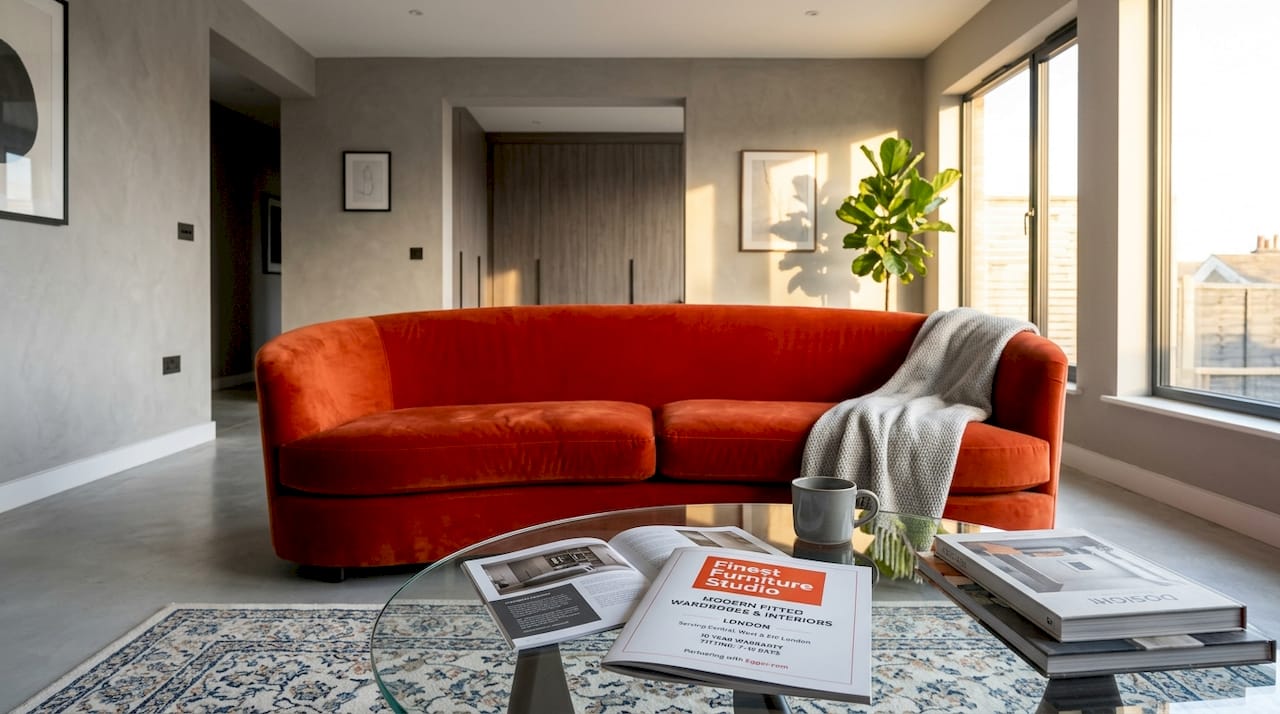
What makes curved furniture particularly useful as a design tool is its spatial function. Designers use a single curved anchor piece to soften adjacent linear furniture without overhauling the entire room. A rounded sofa placed against a rectangular wall unit, or a kidney-shaped coffee table in front of a structured shelving system, creates balance through contrast. You do not need to replace everything to achieve the effect.
Key ways to introduce curved forms in 2026 interiors:
- A curved two or three-seater sofa as the focal point of a living room
- Rounded dining chairs paired with a rectangular table for contrast
- Sculptural accent chairs in bouclé or velvet to add softness to a corner
- Arched mirror frames or oval artwork to reinforce the organic theme
- Curved storage units or wardrobes with softened door profiles
Pro Tip: If you are working with a fitted wardrobe or media unit, ask your designer about softened door profiles or arched alcove framing. These details carry the curved aesthetic into built-in furniture without compromising storage capacity.
Curvy forms also pair naturally with maximalism and layered interiors, both of which are gaining momentum in 2026. The result is interiors that feel rich and considered rather than sparse or clinical.
2. Upholstery as a design statement
Upholstered furniture in 2026 is no longer purely functional. Textured, tactile fabrics and tailored details are repositioning sofas, chairs, and headboards as sculptural focal points within a room. GDC Home identifies this shift as one of the defining characteristics of 2026 living room furniture, with upholstery choices now carrying as much design weight as colour palette or flooring.
The materials leading this movement are velvet, bouclé, and woven textiles. Each brings a distinct tactile quality. Velvet adds depth and richness, bouclé introduces a casual, textured warmth, and woven fabrics offer a more artisanal, handcrafted feel. The common thread is that all three reward close inspection and create a sensory experience that flat, smooth fabrics simply cannot match.
Performance fabrics are running alongside this aesthetic shift. High-performance upholstery is chosen for stain and traffic resistance, while textures and decorative seams make that durability visually appealing. For households in Kingston, Putney, or Hammersmith with children or pets, this combination of beauty and resilience is particularly relevant. You no longer have to choose between a fabric that looks good and one that holds up.
Styling upholstery effectively in 2026 comes down to a few clear principles:
- Choose one hero upholstered piece and build the room around it
- Mix textures rather than patterns for a layered but cohesive look
- Use contrasting piping or visible seam details to add tailored definition
- Pair soft upholstery with harder materials such as stone, metal, or lacquered wood for balance
- Consider the undertone of your fabric against your wall colour before committing
Pro Tip: Bouclé and velvet both photograph beautifully, which matters if you are designing a space for a client who intends to list or let the property. Tactile, well-upholstered rooms consistently perform better in property photography.
3. Sustainability and intentional material choices
Sustainability is now a primary specification criterion in 2026 furniture design, not a secondary consideration. ICFF 2026 programming places bio-based materials, circular manufacturing, and healthy material specifications at the centre of its agenda. This signals where the industry is heading and what clients are beginning to expect from their furniture makers and designers.
The materials gaining traction are reclaimed wood, bio-based fabrics, recycled glass, and natural stone. Each carries a warmth and individuality that manufactured substitutes cannot replicate. A reclaimed oak sideboard, for example, brings grain patterns and tonal variation that make it unique. That character is precisely what homeowners now prefer over the uniform finish of mass-produced alternatives.
The table below outlines the most relevant sustainable material categories for 2026 bespoke furniture projects:
| Material category | Examples | Key benefit |
|---|---|---|
| Reclaimed timber | Oak, pine, elm from salvaged sources | Unique grain, reduced environmental impact |
| Bio-based fabrics | Hemp, linen, organic cotton | Breathable, lower chemical load |
| Recycled glass | Countertops, decorative panels | Diverts waste, high visual interest |
| Natural stone | Marble, slate, travertine | Durable, timeless, no synthetic content |
| FSC-certified wood | Certified oak, walnut, ash | Verified responsible sourcing |
Understanding FSC and PEFC certification is worth your time if you are specifying bespoke furniture. These certifications confirm that timber has been sourced from responsibly managed forests, which matters both ethically and commercially as client awareness grows.
The practical shift in 2026 is away from the sterile, all-white showroom aesthetic toward interiors that feel warm, layered, and collected over time. Natural materials are central to achieving that. For a deeper look at how material choices affect bespoke furniture quality, the role of materials in fitted furniture is worth exploring before you commit to a specification.
4. Vintage and antique furniture: character with longevity
Vintage and antique furniture has moved from occasional accent to deliberate design strategy in 2026. 85% of designers sourced vintage pieces from the 1920s to 2000 in recent projects, the highest proportion recorded in five years. Vintage sourcing averaged 36% of furniture in 2025 projects, and that figure is expected to rise as the antique appeal grows further in 2026.
The reason for this shift is not nostalgia. It is quality and character. Furniture made between the 1940s and 1980s was frequently built to a standard of craftsmanship that is difficult to replicate at accessible price points today. Solid joinery, hand-finished surfaces, and genuine material depth are qualities that age well and add personality to a room in ways that flat-pack alternatives cannot.
Designers are increasingly sourcing vintage pieces with data-driven intent, selecting specific eras and styles to complement contemporary fitted furniture. A mid-century sideboard placed alongside a modern fitted media wall, for example, creates a layered interior that feels curated rather than matched. This approach works particularly well in period properties across Barnes, Twickenham, and Richmond, where architectural character already provides a historical reference point.
Practical considerations for integrating vintage pieces effectively:
- Select one or two statement vintage items rather than filling a room with period furniture
- Match the scale of vintage pieces to the room proportions, not just the aesthetic
- Use vintage upholstered items as opportunities to reupholster in contemporary performance fabrics
- Look for pieces with strong silhouettes that hold their own alongside modern fitted storage
- For inspiration on combining vintage character with fitted kitchens and living spaces, vintage industrial kitchen approaches offer useful reference points
The longevity argument for vintage furniture also aligns with sustainability priorities. A well-made piece from 1965 that has already lasted sixty years will almost certainly outlast a new item manufactured to a budget specification. Buying vintage is, in practical terms, one of the most sustainable furniture decisions available.
5. Modular and adaptable furniture for flexible living
Modular and reconfigurable furniture is a direct response to how people actually live in 2026. Compact all-in-one seating and storage conversions are emerging as key market trends, driven by smaller urban footprints and the continued prevalence of home working. In London homes across Ealing, Brixton, and New Malden, where square footage is at a premium, furniture that adapts to multiple functions is not a luxury. It is a practical requirement.
The core principle of modular furniture is reconfigurability. A sofa system that can be rearranged from an L-shape to a straight configuration, or a shelving unit that expands as storage needs change, delivers long-term value that fixed furniture cannot. This is especially relevant for homeowners who move frequently or whose household composition changes over time.
Here is how to approach modular furniture selection for a 2026 interior:
- Define the primary and secondary functions of each room. A spare bedroom that doubles as a home office needs furniture that serves both uses without compromise.
- Choose systems with standardised components. Modular shelving from manufacturers with consistent sizing allows you to add units over time without mismatched proportions.
- Prioritise vertical storage in compact rooms. Floor-to-ceiling fitted units maximise capacity without increasing the room’s footprint.
- Consider convertible seating for multifunctional living rooms. Sofa beds and modular corner units with integrated storage address both seating and sleeping needs.
- Invest in bespoke fitted solutions for fixed architectural features. Alcoves, loft spaces, and awkward corners benefit most from purpose-built furniture rather than off-the-shelf modular systems.
For homes with unconventional layouts, awkward space storage solutions offer a practical framework for maximising every available inch. Similarly, if you are working with a compact bedroom, small walk-in wardrobe designs demonstrate how bespoke fitted furniture outperforms modular alternatives in tight spaces.
Pro Tip: When specifying a fitted wardrobe or media unit for a multifunctional room, ask your designer to include adjustable shelving and removable internal components. This costs little at the build stage but significantly extends the furniture’s useful life as your needs change.
The home office dimension of modular living is also worth addressing directly. Home office storage options that integrate with bedroom or living room furniture are increasingly requested by clients across Wimbledon, Putney, and Chelsea, where dedicated office rooms are rare but the need for a functional workspace is constant.
Key takeaways
The five furniture design trends defining 2026 share a common foundation: a preference for warmth, quality, and adaptability over uniformity and disposability.
| Point | Details |
|---|---|
| Curved forms soften rooms | A single curved anchor piece balances linear furniture without a full redesign. |
| Upholstery is now sculptural | Choose performance fabrics in velvet or bouclé to combine durability with visual impact. |
| Sustainable materials are standard | Reclaimed timber, bio-based fabrics, and FSC-certified wood are now baseline client expectations. |
| Vintage adds character and longevity | 85% of designers sourced vintage pieces in recent projects, prioritising craftsmanship over newness. |
| Modular furniture extends value | Reconfigurable and bespoke fitted systems outperform fixed furniture in compact or multifunctional spaces. |
Why these trends matter more than they appear to
By Aureliu
Having worked closely with homeowners and design professionals across London for a number of years, I have noticed something consistent about how trends land in real projects. The ones that stick are not the ones with the most Instagram coverage. They are the ones that solve a genuine problem in a specific space.
Curved furniture is a good example. The reason it resonates in 2026 is not because it looks good in a mood board. It is because most London homes, particularly Victorian and Edwardian terraces in Richmond, Barnes, and Chiswick, have rooms with strong architectural lines and relatively modest proportions. A curved sofa or rounded table introduces visual relief without requiring structural change. That is a practical solution dressed as an aesthetic trend.
The vintage and sustainability movements tell a similar story. Clients are increasingly sceptical of furniture that looks impressive in a showroom but deteriorates within five years. The appetite for reclaimed materials and well-made vintage pieces reflects a desire for furniture that earns its place over time. I find this shift genuinely encouraging, because it aligns with how we think about bespoke fitted furniture at Finest Furniture Studio.
My honest observation on modular furniture is that it works best when it is purpose-built rather than assembled from generic components. Off-the-shelf modular systems rarely account for ceiling height variations, alcove depths, or the specific proportions of a London period property. Bespoke fitted solutions address those variables directly, which is why they consistently outperform standard alternatives in the homes I see.
The one caution I would offer is this: do not chase all five trends simultaneously. Choose the one or two that genuinely suit your space and lifestyle, then commit to them with quality materials and considered execution. A single well-chosen curved sofa in a quality bouclé fabric will do more for a room than five trend-led purchases that do not cohere.
— Aureliu
Bring 2026 furniture trends to life with Finest Furniture Studio
At Finest Furniture Studio, we design and install bespoke fitted wardrobes, media walls, and storage solutions that reflect exactly the trends shaping 2026 interiors. Every piece is built to your room’s specific dimensions, finished in materials that align with your aesthetic, and installed within seven days. Our bespoke wardrobes for West London are crafted to complement curved, layered, and sustainable interior schemes across Richmond, Chelsea, Wimbledon, Fulham, and beyond. We also remove and dispose of your existing furniture as part of the service, and every installation is backed by a ten-year guarantee.
Book a free design visit today. Call us on 07468 150807, WhatsApp us, or visit our office at 124 City Road, Kemp House, London, EC1V 2NX. We will come to you, assess your space, and create a design that works.
FAQ
What are the top furniture design trends for 2026?
The leading furniture design trends for 2026 are curved organic silhouettes, statement upholstery in textured fabrics, sustainable and reclaimed materials, vintage and antique integration, and modular or adaptable furniture systems. These trends are supported by data from 1stDibs, Redfin, and ICFF 2026.
Why are curved sofas so popular in 2026?
Curved sofas are popular because they soften the sharp architectural lines common in most rooms, creating a more relaxed and biophilic atmosphere. A 1stDibs survey found that 43% of designers identify curvy furniture as a top 2026 trend.
Is vintage furniture a good investment in 2026?
Vintage furniture from the 1920s to 2000 is increasingly valued for its craftsmanship, character, and longevity. 85% of designers sourced vintage pieces in recent projects, and well-made vintage items typically outlast budget-specification new furniture by decades.
How does sustainable furniture differ from standard furniture?
Sustainable furniture uses responsibly sourced or reclaimed materials such as FSC-certified timber, bio-based fabrics, and recycled glass, reducing environmental impact and often delivering superior material quality. ICFF 2026 identifies bio-based materials and circular manufacturing as central to current industry direction.
What is the best furniture approach for a small London home?
Bespoke fitted furniture is the most effective solution for compact London homes, as it accounts for specific room dimensions, ceiling heights, and architectural features that standard modular systems cannot address. Purpose-built wardrobes, alcove units, and fitted media walls maximise storage without consuming additional floor space.

