








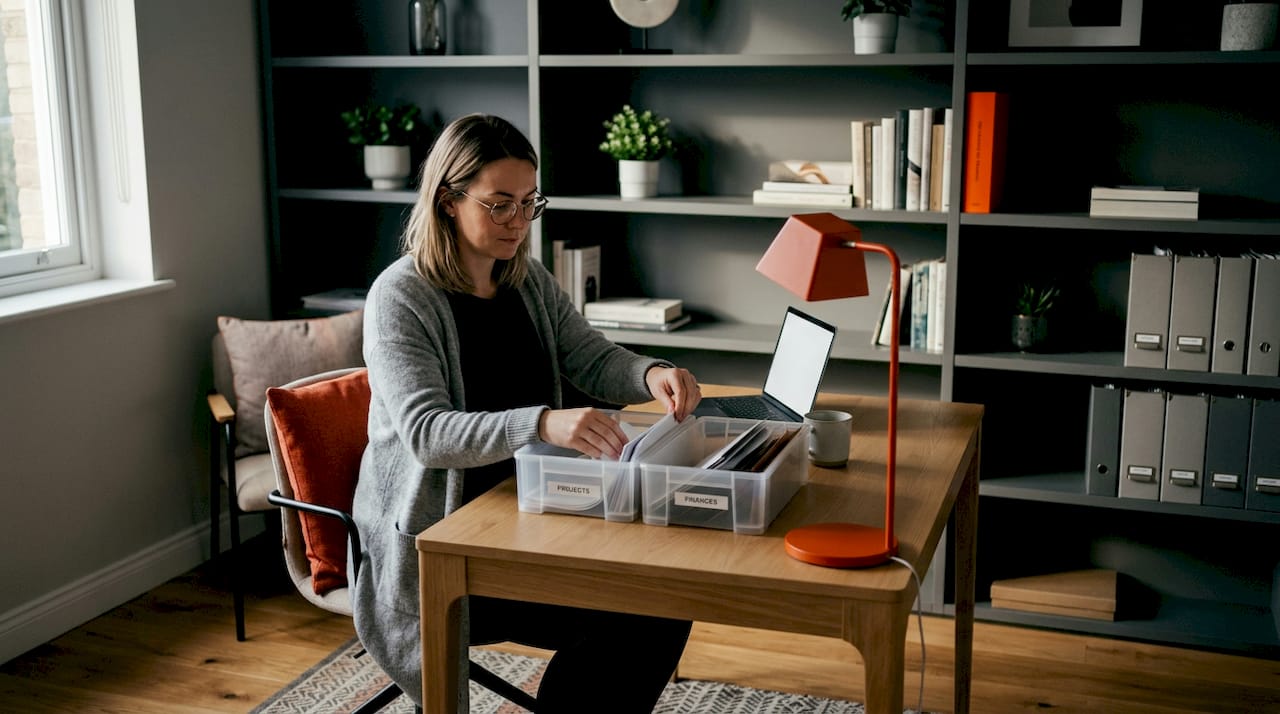
Working from home has made one thing clear: your storage either works for you or against you. Choosing from the many available home office storage options is genuinely tricky when you need solutions that keep paperwork under control, look good on a video call backdrop, and actually fit your space. This guide cuts through the noise. We cover the key criteria for evaluating storage, explore the best solutions from classic cabinetry to clever space-savers, and give you a practical framework for deciding what belongs in your home office.
Table of Contents
- Key takeaways
- 1. Key criteria for evaluating home office storage options
- 2. Classic storage furniture and its role in the home office
- 3. Innovative and space-saving solutions for small home offices
- 4. Organisational tools and accessories that make storage work harder
- 5. Comparing home office storage options by need and space
- 6. My perspective on getting home office storage right
- Transform your home office with Finestfurniturestudio
- FAQ
Key takeaways
| Point | Details |
|---|---|
| Audit before you buy | Sort your workspace items into categories to reveal actual storage needs and avoid overbuying. |
| Use vertical space wisely | Tall, narrow storage units maximise floor space and work especially well in compact home offices. |
| Match storage to work habits | Organise by frequency of use, keeping daily essentials closest and archives furthest away. |
| Simplicity outperforms complexity | Straightforward systems like clear containers and drawer dividers maintain order better long-term. |
| Bespoke beats generic | Custom-fitted storage tailored to your layout delivers far greater functionality and longevity. |
1. Key criteria for evaluating home office storage options
Before purchasing a single shelf or cabinet, you need a framework. The right storage choice depends on several factors working together, not just aesthetics or price alone.
Space and footprint should be your starting point. Measure your room carefully and consider whether you need to go vertical rather than horizontal. In many London homes, particularly across areas like Wimbledon, Putney, and Fulham, square footage is at a premium. A tall, narrow unit takes up far less floor space than a wide sideboard whilst offering comparable capacity.
Style and interior cohesion matter more in a home office than in a commercial one. Your storage should feel at home in your home. A walnut-finish credenza that complements your existing furniture creates a professional, polished atmosphere. Mismatched flatpack units do not.
Here are the core criteria to weigh when assessing any storage solution:
- Functionality: Does it store what you actually need to store, in the format you need to access it?
- Flexibility: Is it fixed to the wall or freestanding? Renters and those in evolving households need adaptable options.
- Ease of maintenance: Complex systems that are difficult to maintain lead to more clutter, not less. Simpler is often better.
- Budget: Costs range from under £50 for basic shelving to several thousand for bespoke fitted units. Know your ceiling before you browse.
- Permanence: Built-in cabinetry is a long-term investment. Freestanding furniture offers flexibility if your setup or home changes.
Pro Tip: An initial workspace audit before purchasing anything is one of the most valuable steps you can take. Sort every item in your office into categories. You will almost certainly discover you need less storage than you assumed, and a clearer picture of what specific storage types you actually require.
2. Classic storage furniture and its role in the home office
Traditional storage furniture has earned its place through decades of practical use. These pieces are tried, tested, and still the backbone of most well-organised home offices.
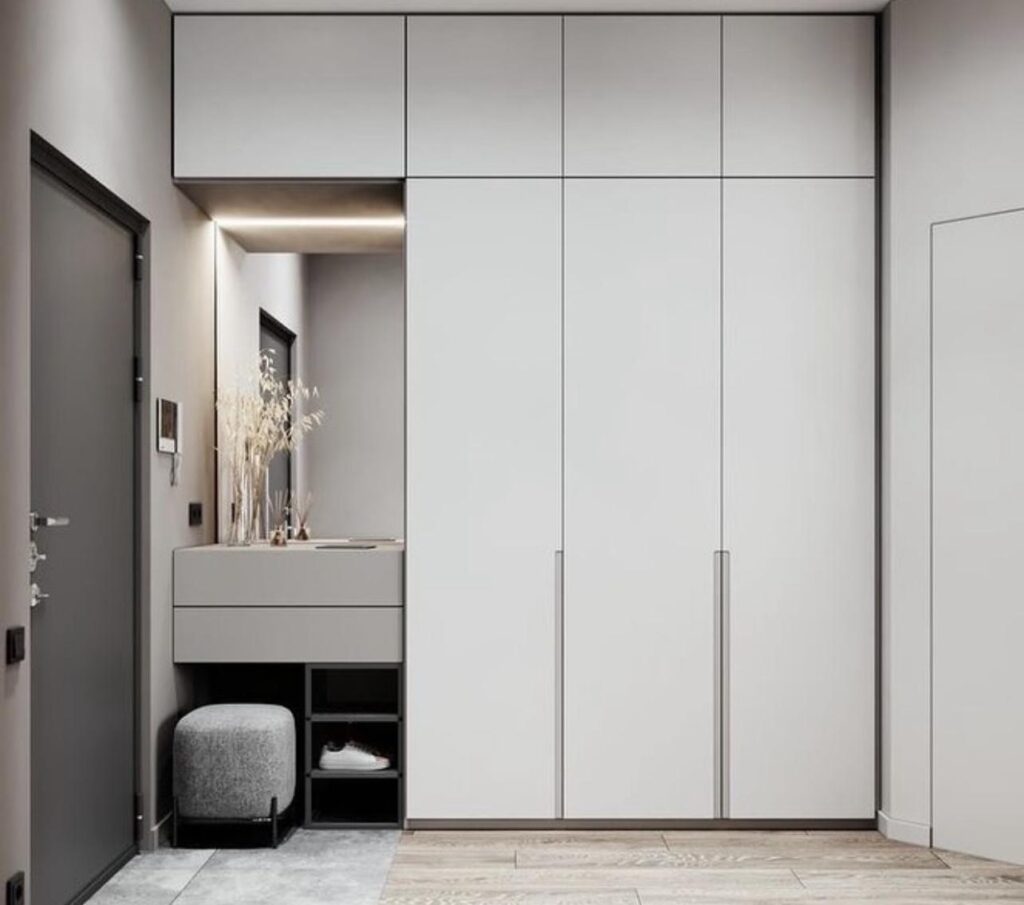
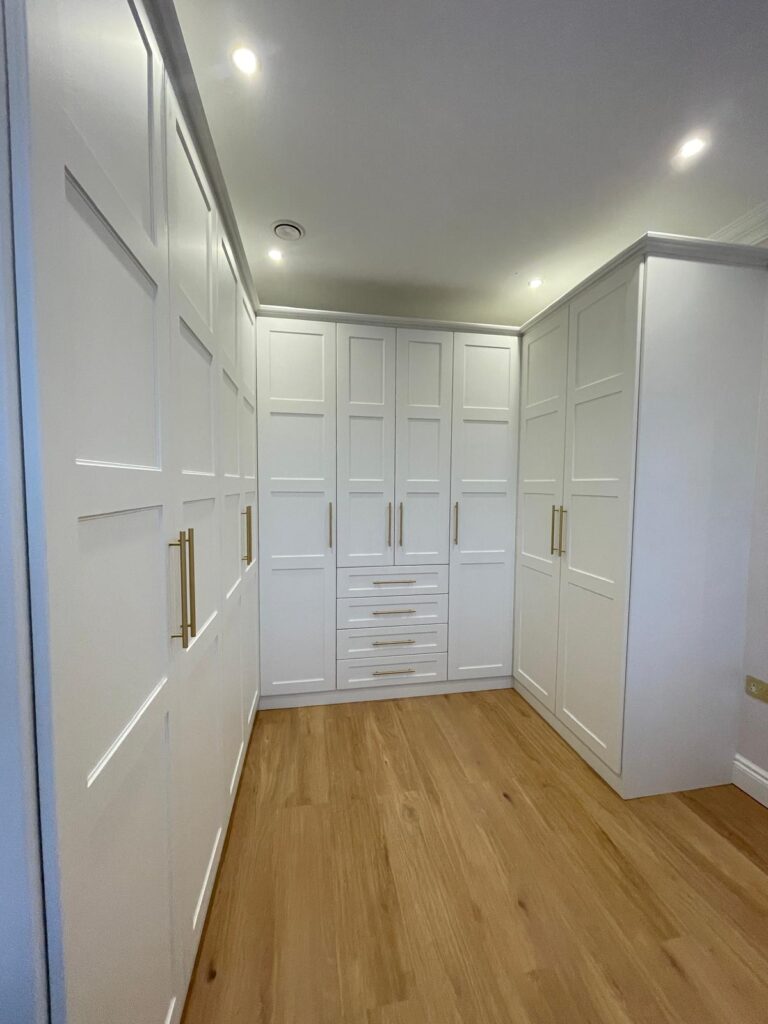
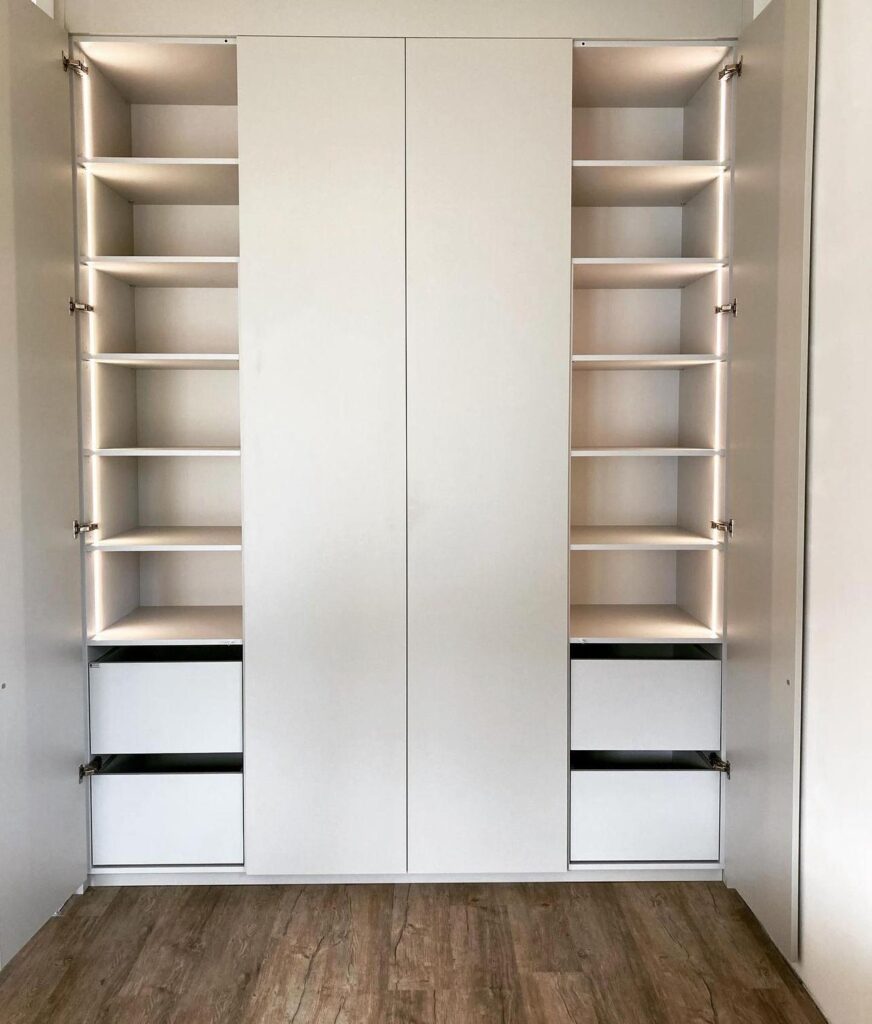
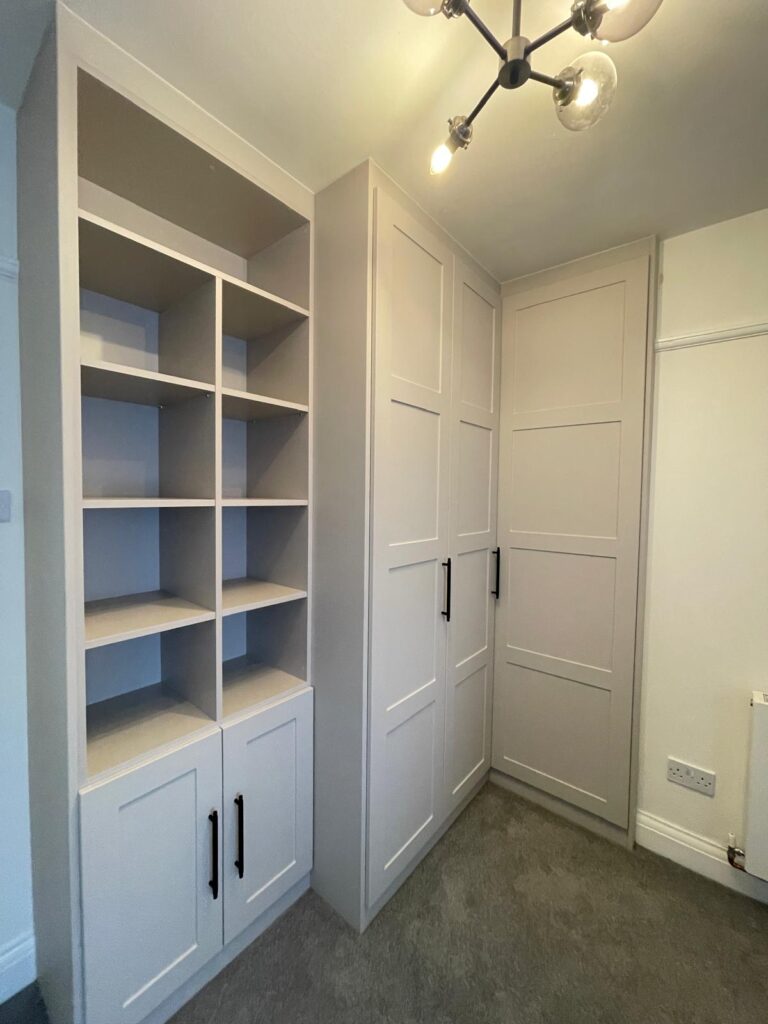
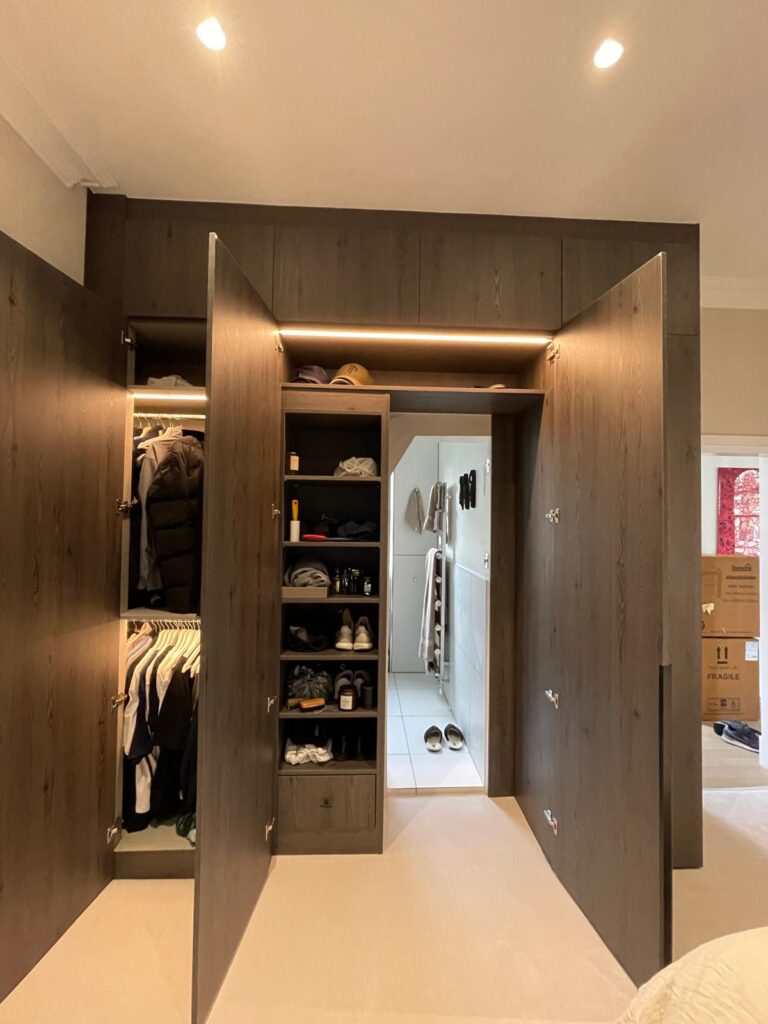
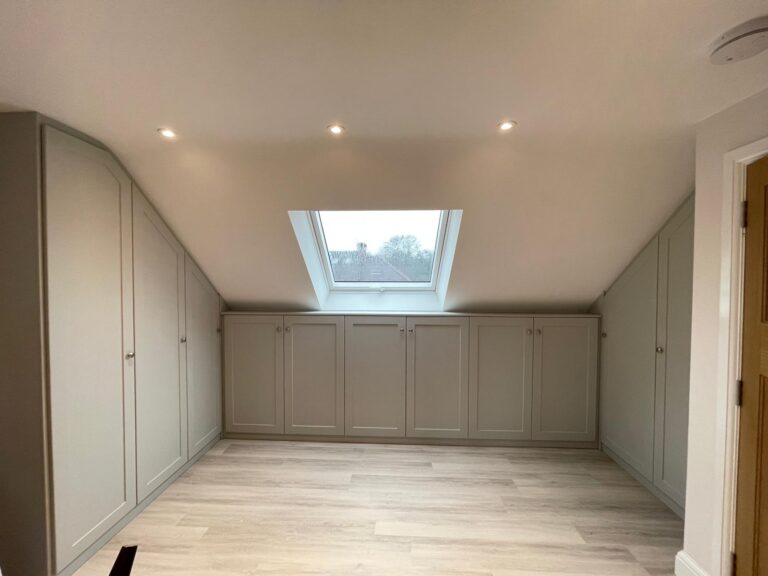
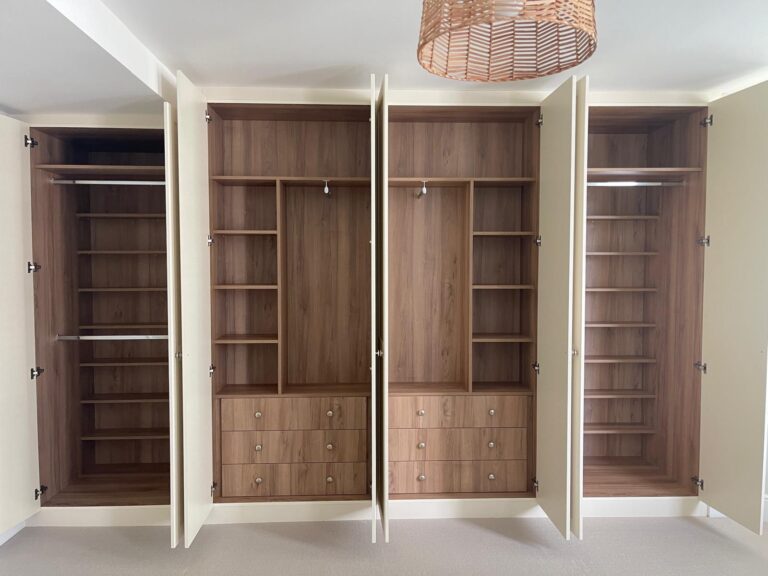
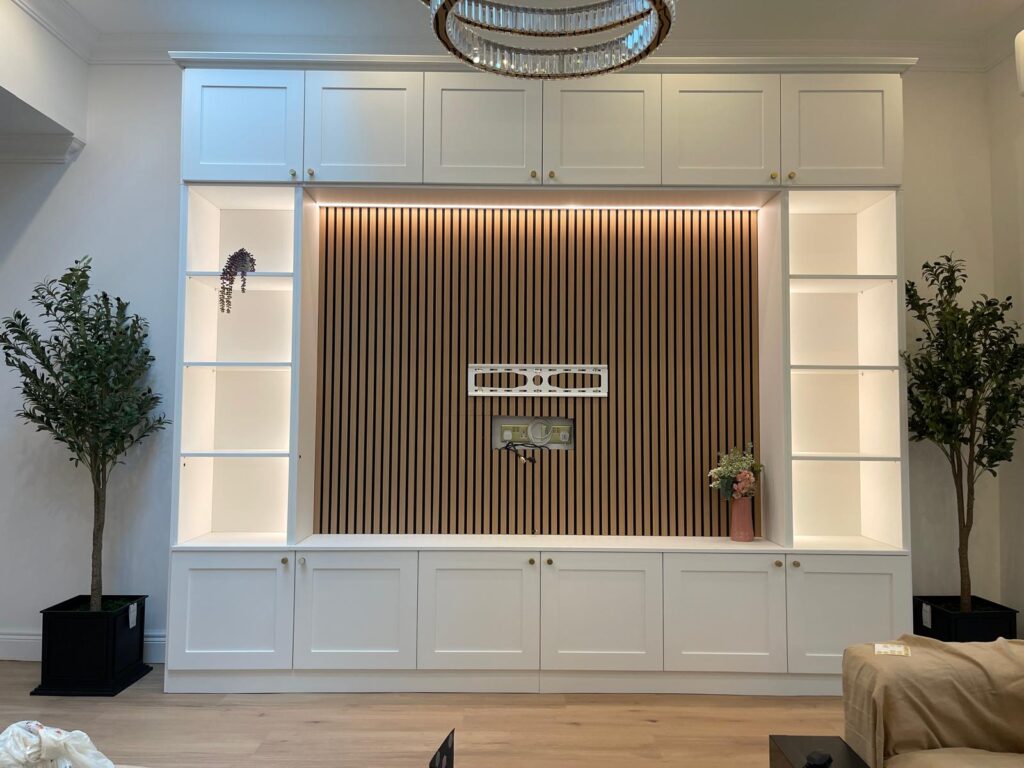
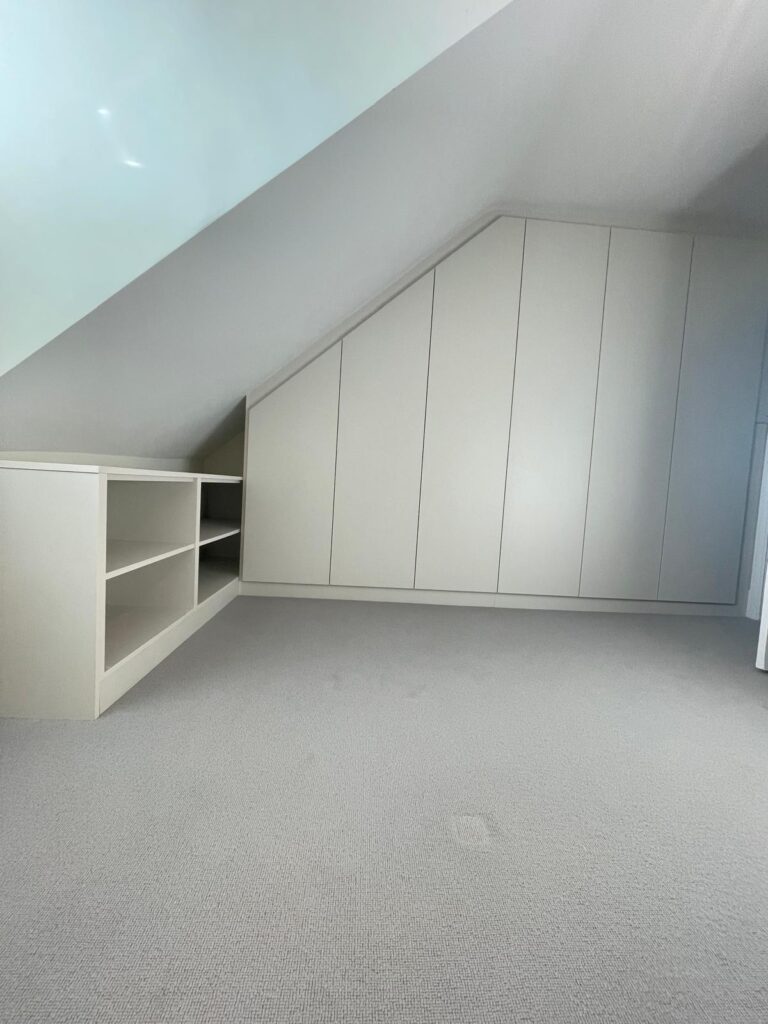
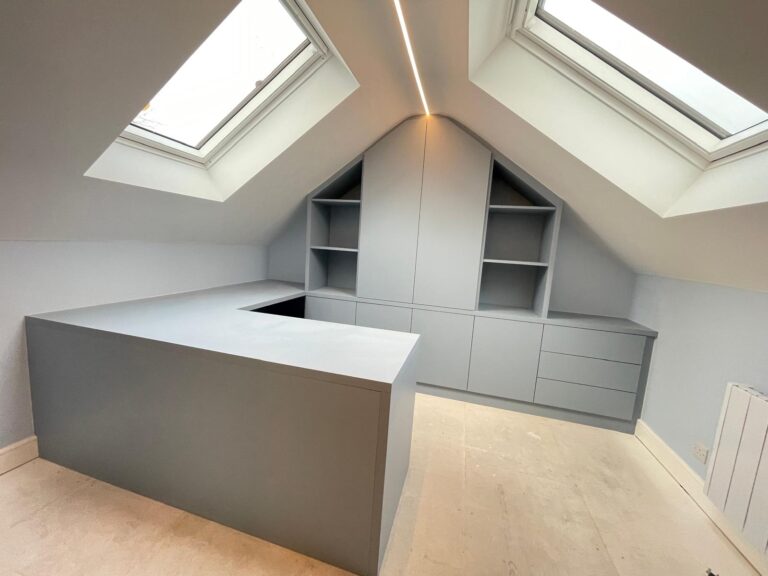
Built-in cabinetry and wall shelving represent the gold standard. They offer a seamless, high-end look that no freestanding unit can fully replicate. The downside is permanence. Once fitted, they are not easily moved or altered. For homeowners in Richmond, Chelsea, or Kingston who plan to be in their property for years, this is often the right call.
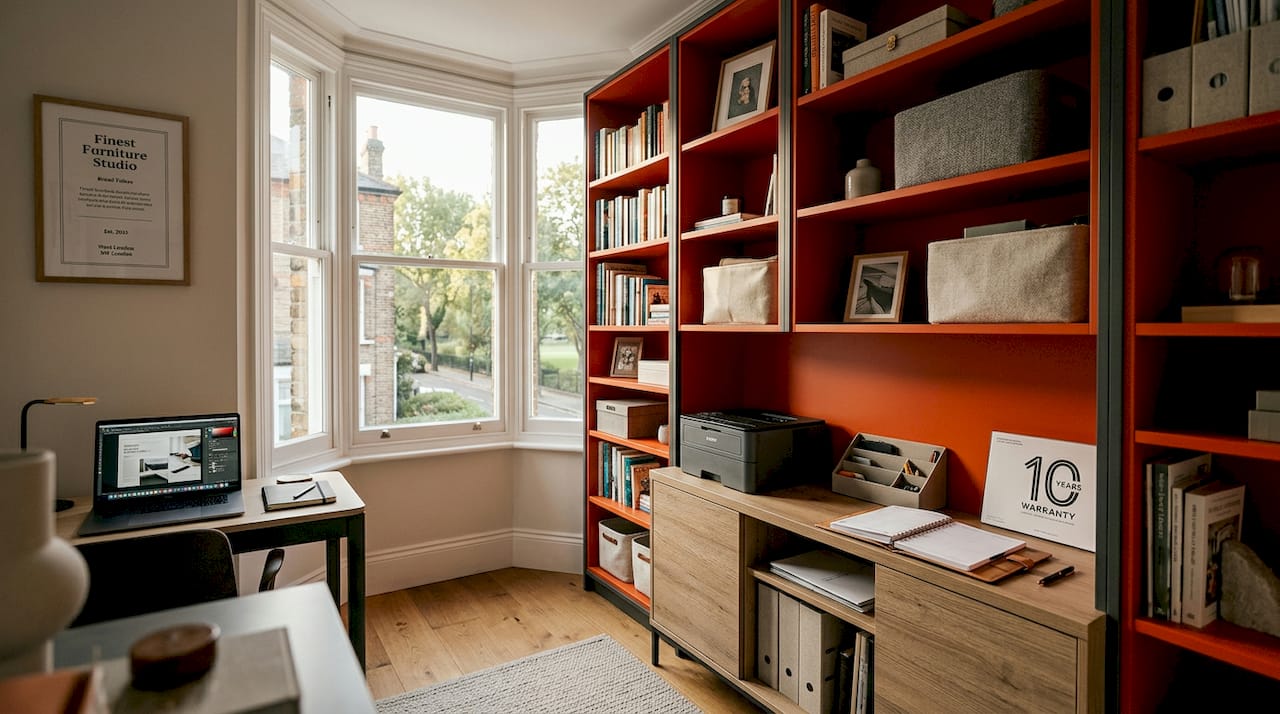
Lateral filing cabinets and desk pedestals handle the unglamorous but necessary job of paperwork management. Lateral cabinets offer wider drawers than traditional vertical filing cabinets, making it easier to see folder labels at a glance. Integrated desk pedestals keep files within arm’s reach without cluttering your desktop.
Credenzas and buffet-style cabinets bring both concealed storage and visual calm to a home office. Everything sits behind closed doors, which means the room looks clean even when the contents are not perfectly sorted. A well-chosen credenza can double as a printer stand, additional workspace, or display surface.
Freestanding bookcases and ladder shelves are the most renter-friendly and budget-conscious choice. Ladder shelves in particular have grown in popularity because they lean against the wall without fixings and add visual interest. For adaptable home office organisation, they are hard to beat.
- Bookcases work well for reference books, binders, and decorative items.
- Ladder shelves suit smaller offices or corners where a full bookcase would feel imposing.
- Credenzas suit dedicated home offices where a professional aesthetic is a priority.
- Filing cabinets are non-negotiable if your work involves significant physical paperwork.
Pro Tip: If you are using a credenza or sideboard for storage, place your printer on top rather than on your desk. It frees up valuable workspace and gives the unit a clear functional purpose within the room.
3. Innovative and space-saving solutions for small home offices
Not every London professional has a dedicated study. Many are working from a corner of a bedroom, a converted alcove in Chiswick or Barnes, or a compact flat in Hammersmith. These constraints call for smarter solutions.
Vertical storage towers and corner cabinets exploit the spaces that most furniture ignores. Tall, narrow cabinet units around 64 inches in height with a shallow footprint are particularly effective, offering substantial storage capacity without consuming floor area. Corner cabinets turn dead angles into functional zones.
Wall-mounted floating shelves and over-door organisers add storage without touching the floor at all. A row of floating shelves above your desk keeps reference materials accessible without cluttering the workspace below. Over-door organisers on the inside of a cupboard door are an often-overlooked way to store stationery, cables, or small accessories.
Multi-functional furniture is where compact home offices gain the most ground. Consider the following options:
- Secretary desks fold closed when not in use, hiding all your work materials and turning the office into a living space in seconds.
- Hutch desks combine a workspace with shelving and enclosed cabinets above, delivering combined storage and workspace in a single footprint.
- Ottomans with hidden compartments provide seating for a guest or video call and store files, cables, or equipment inside.
- Modular storage units are perhaps the most future-proof option. You can start with one module and add more as your storage needs grow.
Roll-out drawer units that slide under desks are another practical addition. They store stationery, notebooks, or tech accessories within reach but completely out of sight. Many are available on castors, making them easy to reposition as your layout changes.
4. Organisational tools and accessories that make storage work harder
Furniture alone does not create an organised office. The accessories and systems you use inside and around that furniture determine whether your storage actually functions day to day.
Clear containers and labelling are the simplest upgrade with the most consistent payoff. Transparency paired with labels reduces search time and encourages people to return items to their correct place. Use uniform clear boxes on shelves for a tidy appearance and label each one specifically. “Cables” is not a label. “HDMI and power cables” is.
Ergonomic zoning is a principle worth understanding properly. The ergonomic three-zone reach system organises storage by how often you use each item. Your primary zone, the area within immediate reach, holds daily essentials. The secondary zone covers weekly-use items. Deep storage or high shelves handle archives and rarely accessed materials. Applying this principle to your storage layout reduces the friction of your working day measurably.
Pegboard walls and desktop organisers bring a level of customisation that standard furniture cannot match. A pegboard fitted to a wall above your desk accepts hooks, shelves, and magnetic accessories that can be repositioned as your needs change. Desktop organisers with dedicated trays for incoming documents, pens, and devices keep the surface clear without requiring constant tidying.
Drawer dividers are inexpensive but genuinely transformative. An open drawer becomes a jumble within weeks without them. Dividers create fixed homes for specific items, which means finding what you need takes seconds rather than minutes.
One important caution: over-engineered storage systems often collapse under their own complexity. The more intricate the system, the less likely you are to maintain it under pressure. The best home office organisation process is one that requires minimal effort to sustain.
A simple desk-side filing tray, a pegboard for cables and pens, and a single drawer unit will outperform an elaborate colour-coded catalogue system every time. Design for the busiest version of your workday, not the most optimistic one.
5. Comparing home office storage options by need and space
With so many choices available, a direct comparison helps clarify which direction suits your situation. The table below weighs the most common home office storage options against four practical criteria.
| Storage type | Best for | Flexibility | Approximate cost | Installation effort |
|---|---|---|---|---|
| Built-in cabinetry | Dedicated, permanent home offices | Low | £££ | High (professional fitting) |
| Freestanding bookcase | Renters, flexible setups | High | £ to ££ | Minimal |
| Credenza or sideboard | Professional aesthetic, concealed storage | Medium | ££ to £££ | Low |
| Modular shelving | Growing or changing needs | Very high | £ to ££ | Low to medium |
| Ladder shelf | Small offices, decorative storage | High | £ | None |
| Filing cabinet | Heavy paperwork users | Medium | £ to ££ | None |
| Multi-functional desk hutch | Small or multi-use rooms | Medium | ££ | Low |
| Wall-mounted floating shelves | Minimal footprint, maximising wall space | Medium | £ | Medium |
The distinction between built-in and freestanding storage often comes down to how permanent your home office setup is. If you own your property and have a dedicated room, built-in or bespoke fitted storage is almost always the better long-term investment. If you rent or share a space, freestanding and modular options give you the freedom to adapt without losing a deposit.
Budget is rarely the sole deciding factor, but it is a real one. The most affordable storage options, such as ladder shelves and flatpack modular units, serve many needs perfectly well. For luxury bespoke home office furniture, the return on investment comes through a combination of superior fit, longevity, and the kind of professional finish that genuinely affects how you feel about working in the space each day.
Pro Tip: Carry out a weekly 10-minute paperwork review to keep documents from accumulating into an unmanageable backlog. For most people receiving fewer than 20 documents per week, this single habit prevents the need for extensive filing infrastructure altogether.
6. My perspective on getting home office storage right
I have visited and advised on a significant number of home office setups across London. The same mistake appears again and again: people buy storage before they understand what they are storing.
In my experience, the audit step is not optional. It reveals that roughly a third of what people store in their home offices does not need to be there at all. Old equipment, outdated files, duplicate cables, and long-forgotten stationery take up space that should belong to your active work life.
What I have also learned is that the appeal of a perfectly organised, aesthetically beautiful system can actually work against you. I have seen offices kitted out with colour-coded box files, custom drawer inserts, and dual filing systems that looked extraordinary on installation day and were in complete disarray within three months. The person’s actual working habits never matched the idealised system they had created. Simpler setups built around real workflow, rather than aspirational workflow, consistently perform better.
My honest recommendation for homeowners in areas like Wimbledon, Richmond, and Ealing who are serious about their home working environment: invest in quality bespoke fitted storage when your budget allows. Not because it looks impressive, although it does. Because integrated storage built to your layout removes all the compromise that freestanding furniture inevitably involves. Gaps, awkward angles, wasted vertical space, and furniture that does not quite fit. These are problems that disappear with a properly designed fitted solution.
Start simple. Refine over time. And when you are ready to make a permanent investment, make it count.
— Aureliu
Transform your home office with Finestfurniturestudio
If you are ready to move beyond mismatched shelves and overfull drawers, Finestfurniturestudio designs and fits bespoke storage solutions built specifically for your home, your layout, and your way of working. We serve homeowners across London, including Richmond, Wimbledon, Chiswick, Chelsea, Putney, and Twickenham, delivering fitted furniture that looks exceptional and performs flawlessly.
Every project begins with a personal consultation. We assess your space, understand your storage requirements, and design a solution that integrates seamlessly into your existing interior. Our fitted units come with a 10-year quality guarantee and are installed within 7 to 12 days. We also remove and dispose of your existing furniture as part of the service, so there is no disruption or hassle on your end.
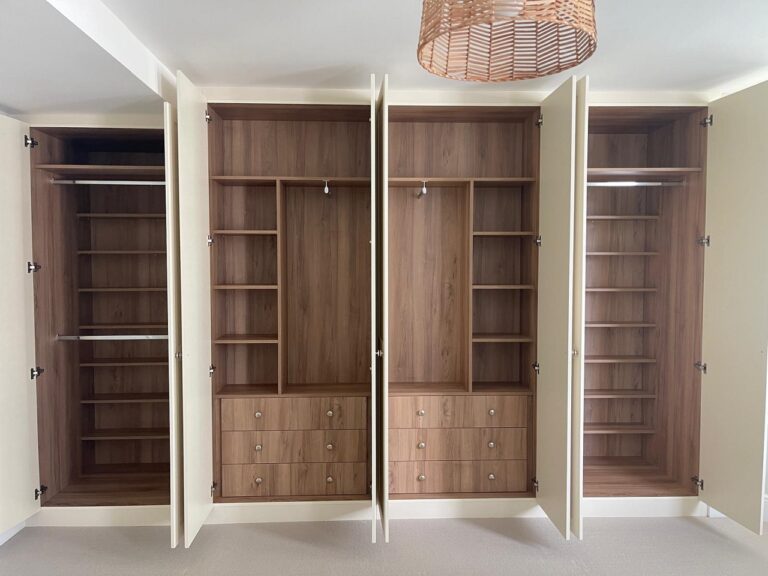
Whether you need a full-wall fitted office system or a more modest custom storage unit, explore our bespoke London storage solutions or browse our premium fitted wardrobe options to see what a truly tailored approach can achieve in your home.
FAQ
What are the best storage options for a small home office?
Wall-mounted floating shelves, ladder shelves, and modular storage units work particularly well in small offices because they maximise vertical space without consuming floor area. Multi-functional furniture like hutch desks and ottomans with hidden compartments also deliver excellent storage capacity within a compact footprint.
How do I keep my home office organised long-term?
The most sustainable approach combines simple physical storage, such as clear labelled containers and drawer dividers, with a short weekly paperwork review. A 10-minute weekly review prevents documents from accumulating and keeps your system manageable without requiring significant effort.
Should I choose built-in or freestanding home office storage?
Built-in cabinetry suits homeowners with a dedicated, permanent office space and delivers the highest level of functionality and finish. Freestanding furniture is better suited to renters or those in evolving households, offering flexibility without the commitment or cost of professional installation.
How do I make the most of ergonomic storage zoning?
Place your most frequently used items, such as pens, notebooks, and active files, within immediate arm’s reach in your primary zone. Weekly-use items go in your secondary zone, and archives or rarely accessed materials belong in deep storage or on high shelves. This three-zone reach system reduces daily friction and keeps your workspace clear.
Are bespoke home office storage solutions worth the cost?
For homeowners who work from home regularly and have a dedicated office space, bespoke fitted storage is a sound investment. Custom units eliminate wasted space, integrate with your interior perfectly, and carry guarantees that flatpack alternatives cannot match. The upfront cost is higher, but the longevity and daily functionality justify it clearly.