

Why soft close wardrobes feel better day to day
Soft close wardrobes are not just a nice extra, they change how a room feels every time you open or shut the doors. The main benefit is simple: the door slows itself before impact, so you avoid the sharp bang, the rushed catch, and the wear that builds up over time. If you are comparing fitted wardrobes or custom wardrobes, this is one of the small details that has the biggest effect on daily comfort. The best way to judge them is practical, not theoretical. Open a door with one hand, close it quickly, and notice whether the movement feels controlled, quiet, and consistent.
What the soft-close mechanism actually does
The mechanism behind soft close wardrobes is usually hidden in the hinge, runner, or door hardware. When the door reaches the final part of its travel, the mechanism takes over and cushions the movement. That last 10 to 15 centimetres is where most damage and noise usually happen, so the benefit is concentrated where it matters most. In sliding door wardrobes, the same idea applies through the track system rather than a hinge. The practical trade-off is that hardware quality matters more than with standard doors, because a weak mechanism can feel sluggish or inconsistent rather than smooth.
Everyday use: the small moments that improve
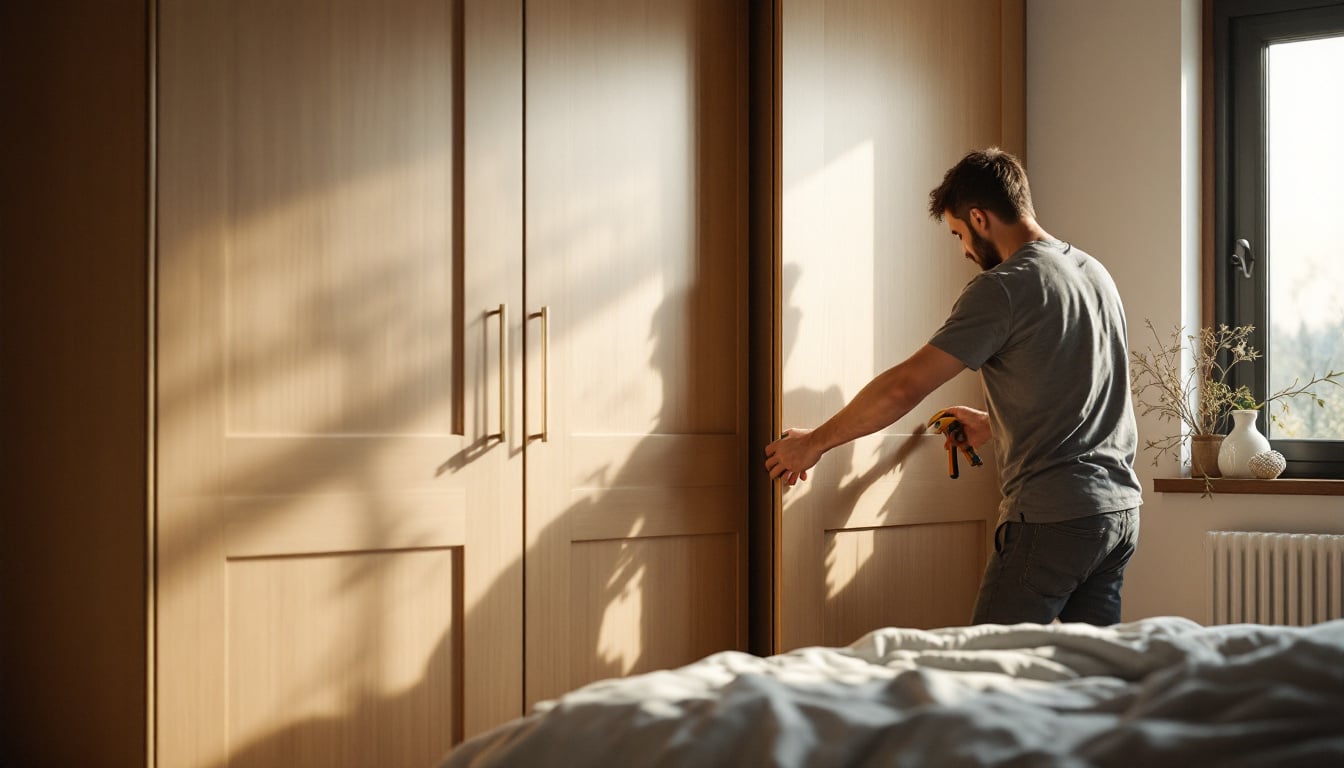
The real value of soft close wardrobes shows up in ordinary moments, not showroom demos. If you are getting dressed early in the morning, putting away laundry late at night, or helping children use the bedroom storage, a quieter close prevents unnecessary disturbance. It also reduces the habit of slamming doors, which often happens when hands are full or attention is elsewhere. For families, the difference is noticeable because repeated impacts can turn a good wardrobe into a noisy one within months. A practical rule is this: if the wardrobe will be used many times a day, soft close hardware is usually worth prioritising over decorative extras.
The durability angle most people miss
One of the less obvious advantages of soft close wardrobes is reduced long-term stress on the frame, hinges, and internal fittings. Every hard impact transfers force into the carcass and the door edges, especially on heavier bespoke wardrobes or full-height built wardrobes. Over time, that can mean more frequent realignment and more visible wear around the most-used panels. Soft close hardware does not make a wardrobe indestructible, but it does reduce the repeated shock that causes the most common maintenance issues. If you want a simple decision metric, look at expected use frequency, door weight, and how much wear you want to avoid over five or ten years.
How to choose the right soft-close setup
Not every soft-close setup feels the same, so the right choice depends on the wardrobe type and the way you use the room. For hinged doors, check hinge quality, door weight compatibility, and whether the closing speed feels consistent across multiple openings. For sliding systems, check the track smoothness, stopping action, and whether the doors remain easy to clean and maintain. If you are considering bespoke fitted wardrobes, ask how the mechanism behaves with full-length mirrored doors, heavy panels, or awkward room layouts. A useful test is to open and close each door several times in a row, because a good mechanism should feel the same on the tenth movement as it did on the first.
Hardware quality matters more than the label
Soft close wardrobes only perform well when the hardware is properly specified. A door can be beautifully built and still feel disappointing if the hinges are weak, the runners are undersized, or the adjustment range is too limited. That is why it helps to ask what type of fittings are being used, how much weight they are designed to carry, and whether they can be adjusted after installation. In practical terms, poor hardware often shows up as doors that close at different speeds, bounce slightly before sealing, or need repeated adjustment. If a supplier cannot explain the hardware specification clearly, treat that as a warning sign.
Hinged, sliding, and walk-in wardrobes
Soft close wardrobes can suit several layouts, but the best fit depends on the room. Hinged doors benefit most from the cushioned finish because the closing motion is direct and frequent. Sliding wardrobes often rely more on precision tracks and a clean glide, so the benefit is quieter travel rather than a dramatic door catch. In walk-in wardrobes, soft close details often matter on drawers, pull-out shelves, and internal compartments more than on the room entry. The decision rule is straightforward: if the motion is heavy, repeated, or likely to be rushed, a soft-close finish will usually improve day-to-day use.
Fit and measure carefully before you decide
A wardrobe can only close softly if it is fitted accurately. Even high-quality soft close wardrobes will feel off if the frame is out of square, the floor is uneven, or the doors are not aligned properly. That matters especially in older homes, loft spaces, and rooms with sloped ceilings, where a small fitting error can affect the whole mechanism. Before installation, check clearances, skirting depth, and wall irregularities. If you are comparing fitted wardrobes manufacturer options, ask how they handle site measurement and post-install adjustment. The common pitfall is assuming the hardware will compensate for poor fitting – it usually will not.
Noise reduction is useful, but not the only gain
Noise reduction is the obvious selling point of soft close wardrobes, but the practical gain is broader. Quieter operation supports a calmer bedroom environment, helps children use storage more gently, and makes the room feel more finished. There is also a hygiene angle in some layouts, especially if doors shut more cleanly and do not rattle open again. Still, noise reduction should not be the only reason to choose them. If you rarely use the wardrobe or the room is more decorative than functional, the added hardware may be less important than drawer depth, door style, or storage layout.
Where soft close can be the wrong choice
There are situations where soft close wardrobes are useful but not essential. If you have very light doors, a low-traffic guest room, or a design where speed of access matters more than refined motion, the benefit may be modest. Some people also prefer firmer closing action on utility storage because they want an immediate, positive shut. The trade-off is cost and complexity, since soft-close hardware adds another layer of specification and potential maintenance. A sensible approach is to match the mechanism to the room’s usage pattern, not to assume every wardrobe needs the same finish.
How soft close compares with standard wardrobes
Compared with standard wardrobes, soft close wardrobes usually cost more upfront and require better fitting, but they reward you with better everyday handling. Standard hinges may be perfectly functional, especially on lighter doors or low-use storage, yet they rely more on user control and more careful closing. That difference sounds minor until you use the wardrobe dozens of times a week. If you are deciding between budget and comfort, use a simple framework: choose standard hardware for low-use utility storage, and soft-close hardware for main bedroom wardrobes, shared rooms, or heavier bespoke doors. That keeps the spend aligned with the real use.
A practical checklist before you order
Before you commit, look at four things: door weight, room layout, expected use, and maintenance access. Heavier doors need better hinges or tracks, narrow rooms may benefit more from sliding solutions, and busy households usually see the biggest value from soft close wardrobes. It is also smart to ask how the mechanism can be adjusted later, because seasonal movement in timber or walls can affect alignment. If you are speaking with a provider about bespoke fitted wardrobes or built-in wardrobes, ask for a hardware explanation, not just a design render. That one question filters out a lot of weak options.
Why the finish matters in real homes
A soft-close feature is not only about engineering, it changes how a room is experienced. In a bedroom, the difference between a bang and a controlled close affects the sense of calm every single day. In a shared home, it also reduces friction between household members because storage stops sounding abrupt or careless. That is one reason soft close wardrobes pair well with premium fitted furniture: the visible design gets attention, but the quiet finish makes the furniture easier to live with. If you want a wardrobe that feels considered rather than merely installed, this is one of the most worthwhile details to include.
When bespoke design makes the biggest difference
Bespoke design matters most when the room has awkward proportions, heavy doors, or a storage layout that will be used every day. In those cases, soft close wardrobes can be tuned to the exact door size, access pattern, and internal configuration. That is especially helpful in loft wardrobes, alcove cupboards, and custom wardrobes London projects where standard off-the-shelf dimensions rarely fit neatly. The best outcome comes from matching the mechanism to the furniture, not the other way around. If you are working with a designer, ask how the closing action will behave after full installation, not just how the wardrobe looks on paper.
What to expect from a good installation
A good installation leaves the doors aligned, the closing action smooth, and the hardware easy to adjust later. You should not need to force anything, and you should not hear scraping, bounce-back, or uneven resistance. If the wardrobe is installed well, the soft-close action should feel almost invisible, which is exactly the point. In the UK market, some providers mention fitting within 7 to 10 days once work begins, but the more important measure is accuracy on completion day. A rushed fit can cancel out the value of premium hardware, so quality of installation matters as much as the mechanism itself.
Quick takeaways
Soft close wardrobes improve everyday use by reducing noise, wear, and the effort needed to shut doors cleanly. The benefit is strongest in bedrooms, shared spaces, and wardrobes that are opened many times a day. Hardware quality matters as much as the design, so check hinges, runners, and adjustability before buying. Good fitting is essential, because poor alignment can undermine even the best soft-close mechanism. Sliding wardrobes, hinged wardrobes, and walk-in storage can all use soft-close details, but the best setup depends on the room. Choose the feature for real usage patterns, not just because it looks premium. A careful pre-order check on door weight, layout, and maintenance access helps avoid disappointment later.
How to decide if soft close is worth it for you
The simplest way to decide is to rank the wardrobe by how often it will be used, how heavy the doors are, and how sensitive the room is to noise. If all three are high, soft close wardrobes are usually a strong choice. If only one is high, the decision is less obvious, and the rest of the design may matter more. For many homes, the feature earns its place on the main bedroom wardrobe and any storage used by children or guests. If you want to compare options properly, speak to a specialist such as Finest Furniture Studio about bespoke fitted wardrobes, built wardrobes, or wardrobe doors design that suit the room rather than forcing the room to suit the furniture.
A final word before you choose
Soft close wardrobes are at their best when you want storage that feels calm, controlled, and durable in daily use. The quiet close, reduced impact, and better long-term feel are all practical benefits, not just design talking points. The key is to avoid treating soft close as a standalone feature. It works best when the wardrobe is measured accurately, the hardware is specified properly, and the installation is done with care. If you are planning fitted storage, use the mechanism as one part of the decision, alongside layout, materials, and room fit. That approach will give you a wardrobe that stays easy to live with long after the first week. If this guide helped, share it with someone comparing wardrobe options, and tell us what matters more in your home: silence, durability, or ease of use?
Frequently Asked Questions
Are soft close wardrobes worth it for everyday use?
Yes, especially if the wardrobe is used several times a day. Soft close wardrobes reduce noise, help protect hinges and panels, and make the closing action feel more controlled. They are most worthwhile in main bedrooms, shared rooms, and heavier fitted wardrobes.
Do soft close wardrobes need special maintenance?
They do not need much, but they do benefit from occasional checks. Look for loose screws, uneven door alignment, or changes in how the door slows near the end of travel. For soft close wardrobe maintenance, a quick adjustment is often enough before a bigger issue develops.
Can sliding soft close wardrobes be adjusted after fitting?
Usually yes, depending on the track and hardware system. Sliding soft close wardrobes often allow fine adjustment so the doors run evenly and stop correctly. If the fit changes over time, a technician can usually correct the alignment without replacing the whole unit.
Do soft close wardrobes work well in small rooms?
They can work very well in small rooms, especially when space is tight and door noise is more noticeable. In some layouts, soft close sliding wardrobes are better than hinged doors because they save clearance space. The best choice depends on room width, bed placement, and access to the contents.
What should I check before ordering bespoke soft close wardrobes?
Check door weight, wall condition, room measurements, and how often the wardrobe will be used. For bespoke soft close wardrobes, it also helps to ask about hinge quality, track type, and post-installation adjustment. That gives you a clearer idea of whether the system will stay smooth over time.
Are soft close wardrobes better than standard wardrobes?
For most busy bedrooms, yes. Standard wardrobes can work fine, but soft close wardrobes usually offer a better everyday experience because they reduce impact and noise. If the wardrobe is low-use or purely functional, standard hardware may still be the more practical choice.
How quickly can soft close wardrobes be fitted?
Fitting times vary by design and room complexity, but once production is ready, some providers mention fitting in 7 to 10 days. The more important point is not speed alone, but whether the installation leaves the doors aligned and the soft-close action working properly. Accurate fitting matters more than rushing the job.

