

A furniture design consultation is the structured initial process where a specialist assesses your space, lifestyle, and budget to translate broad preferences into precise, buildable furniture plans. For homeowners in London, particularly those considering bespoke fitted wardrobes, TV media walls, or loft storage solutions, the role of design consultation in furniture projects is not a luxury step. It is the difference between a finished room that works and one that frustrates. At Finest Furniture Studio, we see this distinction every week across Richmond, Wimbledon, Chelsea, and Kingston. The consultation defines dimensions, finishes, and function before a single panel is cut, which means every decision that follows is a refinement rather than a correction.
What is the role of design consultation in furniture projects?
Design consultation in furniture projects is defined as a pre-build advisory session where a specialist gathers measurements, lifestyle requirements, material preferences, and budget parameters to produce a clear design direction. The industry term for this process is pre-design advisory, though most clients and studios refer to it simply as a design consultation or design brief session. Both terms describe the same structured activity: aligning client goals with spatial and financial reality before any work begins.
The consultation transforms vague ideas into specific decisions. A homeowner in Putney might arrive knowing they want “more wardrobe space,” but leave with confirmed dimensions, a chosen finish, an agreed internal layout, and a sequenced installation plan. That precision is only possible because a trained consultant has evaluated the room, asked the right questions, and applied experience to the answers.
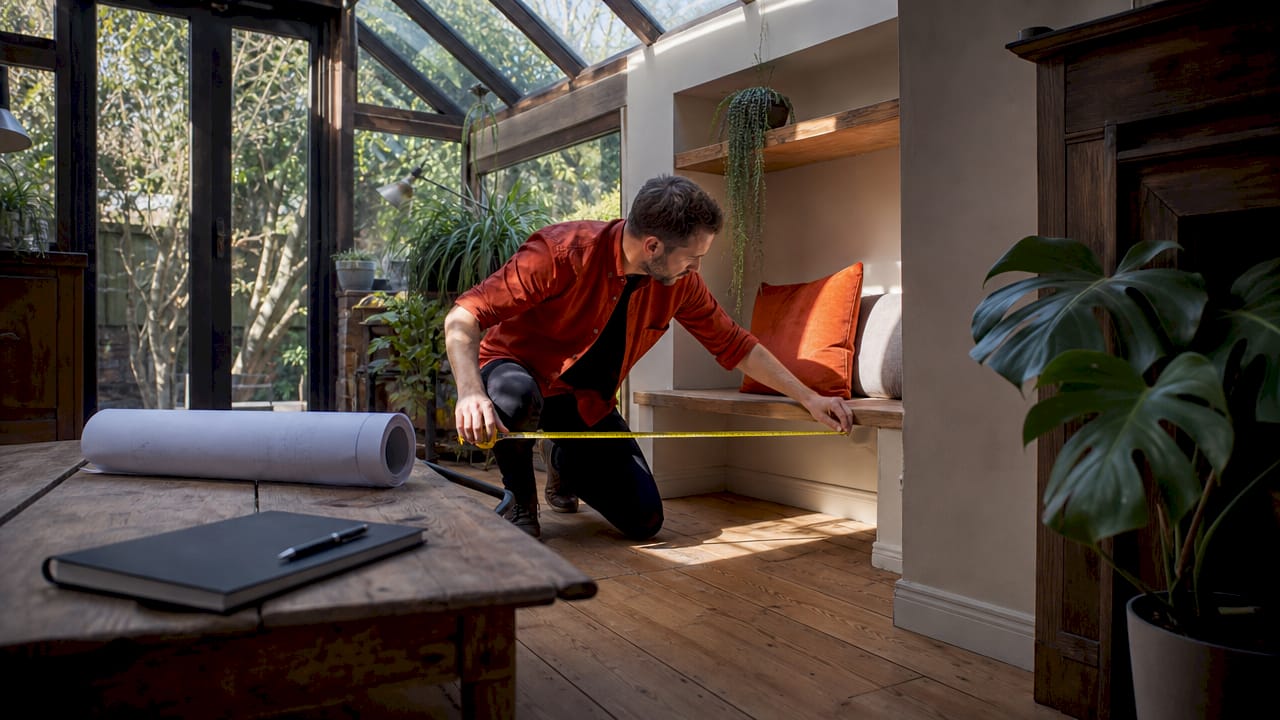
Consultation properly tests size, finish, function and style before the build begins, reducing the risk of wrong proportions or impractical furniture. This matters enormously for bespoke projects where every component is made to order and cannot simply be returned or exchanged.
The consultation also introduces the key players in a furniture project: the client, the design consultant, the materials specialist, and the installation team. When these parties align early, the project runs to schedule. When they do not, costly revisions follow.
What happens during a furniture design consultation?
A well-structured furniture design consultation follows a clear sequence. Understanding that sequence helps you prepare effectively and get the most from the session.
1. Space evaluation and measurements
The consultant measures the room in detail, noting ceiling heights, alcove depths, window and door positions, skirting board profiles, and any structural irregularities. For loft wardrobes in areas like Ealing or Twickenham, where roof pitches create awkward angles, this stage is particularly thorough. Accurate measurements at this point prevent the single most common bespoke furniture problem: a beautifully designed piece that does not fit the space as built.
2. Lifestyle and usage needs assessment
The consultant asks how you live, not just how you want the room to look. How many people share the wardrobe? Do you need hanging space for long coats or mostly folded items? Is the TV media wall in a room where children play, requiring concealed cable management? Lifestyle and usage needs directly shape the internal configuration of every fitted piece.
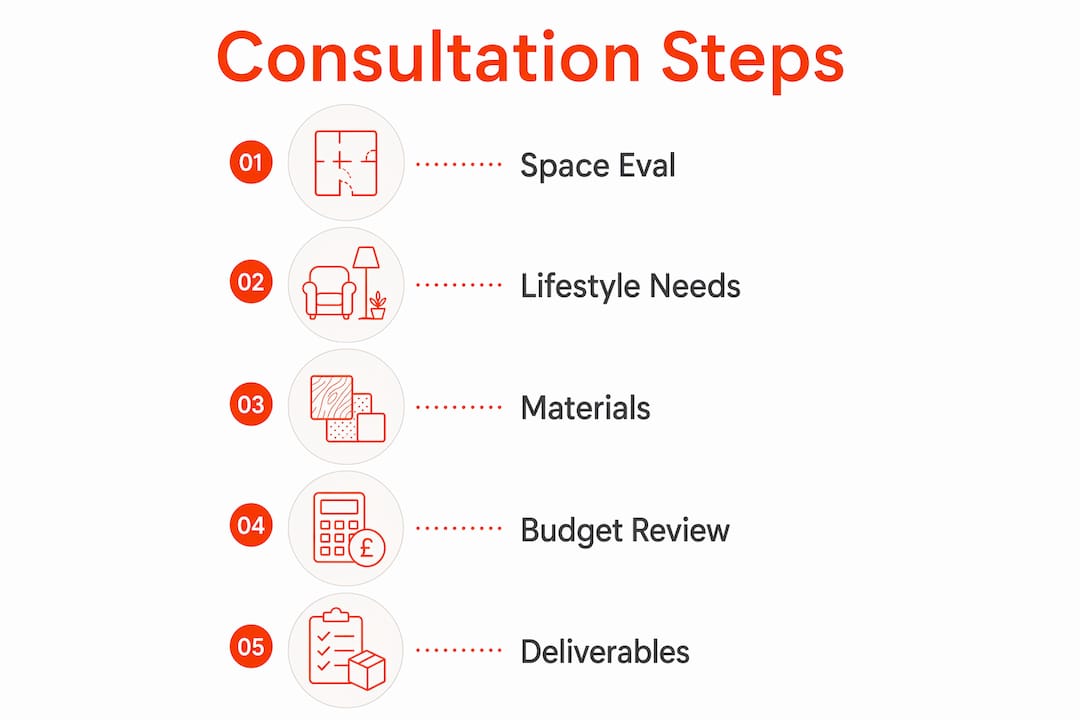
3. Materials, finishes, and style preferences
This is where aesthetic direction is set. Shaker-style doors in a painted finish suit period properties in Barnes and Richmond. High-gloss or wood-effect panels work well in contemporary flats in Fulham or Hammersmith. The consultant reviews samples, discusses how different materials complement existing décor, and advises on durability for the intended use.
4. Budget and timeline review
Consultations typically last 60 to 90 minutes and produce a budget framework alongside a preliminary schedule. Knowing your budget ceiling early allows the consultant to prioritise where to invest, for example in quality drawer mechanisms and soft-close hinges, and where to make practical savings without compromising the result.
5. Deliverables: design brief, floor plan, and next steps
The session closes with agreed outputs. These typically include a written design brief, a scaled floor plan or sketch, a materials shortlist, and a confirmed next step, whether that is a formal proposal, a site visit, or a quotation. A consultation allocates structured time across lifestyle discovery, aesthetic definition, space assessment, and budget review, ensuring nothing is overlooked.
Pro Tip: Bring photographs of your room from multiple angles, any existing architectural drawings, and a clear note of your maximum budget before the consultation begins. Consultants who receive this information in advance produce more accurate proposals and spend session time on decisions rather than data gathering.
How does design consultation help avoid costly furniture mistakes?
The financial case for professional consultation is direct. Design consultants measure, create floor plans, and recommend layouts for comfort and flow, preventing mismatched finishes and impractical furniture. Without this guidance, homeowners frequently encounter problems that are expensive to fix.
Common mistakes made without a design consultation include:
- Ordering fitted wardrobes that are too deep for a narrow bedroom, blocking natural light or restricting movement
- Choosing a media wall finish that clashes with existing flooring or wall colours
- Installing shelving at heights that do not suit the household’s actual usage patterns
- Purchasing components in the wrong sequence, so later additions require earlier work to be undone
- Underestimating the complexity of loft or alcove spaces, resulting in gaps, uneven reveals, or structural conflicts
The comparison below illustrates the practical difference between a DIY planning approach and a professionally guided consultation.
| Planning approach | Typical outcome |
|---|---|
| DIY measurement and ordering | Dimensions based on approximate room size; risk of poor fit, wasted material, and rework costs |
| Professional design consultation | Precise measurements, sequenced decisions, and material cohesion from the outset |
| DIY finish selection | Finishes chosen in isolation, often clashing with flooring, lighting, or adjacent furniture |
| Consultation-led finish selection | Finishes reviewed against existing décor samples and room lighting conditions |
| DIY project sequencing | Components ordered as ideas develop, leading to substitutions and costly corrections |
| Consultation-led sequencing | Sequenced purchase plan produced upfront, directing what to buy first and where to invest |
Early design consultations reduce cost escalation by aligning goals, scope, and constraints before any money is spent on materials or labour. For a bespoke fitted wardrobe in Chelsea or a TV media wall in Wimbledon, where both space and budgets are significant, this upfront alignment is the most cost-effective decision a homeowner can make.
Bespoke vs standard furniture consultations: what is the difference?
The distinction between a bespoke furniture consultation and a standard furniture consultation is significant, and understanding it helps you choose the right level of service for your project.
A standard furniture consultation typically involves selecting from an existing range of sizes and finishes, with the consultant helping you identify the best fit from a catalogue. The decisions are constrained by what the manufacturer produces. This works well for straightforward rooms with regular dimensions and no unusual architectural features.
A bespoke furniture consultation starts from a blank page. The consultation is where client vision and budgets are discussed before design proposals, sketches, and construction begin. Every dimension, finish, internal fitting, and hardware choice is determined by the consultation outcomes rather than by a pre-existing product range. This is why the initial session carries so much weight in bespoke projects.
For homeowners with loft bedrooms in Chiswick or Ealing, alcove spaces in Victorian terraces in Fulham, or under-stair storage needs in Kingston, bespoke consultation is not optional. Standard ranges simply do not accommodate these spaces. The consultant must understand the structural constraints, the intended use, and the aesthetic goals before a single design line is drawn.
The sequencing in a bespoke project also differs. After the consultation, the process moves through a formal design proposal, client approval, detailed technical drawings, material procurement, and then build and installation. In bespoke projects, consultation outcomes define core dimensions, finishes, and functions, making later stages refinements rather than redesigns. If the consultation is thorough, every subsequent stage runs smoothly. If it is rushed or incomplete, problems compound at each step.
Pro Tip: Treat your bespoke furniture consultation as a requirements-definition session, not an aesthetic mood board exercise. Bring practical constraints to the table: the number of items to be stored, the height of the tallest household member, the direction the door opens, and any access restrictions for installation. These details shape the design far more than colour preferences alone.
You can explore the full flow from consultation through to build in this West London design process guide, which outlines each stage in practical terms for homeowners considering bespoke fitted solutions.
How to maximise your design consultation as a London homeowner
Preparation determines how much value you extract from a design consultation. The following steps apply whether you are planning a fitted wardrobe in Richmond, a TV media wall in Wimbledon, or a loft storage solution in Twickenham.
-
Define your goals before the session. Write down the three things the finished piece must achieve. For a fitted wardrobe, this might be: maximum hanging space, a dedicated shoe section, and a finish that matches existing bedroom furniture. Clear goals prevent scope creep and keep the consultation focused.
-
Bring photographs and measurements. Photograph the room from each corner and from the doorway. If you have architectural drawings or a floor plan, bring those too. Consultants who can see the space in advance arrive better prepared and ask more targeted questions.
-
State your budget clearly and early. Budget transparency allows the consultant to design within realistic parameters from the start. A great consultation shapes a project roadmap, influencing all subsequent furniture and material decisions for cohesion and function. That roadmap is only useful if it reflects what you can actually spend.
-
Prioritise function over aesthetics when trade-offs arise. A beautifully finished wardrobe that does not hold everything you own will frustrate you within weeks. Consultants in London, particularly those working on bespoke fitted wardrobes and media walls, are experienced at finding solutions that deliver both, but function must be the non-negotiable baseline.
-
Ask about the full project timeline. For homeowners in areas like Walton-on-Thames, Woking, or Guildford, installation logistics matter. Confirm how long the design and build process takes, when installation is scheduled, and what disruption to expect. At Finest Furniture Studio, fitting is completed within seven to twelve days, and we remove and dispose of any existing furniture as part of the service.
-
Select a provider with a proven bespoke track record. In London, the number of fitted furniture providers has grown considerably. Look for studios that offer a free design visit, a written guarantee of at least ten years, and a portfolio of completed projects in spaces similar to yours. Understanding personalised furniture design and how it differs from off-the-shelf solutions will help you ask better questions and evaluate proposals more confidently.
For homeowners in Chelsea, Fulham, or Barnes with period properties, also ask specifically about how the consultant handles non-standard wall angles, chimney breast alcoves, and listed building constraints. These are common in South West London and require experience to resolve well.
Key takeaways
A design consultation is the single most cost-effective step in any furniture project because it aligns space, budget, and function before any material is ordered or any work begins.
| Point | Details |
|---|---|
| Consultation defines the project | Space measurements, lifestyle needs, and budget are confirmed before design or build begins. |
| Bespoke projects depend on it | In bespoke furniture, consultation outcomes set all dimensions and finishes, making later stages refinements not redesigns. |
| It prevents costly mistakes | Sequenced decision planning avoids wrong sizing, finish mismatches, and expensive rework. |
| Preparation increases value | Bringing photos, measurements, and a clear budget to the session produces more accurate proposals. |
| London homeowners have specific needs | Loft spaces, alcoves, and period properties in areas like Richmond and Chelsea require bespoke consultation, not standard ranges. |
Why I believe the consultation is the most undervalued hour in any furniture project
By Aureliu
After working on bespoke wardrobe and media wall projects across Richmond, Wimbledon, Putney, and Kingston, the pattern I see most often is this: the homeowners who invest time in a thorough consultation end up with results they are genuinely proud of. The ones who skip it, or rush through it, almost always come back with a problem that costs more to fix than the consultation would have cost in the first place.
What surprises most clients is how much the consultation changes their own thinking. They arrive with a fixed idea, often based on something they have seen online, and leave with a solution that is actually suited to their home, their habits, and their budget. That shift happens because a good consultant asks questions that the homeowner has not thought to ask themselves.
My honest view is that homeowners undervalue the consultation because it does not feel like progress. Nothing is built. Nothing is delivered. But two hours of expert consultation early in the project provides immense value by saving expensive mistakes down the line. The consultation is where the project is either set up to succeed or quietly set up to disappoint.
For anyone considering a fitted wardrobe, a TV media wall, or a loft storage solution in London, my advice is straightforward: treat the consultation as the most important meeting in the entire project. Prepare for it as you would for any significant decision. The quality of that conversation determines the quality of everything that follows.
— Aureliu
How Finest Furniture Studio can help with your bespoke furniture project
At Finest Furniture Studio, our design consultation process is built around your space, not a product catalogue. We serve homeowners across Richmond, Wimbledon, Chelsea, Kingston, Putney, Chiswick, Fulham, Ealing, Twickenham, Barnes, and Hammersmith, as well as New Malden, Walton-on-Thames, Woking, Guildford, and Reading.
Every project begins with a free design visit, where we assess your space, discuss your goals, and provide a clear proposal with no obligation. Our bespoke fitted wardrobes, TV media walls, and loft storage solutions are built to your exact specifications, installed within seven to twelve days, and backed by a ten-year quality guarantee. We also remove and dispose of your existing furniture as part of the service. Explore our bespoke fitted wardrobes in Richmond or our bespoke media wall designs to see what a properly consulted project looks like in practice. Call us on 07468 150807 or WhatsApp, or visit us at 124 City Road, Kemp House, London, EC1V 2NX.
FAQ
What is a consultation in furniture design?
A furniture design consultation is a structured session where a specialist assesses your space, lifestyle needs, and budget to produce a clear design direction before any build begins. It typically covers measurements, material preferences, and a sequenced project plan.
How long does a furniture design consultation take?
Most furniture design consultations last between 60 and 90 minutes, covering space evaluation, style preferences, budget review, and next steps. Bespoke projects may require a follow-up session once initial proposals are reviewed.
Why is design consultation important for bespoke wardrobes?
Bespoke wardrobes are made entirely to order, so every dimension and finish is decided at the consultation stage. A thorough consultation prevents costly errors because there is no standard product to fall back on if the brief is incomplete.
Can a design consultation save money on a furniture project?
Yes. Pre-design advisory services reduce cost escalation by aligning goals and constraints before materials are ordered. Homeowners who skip consultation frequently face rework costs that exceed the consultation fee many times over.
How do I prepare for a furniture design consultation?
Bring photographs of the room from multiple angles, any existing floor plans, a list of your functional priorities, and a clear budget range. The more specific the information you provide, the more accurate and useful the resulting design proposal will be.

