
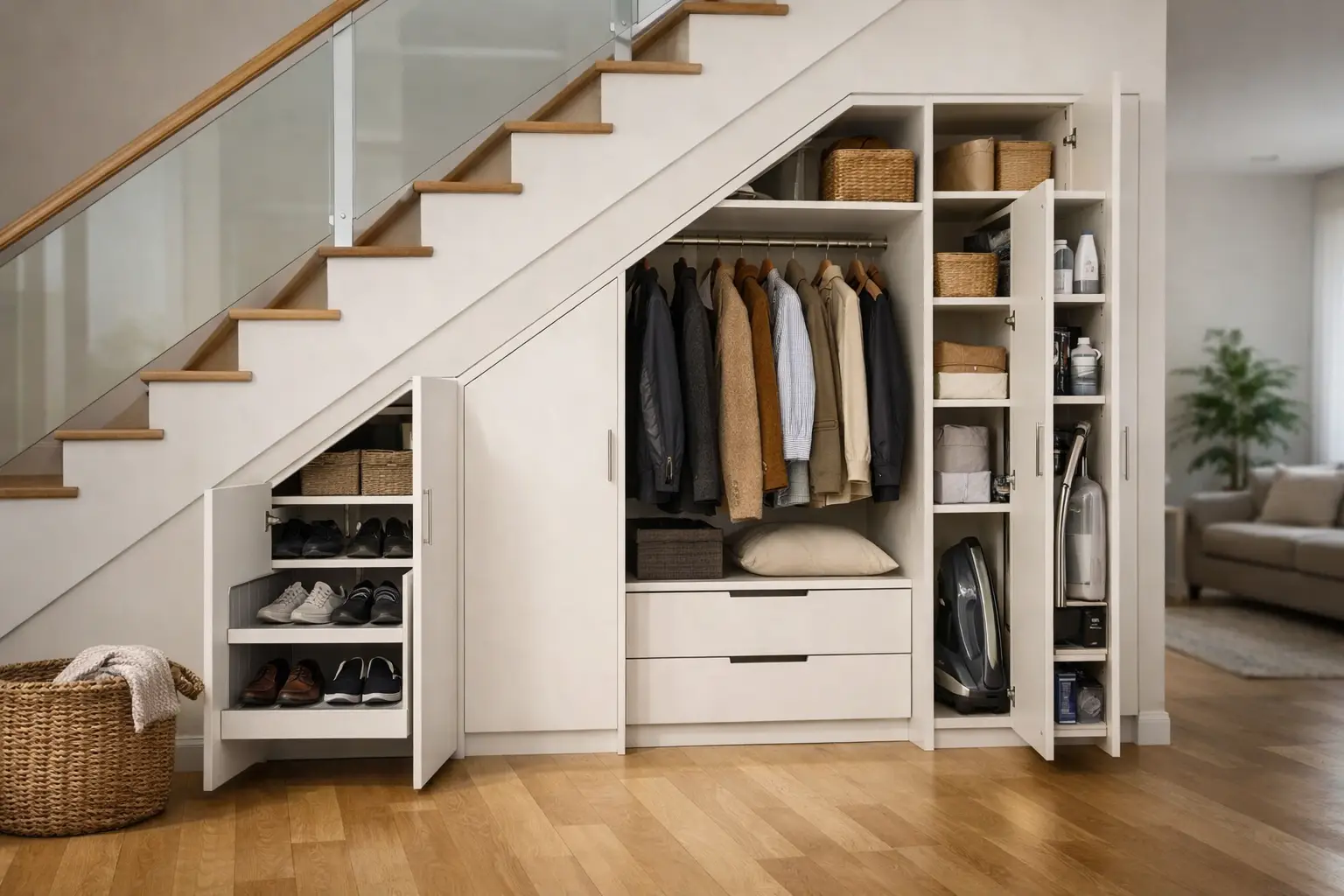
That triangular void beneath the stairs often becomes a holding zone for everything you do not want on show – shoes, bags, cleaning supplies, children’s bits, pet gear and the occasional suitcase that never quite finds a proper home. A well-planned understairs storage design guide starts by treating that space not as leftover square footage, but as one of the most valuable opportunities in the house. When it is designed properly, it can calm visual clutter, improve daily routines and add a fitted, architectural quality that freestanding pieces rarely achieve.
The reason understairs storage works so well is simple: it turns an awkward shape into purposeful storage exactly where household traffic is busiest. Hallways, entrances and transitional living areas tend to attract clutter because they serve several functions at once. Coats need to be dropped, shoes need to be stored, chargers need to be tucked away and cleaning items need to stay accessible without being on display. Bespoke fitted furniture gives that space a job, and just as importantly, gives it a finish that feels intentional.
Why an understairs storage design guide matters
The biggest mistake homeowners make is assuming any cupboard under the stairs will do. In reality, the most successful designs depend on how you live. A family with school-age children needs something very different from a couple renovating a period property, and both need something different from someone using the space beside an open-plan kitchen.
Good design balances three things: access, capacity and appearance. If the storage is deep but frustrating to reach, it will not stay organised. If it is practical but visually heavy, it can make a hallway feel smaller. If it looks beautiful but does not suit your routine, it quickly becomes expensive decoration. The right solution sits neatly in the middle.
This is where bespoke design earns its value. Rather than forcing standard units into an irregular space, made-to-measure joinery follows the exact pitch of the staircase, works around skirting, pipes and electrics, and uses every usable inch without the finished result feeling cramped.
Start with how you want the space to work
Before choosing finishes or door styles, think about what needs to live there every day. In most homes, understairs storage performs best when it is organised by routine rather than by category. That means the items you reach for on the way out should be easiest to access, while occasional-use items can sit deeper in the unit.
For some households, that leads naturally to pull-out drawers for shoes and bags. For others, a combination of full-height cupboards and smaller compartments is more useful. If your stairs sit beside a sitting room, you may want concealed storage for household essentials, toys or even media accessories. If the space is near the front door, the design may need to function more like a fitted boot room.
There is no single best layout. It depends on whether you need quick grab-and-go storage, hidden general storage, display shelving, or a mixture of all three. That is why the planning stage matters more than many people expect.
The best understairs storage layouts
Pull-out units are one of the smartest options for deeper cavities under the stairs. They bring the contents towards you, which means less wasted space at the back and far easier access. They are particularly effective for shoes, household supplies and bulky everyday items. The finish can be kept minimal so the joinery reads as part of the wall rather than a separate piece of furniture.
Hinged cupboard doors suit wider sections where there is enough room to open them comfortably. They are ideal for larger items such as vacuum cleaners, ironing boards or coats. If you want a cleaner exterior, handleless or discreetly recessed hardware can help the design feel calm and integrated.
Drawers work well at the lower end of the staircase where headroom reduces. They are practical, tidy and easy to divide internally. A run of drawers can look especially elegant in a hallway, giving the space the feel of bespoke cabinetry rather than utility storage.
Open shelving can be attractive, but it needs discipline. In a styled interior, shelves beneath the stairs can display books, ceramics or baskets beautifully. In a busy family home, however, fully open storage often exposes clutter faster than it solves it. A mixed approach is usually more forgiving – perhaps open shelving in one section and closed storage in another.
If the available footprint is generous, understairs storage can also include a small bench, a coat section or even a compact home bar. These ideas look impressive, but only if they are proportioned carefully. Squeezing too many functions into one area can make the design feel busy rather than bespoke.
Design details that change the result
Once the layout is right, the detailing determines whether the storage feels premium. This is often where fitted furniture sets itself apart.
Door style has a major effect on the overall look. Shaker fronts can soften a traditional or transitional interior, while slab doors feel cleaner and more contemporary. If the understairs area sits within a period home, subtle panelling can make the cabinetry feel as though it has always belonged there. In a newer property, a simpler finish may suit the architecture better.
Colour also matters. Matching the cabinetry to the wall colour helps the storage recede, which can be useful in narrower hallways. A contrasting tone creates more presence and can turn the understairs area into a design feature. Darker colours can look rich and refined, but they tend to work best where there is good natural or artificial light. In tighter spaces, softer neutrals often keep the area feeling brighter.
Internal fittings deserve just as much attention as the exterior. Adjustable shelves, dividers, charging points and dedicated compartments all improve how the storage performs over time. What looks neat on day one stays neat much longer when there is a clear place for everything.
Lighting is sometimes overlooked, yet it can make a fitted understairs scheme feel far more considered. Integrated lighting inside cupboards or around shelving improves visibility and adds polish. It is not essential in every design, but in darker hallways it can be a very worthwhile addition.
Common planning mistakes to avoid
The most common issue is underestimating access. A storage unit may look generous on paper, but if the opening is too small or the angle too awkward, it will not be pleasant to use. Deep corners are particularly prone to becoming dead space unless they are designed with pull-outs or other access solutions.
Another mistake is designing for maximum capacity without considering daily flow. Hallways need room to breathe. If cabinetry projects too far or doors open into circulation space, the area can feel more cramped than before. Good fitted design improves movement through the home, not just storage volume.
It is also worth thinking ahead. If you expect family routines to change, or if you are renovating with resale in mind, flexible storage tends to age better than highly specific compartments. Bespoke does not need to mean rigid. The best designs feel tailored now but still useful in five or ten years.
Is bespoke worth it for understairs storage?
For an irregular architectural space, bespoke is often the most effective route because standard furniture rarely handles the angles well. Gaps, wasted corners and awkward proportions can make off-the-shelf pieces feel like a compromise. By contrast, made-to-measure cabinetry follows the line of the staircase precisely and gives the space a finished, integrated appearance.
There is, of course, a budget conversation to have. Bespoke storage costs more upfront than a basic cupboard conversion or freestanding alternatives. But it also tends to deliver more usable storage, a stronger visual result and better longevity. For homeowners improving a long-term home, that balance often makes sense.
This is especially true in London and South West London homes where every inch matters. In compact properties, awkward areas need to work harder. Turning the void under the stairs into elegant fitted storage can make the whole ground floor feel calmer and better organised.
How to approach your own understairs storage design guide
If you are planning a project, start by being honest about what currently collects under the stairs and what you wish happened there instead. That gap between reality and ideal use usually reveals the right design direction. Measure the space carefully, note any obstacles and think about how the area connects to the surrounding room.
Then focus on the outcome rather than just the furniture. Do you want the hallway to feel tidier? Do you want children to be able to put their own things away? Do you need hidden storage that still looks elegant when guests arrive? Those answers shape a better design than chasing a trend.
At Finest Furniture Studio, bespoke understairs solutions are approached in exactly that way – around the home, the routine and the finish you want to live with every day. Because when fitted storage is done properly, it does more than hide clutter. It makes the house feel more settled, more beautiful and much easier to enjoy.
The best understairs design does not shout for attention. It quietly improves the way your home works, every single day.

