
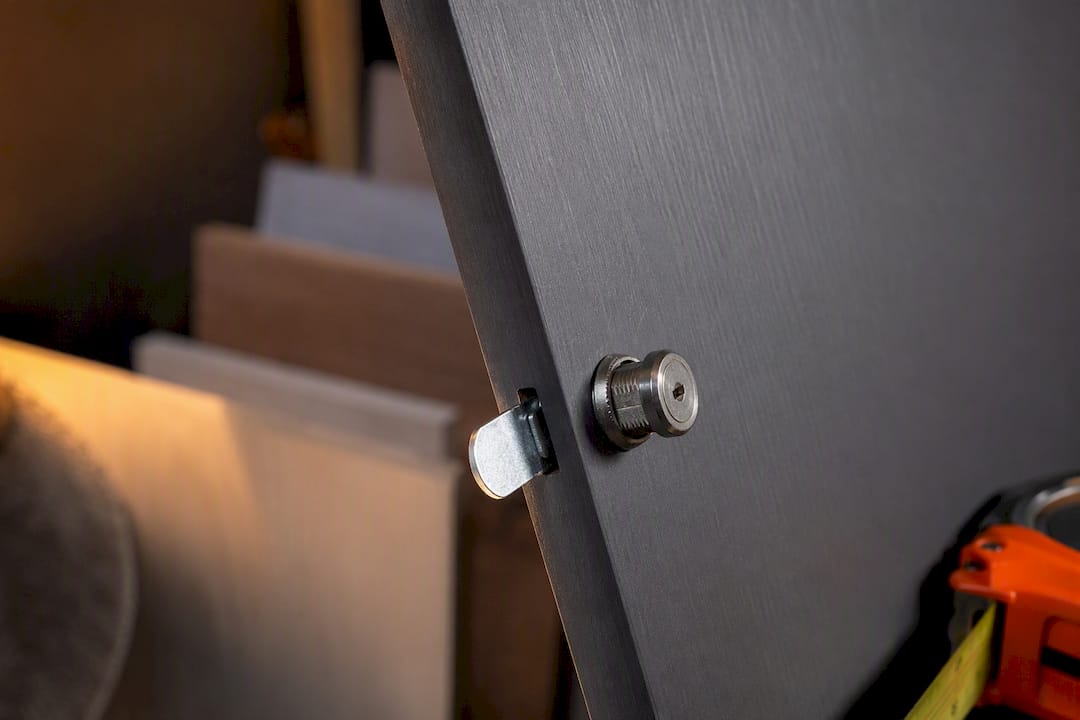
For most UK homes, an affordable keyed cam or cupboard lock, or a surface-mounted rim lock, gives the best balance of cost and easy fitting. Choose a small digital cabinet lock only if you need keyless access for shared or changing users. Either way, check the door thickness and cam length before you buy, then work through the short comparison below to confirm fit and price against your wardrobe.
TL;DR:
- Keyed cam locks are the most cost-effective option for typical UK wardrobes, but fit depends on matching the cam length to door thickness.
- Surface-mounted rim locks are easy to install without drilling, suitable for thin or veneered doors, and can be DIY fitted with screws.
- Built-in mortice locks offer higher tamper resistance but require precise recess cuts and are better suited to bespoke wardrobes planned during manufacturing.
- Electronic locks are convenient for shared access but need careful measurement of cam length, internal clearance, and a mechanical override for reliability.
- Choosing a lock certified for security is essential if the lock will hold valuables or meet insurer requirements, especially for bespoke furniture.
Table of Contents
- Which wardrobe door lock should you buy?
- Types of wardrobe and cabinet locks and when to use them
- How do you choose and fit the right wardrobe lock?
- Where can you buy replacement wardrobe locks in the UK?
- Why lock choice changes once a wardrobe is bespoke
- Want locks built in from the start, not bolted on after?
- Sources
- FAQ
Which wardrobe door lock should you buy?
The right choice depends on how your door is built, not just how much security you want. A hinged chipboard wardrobe door takes a different lock to a slim sliding panel, and getting that wrong is the single most common mistake buyers make.
The table below sets out the realistic options for UK wardrobes and cupboards, from the cheapest keyed cam lock to a digital push-button unit.
| Lock type | Best for | Price band | Installation difficulty | Security / tamper resistance | Fit and compatibility notes |
|---|---|---|---|---|---|
| Cam / cupboard locks (retail range) | Basic home storage, low-cost retrofit | £ | Easy (drill one hole) | Low to moderate | 20–52mm cam lengths; check door thickness matches cam length |
| Rim / surface-mounted cupboard locks | Retrofit where cutting a mortice is impractical | £ | Easy (screw-fixed) | Low to moderate | Works on thin or veneered doors; no internal cutting needed |
| Mortice / concealed furniture locks | Bespoke wardrobes fitted at the design stage | ££ | Difficult (needs joiner) | Moderate to high | Requires precise chiselled recess; best planned before manufacture |
| Codelocks electronic push-button cam lock | Shared storage needing keyless entry | ££ | Moderate | Moderate | Battery-powered; confirm cam length and mechanical override |
| Codelocks mechanical combination locker lock | Lockers and cabinets with fixed users | ££ | Moderate | Moderate | Small cam; no batteries, but codes must be managed manually |
| Adhesive child-safety locks | Households with toddlers, temporary use | £ | Very easy | Low | Not a security lock; won’t resist a determined adult |
A few UK retailers carry these across the board. Amazon.co.uk has the widest spread of cheap cam locks and rim locks, useful when you want to compare several cam lengths at once. IronmongeryDirect and Hafele stock trade-grade cabinet locks with clearer size specifications, which matters if your door is an unusual thickness. Screwfix is the quickest option when you need a lock the same day, and Celtic Woods offers UK-made cupboard locks aimed specifically at joinery projects.
Types of wardrobe and cabinet locks and when to use them
UK ironmongery guides list a wide range of lock families, from cylinder and lever locks through to rim locks, cabinet locks and digital push-button units. For a wardrobe, only a handful of these are actually practical.
Cam and cupboard locks are the default. Most retail models run from 20mm up to 52mm in cam length, and a 52mm surface-mounted lock such as the CEN047 style is a common example of the size most home wardrobes and cupboards need. They fit through a single drilled hole and cost very little, which is why they dominate the budget end of the market.
Rim or surface-mounted locks skip the hole altogether. They’re screwed straight onto the door face, which makes them the go-to for thin or veneered doors where drilling risks splitting the panel. This is a genuinely DIY-friendly route: for retrofit projects, surface-mounted rim locks are usually installed with just a few screws, while a built-in or smart lock demands more precise cutting and takes longer.

Mortice and concealed furniture locks sit inside the door itself, hidden from view. They suit bespoke wardrobes where the lock is planned before the carcass is built, since retrofitting a mortice into an existing fitted door usually means unpicking joinery that was never designed for it.
Padlocks and hasps still turn up on older wardrobes and sheds-turned-storage, but they’re bulky and rarely appropriate for a bedroom.
Digital, PIN and RFID cabinet locks solve a different problem: shared or changing users. Mechanical locker locks are cheaper and suit one fixed user, while electronic locks suit shared use but demand a compatibility check on cut-out size and internal clearance before you order.
Adhesive child-safety locks are the odd one out. They stop a toddler opening a door; they won’t stop an adult, and shouldn’t be mistaken for security hardware.
- Cam and rim locks resist casual opening but not a determined attempt with tools.
- Mortice locks, properly fitted, resist tampering better because the mechanism isn’t exposed.
- Digital locks add convenience, not necessarily strength, unless paired with a certified mechanical core.
Pro Tip: If you’re locking away anything an insurer would ask about, check whether the lock carries a recognised certification rather than relying on the word “secure” in the listing description.
How do you choose and fit the right wardrobe lock?
Getting the measurements wrong is the single biggest reason a lock arrives and doesn’t fit. Before ordering anything, measure four things: door thickness, the diameter of any existing lock hole, the cam length you’ll need, and which way the cam needs to rotate to catch the frame.
Sliding wardrobe doors behave differently to hinged ones. A cam lock designed for a hinged door often has nowhere sensible to catch on a sliding track, so check whether your sliding door setup needs a specialist fitting rather than an off-the-shelf cam lock. Mortice-style locks, meanwhile, almost always need a rebate cut into the door edge, which is a job for a joiner rather than a Saturday-afternoon DIY project.
Installation difficulty splits roughly into two camps. Surface-mounted rim locks and standard cam locks are genuinely DIY-friendly; a drill, a screwdriver, and twenty minutes will usually do it. Mortice locks and anything requiring a chiselled recess are best left to a locksmith or joiner, particularly on a bespoke or veneered wardrobe where a slip with a chisel can’t be undone.
Three mistakes come up again and again:
- Ordering the wrong cam length, so the bolt either doesn’t reach the frame or fouls the door when closing.
- Fitting a battery-powered lock with no mechanical override, which locksmiths warn creates a failure risk if the battery dies or the electronics fault.
- Assuming any lock satisfies an insurer’s security requirements, when only certified mechanical cores are typically recognised.
Installation checklist:
- Measure door thickness at the point the lock will sit.
- Confirm the cam length matches that thickness with enough clearance to rotate freely.
- Check the cam rotates the correct direction to catch the frame or adjacent panel.
- Note the internal clearance behind the door for the lock body and, on digital models, the keypad footprint.
- Decide whether the fixing is a drilled hole (cam lock) or screw-fixed face plate (rim lock).
- If choosing electronic, confirm there’s a mechanical override before you buy.
- Book a locksmith or joiner if the job involves cutting a mortice recess.
Pro Tip: Take a photo of your door edge next to a tape measure before you order online. It sounds basic, but it settles cam-length disputes with a seller far faster than a phone call.
Where can you buy replacement wardrobe locks in the UK?
Different retailers suit different jobs. Amazon gives you the widest selection and the fastest price comparison, which is ideal when you just need a standard cam lock delivered quickly. IronmongeryDirect and Hafele carry more specialist and trade-grade sizes, useful when a standard 30mm or 40mm cam doesn’t fit and you need something less common. Trade suppliers like IronmongeryDirect and Hafele focus on specialised cabinet hardware, while Screwfix is better suited to a same-day trade purchase of a common keyed lock.
- Amazon.co.uk: broadest range, easiest price comparison for standard cam and rim locks.
- IronmongeryDirect and Hafele: specialist sizes and trade-grade cabinet hardware.
- Screwfix: quick trade buys, common keyed cam locks in stock locally.
- Celtic Woods: UK-made cupboard locks aimed at joinery and furniture trades.
If you’ve lost a key or need several wardrobes keyed alike, most suppliers can quote against the key number stamped on the lock or barrel, and a locksmith can rekey a barrel where the original number has worn off. For anything insurance-related, buying from a trade supplier and having it professionally fitted is usually worth the extra cost over a purely retail purchase.
Why lock choice changes once a wardrobe is bespoke

Retrofitting a lock onto an existing door is always a compromise. You’re working around hinges, panel thickness and whatever hole pattern the door already has. When a wardrobe is built from scratch, the lock gets designed in from the start: concealed within the door, properly supported by the carcass, and finished so it doesn’t interrupt the joinery.
We build that consideration into every fitted wardrobe we design, which is why we’d rather have the conversation about security before the wardrobe is manufactured than after. A homeowner planning a new fitted wardrobe, particularly for a glass door or an unusual door style, should raise locking needs at the design visit rather than treating it as an afterthought.
— Aureliu
Want locks built in from the start, not bolted on after?
There are other routes to a secure wardrobe: buy a cam lock online and fit it yourself, or call a locksmith to retrofit a rim lock onto an existing door. Both work. But if you’re commissioning a new wardrobe anyway, Finest Furniture Studio designs the lock into the door at the planning stage, so there’s no drilled hole to hide and no compromise on cam length because the carcass was built around it.

We offer a free design visit to assess your space and talk through locking options, whether that’s a concealed mechanical lock or a discreet digital pad. Installation is typically completed within seven to twelve days, and every fitted wardrobe carries a 10 year guarantee, well beyond what most retrofit hardware offers. We’ll also take away and dispose of the old the wardrobe, so there’s nothing left for you to deal with. If you’re in Richmond, Wimbledon, Kingston, Chiswick or elsewhere across West and Central London, get in touch on 07468 150807 or WhatsApp for a free consultation, or explore our bespoke wardrobe options for West London to see what a fully integrated design could look like for your bedroom.
Sources
- Door Controls Direct — 120 types of door locks: a comprehensive guide to UK locks
- Total Locker Service — Mechanical vs electronic locker locks (UK)
- LocksmithLocal — Smart locks vs traditional locks: an honest UK guide
FAQ
Which lock is best for a wardrobe?
For most home wardrobes, a keyed cam lock or a 52mm surface-mounted cupboard lock offers the best balance of cost and ease of fit. Choose a digital cabinet lock only if several people need access without sharing a key.
How do you lock a wardrobe door?
Fit a cam lock through a drilled hole or a rim lock screwed to the door face, matching the cam length to your door thickness. Sliding doors and bespoke joinery may need a specialist mortice fitting instead.
Where can you find replacement cupboard locks?
Amazon.co.uk offers the widest retail selection, while IronmongeryDirect, Hafele and Screwfix stock trade-grade sizes for less common door thicknesses. Celtic Woods supplies UK-made cupboard locks aimed at joinery projects.
What are the different types of wardrobe locks?
The main categories are cam or cupboard locks, surface-mounted rim locks, concealed mortice locks, mechanical combination locker locks, and digital push-button or RFID cabinet locks. Adhesive child-safety catches exist too, but they’re not a security measure.
Is it better to fit a lock myself or have one built in?
A retrofit cam or rim lock is a straightforward DIY job on most doors. If you’re commissioning a new bespoke wardrobe, having the lock designed in from the start, as Finest Furniture Studio does, gives a more concealed and secure result than adding one afterwards.

