
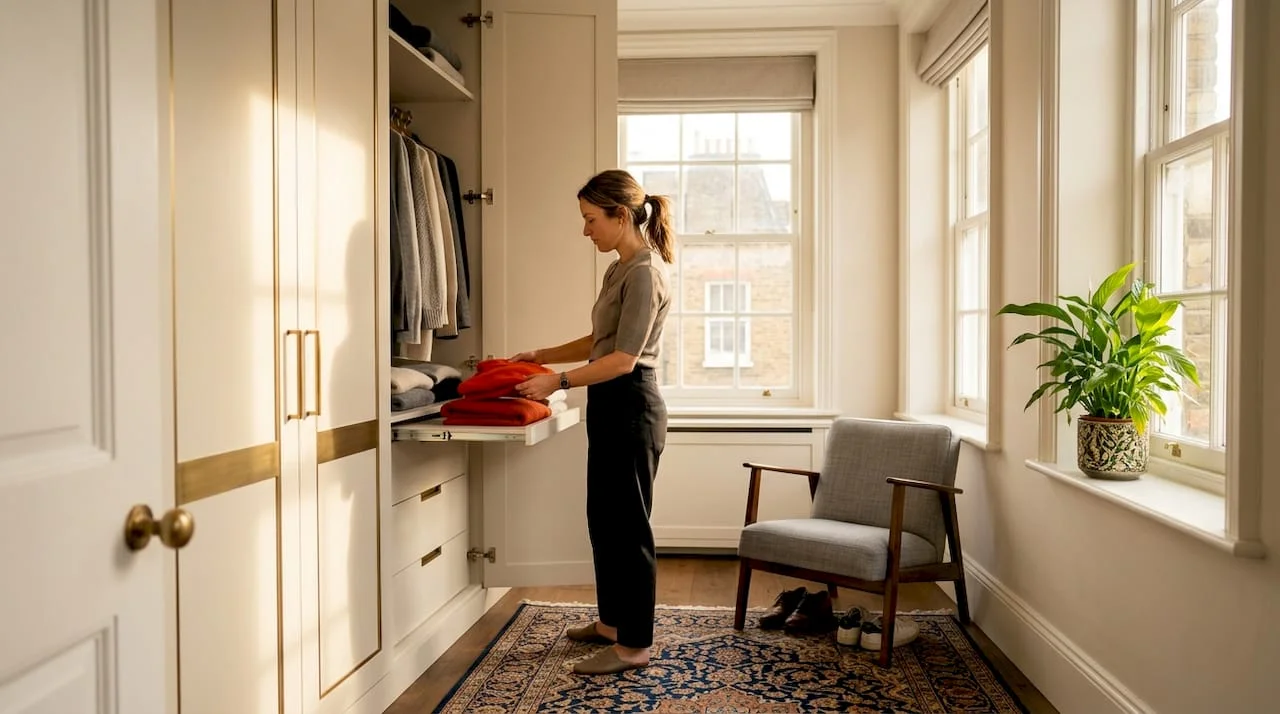
Most people assume a designer wardrobe is simply an expensive one with attractive doors. That misunderstanding leads to costly decisions and disappointing results. What defines designer wardrobes, in reality, is a precise combination of craftsmanship, material quality, personalised functionality, and architectural integration. For London homeowners navigating Victorian terraces, compact flats, and period conversions, the distinction matters enormously. A truly designer wardrobe does not just store your clothes. It shapes how your room feels, how your mornings flow, and how your home reflects who you are.
Table of Contents
- Understanding the core qualities of designer wardrobes
- The art of personalised storage and functionality
- Exploring built-in versus freestanding designer wardrobes
- Choosing materials and finishes that elevate designer wardrobes
- Integrating designer wardrobes into London homes: practical tips
- Rethinking designer wardrobes: a blend of identity and organisation
- Discover your perfect designer wardrobe with Finest Furniture Studio
- Frequently asked questions
Key Takeaways
| Point | Details |
|---|---|
| Balance of function and style | Designer wardrobes combine personalised storage solutions with aesthetic design tailored to your home. |
| Custom layouts matter | Adjustable shelves and drawers ensure your wardrobe fits your unique storage needs. |
| Material quality is vital | High-quality woods and finishes guarantee durability and elevate room appeal. |
| Integration saves space | Built-in wardrobes optimise awkward spaces and create a seamless look in compact rooms. |
| Expert design enhances lifestyle | A well-designed wardrobe improves daily routines and expresses your personal identity. |
Understanding the core qualities of designer wardrobes
To fully grasp what defines designer wardrobes, it is important to explore their core qualities in detail. These are not just aesthetic choices. They are deliberate decisions that affect how the wardrobe performs over years of daily use.
The foundation of any bespoke wardrobe solutions lies in material quality. Designer wardrobes are typically constructed from solid oak, walnut veneer, birch plywood, or high-grade MDF with premium lacquer finishes. These materials do not just look superior. They resist warping, absorb finish evenly, and hold fixings securely over time. A wardrobe built from solid oak will outlast a flat-pack alternative by decades, and you will feel the difference every time you open a door.
As The Independent notes, “the best wardrobes complete your bedroom set-up, offering a smart and stylish storage solution.” That combination of smart and stylish is exactly what separates designer pieces from standard retail offerings.
The key qualities that define designer wardrobes include:
- Precision joinery and hand-finished edges that eliminate visible gaps or rough surfaces
- Customisable internal layouts including adjustable shelving, pull-out drawers, and tiered hanging rails
- Architectural integration where the wardrobe is designed to work with the room’s ceiling height, alcoves, and skirting boards
- Consistent finish quality across all surfaces, including interiors that are as refined as the exterior façade
- Hardware that performs such as soft-close hinges, push-to-open mechanisms, and smooth drawer runners
These designer wardrobe characteristics are what separate a genuinely considered piece from something that merely looks good in a showroom photograph.
The art of personalised storage and functionality
Having identified the fundamental qualities, the next focus is on how designer wardrobes deliver truly personalised and functional storage. A wardrobe that holds your clothes efficiently but forces you to hunt for things every morning has failed at its primary job.
The process of designing functional, personalised storage follows a clear progression:
- Audit your wardrobe contents first. Before any designer begins planning, you need to know how many full-length garments you own, how many folded items, and where accessories like shoes, bags, and jewellery currently live without a proper home.
- Map hanging zones by garment length. Short hanging for shirts and jackets, long hanging for dresses and coats. Mixing these zones without thought wastes significant vertical space.
- Incorporate adjustable shelving. Your storage needs will change. Adjustable rails and shelf pins allow you to reconfigure without replacing.
- Plan for lighting from the start. LED strip lighting inside a wardrobe is not a luxury add-on. It makes colour-matching clothes easier and ensures nothing gets lost in a dark corner.
- Consider a dedicated accessories zone. Pull-out velvet-lined drawers for jewellery, angled shoe shelving, and open cubby sections for bags transform a storage unit into a personal boutique.
A well-designed closet “achieves a balance between functionality and visual elegance, ensuring every item has a dedicated place while maintaining a clean look.” This is precisely the standard that custom wardrobe designs should aim for, particularly in London homes where space is precious.
Pro Tip: If your bedroom is under 10 square metres, prioritise vertical storage. A floor-to-ceiling wardrobe with varied internal zones creates significantly more usable capacity than a standard-height unit with wasted space above.
Exploring built-in versus freestanding designer wardrobes
To contextualise these storage solutions, it helps to compare the two primary wardrobe types available to homeowners. Both can be designer-quality. The right choice depends on your property, your plans, and how permanently you want to commit.
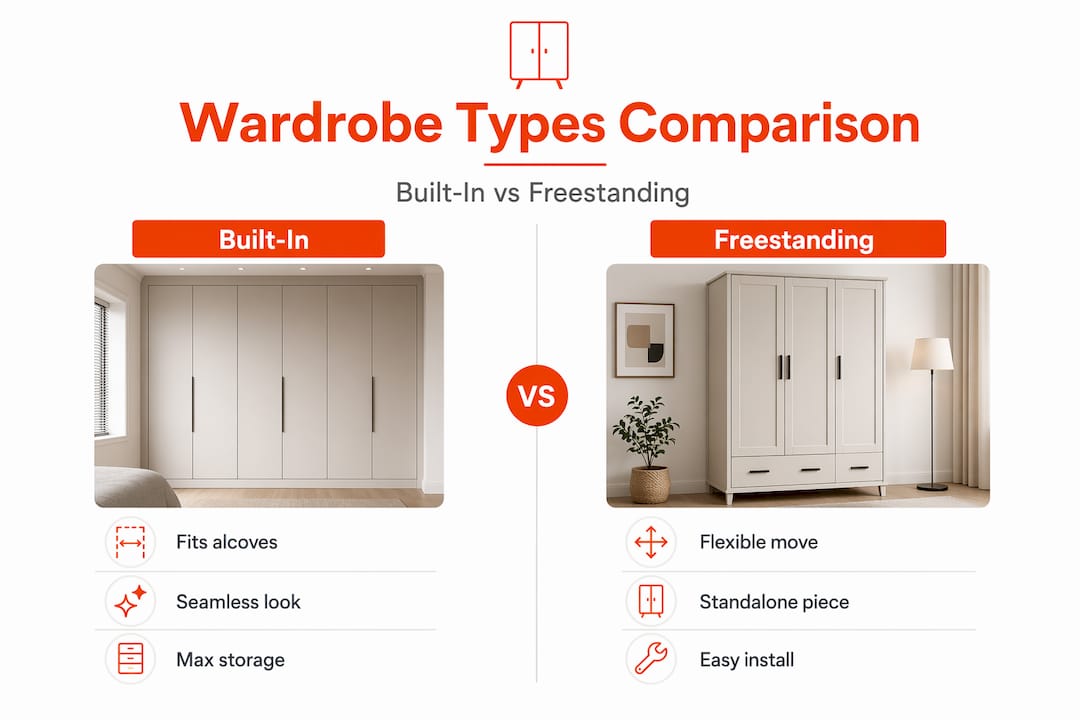
| Feature | Built-in wardrobes | Freestanding wardrobes |
|---|---|---|
| Space efficiency | Maximises every inch, including awkward alcoves | Fixed footprint, limited by unit dimensions |
| Installation | Requires professional fitting | Can be self-assembled or delivered ready-built |
| Flexibility | Permanent, increases property value | Portable, moves with you if you relocate |
| Aesthetic | Fully integrated with room architecture | Standalone piece, easier to restyle |
| Cost | Typically higher upfront | Variable, often lower for off-the-shelf options |
| Customisation | Fully bespoke internally and externally | Limited to manufacturer configurations |
Built-in wardrobes are especially well-suited to London homes because they accommodate the architectural quirks that are common in period properties. Sloped ceilings, chimney breast alcoves, and irregular wall angles are challenges that a bespoke built-in can absorb gracefully. As one design resource notes, “built-in wardrobes utilise every inch of space efficiently”, offering a permanent, clutter-free result.
Freestanding wardrobes have genuine advantages too, particularly for renters or homeowners who may move within a few years. A beautifully constructed freestanding wardrobe in solid walnut travels with you and retains its value.
Key considerations when choosing between the two:
- Sliding doors save floor space in rooms under 3 metres wide and are available in both built-in and freestanding configurations
- Hinged doors offer full access to the wardrobe interior at once, which some people strongly prefer
- Before committing to a built-in, consider wardrobe installation requirements and ensure the room and floor are in suitable condition
Pro Tip: If you are planning a built-in wardrobe in a London period property, check for uneven walls before ordering. A 20mm variance across a 3-metre wall is common and must be accounted for in the design brief.
Choosing materials and finishes that elevate designer wardrobes
Understanding material choices is crucial to achieving both aesthetic appeal and lasting quality in designer wardrobes. The finish you choose communicates the personality of the space as much as any other design decision.
The most respected materials and finishes in high-end wardrobe design include:
- Solid oak and walnut for a warm, natural grain that ages gracefully and accepts staining or oiling beautifully
- Walnut veneer on birch plywood offers the aesthetic of solid wood with greater dimensional stability at a more accessible price point
- High-gloss lacquer in white, charcoal, or deep navy for a contemporary, light-reflective finish that makes rooms feel larger
- Glass inserts and mirrored panels to add depth to the room and reduce visual weight from large wardrobe facades
- Leather-look finishes and fabric panels for a tactile, luxurious quality that feels distinct from standard painted MDF
Neutral tones continue to dominate designer wardrobe trends in 2026, particularly warm whites, greige, and deep earthy tones that work across a range of bedroom colour schemes. Handleless designs with push-to-open or integrated J-pull profiles create a cleaner silhouette that works well in both contemporary and period-influenced interiors.
Investment furniture demands first-rate materials and quality craftsmanship for lasting appeal. When you are selecting wardrobe materials and finishes, always request physical samples rather than relying on digital renders. Colours shift significantly between a screen and real light conditions in your bedroom.
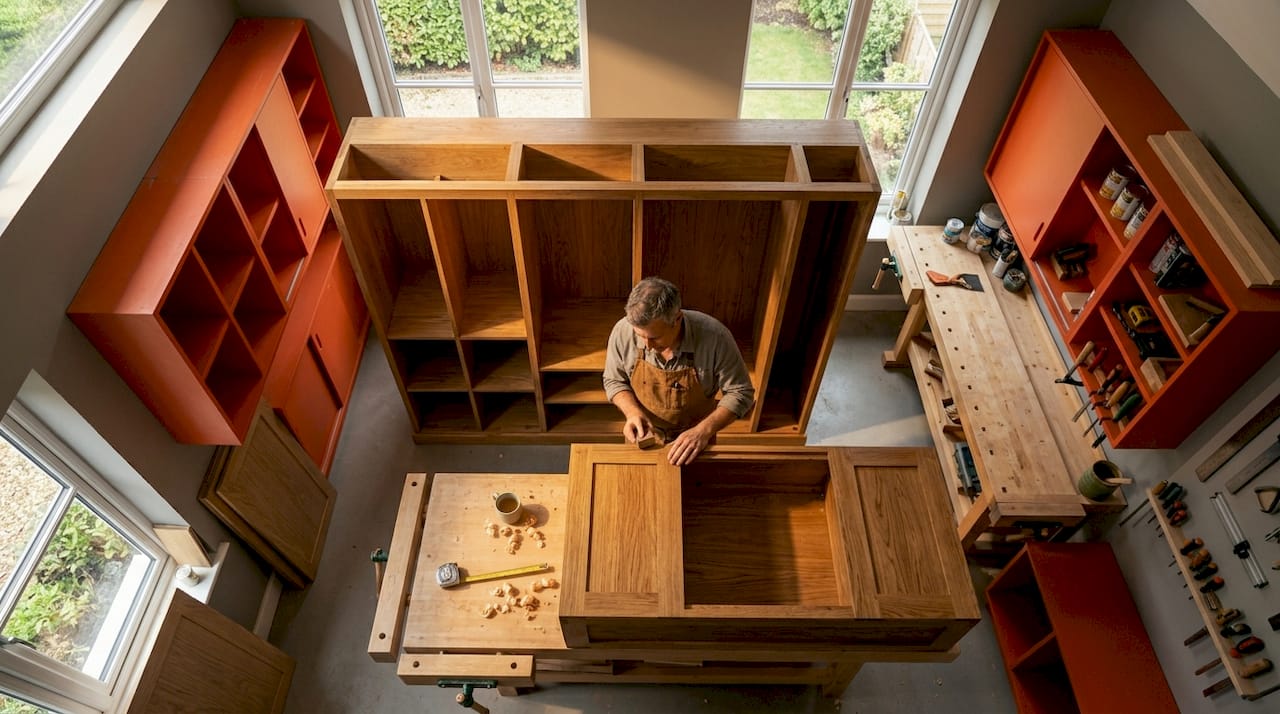
Durability matters as much as aesthetics. Lacquered finishes should be applied in multiple coats with sanding between layers. Veneer edges should be sealed properly to prevent peeling. These are the details that distinguish a genuinely designer piece from one that only appears to be.
Integrating designer wardrobes into London homes: practical tips
With the materials chosen, practical considerations become paramount to ensure your designer wardrobe fits your lifestyle and your property without complications.
Follow these steps for a successful integration:
- Measure the room three times, not once. Record floor-to-ceiling height at multiple points, width at floor level and cornice level, and note any radiators, light switches, or sockets that might affect positioning.
- Account for London’s older building stock. Victorian and Edwardian homes often have lath-and-plaster walls that require specialist fixings. Confirm wall construction before your designer finalises the structural approach.
- Plan your layout before installation day. Decide where lighting, power for charging units, and any internal accessories will sit so that cabling can be incorporated cleanly during the build.
- Maintain your wardrobe correctly. Wipe lacquered surfaces with a damp cloth, never abrasive cleaners. Oil solid wood annually to prevent drying. Check and tighten soft-close hinges every 18 months.
- Build in flexibility for future needs. Adjustable shelf positions and removable internal components mean your wardrobe can evolve as your wardrobe contents change.
As noted in independent testing, “assembly varies between ready-to-use and self-assembly wardrobes”, and delivery services with installation can significantly ease the process. For a bespoke fitted piece, professional installation is not optional. It is what ensures the wardrobe sits true, the doors align, and the finish remains intact.
Pro Tip: Ask your installer to leave 2mm clearance gaps at ceiling and wall junctions rather than caulking immediately. Allow the wardrobe to settle for a week before final sealing. This prevents cracking if there is any natural movement in older floors.
Explore wardrobe installation guidance to understand the full process before committing to a design.
Rethinking designer wardrobes: a blend of identity and organisation
There is something we rarely say directly to clients, and perhaps should say more often. A wardrobe is not just a storage system. It is one of the most intimate pieces of furniture in your home.
Consider what Nicoletta Santoro, the Milanese stylist who has worn exclusively Prada for over 30 years, has said about her own wardrobe. As Cultured Magazine reports, “her wardrobe is an archive reflecting personal evolution”, not merely a collection of functional or aesthetic items. That framing changes everything about how you should approach the design process.
When we work with clients on bespoke wardrobe projects, the ones who are most satisfied are not those who simply chose a finish they liked. They are the clients who thought carefully about how they dress, how they feel standing in front of a wardrobe in the morning, and what kind of space they want that moment to be. A wardrobe that is chaotic, overcrowded, or badly lit does not just create inconvenience. It affects how you begin your day.
The importance of designer wardrobes, viewed through this lens, extends well beyond property value or aesthetics. It is about creating a space that supports how you live. The ritual of choosing what to wear, of maintaining clothes well, of having a place where everything belongs, these are not trivial concerns. They quietly shape daily wellbeing.
We believe the best designer wardrobes are ones that their owners genuinely enjoy using, not just ones that photograph well. That distinction guides every consultation we undertake.
Discover your perfect designer wardrobe with Finest Furniture Studio
Having explored what makes a wardrobe truly designer, your next step is to work with people who build them to that standard every day.
At Finest Furniture Studio, we specialise in bespoke designer wardrobes London homeowners can rely on for quality, functionality, and lasting style. From the initial consultation through to professional installation, we manage every stage of the process. We use only premium materials, apply rigorous craftsmanship standards, and back every piece with a 10-year guarantee. Whether you are working with a compact London flat or a spacious family home, we design wardrobes that work precisely for your space, your storage needs, and your aesthetic vision. Contact us to arrange a consultation and see what a genuinely bespoke wardrobe can do for your home.
Frequently asked questions
What materials are commonly used in designer wardrobes?
Designer wardrobes typically use high-quality materials such as solid oak, walnut veneer, high-gloss lacquer, glass inserts, and leather-look finishes. As investment furniture requires, first-rate materials and quality craftsmanship are essential for lasting appeal.
How can I maximise space in a small London bedroom with a designer wardrobe?
Built-in wardrobes with sliding doors and custom internal layouts make efficient use of vertical and horizontal space in compact rooms. Built-ins utilise every inch, including awkward alcoves and irregular wall angles typical in London properties.
Are bespoke wardrobes worth the investment?
Yes. Bespoke wardrobes combine personalised storage, superior materials, and considered craftsmanship that elevates both home aesthetics and daily functionality for years. Custom closets represent a fusion of design, functionality, and innovation tailored to modern lifestyles.
What should I consider about wardrobe assembly?
Some wardrobes arrive ready-assembled, while others require professional installation to ensure alignment, structural integrity, and a quality finish. Assembly varies considerably between ready-to-use and fitted options, and professional installation is strongly recommended for bespoke pieces.

