

Client-led furniture design is a collaborative model where you supply the creative direction and a skilled maker refines it into a buildable, production-ready piece without altering your core vision. This approach sits at the heart of the custom furniture design process, and it is the standard industry term for what many homeowners simply call “bespoke” or “made-to-measure” design. Understanding what is client-led furniture design matters because it determines how much control you genuinely hold over dimensions, materials, finishes, and function. At Finest Furniture Studio, every fitted wardrobe, TV media wall, and loft storage solution we produce in London begins with exactly this principle: your ideas first, our craftsmanship second.
What is client-led furniture design and how does it work?
Client-led furniture design is defined as a process where client ideas drive direction and the maker’s role is to translate those ideas into stable, scalable, buildable designs. The client is not expected to produce technical drawings. Inspiration boards, photographs, rough sketches, and a clear sense of how a space needs to function are enough to begin.
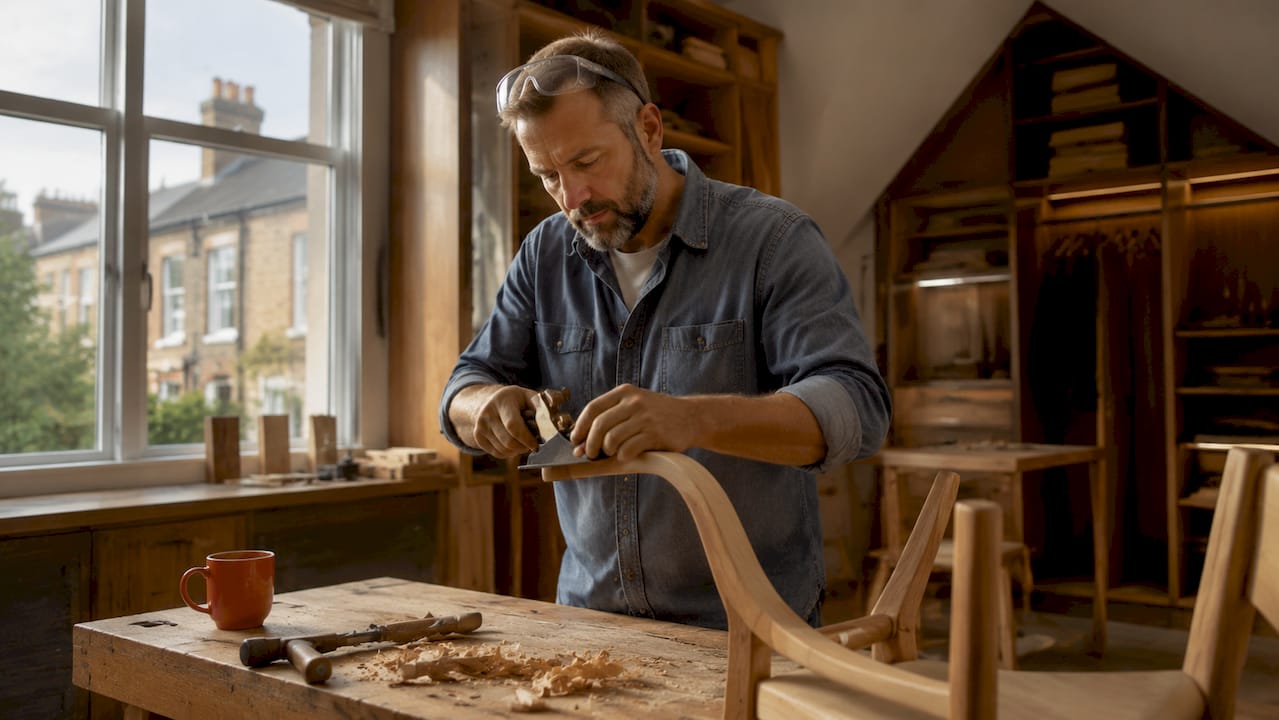
This model contrasts sharply with catalogue purchasing, where you choose from fixed sizes and finishes. In client-focused furniture design, there are no fixed catalogue sizes. A client might specify a dining table at 114 inches long in white oak with a ceruse finish and a blackened steel base, and the maker works to that exact brief. The same principle applies to a fitted wardrobe in a Wimbledon bedroom or a media wall in a Chelsea living room.
The distinction between client-led and traditional bespoke is subtle but worth understanding. Traditional bespoke often means a craftsperson interprets your brief with significant creative latitude. Client-led design keeps the creative authority firmly with you. The maker’s expertise is applied to engineering and production, not to reinterpreting your aesthetic choices.
How does the custom furniture design process work step by step?
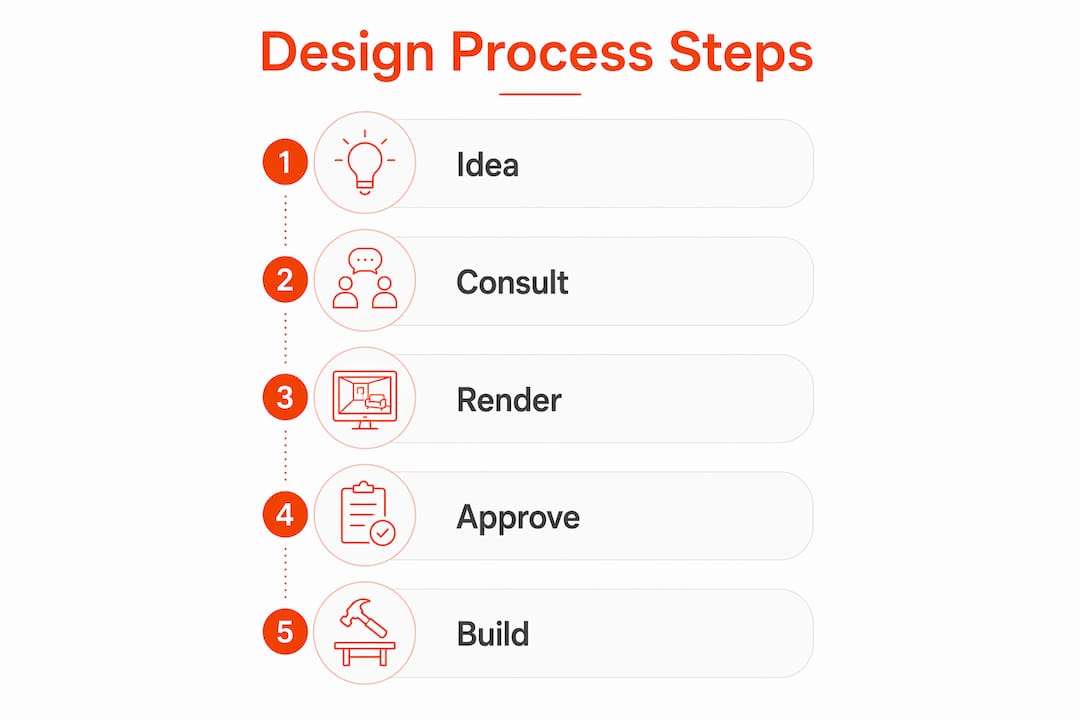
The custom furniture workflow follows a structured sequence that places client input at every decision point, not just at the start and end. Here is how the process typically unfolds:
-
Consultation. You discuss your needs, style preferences, and functional requirements with the maker. This is where you share inspiration images, describe how the space is used, and outline any constraints such as awkward angles, sloped ceilings in a loft conversion, or alcove dimensions.
-
Measurements. The maker visits your home and records precise dimensions of the space. For fitted wardrobes in properties across Richmond, Putney, or Ealing, this step is non-negotiable. Every millimetre matters when furniture is built to fill a specific wall or recess.
-
Concept sketches and 3D renderings. The maker converts your brief into visual concepts. Detailed 3D renderings are shared with you for review and refinement before any production begins. This stage is iterative. You approve, request changes, and approve again until the design matches your vision exactly.
-
Material and finish selection. You choose wood species, panel colours, handle styles, internal fittings, and surface finishes. This is where client-focused furniture design delivers its most visible advantage: every material decision is yours.
-
Production. Once you have given final approval, manufacturing begins. No production starts without your confirmed sign-off. This approval gate prevents costly errors and protects your investment.
-
Quality checks. Finished components are inspected before leaving the workshop. Prototype testing on complex pieces confirms structural stability and scale readiness before the full build proceeds.
-
Delivery and installation. The furniture is fitted in your home, typically within 7–12 days of production completion at Finest Furniture Studio. Old furniture is removed and disposed of as part of the service.
Pro Tip: Ask your maker to share a 3D rendering of your fitted wardrobe or media wall before approving production. Seeing the piece in context of your actual room dimensions reveals proportion issues that flat drawings miss entirely.
The iterative approval process is the most underappreciated part of this workflow. Sharing detailed renderings and refining them until both parties agree prevents the single most common source of dissatisfaction in bespoke furniture projects: a finished piece that does not match what the client imagined.
What roles do clients and makers each play?
The furniture design collaboration between client and maker works because each party contributes what the other cannot. Understanding this division makes the process far less intimidating for homeowners approaching it for the first time.
Your role as the client:
- Provide taste, style references, and inspiration images or moodboards
- Define functional needs clearly (hanging space, shelving ratios, drawer configurations, cable management for a media wall)
- Specify dimensions, preferred materials, and finish colours
- Engage actively with concept sketches and 3D renderings at each approval stage
- Communicate changes promptly to avoid production delays
The maker’s role:
- Translate your preferences into technically sound, producible designs
- Apply engineering knowledge to ensure structural integrity and long-term stability
- Conduct prototype testing to confirm scale readiness and compliance before full production
- Advise on material suitability, joinery methods, and finish durability
- Manage production timelines and installation logistics
Co-creation in interior design goes beyond aesthetics. It includes decisions about ergonomics, furniture distribution within a room, and contrast choices that affect how a space feels to live in daily. A maker who only asks about colour preferences is not practising genuine client-led design.
Pro Tip: Bring a list of functional requirements to your first consultation, not just aesthetic ones. “I need hanging space for 40 long dresses and a pull-out shoe rack for 30 pairs” is far more useful to a maker than “I want it to look elegant.”
The maker’s engineering input does not override your creative direction. Client taste and requirements remain the foundation throughout. The maker’s job is to make your vision buildable, not to substitute their own.
What are the benefits and challenges of client-led design?
The benefits of client-led design are concrete and measurable for homeowners. The challenges are real but manageable with the right maker and clear communication.
| Benefit | Challenge |
|---|---|
| Perfect fit for your exact space dimensions | Requires active participation throughout the process |
| Full control over materials, finishes, and internal fittings | Iterative approvals can extend the timeline |
| Furniture designed around your functional habits | Scope creep if requirements change mid-production |
| Higher satisfaction because the outcome matches your vision | Clear communication is essential to avoid misalignment |
| Awkward spaces (lofts, alcoves, under-stairs) are resolved, not avoided | Budget must account for bespoke pricing, not catalogue costs |
The functional optimisation benefit deserves particular attention. Involving clients early in decisions about ergonomics and furniture performance produces spaces that are genuinely comfortable to use, not just visually appealing. A fitted wardrobe in a loft conversion in Barnes or Hammersmith, for example, must account for sloped ceilings, restricted access, and specific storage habits. No catalogue product solves that combination. A client-led approach does.
The most common challenge is scope creep. This occurs when requirements expand after the design has been approved and production has begun. Changes at that stage are expensive and time-consuming. The solution is straightforward: invest time in the consultation and approval stages to define requirements completely before sign-off.
“The most successful bespoke furniture projects we see are the ones where the client arrives with a clear sense of how they live in the space, not just how they want it to look. Function and aesthetics are both non-negotiable in a well-designed fitted wardrobe or media wall.”
A second challenge is production feasibility. Some design ideas that look compelling in an inspiration image are difficult or impossible to reproduce in a specific material or at a specific scale. A good maker flags these issues early, proposes alternatives, and keeps your core vision intact. This is why prototype development is a critical translation step in any serious client-led project.
How can homeowners prepare for a client-led furniture project?
Preparation is the single factor that most reliably determines how smoothly a bespoke furniture project runs. Homeowners who arrive at their first consultation with clear inputs get better results, faster.
Here is what to gather and consider before your design consultation:
- Inspiration images. Collect 10–20 photographs from sources such as Houzz, Pinterest, or design magazines that reflect the style you want. You do not need to love every detail of each image. Identify what specifically appeals to you in each one.
- Functional requirements list. Write down exactly how you use the space. For a fitted wardrobe, note how many items need hanging, folding, or drawer storage. For a TV media wall, note cable routing needs, equipment dimensions, and whether you want integrated lighting or open shelving.
- Room dimensions. Measure the wall or space where the furniture will sit. Bring photographs of the room from multiple angles. Your maker will take precise measurements during the site visit, but having your own figures helps the initial conversation.
- Style preferences. Decide whether you lean towards shaker-style panels, modern gloss finishes, wood-effect textures, or painted finishes. Knowing your direction saves time during material selection.
- Budget range. Client inputs are most useful when they include budget parameters. A maker who knows your range can guide material and finish choices that deliver the best result within it.
Pro Tip: Do not wait until you have a fully formed design idea before contacting a maker. Booking a design consultation early means the maker can help you develop your brief, which often produces better outcomes than arriving with a fixed plan that may not suit the space.
Choosing the right maker is as important as preparing your brief. Look for a studio that shares detailed 3D renderings before production, offers a clear approval process, and has a portfolio of completed projects in spaces similar to yours. At Finest Furniture Studio, every project in areas such as Kingston, Fulham, Twickenham, and Chiswick follows this structured, client-involved process from the first visit to final installation.
For a detailed walkthrough of how this works in practice, the West London design process guide covers the full journey from consultation to completion.
Key takeaways
Client-led furniture design produces the best results when clients supply clear functional and aesthetic direction, and makers apply engineering expertise to translate that vision into a buildable, lasting piece.
| Point | Details |
|---|---|
| Client drives creative direction | You control dimensions, materials, finishes, and internal fittings throughout the process. |
| Makers engineer, not redesign | The maker’s role is to make your vision buildable, not to substitute their own aesthetic choices. |
| Iterative approvals prevent errors | Reviewing 3D renderings before production starts eliminates costly misalignments and rework. |
| Preparation accelerates the process | Arriving with inspiration images, functional requirements, and a budget range shortens the design phase significantly. |
| Awkward spaces are the strongest use case | Loft conversions, alcoves, and under-stairs areas are where client-led bespoke design outperforms any catalogue solution. |
Why client-led design changed how i think about home interiors
By Aureliu
I have worked on fitted wardrobe and media wall projects across London for long enough to notice a clear pattern. The projects that produce genuinely transformational results are not the ones with the largest budgets. They are the ones where the client came prepared and stayed engaged throughout.
What surprises most homeowners is how much their input matters at the engineering stage, not just the aesthetic one. I have seen clients dismiss the prototype review as a formality, only to realise later that a small adjustment to shelf depth or hanging rail height would have made the wardrobe significantly more practical. The approval stages are not bureaucratic checkpoints. They are the moments where your daily habits get built into the furniture.
The conventional wisdom is that you should leave the design to the professionals. I disagree with that entirely in the context of client-led work. A maker who discourages your involvement is not practising client-led design. They are practising maker-led design with a client sign-off at the end. Those are fundamentally different things, and the results reflect it.
The homeowners I see get the most from this process are the ones who treat the consultation as a genuine conversation rather than a brief handover. They ask questions, push back on suggestions that do not feel right, and engage with the 3D renderings critically. That level of involvement does not slow the project down. It speeds it up, because decisions get made correctly the first time.
If you are considering a fitted wardrobe for a loft conversion in Barnes, a shaker-style built-in for a bedroom in Richmond, or a media wall for a living room in Chelsea, my honest advice is this: invest your time in the preparation and approval stages. The craftsmanship will follow. What you bring to the table at the start is what determines how well the finished piece fits your life.
— Aureliu
How finest furniture studio brings client-led design to london homes
At Finest Furniture Studio, the client-led approach is built into every project we take on across London, from Richmond and Wimbledon to Chelsea, Fulham, Kingston, and Central London.
We specialise in bespoke fitted wardrobes, TV media walls, loft wardrobes, and alcove storage solutions, all designed in close collaboration with you from the first consultation to final installation. Every project includes a free design visit, detailed 3D renderings for your approval, and fitting completed within 7–12 days. We also remove and dispose of your old furniture as part of the service, and every piece carries a 10-year quality guarantee. Contact us for a free design visit and personalised quote. Call or WhatsApp us on 07468 150807, or visit us at 124 City Road, Kemp House, London, EC1V 2NX.
FAQ
What is client-led furniture design in simple terms?
Client-led furniture design is a process where you provide the creative direction and a maker refines it into a buildable piece. Your vision drives every key decision, from dimensions and materials to internal fittings and finishes.
How is client-led design different from standard bespoke furniture?
Standard bespoke furniture gives the craftsperson significant creative latitude to interpret your brief. Client-led design keeps creative authority with you throughout, with the maker applying engineering expertise to make your specific vision producible.
What do i need to bring to a client-led furniture consultation?
Bring inspiration images, a list of functional requirements, rough room dimensions, and a budget range. Initial client inputs are typically rough rather than technical, so you do not need finished drawings.
How long does a client-led fitted wardrobe project take?
The timeline varies by complexity, but the design and approval phase typically takes 1–3 weeks. At Finest Furniture Studio, installation is completed within 7–12 days of production sign-off, making the total process efficient without sacrificing quality.
Can client-led design work for awkward spaces like loft conversions?
Client-led design is particularly well suited to loft conversions, alcoves, and under-stairs spaces. Because every dimension and configuration is specified to your exact space, fitted wardrobes for loft conversions can address sloped ceilings and restricted access that no catalogue product can accommodate.

