

Why guaranteed fitting changes the whole order
Guaranteed fitting is not a slogan to skim past. In custom furniture orders, it is the part that decides whether the finished piece actually works in your room, clears skirting boards, opens doors properly, and looks built-in rather than forced in. If you are comparing bespoke wardrobes, fitted storage, or custom made furniture, the promise of guaranteed fitting is really a promise about responsibility. It means the supplier has committed to measure, design, and install around the real space, not an ideal one. That matters most where walls are uneven, ceilings slope, or alcoves are deeper than standard units can handle.
What guaranteed fitting should cover
A strong guaranteed fitting promise should cover the full chain from survey to installation, not just the last day on site. At minimum, it should include accurate measuring, design adjustments for the room, and a final install that leaves the furniture usable and aligned. If any of those steps are missing, the guarantee is weaker than it sounds. The practical test is simple: ask what happens if the wardrobe does not sit flush, if a hinge hits a wall, or if a drawer cannot open because of a pipe or socket. A real guarantee has a clear fix, not a vague apology.
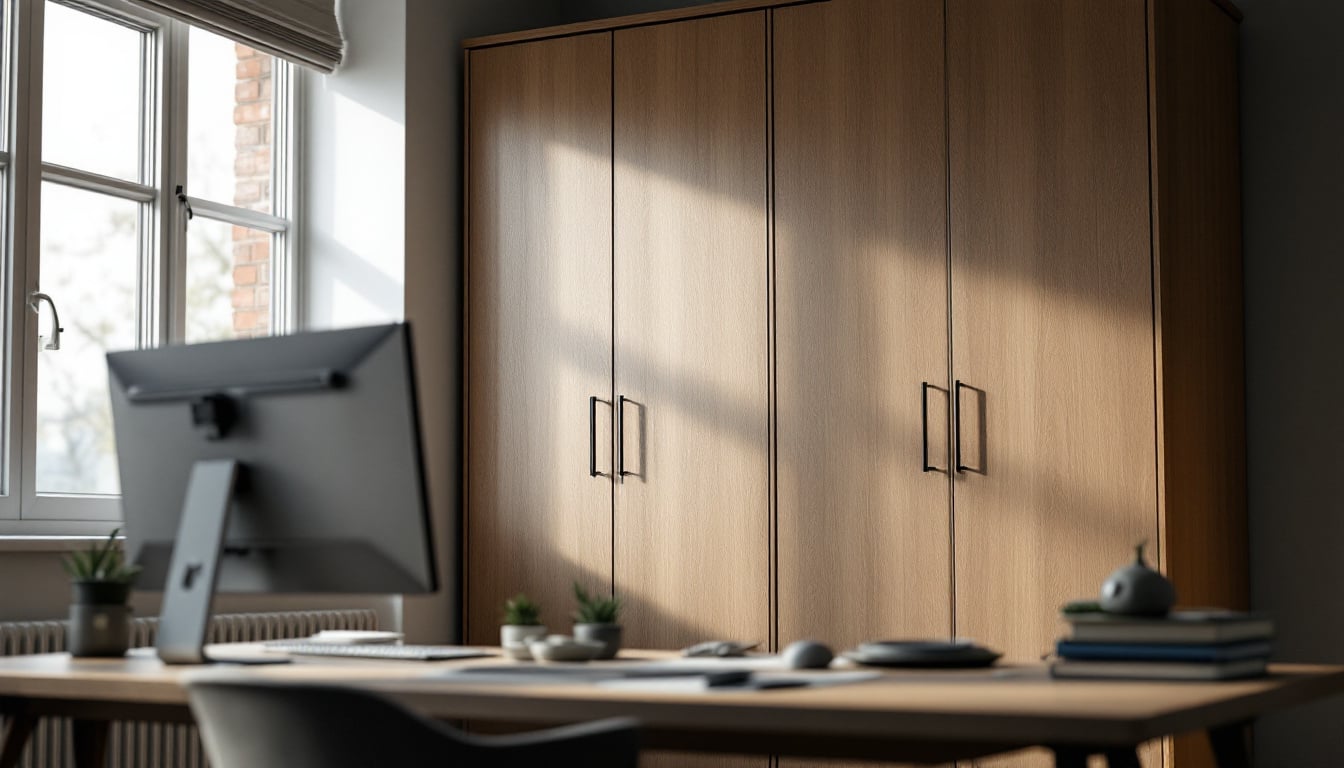
The parts of a room that create fitting risk
Most fitting failures are not caused by the furniture itself, but by the room. Old houses can have walls that are not straight, floors that slope, and ceilings that change height by more than a few millimetres across a run. Even in newer homes, boxed-in pipes, radiator pipes, and socket locations can force awkward compromises. Guaranteed fitting matters because bespoke furniture has to absorb those irregularities. If the designer does not allow for them, you may end up with gaps, scribed panels that look improvised, or doors that scrape from day one.
Quick Takeaways
Guaranteed fitting is valuable because it shifts risk from you to the supplier. A proper promise should include survey, design, and installation, not only a fitting appointment. Room irregularities like uneven floors, sloped ceilings, and hidden pipes are the main reasons custom furniture fails. Clear drawings, tolerances, and installation checks are the best way to judge whether a guarantee is real. The strongest suppliers explain exactly what happens if something does not fit as planned. If you want fewer surprises, compare the guarantee wording before you compare finishes.
How to judge the guarantee before you sign
The easiest mistake is to assume all guaranteed fitting offers mean the same thing. They do not. A useful decision rule is to read the wording as if a problem has already happened. Does the supplier state whether they return to remake parts, adjust the install, or correct measurement issues at no extra charge? If the answer is buried in sales language, treat it as a warning sign. When checking fitted wardrobes or custom furniture London projects, clarity matters more than polished brochures. A strong guarantee is specific about scope, timing, and what counts as a valid fitting issue.
Look for measurable boundaries
The best guarantees define the limits of acceptable variation. For example, they may explain what gap size is normal, how much scribing is expected, and whether access constraints affect the install. That detail is useful because custom furniture is built to real-world tolerances, not perfect showroom conditions. If a provider cannot tell you how they handle minor wall deviation or a floor that is out of level, they may be relying on assumptions. Ask for the practical boundary, not the marketing phrase. That one conversation often reveals whether guaranteed fitting is backed by process or just confidence.
Design choices that make guaranteed fitting more reliable
Some design decisions reduce fitting risk before installation even begins. Adjustable plinths help with uneven floors. Scribed fillers help bridge irregular walls. Hinged doors can be easier to align in tight rooms, while sliding doors solve clearance issues but need accurate track setup. In loft wardrobes and sloped cupboards, the design must follow the ceiling line instead of fighting it. These are not aesthetic details only, they are fitting decisions. A guarantee is stronger when the design choices already anticipate common site problems, because there is less room for last-minute improvisation.
Ask how the design is adapted to your room
A good design process starts with a survey and ends with a drawing that reflects the actual room, not a standard product template. You should expect discussion of access, wall returns, skirting depth, and any fixed obstructions. If you are ordering custom wood furniture or built-in cupboard solutions, ask how the design changes when the survey finds a pipe chase or a bowed wall. That question forces the supplier to explain their workflow. Guaranteed fitting is far more credible when it is tied to room-specific design decisions rather than generic modular assumptions.
The installation stage is where guarantees prove themselves
Installation is where a promise becomes visible. Even a good design can fail if the fitter rushes levelling, ignores wall fixings, or leaves gaps unsealed. A proper guaranteed fitting process should include checking the room again on arrival, confirming levels, and testing every moving part before sign-off. This is especially important for sliding doors wardrobes and tv media walls, where small alignment errors can create visible problems. The useful metric here is not speed alone. It is whether the installer leaves with doors aligned, drawers running smoothly, and edges finished cleanly.
What to inspect on installation day
Before you accept the job, inspect the furniture from three angles: fit, function, and finish. Fit means no obvious gaps, unsafe rocking, or collision with pipes or sockets. Function means doors, shelves, hinges, and drawers all work without resistance. Finish means edges, trim, and joints look intentional rather than patched. If something is off, raise it immediately while the installer is still there. A reliable guarantee should make this easier, not awkward. The sooner an issue is logged, the easier it is to correct without a second visit becoming a dispute.
Cost trade-offs: why the guarantee affects the price
Guaranteed fitting can add cost because it requires more than manufacturing. There is survey time, design adjustment time, installation skill, and sometimes a return visit allowance built into the job. That does not make it expensive for the sake of it. It means you are paying for fewer avoidable fixes later. The trade-off is straightforward: a lower headline price with no real fitting protection can become the pricier option if panels need remaking or the room has to be altered. For bespoke wardrobes and fitted furniture, the cheapest quote is often the one that leaves the biggest risk on your side.
Use the quote comparison rule
When comparing quotes, separate furniture cost from fitting risk. A fair comparison looks at survey detail, install scope, aftercare, and what happens if the room measurements change slightly after the initial visit. If one quote is cheaper but excludes adjustment work, it may not be comparable at all. The practical rule is to ask each provider the same three questions: who measures, who installs, and who fixes mistakes. If the answers are vague, the quote is incomplete. That discipline matters more than chasing the lowest number on the page.
Why guaranteed fitting matters more in awkward spaces
The value of guaranteed fitting rises sharply in awkward spaces because standard products are least forgiving there. Alcove cupboards, loft wardrobes, sloped ceilings, and built-in storage around chimney breasts need precision. Even a small measurement error can waste usable storage or leave visible gaps. If the room has a narrow access route, turning corners or stairwells may also affect installation. Guaranteed fitting matters here because the real challenge is not just making the unit, but getting it into place and finished properly. In these rooms, the guarantee is part of the design strategy, not an add-on.
Signs the provider understands awkward rooms
You are looking for evidence that the provider expects complexity rather than hoping to avoid it. Good signs include detailed survey questions, comments about wall plumbness, and practical solutions for skirting or ceiling slopes. If a studio talks only about finish options and not about fit constraints, that is a gap. For custom furniture design, the best teams plan for tolerances from the start. That is especially relevant if you want fitting furniture that looks built-in instead of assembled. The difference shows in the small things, like clean returns and uninterrupted lines.
How to avoid guarantee disputes
Most disputes come from unclear expectations, not bad intentions. To avoid them, keep the survey notes, the design drawings, and the quotation together so you can check what was promised. If a room detail changes after the survey, tell the provider before manufacture continues. If you spot a fitting issue during installation, record it the same day. That process gives both sides a clear reference. The more precise the paper trail, the easier it is to resolve a problem without arguments. Guaranteed fitting works best when the project has a documented trail from measurement to sign-off.
Five checks that reduce later friction
Before work starts, confirm five things: who approved the final measurements, whether the installer will handle adjustments on site, whether wall and floor irregularities are included in the scope, whether access limitations were considered, and whether aftercare is part of the guarantee. These five checks are simple, but they catch most weak points. If one is missing, ask for it in writing. This does not make the process difficult, it makes it clear. For a guaranteed fitting promise to be useful, it has to survive practical questions from the start.
Where a strong guarantee helps after installation
The strongest guaranteed fitting promises do not end when the van leaves. Minor settling, hinge tweaks, and door alignment checks are normal in fitted furniture, especially after the room starts being used daily. A sensible guarantee should explain whether post-install adjustments are included and for how long. That matters because real homes are not static. Flooring can settle, walls can show movement, and heavy doors may need fine tuning. If the warranty or fitting promise includes a clear aftercare path, the furniture stays usable longer and the owner knows who to call if a small issue appears later.
What aftercare should feel like
Aftercare should feel structured, not reactive. You should know how to report a problem, how quickly the company responds, and whether the fix is a simple adjustment or a remake. For bespoke furniture London buyers, that clarity is especially useful because access and scheduling can complicate return visits. A good provider does not pretend every issue is avoidable. Instead, they have a defined way to handle the few that still appear. That is the real value of guaranteed fitting: less uncertainty after the installation is complete.
Quick way to compare providers
If you are choosing between suppliers, use a simple three-part filter. First, check whether they explain how they measure and survey the room. Second, check whether their guarantee covers design adjustments and install corrections, not just materials. Third, check whether they can describe one realistic fitting problem and how they solve it. A provider that handles custom furniture craftsmanship well will usually answer these questions without hesitation. That is more useful than a broad promise. The goal is not to find the flashiest offer, but the one most likely to fit the room first time and stay that way.
When to move forward
Move ahead when the provider has shown you a clear process, not only a confident pitch. If you have a survey, a room-specific design, and a guarantee that explains corrections and aftercare, you are in good shape. If those pieces are missing, keep asking until they are clear. That approach is especially relevant if you are planning bespoke wardrobes, custom made furniture, or other fitted storage where the room itself sets the challenge. Guaranteed fitting is worth paying attention to because it protects the one thing custom furniture is supposed to deliver, a result that works in your home, not just on paper.
Frequently Asked Questions
What does guaranteed fitting mean in custom furniture orders?
Guaranteed fitting means the supplier commits to making the furniture fit the room as planned, including survey, design, and installation support. In custom furniture orders, that usually means any fitting issue caused by measurement or adaptation should be corrected under the agreed terms.
Why is guaranteed fitting important for bespoke wardrobes?
Bespoke wardrobes are built around exact room dimensions, so small errors can affect doors, drawers, and finishing details. Guaranteed fitting matters because it reduces the chance of visible gaps, rubbing doors, or awkward trim work in fitted wardrobe installation.
Does guaranteed fitting cover uneven walls and floors?
It should, but only if the guarantee and survey process say so clearly. Ask whether uneven walls, sloped ceilings, and floor level differences are included in the room adaptation process for fitted furniture, because those are common causes of installation issues.
What should I check before accepting a guaranteed fitting quote?
Check who measures, who installs, and what happens if adjustments are needed after the final survey. A strong custom furniture fitting quote should also explain aftercare, correction times, and whether design changes are covered if the room has unexpected obstacles.
Is guaranteed fitting useful for loft wardrobes and alcove cupboards?
Yes, especially in awkward spaces where standard units rarely work cleanly. Loft wardrobes, alcove cupboards, and other fitted storage solutions depend on accurate adaptation, so guaranteed fitting is often the difference between a tidy finish and an awkward compromise.
How do I know if a fitting guarantee is real?
A real guarantee is specific about scope, correction steps, and responsibility if something does not fit properly. If the supplier can explain the process for remake, adjustment, or return visits in plain language, the guaranteed fitting offer is much stronger than a vague promise.

