








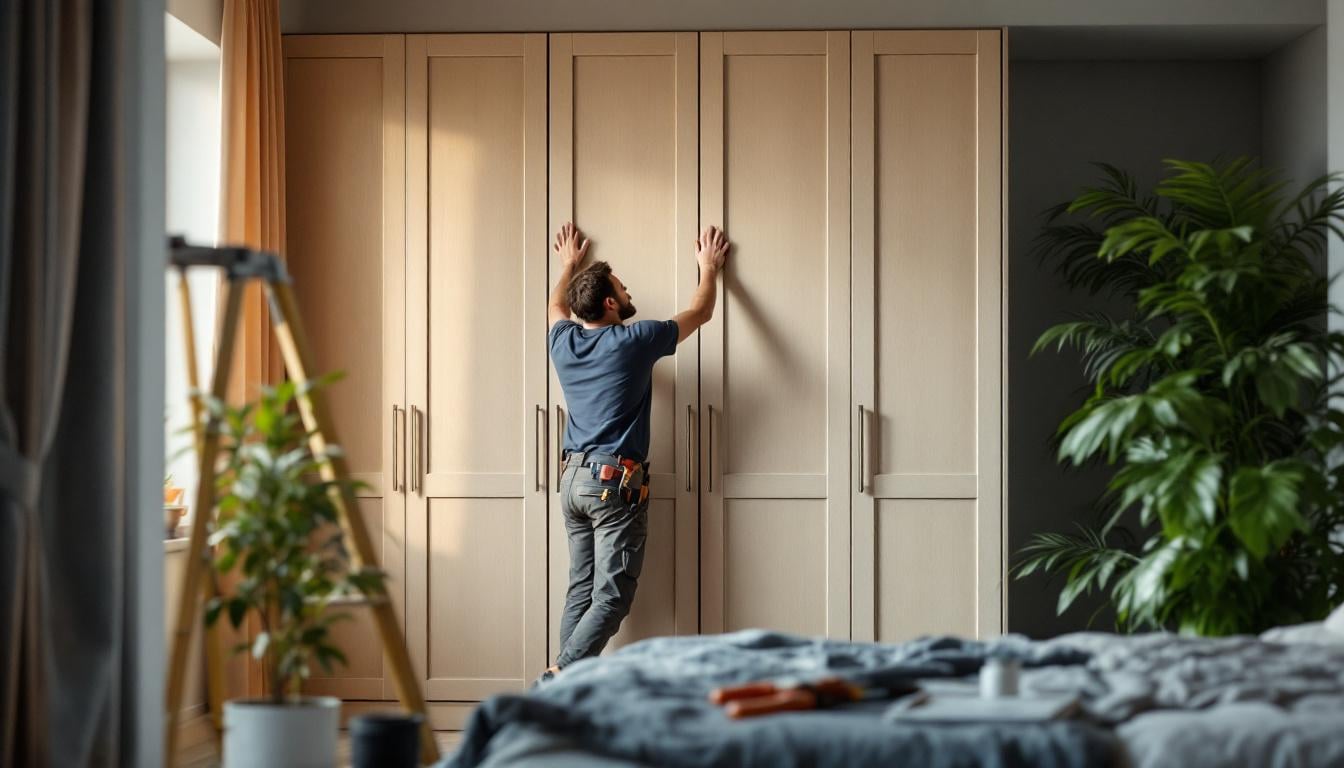
Wardrobe fitting that works in real homes
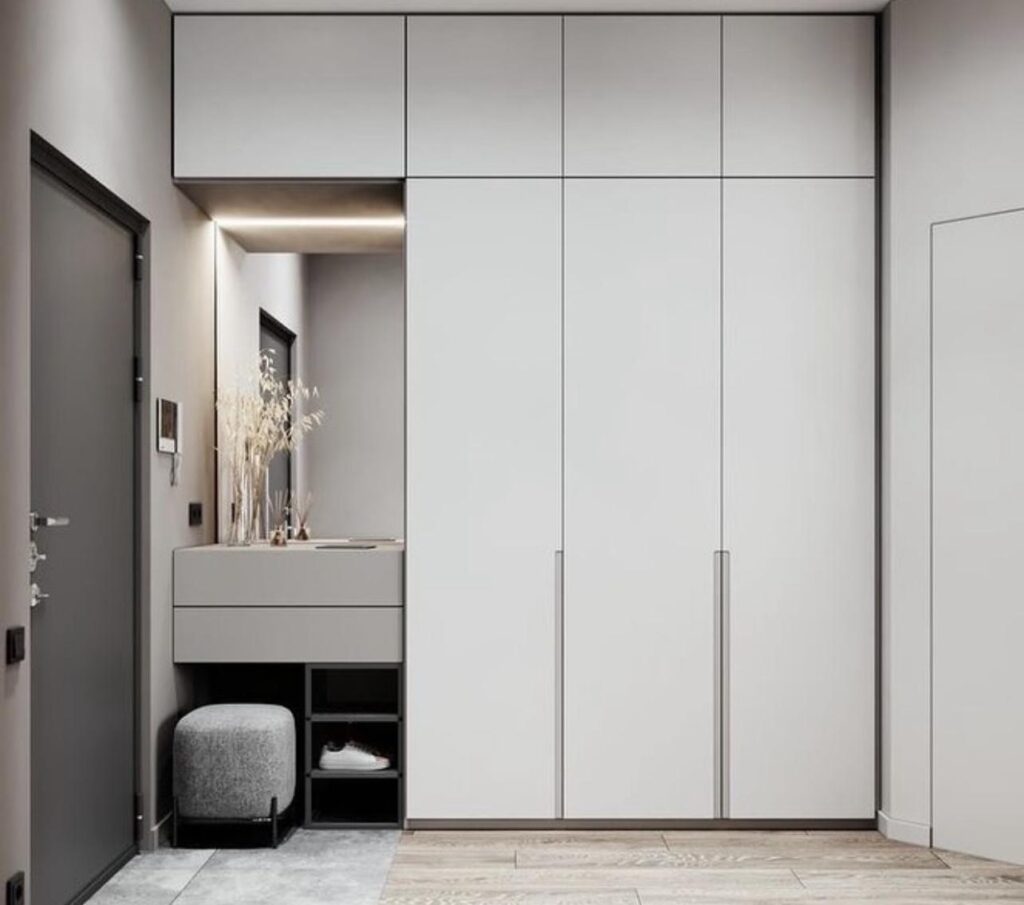
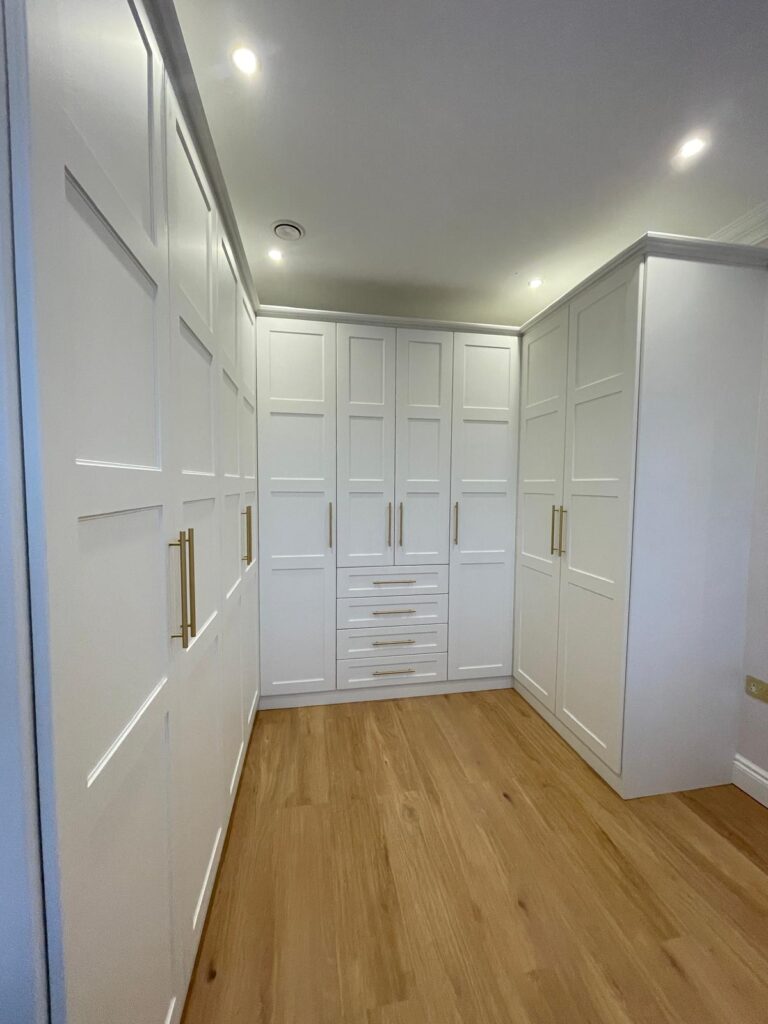
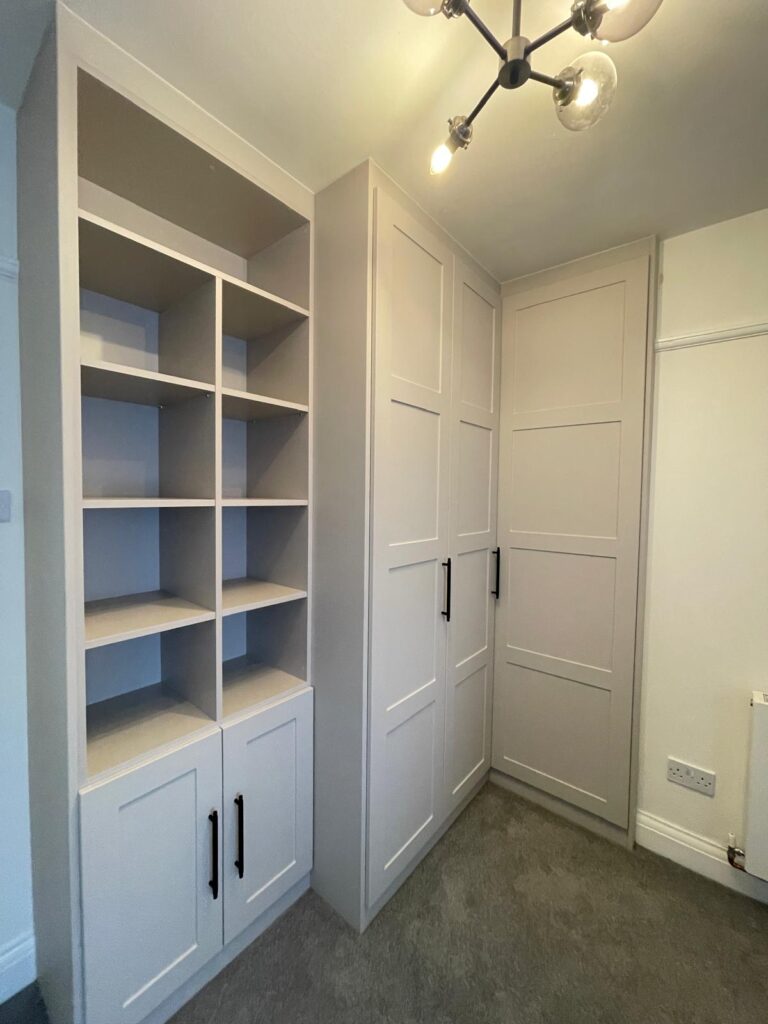
Good wardrobe fitting is less about filling a wall and more about making the room work harder without looking crowded. In UK homes, that usually means dealing with awkward corners, sloped ceilings, alcoves, and storage that needs to disappear into the architecture. The best results come from planning the wardrobe around the room first, then choosing doors, internals, and finish.
What ranking pages cover, and what they miss
Most top-ranking wardrobe fitting pages focus on inspiration, room types, or the basics of fitted wardrobes. They usually cover measuring, style choices, materials, and installation, with some attention to sliding doors, mirrored doors, and space-saving layouts. That is useful, but many pages stop short of the practical decisions that actually affect results: how much hanging depth you need, when sliding doors are worth the trade-off, or how to avoid losing access in tight bedrooms. A stronger article needs to answer those questions directly, because searchers are often past the idea stage and are trying to reduce risk before they book a survey.
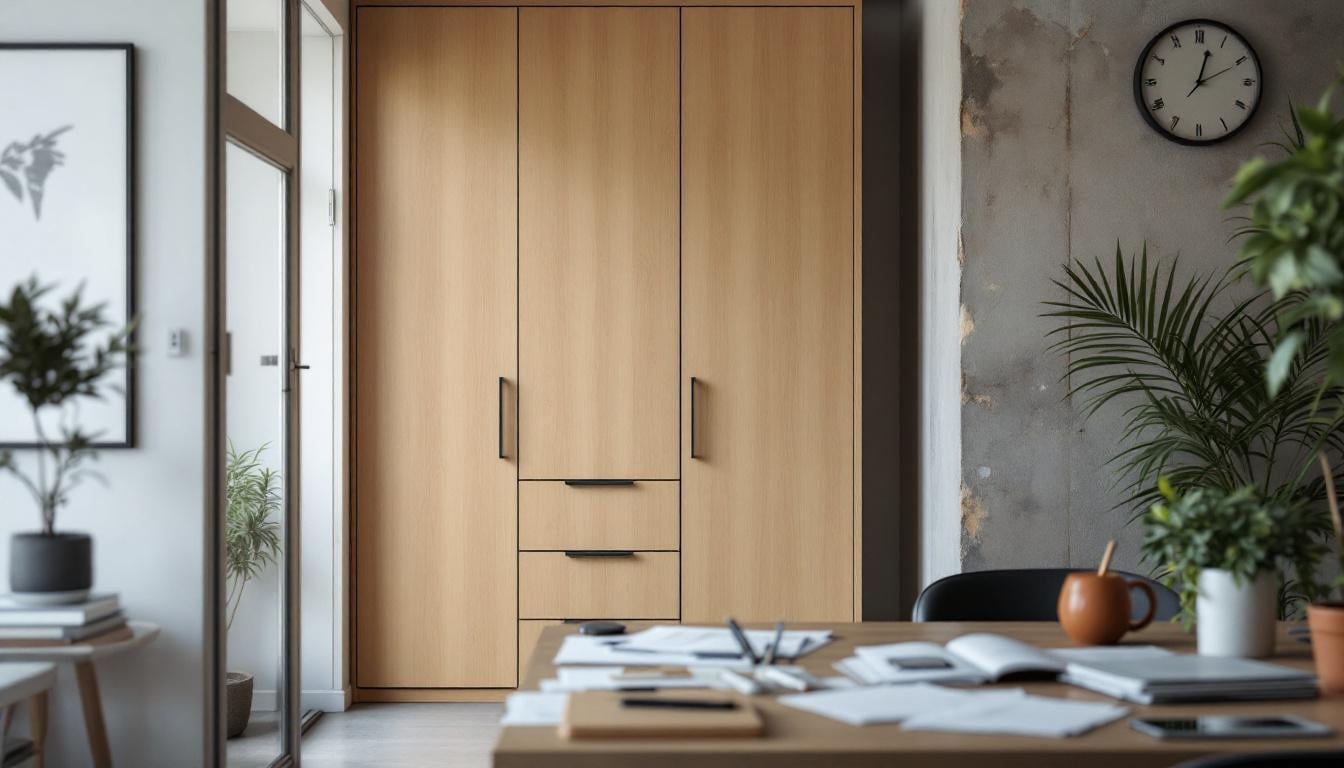
Plan the room before you plan the wardrobe
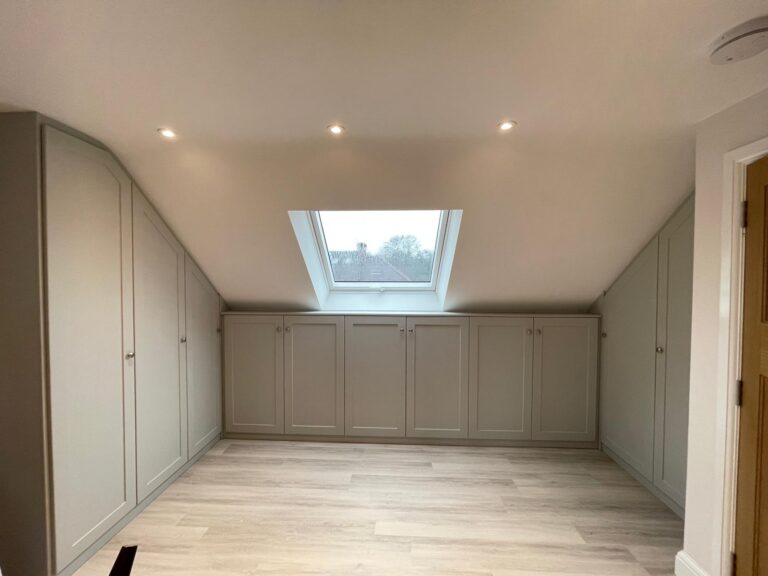
The most reliable wardrobe fitting workflow starts with the room, not the product. Measure wall width, ceiling height, skirting depth, socket positions, and door swing first, then decide how much of the room can realistically be dedicated to storage. A useful decision rule is simple: if a wardrobe will block natural movement, reduce access to windows, or crowd the bed, the design is too large. A fitted solution should improve the room’s circulation, not just its storage count. This is where bespoke design usually outperforms a flat-pack solution, especially in loft wardrobes, alcove cupboards, and built-in cupboard projects.
Measure for fit, not just for width
A common mistake is measuring only the visible span of the wall. Proper wardrobe fitting also accounts for uneven floors, bowed walls, and the tolerance needed for scribing. In practice, the fitter needs enough adjustment space to create a clean line against surfaces that are rarely perfectly square. A good rule is to check the width at three points, left, centre, and right, and to note any difference over 5 mm. That small gap can decide whether the carcass sits flush or needs extra packing and trim work.
Choose a layout that matches how the room is used
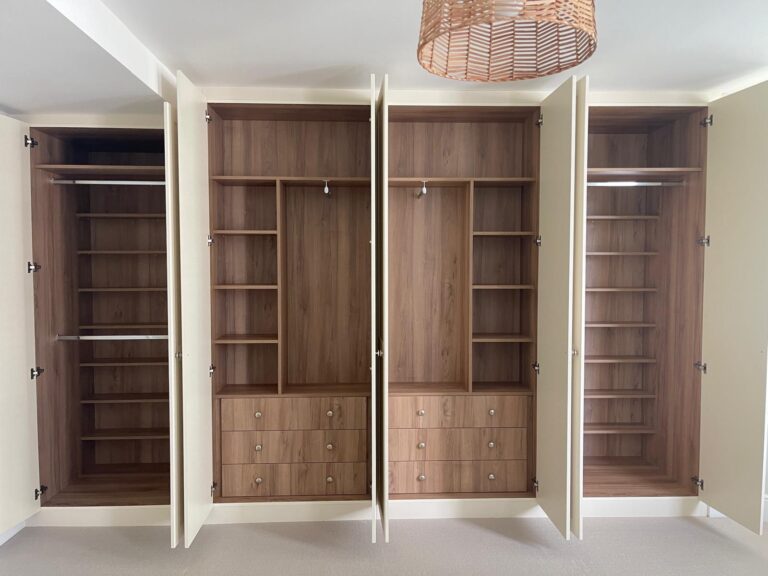
A single wardrobe can fail if the internal layout does not match the household’s habits. Couples often need a split of long hanging, short hanging, shelving, and drawers, while a child’s room may benefit more from low-access shelving and adjustable rails. If a wardrobe is supposed to support daily use, the most valuable items should be accessible without moving other storage. That sounds basic, but it is where many wardrobe fitting projects go wrong. Designers who map the user’s routine before finalising compartments usually reduce later complaints about awkward access.
Door style changes the whole experience
Door choice affects space, sightlines, and maintenance more than most buyers expect. Hinged doors give full access to the interior and work well when the room has clearance in front of the wardrobe. Sliding doors save floor space and suit tighter rooms, but they trade away some access because one section is always behind another. Mirrored doors can make a smaller bedroom feel wider, but they also show fingerprints and require careful placement to avoid glare from windows. For many homeowners, wardrobe fitting becomes easier once the door style is chosen early, because it changes the depth, track system, and internal access points.
When sliding doors are the better trade-off
Sliding doors make sense when bed clearance is tight or when a wardrobe sits opposite another fixed element such as a radiator or chest of drawers. They are especially useful in narrow bedrooms where hinged doors would create an awkward pinch point. The trade-off is access: if you rely on wide-open visibility for every shelf, sliding doors may frustrate you. In wardrobe fitting, the best rule is to choose sliding doors when space efficiency matters more than instant full access. Internal planning should then group frequently used items near the front rail or in sections that are easy to reach.
Why hinged doors still win in some rooms
Hinged doors are often the better choice for larger rooms or for clients who want a more traditional, furniture-like look. They give a clear view of the full interior, which helps with organisation and seasonal rotation. They also simplify access for deep shelving, pull-out accessories, and taller storage zones. The trade-off is that the room must tolerate the door swing. In wardrobe fitting, that usually means checking whether the open door will block a bedside table, another cupboard, or the main walkway. If the answer is yes, the design needs revision before installation.
Internal design is where storage value is won
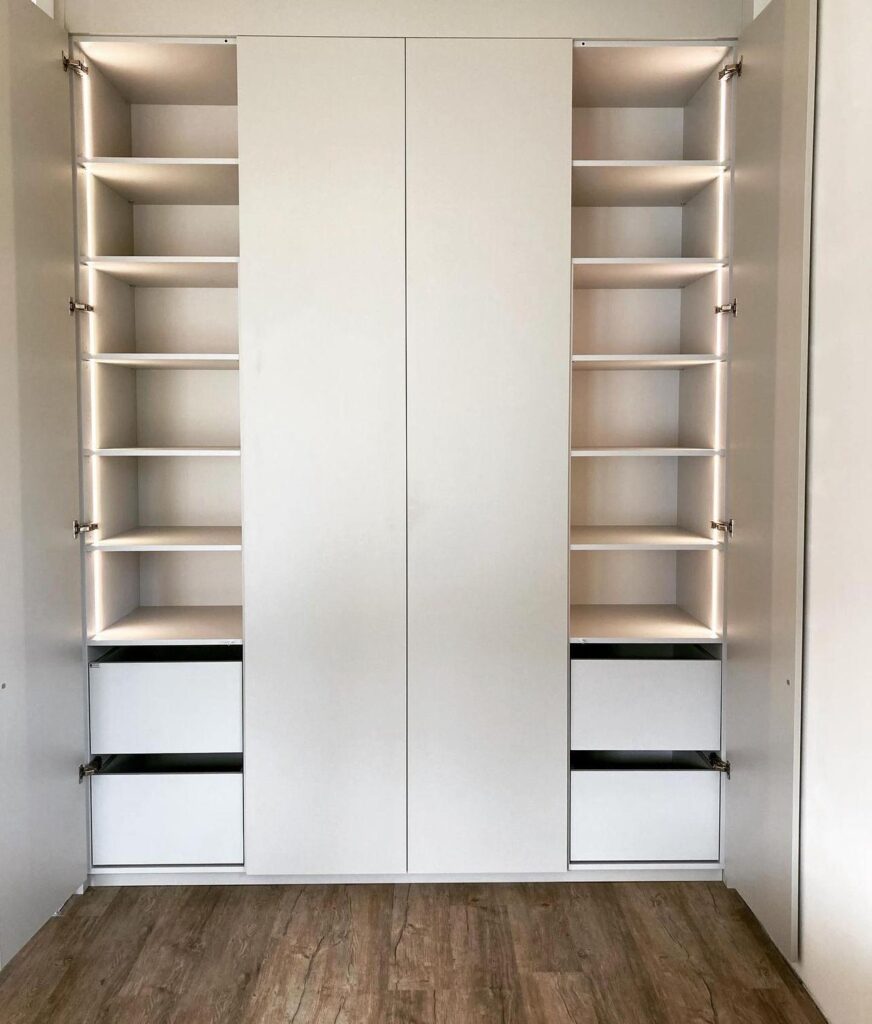
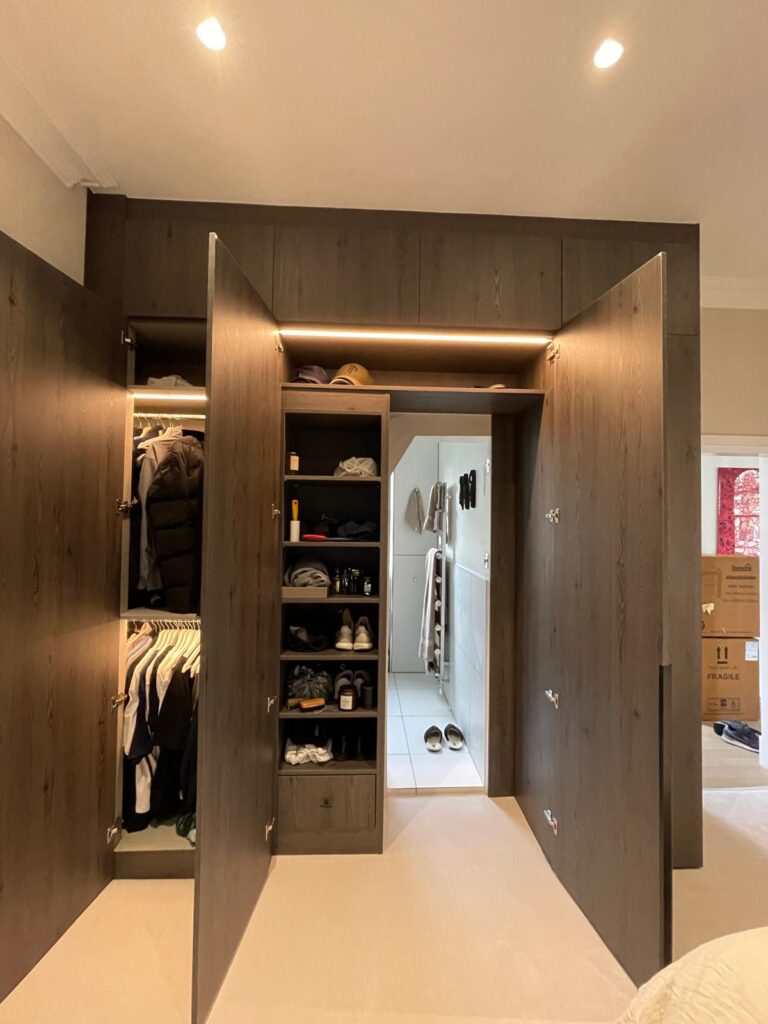
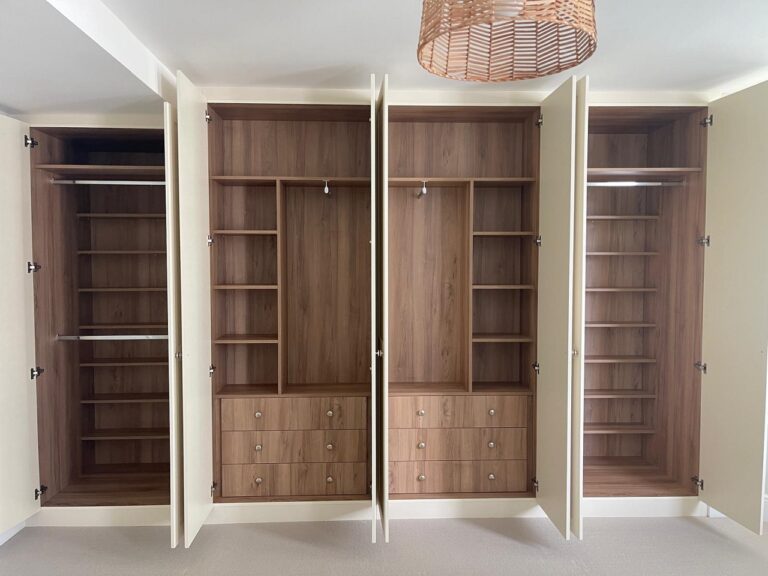
The interior matters more than the door finish because it determines whether the wardrobe is convenient six months after installation, not just impressive on day one. A useful wardrobe fitting plan combines hanging space, shelf spacing, drawers, and specialist zones such as shoe storage or accessory trays. A practical benchmark is to dedicate at least one section to long-term storage that does not get daily use, so the rest of the layout stays uncluttered. Homes with a lot of clothing variety usually need more segmentation, not more total volume.
Use a simple internal planning sequence
A solid planning sequence is to list what must hang, what must fold, and what must be hidden. Then assign each category a fixed zone before design refinement begins. This prevents the common mistake of overloading shelves and under-sizing hanging space. In fitted wardrobe design, a good internal mix might include one full-height hanging section, two drawer stacks, and adjustable shelving for seasonal items. The key trade-off is flexibility versus precision. Adjustable internals give future choice, while fixed internals create cleaner organisation if the household’s storage habits are stable.
Mini-case: a cramped bedroom with a better outcome
One customer segment with a narrow main bedroom wanted maximum storage without losing bedside access. The initial idea was a full-width hinged wardrobe, but the door swing would have cut into the walkway. The final wardrobe fitting used sliding doors, a reduced-depth section at one end, and a split internal layout with more hanging than shelving. The result, based on the design brief, was a room that kept clear floor circulation and improved usable storage compared with the previous freestanding units. The lesson is that the best wardrobe is often the one that gives up a little visual volume to gain daily function.
Finishes, colours, and the room’s visual balance
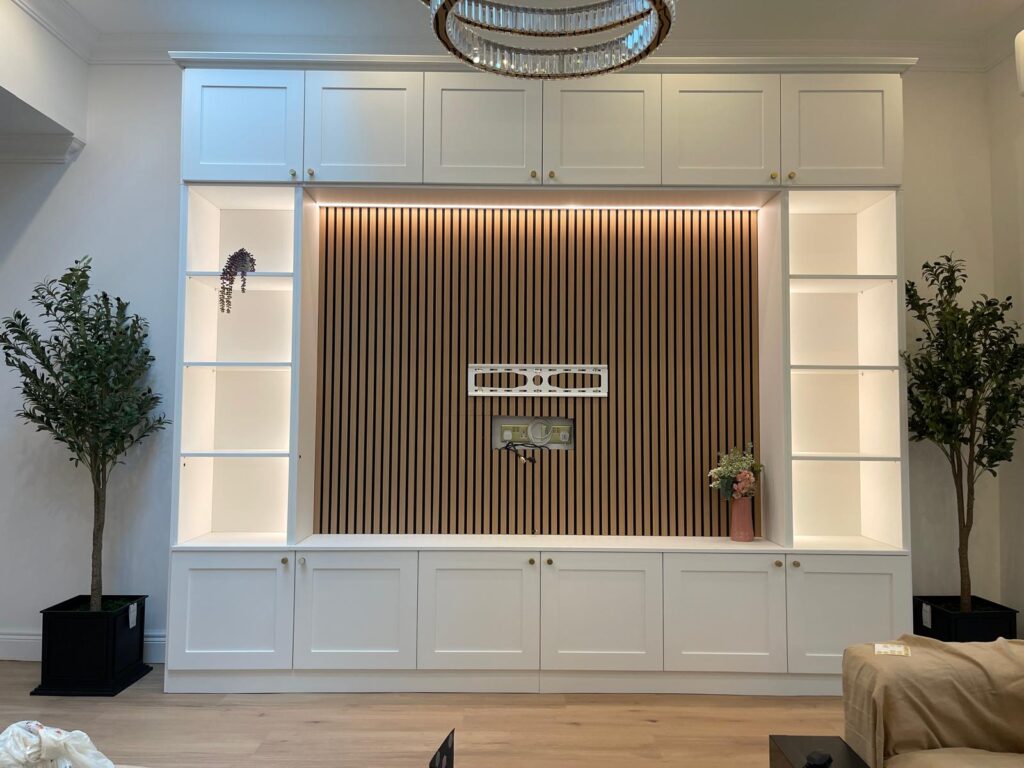
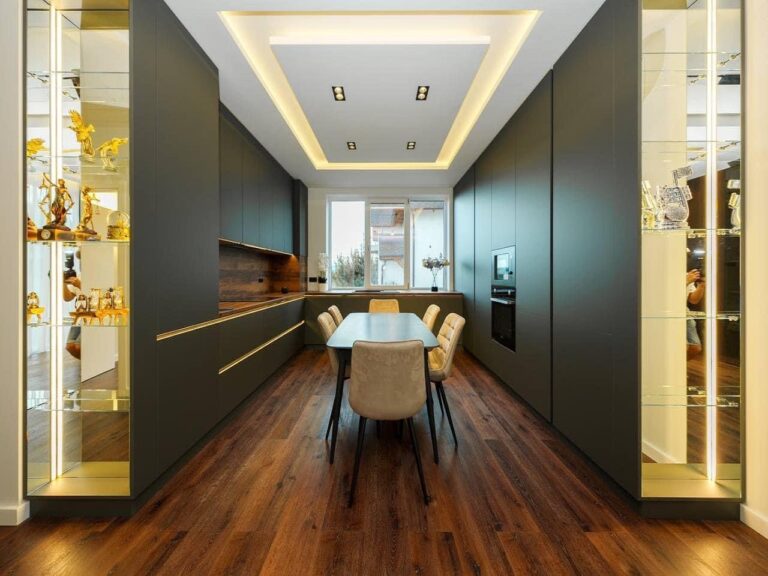
Finish choice is not just about taste, it changes how large or calm the room feels. Lighter matte finishes tend to soften large fitted runs, while darker tones can look strong but need more natural light to avoid feeling heavy. For wardrobe fitting in smaller rooms, the safest approach is to keep the external finish close to the wall colour or floor tone, so the joinery reads as part of the architecture. High-gloss finishes can reflect light well, but they also show marks more easily. A practical design move is to test samples in daylight and evening light before confirming the order.
Match the wardrobe to the room, not just to trends
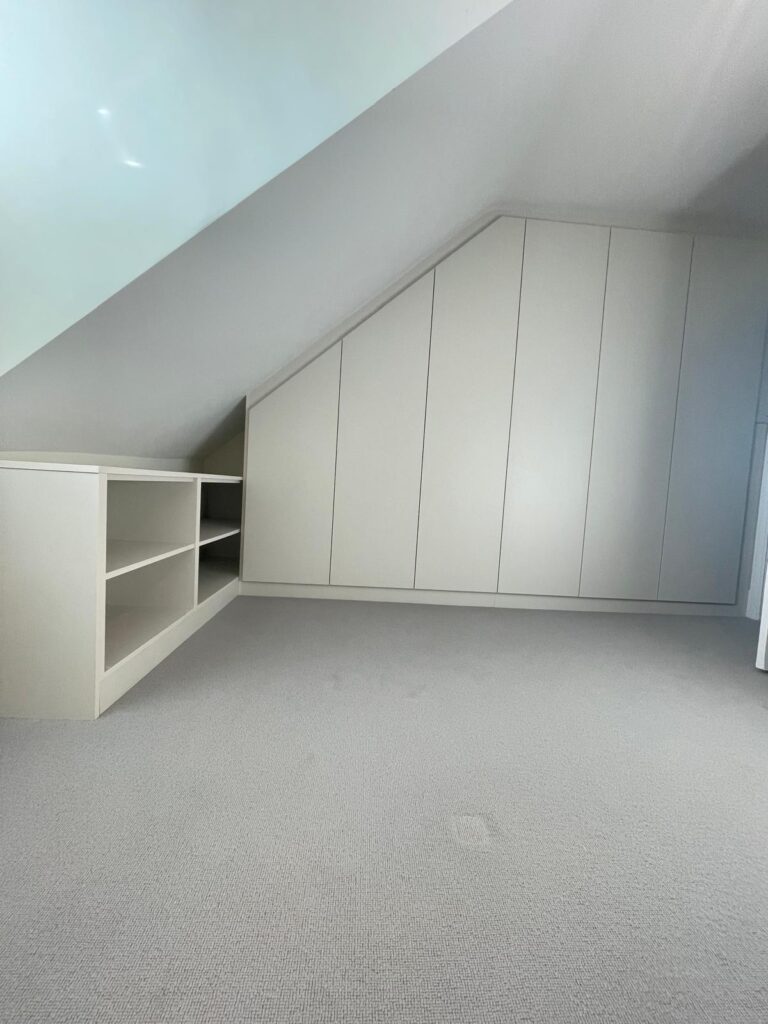
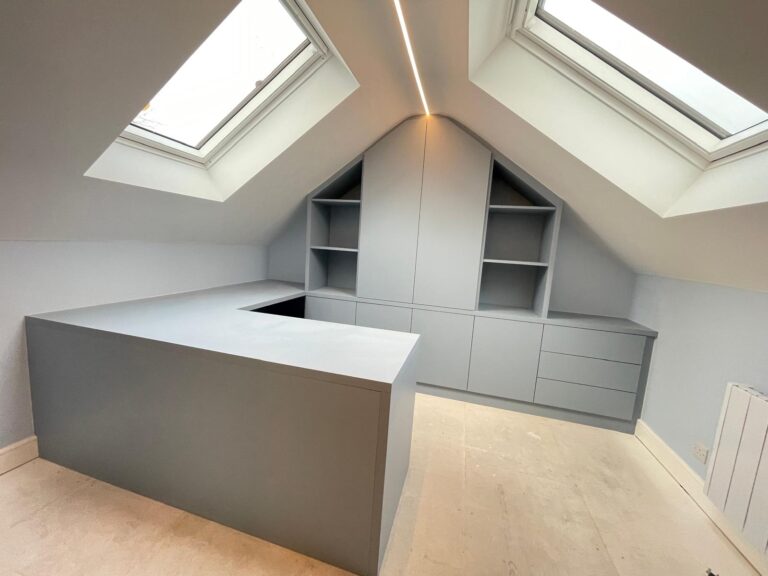
Trend-led finishes can date quickly if they ignore the room’s proportions. A wardrobe that sits in a loft conversion, for example, often looks better with calmer front panels and fewer decorative breaks because the slope already creates visual complexity. In bedroom furniture design, restraint usually works harder than contrast. If the room already has a strong feature wall, exposed beam, or bold flooring, the wardrobe fitting should support that feature rather than compete with it. This is a useful decision criterion: choose the finish that reduces visual noise first, then add character through doors and handles.
Installation timing, warranty, and what to ask before you book
Lead times matter because good wardrobe fitting depends on coordination, not just cabinetry. If a project claims fitting in 7-10 days, the critical question is whether survey, design approval, and manufacturing have already been locked in. A short installation window is useful, but only when the site is ready and the measurements are final. Warranty is another useful filter. A 10-year warranty suggests the supplier expects the furniture and installation to hold up over time, but the real value is in understanding what is covered, especially for hinges, runners, and fitting workmanship. Before booking, ask how access, waste removal, and snagging are handled.
The survey is the point where delays are avoided
A proper survey should identify obstacles that could slow installation, such as uneven plaster, radiator positions, recessed pipes, or hidden service routes. If any of those are missed, wardrobe fitting often gets delayed by on-site adjustments. The best installers treat the survey as a risk-reduction step, not a sales call. A practical checklist is to confirm wall condition, power points, skirting, ceiling height variation, and access to the room. When those items are clear in advance, fitting time is easier to predict and the chance of remedial work drops sharply.
Mini-case: fitting speed with fewer surprises
A B2B SaaS team would be the wrong example here, so consider a straightforward residential case instead. A homeowner with an alcove storage project had a tight two-week moving window and needed fitted furniture installed fast. By finalising the design after a full site survey and approving finishes before manufacture, the wardrobe fitting stayed within the planned 7-10 day installation period. The important point is not the speed alone. It is that fast fitting only works when the design has already eliminated uncertainty. Without that discipline, the same timeline becomes risky.
Use product pages to narrow the spec before you enquire
Product pages are not just for browsing, they can shorten the design process. If you already know you want a specific door profile, finish family, or wardrobe doors design, you can move from broad inspiration to a clearer brief. That helps the surveyor and designer propose options that fit the room faster. Internal links to styles such as wardrobe doors design pages can also help compare details like panel shape, edge profile, and visual weight. The trade-off is simple: more upfront browsing gives better decision quality, but only if you use it to define constraints rather than collect endless ideas.
How to use inspiration without drifting off brief
One common failure mode is saving too many reference images and ending up with a wardrobe that is visually inconsistent. The fix is to separate non-negotiables from preferences. Non-negotiables include room dimensions, storage capacity, and access needs. Preferences cover colour, handle style, and door texture. In wardrobe fitting, that distinction keeps the project grounded. It also stops the design from being forced into a style that looks good online but works poorly in the room. The cleanest briefs are usually short, specific, and tied to how the room is used every day.
Quick takeaways for better wardrobe fitting
Wardrobe fitting works best when the room is measured and planned before any style choice is made. Sliding doors save floor space, while hinged doors usually give better access. Internal layouts should be designed around how the household actually stores clothes, not around generic shelf counts. Finishes should reduce visual clutter, especially in smaller bedrooms or lofts. A full survey protects the timeline, and a clear warranty gives you a better sense of long-term value. If you want to compare options, browse the relevant wardrobe doors design details first, then use that short list to guide the survey and quotation process.
Why bespoke usually outperforms standard furniture
Bespoke wardrobe fitting is often the smarter investment because it uses wall height, corner depth, and awkward geometry more efficiently than modular storage. That matters in UK homes where rooms rarely follow perfect rectangular assumptions. Standard furniture can be cheaper at the start, but it often leaves dead space above, beside, or behind the unit. A custom solution can turn those gaps into drawers, bridge units, or full-height storage.
What to expect from a professional process
A well-run wardrobe fitting process normally follows a clear sequence: enquiry, survey, design approval, manufacture, installation, and snagging. Each step should reduce risk rather than create new questions. If a supplier cannot explain the sequence, it is worth pausing before you commit. The best sign of a mature process is consistency, not sales language. For homeowners, that means fewer surprises on fitting day, fewer changes after sign-off, and a better chance that the final room looks intentional rather than patched together. For designers, it means more control over outcomes and less time spent fixing avoidable issues.
Frequently Asked Questions
Below are the most common questions people ask before booking wardrobe fitting, especially when comparing bespoke wardrobes, fitted furniture, and standard storage options.
Frequently Asked Questions
What is wardrobe fitting?
Wardrobe fitting is the process of designing, manufacturing, and installing wardrobes to match a specific room. In practice, it covers everything from measuring wall space to choosing internal storage and door style. For a better result, treat it as part of the room design, not just furniture installation.
How long does wardrobe fitting usually take?
Timelines vary by project size, but many bespoke wardrobe fitting jobs are installed in 7-10 days once manufacture is complete. The bigger variable is often the survey and design approval stage, especially in rooms with sloped ceilings or alcoves. A clear brief reduces delays more than any single product choice.
Is bespoke wardrobe fitting worth it in small bedrooms?
Yes, often more than in larger rooms, because bespoke wardrobe fitting can recover awkward corners, unused height, and shallow recesses. Small bedrooms usually benefit from sliding doors, slimmer depths, and tighter internal planning. The key is to protect circulation first so the room still feels usable.
What should I check before booking wardrobe fitting?
Check room measurements, ceiling height variation, skirting depth, socket positions, and whether you have enough clearance for doors or drawers. It is also smart to ask about the survey process, lead time, and warranty coverage. These details help you compare fitted wardrobes and custom wardrobes on more than just price.
What is the best door style for wardrobe fitting?
The best door style depends on available floor space and how often you need full access to the interior. Sliding doors are useful in narrow rooms, while hinged doors usually work better when you want a full opening. If you are unsure, compare wardrobe doors design options against the room layout before deciding.
Does wardrobe fitting include a warranty?
Many bespoke furniture providers include some form of warranty, and a 10-year warranty is a strong signal of confidence in both materials and fitting. Always confirm what is covered, including hardware, runners, and installation workmanship. That gives you a clearer picture of long-term value than price alone.