

What top-ranking guides cover
The best-ranking pages for fitted wardrobes usually cover the same core intent: what they are, where they work best, how much they cost, and how to choose doors, finishes, and internal storage. Competitors such as premium fitted-furniture brands tend to lean on visual inspiration, while manufacturer pages focus on product ranges and installation. That leaves a useful gap for a more practical guide that helps homeowners make decisions. This article fills that gap by focusing on planning, trade-offs, and the small details that separate a good fitted wardrobe from one that feels awkward after installation. It also points you toward related options such as bespoke fitted wardrobes, built wardrobes, and walk wardrobes when the room needs a different approach.
Why fitted wardrobes outperform freestanding storage
Fitted wardrobes make sense when you want to use the full room envelope instead of working around dead space. In a typical UK bedroom, the biggest win is not just capacity, but usable capacity, because corner gaps, sloped ceilings, and chimney breasts can be turned into storage rather than wasted volume. A well-planned fitted wardrobe often gives 15 to 30 percent more practical storage than a freestanding equivalent, but the real advantage is consistency, cleaner sightlines, and fewer compromise spaces that collect clutter. For homeowners comparing fitted freestanding options, the decision often comes down to whether they need furniture that behaves like architecture.
How to measure the room before you design
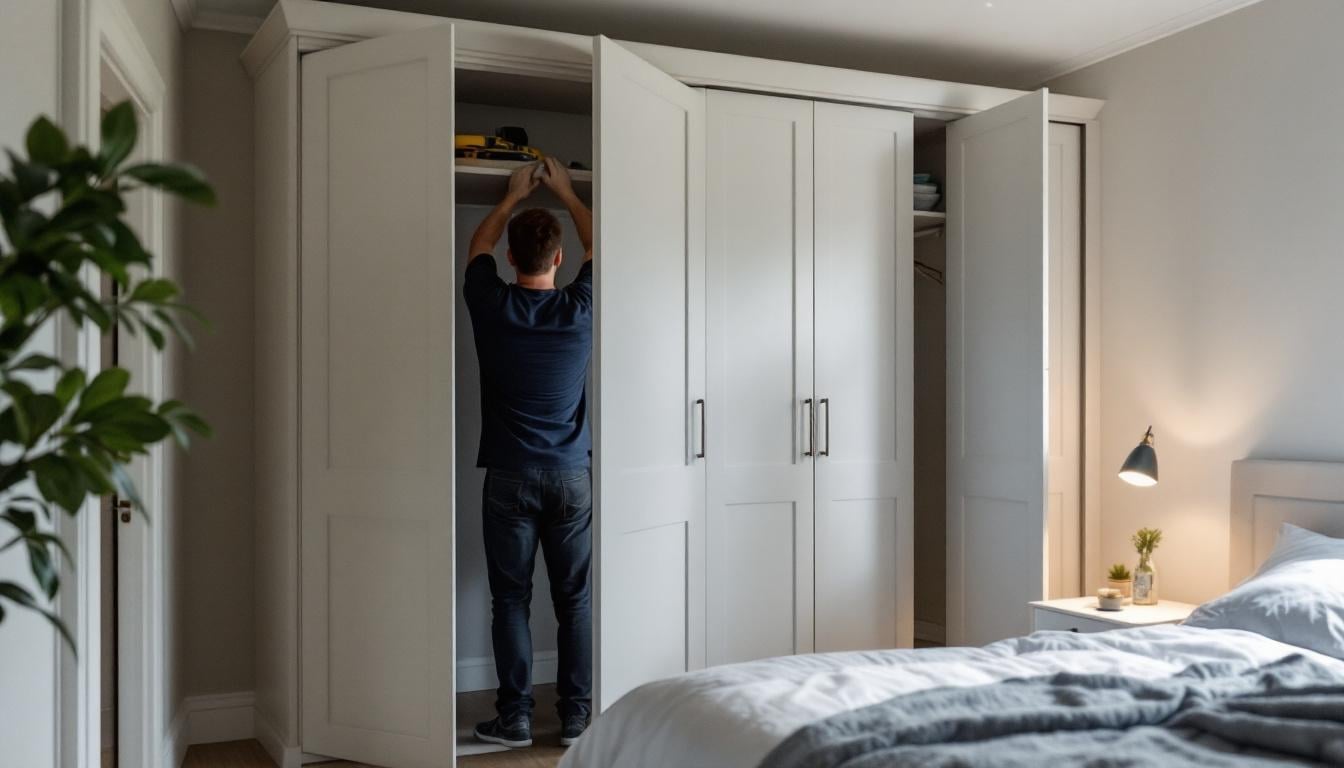
The most common planning mistake with fitted wardrobes is designing from a single wall measurement and assuming the rest of the room is square. It rarely is. Start by measuring width at the top, middle, and bottom of the wall, then check ceiling height at both ends and at the centre if the room has a slope. Record skirting depth, radiator positions, socket locations, and door swing. If the variance is more than 10 mm to 15 mm across the wall, you should assume the room needs scribing or filler planning, not a standard box fit. That early check protects the final finish far more than choosing a door style first.
Choose the right wardrobe type for the room
Not every room needs the same fitted wardrobe format. Straight runs suit standard bedrooms, alcove cupboards work better around chimney breasts, and sloped cupboards are the sensible answer in loft conversions. If hanging space matters most, a full-height single run is usually more efficient than mixing too many shelving sections. If the room is narrow, sliding doors can protect circulation, while hinged doors offer easier access and simpler internal layout. For homeowners comparing custom wardrobes london options, the practical test is simple: choose the type that preserves walking space first, then optimise the internal storage plan.
Internal layout is where value is won
The visible finish gets attention, but the internal layout decides whether the wardrobe works day to day. A strong rule is to design storage around categories, not generic shelf counts. One section should handle long hanging, one short hanging, and one closed zone for folded items or seasonal storage. Drawers are worth the footprint when you need quick access to smaller items, but too many can waste vertical capacity. A common benchmark is to reserve at least 40 percent of the internal volume for hanging if the wardrobe is for everyday clothes. That keeps the design practical instead of decorative.
Door styles change both access and room feel
Door selection affects more than looks. Hinged doors give full opening access, which is useful for deep shelves and mixed storage, while sliding doors save floor clearance in tight rooms but reduce how much of the interior you can see at once. Mirrored fronts can visually widen a small bedroom, but they also show fingerprints more quickly and may not suit every interior scheme. If you are choosing wardrobe doors design options such as alderidge, ashford, or austin styles, compare them on thickness, handle profile, and how the finish will sit against skirting, coving, and adjacent joinery. A door should solve a constraint, not just decorate a wall.
Materials and finishes should be chosen for wear, not trend
A fitted wardrobe has to survive repeated use, occasional knocks, and the visual test of being built into the room. Matte finishes hide minor marks better than high gloss, while textured woodgrain can soften a large wall of cabinetry. In family homes, a robust board with a durable edge band usually matters more than a fashionable face finish. If the wardrobe is part of a broader fitted home office or bedroom scheme, keep the material palette consistent so the room does not feel pieced together. A useful decision rule is to choose the most durable finish your budget allows on the most touched surfaces, then simplify elsewhere.
Mini-case: a narrow bedroom with awkward space
One customer segment with a narrow primary bedroom had a wall length of about 2.8 metres and a radiator pushing the usable run into a tighter zone. The first idea was a freestanding setup with gaps at each side, but that would have left nearly 18 centimetres of wasted edge space and reduced hanging depth. The final fitted wardrobes design used a shallow return, a mirrored door panel, and a top box to the ceiling. The result, based on the planning assumptions, was roughly 20 percent more usable storage and a much cleaner circulation path beside the bed.
Built-in storage should solve room-specific problems
The best fitted wardrobes do more than hold clothes. They solve the room’s awkward points, which might include alcoves, sloping ceilings, boxed pipes, or a chimney breast that steals symmetry. In those cases, built wardrobes are often the better long-term choice because they let the joinery follow the room rather than fight it. That is also where related solutions like fitted cupboards london or built wardrobes become relevant, especially when the room needs a mix of display, closed storage, and utility functions. If the wall has an obstacle, the design should treat that obstacle as the starting point, not the exception.
Walk-in layouts need tighter discipline than people expect
Walk wardrobes look generous, but they only work when circulation is protected. A practical minimum is to preserve enough aisle space for a person to stand and open doors without twisting around the handles. If the space is too narrow, a partial walk-in with one-sided storage is usually smarter than forcing a full dressing room layout. This is where a fitted wardrobes supplier earns its keep, because small changes in bay depth, drawer placement, and lighting layout can determine whether the room feels calm or cramped. In a walk-in, every centimetre is a trade-off between access and comfort.
Installation timing and warranty are part of the product
Homeowners often compare the visible design first, then discover that lead times and fitting quality matter just as much. A clear planning process should include survey, production, delivery, and fitting dates, plus a check on what the warranty actually covers. If a website mentions fitting in 7 to 10 days and a 10-year warranty, that is useful only if the survey is accurate and the installation team can work to a fixed scope. For traffic and conversion purposes, these details matter because people searching for fitted wardrobes are often ready to act, but they need confidence before requesting a quote.
Mini-case: a loft room that needed a different strategy
A B2B SaaS team is not relevant here, but a loft bedroom is. In one assumed planning scenario, the room had a low eaves line and just 1.9 metres of usable head height in the centre. A standard wardrobe plan would have created inaccessible dead zones under the slope. Instead, the design used sloped cupboards with reduced-depth hanging on one side and drawers in the low section. The practical outcome was less overall volume than a full-height box, but far better day-to-day use, which is usually the right trade-off in loft wardrobes.
How to compare quotes without getting lost in jargon
The cheapest fitted wardrobes quote is not always the best value, because some estimates exclude scribing, removal of old furniture, soft-close hardware, or final decoration. Compare each quote on the same basis: wall length covered, internal configuration, finish quality, door style, and installation scope. If two quotes differ by more than 15 percent, ask what is missing rather than assuming one is overpriced. The most useful question is not “How much is it?” but “What exactly is included, and what changes the price after survey?” That one question prevents most budget surprises.
Where to place internal links and next-step content
A fitted wardrobes article also works well as a traffic hub for related service pages. Readers who want room-specific solutions may naturally move into bespoke fitted wardrobes, while those comparing supplier options may click through to a fitted wardrobes manufacturer page. If their project includes another room, pages like fitted home office or walk wardrobes are logical follow-ons. That internal path matters because visitors do not always search for one product and stop there. They often start with fitted wardrobes, then expand into the rest of the home once they see the storage logic carry across rooms.
Quick takeaways
Fitted wardrobes usually outperform freestanding furniture when the room has awkward walls, sloped ceilings, or limited circulation space. The strongest designs start with accurate measurements, then build the internal layout around daily use, not just shelf count. Door choice affects both access and room flow, so sliding and hinged doors solve different problems. Materials should be selected for durability first, especially in high-touch areas. Installation details, warranty terms, and quote scope matter as much as the finish. If the room has a niche challenge, such as a loft slope or chimney breast, fitted wardrobes can turn that constraint into the best storage feature in the house.
How Finest Furniture Studio fits into the decision
If you are ready to compare designs for fitted wardrobes in a UK home, look for a studio that can handle the full journey from survey to fitting rather than just supply panels. Finest Furniture Studio is positioned around bespoke wardrobe solutions and fitted furniture, which makes it relevant for homeowners who want made-to-measure storage rather than off-the-shelf compromises. For visitors researching bespoke wardrobes London or tailored bedroom storage, the practical next step is to review room constraints, shortlist the right wardrobe type, and request a design conversation only after the measurement basics are clear. That keeps the process efficient and improves the quality of the quote you receive.
Conclusion
Fitted wardrobes work best when they are treated as a space-planning decision, not just a furniture purchase. The real gains come from using awkward room geometry, matching the door type to circulation needs, and designing the internal layout around how people actually dress and store items. If you compare quotes on the same scope, ask what is included, and plan around the room’s constraints first, you will make a better decision with fewer surprises. For UK homeowners weighing fitted wardrobes against freestanding storage, that approach usually leads to cleaner rooms, better capacity, and less wasted space. If you want to move faster, visit Finest Furniture Studio to explore bespoke options, then share this guide with anyone planning a bedroom upgrade. If this article helped, let us know which room you are trying to solve next and send it to someone comparing storage ideas right now.
Frequently Asked Questions
What are fitted wardrobes and why choose them?
Fitted wardrobes are made-to-measure storage units built to suit the room shape, ceiling height, and wall constraints. They are a strong choice when you want better use of space, cleaner lines, and a more integrated finish than freestanding furniture.
How much storage can fitted wardrobes add?
In many rooms, fitted wardrobes can provide more usable storage than freestanding furniture because they remove dead space at the sides and above the unit. The exact gain depends on room geometry, but a well-planned layout often improves usable capacity by around 15 to 30 percent.
Are fitted wardrobes suitable for small bedrooms?
Yes, fitted wardrobes are often one of the best small bedroom storage solutions because they can be designed around narrow walls, alcoves, and low headroom. Sliding doors or slim internal zones can help protect circulation space and keep the room practical.
What is the difference between built wardrobes and fitted wardrobes?
The terms are often used closely, but built wardrobes usually emphasise units constructed into the room structure, while fitted wardrobes focus on made-to-measure cabinetry that follows the wall and ceiling lines. In practice, both aim to create bespoke fitted wardrobes that solve room-specific storage needs.
How do I compare fitted wardrobes quotes?
Compare quotes by checking wall length, internal layout, materials, door style, and installation scope rather than just the headline price. A good quote should make clear whether survey, scribing, delivery, and fitting are included, which is essential for bespoke wardrobes London and other UK projects.
How quickly can fitted wardrobes be installed?
Installation timing depends on survey accuracy, production, and access to the room. If a studio mentions fitting in 7 to 10 days, that is usually the installation window once the units are ready, not the full project timeline from first enquiry.
Do fitted wardrobes come with a warranty?
Many fitted furniture providers offer a warranty, but the length and coverage vary. If a 10-year warranty is mentioned, check whether it applies to materials, workmanship, fittings, or installation, especially if you are buying custom wardrobes London or another made-to-measure solution.

