
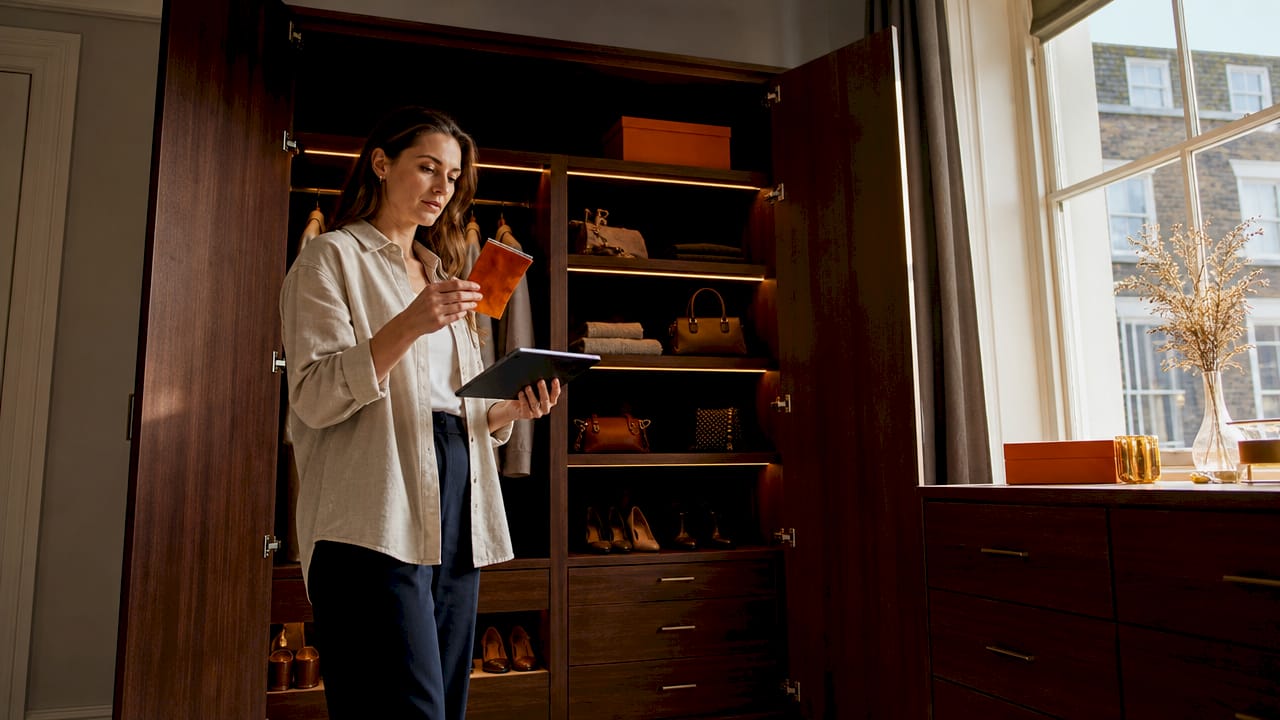
A premium wardrobe is defined by bespoke craftsmanship, superior materials, and a design engineered precisely to your space and lifestyle. Unlike standard retail units, a truly high-end fitted wardrobe integrates with the architecture of your room, eliminates wasted space, and reflects your personal storage needs down to the last millimetre. What defines premium wardrobes goes well beyond aesthetics. It is the combination of expert spatial planning, European-grade hardware, tactile finishes, and considered ergonomics that separates a bespoke piece from anything you can buy off the shelf. At Finest Furniture Studio, we see this distinction every day across projects in Chelsea, Richmond, Wimbledon, and beyond.
What defines premium wardrobes: materials and craftsmanship
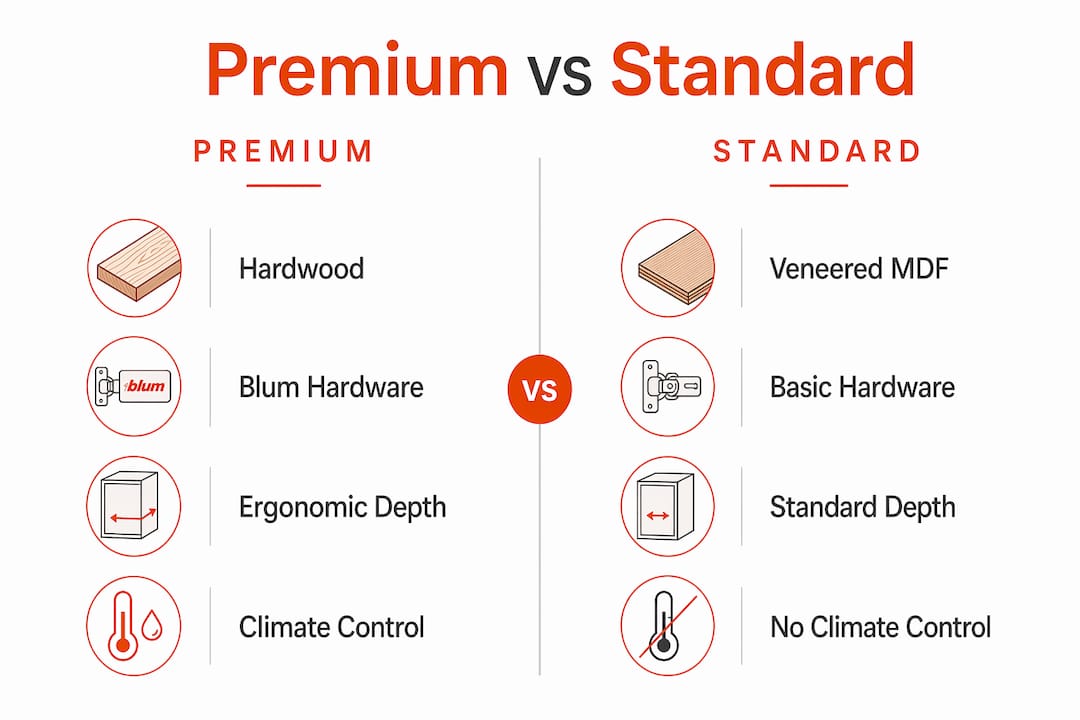
The foundation of any premium wardrobe is the quality of its materials and the skill of the people who build it. Solid hardwoods such as oak, walnut, and ash deliver structural integrity that modular board systems simply cannot match. Veneered MDF with lacquer finishes offers a cost-conscious alternative that still achieves a refined, furniture-grade surface. For homeowners exploring luxury wardrobe construction, the tactile difference between these materials and standard retail chipboard is immediately apparent.
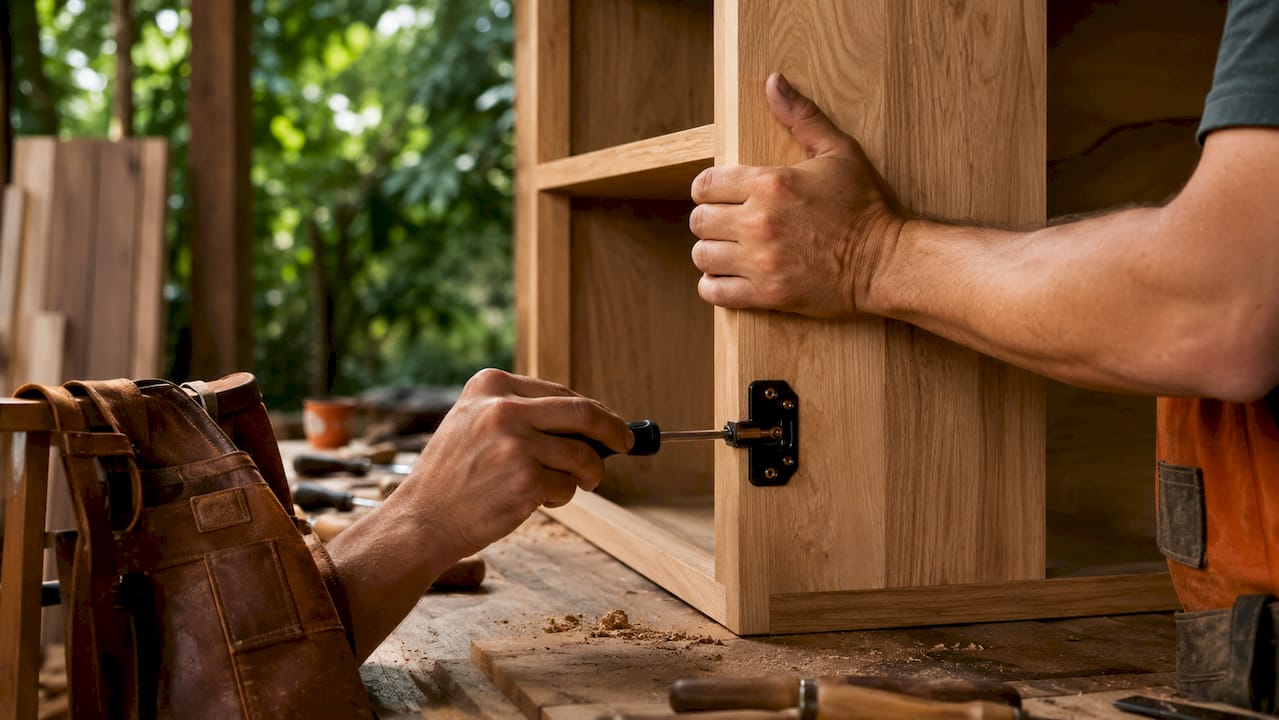
Hardware is where premium wardrobes earn their reputation for longevity. European brands like Blum and Hettich produce soft-close drawer runners and hinges engineered for decades of use, with tolerances that prevent rattling, sagging, or misalignment over time. A drawer from a Blum-fitted wardrobe closes with a whisper. A drawer from a budget flat-pack unit starts to stick within two years. That difference compounds across thousands of daily interactions.
Craftsmanship also shows in the joinery. Traditional methods such as mortise-and-tenon joints and dovetail drawer boxes are combined with modern CNC precision cutting in the best bespoke workshops. The result is furniture that fits perfectly, moves precisely, and ages gracefully. Exotic finishes, including brushed brass, smoked glass, and hand-applied lacquers, add a layer of individuality that no catalogue product can replicate.
Key material distinctions at a glance:
- Solid hardwood (oak, walnut, ash): maximum durability, natural grain character, ideal for visible carcasses and shelving
- Veneered MDF with lacquer: smooth, consistent finish, excellent for painted or high-gloss doors
- Exotic wood veneers (ebony, macassar): tactile luxury for drawer fronts and feature panels
- Blum and Hettich hardware: soft-close, load-rated, and built to operate without adjustment for years
- Smoked or fluted glass panels: add depth and a boutique-like atmosphere to door fronts
| Feature | Premium bespoke wardrobe | Standard retail wardrobe |
|---|---|---|
| Carcass material | Solid hardwood or veneered MDF | Melamine-coated chipboard |
| Hardware brand | Blum, Hettich | Unbranded or budget-grade |
| Finish quality | Hand-applied lacquer, veneer | Printed foil or basic paint |
| Joinery method | Traditional and CNC precision | Cam-lock and dowel assembly |
| Expected lifespan | Several decades | 7–10 years before replacement |
Pro Tip: When selecting materials, ask your designer whether the timber is FSC-certified. Sustainably sourced hardwoods carry the same quality credentials as standard options and add an ethical dimension to your investment.
How does bespoke design improve wardrobe functionality?
Bespoke design is not simply about choosing a finish colour. It is a process of precise spatial analysis that results in a wardrobe built to your room’s exact dimensions, including its imperfections. Professional site surveys capture every angle, recess, and ceiling height variation before a single panel is cut. This means the finished wardrobe integrates with your architecture rather than sitting awkwardly against it.
The most visible benefit of this approach is the elimination of filler panels. Standard modular systems leave gaps at ceilings, walls, and floors that collect dust and undermine the visual continuity of the room. Premium bespoke wardrobes are built floor-to-ceiling and wall-to-wall, using every cubic centimetre of available volume. The room looks larger, cleaner, and more considered as a result.
Ergonomics are a core part of premium wardrobe design, not an afterthought. The industry applies specific benchmarks to ensure the wardrobe works as well as it looks:
- Standard hanging depth: 610 mm (24 inches) for everyday garments, preserving shape and allowing easy access
- Long garment hanging depth: 760–915 mm (30–36 inches) for full-length coats and gowns, preventing hem damage
- Walk-in aisle width: a minimum of 915 mm (36 inches) for single-person use; the ideal is 1,220 mm (48 inches) for two-person comfort
- Shelf depth: 400–500 mm for folded garments, 300 mm for accessories and shoes
- Drawer height: 100–150 mm for accessories, 200 mm for knitwear and heavier folded items
| Ergonomic benchmark | Standard measurement | Premium application |
|---|---|---|
| Standard hanging depth | 610 mm | Confirmed by site survey |
| Long garment depth | 760–915 mm | Dedicated full-height section |
| Walk-in aisle width | 915 mm minimum | 1,220 mm preferred |
| Task lighting level | 300–500 lux | Layered LED system |
Lighting is a defining feature of high-end wardrobe design, not a decorative extra. Task zones require 300–500 lux of illumination to allow accurate colour matching and garment assessment. Layered lighting combines ambient ceiling strips, task-focused rail lights above hanging sections, and accent lighting inside drawers or on shelving. Motion-activated LED systems add convenience and reduce energy use. A well-lit wardrobe functions like a personal boutique, making the daily ritual of dressing genuinely pleasurable. You can read more about how integrated wardrobe lighting works in practice.
Pro Tip: Ask your designer to produce a scaled technical drawing before sign-off. This drawing should show every hanging section, shelf, drawer, and lighting position. If a designer cannot provide this, the design process is not premium.
What luxury features turn a wardrobe into a personal sanctuary?
Luxury wardrobes serve as personal sanctuaries where design elevates daily rituals, making storage an intentional experience rather than a chore. The features that achieve this go beyond materials and dimensions. They address the sensory experience of using the space every day.
Climate control is one of the most underappreciated features in a high-end wardrobe. Maintaining internal humidity at 40–50% with smart controls protects delicate fabrics including silk, cashmere, and fine wool from degradation caused by moisture fluctuation. In London homes, where seasonal humidity swings are significant, this is a practical necessity for anyone with a serious wardrobe investment.
The philosophy of quiet luxury shapes how the best bespoke wardrobes are finished. Quiet luxury in wardrobe design prioritises high-quality materials and subtle finishes over visible branding or ostentatious detail. Leather-lined drawers, exotic wood veneers, and brushed metal handles without logos create an atmosphere of understated refinement. The quality speaks through touch and proportion, not through decoration.
Luxury features that define the premium tier:
- Leather-lined drawers: protect jewellery and accessories from scratching, add a tactile richness to every interaction
- Motion-sensor LED lighting: activates on door opening, illuminates the full interior without switches
- Dimmer-controlled ambient lighting: allows mood adjustment from bright task light to soft evening ambience
- Climate control units: maintain 40–50% humidity to preserve silk, cashmere, and leather goods
- Soft-close door systems: sliding or hinged doors with hydraulic dampers that close silently and without effort
- Fluted glass or mirror panels: add depth, reflect light, and make the room appear larger and brighter
“The door system you choose shapes the entire experience of the wardrobe. Sliding doors suit tighter rooms and create a clean, gallery-like wall. Hinged doors with full-length mirrors add drama and function. Neither is superior. The right choice depends entirely on the room and the person using it.”
Smart technology is increasingly standard in premium wardrobe design. Motion sensors that trigger lighting, app-controlled dimming systems, and integrated charging points for devices are all features that Finest Furniture Studio incorporates into bespoke projects across London. These additions do not shout for attention. They simply make the wardrobe work better.
Do premium wardrobes offer better long-term value?
The upfront cost of a bespoke fitted wardrobe is higher than a modular retail system. The long-term cost is lower. Retail wardrobe systems often need replacement every 7–10 years as chipboard swells, cam-lock joints loosen, and budget hardware fails. A premium bespoke wardrobe built with solid hardwood and Blum or Hettich hardware operates without meaningful degradation for several decades.
The value calculation extends beyond replacement costs. A well-designed fitted wardrobe increases the perceived value of a bedroom, which matters in London’s competitive property market. Buyers in areas like Wimbledon, Fulham, and Chiswick consistently respond positively to high-quality fitted storage. It signals that the home has been maintained and improved with care.
| Cost factor | Premium bespoke wardrobe | Standard retail wardrobe |
|---|---|---|
| Initial investment | Higher | Lower |
| Replacement cycle | Decades | 7–10 years |
| Maintenance requirement | Minimal | Regular adjustment or repair |
| Property value impact | Positive | Neutral or negative |
| Warranty coverage | Up to 10 years (Finest Furniture Studio) | Typically 1–2 years |
Warranty and installation quality are inseparable from long-term value. Finest Furniture Studio backs every installation with a 10-year quality guarantee and completes fitting within 7–12 days. Poor installation, regardless of material quality, leads to misaligned doors, sagging shelves, and frustrated homeowners. The wardrobe planning process matters as much as the build itself.
Pro Tip: Before committing to any bespoke wardrobe supplier, ask specifically about their installation team. In-house fitters who work exclusively with the manufacturer’s products produce consistently better results than subcontracted teams unfamiliar with the specific system.
Key takeaways
Premium wardrobes are defined by bespoke design, European-grade hardware, ergonomic precision, and luxury finishes that together deliver decades of reliable, beautiful storage.
| Point | Details |
|---|---|
| Materials determine longevity | Solid hardwood and Blum or Hettich hardware outlast standard chipboard and budget fittings by decades. |
| Ergonomics are non-negotiable | Hanging depths of 610–915 mm and aisle widths of at least 915 mm are measurable standards, not preferences. |
| Lighting is a core feature | Task zones require 300–500 lux; layered LED systems make a wardrobe function like a personal boutique. |
| Quiet luxury outperforms decoration | Leather-lined drawers, exotic veneers, and brushed metals create lasting refinement without visible branding. |
| Long-term cost favours bespoke | Premium wardrobes avoid the 7–10 year replacement cycle typical of retail modular systems. |
Why I believe most homeowners underestimate what a wardrobe can be
After years of working on bespoke fitted wardrobe projects across London, from loft conversions in Ealing to walk-in dressing rooms in Chelsea, the pattern I see most often is this: homeowners spend months choosing kitchen cabinetry and days choosing a wardrobe. That imbalance costs them daily.
The wardrobe is the first thing you interact with every morning and the last thing you use every evening. Its organisation, lighting, and tactile quality shape how you start and end each day. A poorly planned wardrobe creates friction. A well-designed one removes it entirely.
What I find most telling is the 42% of homeowners who report discarding items because their wardrobe space was poorly managed. That is not a storage problem. That is a design problem. And it is entirely avoidable with a professional site survey and a proper technical drawing before anything is built.
The trend I am most encouraged by in 2026 is the shift toward quiet luxury in wardrobe design. Homeowners in Richmond, Putney, and Twickenham are moving away from high-gloss finishes and mirrored excess toward understated materials, considered proportions, and integrated technology that serves rather than performs. That is the right direction. A wardrobe should feel like a well-tailored suit, not a showroom display.
My practical advice: treat your wardrobe as a lifestyle investment with a measurable return. Choose a designer who provides technical drawings, uses named hardware brands, and backs their work with a meaningful warranty. Avoid any supplier who cannot tell you the lux level of their lighting specification or the load rating of their drawer runners. Those details reveal whether the premium label is earned or merely claimed.
— Aureliu
Finest Furniture Studio: bespoke wardrobes built for London homes
Finest Furniture Studio designs and installs bespoke fitted wardrobes, walk-in dressing rooms, and loft wardrobes across London, including Richmond, Chelsea, Wimbledon, Putney, Fulham, Chiswick, Ealing, Kingston, Twickenham, and Hammersmith. Every project begins with a free design visit and a detailed technical drawing, so you see exactly what you are getting before a single panel is cut.
Our bespoke wardrobe solutions in West London combine premium materials, European hardware, and layered lighting into fitted furniture that works precisely for your space. Installation is completed within 7–12 days, and every wardrobe is backed by a 10-year quality guarantee. We also remove and dispose of your old wardrobe as part of the service. Contact us for a free design visit or call 07468 150807 (also on WhatsApp). You can also visit us at 124 City Road, Kemp House, London, EC1V 2NX.
FAQ
What defines a premium wardrobe?
A premium wardrobe is defined by bespoke design tailored to the room’s exact dimensions, superior materials such as solid hardwood or veneered MDF, European-grade hardware from brands like Blum or Hettich, and ergonomic internal organisation. It is built floor-to-ceiling with no filler panels and integrates lighting as a core functional element.
What materials are used in high-end wardrobes?
High-end wardrobes use solid hardwoods including oak and walnut, veneered MDF with lacquer or exotic veneer finishes, and hardware from Blum or Hettich. These materials deliver a lifespan measured in decades rather than the 7–10 year replacement cycle typical of standard retail chipboard systems.
How deep should a premium wardrobe be?
Standard hanging sections require a depth of 610 mm (24 inches) for everyday garments. Long garment sections for coats and gowns need 760–915 mm (30–36 inches). These are measurable ergonomic benchmarks, not estimates, and a professional bespoke designer will confirm them during a site survey.
Are bespoke fitted wardrobes worth the investment?
Bespoke fitted wardrobes cost more upfront but avoid the 7–10 year replacement cycle of modular retail systems. They also add measurable value to a property, particularly in London areas such as Wimbledon, Fulham, and Chelsea, where buyers respond positively to high-quality fitted storage.
What lighting level does a premium wardrobe need?
Task lighting zones in a premium wardrobe require 300–500 lux to allow accurate colour matching and garment assessment. A layered system combining ambient ceiling strips, task rail lights above hanging sections, and motion-activated accent lighting inside drawers delivers both function and a boutique-like atmosphere.