
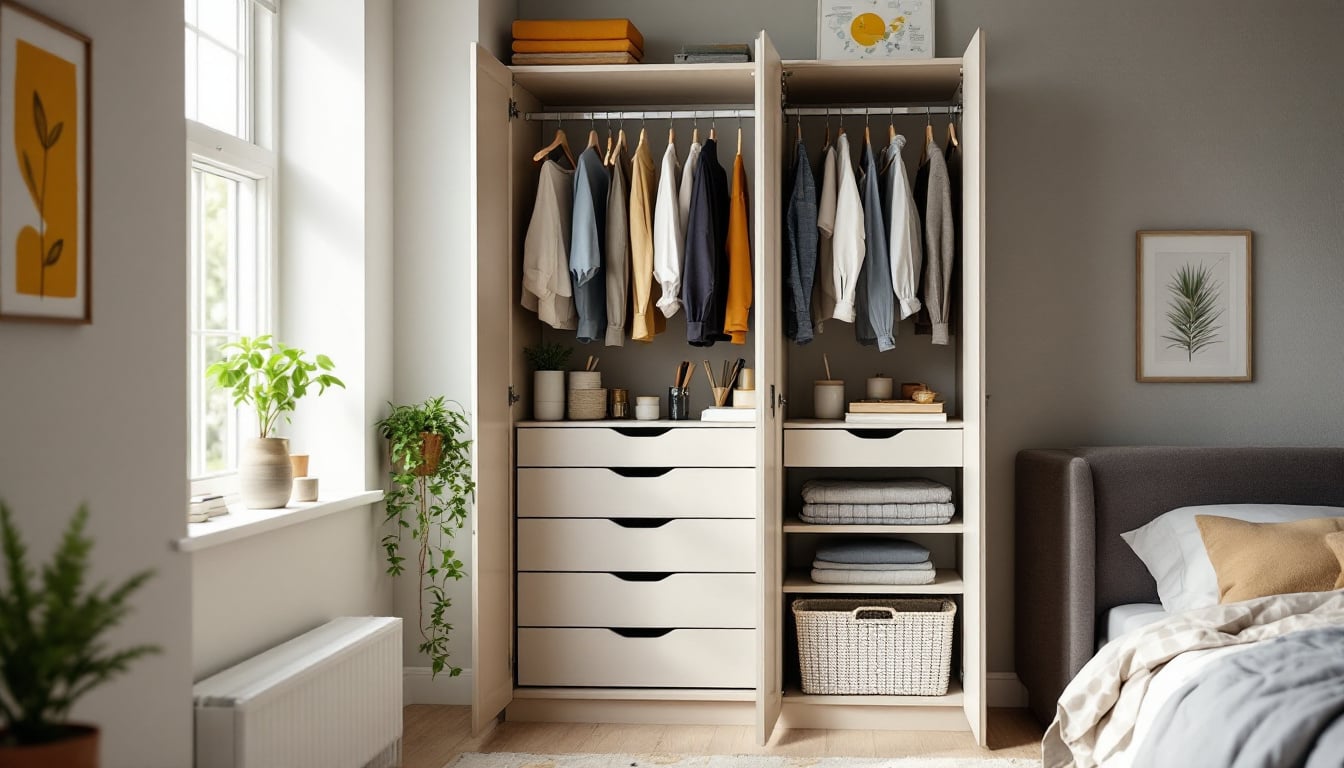
Why Wardrobe Stoke Needs a Smarter Layout
Wardrobe Stoke usually becomes a space problem before it becomes a style problem. Once shelves, rails, and boxes start competing for the same area, the usable space shrinks fast. The fix is not just buying more storage, it is deciding what type of storage each item actually needs, then building the layout around that. A good fitted wardrobe plan can recover a surprising amount of room without making the bedroom feel crowded.
The 3-part space check
Start with three measurements: hanging height, usable depth, and dead space above or beside the wardrobe. In many rooms, the wasted area sits at the top and in the corners, not in the main body of the unit. If you can measure those zones before you shop or commission a fitted design, you are already ahead. That is the practical starting point for wardrobe Stoke planning, especially if the room has slopes, alcoves, or awkward recesses.
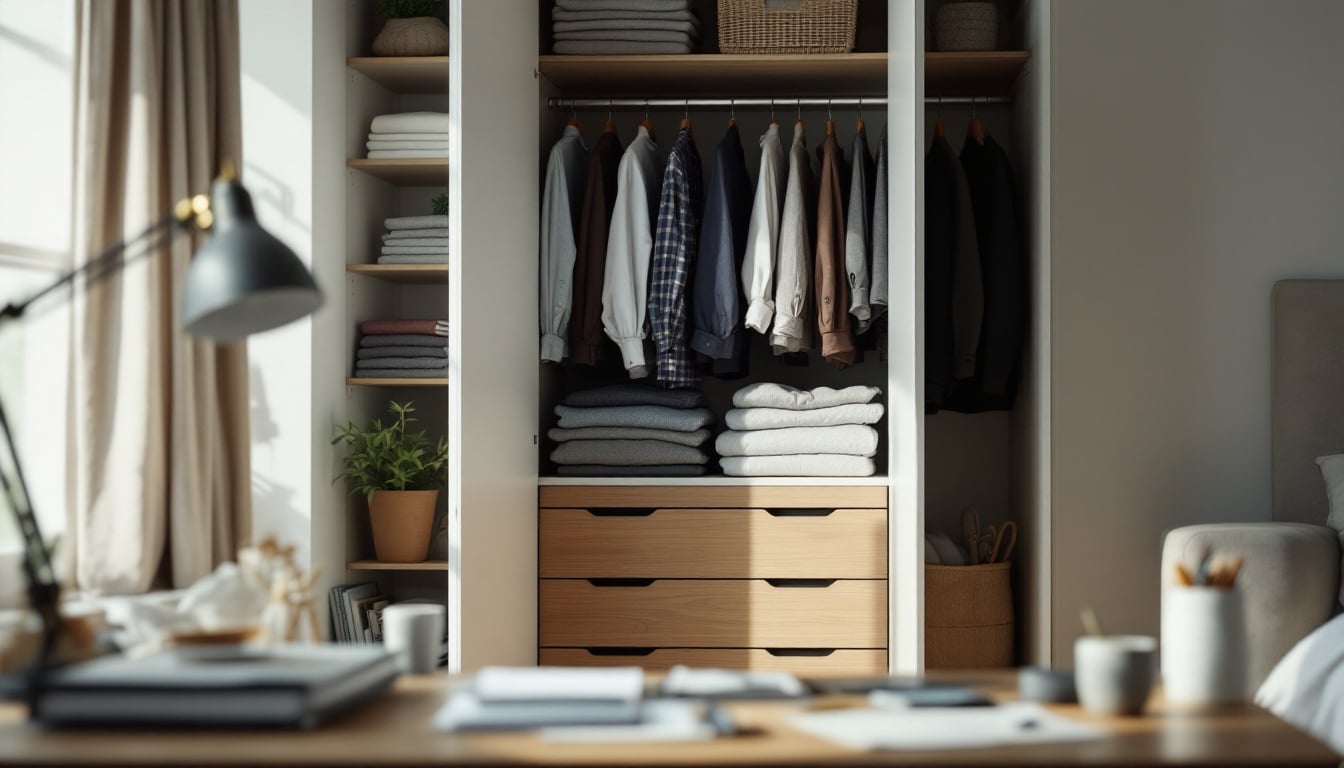
Smart Way 1: Use the full height of the room
The fastest way to maximise wardrobe Stoke storage is to build upward instead of outward. A wardrobe that stops well below the ceiling leaves a gap that collects dust and gives you no usable benefit. Tall fitted wardrobes, full-height doors, and top-box storage make that vertical space work harder. For most rooms, the trade-off is simple: you gain capacity, but you may need a step stool for seasonal items.
When height helps and when it does not
Use full-height storage if you have bulky bedding, spare duvets, or out-of-season clothing that you only reach a few times a year. Skip overbuilding if the room has low ceilings, heavy visual clutter, or you need quick daily access to everything. A practical rule is to reserve the highest shelves for low-use items and keep the most-used zone between shoulder and knee height. That keeps the wardrobe Stoke layout efficient, not just large.
Smart Way 2: Separate hanging zones by garment type
One of the most common wardrobe mistakes is using a single hanging rail for everything. Long coats, shirts, dresses, and folded tops do not all need the same space. In wardrobe Stoke planning, a double-hang section can nearly double capacity for shorter garments, while a long-hang zone keeps dresses and coats from crushing lower shelves. The best layouts usually mix both rather than choosing one approach for the whole run.
A simple hanging rule that avoids wasted centimetres
If you wear many shirts, blouses, or jackets, a double-rail setup is usually more efficient than a large single rail. If your wardrobe is heavy on dresses or long coats, dedicate one tall section instead of forcing them into a standard configuration. This is where bespoke wardrobe solutions make a real difference, because the internal layout should follow your clothing, not the other way around. For wardrobe Stoke, that fit is often what separates good storage from frustrating storage.
Smart Way 3: Replace deep piles with fitted shelving
Deep shelves look useful on paper, but in practice they create hidden piles. Items get stacked two or three rows back, then forgotten. For wardrobe Stoke, shallower fitted shelving is often more efficient because every item stays visible. It is especially useful for folded knitwear, denim, bags, and spare bedding. The key is to match shelf depth to what you actually store, not to the full depth of the wardrobe cavity.
Use adjustable shelves to reduce dead zones
Adjustable shelves give you flexibility when your storage mix changes. A shelf spacing of roughly 25 to 35 cm often works well for folded clothes, while taller gaps are better for boots or storage boxes. If you are planning a fitted wardrobe, ask how many shelf positions can be changed later without remaking the whole unit. That detail matters in wardrobe Stoke because storage needs tend to change with seasons, workwear, and family life.
Smart Way 4: Build in drawers for items that collapse in piles
Drawers are not just for small items, they are one of the best tools for keeping wardrobe Stoke organised. Socks, underwear, gymwear, accessories, and folded basics stay more orderly in drawers than on open shelves. Drawers also use lower storage zones well, which are often awkward for long hanging but ideal for high-access storage. If you only add one feature to improve day-to-day use, drawers are usually the safest bet.
Pick drawer depth based on what you store
Shallow drawers work well for accessories and smaller garments because they prevent overfilling. Deeper drawers are better for jumpers, loungewear, or thicker seasonal items. The common pitfall is using one deep drawer for everything, then turning it into a mixed pile. In wardrobe Stoke design, a clean split between small-item drawers and bulk-item drawers keeps the system usable after the first month, which is when many storage setups begin to fail.
Smart Way 5: Use doors and mirrors to reduce visual clutter
Storage is not only about capacity, it is also about how calm the room feels. Sliding or hinged wardrobe doors with a clean finish can make wardrobe Stoke spaces look more settled, even when they are packed efficiently inside. Mirrored doors can also remove the need for a separate full-length mirror, which frees wall space. That said, mirrors help most in smaller rooms where light and visual depth matter.
Choose door style for access, not just appearance
Sliding doors save clearance space in tight rooms, while hinged doors give fuller access to the interior at once. If you need to open both sides and see everything clearly, hinged doors are usually the better daily-use choice. If bed placement limits door swing, sliding doors are the practical answer. For wardrobe Stoke, the right door is the one that fits the room layout without making access awkward.
Smart Way 6: Claim awkward corners, alcoves, and sloped ceilings
This is where fitted furniture usually beats freestanding units. Alcoves, chimney breasts, loft slopes, and uneven recesses often create storage gaps that standard wardrobes cannot use properly. A bespoke wardrobe can turn those awkward shapes into usable hanging, shelving, or drawer space. In wardrobe Stoke projects, these custom fits often deliver the biggest gain because they recover wasted square footage instead of just rearranging existing storage.
What to do with low or irregular spaces
Use low zones for drawers, folded clothes, or shoe storage, not for long-hanging sections. In sloped rooms, position the highest-use items where head height is safest and reserve the lower end for seasonal storage. If you are comparing options, ask whether the layout can be built around the room shape rather than trimmed to it. That distinction matters more than most people expect when planning wardrobe Stoke storage in homes with unusual dimensions.
Smart Way 7: Design around what you actually own
The most efficient wardrobe Stoke layout starts with an honest inventory. If half your clothes are folded basics and half are hanging pieces, your wardrobe should reflect that split. If you own more shoes, bags, or accessories than suits, the internal mix should change accordingly. A good rule is to map your storage by category before choosing the final layout, because the wrong proportions waste space even in a large wardrobe.
A simple inventory method before you order
Take five categories and count what needs hanging, folding, drawer storage, shoe storage, or seasonal storage. That gives you a clearer brief than guessing from memory. If you find that one category dominates, build around it instead of trying to fit everything into a generic template. This approach is especially useful for bespoke wardrobes and fitted furniture, where the internal layout can be tuned before installation. In wardrobe Stoke planning, that one exercise often prevents the most expensive mistakes.
Quick Takeaways
Wardrobe Stoke works best when the layout follows the room, not a standard catalogue format. Full-height storage, mixed hanging zones, fitted shelving, and drawers all solve different problems, so the strongest designs combine several of them. Alcoves, slopes, and corners should be treated as usable space, not dead space. The most practical wardrobe Stoke plans also start with an inventory of what you actually own, because that is what decides the right balance of hanging, folding, and drawer storage.
How to plan a wardrobe that stays usable
A wardrobe that looks organised on installation day can still fail if it is hard to maintain. The test is whether you can put clothes away in under a minute without reshuffling other items. If you have to move two things to store one, the layout is already working against you. The best wardrobe Stoke designs keep the most-used items visible, reachable, and separate from seasonal overflow, so the system stays practical after a busy week.
The 4-step decision framework
First, identify the items you use every day and place them in the easiest reach zone. Second, push less-used items upward or into deeper storage. Third, give every category a fixed home so piles do not spread. Fourth, leave a small buffer of spare capacity, because a wardrobe filled to 100 percent becomes difficult to maintain. That simple framework is often enough to choose between shelves, drawers, rails, or a mixed fitted design for wardrobe Stoke projects.
Common mistakes that waste space
The biggest mistake is overusing one storage type. Too much hanging space leaves empty air below rails, while too many shelves create stacks that collapse. Another issue is ignoring door swing, skirting boards, and room clearance, which can make a theoretically large wardrobe awkward to use. In wardrobe Stoke, the fix is to design for movement as well as storage, because space only counts if you can access it comfortably.
When bespoke design is worth it
Bespoke design is worth considering when the room is irregular, storage needs are mixed, or you want the unit to feel built into the space. It is also a sensible route if you want to match specific wardrobe doors design options or integrate features like sloped cupboards, alcove cupboards, or sliding doors wardrobes. A fitted solution usually makes the most sense when standard furniture leaves at least one major gap unused. In wardrobe Stoke terms, that is where the extra planning pays off.
A practical next step if you need more room now
If your current wardrobe is already overcrowded, start with a quick sort before you replace anything. Remove anything damaged, unused, or seasonally irrelevant, then measure the remaining items by category. Once you know the real mix, you can decide whether a re-layout is enough or whether a fitted wardrobe is the smarter fix. For many homes, that step alone makes the wardrobe Stoke problem much clearer and stops you from overbuying storage that still does not fit the room.
Why a fitted wardrobe can solve the wrong-space problem
Freestanding furniture often leaves thin gaps, wasted top space, and awkward corners that never quite get used. Fitted furniture closes those gaps and lets the inside be planned around the contents instead of the box. If you are comparing providers, look for one that offers tailored layouts rather than a one-size-fits-all specification. That is where a studio such as Finest Furniture Studio fits naturally into the conversation, especially if you want a custom layout rather than a compromise.
Frequently Asked Questions
What does wardrobe Stoke mean in practice?
In practice, wardrobe Stoke refers to planning a wardrobe layout that makes better use of the space you already have. It usually means combining hanging rails, fitted shelving, and drawers so the wardrobe feels larger without taking more floor area.
How do I maximise space in a wardrobe Stoke layout?
The most effective wardrobe Stoke approach is to use full height, split hanging into short and long sections, and add drawers for smaller items. A fitted wardrobe design is often the best option when you want to use alcoves, awkward corners, or sloped ceilings properly.
Is a fitted wardrobe better for wardrobe Stoke storage?
Often, yes, especially if the room has unusual dimensions or you want a cleaner built-in look. A fitted wardrobe can reduce wasted gaps and create a more efficient wardrobe Stoke storage layout than a freestanding unit. The trade-off is that it requires better planning up front.
What should I measure before planning wardrobe Stoke storage?
Measure the ceiling height, available width, usable depth, and any obstacles such as skirting boards or sloped ceilings. It also helps to list how many items need hanging, folding, or drawer space so your wardrobe Stoke design matches your actual storage needs.
Which wardrobe doors work best for small wardrobe Stoke rooms?
Sliding doors are often the most practical choice in tighter rooms because they do not need clearance to open. Hinged doors give better full-access visibility, so the best choice depends on whether the room layout or the need for easier access matters more in your wardrobe Stoke setup.
How do I stop a wardrobe Stoke layout from becoming cluttered again?
Keep categories separate and avoid mixing every item type on the same shelf or rail. A practical wardrobe Stoke system usually works best when daily-use items stay at eye level and seasonal items are stored higher up or in deeper sections.
When should I consider bespoke wardrobe solutions for wardrobe Stoke?
Consider bespoke wardrobe solutions when standard furniture leaves dead space, the room has an awkward shape, or you need a very specific mix of shelving, drawers, and hanging. That is usually the point where a tailored wardrobe Stoke design becomes more efficient than buying another off-the-shelf unit.


One Response