



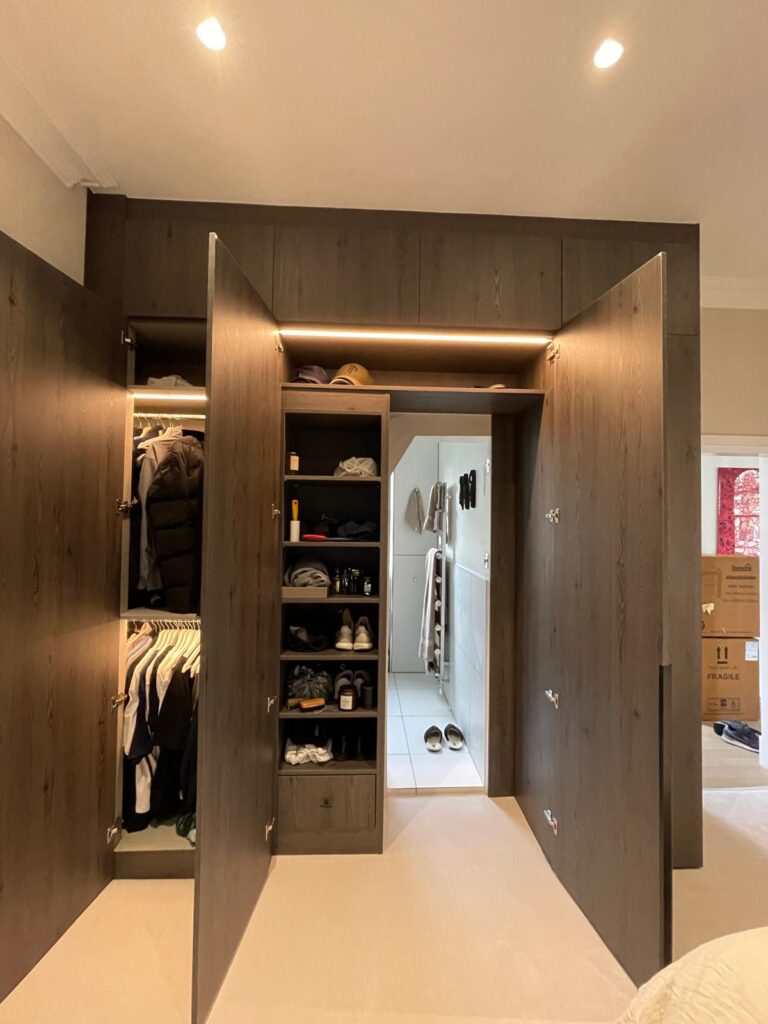

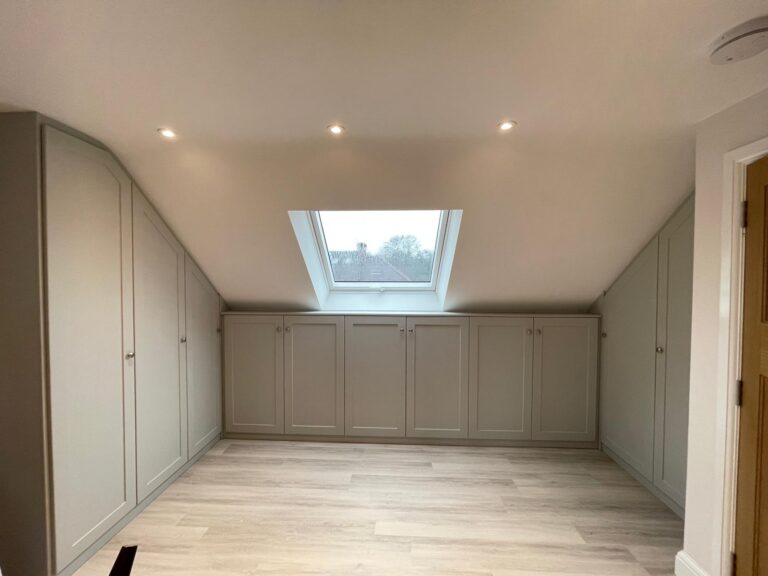

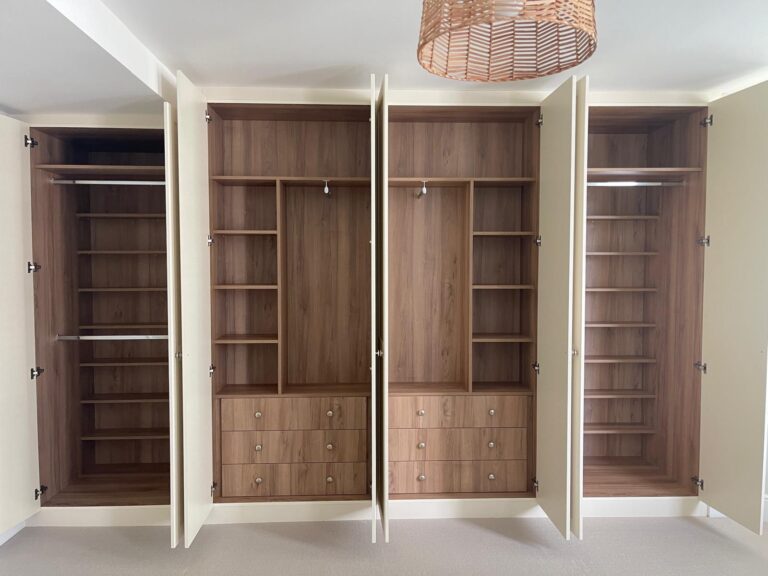
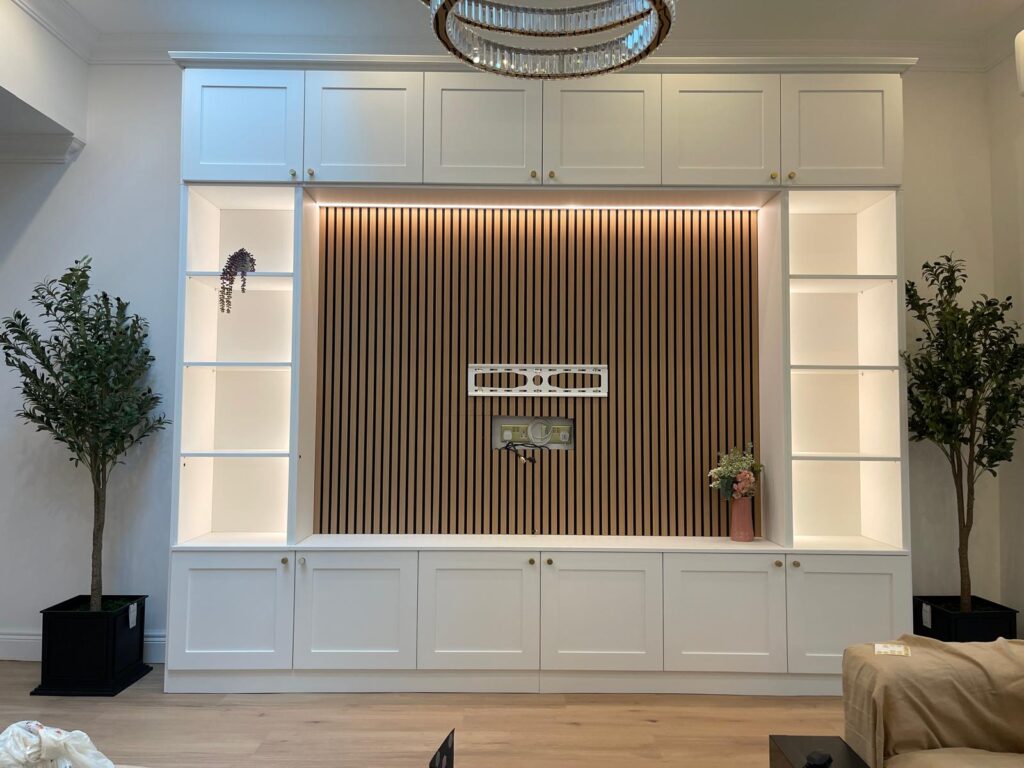



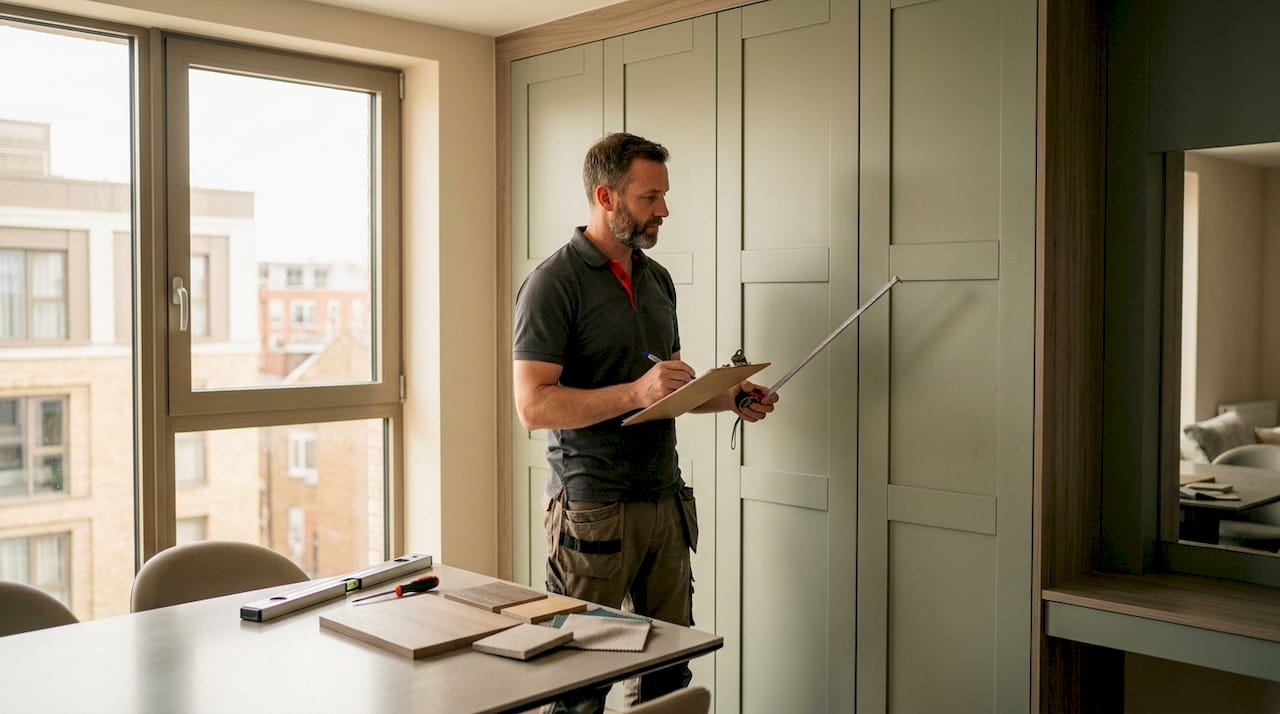
Selecting wardrobe finishes is the process of choosing the surface material, coating, and colour of your bespoke wardrobe to achieve the right balance of aesthetics, durability, and practicality. The finish is not a cosmetic afterthought. It defines how your wardrobe interacts with the room’s light, architecture, and daily use. At Finest Furniture Studio, we work with homeowners across London, from Richmond and Wimbledon to Putney and Chelsea, to match finishes precisely to each home’s character. This guide covers every key decision point so you can choose with confidence, whether you are fitting a built-in wardrobe in a period property or a sleek loft conversion.
What types of wardrobe finishes are available?
Wardrobe surface treatment, the industry term for what most homeowners call a “finish,” covers the material applied to the visible exterior of doors, frames, and carcasses. The category is broad, and each option carries distinct trade-offs between appearance, cost, and longevity.
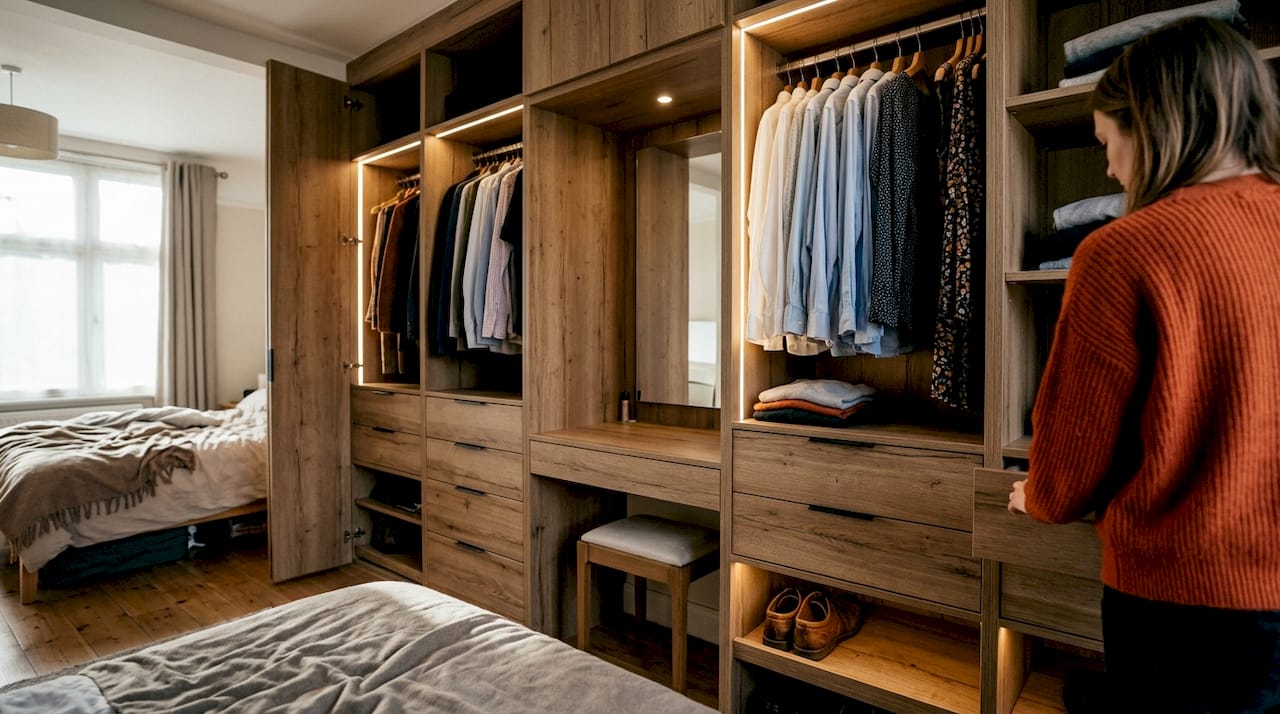
The main finish categories
The six most common finish types for bespoke wardrobes are:
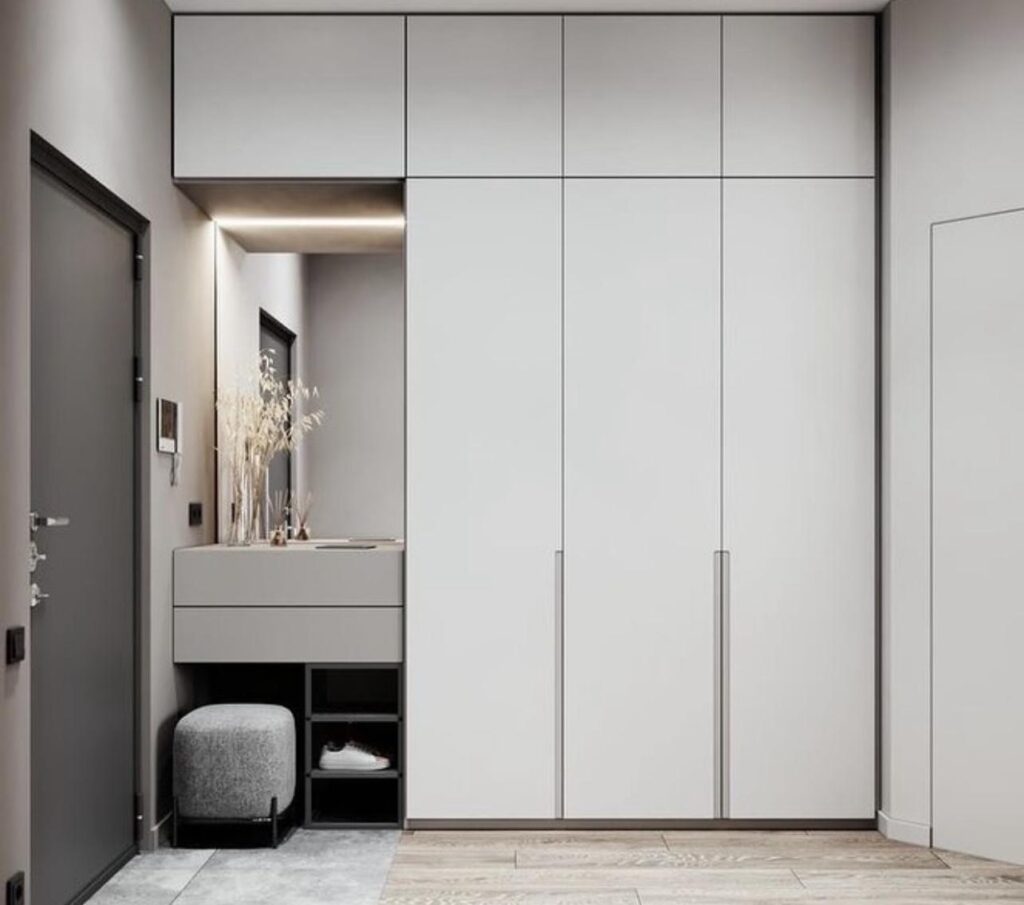
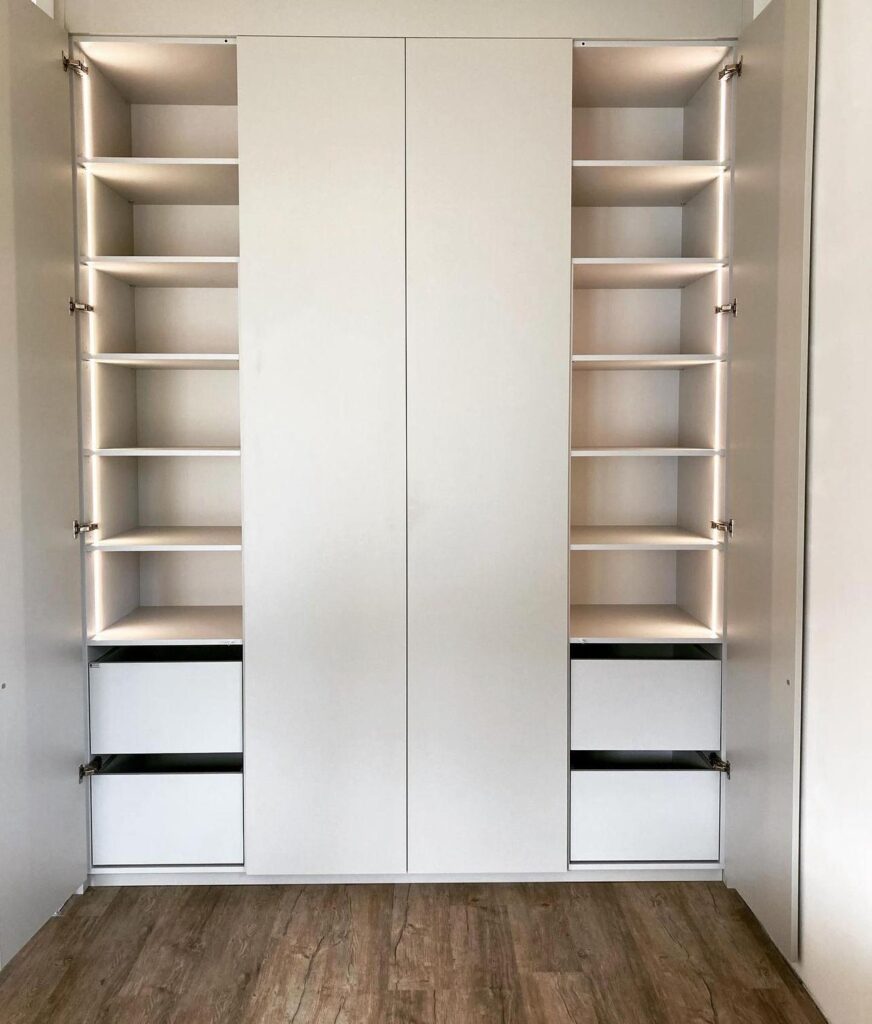
- Matte and satin lacquer. Matte and satin finishes are the preferred choice in UK luxury bedroom design for 2026. They reduce glare and conceal fingerprints better than high-gloss alternatives, making them highly practical for everyday use.
- High-gloss lacquer. Glossy surfaces are highly reflective and enlarge the perception of space. They are prone to showing smudges and require more frequent cleaning.
- Veneer. Veneers provide an authentic wood appearance more sustainably and stably than solid wood. They allow consistent grain matching and resist climate fluctuations, which matters in British homes.
- Laminate and foil wrap. These factory-applied finishes are cost-effective and available in a wide range of colours and textures. They are less repairable than hand-sprayed options and can delaminate over time.
- Glass and mirror. Mirrored doors enhance light and volume in compact bedrooms. They require more frequent cleaning and can feel cold without decorative fretwork or frame detailing.
- Solid wood. Solid wood offers timeless elegance and genuine durability. It needs more maintenance and is sensitive to humidity changes compared to engineered substrates.
Substrate matters as much as surface
The material beneath the finish determines how well it performs. MDF with hand-sprayed paint is more dimensionally stable in the British climate and is the standard choice for painted bespoke wardrobes. High-density fibreboard (HDF) is the preferred substrate for painted doors, yielding smooth surfaces that solid wood cannot reliably match in variable UK conditions. Plywood offers good structural strength for carcasses, while solid wood remains the prestige choice for visible frames and decorative elements.
| Finish type | Appearance | Durability | Maintenance | Best for |
|---|---|---|---|---|
| Matte lacquer | Soft, non-reflective | High | Low | Busy households, luxury bedrooms |
| High-gloss lacquer | Bright, reflective | Medium | High | Small rooms, contemporary spaces |
| Veneer | Natural wood grain | High | Medium | Period and luxury homes |
| Laminate/foil | Versatile, uniform | Medium | Low | Budget-conscious projects |
| Mirror/glass | Reflective, open | Medium | High | Compact bedrooms |
| Solid wood | Rich, natural | High | High | Statement pieces, period properties |
Pro Tip: Always request a physical sample of your chosen finish and place it in your bedroom for at least 48 hours. Finishes look different under morning light, artificial evening light, and overcast British daylight. What reads as warm taupe in a showroom can appear grey at home.
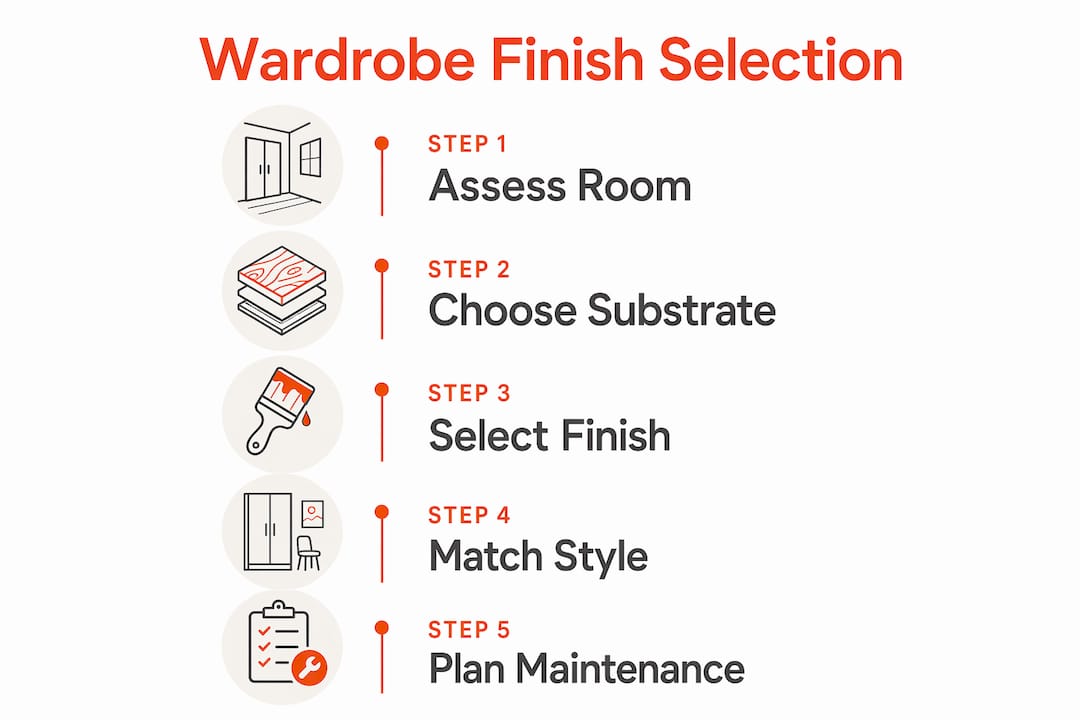
How do room lighting, space, and existing interiors affect finish choices?
Lighting is the single most underestimated factor in choosing wardrobe finishes. A finish that looks perfect in a south-facing room in Fulham can appear flat and lifeless in a north-facing bedroom in Ealing. Getting this right requires you to assess your room before you commit to any material.
Natural light and finish reflectivity
Rooms with strong natural light can carry matte and dark finishes without feeling oppressive. North-facing rooms benefit from lighter, more reflective finishes that bounce available light around the space. High-gloss and mirrored finishes work particularly well in these conditions, as they amplify whatever light enters the room.
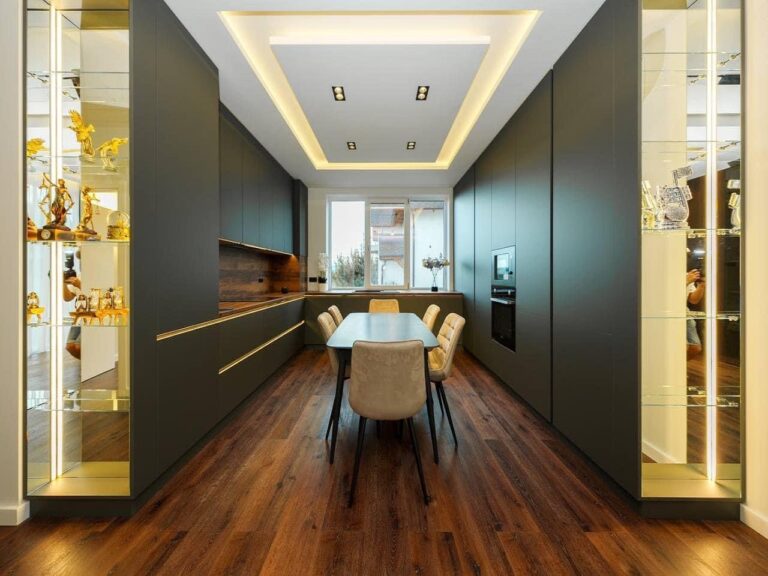
Dark tones such as charcoal and deep navy create a luxury effect but need careful attention to lighting to avoid appearing too heavy. Designers note that these tones convey depth and elegance when paired with warm artificial lighting and pale walls. Used without that balance, they can make a room feel smaller than it is.
Using reflective finishes in compact spaces
Mirrored and glass finishes are the most effective tool for visually expanding a small bedroom. They reflect the room back on itself, creating a sense of depth that no paint colour can replicate. The trade-off is maintenance: glass surfaces show every fingerprint and dust particle, so they suit homeowners who clean regularly.
“Material selection must complement a home’s existing architecture and lighting for successful integration. High-gloss lacquer suits luxury hotel aesthetics but should not compete with reflective surfaces like stone floors or glass.”
Materials That Define Luxury, Strikeapose
Matching finishes to floors, walls, and architectural features
The wardrobe finish should sit within the room’s existing palette, not fight it. A few practical principles apply:
- Match the undertone, not the exact colour. A warm oak veneer pairs with warm-toned walls; a cool grey lacquer pairs with cool-toned stone or painted plaster.
- Contrast texture rather than colour for a sophisticated result. A matte wardrobe against a gloss-tiled floor creates visual interest without clashing.
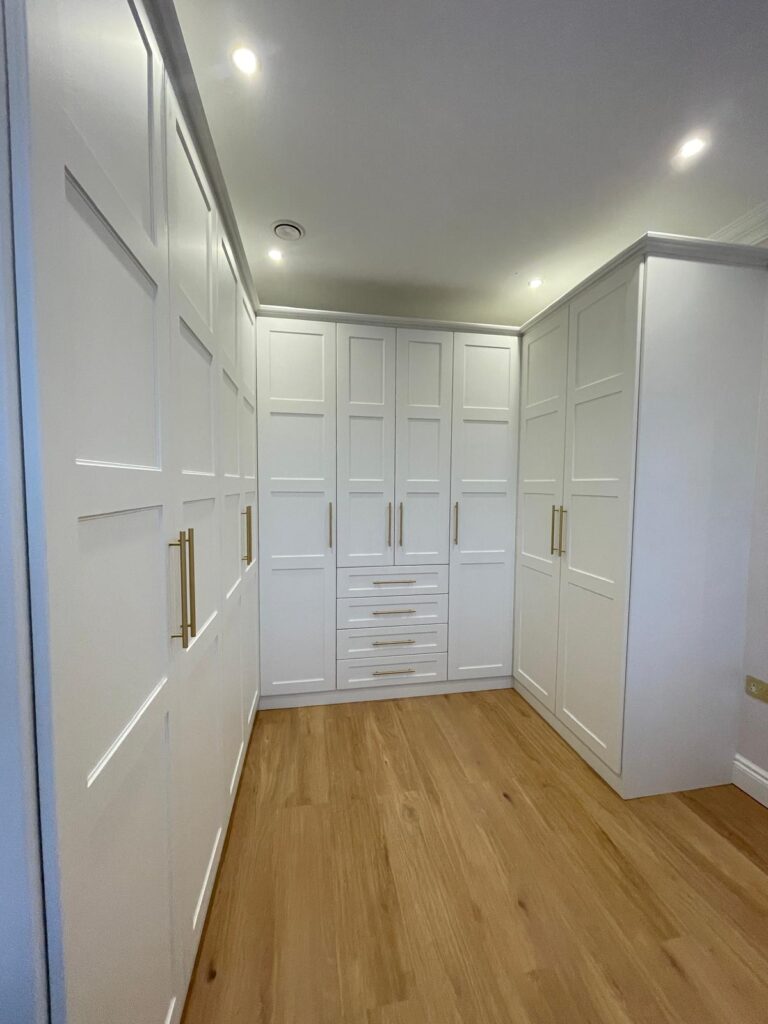
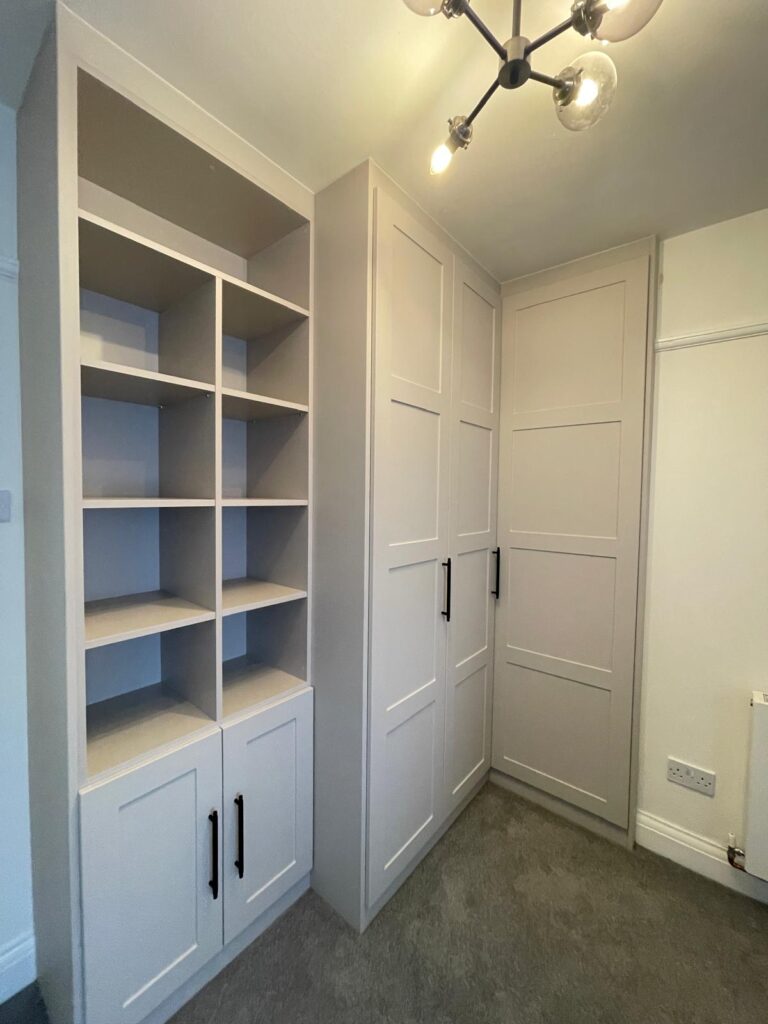
- In period properties such as Georgian or Victorian homes in Richmond or Twickenham, wood-effect finishes and Shaker-style doors maintain architectural coherence.
- In modern apartments across Hammersmith or Chelsea, handle-free gloss or satin lacquer doors complement the clean lines of contemporary interiors.
You can find detailed colour pairing advice in our guide to wardrobe colour selection, which covers undertones, contrast ratios, and room-specific recommendations.
What practical considerations should influence wardrobe finish selection?
A finish that looks beautiful on day one but chips, stains, or warps within three years is a poor investment. Practical performance must sit alongside aesthetics when you are choosing wardrobe materials for a bespoke piece that is built to last.
Durability by household type
- Households with children. Matte and satin lacquer finishes are the most forgiving. They conceal minor scuffs and do not show handprints the way gloss surfaces do. Avoid high-gloss in children’s bedrooms unless you are prepared for daily cleaning.
- High-traffic master bedrooms. Hand-sprayed lacquer finishes offer superior durability and colour saturation compared to factory-applied foil or laminate finishes. Factory finishes tend to delaminate over time, whereas hand-sprayed finishes bond directly to the surface and allow easy touch-ups.
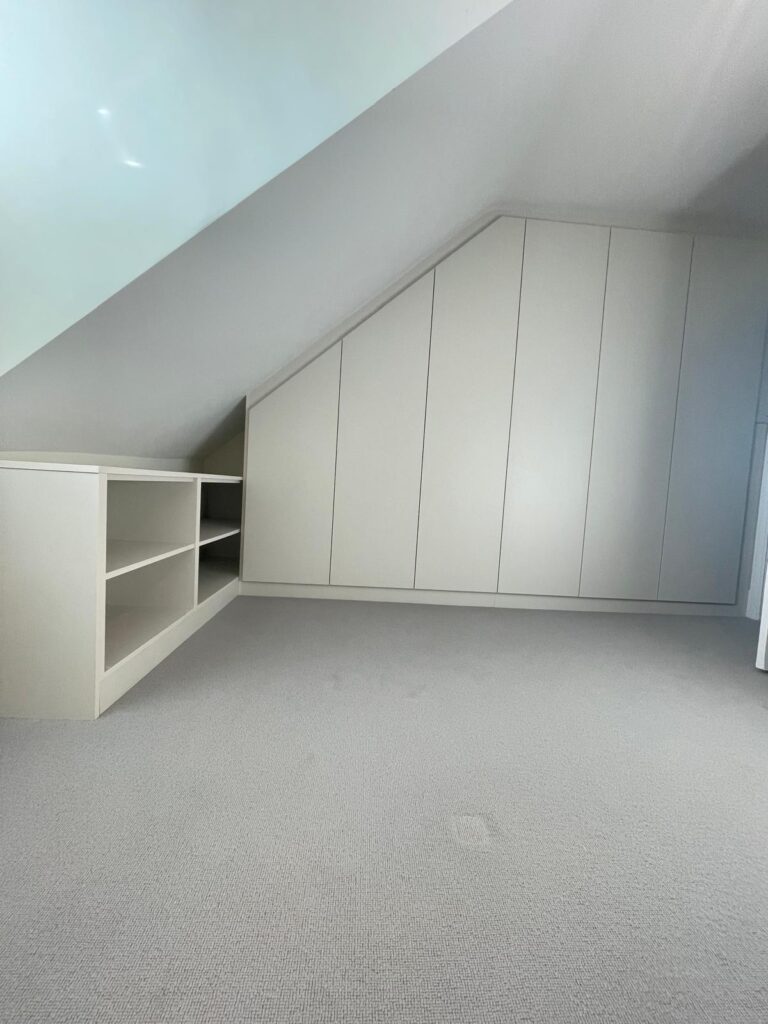
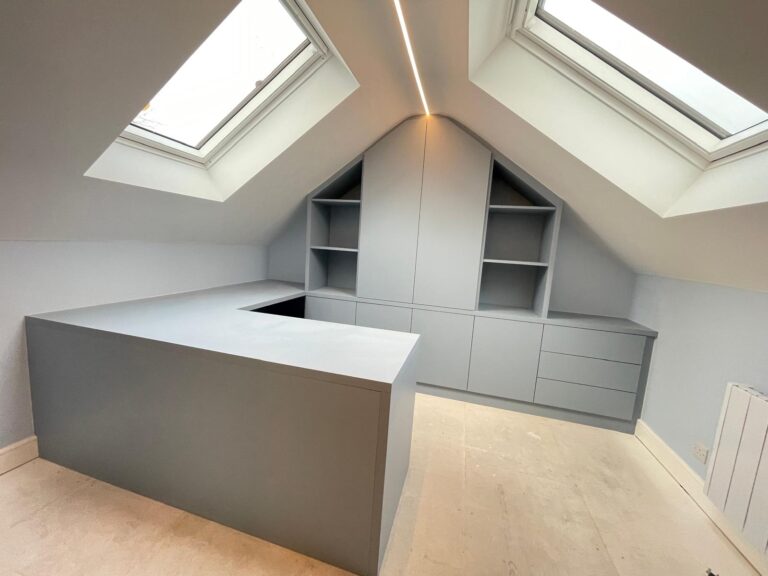
- Loft conversions and rooms with temperature variation. MDF and HDF substrates outperform solid wood in spaces where temperature and humidity fluctuate. Solid wood can expand and contract, causing doors to warp or stick in loft bedrooms.
- Humid environments such as en-suite adjacent wardrobes. Avoid unprotected solid wood and standard laminate. Moisture-resistant MDF with a sealed lacquer finish is the correct specification here.
Cleaning and maintenance by finish type
Choosing manufacturer-recommended cleaning products is the single most important maintenance decision you will make. Incorrect products containing silicones or harsh chemicals cause permanent finish damage. That applies to every finish type, from veneer to gloss lacquer.
For routine care:
- Matte and satin lacquer: wipe with a damp microfibre cloth. No abrasive cleaners.
- High-gloss lacquer: use a specialist gloss cleaner. Buff dry immediately to prevent water marks.
- Veneer: dust regularly and treat with a wood-specific conditioner twice a year.
- Mirror and glass: use a streak-free glass cleaner and a lint-free cloth.
Pro Tip: Ask your wardrobe manufacturer for a written care guide specific to your finish at the point of installation. Finest Furniture Studio provides this as standard with every fitted wardrobe project.
Sustainability and environmental impact
Veneers appeal to homeowners who want the look of real wood with a lower environmental footprint. A single log yields far more veneer surface area than solid timber, making it a more resource-efficient choice. Look for FSC-certified veneers and water-based lacquers to reduce the environmental impact of your bespoke wardrobe further.
How to coordinate wardrobe finishes with your bedroom style
The most successful bespoke wardrobes feel as though they were always part of the room. That result comes from deliberate coordination between the finish and the wider design scheme, not from choosing the most expensive option available.
Aligning with 2026 UK luxury design trends
The 2026 trend favours natural, earthy tones combined with matte or satin finishes over high-gloss white. This “quiet luxury” direction prioritises warmth and longevity over visual drama. Colours such as warm stone, aged linen, and sage green are replacing the stark whites and high-gloss greys that dominated the previous decade. For homeowners in Wimbledon, Kingston, and Barnes who want a bedroom that feels current in 2026 and still feels right in 2031, this palette is a sound investment. You can read more about these shifts in our 2026 wardrobe trends guide.
The broader home decor trends for 2026 confirm this move toward organic textures and tonal layering across all room types, not just bedrooms. Wardrobe finishes that echo this direction will integrate naturally into the wider home.
Balancing statement and subtle features
- A statement wardrobe finish works best when the rest of the room is restrained. A deep charcoal lacquer wardrobe reads as intentional against pale walls and neutral flooring.
- Subtle finishes allow other design elements, such as artwork, lighting, or bedding, to take centre stage.
- Mixing textures within a single wardrobe, for example a matte lacquer door with a brass or brushed nickel handle, adds depth without visual noise.
- Decorative elements such as fluted panels, reeded glass inserts, or routed groove detailing give a bespoke wardrobe character that a flat door cannot achieve.
Matching finishes to architectural style
Period homes in Richmond, Chiswick, and Twickenham suit Shaker-style doors in matte or eggshell finishes. The clean lines of the Shaker frame complement original cornicing and skirting without mimicking period furniture too literally. Georgian properties respond well to symmetrical panel arrangements and warm wood tones.
Modern homes in Fulham, Hammersmith, and Chelsea suit handle-free slab doors in satin or gloss lacquer. Art Deco properties, which appear frequently in Ealing and parts of West London, pair well with high-gloss finishes in deep jewel tones, complemented by geometric brass hardware.
Key takeaways
Selecting the right wardrobe finish requires matching material performance, room conditions, and design style to produce a bespoke result that lasts and looks right for years.
| Point | Details |
|---|---|
| Prioritise substrate quality | MDF and HDF outperform solid wood for painted finishes in the variable British climate. |
| Match finish to light conditions | North-facing rooms need reflective or lighter finishes; south-facing rooms can carry matte and dark tones. |
| Choose hand-sprayed over factory laminate | Hand-sprayed lacquer bonds directly to the surface, resists delamination, and allows touch-ups. |
| Follow manufacturer care guidance | Using incorrect cleaning products causes permanent damage to every finish type. |
| Align with 2026 quiet luxury trends | Matte and satin finishes in earthy, natural tones offer longevity and current design relevance. |
What I have learned from years of wardrobe finish decisions
After working on bespoke wardrobe projects across London, from loft conversions in Putney to alcove wardrobes in Chelsea, the question I hear most often is: “Which finish is the safest choice?” My honest answer is that there is no universally safe choice. There is only the right choice for your specific room, your household, and your tolerance for maintenance.
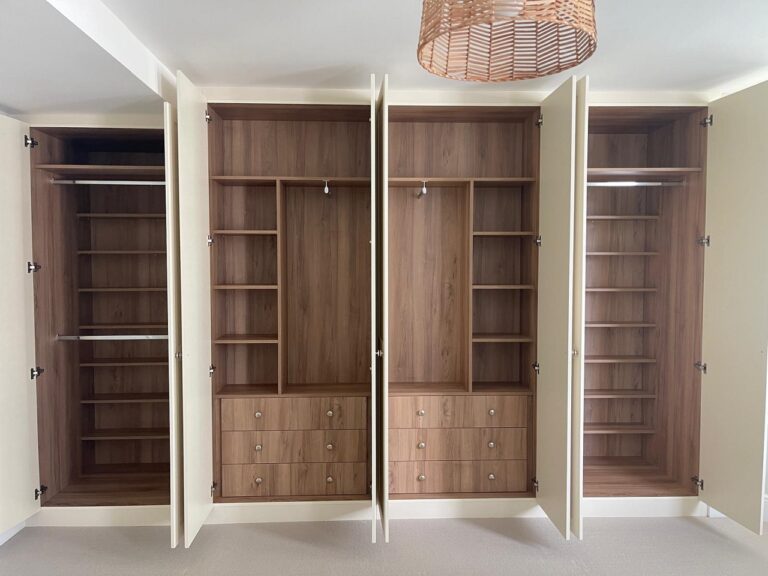
The detail that most homeowners overlook is edge banding. Edge banding quality and grain matching are subtle yet important indicators of a high-quality finish. Inferior edge banding lifts within a few years. Well-executed grain flow creates a visual harmony that you notice even if you cannot name it. When you are assessing a wardrobe quote, ask to see the edge banding on a sample door. It tells you more about the manufacturer’s standards than any brochure photograph.
I also think the industry undersells the importance of requesting samples in your own home. Showroom lighting is designed to flatter every finish. Your bedroom lighting is not. I have seen homeowners commit to a high-gloss white wardrobe in a showroom, then find it reads as cold and clinical at home under warm LED downlights. Spending a week with physical samples before signing off on a specification is not indecisive. It is the correct process.
The other point worth making plainly: successful wardrobe finishes require balance between design integration and practical performance. Beauty and durability are not opposing forces. A hand-sprayed matte lacquer on an HDF substrate is both beautiful and highly durable. The two qualities reinforce each other when the specification is correct from the start.
— Aureliu
Bespoke wardrobe finishes, designed for your London home
At Finest Furniture Studio, we design and manufacture bespoke fitted wardrobes for homeowners across West London, including Richmond, Wimbledon, Putney, Chiswick, and Fulham. Every project begins with a free design consultation at your home, where we assess your room’s lighting, architecture, and storage needs before recommending a finish specification.
Our fitted wardrobes carry a 10-year quality guarantee, and installation is completed within 7–12 days. We also remove and dispose of your old wardrobe as part of the service. Whether you need a custom wardrobe in West London or a loft fitted wardrobe in a sloped-ceiling conversion, we build to your exact specification. You can also explore our full range of fitted wardrobe solutions to find the right starting point for your project.
Call us on 07468 150807 or WhatsApp, or visit us at 124 City Road, Kemp House, London, EC1V 2NX to arrange your free design visit.
FAQ
What is the most durable wardrobe finish for a busy household?
Matte and satin hand-sprayed lacquer on an MDF or HDF substrate is the most durable choice for high-traffic households. It conceals fingerprints, resists daily wear, and allows touch-ups if the surface is damaged.
Do gloss wardrobe finishes make a room look bigger?
High-gloss finishes are highly reflective and do enlarge the perception of space. Mirrored wardrobe doors produce the strongest effect, though both options require more frequent cleaning than matte alternatives.
How do I choose between veneer and solid wood for a bespoke wardrobe?
Veneer is the more practical choice for most British homes. It provides an authentic wood appearance, resists climate fluctuations better than solid wood, and is more resource-efficient. Solid wood suits statement pieces where budget and maintenance commitment are not constraints.
What finish works best in a loft wardrobe?
MDF or HDF with a sealed lacquer finish is the correct specification for loft wardrobes, where temperature and humidity vary. Solid wood and standard laminate are prone to warping in these conditions.
How do I maintain a high-gloss wardrobe finish without damaging it?
Use a specialist gloss cleaner and buff the surface dry immediately after wiping. Avoid products containing silicones or abrasive compounds, as these cause permanent damage to lacquered surfaces.