
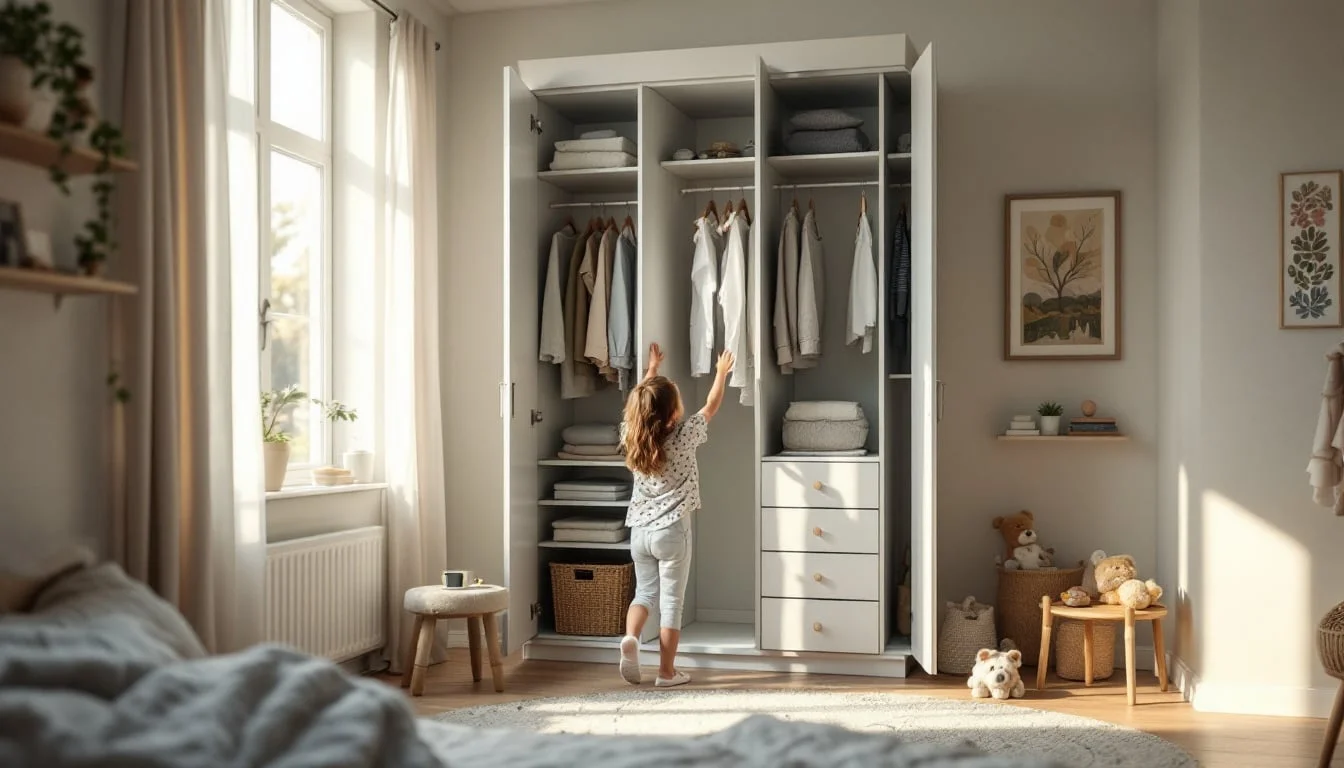
What makes kids wardrobes work long term
Kids wardrobes need to do more than hold tiny clothes. The real test is whether they still work when school uniforms, longer coats, sports kits, and bulkier shoes start taking over. If you are looking at kids wardrobes now, the best choice is one that gives you flexible hanging space, adjustable shelving, and enough depth to handle changing storage needs without wasting floor area.
Set the wardrobe around growth stages
A wardrobe that works at age four can fail by age nine if the internal layout is fixed too early. Start by thinking in growth stages rather than age alone. The useful rule is simple: keep the most-used items between waist and shoulder height, then use higher and lower zones for seasonal or less frequent storage. That layout reduces daily mess and makes kids wardrobes easier to adapt later.
Choose adjustable rails before decorative extras
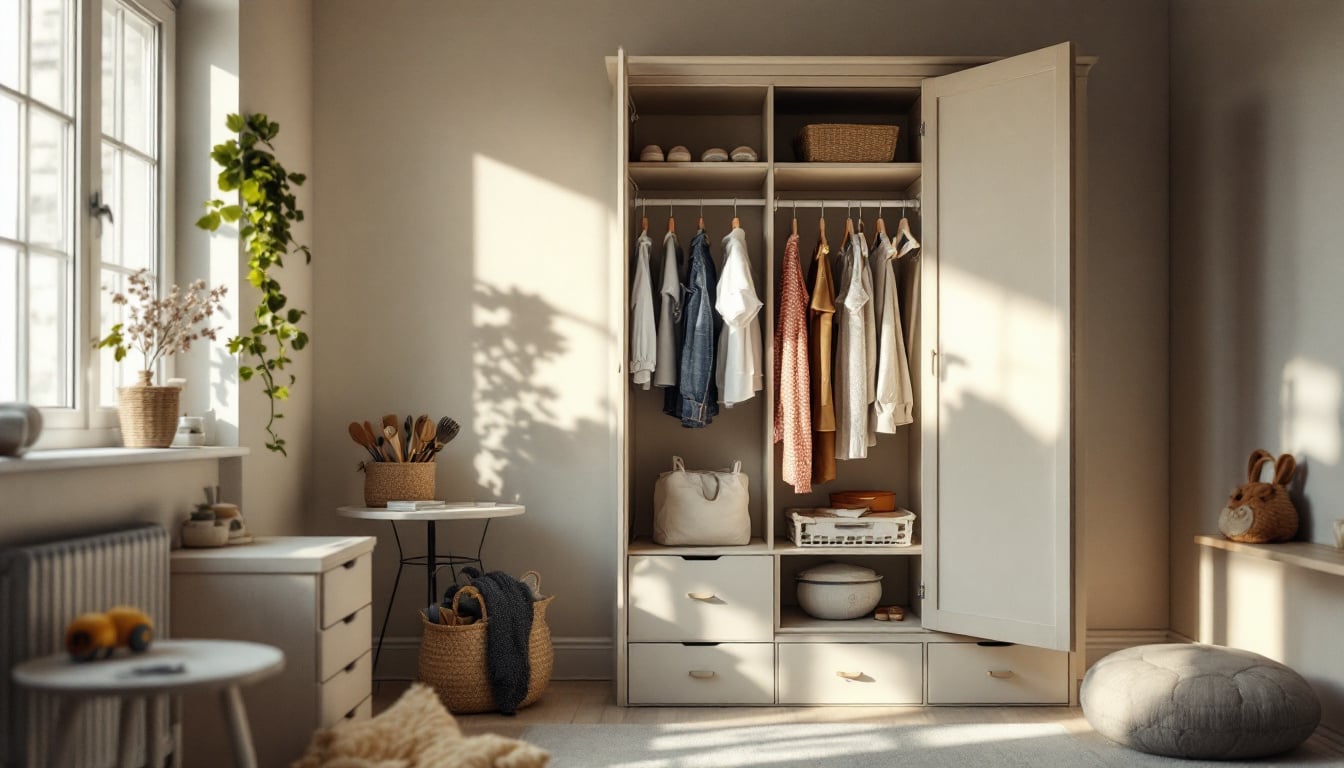
The first design choice should usually be adjustability, not finishes. A movable hanging rail lets you lower the rail for younger children, then raise it as they grow. That matters because it keeps clothing reachable without constant adult help. If you are comparing fitted kids wardrobes, ask whether shelves and rails can be repositioned without major refitting. That one detail often adds years of useful life.
Make the lower zone work hard
The bottom section is often wasted, yet it is the most useful area for young families. Deep drawers for pyjamas, pull-out baskets for socks, and open cubbies for school shoes keep the daily routine fast. A practical rule is to reserve the lowest 30 to 40 cm for items a child can manage independently. In kids wardrobes, independence matters as much as capacity because it reduces daily tidying.
Use a narrow mix of open and closed storage
Purely open storage looks tidy for a week and then becomes clutter. Fully closed storage can hide the system so well that children do not use it properly. The better balance is a few visible zones for everyday items and closed areas for bulkier or seasonal pieces. For built-in kids wardrobes, that trade-off gives you order without turning the room into a row of identical doors.
H3 | Open sections for daily access
Open shelves work best for school bags, cardigan stacks, and the next day’s outfit. The key is to keep them shallow enough that items do not disappear behind each other. If a shelf is too deep, it becomes a dumping ground. In practical terms, open sections should support a quick five-minute reset at the end of the day, which is a better test than appearance alone.
H3 | Closed sections for the long haul
Closed cupboards are better for spare bedding, old-size clothes waiting to be handed down, and larger seasonal items. They also protect visual calm in a bedroom. If you are planning kids wardrobes for a shared room, closed storage helps one child’s mess stay out of sight, which can make the whole space feel more manageable. The trade-off is that closed storage needs a clear internal labelling system or it gets forgotten.
Plan for a taller hanging zone later
One of the easiest mistakes is designing only for current height. Children grow fast, and hanging space that feels generous now may become cramped within a couple of years. A smart approach is to leave at least one section tall enough for long dresses, school blazers, or winter coats later on. In fitted wardrobes, this flexibility is usually easier to build in from the start than to retrofit.
Use modular interiors instead of fixed compartments
Modular interiors are the safest way to avoid an early replacement. Think of them as a wardrobe layout that can change from toy storage to clothing storage to teen storage without rebuilding the carcass. The practical benefit is not just convenience, it is cost control. When the structure stays the same and the inside changes, kids wardrobes can last through several life stages with fewer compromises.
H3 | Best modules for younger children
For younger children, drawers, low rails, and shallow shelves usually beat large hanging areas. They can see what they own and put things back without help. A useful setup is one rail for current clothes, one drawer for small items, and one open basket for accessories. That kind of simple system is often more effective than a complex interior that looks impressive but is hard to maintain.
H3 | Best modules for older children
As children get older, the wardrobe should shift toward more hanging room, a dedicated school section, and space for bags or sports kit. This is where adjustable shelving earns its keep. You do not need a whole new wardrobe, only a rebalanced one. If you are comparing kids wardrobes, look for interiors that can change without replacing the doors or the main structure.
Choose doors that suit the room, not just the trend
Door style affects how much usable space the wardrobe really gives you. Sliding doors can work well in smaller bedrooms because they do not need swing clearance, while hinged doors can make the full interior visible at once. The right choice depends on room width, bed placement, and how often the wardrobe is opened during the day. That practical fit matters more than a passing style preference.
H3 | Sliding doors in tight rooms
Sliding doors are often the better choice when bed placement limits the opening arc. They also help in narrow rooms where every extra centimetre matters. The limitation is partial access, since you can only see one side of the wardrobe at a time. For kids wardrobes, that can still be a strong option if the interior is organised into clear zones so nothing gets buried.
H3 | Hinged doors for easier sorting
Hinged doors make it easier to inspect the whole layout quickly, which helps during morning routines and seasonal resets. They do need clearance, so they are best when the room allows it. If you want a wardrobe that can support regular decluttering, hinged doors often make the internal plan easier to maintain. The trade-off is simple: more access, less space efficiency.
Think about materials that can handle daily use
Children lean, pull, drop, and drag things. That means the finish and hardware matter more than many buyers expect. Scratch-resistant surfaces, sturdy hinges, and solid drawer runners can make a bigger difference than a decorative panel. In kids wardrobes, you want surfaces that tolerate frequent contact and easy cleaning. A wipeable finish is usually more useful than a delicate one that needs careful handling.
Check the build quality details that actually fail first
The first weak points are usually hinges, drawer runners, edge banding, and handles. If those feel loose, the wardrobe will age badly no matter how good it looks on day one. Ask how the doors close, whether drawers glide smoothly under load, and whether the edges are sealed properly. Those are the details that separate a wardrobe built for a few years from one that grows with your child.
Measure around the room before you design the storage
Good kids wardrobes are designed around real bedroom constraints, not a generic rectangle. Measure door swings, skirting, radiators, sloped ceilings, and any awkward corners before deciding on depth or door style. A 50 mm mistake can be enough to make a plan frustrating in daily use. For loft rooms or awkward layouts, built-in cupboard solutions often outperform freestanding pieces because they use space more accurately.
H3 | The practical fitting checklist
Before ordering, confirm the exact width, height, and depth available, then note any fixed obstacles. Check whether the wardrobe will block windows, sockets, or bedside access. If you are considering custom wardrobes London suppliers or other UK fitted wardrobe specialists, the useful question is not just whether the wardrobe fits today, but whether it still fits once the room layout changes slightly over time.
Build in a simple reorganisation plan
The best kids wardrobes are easy to reset, not just easy to admire. Every six to twelve months, review what is too small, too large, or rarely used. Move outgrown items higher, bring the current-size clothes to the middle, and use lower drawers for daily wear. That seasonal reset keeps the wardrobe useful and prevents the system from collapsing into a pile of mixed sizes.
H3 | A yearly reset that keeps clutter down
Set one regular review point, ideally before school changes or the start of colder weather. That timing catches the biggest storage shifts before they become messy. You do not need to empty the whole wardrobe each time, only reassign the zones. A 20-minute reset is usually enough if the layout was sensible from the start. That is the real sign of well-designed kids wardrobes.
H2 | Quick Takeaways
The best kids wardrobes are built for change, not for one age only. Adjustable rails, modular shelving, and a sensible mix of open and closed storage give you more useful years from the same footprint. Door style should be chosen around room layout, not just appearance, and the hidden quality details matter more than decorative extras. If you plan around growth stages, the wardrobe stays easy to use and easier to keep tidy.
H3 | Keep the design simple where daily use matters
Children use storage best when the system is obvious. That means low access for everyday items, clear zones for school gear, and enough flexibility to move the layout as they grow. In practice, the most successful kids wardrobes are not the most complicated ones. They are the ones that can be reset quickly, cleaned easily, and adjusted without replacing the whole unit.
H2 | When a bespoke solution makes sense
A bespoke wardrobe is worth considering when the room is awkward, storage needs are changing quickly, or you want one solution that survives several stages of childhood. This is especially useful in rooms with sloped ceilings, alcoves, or tight circulation space. If that sounds familiar, a fitted approach can combine built wardrobes with flexible interiors so the outside stays neat while the inside keeps adapting.
H3 | What to ask before you commit
Ask how the layout can be changed later, what the fitting timeline looks like, and whether the internal parts can be reconfigured without replacing the whole wardrobe. It is also worth checking the warranty and fitting details, because these often matter more than the finish once the room is being used every day. For families comparing kids wardrobes, those practical questions usually reveal the best long-term option.
H2 | A simple decision framework for parents
Use three filters before you choose: room fit, growth flexibility, and daily ease of use. If a wardrobe scores well on only one of those, it is probably not the right long-term choice. A smaller but adaptable layout is often better than a larger one that becomes awkward to use. That rule helps you avoid overbuying storage you will not actually use.
H3 | The 3-question test
First, can a child use the wardrobe independently without climbing or stretching? Second, can the layout change as clothes get larger and routines become more complex? Third, will it still fit the room if furniture around it changes? If the answer is yes to all three, you are probably looking at the right kids wardrobes for the long term.
H2 | A practical next step for UK homes
If you are ready to move beyond guessing, start with a room measurement and a list of what the wardrobe needs to hold in the next three years, not just this season. That gives you a better brief and a more realistic layout. For families who want a made-to-measure result, Finest Furniture Studio can be a sensible place to compare bespoke fitted wardrobes, custom wardrobes London, and other fitted storage options that are built around real room constraints rather than generic sizes.
Frequently Asked Questions
What should kids wardrobes include for long-term use?
For long-term use, kids wardrobes should include adjustable rails, flexible shelving, and a mix of drawers and closed storage. The best kids wardrobe ideas for growing children usually allow the inside layout to change without replacing the full unit.
Are fitted kids wardrobes better than freestanding ones?
Fitted kids wardrobes are usually better when you want to use awkward space well or need the layout to adapt as your child grows. Freestanding wardrobes can work in simple rooms, but they are harder to customise and may waste space around slopes, alcoves, or skirting.
What is the best door style for kids wardrobes in a small room?
Sliding doors are often the best choice for kids wardrobes in a small room because they do not need extra swing space. Hinged doors can be better for full visibility, but they need clearance in front of the wardrobe.
How can I make kids wardrobes easier for children to use?
Keep everyday items between waist and shoulder height, and place school clothes or shoes where your child can reach them independently. This simple layout is one of the most practical kids wardrobe ideas because it reduces clutter and helps children put things away on their own.
How often should kids wardrobes be reorganised?
A seasonal reset every six to twelve months usually works well. As children grow, the best kids wardrobes need occasional rebalancing so current-size clothes stay easy to reach and outgrown items do not take over the useful space.
What are the biggest mistakes to avoid with kids wardrobes?
The biggest mistakes are fixed interiors, too much deep shelving, and choosing door styles that do not fit the room. Another common problem is ignoring hardware quality, which can cause loose doors or sticky drawers long before the wardrobe should need replacing.
Can kids wardrobes grow with teenagers too?
Yes, if the wardrobe uses adjustable interiors and enough hanging height for longer clothes. A well-planned wardrobe can move from toy storage to school storage to teen storage, which is why growth-friendly kids wardrobes are usually designed around flexibility first.

