




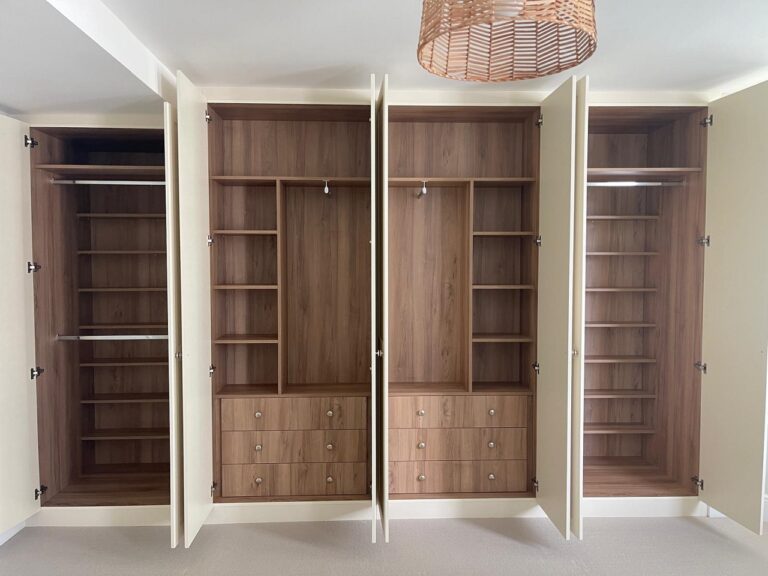

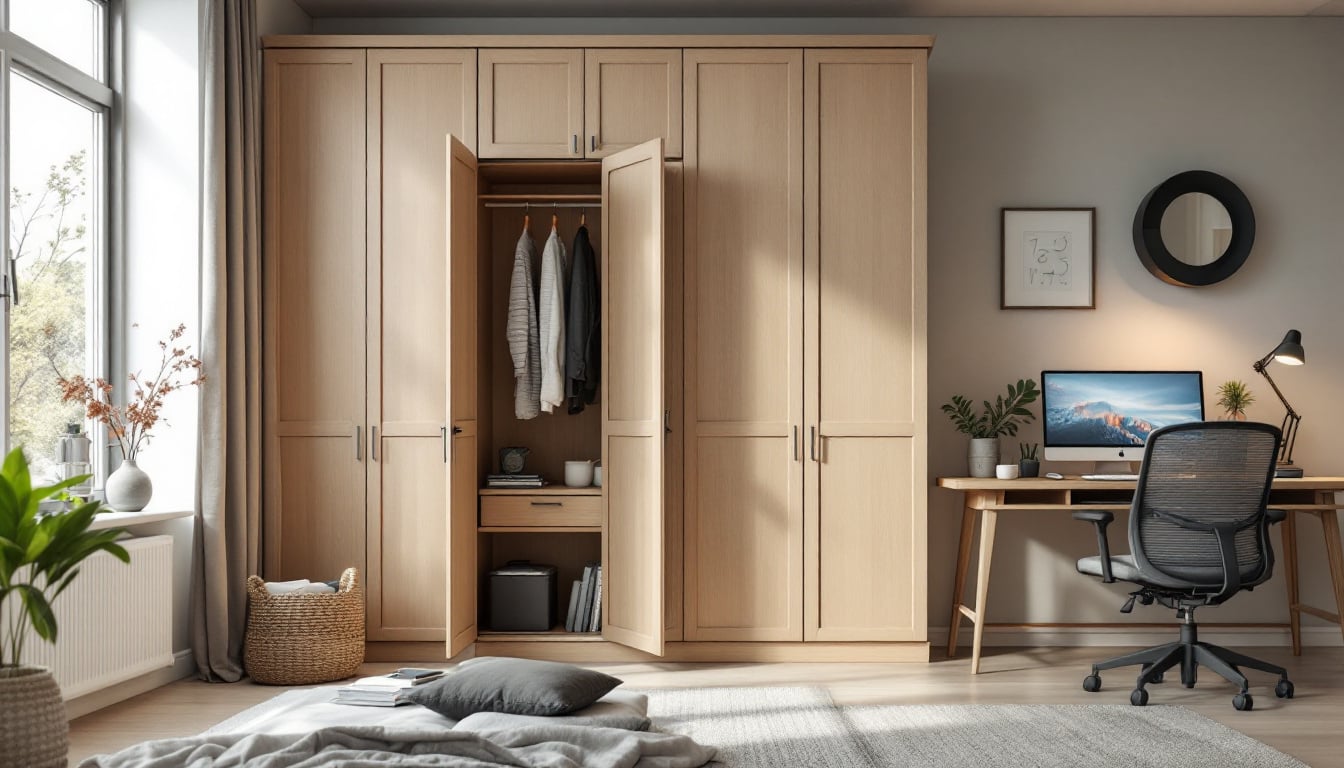
What Good Home Fitted Furniture Should Deliver
When you are comparing home fitted furniture, the first mistake is judging it by appearance alone. A neat render or glossy finish tells you very little about how the unit will hold up after a year of opening doors, loading shelves, and living with daily use. Good fitted furniture should feel solid, sit flush to the room, and work around awkward walls or slopes without visible compromise. In practical terms, you want a build that resists movement, closes cleanly, and gives you usable storage rather than just a tidy look. The best way to assess home fitted furniture quality is to look at construction details, not just style. That means checking carcass thickness, fixing method, hardware, edge finishing, and how the installer handles uneven surfaces. If you start there, you can compare options with far more confidence.
How To Judge Quality Before You Order
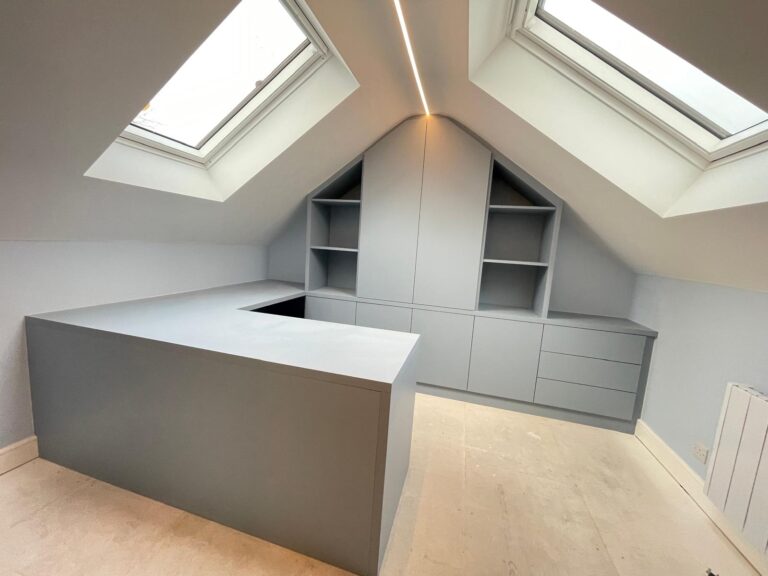
Before you commit to fitted wardrobes, an alcove unit, or a fitted home office, ask for the build specification in plain language. You do not need a technical lecture, but you do need specifics: board thickness, hinge type, drawer runner rating, finish material, and how the unit will be scribed to the room. A good provider should answer those questions without hesitation. If they cannot, that is a warning sign. A simple decision rule helps here. If the supplier talks mostly about colour and door style but avoids structure, they are selling the surface, not the build. If they discuss tolerances, wall irregularities, and installation sequence, you are closer to a serious product. For home fitted furniture, quality is usually revealed in the details the customer does not see at first glance.
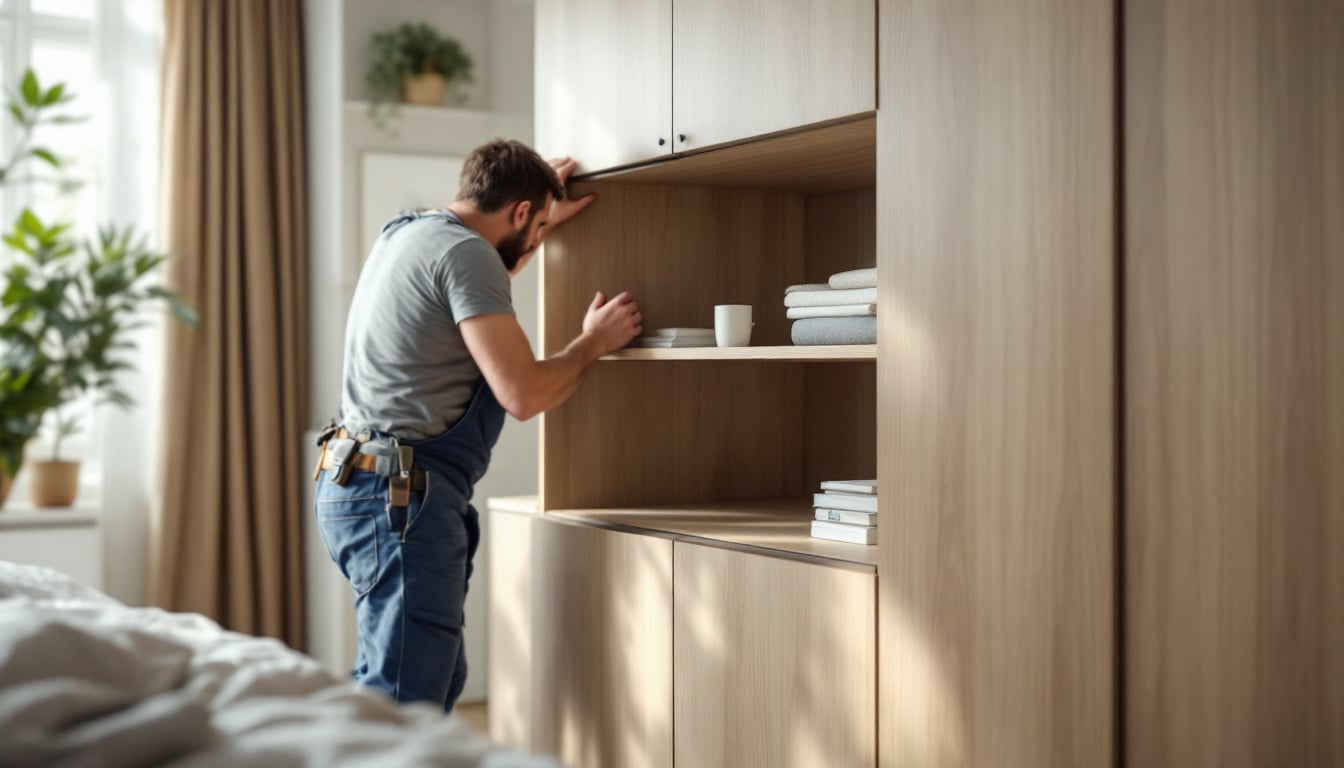
7 Signs Your Fitted Furniture Is Well Built
There are seven signs that usually separate a competent build from an average one. They are not abstract design ideas, they are practical checks you can make before and after installation. Look for a rigid structure, clean join lines, good-quality hardware, properly finished edges, accurate scribing, consistent door gaps, and a warranty that matches the expected life of the furniture. If most of those are present, the chance of long-term satisfaction rises sharply. If two or three are missing, expect trouble with alignment, wear, or movement. The point is not perfection, but control. Good home fitted furniture should tolerate daily use, humidity changes, and minor building imperfections without looking tired or going out of line.
1. The Structure Feels Rigid, Not Hollow
The first sign of quality is structural rigidity. When you tap the side panel or gently press on a shelf, it should feel stable rather than thin or springy. In most fitted furniture, the carcass is doing the real work, so a light or weak structure will show itself later as sagging shelves, loose fixings, or rattling doors. Ask what board thickness is being used and how the main sections are anchored to the wall or floor. A practical benchmark is simple: a well-built unit should not shift under normal use or produce creaks when doors are opened. If the structure feels flimsy before installation, it rarely improves once it is in the room.
2. Joints and Fixings Are Hidden but Precise
Quality home fitted furniture usually has tidy joints and fixings that are either hidden or intentionally integrated into the design. Loose visible screws, rough mitres, or awkward filler strips often suggest rushed fabrication. The better approach is a consistent join line, secure fixing method, and cabinet parts that meet cleanly even where the room itself is uneven. A useful check is to ask how the installer handles corners, carcass connections, and load-bearing points. If you are considering bespoke fitted wardrobes or built-in storage, this matters because repeated opening and closing puts pressure on every joint. Poor fixings may look acceptable on day one, but they are the first place quality fails under real use.
3. Doors and Drawers Move Smoothly
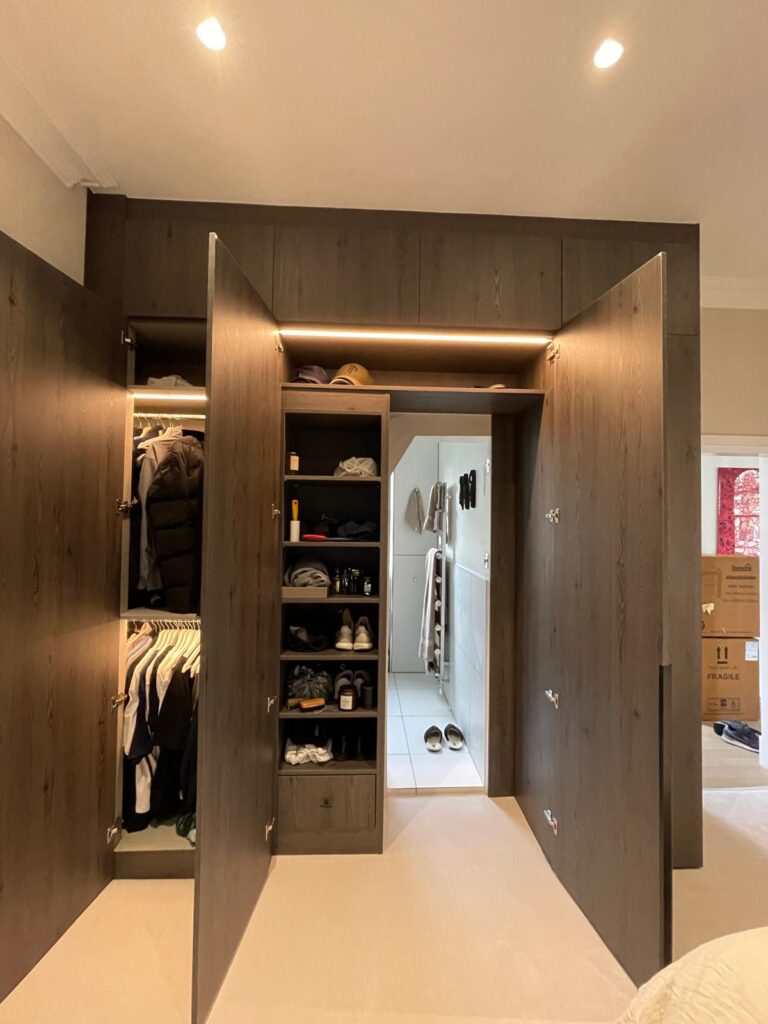
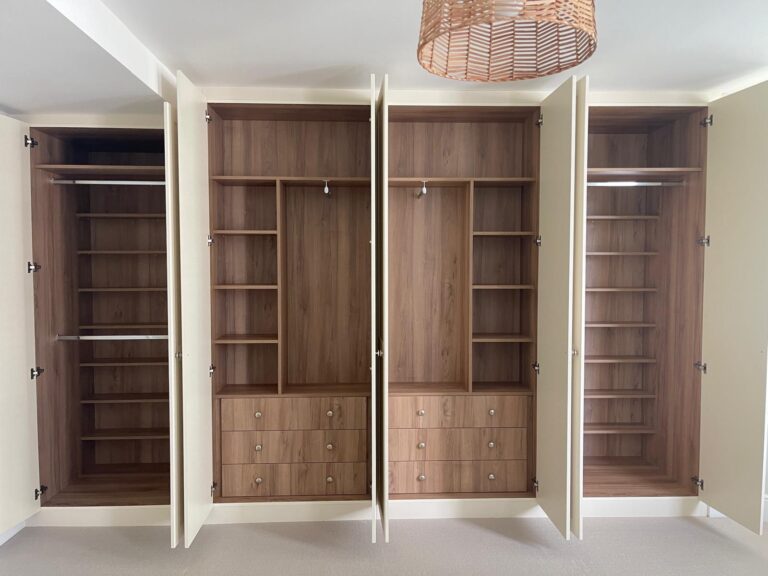
Hardware is where home fitted furniture either feels premium or starts to annoy you. Doors should open with a controlled motion, drawers should run straight, and soft-close action should feel consistent rather than sluggish or uneven. Ask what hinges and runners are used, and whether they are rated for everyday residential use. The trade-off is straightforward: cheaper hardware can reduce the starting price, but it usually shortens the useful life of the unit. If a drawer sticks or a door drops after a few months, the whole piece feels older than it is. Smooth movement is one of the easiest quality checks because you can test it on the first day and compare it against your expectations immediately.
4. Edges, Panels, and Finish Are Consistent
The visible finish tells you whether the maker paid attention to detail during fabrication and installation. Look closely at edging, paint depth, laminate alignment, and the way panels meet at exposed points. A strong build will keep the finish consistent across doors, shelves, and side panels, with no visible swelling, peeling, or sharp corners. This matters especially in rooms with humidity changes, such as bedrooms near en-suites or loft spaces. A common pitfall is choosing a style that looks good in a showroom but reacts badly to poor sealing at the edges. If the finish is durable, the unit stays visually crisp for longer and is less likely to chip at the places you touch every day.
5. The Furniture Fits the Room, Not Just the Drawing
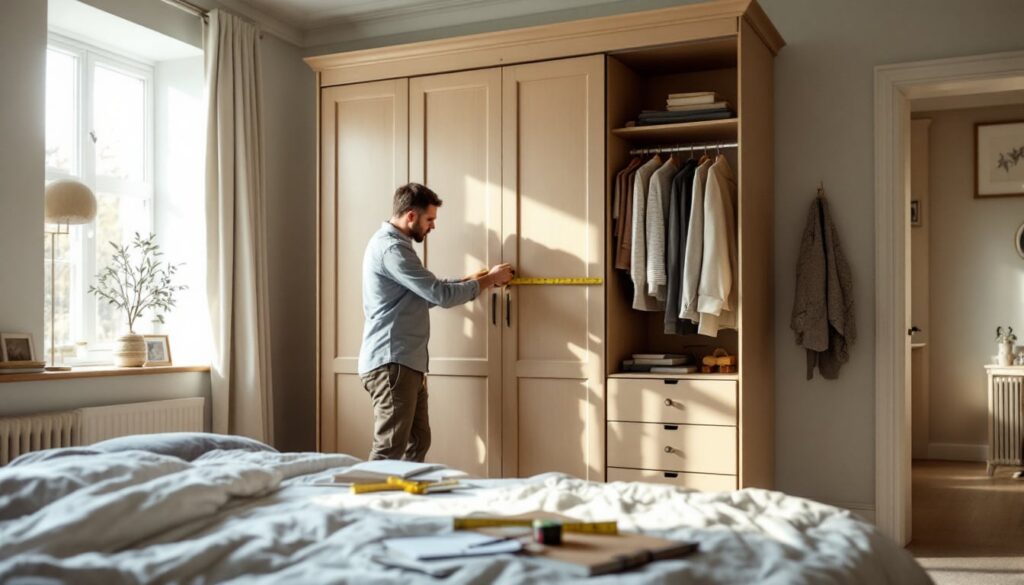
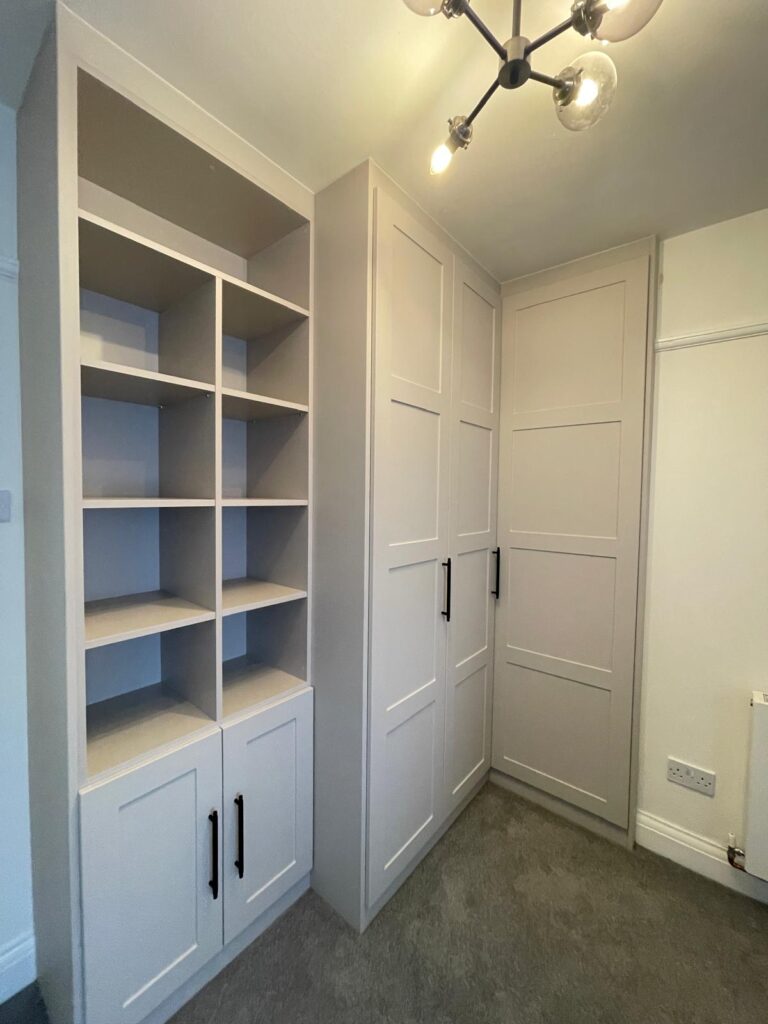
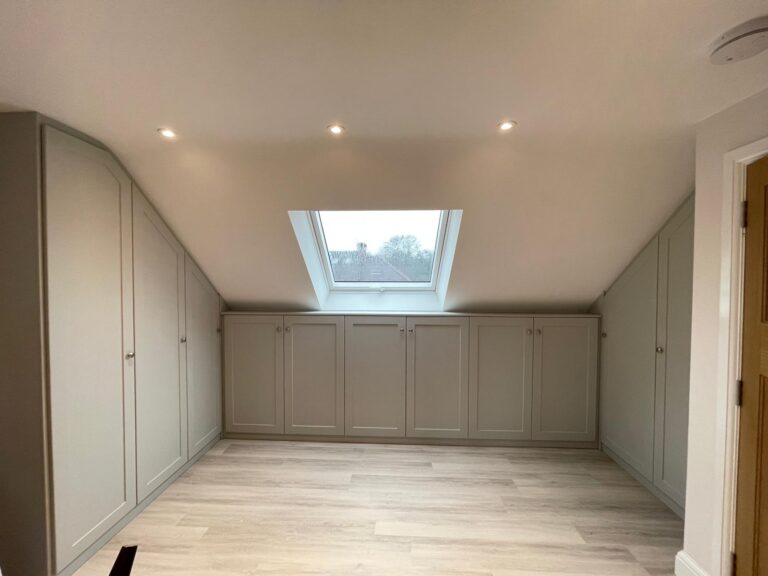
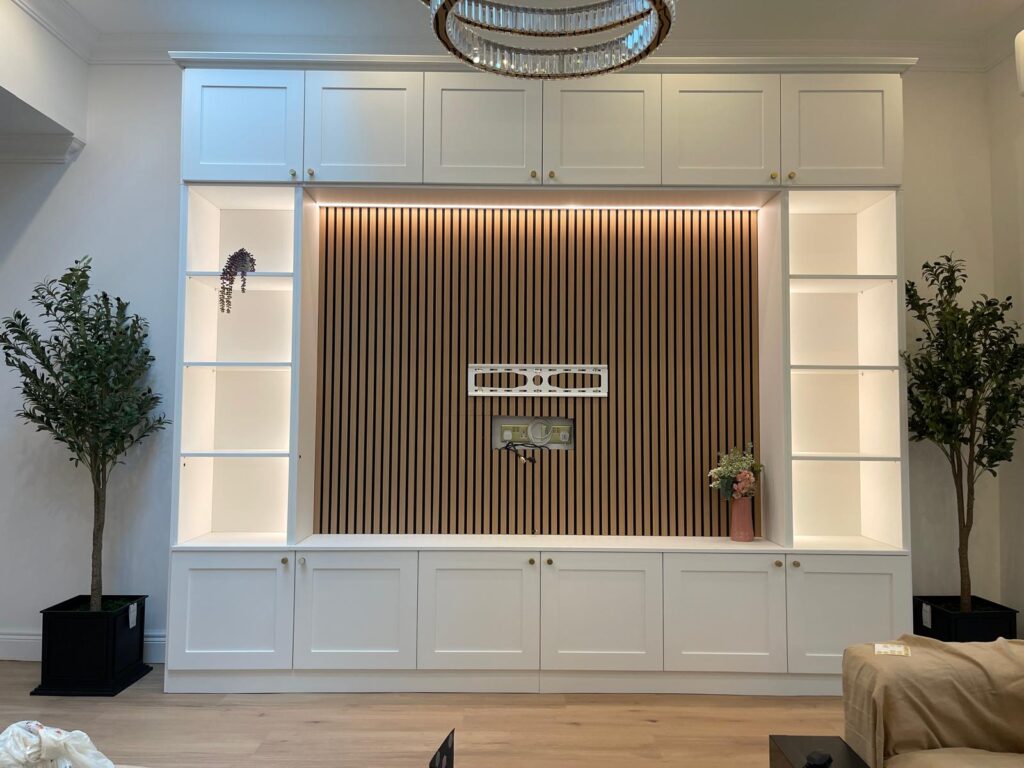
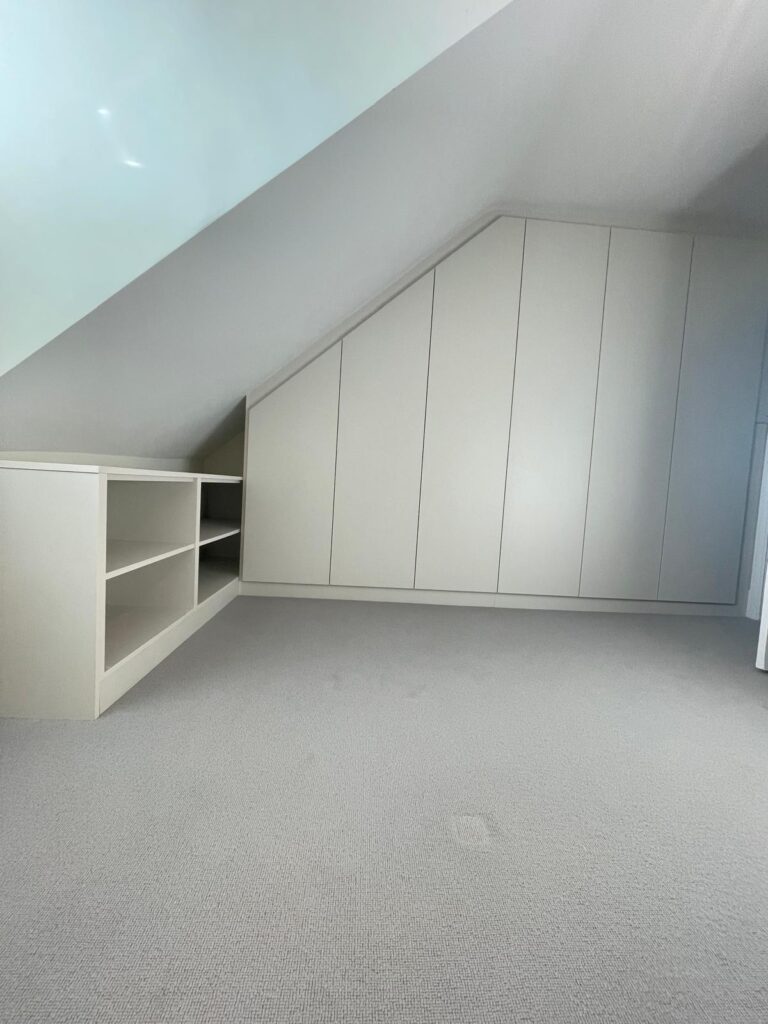
Accurate fitting is one of the strongest signs of home fitted furniture quality. The unit should respect the real geometry of the room, including sloped ceilings, uneven plaster, pipe runs, skirting, and awkward corners. Poor fitting usually shows up as oversized fillers, gaps that change width, or doors that do not line up with the room’s actual proportions. A good installer measures carefully, confirms the final layout, and adjusts on site where needed. This is where bespoke fitted wardrobes and custom furniture design really earn their value, because the furniture becomes part of the room rather than something forced into it. If the fit feels improvised, the build quality is probably only average even if the materials are decent.
6. The Gaps Are Even and the Lines Stay True
Uniform gaps between doors, drawer fronts, and panels are a sign of accurate manufacturing and careful installation. You do not need laser-level precision in a home, but you do need a visual rhythm that stays consistent across the unit. Uneven reveals or doors that drift out of line suggest poor preparation or weak adjustment hardware. A practical check is to step back and look at the whole run, not just one panel. If your eye keeps catching one door edge or one drawer front, the system is probably off. Good home fitted furniture should look calm, with straight lines that guide the eye naturally across the room instead of pulling attention to the joints.
7. The Warranty Matches the Build Promise
A warranty is not a substitute for quality, but it does show how much confidence the provider has in the build. If a company offers a long warranty, ask what it actually covers, especially for hinges, drawer runners, installation, and structural issues. Read the exclusions carefully because some warranties sound generous but only apply to limited components. For home fitted furniture, the most useful warranty is one that covers real-world wear points rather than just manufacturing defects on paper. A short warranty is not automatically bad, but it should make you ask harder questions about materials and fixing methods. If the build is sound, a clear warranty should feel like a confirmation, not the main reason you buy.
What To Ask The Supplier Before You Sign Off
A short pre-order checklist can save you from expensive disappointment. Ask for the board specification, hinge and runner brand or type, finish details, installation timeline, and what happens if the room measurements change slightly on site. You should also ask how access issues are handled, especially in older UK homes with tight stairs or uneven walls. If you are comparing custom furniture London providers, this is where communication quality becomes part of the product. Good suppliers answer in practical terms, not vague reassurances. A useful rule is to request a written summary of the agreed layout and finishes before manufacture begins. That gives you a reference point if the final fit does not match the plan.
Common Quality Problems And How To Avoid Them
The most common problems are rarely dramatic. They are usually small faults that stack up: weak shelves, poor edge sealing, doors that need constant adjustment, and filler pieces that look like afterthoughts. Most of these issues come from one of two causes, either poor materials or poor installation. The fix is to separate the two before you buy. Ask what is made in workshop conditions and what is adjusted on site, because that tells you where tolerances are controlled. For loft wardrobes, sloped ceilings, or alcove cupboards, this is especially important. If the design depends on many on-site corrections, you need a fitter who is comfortable solving problems cleanly rather than hiding them with trim.
When Bespoke Is Worth It, And When It Is Not
Bespoke home fitted furniture is worth paying for when the room has awkward dimensions, you need maximum storage, or the finish needs to blend into the architecture. It is less compelling if the room is simple, the layout is temporary, or you only need basic storage with no special constraints. The practical question is whether custom design reduces waste and improves access enough to justify the extra planning. For many homeowners, the answer is yes in bedrooms, lofts, and under-stair spaces, where standard furniture leaves dead corners. If the room is straightforward, make sure the build quality is still strong enough to justify the spend. Bespoke should solve a problem, not just add complexity.
How To Compare Options Without Getting Lost In Style Choices
Style matters, but it should be the final filter, not the first one. Start by comparing how each option is built, installed, and supported, then look at the finish. A good comparison framework is to rank each supplier on five factors: structure, hardware, fit, finish, and warranty. That prevents the common mistake of choosing the best-looking sample and ignoring the rest of the system. If two quotes are close in price, the better answer is usually the one with clearer construction details and better site-fitting process. This approach works well for bespoke furniture east London and wider UK projects because it keeps the conversation grounded in build quality rather than showroom polish.
Quick Takeaways
The strongest signs of quality in home fitted furniture are often hidden in the structure, not the finish. Rigid carcasses, smooth hardware, clean edges, and even gaps usually tell you more than the showroom sample does. Accurate fitting is essential because a good design still fails if it does not sit properly in the room. Warranty terms matter too, but they should confirm the build, not replace a close inspection. The best buying process is simple: ask for the construction spec, check how the room will be measured and scribed, compare hardware and finish details, and look for a supplier that explains trade-offs clearly. If a provider can talk confidently about the practical details, you are far more likely to end up with fitted furniture that works every day, not just on installation day.
Choosing A Provider For Long-Term Use
If you are planning fitted wardrobes, a fitted home office, or another built-in storage run, choose the provider that explains how the furniture will age, not just how it will look in month one. That means asking about adjustment, replacement parts, and what happens if a door needs realignment later. A good fit is more than neat carpentry. It is a system that remains usable after repeated opening, cleaning, and daily life. In the UK market, this also means working with a team that understands older properties, non-standard walls, and realistic fitting times. Finest Furniture Studio, for example, positions bespoke design, a 7-10 day fitting window, and a 10-year warranty, which are the kinds of practical signals worth checking when you compare options. Use those signals to narrow the list, then inspect the build details before you commit.
Conclusion
Good home fitted furniture should earn its place in the room through structure, fit, and day-to-day reliability. If you remember only one thing, make it this: finish gets the attention, but build quality does the work. Check the carcass, hardware, edges, gap consistency, and how the furniture is adapted to the room before you focus on colour or style. That is the fastest way to separate a well-made unit from one that only looks good on paper. If you are comparing suppliers now, ask for the construction spec, the fitting approach, and the warranty details in writing. Then compare the answers side by side instead of relying on showroom impressions alone. If this guide helped, share it with someone planning fitted wardrobes or other home fitted furniture, and let me know which quality sign you check first when you are choosing a build.
Frequently Asked Questions
What is the best sign of quality in home fitted furniture?
The strongest sign is structural rigidity. If the carcass feels solid, the doors align properly, and the furniture stays stable on an uneven wall, the build is usually better than average.
How do I check home fitted furniture quality before ordering?
Ask for the board thickness, hinge and runner type, edge finish, and installation method. A good supplier should explain the build in practical terms, especially for bespoke fitted wardrobes or a fitted home office.
Does a long warranty mean better home fitted furniture?
Not always, but it is a useful signal. Read what the warranty actually covers, because a strong home fitted furniture warranty should include common wear points like hinges, runners, and installation issues.
What should I look for in bespoke fitted wardrobes?
Look for even gaps, smooth door movement, clean edging, and accurate scribing to the room. These details usually matter more than the door style when you want fitted furniture quality that lasts.
Are cheaper home fitted furniture options worth it?
Sometimes, but only if the materials and fittings are still strong enough for daily use. Lower prices often mean lighter boards, simpler hardware, or less precise installation, which can shorten the life of the unit.
How do I compare fitted furniture suppliers in the UK?
Use a simple comparison of structure, hardware, fit, finish, and warranty. That framework is especially useful when reviewing custom furniture London providers or any home fitted furniture supplier with similar pricing.
What causes poor fitted furniture quality after installation?
The usual causes are weak fixings, poor measurements, or rushed site adjustments. If the room is awkward, such as a loft or alcove, the fitter needs experience with scribing and on-site alignment.