
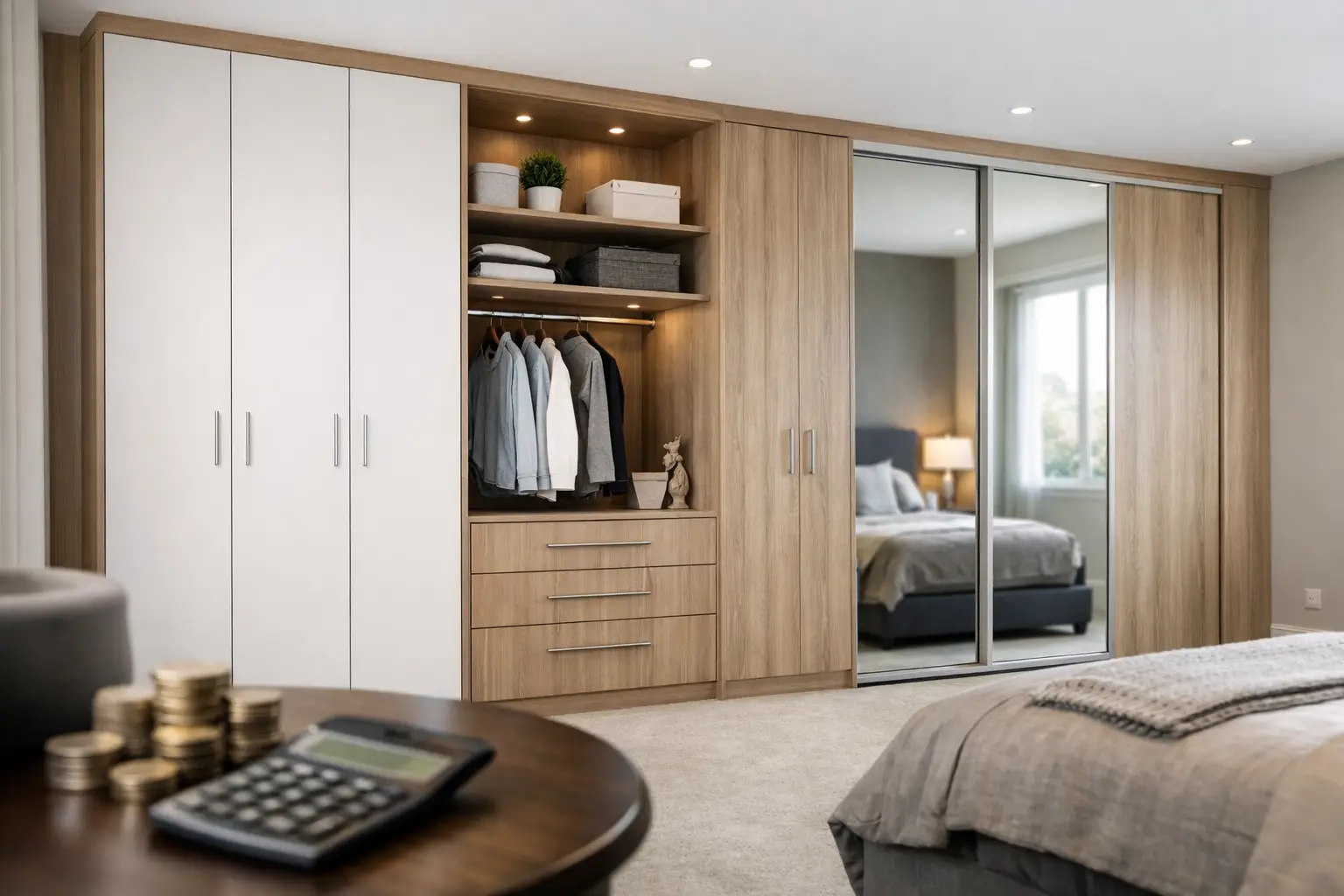
A beautiful wardrobe can look simple from the outside, yet its price is shaped by every decision behind the doors: the room’s dimensions, the internal layout, the finish, and the level of fitting required. So, what does fitted furniture cost? For a genuinely made-to-measure solution, the answer is less about a single figure and more about creating the right balance of design, storage and long-term quality for your home.
For London homeowners renovating an extension, loft or period property, bespoke fitted furniture is often one of the most visible and useful investments in the room. It turns difficult walls, chimney breasts and sloping ceilings into purposeful storage, while giving the interior a calm, considered finish.
Typical fitted furniture costs
At Finest Furniture Studio, starting prices for bespoke fitted furniture are designed to make luxury storage more approachable without compromising on tailored design or professional installation. A hinged-door wardrobe starts from £1,800, a walk-in wardrobe from £1,600, and a sliding-door wardrobe from £2,000. Loft wardrobes start from £1,850, fitted bedrooms from £1,850 and media wall units from £2,000.
These are useful starting points, rather than fixed package prices. A compact alcove wardrobe with straightforward shelves will naturally cost less than a full wall of wardrobes with integrated lighting, mirrored doors, drawers and a detailed internal dressing area. The final quotation should reflect the actual room, your chosen materials and how you want to live with the furniture every day.
For a larger project, such as a walk-in wardrobe combined with a media wall or fitted home office, budgets commonly rise into the £8,000 to £30,000 range. This is particularly true where several rooms are being fitted, premium finishes are selected, or the design must work around the character and irregularities of an older London home.
What affects the cost of fitted furniture?
Size matters, but complexity matters more
A wider wardrobe uses more board, hardware and installation time, so size has a direct effect on cost. Yet a smaller unit in a challenging space can require more design and workmanship than a large, straight run on a clear wall.
Loft bedrooms, for example, may need furniture scribed precisely to sloping ceilings, uneven walls or low eaves. Understairs storage must follow changing angles while still allowing drawers or doors to operate correctly. These solutions are exactly where bespoke furniture earns its value, because standard units tend to leave awkward gaps or waste valuable space.
Door style and external finish
The doors set the visual tone of a fitted wardrobe and form a significant part of the budget. Hinged doors are a classic choice and suit Shaker, contemporary and more traditional bedroom schemes. Sliding doors can be ideal where floor space is limited, while also creating a clean, architectural look across a long wall.
Wood-effect finishes offer warmth and texture at a considered price point. Painted shaker doors, glass, mirrors, fluted detailing, bespoke colour matching and high-end decorative panels can increase the cost, but can also make the furniture feel integral to the architecture rather than added afterwards. The right option is not automatically the most expensive one. It is the finish that works with the room, the light and the rest of your interior.
The interior is where daily value is created
A wardrobe with one hanging rail and a shelf is less costly than one tailored to a full collection of clothes, shoes, bags and accessories. Drawers, pull-down rails, shoe storage, trouser racks, jewellery drawers and dedicated spaces for luggage all add materials and mechanisms.
This is not an area to over-specify simply for the sake of it. A good designer will ask practical questions: Do you share the wardrobe? Is long hanging essential? Do you fold knitwear? Where will seasonal items go? A well-planned interior can prevent the common problem of buying a large wardrobe that still never feels organised.
Lighting, handles and thoughtful details
Integrated LED lighting, soft-close drawer systems, premium handles and discreet charging points can lift both the usability and the feel of fitted furniture. They are optional additions, not requirements for an elegant result.
Lighting is often especially worthwhile in a walk-in wardrobe, deep cupboard or media wall, where it improves visibility and creates a more polished atmosphere. In a bedroom with generous natural light and simple storage needs, a carefully selected finish and a strong internal layout may make a bigger difference than extra features.
Installation and preparation work
A transparent fitted furniture quote should account for professional installation, not just the cabinets themselves. Fitting requires accurate measuring, transport, careful assembly, levelling and precise finishing against walls, floors and ceilings.
Some rooms need additional preparation, such as boxing in pipes, working around sockets, removing old furniture or adapting a design to newly plastered walls. Electrical work for a media wall or wardrobe lighting may also be priced separately depending on the scope. Discussing these details during the design visit helps avoid surprises later.
Why bespoke furniture can cost more than freestanding pieces
Freestanding furniture can be an excellent short-term choice, particularly for renters or homeowners who expect to move soon. It is readily available, can be moved around and often has a lower initial price. But it rarely makes full use of an alcove, a loft eave or the height of a Victorian bedroom.
Bespoke fitted furniture is manufactured for one room and one set of requirements. It can run floor to ceiling, accommodate uneven walls and conceal the visual clutter that makes even a generous bedroom feel smaller. It also brings design consistency to a renovation, whether you are matching a calm master suite, creating a hardworking children’s bedroom or giving a new extension the storage it needs from day one.
The trade-off is permanence. A fitted wardrobe is not designed to come with you when you move, so it is best viewed as an improvement to the home and your daily routine, rather than a portable purchase. For many homeowners, that permanence is precisely the appeal.
How to plan a realistic budget
Start with the problem you want the furniture to solve, rather than a list of features. Perhaps a new loft conversion needs storage below the eaves, or an extended living room needs a media wall that hides cables and accommodates books, toys and technology. Being clear about the outcome helps a designer prioritise the elements that genuinely matter.
It is sensible to allow room in your budget for the features you will use most. For a wardrobe, this may mean better drawers and a tailored interior rather than a more elaborate door finish. For a media wall, it might be proper cable management, ventilation and proportion around the television rather than excessive shelving.
If your preferred design exceeds the initial budget, ask what can be adjusted without reducing the quality of the core construction. A simpler door style, a revised internal configuration or phased work across rooms may be more effective than compromising on the fit and installation. Good bespoke design is about making informed choices, not adding every available extra.
Getting a quote you can trust
The most useful quotation follows a design conversation and an accurate survey of the space. It should describe the furniture being supplied, the chosen materials and finish, the internal arrangement, key hardware, installation and any exclusions. That gives you a fair basis for comparing proposals that may otherwise look very different on paper.
Photographs and measurements are helpful as a first step, but a free design visit is where the detail becomes real. It allows the designer to assess awkward corners, ceiling heights, door clearances and the existing character of the room. For homes in Wimbledon, Richmond, Chelsea and across London, this attention is particularly valuable in period properties where no two walls are quite alike.
A carefully planned fitted wardrobe or storage wall should make a room easier to use from the first morning, not merely look impressive on installation day. Choose the layout that supports your routine, the finish that belongs in your home and a specialist who can turn both into furniture built to last.

