

Carpentry and the value of fitted furniture
Carpentry is the difference between furniture that fills a room and furniture that actually works in it. For homeowners looking at bespoke wardrobes, alcove cupboards, or media walls, the real value is not just appearance. It is the way carpentry turns awkward dimensions, sloped ceilings, and wasted corners into usable storage with a clean finish. That is why carpentry sits at the centre of fitted furniture decisions, especially when the goal is to get more out of a bedroom, loft, or living area without expanding the footprint.
What top ranking pages cover, and what they miss
The strongest ranking pages for carpentry-related fitted furniture topics usually cover three things well: material choice, design flexibility, and installation options. They also tend to show broad product categories like fitted wardrobes, sliding doors, and made-to-measure storage. What many pages miss is the buyer-side decision process, such as how to judge lead time, warranty length, and the trade-off between fully bespoke carpentry and modular alternatives. For a UK homeowner, those details matter more than generic style language.
A practical outline for buyers and designers
A useful carpentry article should move from space problems to design choices, then to materials, installation, and long-term value. It should also help readers compare fitted wardrobes, loft wardrobes, built-in cupboards, and bespoke TV media walls without repeating the same points. The best structure answers one question at a time: what can be built, what it costs in complexity, how long it takes, and which compromise is worth making. That approach keeps the article useful for both researchers and ready-to-buy visitors.
Related keywords and search phrases
To support search traffic, the article should naturally include phrases such as bespoke carpentry, fitted wardrobes, custom storage solutions, made-to-measure furniture, joinery services, fitted bedroom furniture, alcove cupboards, loft wardrobes, sliding door wardrobes, built-in cupboards, fitted home office, and bespoke interior furniture. Other useful terms are carpentry design, UK fitted furniture, space-saving storage, and custom wardrobe solutions. These phrases reflect how buyers search when they are comparing practical options, not just browsing inspiration.
How to judge whether carpentry is the right route
The cleanest decision rule is simple: choose carpentry when the room has a fixed constraint that standard furniture does not handle well. Sloped ceilings, chimney breasts, alcoves, and tight clearances are the classic triggers. If the room needs only a light storage refresh, off-the-shelf furniture may be cheaper. If the room needs a built-in finish, higher storage density, or a premium look that follows the wall line, carpentry usually wins on space efficiency and visual consistency.
Measure the room before you measure style
Good carpentry starts with a measured brief, not a colour palette. A sensible workflow is to measure wall-to-wall width, ceiling height at several points, skirting depth, socket positions, and any slope or protrusion that affects the run of furniture. The most common mistake is designing to the widest point and assuming the rest is square. In reality, a 10 mm variance can affect door alignment, filler panels, and how much internal storage you actually gain.
The hidden trade-off between bespoke and semi-bespoke
Not every carpentry project needs a fully custom build from scratch. Semi-bespoke options can be a smart middle ground when the dimensions are unusual but the internal layout is fairly standard. The trade-off is control versus speed. Fully bespoke carpentry gives more freedom for hanging space, shelving, and drawer depth, while semi-bespoke solutions often shorten lead time and reduce cost. For many UK homes, that balance is the real buying decision, not the finish itself.
Materials that hold up in real homes
Material choice affects durability, maintenance, and the final feel of the room. MDF is common for painted finishes because it machines cleanly and produces smooth edges. Veneered boards can give a warmer wood look with less maintenance than solid timber. Solid timber has the strongest natural appeal, but it can move with humidity and is rarely necessary for every component. A practical carpentry brief should specify where strength matters, where appearance matters, and where a lower-cost board is acceptable.
Surface finish, edge detail, and why buyers notice them
Surface finish is one of the fastest ways to judge carpentry quality on site. Poor edge sealing, uneven paint, and visible joint lines usually show up first on doors and exposed panels. Buyers often notice the finish before they notice the structure. A well-executed fitted wardrobe should feel consistent to the touch, close cleanly, and avoid the slight wobble that comes from weak carcass construction. That is why the visible finish should never be treated as a last-step cosmetic add-on.
Room types where carpentry adds the most value
Carpentry creates the strongest return in bedrooms, loft conversions, alcoves, and awkward living rooms. In bedrooms, fitted wardrobes can replace mismatched freestanding units and recover floor space. In lofts, sloped ceilings make made-to-measure furniture almost unavoidable if you want usable storage. In alcoves, built-in cupboards and shelving can frame fireplaces or fill dead space. The pattern is consistent: the more irregular the room, the more carpentry improves storage density and finish quality.
Bespoke wardrobes, loft wardrobes, and sliding doors
Bespoke wardrobes are often the first search term people use, but the details matter more than the label. Sliding door wardrobes can save swing clearance in narrow rooms, while hinged doors are better if you need full internal access. Loft wardrobes usually require angled tops, custom depths, and careful planning around headroom. A useful rule is to match the door type to the circulation space, not the aesthetic preference alone. That avoids daily frustration after installation.
How to plan internal storage that stays useful
The best carpentry projects start from what the owner stores, not from a generic shelving grid. A practical layout should separate hanging height, folded clothes, seasonal items, and bulky storage. If one user mainly stores long coats, the hanging section should dominate. If the room needs a shared solution, split the layout into zones instead of forcing a one-size-fits-all interior. The most common pitfall is overloading the design with shelves, which looks efficient on paper but becomes awkward in daily use.
Mini-case: a bedroom storage redesign
One homeowner with a small bedroom and a boxed-in chimney breast had two freestanding wardrobes that left a narrow walking gap. After a carpentry-led redesign, the room used fitted wardrobes across the full wall with a recessed centre section for daily items. The assumption was a 15 to 20 percent gain in usable storage, which is realistic when dead corner space is captured. The bigger win was circulation, because the room no longer felt split into separate storage blocks.
Why lead time and fitting speed change the buying decision
For many buyers, carpentry is judged on turnaround as much as on design. If a project can be fitted in 7 to 10 days after final sign-off, that reduces disruption and makes the purchase easier to plan around. The catch is that speed only works when the design process is tight and the site survey is accurate. A rushed survey can save a day at the start and cost several days later through rework, missed measurements, or delayed installation.
Installation sequence that avoids rework
A reliable workflow is survey, design approval, manufacture, delivery check, installation, and final snagging. Each stage should have a sign-off point. The best carpentry teams treat wall conditions, flooring level, and socket positions as install constraints, not surprises. If a room is not square, filler strategy should be agreed before manufacture. That single decision can save time on site and protect the finish. Buyers should ask how the installer handles variation, not just whether they install quickly.
Mini-case: a loft room with a slope constraint
A loft room with a low eaves line is a good example of where carpentry outperforms standard furniture. In one typical scenario, a fitted run was designed with lower-depth storage under the slope and deeper hanging space where headroom allowed. The practical result was not just more storage, but less visual clutter. If the room originally had one awkward freestanding unit, the fitted version could reclaim a usable strip along the wall without blocking access to the window or stair landing.
What makes a 10-year warranty meaningful
A 10-year warranty sounds simple, but the useful question is what it covers. In carpentry, buyers should separate finish defects, hardware failures, installation issues, and normal wear. A long warranty is only useful if the workmanship standard is clear and the fitter stands behind it. A good buyer check is whether the warranty aligns with the parts that fail first in real use, such as hinges, runners, and alignment, rather than only cosmetic surfaces.
The maintenance test most articles ignore
Before choosing a finish, ask how it will look after routine cleaning, heating changes, and daily handling. Painted panels can be refreshed more easily, while some natural finishes are more sensitive to marks. Sliding mechanisms should be easy to keep clean if the wardrobe sits near carpet or a dusty floorboard gap. This is where carpentry becomes a long-term decision, not a one-time purchase. Buyers who think in five-year use cycles usually make better material choices than buyers focused only on day-one appearance.
How Finest Furniture Studio fits into the search journey
For visitors comparing bespoke wardrobes, fitted furniture, and custom storage solutions in the UK, Finest Furniture Studio fits the stage where intent is already strong. The brand is positioned around bespoke design, tailored storage, and fitted interior furniture, which means the content should attract readers who are already evaluating layout, timing, and finish. A useful traffic strategy is to publish pages that answer these buyer questions clearly, then direct readers to learn more about Bespoke Wardobes Lomdon and the wider service range.
What to compare against competitors before you enquire
The main comparison points are not just price. Readers should compare design flexibility, installation timeline, warranty length, and whether the supplier handles awkward spaces like alcoves or sloped ceilings. Some competitors lean heavily on broad premium branding, but the stronger decision criteria are more practical: can they build around your room shape, do they explain the install process, and do they provide enough detail to reduce surprises. That is where a carpentry-focused article earns traffic and trust at the same time.
Quick takeaways
Carpentry is most valuable when a room has awkward dimensions, sloped ceilings, or dead space that standard furniture cannot solve. Bespoke wardrobes and fitted furniture usually win on storage density and finish quality. Semi-bespoke options can reduce cost or lead time if the internal layout is fairly standard. A good brief starts with measurements, room constraints, and storage habits, not just colours or door styles. Material choice should balance durability, maintenance, and visual finish. Installation speed matters, but only when the survey and sign-off process are accurate. Warranty value depends on what is actually covered. For UK homeowners, the best carpentry decision is the one that solves the room, not just fills it.
Photorealistic image concepts for this article
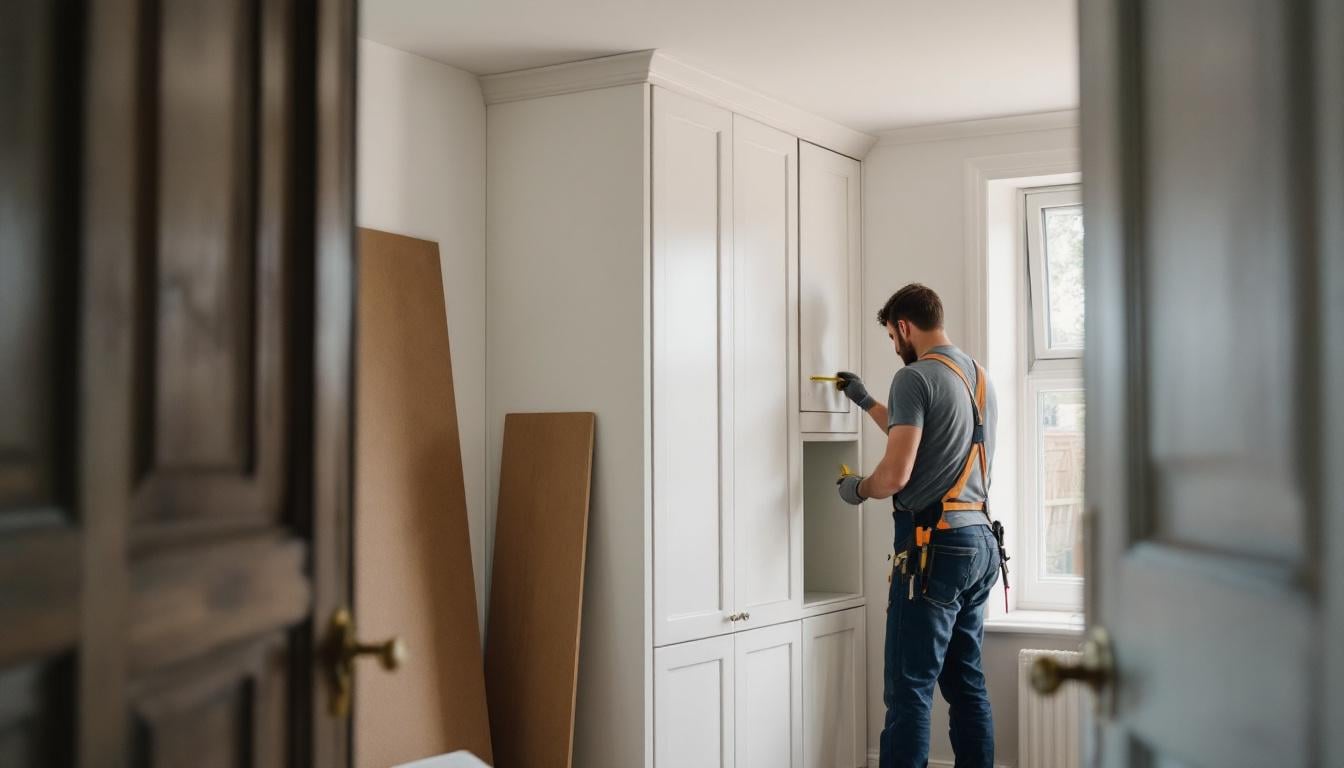
A strong hero image would show a carpenter measuring a bedroom alcove beside unfinished fitted panels, with natural daylight coming through a window and no readable text anywhere. The scene should feel like a real home installation, with tape measure, timber offcuts, and neat tools visible on the floor. Alt text: carpentry fitting bespoke wardrobes in a UK bedroom alcove.
A second concept could show a close, angled view of a fitted wardrobe interior with shelves, hanging rails, and soft neutral finishes, photographed from the doorway so the viewer sees the room context rather than a staged showroom. Alt text: carpentry details inside bespoke fitted wardrobes.
A third concept could capture a loft room with a sloped ceiling and custom built-in storage following the wall line. The camera should sit at human eye level, showing the usable floor area and the way the furniture fits the angle naturally. Alt text: carpentry solution for loft wardrobes with sloped ceilings.
Frequently Asked Questions
These FAQs cover the most common buyer questions about carpentry, fitted furniture, and bespoke wardrobe decisions. They are written for readers comparing custom storage solutions in the UK and trying to decide whether a made-to-measure approach is worth it.
Frequently Asked Questions
What does carpentry mean in bespoke furniture?
In bespoke furniture, carpentry refers to the design, cutting, assembly, and fitting of made-to-measure pieces for a specific room. It is the part of the process that turns a rough idea into fitted wardrobes, alcove cupboards, or custom storage solutions that match the wall dimensions.
Is carpentry better than flat-pack for fitted wardrobes?
For awkward rooms, carpentry is usually better because it can handle sloped ceilings, chimney breasts, and uneven walls. Flat-pack furniture is quicker and cheaper, but it rarely gives the same storage density or seamless finish as made-to-measure furniture.
How long does carpentry fitting usually take?
Lead times vary, but many fitted furniture projects are fitted in a short installation window once design and manufacture are complete. If a supplier mentions fitting in 7 to 10 days, that usually refers to the install phase, not the full project timeline from survey to final sign-off.
What should I check before booking carpentry work?
Check the room measurements, material options, warranty terms, and how the installer handles uneven walls or floors. For bespoke wardrobe design, it also helps to confirm whether the supplier offers a survey first and whether the internal layout can be adjusted for your storage habits.
What carpentry projects add the most storage space?
Bespoke wardrobes, loft wardrobes, built-in cupboards, and alcove cupboards usually add the most usable storage. These are the projects where custom carpentry can recover dead space and create fitted furniture that follows the room rather than fighting it.
Does a 10-year warranty matter for carpentry?
Yes, but only if you know what the warranty covers. A strong warranty should cover workmanship and key hardware issues, which are common concerns in custom wardrobe solutions and fitted furniture used every day.
Is carpentry a good option for UK homes with small rooms?
Yes, especially in bedrooms, lofts, and narrow living spaces where standard furniture wastes wall space. UK homeowners often use bespoke carpentry to get better storage, cleaner lines, and a more permanent fitted look without changing the room layout.

