

Quick Summary
Accidental damage usually does not void a furniture warranty by itself. A standard furniture warranty covers faults in materials and workmanship, so a spill or knock is generally handled under a separate protection plan. Most of the time, accidental damage affects only the damaged part or claim, not the whole warranty.
- Check whether your warranty explicitly excludes accidental damage in its terms.
- Photograph the damage and any serial or fitting labels before cleaning or repairing anything.
- Report the damage promptly in writing and ask for a claim reference.
- Do not attempt a repair until the administrator has authorised it.
- Keep receipts and fitting records to show the item’s history.
Book a Free Design Visit
Table of Contents
- What a Furniture Warranty Usually Covers
- Manufacturing Defects Versus Accidental Damage
- Accidental Damage Versus Wear and Tear
- Does Accidental Damage Void the Whole Warranty?
- What to Do Straight After Accidental Damage
- The Furniture Warranty Claim Process
- Checking Your Fitted Wardrobe Warranty and Protection Options
- Frequently Asked Questions
Does Accidental Damage Void a Furniture Warranty?
Last Updated: November 11, 2026
Accidental damage usually does not void a furniture warranty by itself. A standard warranty covers faults in materials and workmanship, so a spill or a knock is generally treated under a separate protection plan. The answer depends on the wording of your warranty and on what caused the damage.
Many homeowners assume a single accident wipes out their cover. That is rarely the case. Most problems come from confusing what a warranty is for with what protection cover does. The rest of this guide explains where the line falls and what to do next.
What a Furniture Warranty Usually Covers
A furniture warranty is a promise that the item will be free from defects for a set period. Finest Furniture Studio offers a 10-year warranty on its wardrobes.
Warranties typically address:
- Faults in the materials used
- Poor workmanship during manufacture or fitting
- Hardware that fails under normal use, such as runners or hinges
A warranty does not usually promise to repair damage caused by an outside event. You can see the detailed coverage breakdown to check exactly what is protected. Read the terms to confirm what is included and what is excluded.
Manufacturing Defects Versus Accidental Damage
A manufacturing defect exists from the start. You can compare these with the common fitted bedroom furniture problems that are genuinely faults. A loose shelf bracket fitted incorrectly is a defect. A drawer that jams because the runners were badly aligned is a defect too.
Accidental damage happens after delivery. A chair leg snapped when someone sat on it wrongly, or a door panel cracked after a bag was dropped against it, are examples. The cause and timing matter, and that is usually what the claim turns on.
Accidental Damage Versus Wear and Tear
Wear and tear is the gradual loss of condition from normal use. Practical guidance on maintaining custom fitted wardrobes can help prevent problems. Worn handles, faded finishes and softened cushions all fall into this group.
Accidental damage is sudden and caused by an event. A burn mark from a hot pan or a deep scratch from a moving box are typical cases. Because wear and tear is expected, warranties rarely cover it, and the same is usually true of normal everyday use.
Does Accidental Damage Void the Whole Warranty?
In most cases, accidental damage affects only the damaged part or the specific claim, not the entire warranty. The rest of the item keeps its cover for manufacturing faults.
Check two things in your terms:
- Whether the warranty says accidental damage is excluded
- Whether the damage has changed the item so that a later fault cannot be assessed
If a defect appears in a different part of the piece, it should still be considered on its merits. Keep your receipts and any fitting records so you can show the item’s history.
What to Do Straight After Accidental Damage
The first hour after a spill, knock or tear often decides whether a claim succeeds. Insurers and warranty administrators look for evidence that the damage was sudden and that you acted reasonably to stop it getting worse. A short, ordered response protects both the item and your position.
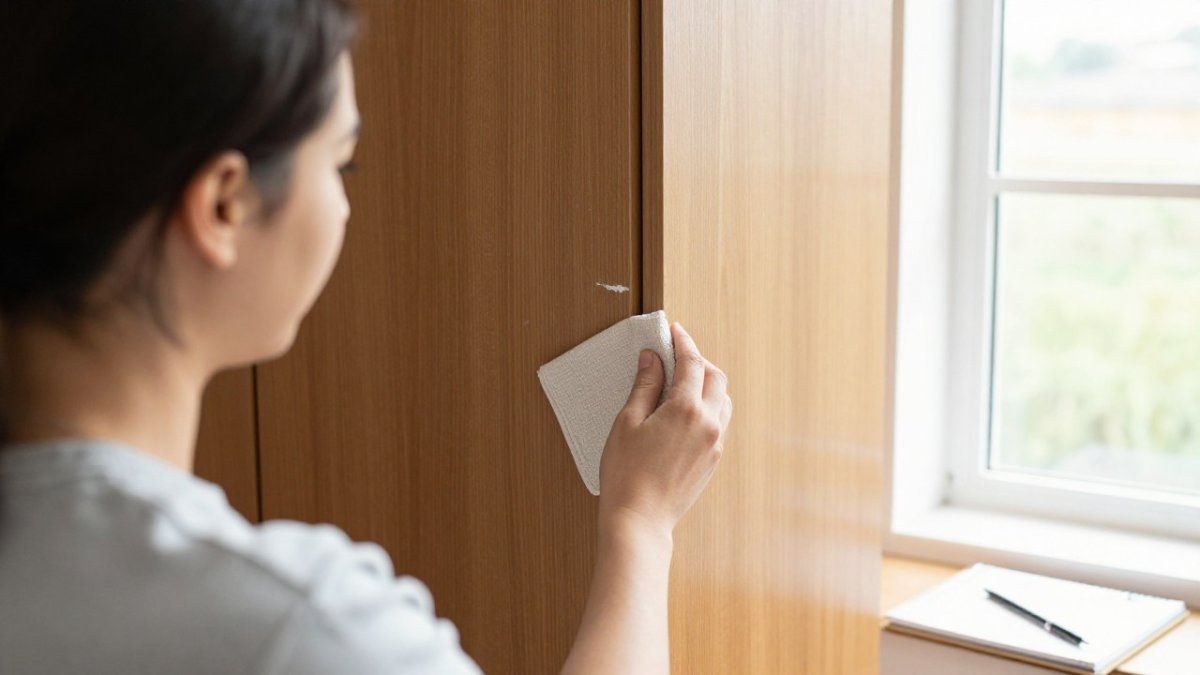
1. Make the area safe and stop further damage. Move the piece away from the source of the damage if it is safe to do so, mop up standing liquid with a clean, colour-fast cloth, and lift weight off a cracked leg or frame. Mitigating loss is expected; it is not an admission of fault.
2. Photograph before you clean. Take wide shots showing the whole item in its room, mid shots showing the damaged area in context, and close-ups with a ruler or coin for scale. Photograph any serial number, batch label or fitting stamp, because warranty administrators use these to confirm the item matches the order.
3. Keep the evidence. Bag and label any broken part, keep the cloth you used, and do not throw away packaging or fitting paperwork. If a joint has failed, photograph it in place before dismantling anything.
4. Write a short timeline. Note the date, time, what happened, who was present and what you did immediately afterwards. Memory fades quickly and a contemporaneous note carries more weight than a reconstruction weeks later.
5. Notify promptly and in writing. Contact the supplier or warranty administrator by email or through their claims portal so you have a dated record. Ask for the claim reference and the name of the person handling it. Many protection plans impose notification windows, so check the terms the same day rather than waiting to see whether the damage settles.
6. Do not attempt a repair. A well-meant glue repair or a DIY re-finish can make the damage impossible to assess and gives the administrator grounds to decline. Ask for authorisation before anyone touches the item.
Watch out: cleaning a spill with a strong solvent or a hot iron on a veneer can turn a covered accident into excluded negligence, so use only the care instructions supplied with the piece.
The steps below set out what to do after accidental damage, and when to do it, so your claim has the evidence it needs.
| Step | What to do | Timing |
|---|---|---|
| Make the area safe | Move the piece away from the source and mop up standing liquid | Immediately |
| Photograph before cleaning | Wide, mid and close-up shots, with a ruler or coin for scale | Before any cleaning |
| Keep the evidence | Bag and label broken parts; keep packaging and fitting paperwork | Straight away |
| Write a timeline | Note date, time, what happened, who was present and your response | Same day |
| Notify in writing | Contact the supplier or administrator and ask for a claim reference | Promptly, within notification windows |
| Do not repair | Ask for authorisation before anyone touches the item | Before any repair |
The Furniture Warranty Claim Process
A claim is a sequence of decisions, not a single phone call. Knowing what happens at each stage stops you from accepting a quick refusal that should have been challenged.
Stage 1, Report and register. Submit the claim in writing with your order reference, proof of purchase and the photographs you took immediately after the incident. Ask for written confirmation of receipt and the claim number. Keep a copy of everything you send.
Stage 2, Triage. The administrator decides whether the matter falls under the warranty, a separate accidental-damage protection plan, or neither. This is where the ‘void’ question is actually settled: a refusal on an accidental-damage claim is not the same as the warranty being cancelled. Defect cover on the rest of the item normally continues unless the terms say otherwise.
Stage 3, Inspection. Most suppliers arrange a visit or ask for the item to be returned for assessment. Ask whether the inspection is free, who attends, and what happens to the item afterwards. Photograph it again before it leaves your home.
Stage 4, Decision. You should receive an outcome in writing stating what is covered, what is not, and why. If a repair is offered, ask for the specification and the timescale. If a replacement is offered, confirm whether it is like-for-like and whether fitting is included.
Stage 5, Appeal. If you disagree, ask for the decision to be reviewed under the supplier’s complaints procedure and set out your evidence point by point. If the supplier is a member of a trade association or alternative dispute resolution scheme, the complaint can be escalated there. Where a voluntary warranty sits alongside your statutory rights under the Consumer Rights Act 2015, those rights are separate and are not extinguished by a warranty refusal.
Evidence that carries weight:
- Dated photographs showing the damage and the surrounding area
- Proof of purchase, order confirmation and fitting sign-off
- The care and maintenance instructions you followed
- A written timeline of the incident and your response
- Any correspondence with the supplier, kept in date order
Deadlines to check in your terms: the notification window after damage, the period allowed to return an item for inspection, and the time limit for appealing a decision. Missing a notification window is one of the most common reasons a valid claim fails.
Watch out: accepting a goodwill gesture or a partial refund can, in some contracts, be treated as full and final settlement, so read the wording before you sign anything.
Checking Your Fitted Wardrobe Warranty and Protection Options
Fitted furniture is often covered differently from loose pieces, so check the paperwork for each item. You can also find out whether this business offers bespoke fitted wardrobes at all. Ask whether the warranty covers fitting faults and whether a separate protection plan is available.
When comparing options, look at:
- What the warranty covers and for how long
- What the protection plan adds, and what it excludes
- Any excess or fee that applies to a claim
- Whether home contents insurance already covers accidental damage
A clear comparison helps you choose cover that fits your home and budget. Finest Furniture Studio offers a complimentary design visit. Book a Free Design Visit to discuss how your fitted wardrobe will be covered.
Frequently Asked Questions
Does accidental damage void a furniture warranty?
Not automatically. A furniture warranty usually covers defects in materials or workmanship, while accidental damage such as a spill, a crack from an impact or a pet chewing a leg is normally handled by a separate protection plan or contents insurance. Whether a claim is accepted depends on the policy wording and the cause of the fault, so read the warranty terms before assuming the whole warranty is lost. Keep photos and receipts, and contact the supplier promptly after any incident.
What is the difference between accidental damage and wear and tear?
Wear and tear is the gradual deterioration that comes from everyday use, such as fading upholstery, loosened hinges or minor scuffs on a worktop over time. Accidental damage is a sudden, identifiable event, such as a dropped object cracking a shelf or a red wine spill that stains a fabric panel. Most warranties exclude normal wear and tear, so the distinction between the two often decides whether a claim can proceed.
Can a furniture warranty claim be rejected?
Yes. Claims are commonly rejected where the fault is outside the warranty terms, such as damage caused by misuse, poor maintenance, unauthorised repairs or normal wear. Supplying clear photographs, the original order details and a description of how the problem arose makes it easier to show whether the issue falls within cover. If a claim is declined, ask the supplier for the reason in writing and check the policy terms against it.
Does home insurance cover accidental damage to furniture?
Many home contents policies cover accidental damage to belongings, but cover, excesses and limits vary between insurers. A furniture warranty and a home contents policy do different jobs: the warranty addresses manufacturing faults, while contents insurance can respond to sudden accidents. Compare the terms of any optional accidental damage add-on before buying, and check whether the policy has a claim limit that could apply to a bespoke piece.


