
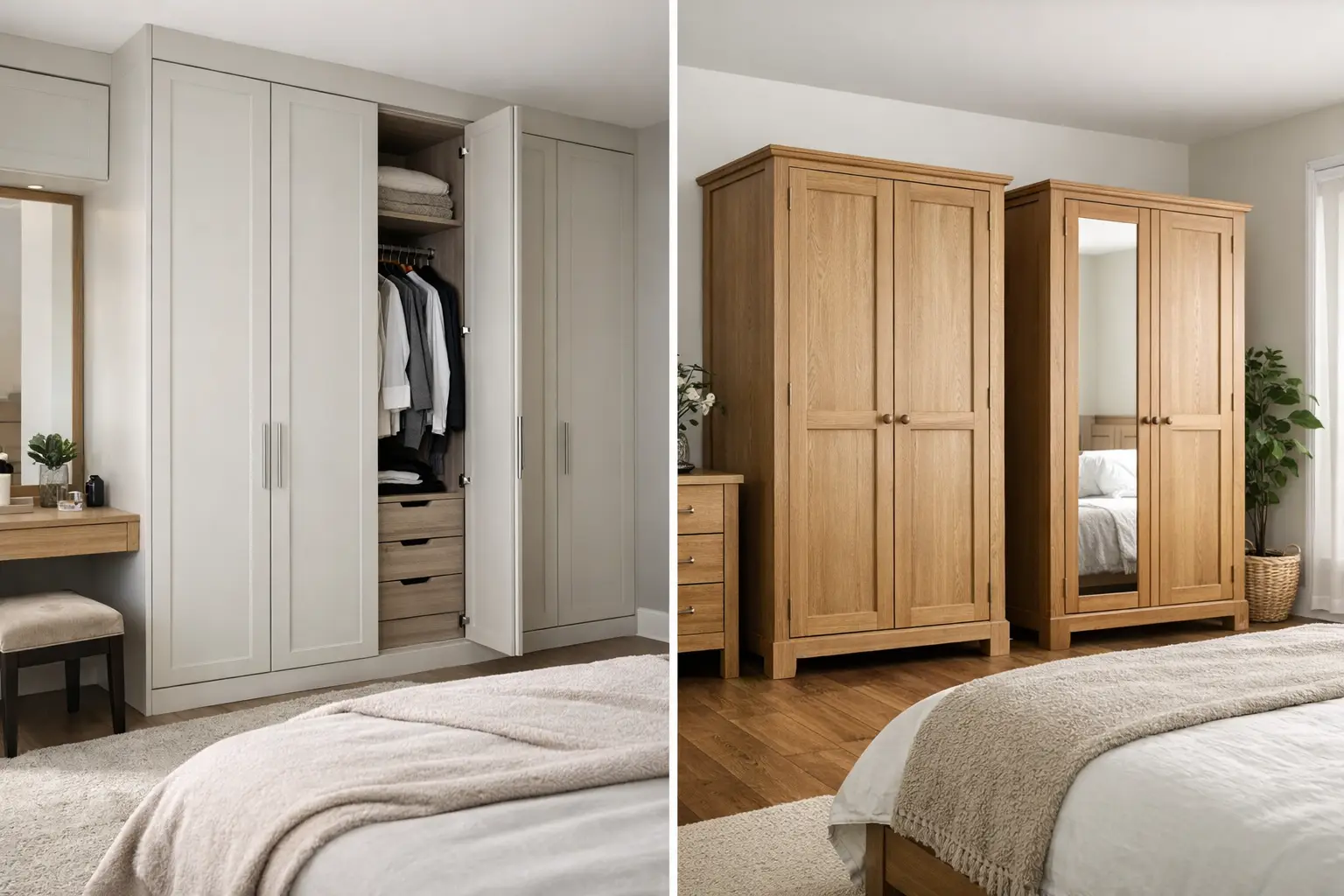
A wardrobe that leaves a dusty gap at the top might not sound like a design problem until you are standing on a chair every few weeks trying to clean it. That is often where the fitted furniture vs freestanding furniture decision becomes very real – not in a showroom, but in the day-to-day rhythm of living at home.
For many homeowners, especially those renovating period houses, loft conversions or newly extended bedrooms, the choice is not simply about style. It is about how well your furniture works with the room you actually have. Ceiling height, alcoves, chimney breasts, sloping walls and everyday storage habits all matter. A beautiful piece that wastes space can quickly become frustrating. Equally, a perfectly tailored installation is not always the right answer for every room.
Fitted furniture vs freestanding furniture: what is the difference?
Freestanding furniture is exactly what it sounds like – wardrobes, drawers, bookcases or media units that stand independently and can be moved. You buy them in standard sizes, place them in the room, and if you move house or redecorate, they usually move with you.
Fitted furniture is made to measure for a specific space. It is designed around the architecture of the room, then installed to sit flush against walls, ceilings or within awkward areas such as alcoves, eaves or under stairs. In practical terms, that means less dead space and a more integrated appearance.
The difference is not only visual. It affects how much storage you gain, how tidy the room feels, how long the furniture lasts, and how much planning is required before installation.
Where fitted furniture makes the biggest difference
In homes with challenging layouts, fitted pieces tend to show their value quickly. A Victorian bedroom with chimney breast alcoves, a loft room with a sloping ceiling, or a compact principal bedroom where every centimetre matters can all benefit from bespoke storage.
Freestanding wardrobes are built to standard dimensions. That makes them convenient, but it also means they rarely use the full height or width of the room. You often lose space above, beside and behind the unit. In a larger room, that might not matter. In a London home where every inch is valuable, it usually does.
Fitted wardrobes, media walls and home office furniture can turn awkward corners into useful storage and make the whole room feel calmer. Instead of trying to work around the room, the furniture works with it. That is especially valuable in bedrooms where visual clutter has a real impact on comfort.
A well-designed fitted wardrobe can include hanging space at the right height, drawers where you need them, shelving that actually fits your belongings, and finishing details that match the room rather than competing with it.
The case for freestanding furniture
Freestanding furniture still has clear advantages, and for some homeowners it remains the better option.
The first is flexibility. If you enjoy rearranging rooms, move home regularly, or are furnishing a temporary space, freestanding pieces are easier to live with. They give you freedom to change your layout without committing to one fixed design.
The second is speed. You can choose a piece, have it delivered, and use it straight away. There is less planning involved, and no design appointment or installation schedule to consider.
The third is lower entry cost. A mass-produced freestanding wardrobe will usually be cheaper upfront than a bespoke fitted alternative. If your priority is furnishing a room quickly on a tighter budget, that matters.
That said, lower purchase price does not always mean better value. If the piece does not fit properly, wears out sooner, or leaves you needing extra storage elsewhere, the savings can narrow over time.
Cost: upfront spend versus long-term value
This is where the conversation becomes more nuanced. Fitted furniture generally costs more at the start because it involves design, manufacturing and installation. It is a tailored service rather than an off-the-shelf purchase.
But cost should be measured against what you receive. With fitted furniture, you are not only paying for materials. You are paying for space efficiency, a cleaner finish, tailored internal layout and a result designed specifically for your home.
In many bedrooms, one bespoke wardrobe can replace the need for several separate pieces. The room can feel larger because storage is consolidated and the furniture sits neatly within the architecture. That has practical value, but it also has visual value.
For homeowners improving a long-term property, fitted furniture can feel more like part of the renovation than a standalone purchase. It supports the overall standard of the home, particularly in extensions, principal suites, home offices and living spaces where consistency matters.
If you are planning to stay for years, the argument for fitted often becomes stronger. If you expect to move soon, freestanding may feel more sensible.
Style and finish
Freestanding furniture can be characterful. Vintage pieces, statement cabinets and beautifully made timber chests all bring personality. They can soften a room and create a layered, collected look.
Fitted furniture offers something different – cohesion. Because it is designed around the room, it can create a more architectural feel. Doors can run floor to ceiling. Finishes can be selected to complement skirting, wall colour, flooring and lighting. Handles, panel styles and internal layouts can be chosen with the room as a whole in mind.
That often makes fitted furniture the stronger option for clean-lined, polished interiors where storage should feel elegant rather than obvious. It is also ideal when you want a bedroom, media wall or walk-in wardrobe to appear calm and resolved, rather than pieced together over time.
Neither approach is more stylish by default. It depends on the look you want. Some homes suit a mix – fitted wardrobes for efficient storage, paired with freestanding bedside tables or a vintage chest for warmth and individuality.
Practical living matters more than showroom appeal
The fitted furniture vs freestanding furniture debate is often framed around aesthetics, but daily use is what truly decides satisfaction.
Think about how you dress in the morning, where laundry goes, how seasonal clothes are stored, whether you share the space, and how tidy you want the room to feel. A wardrobe that looks attractive in a product photo can still be awkward if the hanging rails are too short, the shelves too deep or the doors too wide for the room.
This is one of the biggest strengths of fitted furniture. The interior can be planned around your routine, not an average customer’s. Long hanging for dresses, double hanging for shirts, drawers for knitwear, shelving for shoes, integrated lighting, even a dressing area or concealed television storage – these details are what make a room easier to use every day.
Freestanding furniture can work well when your storage needs are simple. If you only need a single wardrobe and chest of drawers in a generous room, bespoke design may be unnecessary. But when storage is under pressure, tailored interiors become far more valuable.
Which option suits different rooms?
Bedrooms are where fitted furniture usually wins most clearly, especially in smaller rooms or spaces with awkward architecture. Alcoves, loft bedrooms and principal suites all benefit from made-to-measure wardrobes that maximise the full footprint.
Living rooms are more balanced. If you want a statement sideboard or occasional cabinet, freestanding can look excellent. If you need to integrate a television, shelving, cabinetry and concealed storage into one clean feature wall, fitted furniture often gives a more refined result.
Home offices depend on how permanent the setup is. A desk and bookcase can be freestanding if the room is multi-purpose. If you need serious storage, hidden filing, display shelving and a workspace tailored to the room, fitted joinery tends to perform better.
Children’s rooms sit somewhere in the middle. Freestanding pieces offer flexibility as needs change, but fitted wardrobes can still be a smart choice if the room is small and storage needs are high.
So, which should you choose?
Choose freestanding furniture if flexibility, lower upfront spend and quick delivery are your priorities. It suits temporary homes, simpler layouts and homeowners who like to refresh rooms regularly.
Choose fitted furniture if you want to maximise space, achieve a more tailored finish and invest in a storage solution designed around your home and lifestyle. It is especially worthwhile in properties with awkward dimensions, premium interiors or rooms where clutter quickly undermines the look and feel of the space.
Many of the best interiors do not treat it as an either-or question. They use fitted furniture where precision matters most, then layer in freestanding pieces for character.
If you are planning a renovation or trying to make a difficult room work harder, it helps to start with the room itself rather than the furniture category. The right choice is usually the one that respects the architecture, supports the way you live, and still feels right once the novelty of new furniture has worn off. That is when good design proves its worth.

