

Booking a bespoke furniture consultation is the single most important step a London homeowner can take before investing in fitted wardrobes, a TV media wall, or any custom storage solution. The term “bespoke furniture consultation” refers to a structured design meeting between you and a specialist maker, where your room dimensions, lifestyle habits, and aesthetic preferences are translated into a precise furniture brief. Unlike buying off-the-shelf pieces, this process is built around your specific space, whether that is a loft conversion in Wimbledon, an alcove bedroom in Richmond, or a living room media wall in Chelsea. Getting the booking right from the start determines whether your finished furniture feels purpose-built or merely adequate.
How to book a bespoke furniture consultation: what you need to prepare first
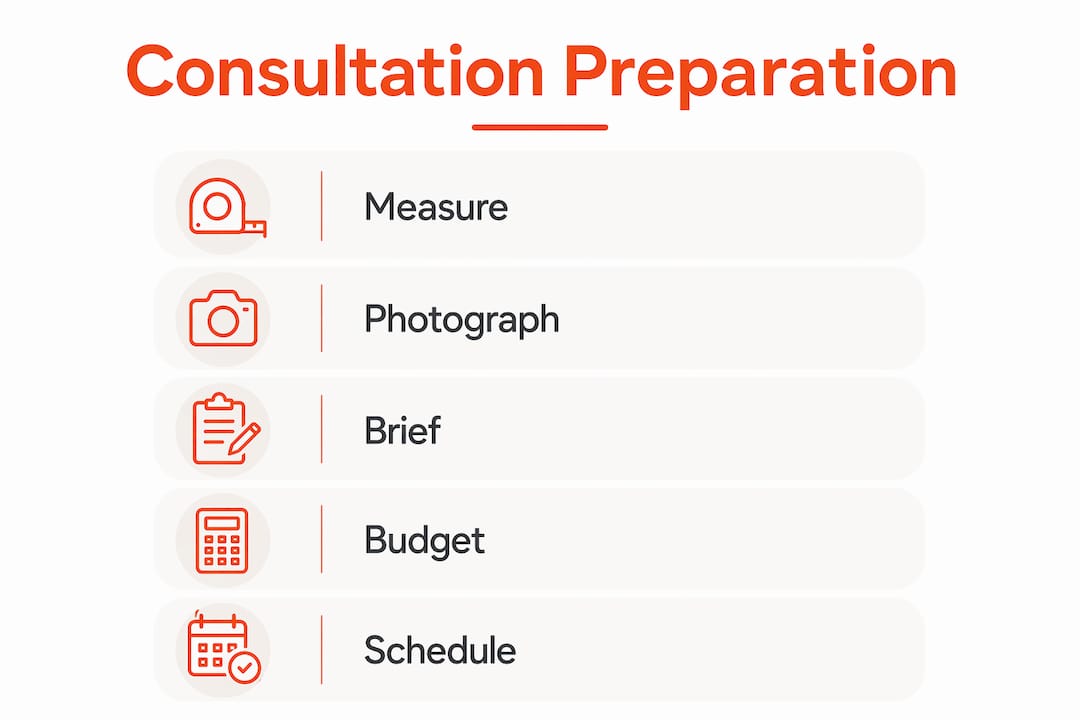
Preparing thoroughly before you schedule a custom furniture consultation is what separates a productive meeting from a wasted hour. Providing accurate measurements, honest photographs, and a clear brief upfront allows for more efficient consultations and reduces the risk of costly redesigns later. Think of it as doing the groundwork so that your designer can spend the meeting solving problems rather than gathering basic facts.
Room measurements and floor plans
Measure every wall in the room where the furniture will sit, including ceiling height, window reveals, and any alcoves or recesses. Note the position of radiators, sockets, and light switches, as these directly affect where fitted wardrobes or media wall units can be placed. A simple hand-drawn floor plan with annotated dimensions is sufficient; you do not need professional drawings at this stage.
Photographs that tell the whole truth
Honest photos showing clutter, wiring, and real-life conditions are the most critical preparation item a homeowner can bring to a consultation. Designers use these images to anticipate fit challenges such as uneven floors, sloping ceilings in loft rooms, or awkward pipework. Take photos in natural daylight and include corners, skirting boards, and any structural irregularities you would normally tidy away before a guest arrived.
Your functional brief
Write down exactly how you intend to use the furniture. A fitted wardrobe in a master bedroom in Putney serves a very different purpose from a loft wardrobe in a converted attic space in Twickenham. Note how many people will use it, what categories of clothing or items need storing, and whether you want specific interior fittings such as pull-out shoe racks, integrated lighting, or a dressing table section.
Pro Tip: Bring a rough budget range to your first meeting. Designers can then prioritise where to invest in premium materials and where to use cost-effective alternatives, which is one of the most practical ways a consultation reduces costly mistakes before a single piece of timber is cut.
Here is a quick reference checklist to bring to your bespoke furniture design appointment:
| Preparation item | Why it matters |
|---|---|
| Room measurements with ceiling height | Prevents sizing errors and ensures a precise fit |
| Photographs including obstacles and wiring | Allows designers to foresee structural challenges |
| Functional brief with usage details | Informs material choices, drawer configurations, and layout |
| Rough budget range | Helps the designer prioritise spend and suggest alternatives |
| Inspiration images or mood board | Gives the designer a clear visual direction for style and finish |
How to find and schedule a bespoke furniture consultation in London
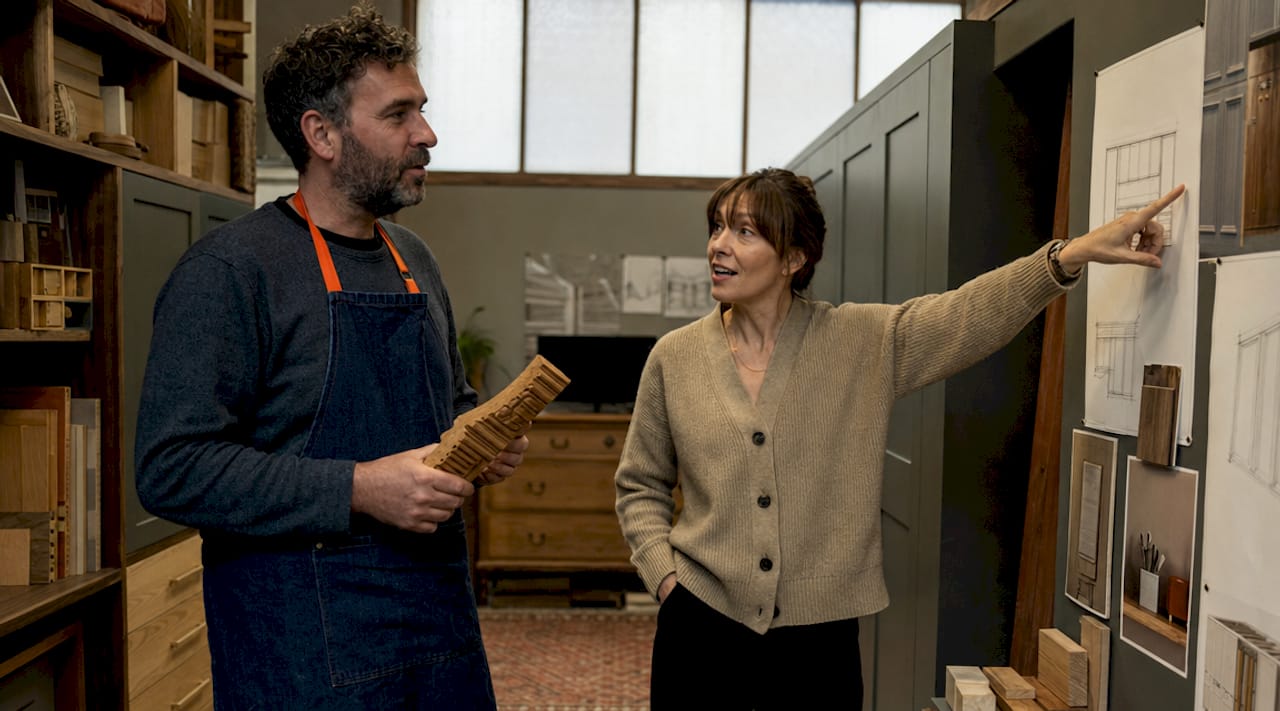
London has no shortage of furniture makers, but not all of them offer the structured, design-led consultation process that bespoke work demands. The right provider will treat the consultation as a genuine discovery session, not a sales call. When you research local specialists, look specifically for makers who focus on fitted wardrobes, media walls, and built-in storage rather than general furniture retail.
What to look for in a London bespoke furniture maker
Start by reviewing the maker’s portfolio for projects in London boroughs similar to yours. A company with completed work in Fulham, Hammersmith, or Barnes will understand the period property quirks common in those areas, including chimney breasts, bay windows, and irregular wall angles. Read customer reviews carefully and pay attention to comments about communication, accuracy of the final product, and how well the maker handled unexpected site challenges.
Transparency in the consultation process itself is a strong indicator of professionalism. Clear proposals that outline dimensions, materials, finish, and costs are the mark of a maker who takes bespoke work seriously and wants to avoid disputes later. If a company cannot explain its consultation process clearly before you book, that is a warning sign.
Booking channels and what each offers
You can typically arrange a bespoke furniture design appointment through three main channels: an online enquiry form, a direct phone call, or email. Each has different strengths depending on how much detail you want to share upfront.
| Booking channel | Strengths | Limitations |
|---|---|---|
| Online enquiry form | Convenient, allows you to attach photos and measurements | Response time varies; less immediate dialogue |
| Phone call | Immediate answers, good for complex briefs or urgent timelines | Harder to share visual information in real time |
| Creates a written record; ideal for detailed briefs with attachments | Can feel slower for back-and-forth questions |
When you make contact, provide your postcode, the type of furniture you need (fitted wardrobe, media wall, loft wardrobe, or alcove storage), your preferred consultation format, and two or three available dates. This information allows the maker to assign the right designer and confirm a visit without unnecessary delays. You can explore the custom furniture design process in detail before you pick up the phone, which makes the initial conversation far more focused.
What to expect during your bespoke furniture consultation
Consultations are designed to be approachable and focused, not intimidating, and they help clients gain genuine confidence before committing to a bespoke investment. Whether you opt for an in-home visit or a virtual session, the meeting follows a recognisable structure that moves from discovery through to a formal proposal.
In-home visits versus virtual consultations
In-home visits provide vital real-world context about space usage and obstacles, enabling solutions that a video call simply cannot replicate. A designer standing in your bedroom in Chiswick can spot a ceiling joist, test a door swing, or notice that a wall is not perfectly square in a way that no photograph fully captures. Virtual consultations work well as an initial screening step, but for fitted wardrobes, media walls, and loft wardrobes, an in-home visit is the standard that serious makers follow.
The step-by-step consultation process
A well-run bespoke furniture consultation follows this sequence:
- Introduction and brief review. The designer reviews the measurements, photographs, and functional brief you prepared in advance.
- Site assessment. The designer takes their own measurements, checks walls for plumb and level, and identifies any structural features that affect the design.
- Lifestyle discussion. Questions about daily usage inform functional specifications such as durable finishes for high-traffic wardrobes or specific drawer configurations for shared spaces. This is where you discuss how many people use the wardrobe, whether children need accessible storage, and how you prefer to organise your clothing.
- Material and finish selection. The designer presents samples of timber, lacquer finishes, handle styles, and interior fittings. For media walls, this includes cable management options and panel materials that complement your existing décor.
- Preliminary design discussion. The designer sketches or describes a proposed layout, explaining how it addresses your brief and the site conditions observed.
- Cost and timeline overview. You receive a broad indication of investment and lead time before any formal quote is issued.
- Next steps and agreement. The designer confirms what happens after the visit, including when you will receive detailed drawings, a written proposal, and a formal contract.
Pro Tip: Ask the designer to walk you through at least two layout options during the meeting. Early decisions in bespoke processes determine success, and seeing alternatives helps you make a more informed choice rather than accepting the first proposal by default.
After the consultation, a reputable maker will send you a written proposal covering dimensions, materials, finish specifications, and a clear cost breakdown. This document is your reference point for everything that follows, so read it carefully before signing.
Common mistakes to avoid when booking a bespoke furniture consultation
Even well-prepared homeowners make avoidable errors that slow down the process or lead to a disappointing outcome. Knowing what these are in advance puts you in a much stronger position.
- Providing idealised rather than honest photographs. Sending a tidy, staged photo of your bedroom hides the radiator position, the awkward corner, and the skirting board height that will directly affect your fitted wardrobe design. Show the space as it actually is.
- Choosing a maker based on price alone. The lowest quote rarely reflects the full scope of a bespoke project. A maker who cannot explain their consultation process, material sourcing, or warranty terms is a risk regardless of the figure they quote.
- Setting an unrealistic timeline. Quality bespoke furniture for London homes typically requires four to eight weeks from confirmed order to installation, depending on complexity. Booking a consultation in the week before you need the furniture installed will not change that reality.
- Failing to confirm the scope in writing. Verbal agreements about finishes, dimensions, or included fittings are a source of disputes. Every detail agreed during your consultation should appear in the written proposal before you approve it.
- Ignoring the contract details. Check that the proposal specifies the payment schedule, what happens if materials are delayed, and what the maker’s policy is on design revisions after sign-off. A clear contract protects both parties.
If you need to request a design revision after receiving the initial proposal, do so in writing and be specific about what you want changed and why. Vague feedback such as “it doesn’t feel right” leads to multiple revision rounds. Precise feedback such as “I need the hanging rail section to be 1,200mm wide rather than 900mm” moves the project forward efficiently. For guidance on getting an accurate furniture quote, reviewing the process before your consultation will help you ask the right questions.
How bespoke consultations improve fitted wardrobes and media walls in London homes
London properties present design challenges that standard furniture simply cannot address. Victorian terraces in Barnes and Hammersmith have chimney breasts that interrupt wall runs. Loft conversions in Wimbledon and Ealing have sloping ceilings that make off-the-shelf wardrobes unusable. New-build apartments in Chelsea and Fulham have irregular room proportions that leave awkward dead spaces. A bespoke furniture consultation is specifically designed to solve these problems.
- Fitted wardrobes in complex rooms. A consultant can design a wardrobe that wraps around a chimney breast, incorporates a sloped ceiling section, or fills an alcove to the millimetre. This is not possible with modular retail furniture.
- Media walls with integrated storage. A bespoke media wall consultation addresses cable routing, speaker placement, and the balance between display space and closed storage. The result is a wall that functions as a complete entertainment and storage system rather than a collection of separate units.
- Loft wardrobe solutions. Loft wardrobes require precise measurement of eaves height and roof pitch. A consultation with a specialist who has completed loft wardrobe projects in London properties means the design accounts for these constraints from the outset.
- Alcove and under-stair storage. These spaces are rarely square or level. A consultation identifies the exact dimensions and structural conditions, allowing the maker to build furniture that fits without gaps or forced adjustments on installation day.
“The consultation is where a cluttered, underused room becomes a room with a plan. Every awkward corner, every sloped ceiling, every radiator that seemed like an obstacle becomes part of the solution rather than a reason to compromise.”
Homeowners in Richmond, Kingston, and Twickenham consistently report that the in-home consultation was the moment the project became real. Seeing a designer take measurements and immediately begin solving layout problems builds confidence in a way that browsing a showroom never does.
Key takeaways
A successful bespoke furniture consultation depends on thorough preparation, choosing a maker with a transparent process, and confirming every agreed detail in writing before work begins.
| Point | Details |
|---|---|
| Prepare before you book | Bring accurate measurements, honest photographs, and a written functional brief to every consultation. |
| Choose the right maker | Select a London specialist with a clear consultation process, relevant portfolio, and written proposals. |
| Expect a structured meeting | A professional consultation covers site assessment, lifestyle questions, material selection, and a cost overview. |
| Confirm everything in writing | Every dimension, material, and finish agreed verbally must appear in the formal proposal before you sign. |
| Avoid common pitfalls | Idealised photos, vague feedback, and verbal-only agreements are the leading causes of bespoke project delays. |
What I have learned from years of bespoke furniture consultations in London
After working with homeowners across Richmond, Wimbledon, Fulham, and beyond, the pattern I see most often is this: the clients who arrive best prepared get the best results. Not because the designer works harder for them, but because the consultation can move directly into problem-solving rather than information gathering.
The mistake I see most frequently is homeowners sending photographs of a tidied room. I understand the instinct. Nobody wants to show a stranger their cluttered wardrobe or the tangle of cables behind the television. But those details are precisely what a designer needs. The radiator you moved to the corner, the socket that sits at an awkward height, the ceiling beam you painted over: these are the constraints that determine whether a fitted wardrobe or media wall works perfectly or requires an expensive revision after installation.
I also think the industry undersells how much the lifestyle conversation matters. When a designer asks how you organise your clothing or how many people share the wardrobe, they are not making small talk. The answers directly determine whether you need a double hanging rail or a long-hang section, a pull-out trouser rack or a built-in laundry hamper. These details, often overlooked, are what make bespoke furniture genuinely satisfying to live with rather than merely good-looking.
My honest advice is to treat the consultation as a collaboration, not an interview. Come with your measurements and photographs, but also come with questions. Ask to see material samples. Ask what happens if the installation reveals an unexpected structural issue. Ask about the warranty. A maker who answers these questions clearly and without hesitation is one you can trust with your home.
— Aureliu
Ready to book your bespoke furniture consultation with Finest Furniture Studio?
Finest Furniture Studio offers free in-home design consultations for homeowners across London, covering fitted wardrobes, TV media walls, loft wardrobes, and alcove storage solutions. We work across Richmond, Wimbledon, Chelsea, Fulham, Chiswick, Putney, Kingston, Ealing, Twickenham, Barnes, and Hammersmith, as well as surrounding areas including Walton-on-Thames, Guildford, and Reading.
Our consultations are structured, unhurried, and focused entirely on your space and lifestyle. Every project comes with a 10-year quality guarantee, and fitting is completed within 7 to 12 days of confirmed order. We also remove and dispose of your existing wardrobe at no additional charge. Explore our bespoke wardrobe services for West London to see what is possible, then contact us to arrange your free design visit.
Call or WhatsApp: 07468 150807
124 City Road, Kemp House, London, EC1V 2NX
FAQ
What is a bespoke furniture consultation?
A bespoke furniture consultation is a structured design meeting where a specialist measures your space, discusses your lifestyle and storage needs, and develops a tailored furniture proposal. It covers material choices, layout options, and a cost overview before any work is commissioned.
How do I prepare for a custom furniture consultation?
Bring accurate room measurements including ceiling height, honest photographs showing obstacles such as radiators and wiring, and a written brief describing how you intend to use the furniture. A rough budget range also helps the designer prioritise materials and fittings effectively.
How long does a bespoke furniture consultation take?
A thorough in-home consultation for a fitted wardrobe or media wall typically takes between one and two hours. This allows time for site assessment, lifestyle discussion, material selection, and a preliminary design conversation.
Is an in-home visit better than a virtual consultation?
For fitted wardrobes, loft wardrobes, and media walls, an in-home visit is the preferred format because it allows the designer to assess wall plumb, ceiling height, and structural features that photographs cannot fully capture. Virtual sessions work well as an initial introduction but rarely replace a physical site visit for bespoke projects.
How soon after the consultation will I receive a design proposal?
Most reputable bespoke furniture makers in London provide a written proposal, including dimensions, materials, finishes, and a cost breakdown, within five to ten working days of the in-home consultation. This document forms the basis of the formal contract before production begins.

