
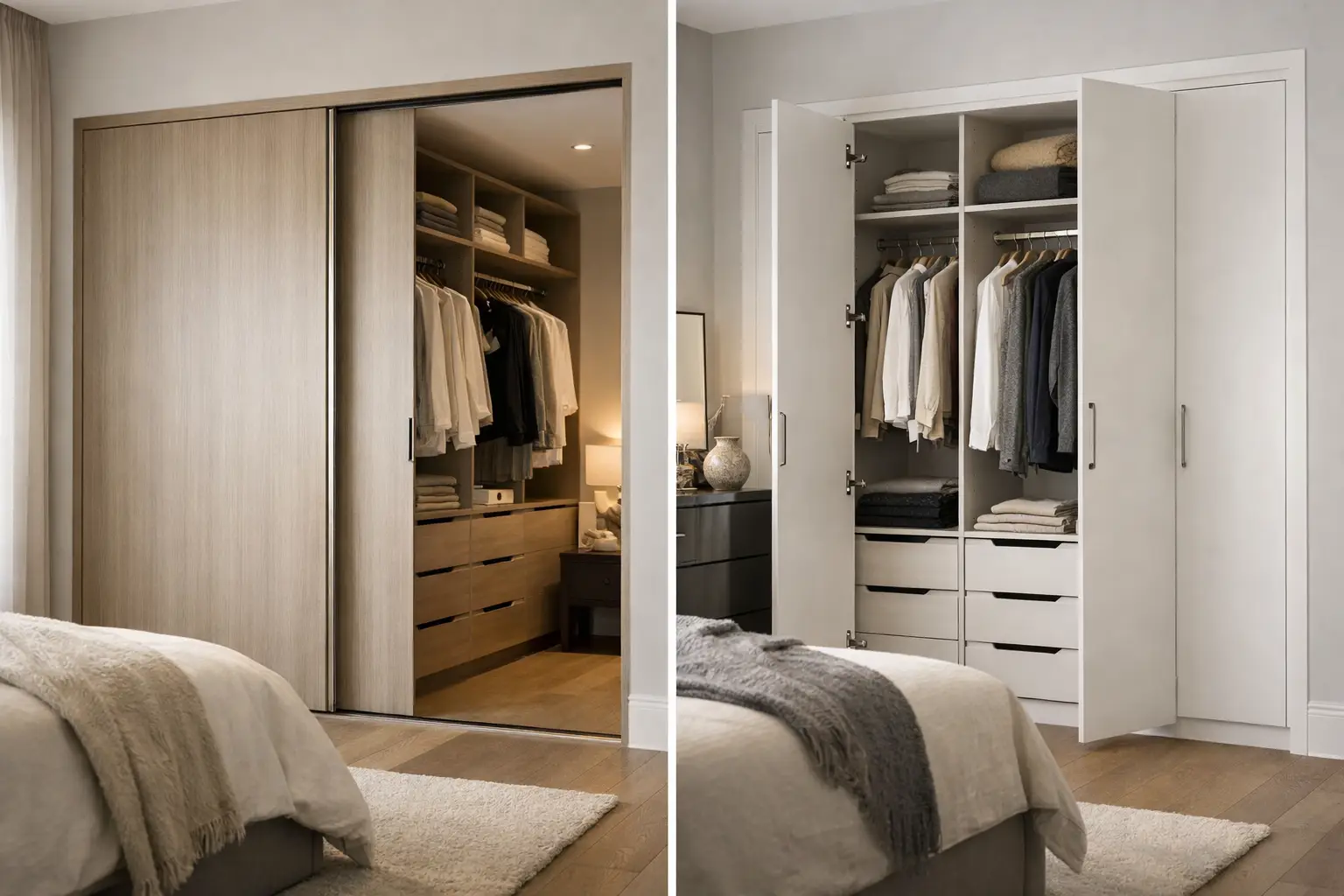
A wardrobe can look perfect on a drawing and still feel wrong the moment you use it every day. That is why sliding doors vs hinged wardrobes is not just a style decision. It affects how easily you move around the room, how well you can see your clothes, and whether the finished design feels calm and considered or slightly compromised.
For some bedrooms, sliding doors are the smartest use of space. In others, hinged doors bring a better sense of access, detail and flexibility. The best option depends on your layout, your storage habits and the kind of finish you want the room to have.
Sliding doors vs hinged wardrobes: what changes in daily use?
The biggest difference is how the wardrobe behaves in the room. Sliding doors move across the front of the unit, so they do not swing out into the bedroom. Hinged doors open forwards, which means they need clearance, but they also reveal the full section behind each door.
That sounds simple, but it has a real effect on daily life. If your bed sits close to the wardrobe, or the room is compact, sliding doors can make the space feel easier to move through. You are not stepping back to open a door, and nothing interrupts the walkway.
Hinged wardrobes, though, tend to feel more open when in use. You can stand in front of the wardrobe and see an entire section at once, which is particularly helpful if you like your clothing, shoes and accessories clearly visible. For households with busy mornings, that full access can be the difference between a wardrobe that looks beautiful and one that genuinely works.
When sliding wardrobes make more sense
Sliding wardrobes are often the natural choice for smaller bedrooms, flats, and layouts where every inch matters. If there is limited space between the wardrobe and the bed, or if a chest of drawers or bedside table sits nearby, sliding doors remove the issue of door swing.
They also suit a cleaner, more contemporary look. Large uninterrupted panels can make a fitted wardrobe feel architectural rather than furniture-like. Mirror finishes can help bounce light around a darker bedroom, while woodgrain or matt panels create a calm, streamlined wall of storage.
This style works especially well in modern homes where simplicity matters. If you want the wardrobe to blend into the room rather than announce itself, sliding doors can feel refined and understated.
There are trade-offs. Because one panel always sits in front of another, you never have the entire wardrobe open at once. That is rarely a problem for one person using the wardrobe casually, but it can be less convenient if two people are getting ready together or if you want complete visibility across the full width.
Sliding systems also need careful design and quality hardware to feel smooth and substantial over time. In a bespoke fitted wardrobe, that matters. A poorly planned sliding wardrobe can feel restrictive. A well-designed one feels elegant, space-smart and effortless to use.
When hinged wardrobes are the better fit
Hinged wardrobes are often the more versatile option, especially in bedrooms where there is enough room for the doors to open comfortably. They offer full access to each compartment, which makes the interior easier to arrange and easier to use.
This is particularly useful if your storage needs are varied. Long hanging, double hanging, shelving, internal drawers and top boxes all feel straightforward behind hinged doors. You open a section and everything is there in front of you.
They also allow more decorative detail on the exterior. Shaker styles, panelled finishes and classic handles all sit naturally on hinged wardrobes, making them a strong choice for period homes, family houses and interiors where the wardrobe should feel like part of the room’s character rather than a sleek built-in wall.
For many homeowners, hinged wardrobes simply feel more familiar. They have a traditional rhythm to them, and that can be reassuring in a bedroom design. If you enjoy the look of crafted joinery and want a wardrobe with more furniture detail, hinged doors usually offer more design freedom.
The limitation is space in front. In a tight bedroom, opened doors can interrupt circulation or make the room feel more crowded while you are using it. That does not mean hinged wardrobes are wrong for smaller rooms, but it does mean the design needs to be thought through properly.
Space planning matters more than door preference
Many people start with a strong preference for one style, then change their mind once the room is measured properly. That is because the right answer often comes down to layout rather than taste alone.
If your bedroom has awkward corners, chimney breasts, alcoves or a sloping ceiling, a fitted design should respond to those features rather than fight them. In some cases, sliding doors create a neater overall frontage across an uneven wall. In others, hinged doors make better use of tricky internal sections because each compartment can be accessed independently.
This is where bespoke design really earns its value. A made-to-measure wardrobe should be designed around how the room works, not just around a catalogue option. In London homes in particular, bedrooms often have proportions that make standard furniture feel like a compromise. The door style needs to support the architecture, not just fit inside it.
Style, finish and the look of the room
Door choice changes the mood of a bedroom more than people expect. Sliding wardrobes often create a more contemporary impression because the frontage is broader and visually quieter. They can help a room feel larger and less busy, especially with pale finishes, mirrored panels or minimalist detailing.
Hinged wardrobes tend to bring more texture and presence. You can introduce moulding, classic handles, painted finishes and other details that give the fitted furniture a more tailored feel. In the right room, that added definition is exactly what makes the design feel expensive and complete.
Neither is automatically better. A sleek modern bedroom may benefit from sliding doors that keep everything calm and linear. A softer, more characterful interior may call for hinged wardrobes that add depth and craftsmanship.
The useful question is not which style is more fashionable. It is which style helps the wardrobe feel properly integrated into your home.
Cost and value over time
Price matters, but it should be looked at in context. Hinged door wardrobes generally start at a lower price point than sliding wardrobes, largely because the mechanisms are simpler. Sliding wardrobes involve track systems and larger door panels, which can increase cost.
That said, the better value option is the one that suits the room and lasts well in daily use. Saving money on the wrong style is rarely a saving. If hinged doors make a narrow room awkward, or sliding doors limit access in a wardrobe used by two people every morning, the problem will be felt long after installation day.
A fitted wardrobe is part of the home, not a short-term purchase. Quality materials, careful internal planning and professional fitting often matter more than the difference between one door style and another.
Sliding doors vs hinged wardrobes for couples and families
Usage patterns are often overlooked. A wardrobe used by one person in a guest room can be designed very differently from the main bedroom storage used by a couple or a family.
For shared wardrobes, hinged doors can be especially practical because more than one section can be opened at once. That allows easier access when two people are using the wardrobe together. Internal drawers and shelves also tend to feel more straightforward when each zone can be opened fully.
Sliding doors can still work beautifully in shared spaces, but the interior needs more thought. Dividing hanging and shelving zones clearly becomes more important, and the design should avoid creating bottlenecks where one person blocks access for the other.
For children’s rooms or multi-use bedrooms, the decision often comes down to clearance. If a hinged door would knock into a bed frame, desk or toy storage, sliding doors usually make the room more practical.
How to choose the right option
If you are deciding between sliding doors vs hinged wardrobes, start with the room, then move to the routine, then think about style. Measure the clear space in front of the wardrobe. Consider whether one or two people will use it at the same time. Think about whether you prefer full visibility or a sleek uninterrupted exterior.
Then consider the interior. A beautiful frontage only works when the inside is planned just as carefully. Hanging lengths, drawers, shelving, shoe storage and overhead compartments all influence which door style will feel best in use.
At Finest Furniture Studio, this is often the point where homeowners realise the answer is more personal than expected. The best fitted wardrobe is not the one that follows a trend. It is the one that feels easy every morning, keeps the room looking composed, and makes proper use of the space you already have.
If you are torn between the two, that usually means both have merit. The right choice is the one that suits your bedroom when the doors are closed and your routine when they are open.

