
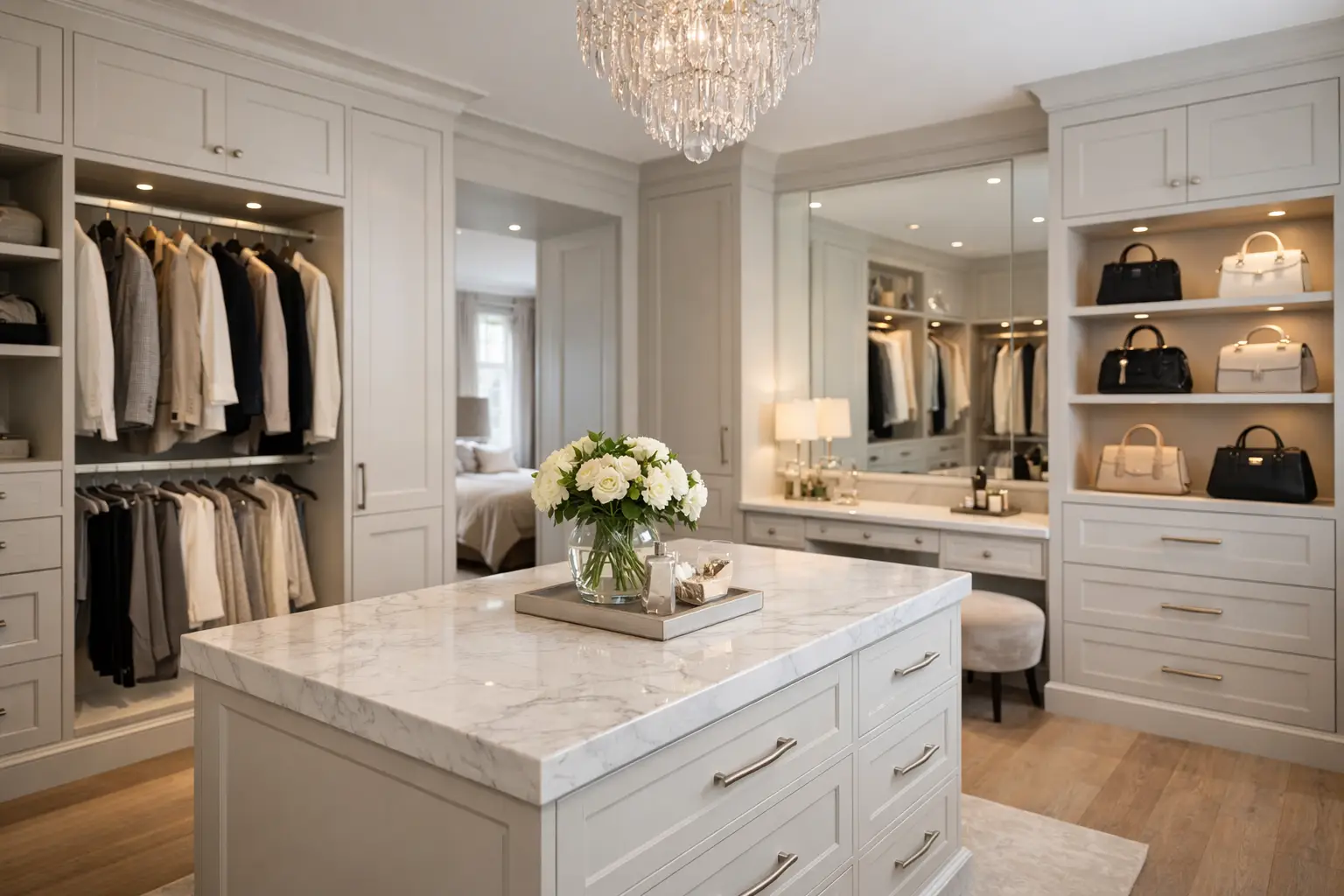
A well-planned dressing space changes the feel of a bedroom faster than most people expect. The best walk-in wardrobes Wimbledon homeowners invest in are not simply larger cupboards – they are tailored storage rooms that make mornings easier, protect clothing properly, and turn awkward square footage into something calm, elegant and useful.
In a place like Wimbledon, where homes range from period properties with quirks to newer builds with tighter layouts, a walk-in wardrobe needs more than a good-looking finish. It has to work with the architecture, the way you dress, and the amount of storage you genuinely need. Done well, it gives you order without making the room feel overbuilt.
Why walk-in wardrobes Wimbledon properties suit so well
Many local homes have the kind of layouts that benefit from fitted storage. That might be an alcove off the principal bedroom, a loft conversion with sloping ceilings, a spare room being turned into a dressing room, or a recessed area that never quite knew what it was for. Freestanding furniture often leaves these spaces underused. Bespoke joinery does the opposite.
This is where a walk-in wardrobe starts to make sense. Instead of forcing standard units into an irregular room, the storage is built around the room itself. Full-height cabinetry, carefully planned hanging sections, integrated drawers and open shelving all help the space feel intentional rather than improvised.
There is also a lifestyle element. For busy professionals and families, clutter is rarely caused by a lack of furniture alone. More often, it comes from the wrong mix of storage. Too little hanging space, drawers that are too shallow, shelves that are too high, or dead corners that become dumping grounds. A fitted walk-in wardrobe solves that by assigning every category of item a proper home.
What makes a walk-in wardrobe genuinely practical
The most successful designs balance appearance with routine. Beautiful doors, finishes and handles matter, but the internal layout matters more. If the wardrobe looks exceptional and still leaves shoes in the hallway or knitwear piled on a chair, it has missed the mark.
Start with how you live. If you own more long coats and dresses than folded jumpers, your design should prioritise full-length hanging. If you wear suits to work, double hanging and pull-out accessories may be more useful. If you share the wardrobe, symmetry can help, but identical storage on both sides is not always the smartest choice. One person may need more shoe shelving, the other more drawer space.
Lighting is another detail that separates average fitted furniture from a refined dressing space. Soft integrated lighting improves visibility, adds atmosphere and makes darker corners more usable. It also helps wardrobes feel like part of the room rather than a dense wall of cabinetry.
Mirrors, seating and dressing surfaces can also be built in, but they should earn their place. In a compact room, a full-height mirror panel may be more valuable than a freestanding stool. In a larger dressing room, a central island with jewellery trays and folded storage can be transformative. It depends on the footprint and on whether the room needs to feel spacious or more boutique in character.
Design choices that shape the final look
A walk-in wardrobe should feel consistent with the rest of the home. In some Wimbledon properties, that means shaker-style fronts and warm painted finishes that sit comfortably with period details. In others, a cleaner modern look with handleless panels, wood-effect interiors or smoked glass inserts may feel more appropriate.
Colour has a practical role as well as an aesthetic one. Lighter finishes can make a narrow wardrobe room feel more open, while darker tones create depth and a more cocooning effect. Neither is automatically better. A room with generous natural light can carry deeper shades beautifully. A compact space without much daylight often benefits from a softer palette.
Internal finishes deserve attention too. Many homeowners focus on external doors and forget that they will see the inside every day. A well-considered interior in a warm wood effect or a clean matte finish brings a sense of quality to daily use. It also makes the wardrobe feel fully designed rather than functional only on paper.
Walk-in wardrobes Wimbledon homeowners often ask for
There is no single ideal layout, but several approaches appear time and again because they answer common problems in real homes.
A spare bedroom conversion is one of the most popular. This works especially well when a small box room is too limited to function comfortably as a bedroom but large enough for a dedicated dressing space. In this setup, wall-to-wall fitted wardrobes, open shelving and a mirror station can create a luxurious feel without wasting floor area.
The second is a bedroom-adjacent walk-in formed within the main room. This may use a partition wall, an L-shaped arrangement, or fitted cabinetry to zone the space. It is an effective option when homeowners want the benefits of a dressing area but do not have a separate room available.
The third is a loft or eaves solution. Sloping ceilings can make freestanding wardrobes frustratingly impractical, but bespoke fitted furniture can turn low-height areas into useful drawer runs, shelving, or seasonal storage. What looks awkward in an empty room can become one of the most efficient parts of the home once planned properly.
Cost, value and where budgets usually shift
Walk-in wardrobes are not all priced the same because they are not all solving the same problem. A straightforward fitted dressing area in a simple layout will naturally cost less than a fully customised room with premium finishes, integrated lighting and specialist accessories.
As a starting point, many homeowners are surprised to learn that bespoke can be more accessible than expected when it is designed sensibly. The key variables are room size, internal specification, material choices and complexity of installation. Corners, sloping ceilings, uneven walls and higher-end detailing all affect the final figure.
It is also worth thinking beyond initial spend. A bespoke walk-in wardrobe often delivers better long-term value than buying multiple freestanding pieces over time, particularly when those pieces still fail to use the room properly. Fitted furniture is about permanence, but also about using every inch with intention.
For homeowners comparing options, transparent pricing and a clear installation process matter just as much as the design itself. A tailored service that moves from consultation to manufacture and fitting with a realistic timeline gives far more confidence than vague estimates or off-the-shelf compromises.
How to know if bespoke is the right route
Not every home needs a walk-in wardrobe, and not every bedroom should have one. If adding a dressing area means making the main room feel cramped or reducing natural light too much, a beautifully designed fitted wardrobe may be the better answer.
But if you have an underused spare room, a generous principal bedroom, or an awkward area that standard furniture cannot handle, bespoke is usually the strongest option. It allows the design to follow the architecture instead of fighting it. That is particularly valuable in homes with chimney breasts, alcoves, ceiling slopes or uneven dimensions.
A good designer will not just ask what style you like. They should ask what you own, what frustrates you about your current storage, whether you share the space, and how you want the room to feel. That is where thoughtful fitted furniture begins.
Choosing a company for walk-in wardrobes Wimbledon projects
The finish matters, but so does the process behind it. A reliable bespoke company should offer a proper design visit, clear guidance on materials and layout, and installation that respects the home as much as the furniture. Speed is useful, but only when paired with accuracy and craftsmanship.
Look for a team that can explain trade-offs honestly. For example, open shelving may feel lighter visually but needs tidier day-to-day use. Drawers create a cleaner look but increase cabinetry volume. Hinged doors offer full access, while open walk-in sections can feel more spacious. The right answer depends on the room and your habits.
At Finest Furniture Studio, that balance between design, usability and efficient fitting sits at the heart of every bespoke project. The aim is not to fill a room with joinery for its own sake, but to create storage that feels elegant, personal and easy to live with.
The best walk-in wardrobe is the one that suits your home when the doors are open, when they are closed, and six months later when daily life has settled in. If the space feels calmer, dressing feels simpler, and the room finally makes sense, the design has done its job.

