
Table of Contents
- What Does Wardrobe Warranty Cover
- Furniture Warranty Exclusions You Need to Know
- Statutory Rights vs. Manufacturer Guarantees
- Consumer Rights Act 2015 and Furniture Protection
- How to Claim on Furniture Warranty
- Warranty Duration and Coverage Periods
- Maintenance Checklists for Warranty Compliance
- Warranty Transferability and Second Owners
Last Updated: August 27, 2026
What Does Wardrobe Warranty Cover
A wardrobe warranty cover is a manufacturer’s or supplier’s commitment to repair or replace specific components and structural elements of your fitted wardrobe if they fail under normal use within a defined period. At Finest Furniture Studio, we understand that a 10-year warranty on wardrobes provides substantial protection, but only if you know exactly what that protection includes and what it excludes.
The scope of wardrobe warranty cover typically encompasses manufacturing defects, structural integrity issues, and workmanship problems that arise during normal use. What it does NOT cover, accidental damage, wear and tear from everyday use, DIY modifications, or installation errors, is equally important to understand before you make a claim.
Manufacturing Defects and Structural Integrity
Manufacturing defects are faults in materials or construction that exist from the moment your wardrobe leaves the factory, including faulty wood joints, incorrect measurements in the cabinet carcass, misaligned panels, or structural weaknesses that compromise integrity under normal use.
Structural integrity coverage protects against failure of the core framework. If the main structure warps, splits, or becomes unstable due to a manufacturing fault rather than misuse, this typically falls within warranty protection. Most warranties define normal use clearly: for a bedroom wardrobe, this generally means everyday storage of clothing and personal items at typical household humidity and temperature levels.
Moving Parts: Hinges, Drawer Runners and Internal Components
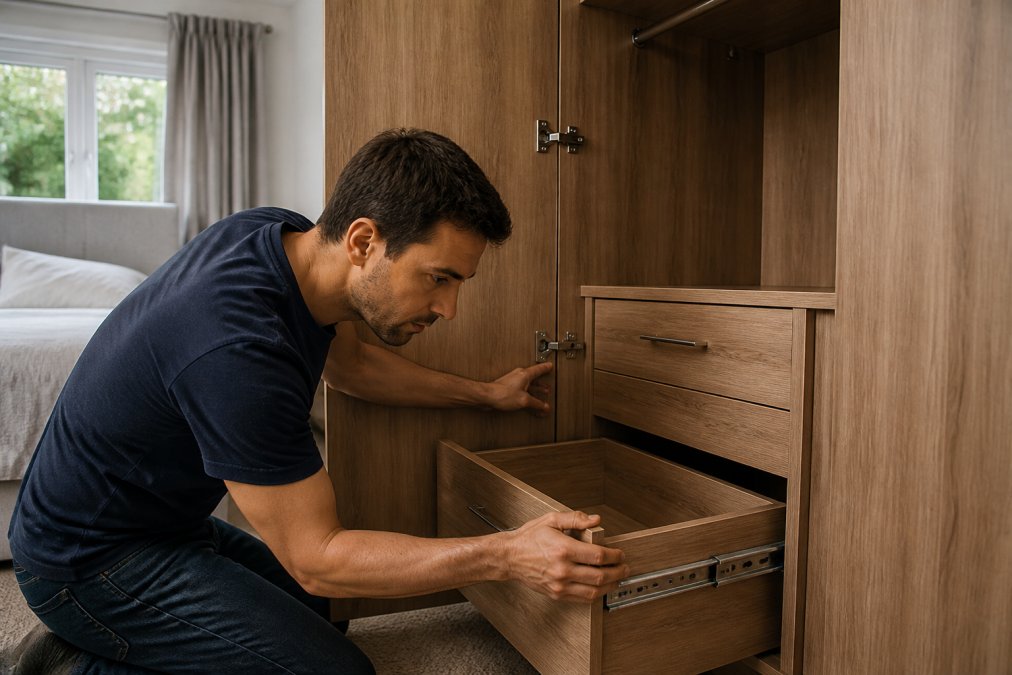
Hinges and drawer runners are among the most common failure points in fitted wardrobes and are usually covered under warranty, but with important caveats. A faulty hinge that breaks within the warranty period due to manufacturing defect is covered; one that fails because it was installed incorrectly or subjected to repeated slamming is not.
Internal components like adjustable shelves, soft-close mechanisms, and drawer dividers are typically covered if they fail due to manufacturing fault. The distinction between product defect and wear and tear is critical: a drawer runner that gradually becomes stiff over five years of heavy use is wear and tear, while one that fails after six months due to a manufacturing flaw is a defect.
Installation Workmanship Coverage
Installation workmanship coverage protects against errors made during the fitting process, but only if the wardrobe was installed by the manufacturer or an approved installer. If Finest Furniture Studio’s team installs your wardrobe, we take responsibility for installation quality. If you hire a third-party fitter or attempt installation yourself, the manufacturer’s warranty may not cover installation-related issues.
Workmanship coverage typically includes misaligned doors, gaps between panels, uneven shelving, and poor fitting to walls or ceilings. Many warranties specify a short window, often 30 days, to report installation defects. Professional installation protects your warranty because fitted wardrobes are complex and require expertise to adjust for imperfect walls and ceilings.
Furniture Warranty Exclusions You Need to Know
Understanding what’s excluded from your wardrobe warranty cover is as important as knowing what’s included.
Accidental Damage and Misuse
Accidental damage, a door smashed in a moving accident, a shelf broken by dropping a heavy object, water damage from a burst pipe, is almost universally excluded from furniture warranties. Misuse includes using the wardrobe for purposes it wasn’t designed for, such as storing heavy tools or using shelves as a climbing frame.
Some extended warranties or insurance products cover accidental damage, but these are separate from the standard manufacturer’s warranty and come at additional cost.
Wear and Tear vs. Product Defect
Wear and tear is the natural degradation of materials and components through normal use over time. A hinge that becomes slightly stiff after eight years of daily opening and closing is wear and tear; a hinge that snaps after six months is a defect.
Manufacturers typically define expected lifespan for components in their warranty documents. If a component fails before its stated lifespan under normal use conditions, it’s usually a defect. If it fails after the expected lifespan, it’s wear and tear and your responsibility.
DIY Modifications and Installation Errors
Any modification you make to the wardrobe after installation typically voids the warranty. Drilling holes for additional shelves, removing components, repainting, or adding hardware all fall into this category. Installation errors, if you attempted to fit the wardrobe yourself or hired an unapproved installer, are a common reason for warranty claims to be rejected.
Professional installation through an approved supplier like Finest Furniture Studio protects your warranty, as we take responsibility for correct installation.
Statutory Rights vs. Manufacturer Guarantees
Your consumer rights under law are separate from the manufacturer’s warranty. A manufacturer’s warranty is a promise from the company that made the product. Statutory rights are protections provided by law that exist regardless of what the warranty says.
In the United Kingdom, the Consumer Rights Act 2015 provides statutory protection for goods sold to consumers (legislation.gov.uk). These rights require that goods are of satisfactory quality, fit for purpose, and as described at the point of sale. If a wardrobe fails due to a manufacturing defect within a reasonable time after purchase, typically within the first six months, you have a statutory right to a repair, replacement, or refund (citizensadvice.org.uk).
A manufacturer’s warranty often provides more specific coverage than statutory rights, but it cannot remove your statutory protections.
Consumer Rights Act 2015 and Furniture Protection
The Consumer Rights Act 2015 is the primary legislation protecting furniture purchases in the United Kingdom. Under this legislation, goods must be of satisfactory quality, meaning they must be safe, durable, and fit for purpose. For a fitted wardrobe, this means it should be structurally sound, function properly, and last a reasonable length of time given its nature and price.
The Act also requires goods to be fit for purpose. If you specified particular requirements when ordering, such as fitting into an awkward space or supporting a specific weight, the wardrobe must meet those requirements. These protections are particularly valuable for bespoke fitted wardrobes, where custom measurements and specifications are central to the purchase.
How to Claim on Furniture Warranty
Making a warranty claim requires following the correct process and providing proper documentation.
Documentation and Proof of Purchase
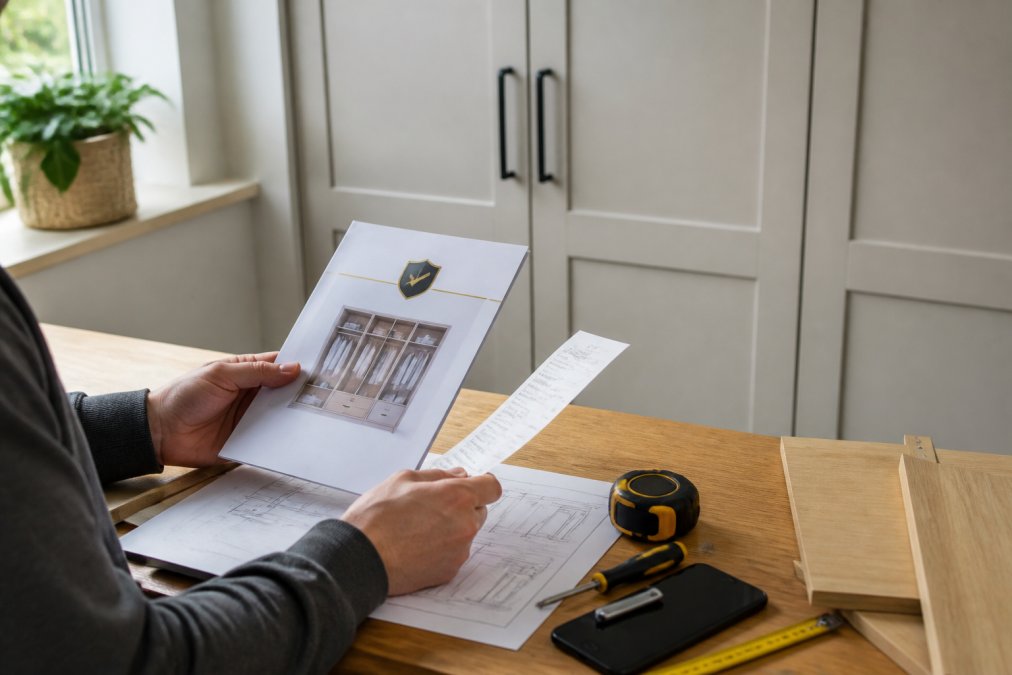
Your proof of purchase is the foundation of any warranty claim. Keep your invoice, receipt, or order confirmation, which should clearly show the purchase date, the specific products purchased, and ideally the serial numbers or reference codes for the installed components.
Many warranties specify a time limit for reporting defects, often 30 days for installation issues. Photographs of the defect are equally important, providing evidence that supports your claim. Take multiple angles and include reference points that show the scale of the problem.
Step-by-Step Claim Process
Begin by contacting the supplier or manufacturer as soon as you notice a defect. Most warranties require you to report issues promptly, typically within 30 days for installation-related problems (tradingstandards.uk). Provide clear details about the problem: what you’ve observed, when you first noticed it, how the wardrobe has been used, and any relevant environmental conditions.
The manufacturer or supplier will typically request photographs and may arrange an inspection. Cooperate fully with any inspection process. If the claim is approved, the manufacturer will offer a remedy: repair, replacement of components, or in some cases a refund. Repair is the most common outcome for minor defects.
Visual Identification of Defects
A manufacturing defect typically appears soon after installation and is often obvious upon inspection. Faulty hinges may be visibly bent, cracked, or misaligned. Drawer runners might be visibly warped or have broken components. Structural issues, splits, warping, or separation of joints, are visible as gaps, cracks, or misalignment of panels and doors.
In contrast, wear and tear develops gradually. Document what you observe carefully. If you’re uncertain whether something constitutes a defect, contact the supplier with photographs and description.
Warranty Duration and Coverage Periods
Fitted wardrobes typically come with warranties ranging from one to ten years, depending on the supplier and the specific products. Finest Furniture Studio provides a 10-year warranty on wardrobes, reflecting our confidence in the quality and durability of our products and workmanship.
However, the length of the warranty doesn’t mean everything is covered for the full ten years. Some components may have shorter coverage periods. Check your warranty document to see if coverage varies by component. The warranty period begins on the delivery date or installation date, depending on the terms.
Maintenance Checklists for Warranty Compliance
Maintaining your wardrobe properly is often a condition of warranty coverage. Most warranties require that you keep the wardrobe clean and dry, avoid exposing it to extreme temperature or humidity fluctuations, and don’t overload shelves or drawers.
Check hinges and drawer runners monthly for smooth operation. Inspect the cabinet carcass quarterly for signs of warping, gaps between panels, or separation of joints. Keep the wardrobe clean by dusting regularly and wiping surfaces with a soft, dry cloth. Avoid harsh chemicals or excessive moisture, which can damage finishes and materials.
Document your maintenance activities. If you ever need to claim on the warranty, evidence that you’ve maintained the wardrobe properly strengthens your position.
Warranty Transferability and Second Owners
If you sell your home or the wardrobe is transferred to a new owner, the warranty may or may not transfer. This depends on the specific terms of your warranty and whether the transfer is within the coverage period.
Some warranties are transferable to the next owner of the property, provided the original owner registers the transfer with the manufacturer. Others are non-transferable and expire if the wardrobe changes hands. Check your warranty document for transfer provisions.
If you’re buying a property with an existing fitted wardrobe, ask the seller about the warranty and whether it’s transferable. Request documentation of the original purchase and installation.
Understanding what your wardrobe warranty cover actually protects requires reading the terms carefully and maintaining the wardrobe properly. Manufacturing defects, structural issues, and workmanship problems are typically covered, while accidental damage, wear and tear, and user modifications are excluded. Your statutory rights under the Consumer Rights Act 2015 provide an additional layer of protection beyond the manufacturer’s warranty.
When you invest in a fitted wardrobe from Finest Furniture Studio, our 10-year warranty reflects our commitment to quality and durability. Our professional installation service and transparent warranty terms mean you understand exactly what’s covered. If you’re considering a bespoke wardrobe solution, book a free design visit to discuss warranty coverage and how we can create a storage solution built to last.
Frequently Asked Questions
Q: What does a wardrobe warranty typically cover?
A: A wardrobe warranty cover usually protects against manufacturing defects, structural failures, and faulty moving parts like hinges and drawer runners. Coverage extends to material failure in the cabinet carcass and internal components under normal use. Most warranties cover professional installation workmanship for a specified period. The exact scope depends on your warranty terms and conditions, so check your product guarantee documentation to confirm what remedy or replacement parts are included.
Q: What is not covered under furniture warranty exclusions?
A: Furniture warranty exclusions typically include accidental damage, wear and tear from daily use, and modifications made after delivery. DIY alterations or professional installation by unauthorised installers often void the warranty. Damage from environmental factors like extreme humidity or temperature changes is usually excluded. Cosmetic scratches and colour fading are rarely covered. Always review your terms and conditions to understand specific limitation of liability clauses.
Q: How do I make a claim on furniture warranty?
A: To claim on furniture warranty, gather your proof of purchase (invoice or receipt) and document the defect with photographs showing the issue clearly. Contact the manufacturer or supplier with your claim documentation within the warranty period. Describe the problem in detail and explain why it falls within coverage. Most suppliers request visual identification of defects before processing. Keep records of all correspondence. The claim process typically results in repair service, replacement parts, or full replacement depending on the severity and your warranty terms.
Q: What are my consumer rights if a wardrobe has a defect?
A: Under the Consumer Rights Act 2015, you have statutory consumer protection rights covering goods that must be of satisfactory quality and fit for purpose. If a defect appears within six months of purchase, it is presumed to have existed at the time of delivery. You can request repair, replacement, or a refund during this period. Beyond six months, you must prove the defect was present at delivery. These statutory rights sit alongside any manufacturer's warranty and offer additional protection under consumer legislation.
This article was written using GrandRanker

