

What functional home storage actually means
Functional home storage is storage designed around use, not just capacity. It prioritises how you move through your home each day, where you naturally reach for things, and how little effort it takes to put them back. The result is a home that feels calm rather than cluttered, because every item has a logical, accessible place.
Designer Linda Hayslett of LH.Designs puts it plainly: “A functional home is a space that works for the people who live in it. It’s not just about aesthetics but how your home adapts to your daily routines. Everything should be intuitive, making life easier, not more complicated.”
The core elements of functional storage include:
- Usability: storage that requires minimal steps to access and return items
- Accessibility: items stored at the right height and depth for the person using them
- Visibility: a clear system so you can see or locate things without searching
- Point of use: charging cables near outlets, bin bags near the bin, scissors in the room where you use them
- Ergonomic design: drawers and pull-out shelves rather than deep cupboards where things disappear
Functional storage differs from decorative organisation, which prioritises appearance over daily usability. A beautifully styled shelf that requires moving three things to reach what you need is decorative. A fitted wardrobe with dedicated hanging rails, shallow drawers, and shoe compartments is functional.
Finest Furniture Studio specialises in exactly this kind of purposeful design, creating bespoke storage solutions for homes across Richmond, Wimbledon, Putney, Chiswick, and throughout West London.
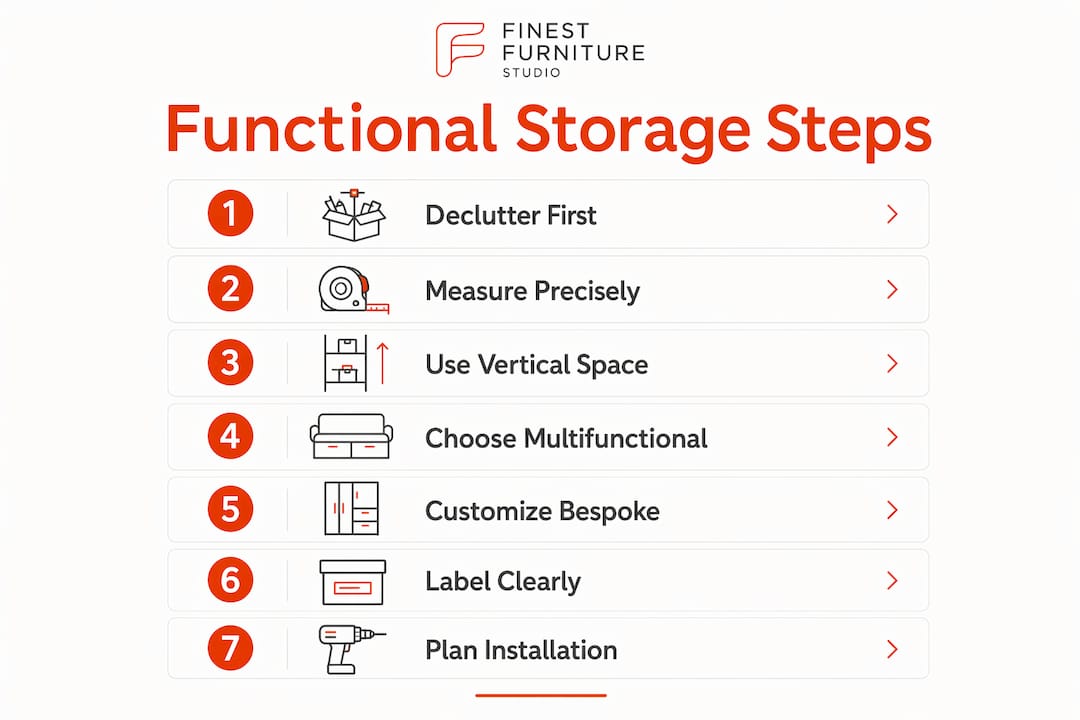
Table of Contents
- Principles and tips for efficient storage in modern UK homes
- How bespoke storage transforms UK homes
- Common mistakes that undermine home storage
- Budget-friendly functional storage ideas
- Finest Furniture Studio: bespoke fitted storage for London homes
- Key takeaways
- FAQ
Principles and tips for efficient storage in modern UK homes
The single most important rule: edit first, store next. Buying storage before you know what you are keeping almost always creates more chaos. Once you understand exactly what needs a home, you can choose storage that fits the specific item rather than buying generically.
Core principles to follow:
- Store items at the point of use to make returning them the path of least resistance
- Favour open shelves and hooks over lidded boxes and hangers for everyday items
- Use vertical space: walls in most British homes reach the ceiling, and floor-to-ceiling shelving can hold a remarkable amount while keeping the floor clear
- Balance visibility with concealment: not everything should be on display, but not everything should be hidden either
- Design for how you actually behave, not how you intend to behave
Multifunctional furniture earns its place in smaller homes. Ottoman beds with drawers or storage benches in hallways combine function without crowding a room. A console table with a drawer handles daily essentials; a bench with a lidded base stores shoes and seasonal items.
Vertical space is chronically underused. Wall-mounted hooks, pegboards, over-door organisers, and high cupboards all reclaim height that would otherwise sit empty. In a typical London terrace or flat, this can meaningfully expand usable storage without touching the floor plan.
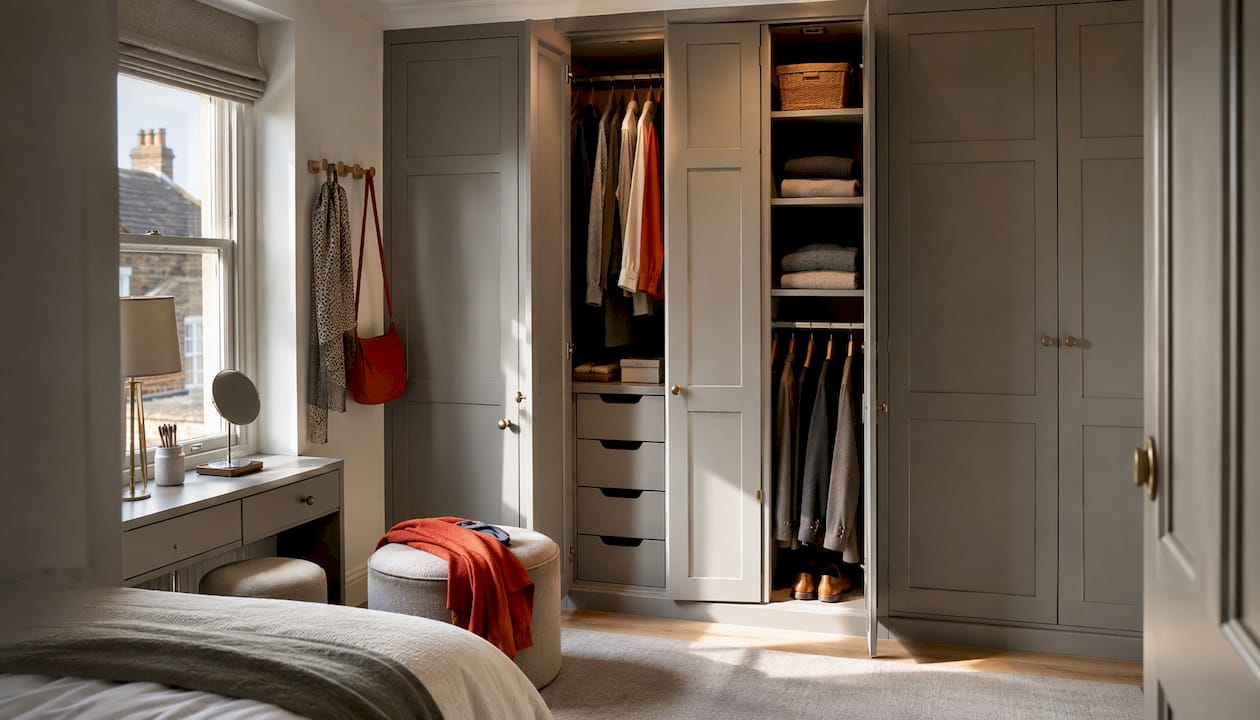
Pro Tip: Designers think in litres and cubic metres, not just shelf counts. Avoid deep shelving wherever possible. Items pushed to the back of a 600mm-deep shelf are effectively lost. Pull-out drawer systems and shallow open shelves keep everything visible and within reach.
Organised storage also reduces stress by removing visual noise from living spaces. A clutter-free bedroom supports better sleep; a well-organised kitchen makes cooking faster and safer. The mental benefit is real and often underestimated.
How bespoke storage transforms UK homes
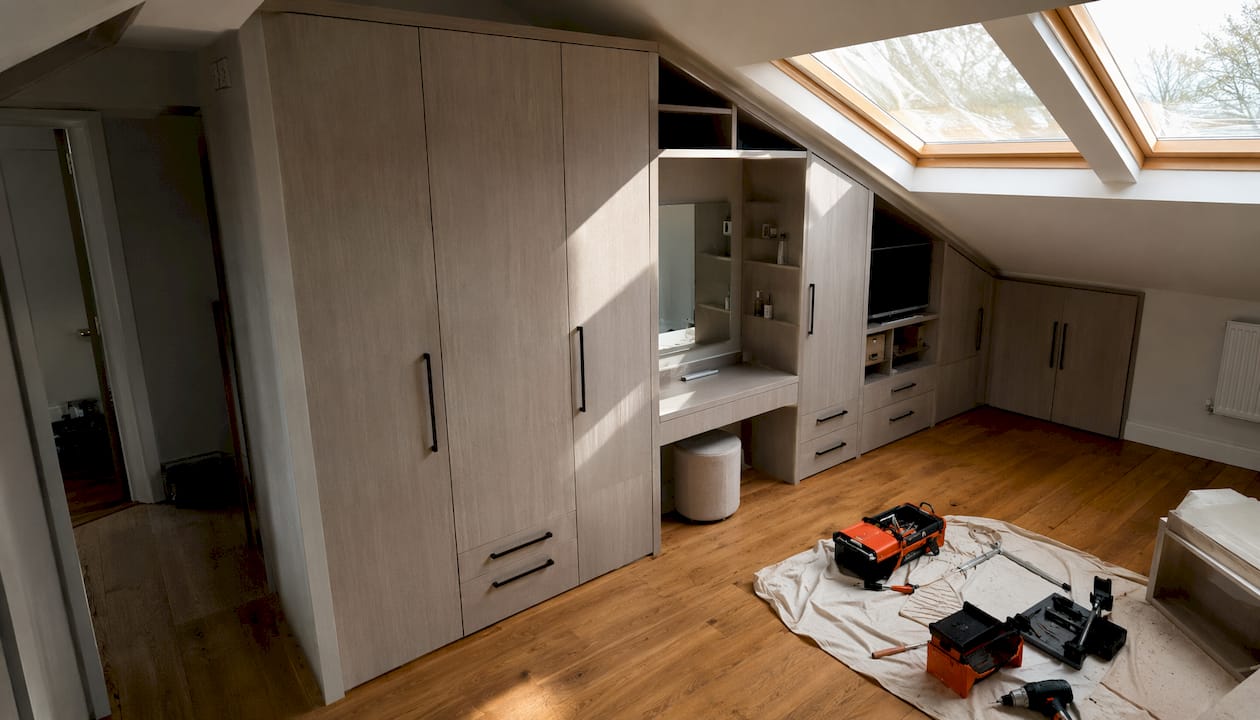
Off-the-shelf units rarely fit British homes well. Victorian terraces, loft conversions, and period properties in areas like Fulham, Chelsea, and Hammersmith come with alcoves, sloped ceilings, chimney breasts, and under-stair voids that standard furniture simply cannot address. Custom joinery solves these layouts by working to exact dimensions, turning awkward spaces into genuinely useful storage.
The practical gains are clearest in rooms with irregular geometry. An alcove wardrobe fitted around a chimney breast in a Wimbledon bedroom, or a bespoke under-stair unit in a Richmond hallway, uses every centimetre that a freestanding unit would waste. The visual effect is equally significant: fitted storage reads as part of the architecture rather than furniture placed against a wall.
| Storage type | Best suited to | Key advantage |
|---|---|---|
| Alcove wardrobes | Period homes with chimney breasts | Fills irregular recesses precisely |
| Loft fitted wardrobes | Conversions with sloped ceilings | Works where standard units cannot |
| Under-stair storage | Hallways and open-plan ground floors | Converts dead space into practical storage |
| Walk-in wardrobes | Larger bedrooms and dressing rooms | Full visibility and dedicated organisation |
| L-shaped wardrobes | Corner bedrooms and larger spaces | Maximises corner areas often left unused |
Finest Furniture Studio installs bespoke fitted wardrobes, walk-in wardrobes, and under-stair storage across London, typically completing installations within seven days. Every project carries a 10-year guarantee, which is uncommon at this level of craftsmanship. The team also removes and disposes of your existing wardrobe as part of the service.
Common mistakes that undermine home storage
Most storage problems are not caused by a lack of space. They come from a handful of predictable errors that are easy to avoid once you know them.
- Buying before decluttering. Purchasing baskets and boxes before editing your possessions almost always makes things worse. You end up with attractive containers full of things you did not need to keep.
- Choosing inaccessible systems. Any storage that requires more than one action to use, opening a lid, lifting a flap, moving something else out of the way, will gradually stop being used. Design for reality, not intention.
- Ignoring vertical space. Most UK homeowners focus on floor-level storage and overlook walls entirely. Shelving, pegboards, and over-door organisers can double usable storage in a room without extending its footprint.
- Using generic rather than tailored joinery. Standard units leave gaps, waste corners, and fail to address sloped ceilings or alcoves. Bespoke fitted furniture addresses the actual geometry of your home.
- Neglecting upkeep. Storage systems need reviewing as households change. A system that worked for two people may fail for a family of four. Reassess each season and adjust accordingly.
Labelling matters more than most people expect. Unlabelled boxes in a loft or under-stair cupboard become black holes. Clear labels, whether handwritten or printed, mean anyone in the household can find and return items without asking.
Budget-friendly functional storage ideas
Good storage does not require a large budget. Many of the most effective solutions cost very little and can be implemented in an afternoon.
Low-cost options that genuinely work:
- Drawer dividers: adjustable versions fit almost any drawer and transform underwear drawers, kitchen drawers, and desk drawers at minimal cost
- Over-door organisers: hooks, pockets, and racks that use the back of doors, particularly useful in bathrooms, bedrooms, and pantries
- Pull-out shelf inserts: fitted inside existing deep cupboards, these prevent items being lost at the back and significantly improve kitchen and bathroom storage
- Vacuum storage bags: compress bulky duvets, pillows, and off-season coats to a fraction of their original volume
- Wall-mounted hooks: at both adult and child height in hallways, these replace the need for a coat cupboard entirely
- Uniform lidded boxes: stackable, labelled on the outside, and ideal for long-term storage in lofts or under beds
For stylish storage ideas that combine organisation with interior design, pairing these practical solutions with considered finishes keeps rooms looking intentional rather than improvised.
The principle behind budget storage is the same as bespoke: edit first, then store. Spending £20 on drawer dividers after a proper declutter will do more for your kitchen than spending £200 on new units before one.
Pro Tip: Before buying anything, spend 20 minutes walking through each room with a notepad. Write down what is stored in the wrong place, what has no home at all, and what you reach for most often. That audit shapes every purchase decision that follows.
Finest Furniture Studio: bespoke fitted storage for London homes
For homeowners in Richmond, Wimbledon, Putney, Chiswick, Ealing, and across West London, Finest Furniture Studio offers a genuinely different route to functional storage. Rather than adapting your home to fit standard units, we design storage around your exact space, your daily routines, and your aesthetic.
Every project begins with a free design visit. We measure your space, discuss how you use it, and produce a tailored design that addresses the specific challenges of your home, whether that is a sloped loft ceiling in Twickenham, an alcove in a Chelsea period flat, or an under-stair void in a Barnes terrace. Installation typically completes in about a week or slightly longer, and we remove and dispose of your existing wardrobe at no extra charge. All work is backed by our long-term guarantee.
For a bespoke wardrobe in West London or fitted storage anywhere across London, contact us for a free design visit. Call or WhatsApp 07468 150807, or visit us at 124 City Road, Kemp House, London, EC1V 2NX.
Key takeaways
Functional home storage works because it is designed around daily use, not just capacity, making every item easy to access, return, and find.
| Point | Details |
|---|---|
| Edit before you store | Declutter first; only then choose storage sized to what you are actually keeping. |
| Point-of-use placement | Store items where you use them so that returning them takes no extra effort. |
| Vertical space is underused | Floor-to-ceiling shelving and wall-mounted hooks reclaim height most UK homes waste. |
| Bespoke beats generic | Custom joinery fits alcoves, sloped ceilings, and under-stair voids that standard units cannot address. |
| Finest Furniture Studio | Offers bespoke fitted wardrobes and storage across London, installed within 7–12 days with a 10-year guarantee. |
FAQ
What is the difference between functional storage and decorative storage?
Functional storage prioritises ease of access and daily usability, while decorative storage prioritises appearance. A system is functional when items can be retrieved and returned in a single action without disrupting the arrangement.
What does a functional home mean?
A functional home is one where the layout, furniture, and storage work intuitively around the people living in it. As designer Linda Hayslett describes it, everything should adapt to daily routines rather than requiring residents to work around the space.
What are the main areas of a home that benefit most from functional storage?
Kitchens, bedrooms, hallways, and bathrooms see the greatest benefit, each requiring a different approach: pull-out shelves in kitchens, fitted wardrobes in bedrooms, hooks and benches in hallways, and over-toilet or under-sink units in bathrooms.
What are the benefits of multifunctional furniture?
Multifunctional furniture such as ottoman beds with built-in drawers or storage benches combines two purposes in one footprint, reducing clutter and freeing floor space without sacrificing either function or style.
How quickly can Finest Furniture Studio install bespoke storage?
Finest Furniture Studio typically completes installations within 7–12 days, which is considerably faster than most bespoke joinery providers. All work carries a 10-year guarantee.

