

Most people assume that buying a piece labelled “eco-friendly” automatically makes it sustainable. It does not. What is sustainable furniture, really? It is furniture that reduces environmental impact across its entire lifecycle — from the materials harvested, through the manufacturing process, right to the day it is repaired, passed on, or recycled. Durability, repairability, and finish quality matter just as much as whether the timber carries a green label. This guide cuts through the marketing noise and gives you the practical knowledge to make genuinely informed choices for your London home.
Table of Contents
- Key takeaways
- What is sustainable furniture, really?
- Certifications that actually mean something
- Sustainable furniture materials compared
- Buying sustainable furniture in London: practical guidance
- My honest take on sustainable furniture in the UK market
- Bespoke sustainable furniture from Finest Furniture Studio
- Frequently asked questions
Key takeaways
| Point | Details |
|---|---|
| Lifecycle thinking is central | True sustainability covers materials, construction, finishes, and how long a piece lasts before it needs replacing. |
| Durability beats eco-labels alone | Furniture that fails within two years is not sustainable, regardless of what its label claims. |
| Certifications reduce greenwashing risk | Look for FSC, GREENGUARD Gold, and Cradle to Cradle marks to validate manufacturer claims with confidence. |
| Cost per year reveals true value | A well-made piece lasting 25 years almost always costs less annually than a cheaper item replaced every five. |
| Repairability extends the lifespan | Modular joinery and available spare parts keep furniture out of landfill and reduce your overall footprint significantly. |
What is sustainable furniture, really?
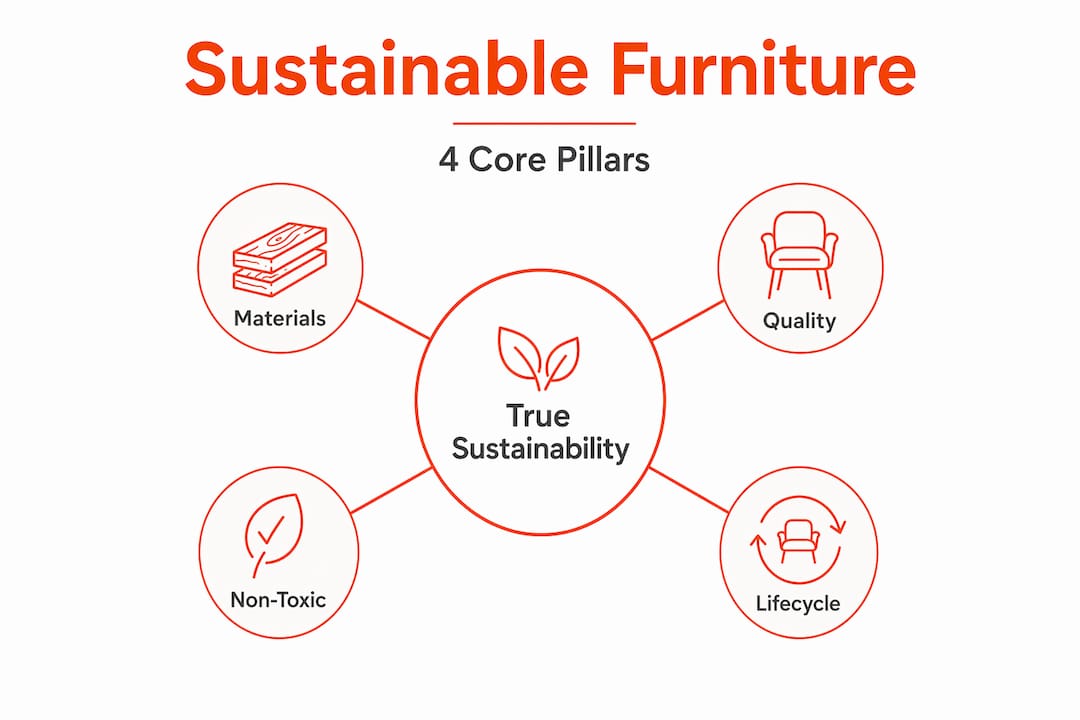
The term “sustainable furniture” gets used so freely that it has almost lost meaning in showrooms and online listings. What actually defines sustainable furniture goes well beyond the wood species used or whether a brand has planted a tree. True sustainability is best understood as choosing lower-impact materials, avoiding hazardous chemicals throughout production, and ensuring the finished piece lasts long enough to justify its environmental cost.
There are four pillars worth understanding before you spend a penny.
1. Materials with a lower environmental footprint
Not all “natural” materials are equal, and not all synthetic ones are harmful. The most reliable sustainable furniture options centre on these material choices:
- Reclaimed or salvaged wood: No new trees felled, embodied carbon already locked in, and often stronger than new timber thanks to age and density.
- FSC-certified or PEFC-certified solid wood: Responsibly sourced from managed forests with verified chain-of-custody documentation.
- Recycled metals: Aluminium and steel sourced from recycled streams reduce demand for virgin ore extraction.
- Bamboo (with caveats): Rapidly renewable and low-carbon at source, but bamboo processing can involve chemical-heavy bonding agents, so processing standards matter enormously.
- Organic or recycled textiles: Organic cotton, wool, and recycled polyester reduce pesticide use and divert waste from landfill.
2. Construction quality and repairability
This is where most “green” furniture fails the test. Furniture that fails within two years is not truly sustainable, regardless of its source materials, because frequent replacements offset any initial environmental benefit. Strong mortise-and-tenon or dovetail joinery, reinforced corner blocks, and modular designs with available spare parts all extend the usable life of a piece considerably. Ask specifically whether replacement components are stocked and whether a local craftsperson can carry out repairs.
3. Non-toxic finishes and indoor air quality
Low-VOC and non-toxic finishes are a significant but frequently overlooked dimension of sustainability. Volatile organic compounds (VOCs) off-gas from varnishes, lacquers, and adhesives long after a piece arrives in your home, affecting indoor air quality for months. Water-based coatings and hardwax oils are preferred choices because they cure with minimal chemical release and are easier to reapply during maintenance.
4. Lifecycle and end-of-life planning
A sustainable piece is designed with its eventual end in mind. Can it be disassembled? Can the materials be separated for recycling? Does the brand offer a take-back or refurbishment programme? Lifecycle thinking transforms furniture from a disposable product into a long-term asset.
Certifications that actually mean something
Shopping for sustainable furniture options without understanding certifications is like reading a nutrition label without knowing what the numbers mean. The good news is that the UK market has access to several well-established, independently verified marks.
Here is a comparison of the most credible certifications you will encounter:
| Certification | What it covers | Best for |
|---|---|---|
| FSC (Forest Stewardship Council) | Responsible forest management and chain of custody for timber | Solid wood and engineered wood furniture |
| PEFC | Similar to FSC; European-focused responsible forestry standard | Wood-based furniture from European suppliers |
| GREENGUARD Gold | Chemical emissions and VOC limits for indoor air quality | Nurseries, children’s rooms, chemically sensitive households |
| Nordic Swan Ecolabel | Full lifecycle impact including production waste and energy use | Scandinavian and Northern European brands |
| Cradle to Cradle | Material health, recyclability, and circular design principles | Brands committed to closed-loop manufacturing |
Independent certifications reduce the risk of greenwashing significantly and allow you to make confident buying decisions without needing to audit a supplier yourself.
A few practical points worth knowing:
- The FSC logo alone does not guarantee the entire piece is sustainable. A frame may be FSC-certified while the adhesives, foam, or finishes are not assessed.
- GREENGUARD Gold is stricter than standard GREENGUARD and is worth specifically requesting if indoor air quality is a concern in your household.
- Cradle to Cradle certification is tiered (Bronze through Platinum), so check the level rather than simply accepting the label at face value.
- The absence of a certification does not automatically disqualify a supplier, but it does place greater responsibility on you to ask detailed questions about sourcing and production.
Pro Tip: Ask any supplier for their FSC chain-of-custody certificate number. Legitimate holders will provide this immediately. If they hesitate or offer vague reassurances instead, that tells you something important.
Sustainable furniture materials compared
Understanding what makes furniture sustainable at a material level helps you evaluate specific pieces rather than relying on brand marketing. Here is how the most common sustainable furniture materials compare across environmental impact, durability, and practical maintenance.
| Material | Environmental impact | Durability | Maintenance demand | Best use case |
|---|---|---|---|---|
| FSC-certified solid oak/beech | Low to moderate (managed forest) | Very high (decades with care) | Low (occasional oiling or waxing) | Frames, dining tables, wardrobes |
| Reclaimed wood | Very low (no new extraction) | High (often denser than new timber) | Low to moderate | Feature pieces, shelving, beds |
| Bamboo | Low at source, variable in processing | Moderate (lighter duty) | Low | Shelving, occasional furniture |
| Recycled aluminium/steel | Moderate (high initial energy, lower than virgin) | Very high | Moderate (rust prevention required) | Frames, legs, structural elements |
| High-quality veneer over plywood | Low to moderate (reduces hardwood use) | Moderate to high (depends on substrate) | Low | Cabinet doors, flat surfaces |
| Organic cotton / wool upholstery | Low to moderate | Moderate | Moderate (cleaning protocols required) | Sofas, chairs, cushions |
| Recycled polyester upholstery | Low (diverts plastic waste) | Moderate to high | Low | High-use seating |
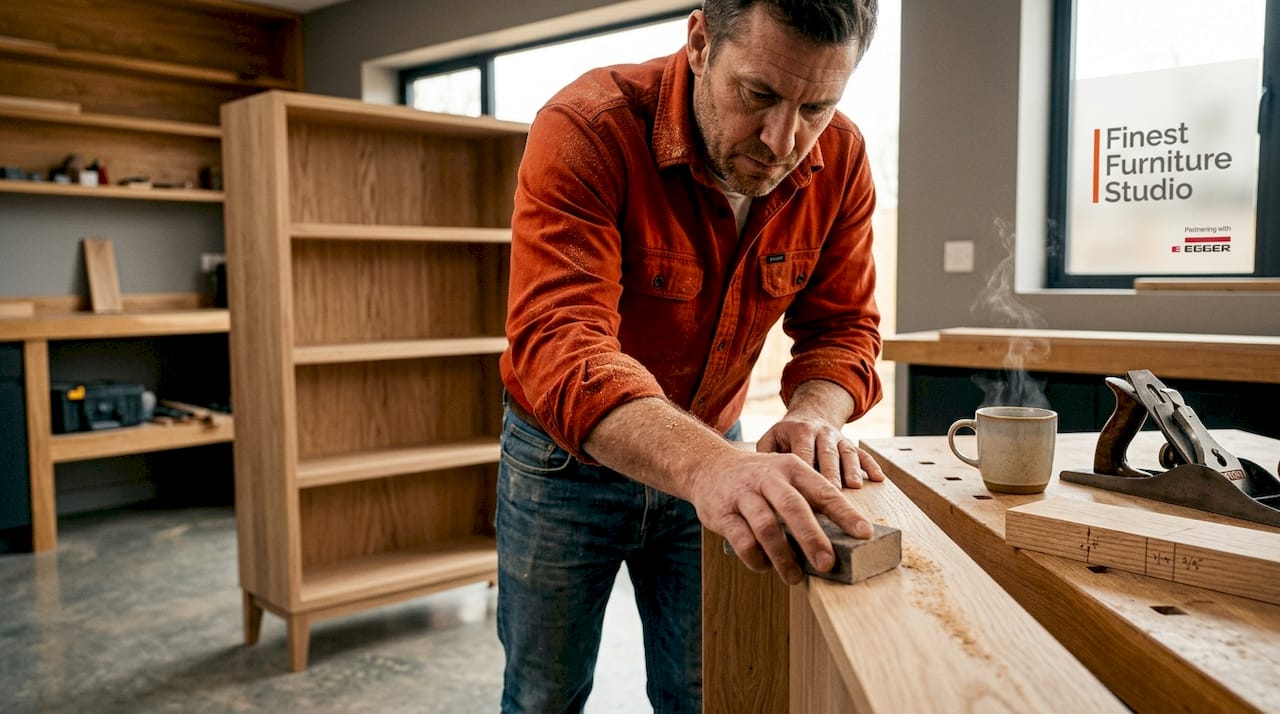
Certified solid woods such as FSC oak or beech remain the most durable and repairable choice for furniture frames. They can last decades when properly dried and finished, and they support refinishing and repair in ways that composite or veneered panels simply cannot match.
Recycled metals reduce demand for virgin ore and are exceptionally durable, but their relatively high embodied energy in production means they perform best as structural components rather than decorative elements.
High-quality veneers over plywood are a genuinely sustainable choice when the substrate is high-grade and the veneer is thick enough to allow light sanding during restoration. Thin decorative films bonded to low-grade particleboard are not. The difference is often visible in the weight of the piece and the quality of the edge finishing.
Pro Tip: When evaluating any upholstered piece, ask specifically about the foam core. Many eco-conscious buyers focus on fabric but overlook that conventional polyurethane foam is a significant source of chemical emissions and is difficult to recycle. Look for certified natural latex or CertiPUR-US rated foam alternatives where available.
Buying sustainable furniture in London: practical guidance
Knowing what defines sustainable furniture is one thing. Applying that knowledge when you are standing in a showroom or browsing a website is another matter entirely. Here is a structured approach that works well for homeowners across London, Richmond, Wimbledon, Chelsea, Fulham, Kingston, Chiswick, and the surrounding areas.
-
Calculate cost per year of use, not upfront price. An expensive table lasting 25 years can carry a lower annual cost than a cheaper one replaced after five. Divide the purchase price by the expected lifespan in years to get a genuine cost comparison between options.
-
Prioritise a minimum 10-year warranty and repair support. Any supplier confident in their materials and construction will back their product with a meaningful guarantee. If a warranty covers less than a decade, treat that as a signal about the expected lifespan.
-
Ask about take-back and refurbishment programmes. An increasing number of responsible UK suppliers now offer to collect and refurbish or recycle pieces at the end of their life. This closes the loop and prevents serviceable materials from entering landfill unnecessarily.
-
Identify genuinely repairable designs before you buy. Look for exposed joinery, solid wood frames rather than glued chipboard, removable cushion covers, and legs that are bolted rather than glued. These details indicate a piece designed to be maintained, not discarded.
-
Verify low-VOC finishes specifically. Do not accept “natural finish” as a sufficient answer. Ask for the specific product used and check whether it carries an Ecolabel or equivalent certification. VOC emissions from finishes and adhesives are integral to sustainability and directly affect indoor air quality in your home.
-
Shop local where possible. Buying from makers based in London or the South East reduces transport emissions and gives you far easier access to aftercare, repairs, and consultations. Local craftspeople are also more likely to source timber from UK or European managed forests with shorter supply chains.
On the topic of repair: a useful rule of thumb is to repair rather than replace unless repair costs exceed 30 to 40 per cent of the replacement cost and the piece is genuinely beyond restoration. Applying this heuristic consistently prevents the kind of habitual disposal that undermines any sustainability effort. You can also explore bespoke furniture design in West London to understand how thoughtful construction choices from the outset reduce the need for early replacement.
Standard maintenance practices matter too. Keep wood furniture away from direct radiator heat and strong sunlight. Re-oil or re-wax solid wood surfaces every one to two years. Address minor scratches or damage promptly before they spread. These small habits can add a decade or more to a piece’s functional life.
My honest take on sustainable furniture in the UK market
I have spent years working with homeowners across London and the surrounding areas, and the pattern I see most often is this: people make a genuinely motivated effort to buy sustainably, but they focus almost entirely on material labels and almost not at all on construction quality.
A bamboo shelving unit with a nice certification sticker is not more sustainable than a solid oak wardrobe built with traditional joinery and a 10-year guarantee. Not even close. The oak wardrobe will still be standing in thirty years. The bamboo unit, bonded with formaldehyde-based adhesives and designed for flat-pack assembly, may well be in a skip within five.
I have also seen the reality of what I would call “wish-cycling” in furniture purchasing. Buyers convince themselves that a piece qualifies as eco-friendly because it is made from recycled content, without asking whether it is actually repairable, whether the finishes off-gas in their living room, or whether the manufacturer will still exist in ten years to honour any warranty.
The uncomfortable truth is that the most sustainable furniture purchase you can make is often not a new purchase at all. It is repairing, restoring, or commissioning a bespoke piece from a local maker who will be accountable for it long term. Consumers consistently overestimate the environmental benefits of eco-labels and underestimate the power of simply buying less, buying better, and maintaining what they already own.
Indoor air quality is the dimension I see overlooked most frequently. Most people are rightly concerned about what goes into a landfill. Far fewer think about what off-gasses into their bedroom or living room from a freshly lacquered piece. That is a health and sustainability consideration in equal measure, and it deserves far more attention than it currently receives.
My advice is simple. Buy from someone who will still be there in a decade, who backs their work with a real guarantee, and who will help you repair rather than replace. That approach does more for your environmental footprint than any number of eco-labels on disposable furniture.
— Aureliu
Bespoke sustainable furniture from Finest Furniture Studio
At Finest Furniture Studio, we build furniture that is designed to last. Every piece is crafted to your exact specifications, using quality materials and construction methods that prioritise durability and repairability over short-term cost-cutting. We back our work with a 10-year guarantee, because we are confident the furniture will still be performing exactly as intended a decade after installation.
We serve homeowners across London and the wider South East, including Richmond, Wimbledon, Chelsea, Fulham, Putney, Kingston, Chiswick, Ealing, Twickenham, Barnes, Hammersmith, and further afield in areas such as Walton-on-Thames, Woking, Guildford, Reading, and Maidenhead. Our installation team typically completes a full fitting in seven to twelve days, and we will remove and responsibly dispose of your old furniture as part of the service.
Whether you are considering a fitted wardrobe, a bespoke media wall, or a fully fitted bedroom, our custom wardrobes in West London are designed with longevity, functionality, and your home’s existing character in mind. We also offer bespoke fitted furniture tailored to individual layouts, with a free design visit so you can see the options before committing.
Contact us for a free design visit. Call or WhatsApp us on 07468 150807, or visit us at 124 City Road, Kemp House, London, EC1V 2NX.
Frequently asked questions
What is sustainable furniture in simple terms?
Sustainable furniture is furniture designed and built to reduce environmental harm across its entire life. This means using responsibly sourced or recycled materials, applying low-VOC finishes, and constructing pieces that last and can be repaired rather than replaced.
What makes furniture truly sustainable beyond the materials used?
Durability and repairability are just as important as material choice. A piece built with strong joinery, modular components, and maintainable finishes will have a far lower lifetime footprint than a “green” material piece that fails within a few years.
Which certifications should I look for when buying sustainable furniture in the UK?
Look for FSC or PEFC certification on wood components, GREENGUARD Gold for low chemical emissions, and Cradle to Cradle for brands committed to circular design principles. Independent certifications are the most reliable way to verify sustainability claims without auditing a supplier yourself.
Are veneered and composite furniture pieces ever a sustainable choice?
Yes, provided the substrate is high-grade plywood and the veneer is thick enough to allow refinishing. Quality veneers reduce the use of precious hardwood while maintaining durability. Thin decorative films over low-grade particleboard do not meet the same standard.
How do I calculate whether a sustainable furniture piece offers good long-term value?
Divide the purchase price by the expected lifespan in years to get the annual cost. A piece costing more upfront but lasting 25 years often works out significantly cheaper per year than an inexpensive alternative replaced after five, and generates far less waste in the process.

