

Why awkward rooms need a different wardrobe plan
If you are searching for wardrobe Essex UK options, the real problem is usually not the wardrobe itself, it is the room. Sloped ceilings, chimney breasts, boxed pipes, and narrow walkways make standard units waste space or block movement. Bespoke storage solves that by building to the room instead of forcing the room to accept the furniture. That is why fitted wardrobes often feel like the only sensible answer in older Essex homes, loft conversions, and compact bedrooms.
How bespoke storage changes the fit
Bespoke fitted wardrobes work because every panel, rail, shelf, and door is planned around the usable envelope of the room. A good designer is not just measuring width and height, but checking skirting depth, ceiling angle, socket positions, and how far doors can open without hitting a bed or radiator. In practice, that means you get storage that uses the full wall line, not just the easy middle section that a flat-pack unit can reach.
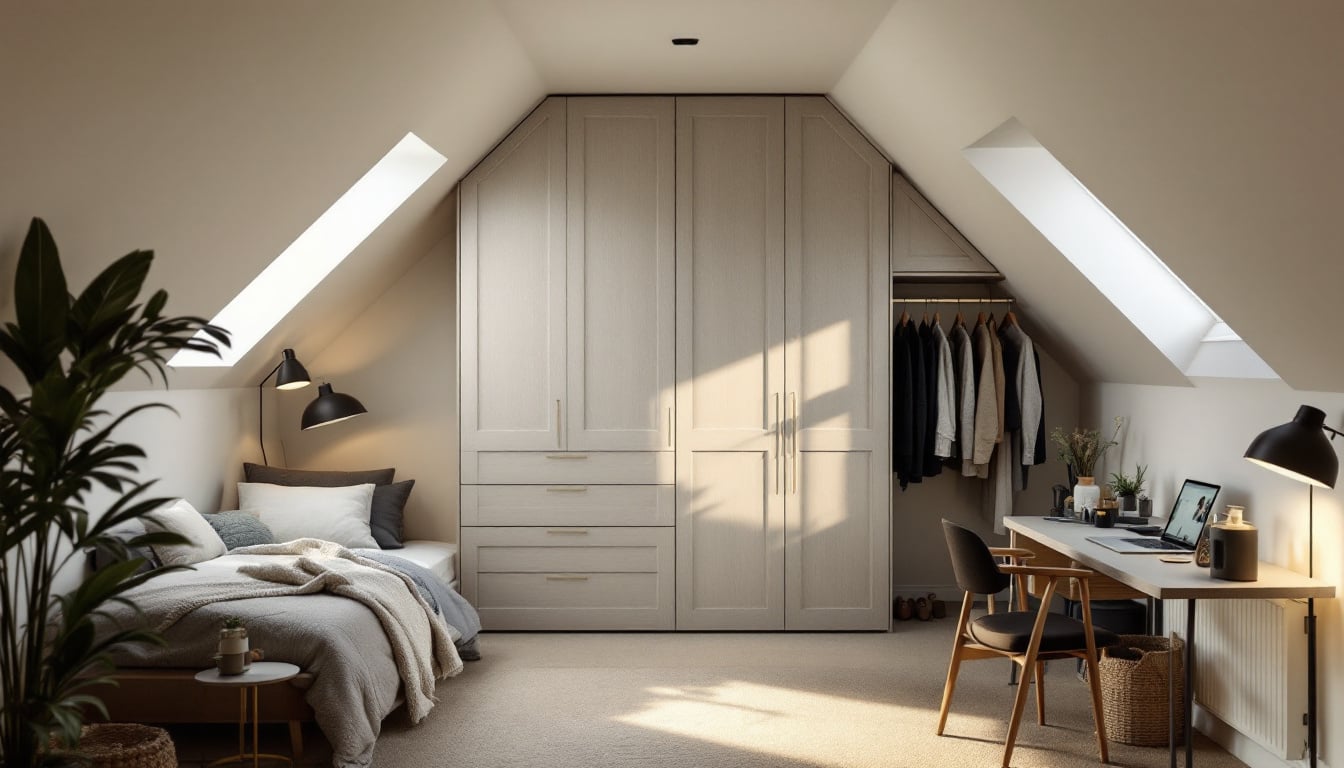
The awkward-room issues bespoke wardrobes solve
The most common awkward-room issue is wasted vertical space. In a room with a sloped ceiling, off-the-shelf wardrobes often leave a large triangular gap above the top panel. Bespoke storage can turn that dead space into full-height cabinetry, hanging space, or top boxes. The same logic applies to alcoves, where custom units can bridge the gap cleanly instead of leaving a dust-trapping void.
Slopes, alcoves, and chimney breasts
Sloped ceilings need a stepped or angled build, depending on the room geometry. Alcoves usually benefit from floor-to-ceiling storage with a continuous face, while chimney breasts often call for a split design that wraps the obstruction rather than fighting it. If you are comparing wardrobe Essex UK providers, ask whether they regularly design for loft wardrobes, built-in cupboards, and awkward spaces, because those details affect how efficient the final layout will be.
What to measure before you ask for a quote
The most useful measurements are not just room width and height. You also need the lowest ceiling point, the widest obstruction, the depth from wall to the front edge of the bed, and the swing space available in front of the doors. A practical rule is to leave enough clearance so you can stand at the wardrobe and open a door without turning sideways. If that is tight, sliding doors or a mixed-door layout may be the better call.
A simple measurement workflow
Start by sketching the wall as three zones: left, centre, and right. Mark any slope, socket, radiator, or pipe run, then note the exact depth you can afford without making the room feel cramped. Finally, measure the route into the room, because bulky carcasses and doors still need to fit through hallways and stair turns. This workflow catches the common mistake of designing a perfect wardrobe that cannot be delivered or installed cleanly.
The storage choices that matter most
When people think about bespoke wardrobes, they focus on the exterior finish first. In reality, the internal layout does more work. Hanging space, shelf depth, drawer count, and shoe storage should match how you actually use the room. A couple with long coats needs different dimensions from someone storing folded knitwear and seasonal bedding. Wardrobe Essex UK searches usually lead to better outcomes when the internal layout is decided before door style.
Hanging rails, drawers, and shelves
Full-height hanging works well for dresses, coats, and shirts, while double hanging increases capacity in rooms with limited width. Deeper drawers are useful for bulkier clothing, but too many drawers can eat into hanging space quickly. Shelves are flexible, yet they are less efficient if everything ends up stacked. A practical balance is to reserve fixed shelving for items you access often and use drawers where visual clutter would otherwise become a problem.
Sliding doors or hinged doors?
Door choice is one of the clearest trade-offs in wardrobe Essex UK projects. Hinged doors give full access to the interior and are easier to split into decorative panels, but they need swing space. Sliding doors save floor clearance and work well in tight bedrooms, although you can only access part of the wardrobe at a time. If the room is narrow or has a bed close to the unit, sliding doors usually solve more problems than they create.
When sliding doors win
Sliding systems are strongest in rooms where door clearance is the main constraint. They also suit long runs of storage where you do not need to open every section at once. The trade-off is access, so plan the interior around the way the doors overlap. That means placing high-use items in sections you can reach first and keeping less-used storage, such as seasonal bedding, behind the outer panels.
Choosing finishes that hide awkward lines
A bespoke wardrobe should do more than fit, it should make the room feel calmer. Matte finishes hide small wall irregularities better than high-gloss surfaces, while lighter colours can stop a compact room from feeling boxed in. If the space already has strong visual features, such as beams or sloped ceilings, a simple front can reduce clutter. The aim is to make the wardrobe look planned, not patched together.
Using colour and door style to reduce visual bulk
Tall vertical lines can make low or sloped rooms feel more ordered, while heavy horizontal breaks can exaggerate awkward proportions. Mirrored doors can help in smaller bedrooms, but they are not always the right answer if you do not want the room to feel busy. The best wardrobe Essex UK design usually balances material choice with the room shape, so the storage blends into the architecture instead of competing with it.
What good fitting looks like on site
Good fitting is less about speed and more about sequence. The installer should level the carcass, scribe around uneven walls, check door alignment, and test each hinge or track before signing off. A fitted wardrobe that is even a few millimetres out can produce rubbing doors, visible gaps, or noisy sliding panels later. If a provider mentions a 7 to 10 day fitting window, ask what parts are pre-manufactured and what is adjusted on site.
The quality checks worth asking for
You should expect a clear sequence: survey, design, manufacture, delivery, installation, and final adjustment. The final adjustment matters because awkward rooms rarely behave exactly as the plan on paper. Ask how they handle uneven floors, because that is where many fitted wardrobes fail. A good installer will pack, level, and trim the unit so doors sit correctly, rather than forcing the room to accept a rigid box.
How to judge price without overpaying
Wardrobe pricing is driven by size, complexity, door type, materials, and the amount of site adjustment required. A simple straight run costs less than a sloped-ceiling build because angled cuts, custom scribing, and extra finishing all add labour. The right question is not just what the wardrobe costs, but what space it recovers. In awkward rooms, a cheaper standard unit often looks economical until you count the storage it leaves unused.
Trade-offs that affect value
If you choose premium finishes, expect the budget to move, but that can be justified in a room you use every day. If you choose sliding doors, you may pay more for the mechanism yet gain better circulation in the bedroom. If you choose more internal hardware, you gain functionality but lose some volume. The best wardrobe Essex UK decision is the one that matches room constraints first and style preferences second.
Why awkward spaces are the real test of bespoke design
Awkward rooms expose whether a provider is truly designing bespoke furniture or just resizing a standard carcass. That is why services like bespoke fitted wardrobes and awkward spaces solutions matter so much. A real bespoke approach will consider the room’s geometry, the way you move through it, and how the wardrobe will age over time. If those three things are in the design from the start, the result usually feels integrated rather than added on.
A quick decision framework for homeowners
Use three questions before you commit. First, does the wardrobe solve a storage shortage or just fill a wall? Second, does the door system suit the room clearance? Third, can the design handle the room’s quirks without making maintenance harder? If you can answer yes to the first two and avoid obvious cleaning or access issues on the third, the project is probably worth moving forward.
Key points to keep in mind
Bespoke storage fits awkward rooms because it is designed around the actual shape of the space, not a standard template. Sloped ceilings, alcoves, chimney breasts, and uneven walls are all easier to solve when the wardrobe is planned from the room outward. Sliding doors help where clearance is tight, while hinged doors work better when access matters more than floor space. The interior layout should always be decided before the finish.
How to brief a designer properly
A good brief saves time and prevents redesign. Tell the designer what the room is used for, what you store most often, and what currently frustrates you. Include photos from multiple angles, notes about sockets and radiators, and the measurements of any sloped or uneven sections. If you need examples, look at wardrobe doors design options such as Aldridge, Ashford, Austin, or Buxton styles to understand how the front can change the look without affecting the storage logic.
When to contact a specialist
You should speak to a specialist when the room has any of the usual obstacles: loft angles, narrow access, odd wall depths, or storage requirements that need more than a simple rail and shelf. At that point, standard retail options often start costing more in compromise than they save in upfront price. If you are in the UK and want a more tailored route, a service such as Finest Furniture Studio can be a sensible next step for wardrobe Essex UK planning.
Frequently Asked Questions
What does wardrobe Essex UK bespoke storage actually mean?
It usually means fitted or made-to-measure storage designed for homes in Essex and the wider UK market. Instead of buying a standard unit, you plan the wardrobe around the wall shape, ceiling height, and how the room is used, which is especially useful for fitted wardrobes in awkward spaces.
Is wardrobe Essex UK a good search if I have a sloped ceiling?
Yes, because sloped ceilings are one of the clearest reasons to choose bespoke storage. A made-to-measure design can use the full height of the wall where possible and step down cleanly where the roofline drops, which is far more efficient than a stock wardrobe.
How do I choose between sliding and hinged wardrobe doors Essex UK?
Choose hinged doors if you want full access to the interior and have enough floor clearance. Choose sliding doors if the room is narrow or the bed sits close to the wardrobe, because they reduce swing space and make compact bedroom layouts easier to live with.
What should I measure before getting wardrobe Essex UK quotes?
Measure wall width, full height, the lowest ceiling point, any alcoves or chimney breasts, and the clearance in front of the wardrobe. Also check access into the room, because the size of the furniture is only part of the job – delivery and installation space matters too.
How quickly can bespoke wardrobe Essex UK fitting happen?
Timelines vary by design complexity and manufacturing lead time, but some providers mention fitting in 7 to 10 days once the design and production stages are complete. Always ask what is included in that window so you know whether it covers survey, manufacture, delivery, and final installation.
Does wardrobe Essex UK bespoke storage cost more than flat-pack furniture?
Usually yes, but the comparison is not just price. A bespoke wardrobe uses awkward space more effectively, often avoids wasted gaps, and can fit around slopes, pipes, and uneven walls that flat-pack furniture cannot handle cleanly. That makes it better value in rooms with real constraints.
Can wardrobe Essex UK designs include other fitted furniture?
Yes, many bespoke storage projects can include fitted cupboards, loft wardrobes, alcove units, built-in storage, or matching media walls. The useful approach is to design the room as one storage system so the furniture feels consistent and the available space is used more efficiently.

