
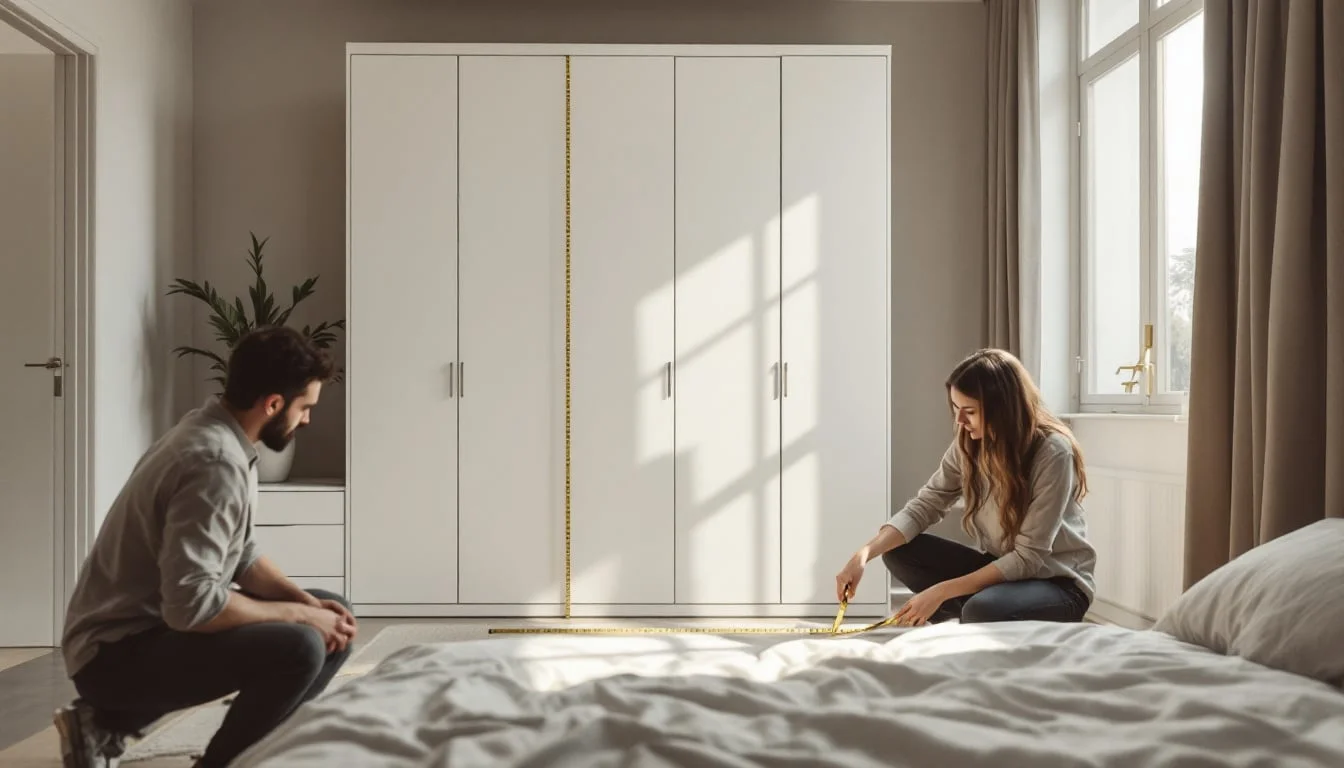
What 7 day fitting really means
When people search for 7 day fitting, they usually want one thing: a clear answer on whether a fitted furniture project can move from design to installation in a week without creating problems later. The phrase is attractive because it signals speed, but the real question is whether the schedule is realistic for your room, your measurements, and your finish choices. A well-run 7 day fitting process depends on accurate survey work, fast approvals, and a production system that can handle tight turnaround times.
How top results frame the topic
The strongest pages around 7 day fitting tend to focus on three things: speed, process, and reassurance. They explain what happens before installation, how long each stage takes, and what the customer needs to prepare. That structure works because the searcher is not just asking about lead time, they are testing reliability. A useful article should do the same, while also spelling out trade-offs such as limited customization windows, measurement sensitivity, and the need for prompt sign-off.

The promise: speed only works with good inputs
A 7 day fitting schedule is possible only when the project starts with clean inputs. That usually means a verified room measurement, a confirmed layout, agreed finishes, and a straightforward installation path. If any of those items is missing, the timetable stretches quickly. The practical takeaway is simple: do not treat 7 day fitting as a generic promise. Treat it as a managed workflow with clear gates, because every missing decision adds delay.
What needs to be decided before day one
Before a fitter arrives, the project should already have a room plan, a scope definition, and a finish selection. If you are comparing bespoke fitted wardrobes, built in wardrobes, or an alcove cabinet design, the layout choice affects cut times and installation complexity. A quick approval cycle matters too, because even a one-day pause waiting for confirmation can break the entire 7 day fitting schedule. In practice, the fastest jobs are the ones with the fewest open questions.
A useful way to judge readiness
The fastest way to assess readiness is to ask three questions: are the measurements final, are the materials standard enough to produce quickly, and are access conditions clear? If the answer is no to any of them, the project is not truly ready for 7 day fitting. This readiness check is more useful than a vague yes or no on lead time, because it tells you where the bottleneck sits and whether the schedule needs a buffer.
Measurement is the make-or-break step
A measuring guide is not just a helpful extra, it is the foundation of a fast project. Tight fitting work depends on wall-to-wall accuracy, floor level checks, skirting depth, ceiling height, and obstacle mapping around sockets, pipes, or sloped ceilings. If you want a reliable 7 day fitting outcome, the survey must confirm the room in a way that leaves no ambiguity for fabrication. This is where many projects slow down, because the room is rarely a perfect rectangle.
How to reduce measurement risk
The most practical fix is a two-step check. First, take the initial room measurements and compare them against the furniture concept. Second, verify any awkward spaces, especially alcoves, loft rooms, or uneven corners, before production starts. If the project includes awkward spaces, a second review is worth the time because it can prevent costly remakes. For a fast-track schedule, accuracy is worth more than optimism.
Design choices that speed up fitting
Not every custom option slows the job equally. Straightforward door layouts, repeatable carcass sizes, and familiar hardware usually fit into a 7 day fitting plan more easily than highly complex internal configurations. If you are deciding between sliding doors wardrobes and a more detailed hinged layout, the simpler route may be faster to manufacture and easier to install. The trade-off is obvious: you gain speed, but you may give up some internal flexibility or visual detail.
Standard finishes versus specialist finishes
Standard finishes generally support faster production because they reduce sourcing friction. Specialist textures, rare colours, or highly custom door styles may still be possible, but they increase the chance of missing the 7 day fitting window. A good rule is to ask whether a finish is already part of the regular production flow. If it is not, the lead time should be treated as provisional rather than fixed.
When custom detail is worth the delay
Some projects deserve the extra time. If the room has a difficult layout, or if the furniture needs to solve a specific storage problem, custom detailing may be the better decision even if it pushes fitting beyond seven days. The important thing is to separate must-have requirements from cosmetic preferences. That gives you a sharper brief and prevents the project from being overloaded with delays that add little value.
Production workflow behind a fast turnaround
A credible 7 day fitting process depends on disciplined internal workflow, not speed alone. The sequence usually looks like this: survey, final design approval, cutting and preparation, quality check, delivery, then installation. If one stage slips, the whole schedule compresses. The best operators build in a checkpoint after approval and before dispatch, because catching an issue at that point is far cheaper than discovering it during fitting.
Why dispatch timing matters
Dispatch is often the hidden bottleneck. Even when fabrication is complete, fitting cannot start until the components arrive on time and in the right order. For 7 day fitting to work, the delivery sequence needs to match the install sequence. If parts arrive mixed or incomplete, installers lose time sorting instead of fitting. That is why the best projects use a clear packing list and a final pre-install check.
What can delay fitting even when production is ready
The most common delays are not dramatic failures, they are small missing pieces. Access can be blocked by furniture, a room might still need decorating, or a homeowner may not have cleared power access near the install area. For fitted wardrobes or TV media walls, even a minor access issue can add hours. The fix is simple but often skipped: prepare the room fully before installation day and confirm access a day in advance.
Site conditions that matter most
Pay attention to floors, walls, and moisture. A wall that is visibly out of plumb or a floor that slopes can still be managed, but it must be known before fitting starts. If you are planning built wardrobes or loft wardrobes, the fitter needs to understand the tolerances early. A project that seems simple on paper can become slow if the room condition is only discovered on site.
How to choose the right project type for 7 day fitting
The best candidates for 7 day fitting are projects with predictable dimensions and limited structural complications. That usually includes standard bedroom wardrobes, alcove cupboards, and some built in cupboard layouts. More complex jobs, such as sloped cupboards or multi-zone media walls, can still work, but only if the survey and design are locked early. If your project has multiple decision layers, make sure the fast timeline is realistic before committing.
Decision rule for fast-track suitability
A useful rule is this: if the room needs structural adaptation, special access planning, or several rounds of revisions, it is probably not a clean 7 day fitting candidate. If the room is measured, the design is settled, and the materials are standard, the timetable becomes far more achievable. This decision rule helps you avoid forcing speed onto a project that needs more coordination.
What to ask before booking
Before you book, ask how the provider handles measurements, what happens if a revision is needed, and whether fitting in 7-10 days is based on the survey date, the order date, or the approval date. Those definitions matter because they change the real timeline. You should also ask whether the project includes a measuring guide, a design visit, or a virtual consultation, because the quality of the front end determines whether the installation date is believable.
The questions that reveal process quality
The most revealing questions are the practical ones. Ask who confirms the final dimensions, how final approval is recorded, and what happens if a room detail changes after sign-off. A provider that can answer those questions clearly usually runs a more controlled 7 day fitting workflow. Vague answers are a warning sign, because speed without process control usually creates installation problems later.
Where a bespoke furniture studio can help
A specialist studio is useful when you need speed without losing fit quality. For example, bespoke fitted wardrobes, alcove cabinet design, bespoke interior doors, and similar room-specific pieces often demand both planning and fabrication discipline. That is where a provider like Finest Furniture Studio can be relevant, especially when the project needs a measured approach and a defined installation window. The value is not just the finished piece, but the ability to manage the steps that lead to it.
Why internal links matter on service pages
If you are building a service page or blog around 7 day fitting, supporting pages such as a measuring guide, choose fitting furniture, or book design visit help users move from curiosity to action. They also reduce friction because readers can find the practical next step without leaving the page guessing. On a fast-turnaround topic, the content architecture should make it obvious how to proceed.
Quick Takeaways
7 day fitting is only realistic when measurements, design approval, and materials are already under control. The schedule depends more on process quality than on promises. Standard finishes and straightforward room layouts are the easiest fit. Awkward spaces, sloped ceilings, and late design changes can quickly break the timeline. A good provider should explain the workflow clearly, not just the delivery window. If you are comparing options, ask about survey accuracy, dispatch timing, and what happens when room conditions are not ideal.
Conclusion
A strong 7 day fitting promise is not about rushing the job, it is about removing avoidable delays before installation starts. If the survey is accurate, the design is agreed, the finish is settled, and the room is prepared, the timeline becomes much more credible. If any one of those pieces is loose, the schedule can slip fast. That is why the best decision is usually the most practical one: judge the process, not the headline. If you are planning fitted wardrobes, built in cupboards, or a media wall, use the checklist in this guide, compare it with the measuring guide and design visit options, and only book once the project is ready to move. If this breakdown helped, share it with someone comparing fast installation options, and let us know which part of the 7 day fitting process you want clarified next.
Frequently Asked Questions
What does 7 day fitting mean for fitted furniture?
7 day fitting usually means the installation can happen within about a week after the project is approved and ready to go. The exact timeline depends on room measurements, materials, and access conditions, so it is best treated as a fast-track installation window rather than a blanket guarantee.
Is 7 day fitting realistic for bespoke fitted wardrobes?
It can be realistic for bespoke fitted wardrobes if the design is simple, measurements are final, and the finishes are standard. If the room has awkward spaces, sloped ceilings, or complex internal storage needs, the lead time may need to extend beyond seven days.
What should I check before booking 7 day fitting?
Check whether the measurements are verified, the design is approved, and the access route is clear for installation. It also helps to ask how the provider handles revisions, because even small changes after sign-off can affect the 7 day fitting schedule.
Does 7 day fitting apply to alcove cabinets and media walls?
It can, but only if the dimensions are straightforward and the layout does not require major structural adjustments. For alcove cabinet design or TV media walls, the room condition and component complexity usually matter more than the label on the service.
How can a measuring guide help with 7 day fitting?
A measuring guide helps reduce errors before production starts, which is critical for a tight timeline. It should cover wall widths, ceiling height, skirting depth, and any features that could affect built wardrobes or built in cupboard installation.
What is the biggest reason 7 day fitting gets delayed?
The most common cause is late changes to the design or measurements after approval. Room access problems, unfinished preparation, and unclear finish choices can also slow the process, especially when the project involves awkward spaces or custom details.

