








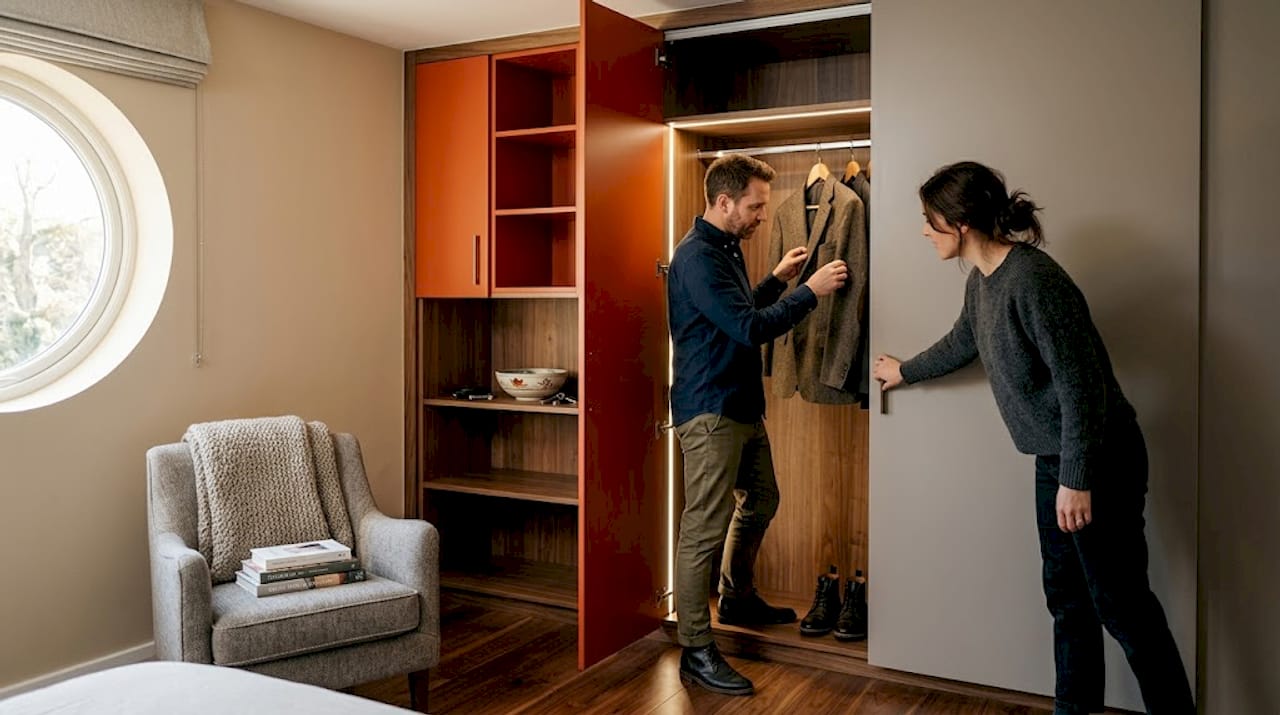
Most homeowners in West London treat wardrobes as an afterthought, something to sort out once the walls are painted and the furniture delivered. That thinking is expensive. The question of why integrated wardrobes outperform freestanding alternatives is not simply about aesthetics. It is about recovering space you are currently losing, adding measurable value to your property, and creating a bedroom that functions at the level your home deserves. This guide covers the real, practical reasons why integrated wardrobes belong in every considered West London residence.
Table of Contents
- Maximising space and storage efficiency with integrated wardrobes
- Bespoke design and luxury finishes tailored to your home
- Long-term value, return on investment, and market appeal
- Practical considerations and choosing the right integrated wardrobe for your home
- Rethinking wardrobe investment for enduring lifestyle and home value
- Discover bespoke integrated wardrobes at Finest Furniture Studio
- Frequently asked questions
Key Takeaways
| Point | Details |
|---|---|
| Maximise storage space | Integrated wardrobes use all room dimensions including awkward areas for up to double the storage of freestanding units. |
| Enhance home luxury | Bespoke finishes and modular designs turn wardrobes into architectural features that complement high-end interiors. |
| Boost property value | Well-designed integrated wardrobes recoup 50-70% of costs and increase buyer appeal in competitive markets. |
| Invest for the long term | Integrated wardrobes provide durable, permanent solutions that amortise cost over decades versus frequent furniture replacement. |
| Plan installation carefully | Custom wardrobes require precise measurement and coordination with room completion, typically taking months to install. |
Maximising space and storage efficiency with integrated wardrobes
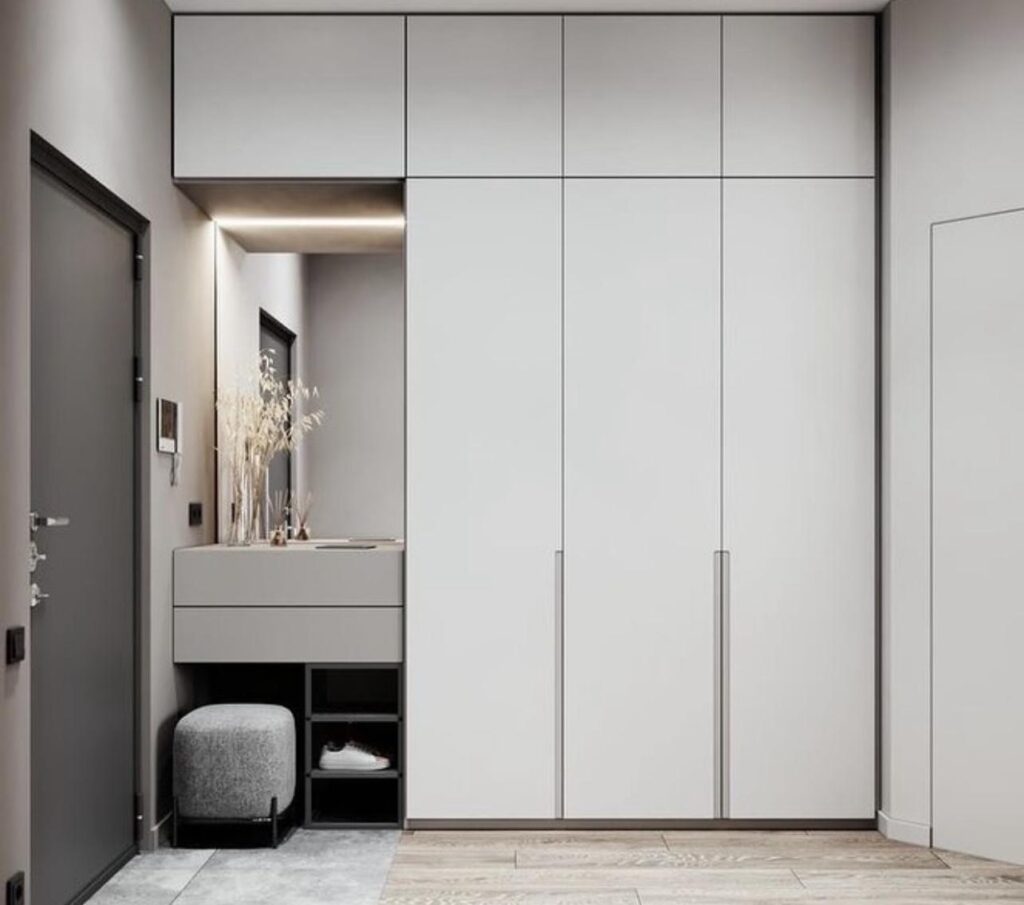
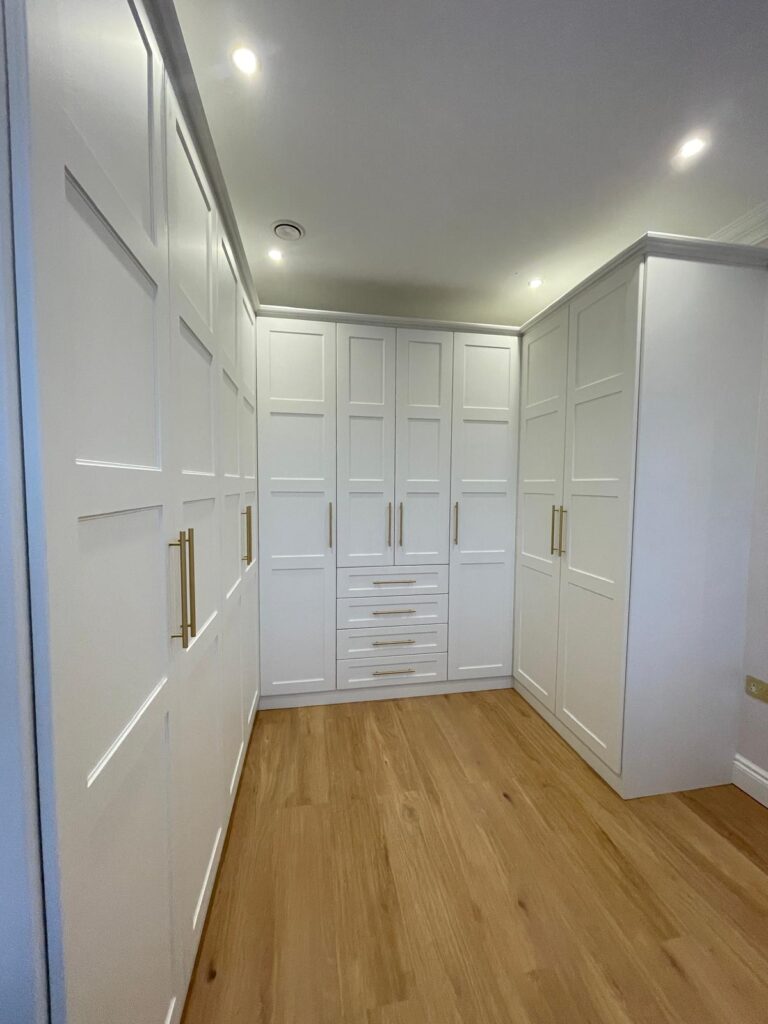
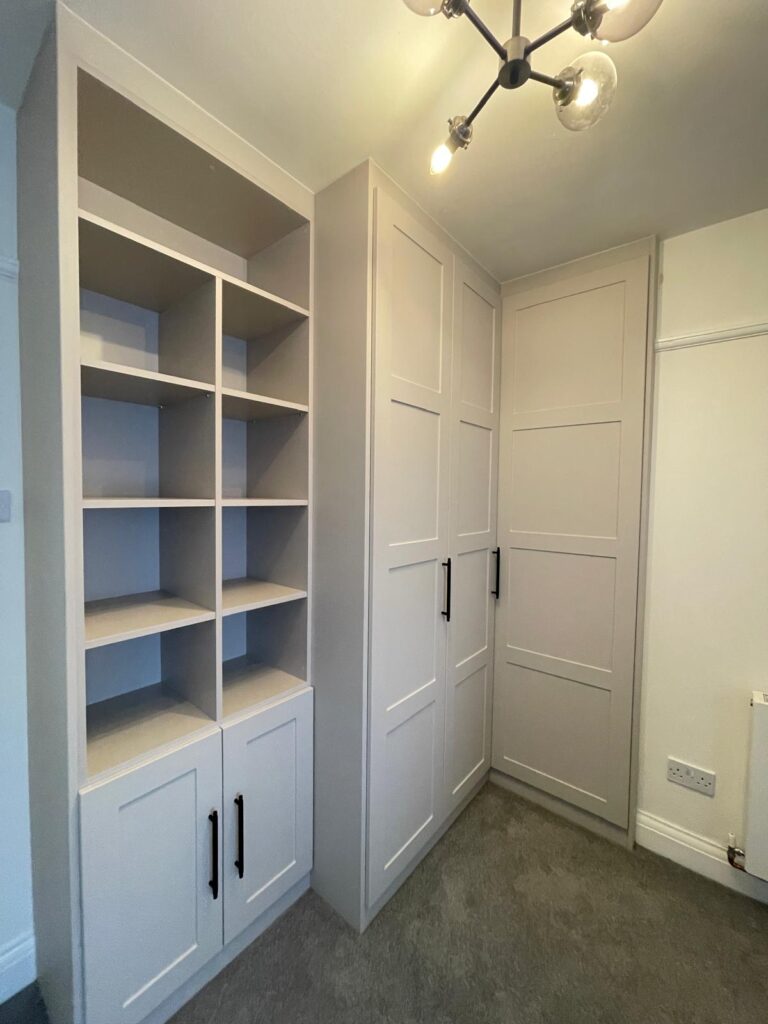
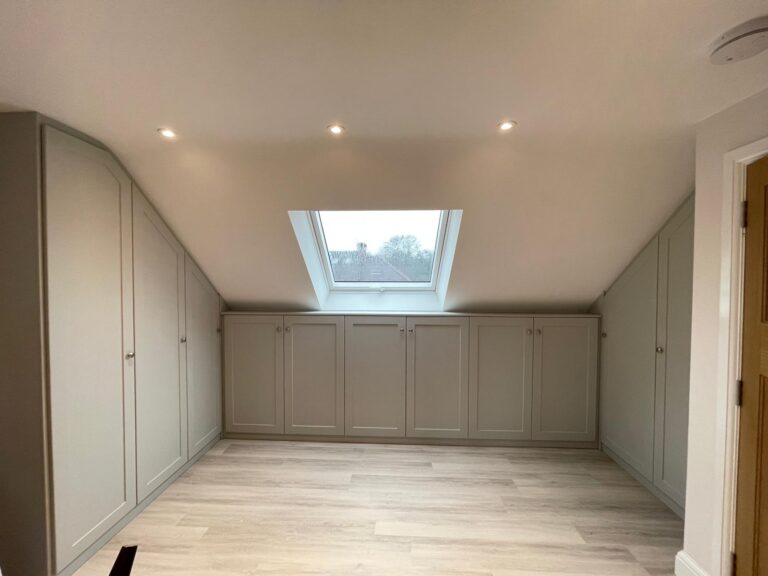
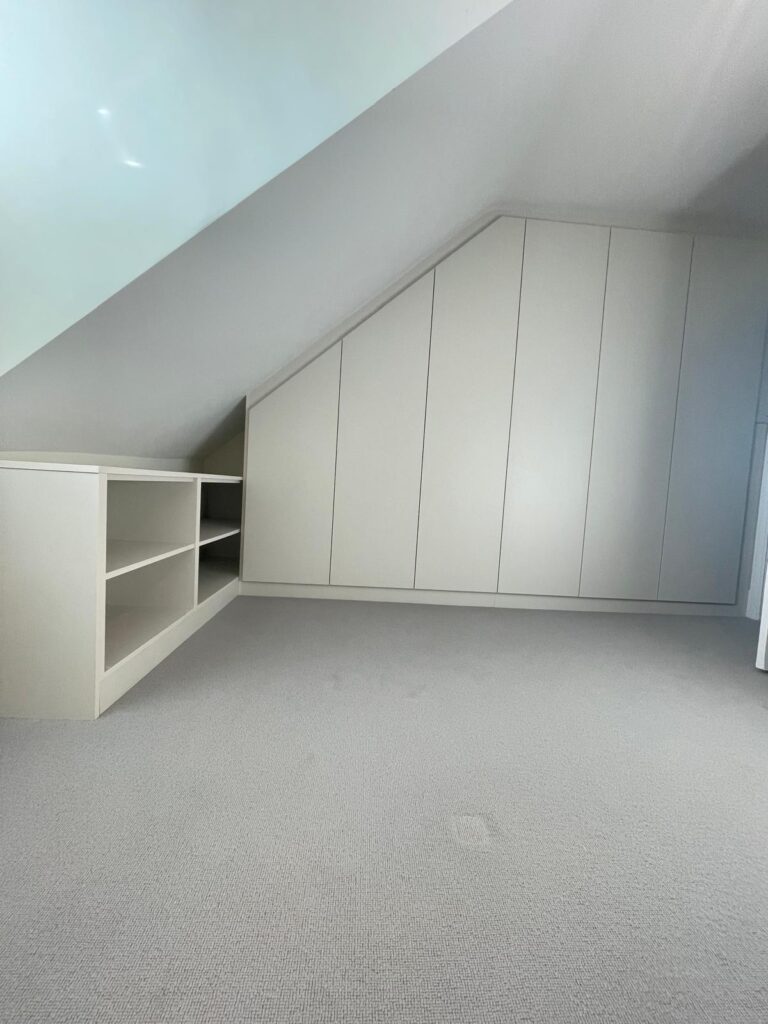
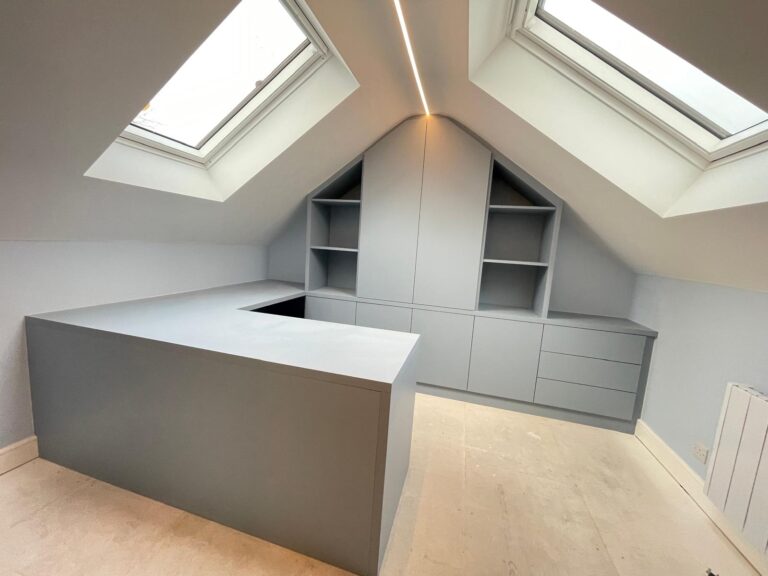
The single most compelling reason to choose integrated wardrobes is what they do with space that freestanding units simply abandon. Victorian and Edwardian properties across Kensington, Notting Hill, and Chelsea are full of awkward alcoves, sloped ceilings, and irregular wall angles. A freestanding wardrobe cannot adapt to these. An integrated wardrobe is built around them.
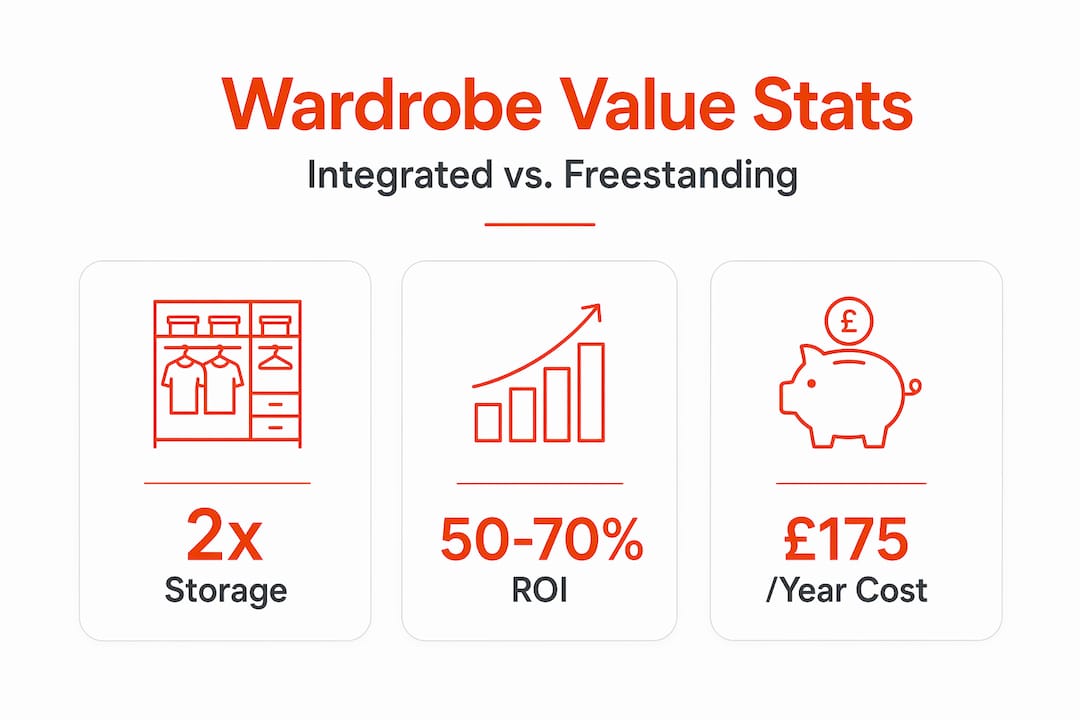
Fitted wardrobes provide up to twice the storage capacity of freestanding ones by utilising awkward spaces like sloped ceilings and alcoves that standard units simply ignore. That is not a marginal gain. In a master bedroom where every square metre counts, doubling your usable storage changes how the room feels and functions entirely.
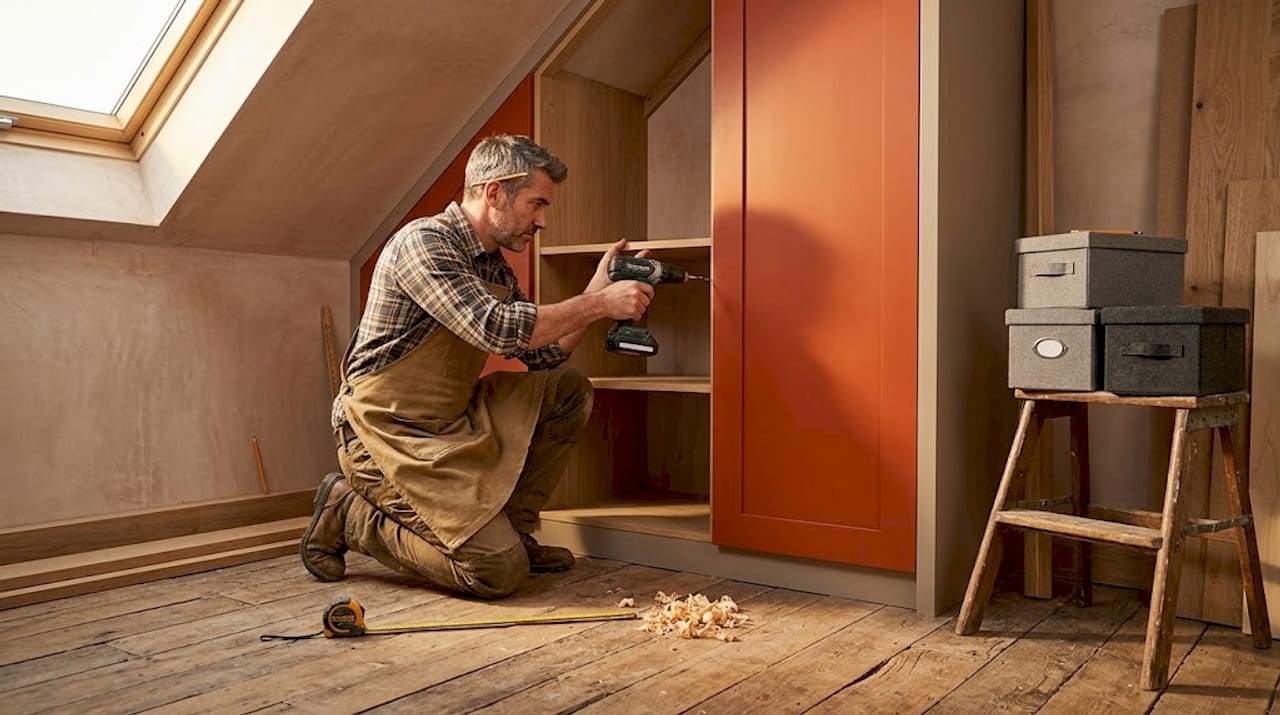
The gap above a freestanding wardrobe is one of the most overlooked inefficiencies in bedroom design. Floor-to-ceiling integrated wardrobes eliminate the typical 30 to 48 inch dust-collecting gap above freestanding units, capturing every vertical inch for 30% more storage volume. That upper zone, when properly fitted, becomes accessible shelving for seasonal items, luggage, or archival storage.
Here is what you gain practically with a well-designed fitted wardrobes utilisation approach:
- Full use of floor-to-ceiling height, including loft conversions and rooms with sloped rooflines
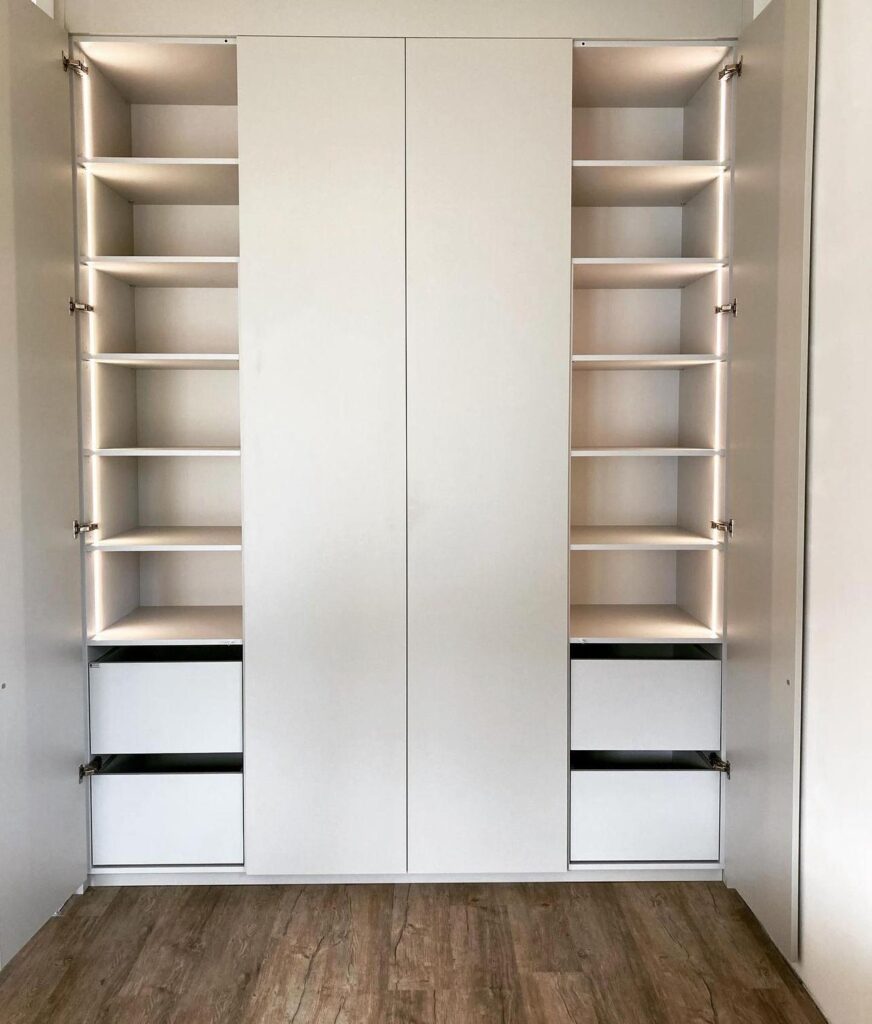
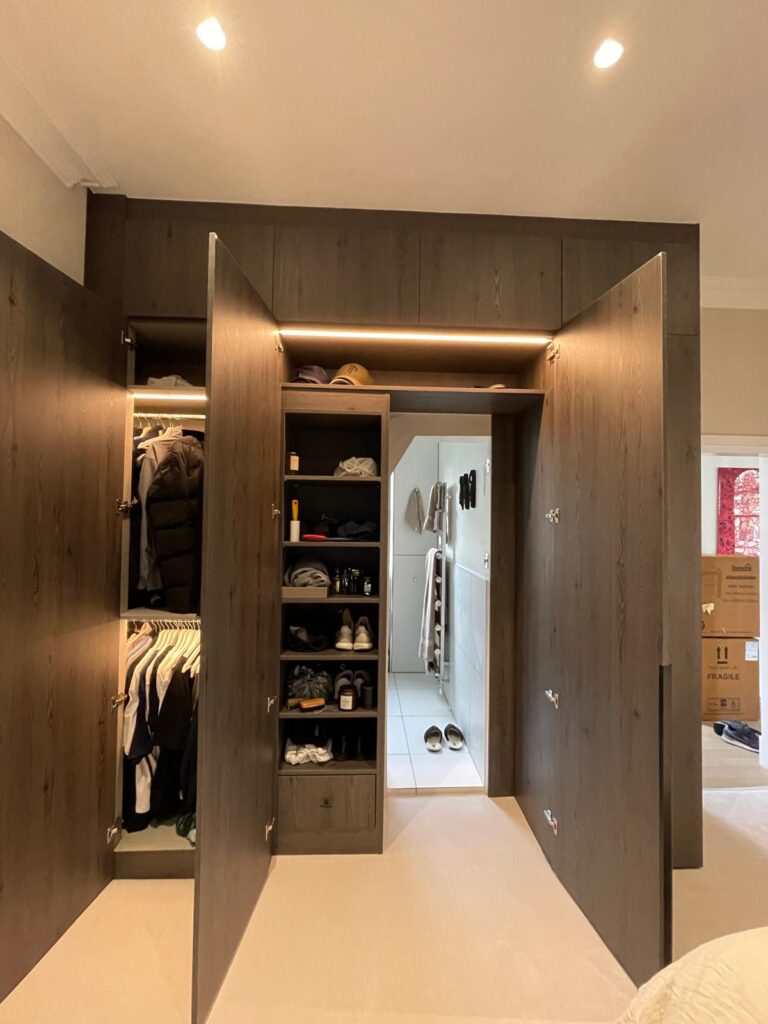
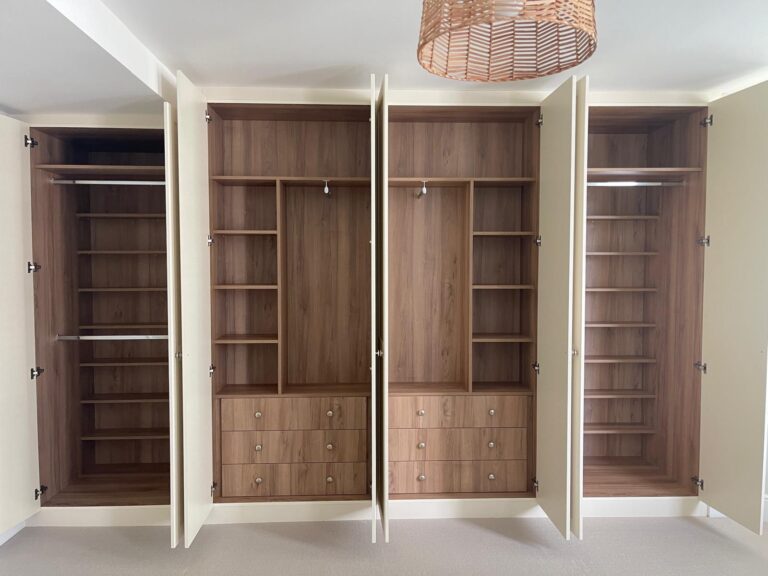
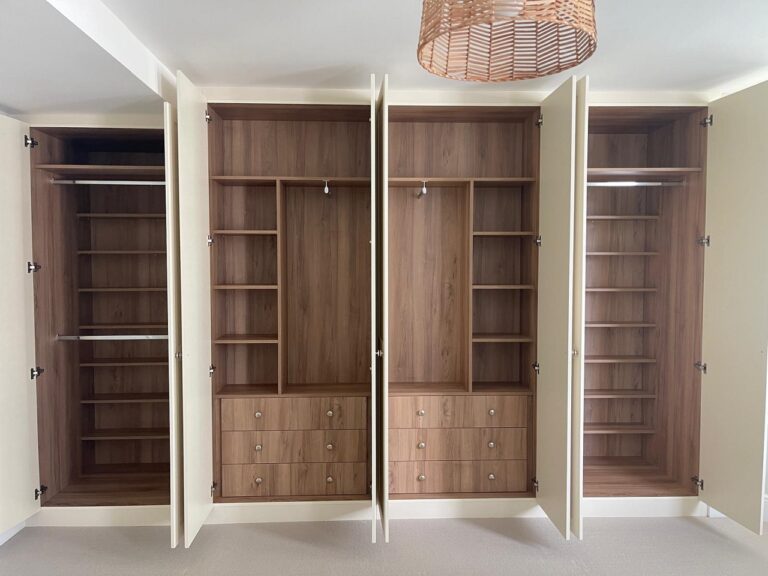
- Custom internal configurations: double hanging rails, pull-out shoe racks, velvet-lined jewellery drawers, and integrated lighting
- Elimination of dead space behind doors and in corners
- A cleaner, less cluttered room that appears larger and brighter
- Reduced dust accumulation, which matters particularly in older West London properties with period features
| Feature | Integrated wardrobe | Freestanding wardrobe |
|---|---|---|
| Storage volume | Up to 100% more | Standard |
| Dust gap above unit | None | 30 to 48 inches |
| Awkward space usage | Full utilisation | Not possible |
| Visual room impact | Expands perceived space | Can crowd the room |
| Longevity | 20 to 30 years | 5 to 15 years |
Pro Tip: When commissioning a bespoke integrated wardrobe, ask your designer to include a full room survey before any drawings are produced. Measuring after plastering and flooring are complete ensures the unit fits without adjustment gaps, which is where dust and misalignment issues begin.
Bespoke design and luxury finishes tailored to your home
Storage efficiency alone does not explain why integrated wardrobes have become the defining feature of premium West London bedrooms. The design possibilities are what truly set them apart.
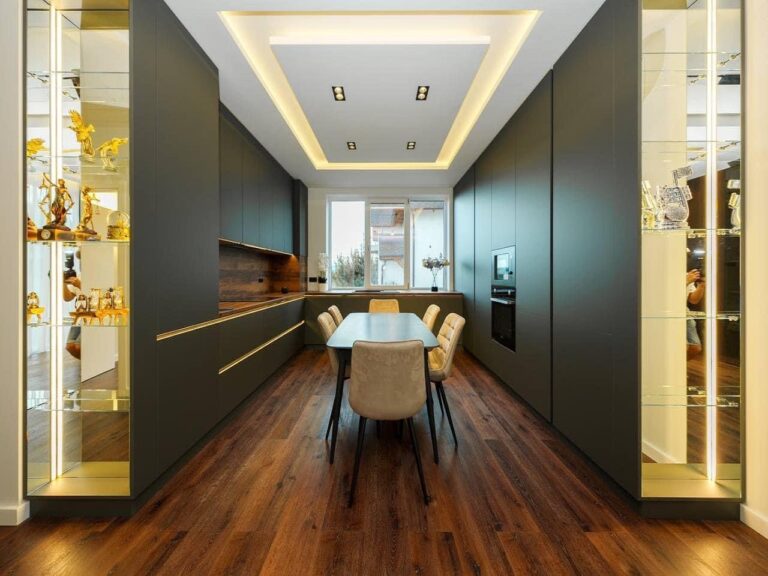
Modular integrated systems offer bespoke looks with industrial precision, making wardrobes central to daily routines rather than afterthoughts. This means your wardrobe is not simply a box you open in the morning. It is an architectural element that reflects your home’s character and your personal standard of living.
A well-executed luxury bespoke wardrobe design can incorporate:
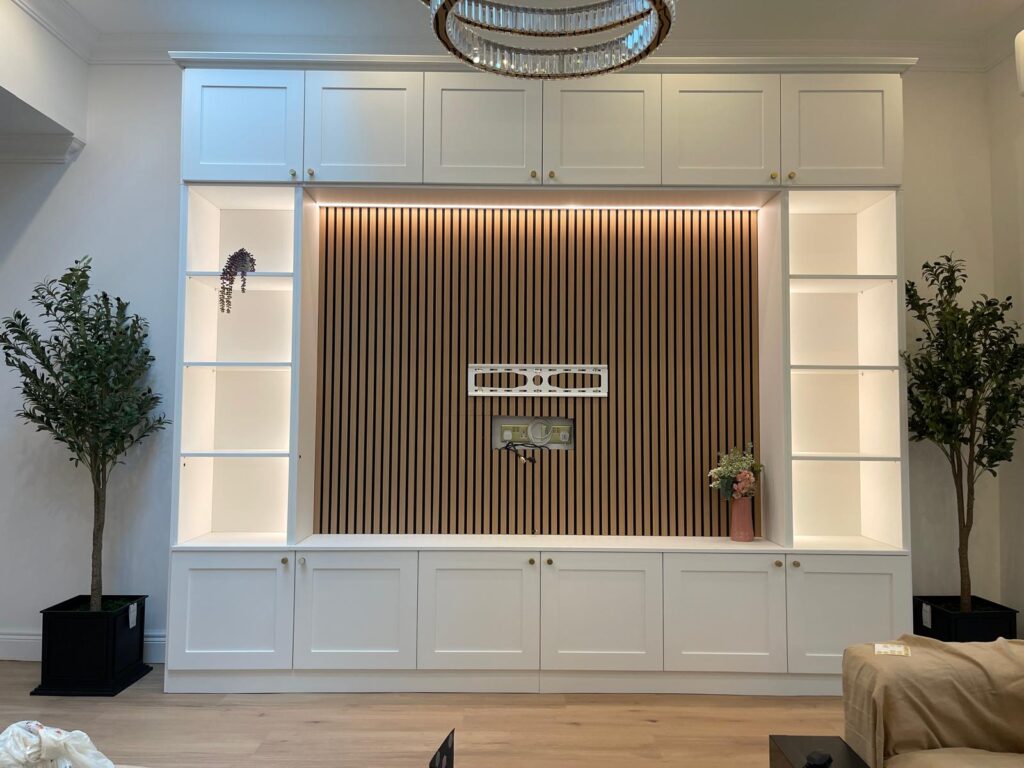
- Handpainted cabinetry in any RAL colour to match or contrast your interior palette
- Fluted glass or reeded panelling for a boutique-hotel quality finish
- Integrated LED lighting, including motion-activated strips and internal spotlights that illuminate clothing clearly
- Soft-close mechanisms on every door and drawer, eliminating noise and wear
- Velvet-lined internal drawers for jewellery, watches, and accessories
- Full-length mirror panels that double the visual depth of the room
- Pull-out valet rods and tie racks for considered daily dressing
The materials matter as much as the configuration. Solid oak, lacquered MDF, walnut veneer, and painted hardwood all behave differently over time and carry distinct visual weight. A skilled designer will match the material to your room’s proportions and existing finishes, ensuring the wardrobe reads as part of the architecture rather than furniture placed against a wall.
Pro Tip: If your bedroom features period cornicing or original skirting boards, choose a design that incorporates rather than conceals these details. A cornice-matching pelmet above the wardrobe doors creates a genuinely bespoke look that elevates the entire room.
Long-term value, return on investment, and market appeal
For homeowners in West London, where property values are among the highest in the country, every design decision carries financial weight. Integrated wardrobes are not an indulgence. They are a considered investment.
Simple built-in wardrobes start from £2,000 to £3,500 with bespoke options recouping 50 to 70% of their cost on resale. For a bespoke fitted wardrobe in a Fulham or Holland Park master bedroom, the investment may be considerably higher, but the proportional return holds firm. Buyers in these postcodes expect integrated storage. Its absence is noticed.
The long-term cost comparison is equally persuasive. A fitted wardrobe used for 20 years costs just £175 per year when amortised across its lifespan, and unlike freestanding furniture, it adds to the home’s value rather than depreciating alongside it.
Consider the financial picture across both wardrobe types:
| Factor | Integrated wardrobe | Freestanding wardrobe |
|---|---|---|
| Initial cost | £2,000 to £10,000+ | £500 to £3,000 |
| Expected lifespan | 20 to 30 years | 5 to 15 years |
| Annual cost (amortised) | £100 to £350 | £100 to £600 |
| Resale value contribution | 50 to 70% cost recovery | None |
| Buyer appeal | Significant positive impact | Neutral or negative |
The financial benefits extend beyond resale figures:
- Integrated wardrobes are permanent fixtures, meaning they are included in property valuations
- They signal quality and care to buyers, reducing time on market
- They eliminate the recurring cost of replacing freestanding furniture as it wears
- They free floor space, which estate agents consistently cite as a key factor in buyer perception
- A considered investment in fitted wardrobes improves the overall quality impression of the entire property
Practical considerations and choosing the right integrated wardrobe for your home
Understanding the benefits of integrated wardrobes is one thing. Executing the project well is another. Here is a structured approach to making the right decision for your home.
The first question is whether the room is permanent. Built-in wardrobes are ideal for forever rooms and dedicated closets, while freestanding suits flexible or guest rooms where layout may change. For your master bedroom or principal dressing room, there is no better choice than a fully integrated solution.
Follow these steps when planning your project:
- Assess the room thoroughly. Note ceiling height, wall irregularities, window and door positions, and any period features that should be preserved or incorporated.
- Book a design consultation. A professional designer will survey the space, discuss your storage requirements, and produce technical drawings before any commitment is made.
- Finalise the specification. Agree on materials, internal configurations, finishes, and any integrated features such as lighting or mirror panels.
- Allow for manufacture time. Bespoke units are made to order. Factor four to eight weeks for manufacture depending on complexity.
- Schedule installation at the right stage. Wardrobes should be installed after flooring and decoration are complete, but before final dressing of the room.
- Review and sign off. Walk through the completed installation with your fitter and address any adjustments before the project closes.
When choosing integrated wardrobes, prioritise your main bedroom first. The return on investment is highest here, and the daily benefit is most significant. Secondary bedrooms and dressing rooms can follow in subsequent phases.
Pro Tip: If you are renovating in stages, have the wardrobe positions marked out and any alcoves or recesses built during construction. Retrofitting a perfectly fitted wardrobe into an already-decorated room is straightforward when the structural groundwork is already done.
Rethinking wardrobe investment for enduring lifestyle and home value
We have spent years working with homeowners across West London, and one pattern is consistent: the clients who treat their wardrobes as a lifestyle investment rather than a storage solution are always the most satisfied. Not because they spent more, but because they thought differently about what a wardrobe is actually for.
The conventional view is that a wardrobe holds clothes. The more useful view is that a wardrobe organises your mornings, shapes how your bedroom feels, and signals to every future buyer that this home was cared for. Those are not small things.
Fitted wardrobes boost buyer confidence by making rooms feel bigger, practical, and well-maintained, which is especially valuable in competitive UK markets like West London. That confidence is not abstract. It translates to faster sales, stronger offers, and a property that stands apart in a crowded market.
There is also the permanence argument. A freestanding wardrobe is furniture. An integrated wardrobe is architecture. One you take with you when you move. The other becomes part of the home’s identity, something the next owner will value and the current owner benefits from every single day. When you consider a wardrobes as lifestyle investment perspective, the maths becomes straightforward. The cost per year of ownership is modest. The daily quality-of-life improvement is real. And the property benefit is measurable.
We believe the reasons for integrated wardrobes are not just practical. They reflect a particular standard of living, one where the details of a home are considered, not settled for.
Discover bespoke integrated wardrobes at Finest Furniture Studio
If this article has clarified why integrated wardrobes are worth prioritising in your home, the next step is a conversation about your specific space, requirements, and vision.
At Finest Furniture Studio, we specialise in handcrafted bespoke integrated wardrobes designed and installed for West London residences. From initial survey through to final installation, our team handles every stage with precision and care. We work with clients across Kensington, Chelsea, Notting Hill, Fulham, and the surrounding areas, bringing deep experience with the room types, proportions, and period features common to homes in these postcodes. Whether you are planning a full master bedroom transformation or a walk-in dressing room, we will design a solution that fits your space exactly and reflects your standard of living.
Frequently asked questions
What are the main advantages of integrated wardrobes over freestanding ones?
Integrated wardrobes maximise storage by using all available room dimensions, including awkward alcoves and sloped ceilings, while eliminating dust gaps and enhancing the room’s architectural quality. Fitted wardrobes provide up to twice the storage capacity and remove the dust-collecting gaps that freestanding units leave above them.
How much do bespoke integrated wardrobes typically cost in the UK?
Standard built-in wardrobes cost £2,000 to £3,500 with bespoke luxury options costing more but typically recouping 50 to 70% of their value on resale, making them a sound long-term investment.
Can integrated wardrobes fit in rooms with sloped ceilings or unusual shapes?
Yes, integrated wardrobes are designed and built to fit precisely around sloped ceilings, alcoves, and irregular wall angles. Fitted wardrobes utilise awkward spaces that freestanding units simply cannot accommodate, making them ideal for period properties and loft conversions.
Do integrated wardrobes add value when selling a home in West London?
They do. Fitted wardrobes boost buyer confidence by creating rooms that feel spacious, well-organised, and carefully maintained, which is a significant advantage in competitive West London markets where buyers have high expectations.
How long does the installation of integrated wardrobes typically take?
The full process from initial survey to installation typically spans several weeks, as built-in wardrobe installation requires precise measurement after room completion, followed by design, manufacture, and professional fitting. Bespoke projects generally allow four to eight weeks for manufacture.