
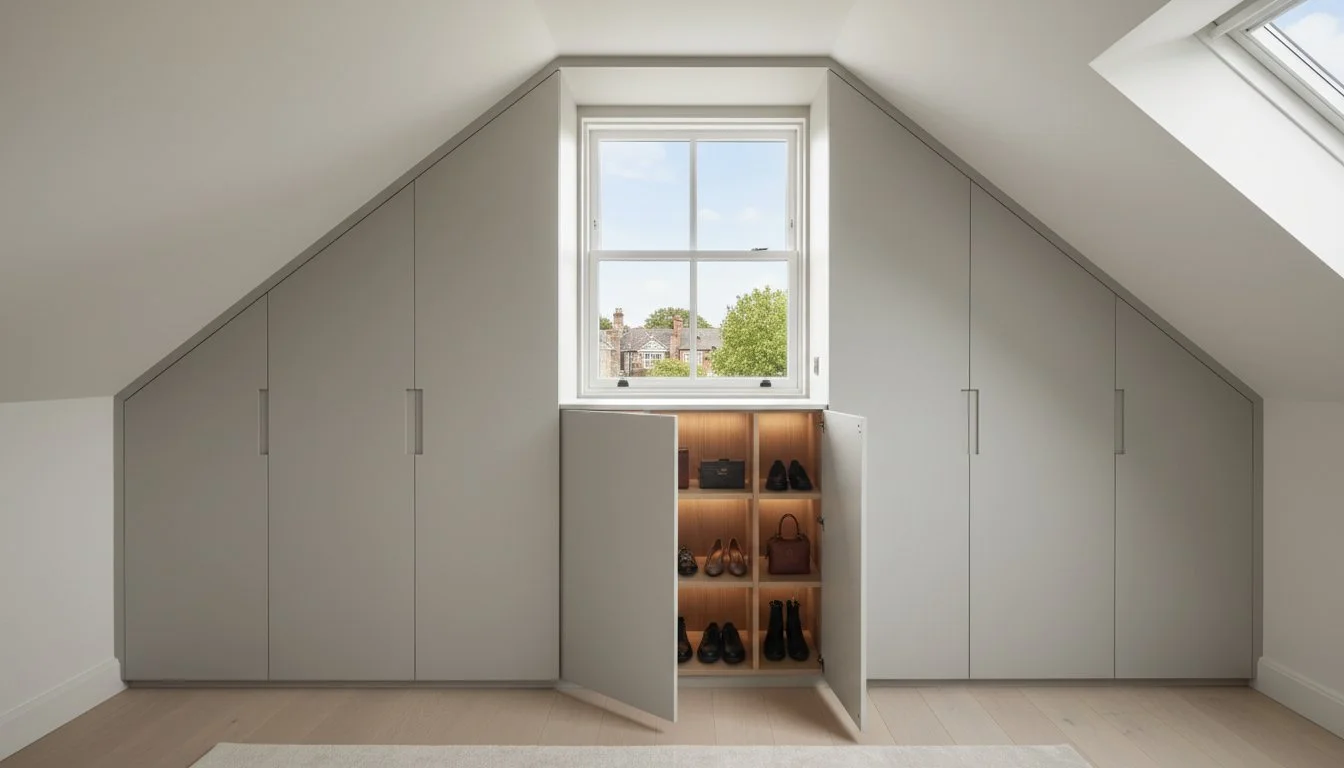
What if the very angles that make your loft feel “awkward” are actually the secret to its most luxurious feature? You’ve likely spent hours staring at those sloped eaves, wondering how to stop them from becoming wasted corners or magnets for dust. It’s frustrating when standard, modular furniture looks like an afterthought, leaving unsightly gaps that ruin the flow of your room. We understand that you want your home to feel like a curated sanctuary, not a compromise of mismatched pieces. This guide reveals how to reclaim every millimetre of your attic space with high-end, bespoke coombed ceiling wardrobes.
You’ll discover how a floor-to-ceiling finish can transform a cramped corner into a sophisticated dressing area that breathes new life into your home. We’ll explore the expert design techniques that turn tricky “coombes” into seamless storage, from the latest 2026 trends in tactile materials to the practical ways precision-fitted storage enhances a loft conversion, which can add between £20,000 and £50,000 to your property value. By the end of this article, you’ll have the confidence to turn your architectural challenges into your favourite design statement.
Key Takeaways
- Learn why bespoke design eliminates the “modular gap” common in standard furniture, ensuring your storage integrates seamlessly with your loft’s architecture.
- Master the “Three-Point Check” technique to achieve a millimetre-perfect fit, allowing you to accurately survey your attic’s unique angles and heights.
- Discover how bespoke coombed ceiling wardrobes provide up to 40% more usable volume than off-the-shelf alternatives by reclaiming every centimetre of sloped space.
- Uncover interior zoning secrets that balance long-hang and short-hang requirements, expertly tailored to the specific height of your eave walls.
- Understand the benefits of a professional artisan process, from 3D rendering to precision fitting, to maximise both storage and property value.
Understanding Coombed Ceilings: Why Standard Wardrobes Fail in Loft Conversions
A “coombed ceiling” describes the unique architectural intersection where a vertical wall meets the sloped pitch of a roofline. Whilst mass-market retailers often use the generic term “sloped ceiling”, the coombe is a specific feature of British heritage homes; particularly those in West London where Victorian and Edwardian loft conversions are common. Standard furniture simply isn’t built to accommodate these precise angles. When you try to place a rectangular, modular unit against a coombe, you’re left with the “modular gap”. This wedge of wasted space is the enemy of high-end interior design. It creates a visual stutter in the room and quickly becomes a magnet for dust that’s impossible to reach.
Understanding loft conversions is essential for any homeowner looking to maximise their floor plan. These spaces are rarely “square” or level. You’re often contending with structural purlins, protruding rafters, and floors that have settled unevenly over decades. Bespoke coombed ceiling wardrobes solve these issues by treating the architecture as a template rather than an obstacle. By opting for a floor-to-ceiling finish, you create a seamless “built-in” look that feels like a natural extension of the room’s skeleton, rather than an afterthought that’s been tacked on.
The Anatomy of a Sloped Ceiling Wardrobe
Creating a truly integrated wardrobe requires more than just cutting wood at an angle. The anatomy of a high-quality unit relies on a sophisticated mix of vertical side panels and precision-engineered angled top rails. A critical component is the “scribe”; a thin piece of matching material used to bridge the gap between the wardrobe and an uneven wall. This ensures the unit looks perfectly straight even if your house isn’t. We also select specific materials, such as high-density moisture-resistant MDF or premium melamine-faced chipboard, because they remain stable despite the temperature fluctuations common in attic rooms.
Common Pitfalls in DIY Loft Storage
Many homeowners attempt a DIY approach only to find that the reality of the space is more complex than it looks. Common mistakes include:
- Overestimating hanging height: Once you account for the internal rail and the slope, you may find your coats dragging on the floor of the unit.
- Blocking access: Attic eaves often house essential access hatches for plumbing or electrical work. Permanent coombed ceiling wardrobes must be designed to allow for these without compromising the structure.
- Hardware strain: Avoid using excessively heavy doors on angled hinges; the gravity of a sloped front puts unique strain on the hardware that standard fittings can’t handle.
By avoiding these traps, you move from a functional compromise to a sanctuary of order. Our bespoke approach ensures that every millimetre of your loft is utilised with the quiet confidence of expert craftsmanship.
How to Measure Your Sloped Ceiling for a Millimetre-Perfect Fit
Precision is the foundation of luxury. Measuring for coombed ceiling wardrobes requires a level of detail that goes far beyond a standard bedroom survey. Whilst mass-market retailers often rely on a single height measurement, a bespoke loft installation demands a three-dimensional understanding of your room’s geometry. You’ll need a high-quality steel tape measure, a digital laser measurer for long spans, and a spirit level to check the “plumb” of your walls. Don’t assume your floor is level or your walls are perfectly vertical; in loft spaces, they rarely are.
The “Three-Point Check” is our signature approach to capturing the true shape of a room. You must measure the vertical height at the highest point, the lowest point of the slope, and exactly in the middle of the run. This identifies any ceiling sag or floor dipping that would otherwise cause unsightly gaps. When exploring design ideas for your loft conversion, you’ll notice that the most successful projects account for every architectural nuance. This includes documenting obstructions like radiators, electrical sockets, and window reveals that might interfere with door clearance or internal shelving.
The Critical Measurements Checklist
To ensure your 3D render is accurate, you should document the following specific dimensions:
- Total width: Measure the full run where the wardrobe will sit, including space for end panels.
- Height to slope: This is the vertical distance from the floor to the “knee wall” where the ceiling begins to angle.
- The Diagonal: Measure the length of the actual sloped “coombe” from the top of the vertical wall to the highest ceiling point.
Accounting for Period Property Quirks
Local architecture often dictates the complexity of a survey. Period homes in Richmond and Chiswick frequently feature “wonky” walls that lean inward or outward. Similarly, older Slough terrace conversions often have floor levels that have settled over time. We always design with a 50mm “tolerance” for scribing. This extra material allows our fitters to hand-cut the edges of your coombed ceiling wardrobes on-site, ensuring they follow the exact contour of your walls without a single millimetre of wasted space. If you’re unsure about capturing these complex angles yourself, you can always request a professional survey through finestfurniturestudio.co.uk to guarantee a flawless result.
Calculating the pitch of the roof is also vital. A steep pitch may require hinged doors with specific angled hinges, whilst a shallower slope might be better suited to a sliding configuration. By documenting these details early, you ensure the final installation feels like a permanent, structural part of your home rather than a temporary addition.
Bespoke vs Modular: Why Custom Cabinetry Wins in Awkward Attic Spaces
Modular furniture is designed for the predictable geometry of a square room. When these rectangular units are placed into a loft conversion, they inevitably create the “step effect”. This occurs when standard-height wardrobes leave triangular voids above them, resulting in a fragmented look that highlights the room’s limitations rather than its potential. In contrast, bespoke coombed ceiling wardrobes are engineered to follow the exact pitch of your rafters. This “seamless slope” doesn’t just look better; it provides up to 40% more usable storage volume than modular alternatives by reclaiming the deep recesses of the eaves that would otherwise be lost.
The difference in structural integrity is equally profound. Whilst flat-pack units simply sit under a ceiling, custom-built frames are scribed into the room’s architecture, offering a level of stability that standalone furniture cannot match. This permanent integration is a key driver for property value in competitive markets. High-quality fitted wardrobes London buyers look for are considered a structural asset. Estate agents often report that bespoke storage is a deciding factor for buyers who want a home that feels “finished” and thoughtfully designed.
Material Quality and Longevity
Attic rooms experience more significant temperature fluctuations than the rest of the house. We prioritise materials like moisture-resistant MDF or premium birch plywood that won’t warp as the seasons change. The finish is just as vital; whether you prefer a hand-painted eggshell or a contemporary textured wood grain, the application must be flawless. Because the doors of coombed ceiling wardrobes are often cut at sharp angles, we use heavy-duty soft-close mechanisms and specialised angled hinges. These components ensure the doors operate smoothly without the sagging common in lower-grade hardware.
Design Flexibility for Awkward Voids
Loft spaces are rarely empty boxes. They often contain chimney breasts, structural pillars, or essential access hatches. Bespoke cabinetry allows us to wrap the wardrobe run around a chimney breast or create “secret” push-to-open panels that maintain access to crawl spaces. We can also adjust the depth of individual sections to fit shallow alcoves. This level of customisation ensures that no matter how many architectural “quirks” your loft has, the final result is a sanctuary of clean lines and organised calm. You aren’t just buying a cupboard; you’re investing in a tailored solution that works in harmony with your home’s unique skeleton.

Interior Design Secrets: Maximising Storage Behind a Sloped Front
Whilst the exterior of your cabinetry defines the room’s aesthetic, the true magic of coombed ceiling wardrobes happens behind the doors. Most off-the-shelf solutions ignore the shallow, acute angles where the roof meets the floor. We treat these zones as high-value real estate. By zoning the interior, you can dedicate the full-height vertical sections to hanging garments whilst utilising the deeper, sloped areas for specialized pull-out systems. This approach ensures that no part of your loft conversion remains a “dead zone” for clutter.
The “Long-Hang” versus “Short-Hang” dilemma is a common hurdle in attic spaces. In a standard room, you have ample height for evening dresses and long coats. In a loft, you must be more strategic. We often recommend placing double hanging rails in the highest part of the wardrobe and transitioning to shelving or drawers as the ceiling descends. To enhance the experience, we integrate cool-to-touch LED strip lighting. These don’t produce the heat of traditional bulbs; making them safe for tight, enclosed spaces whilst ensuring you never have to hunt for a favourite jumper in a dark corner.
Innovative Interior Fittings
Modern hardware has revolutionised how we access difficult spaces. We frequently install pull-down “Häfele” rails in the highest sections of the wardrobe, allowing you to bring your clothes down to eye level with a simple handle. For the narrowest parts of the eaves, scalloped shoe drawers or pull-out trouser racks provide easy access to items that would otherwise be buried. We also use internal mirrors on the back of doors to bounce natural light around the room, making even the most compact loft feel airy and expansive.
Organising by Frequency of Use
Success in a small space relies on a logical hierarchy. We suggest storing out-of-season suitcases or heavy winter bedding in the most acute angles of the coombe. Your daily essentials; such as shirts, trousers, and accessories; should sit at eye level in the most accessible vertical sections. Ultimately, your fitted wardrobe interiors should reflect your specific lifestyle, whether you need a dedicated space for a vast shoe collection or a hidden compartment for a home office setup.
Ready to reclaim your space? Start your journey toward a perfectly organised home by booking a design survey at finestfurniturestudio.co.uk. Our experts will help you visualise a layout that turns your architectural challenges into your home’s most functional asset.
Designing Your Dream Loft Wardrobe with Finest Furniture Studio
Finest Furniture Studio operates from our artisan workshop in Slough, where we’ve refined a specialized methodology for mastering the most challenging architectural spaces. Our team understands that West London homes require a bespoke touch that respects the heritage of the building whilst introducing modern efficiency. We don’t just install cupboards; we partner with you to enhance your quality of life through structured, thoughtful design. For 2026, we’re seeing a clear trend toward minimalist, handle-less doors. This sleek aesthetic is particularly effective for coombed ceiling wardrobes, as it allows the cabinetry to disappear into the room’s silhouette, creating a sense of calm and sanctuary in what was once a cluttered attic corner.
Trust is the cornerstone of our service. We provide total financial clarity from the outset, ensuring there are no unexpected costs or hidden fees as your project progresses. This commitment to honesty is why so many homeowners across the region choose us to transform their living spaces. We treat your private home with the utmost respect, maintaining a disciplined schedule and a clean workspace throughout the transformation. It’s our goal to provide the emotional relief that comes from a perfectly organised home, backed by long-term quality assurances that offer you complete peace of mind.
The Finest Furniture Studio Consultation
Our process begins with an inviting and helpful home visit in areas like Wimbledon or Putney. During this session, we’ll explore how your new loft storage can complement your existing fitted living room furniture to create a cohesive design language throughout your property. Using our advanced 3D design software, we’ll create a high-fidelity render of your coombed ceiling wardrobes. This allows you to visualise the final result and adjust the internal configurations before a single piece of timber is cut, ensuring the final product is exactly as you imagined.
Installation and Final Touches
Logistics in a loft conversion can be tricky, but our expert fitters are specialists in navigating narrow staircases and restricted access. We take pride in our “Millimetre-Perfect” promise, which involves hand-scribing every panel on-site to follow the unique, often uneven line of your ceiling. This level of precision ensures a seamless, floor-to-ceiling finish that adds genuine value to your property. Once the installation is complete, we conduct a detailed final walkthrough with you. This ensures every soft-close hinge and pull-out rail operates with the fluid experience we’re known for, leaving you with a space that is as functional as it is beautiful.
Transform Your Architectural Challenges into a Sanctuary
Reclaiming your attic space is about more than just adding cupboards; it’s about refining the way you live. We’ve explored how bespoke design treats every slope as a feature, ensuring your home feels cohesive and intentional. By moving beyond modular compromises, you’re choosing a solution that respects the unique geometry of your property. This transition from awkward voids to streamlined storage is what turns a simple loft into a premium living area that breathes with your daily routine.
Our Slough-based artisans have been serving homeowners across London and the UK since 2018, bringing a disciplined commitment to every project. We understand the peace of mind that comes from financial clarity and precision craftsmanship. Whether you’re in the early stages of a conversion or looking to upgrade your existing bedroom, coombed ceiling wardrobes offer the most sophisticated path to a clutter-free lifestyle. We’re ready to help you visualise your transformation with our millimetre-perfect 3D renders included as part of our expert service.
Book your free bespoke loft design consultation today and take the first step toward a home that truly works for you. Your dream sanctuary is closer than you think.
Frequently Asked Questions
Can you put a wardrobe on a sloped ceiling?
Yes, you can install a wardrobe on a sloped ceiling by using bespoke cabinetry that is hand-scribed to the exact angle of your roofline. Unlike standalone units that leave awkward gaps, these built-in solutions utilise the full height of the room. This process involves creating an angled frame that follows the pitch perfectly. It ensures your storage looks like a permanent architectural feature rather than a temporary addition.
What is the difference between a sloped ceiling and a coombed ceiling?
A coombed ceiling is a specific British architectural term for the angled part of a room where the ceiling slopes down to meet a shorter vertical wall. Whilst “sloped ceiling” is a generic description used globally, the “coombe” specifically refers to the unique geometry found in UK loft conversions. Recognising this distinction is vital for ensuring your designer understands the precise structural challenges of your attic space.
How deep should a loft wardrobe be for hanging clothes?
A standard depth of 600mm is ideal for coombed ceiling wardrobes to ensure clothes hang freely without touching the doors or the back panel. In tighter loft spaces, we can sometimes reduce this to 550mm if space is at a premium. However, maintaining sufficient depth is critical to prevent sleeves from being crushed against the internal structure; especially when dealing with the reduced volume of a sloped ceiling.
Are sliding doors better than hinged doors for sloped ceilings?
Sliding doors are often preferred in narrow lofts because they don’t require clearance to open, whilst hinged doors offer the benefit of seeing your entire collection at once. The choice often comes down to the pitch of your ceiling. Steep angles usually require hinged doors with specialised hardware to manage the weight. Shallower slopes are more accommodating to sliding tracks that can be recessed into the floor and ceiling.
How much do coombed ceiling wardrobes cost in London?
The investment for bespoke storage depends entirely on the dimensions of your run, the choice of finishes, and the complexity of the internal fittings. High-end installations in London reflect the premium materials and artisan labour required to master difficult architectural angles. We focus on providing a transparent, fixed-price quote after your design consultation. This ensures you have complete financial clarity without any unexpected costs appearing during the installation phase.
Can I still access my eaves storage if I install a fitted wardrobe?
Access to your eaves is easily maintained through the clever integration of removable back panels or hidden “secret” doors within the wardrobe structure. We understand that this space is often essential for accessing plumbing, electrical cables, or long-term storage. By designing your coombed ceiling wardrobes with these requirements in mind, we ensure you never lose the functionality of your home’s original storage voids.
How long does it take to install a bespoke loft wardrobe?
Most bespoke loft wardrobes are installed within one to three days, though this timeline varies based on the size and complexity of the project. Our expert fitters handle the heavy lifting and precision scribing on-site to ensure a millimetre-perfect finish. Because we manufacture the core components in our Slough workshop beforehand, the time spent in your home is kept to a minimum; allowing you to enjoy your organised sanctuary sooner.
Do I need to reinforce my loft floor before installation?
Modern loft conversions built to current building regulations are generally designed to support the weight of fitted furniture without additional reinforcement. However, if your conversion is older or you’re concerned about structural integrity, it’s wise to consult a structural engineer. We always assess the floor’s levelness and stability during our initial survey to ensure your new cabinetry remains perfectly aligned and secure for years to come.

