
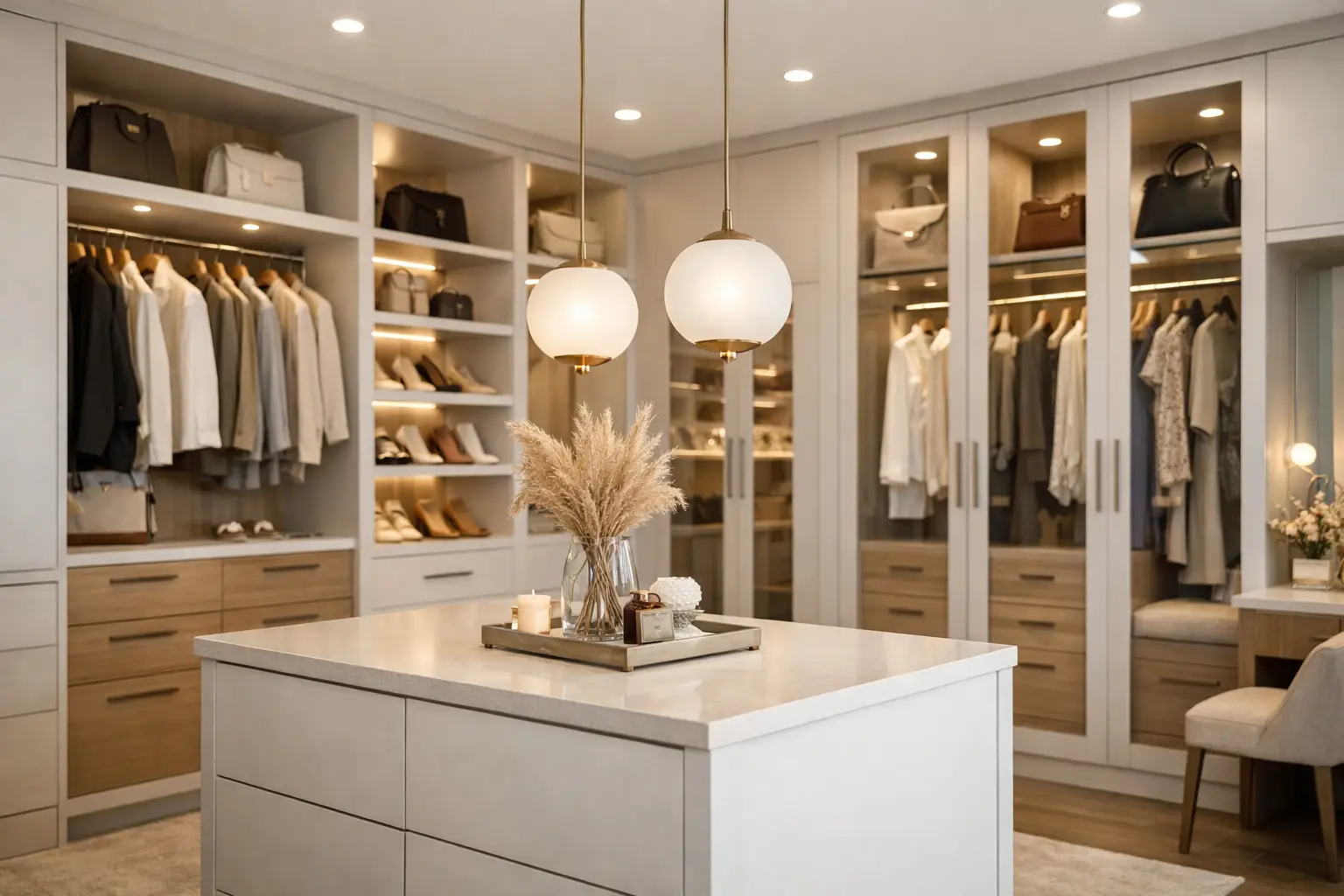
If your wardrobe still relies on a rail, a chest of drawers and a bit of daily compromise, the biggest shift behind walk in closet ideas 2026 is simple: people want storage to feel designed, not merely added. Homeowners are expecting more from every square metre now – more order, more beauty, and more intelligent use of awkward space.
A walk-in closet is no longer reserved for large houses with a spare room to dedicate. In many homes, it is being shaped from alcoves, loft rooms, box rooms, recesses behind the bed, or an underused corner of the principal bedroom. The best designs are not about excess. They are about making the space fit your routine with precision.
Walk in closet ideas 2026 are becoming more tailored
The strongest trend for 2026 is not one single finish or layout. It is the move towards bespoke planning. Homeowners are moving away from generic shelving systems and choosing fitted interiors that reflect what they actually own and how they live.
That means long hanging for dresses and coats if you wear them often, more double hanging if shirts and jackets dominate, and a measured balance of drawers, shelves and display space. It also means planning around real constraints. Sloping ceilings, chimney breasts, uneven walls and narrow footprints are no longer design problems to work around badly. They are features that can be used intelligently.
This is where fitted joinery has a clear advantage over freestanding pieces. A custom design can use the full height, the full width and the awkward inches that standard furniture wastes. The result usually feels calmer because everything has an obvious place.
Layout ideas that make a walk-in closet feel effortless
A good walk-in closet should feel easy to use at 7am when you are in a hurry, not only impressive when it is freshly photographed. That starts with the layout.
The single-wall dressing room
For smaller homes, a single-wall arrangement can work beautifully. One full run of fitted storage, paired with open floor space and a mirror opposite, creates a clean dressing area without making the room feel crowded. This is often ideal in a spare bedroom, a converted box room or a recess off the main bedroom.
The galley-style layout
Where the room is narrow but long enough to move through comfortably, storage on both sides can create a practical walk-in wardrobe. One side might hold hanging rails and drawers, while the other takes shelves, shoe storage and accessories. The key trade-off is clearance. If the walkway becomes too tight, the room quickly loses its sense of ease.
The L-shaped corner solution
L-shaped fitted wardrobes are especially useful in homes with tricky corners or mixed wall lengths. They soften dead space and make the room feel purposeful. Corner sections do need careful planning, though. Poorly designed corners can become deep, awkward voids. Bespoke internal fittings help keep them accessible.
The U-shaped luxury layout
If you have a dedicated dressing room, a U-shaped scheme creates a more immersive feel. It works best when there is enough central space to move around comfortably and, ideally, room for a stool, ottoman or island. This layout looks polished, but it only earns its keep if the proportions are right.
Materials and finishes are getting warmer
For years, ultra-white interiors dominated wardrobe design. In 2026, there is a clearer shift towards warmth and texture. That does not mean dark, heavy rooms. It means a softer, more residential feel.
Woodgrain finishes, taupe tones, cashmere shades, muted greys and smoked glass are all appealing because they make storage feel integrated with the rest of the home. A walk-in closet should not look like a utility cupboard hidden behind a smart door. It should feel like part of the interior scheme.
This is also why handle choices matter more than people expect. Slim metal profiles, discreet recessed pulls and wrapped finishes can change the whole impression. If your style leans more classic, framed cabinetry and shaker-inspired details still have a place, but cleaner lines are leading the way.
Lighting ideas that elevate the whole room
Lighting is one of the most overlooked walk in closet ideas 2026 homeowners should prioritise. Even a beautifully designed wardrobe interior will frustrate you if the lighting is flat, shadowy or badly placed.
Integrated LED lighting inside hanging sections and shelving adds both function and atmosphere. It helps you see colours properly, spot smaller items and avoid the black-hole effect that deep wardrobes often create. Sensor lighting is especially useful in a walk-in setting because it feels effortless.
Ceiling lighting should then support the room rather than fight with it. A decorative pendant can work in a larger dressing space, while neat downlights suit compact rooms. The most flattering result tends to come from layered lighting rather than one harsh central fitting.
Storage details that genuinely improve daily use
The most successful walk-in wardrobes are usually defined by the details. Not extravagant details for the sake of them, but thoughtful ones.
Drawers with dividers for jewellery, watches and smaller accessories help keep surfaces clear. Pull-out trouser rails can save width where hinged access would be clumsy. Adjustable shelving gives flexibility as your storage needs change. Shoe displays can look elegant, but if you own more practical footwear than statement pairs, closed storage may serve you better.
There is also growing demand for concealed laundry sections, fitted mirrors, integrated dressing tables and charging points. These additions can be transformative, but only if they match the way you use the room. A dressing table that squeezes circulation is not a luxury. It is poor planning.
Open versus closed storage
Open shelving photographs well, but that does not mean it suits every household. If you love visual order and edit your belongings carefully, open storage can make a walk-in closet feel boutique-like and refined. It also keeps favourite items close to hand.
If your life is busier, your wardrobe is fuller, or you simply prefer a cleaner look, a mix of open and closed storage is often the better answer. Glass-fronted sections can offer a middle ground. They lighten the look while still creating a sense of enclosure.
This is one of those decisions where honesty matters. The right design is not the one that follows a trend. It is the one that will still feel calm on an ordinary Wednesday.
Islands, seating and extras – when they work
A central island is high on many wish lists, and for good reason. It adds drawer space, gives you a surface for folding or laying out outfits, and makes the room feel more considered. But it needs space around it. If it turns movement into a sidestep, it is not worth forcing in.
Seating can also add comfort and polish, especially in larger walk-in wardrobes. A compact upholstered stool or bench makes dressing easier and introduces softness. Again, proportion is everything. In smaller homes, built-in solutions often achieve more than freestanding extras.
Designing for awkward British homes
Some of the best walk-in closets are created in spaces that looked difficult at first glance. Loft conversions with sloping ceilings, period homes with alcoves, narrow bedrooms and rooms with uneven walls can all become highly efficient with the right fitted approach.
For homeowners in areas such as Richmond, Wimbledon or Fulham, where period property layouts can be charming but awkward, this matters. Standard furniture often leaves wasted gaps, while tailored storage can turn those same quirks into an advantage.
A lower run beneath an eaves line, full-height hanging where the ceiling permits, and integrated drawers where depth is tight can make a room feel finished rather than compromised. This is where careful measuring and experienced design make a visible difference.
Why bespoke walk-in wardrobes are leading in 2026
The appeal of bespoke storage is not simply that it looks expensive. It is that it works harder. A made-to-measure walk-in wardrobe can be designed around your room dimensions, your wardrobe habits and the aesthetic of your home, all at once.
That level of personalisation is what makes a project feel worthwhile long term. You are not adapting your routine to the furniture. The furniture is built around you. For many households, that means less clutter migrating into the bedroom, less frustration finding things, and a room that feels more composed every day.
At Finest Furniture Studio, this is exactly why fitted walk-in wardrobes remain such a strong choice. When design, craftsmanship and installation are handled as one considered process, the result feels cohesive from the first sketch to the final fitting.
The ideas worth carrying forward
The most useful walk in closet ideas 2026 are the ones that combine elegance with honest practicality. Better lighting, warmer finishes, fitted layouts and more personal internal storage are not fleeting trends. They are design decisions that make daily life easier and your home feel more complete.
If you are planning a walk-in closet, start with how you want the room to work, not how you want it to look on day one. The most beautiful spaces usually come from that order of thinking.

