








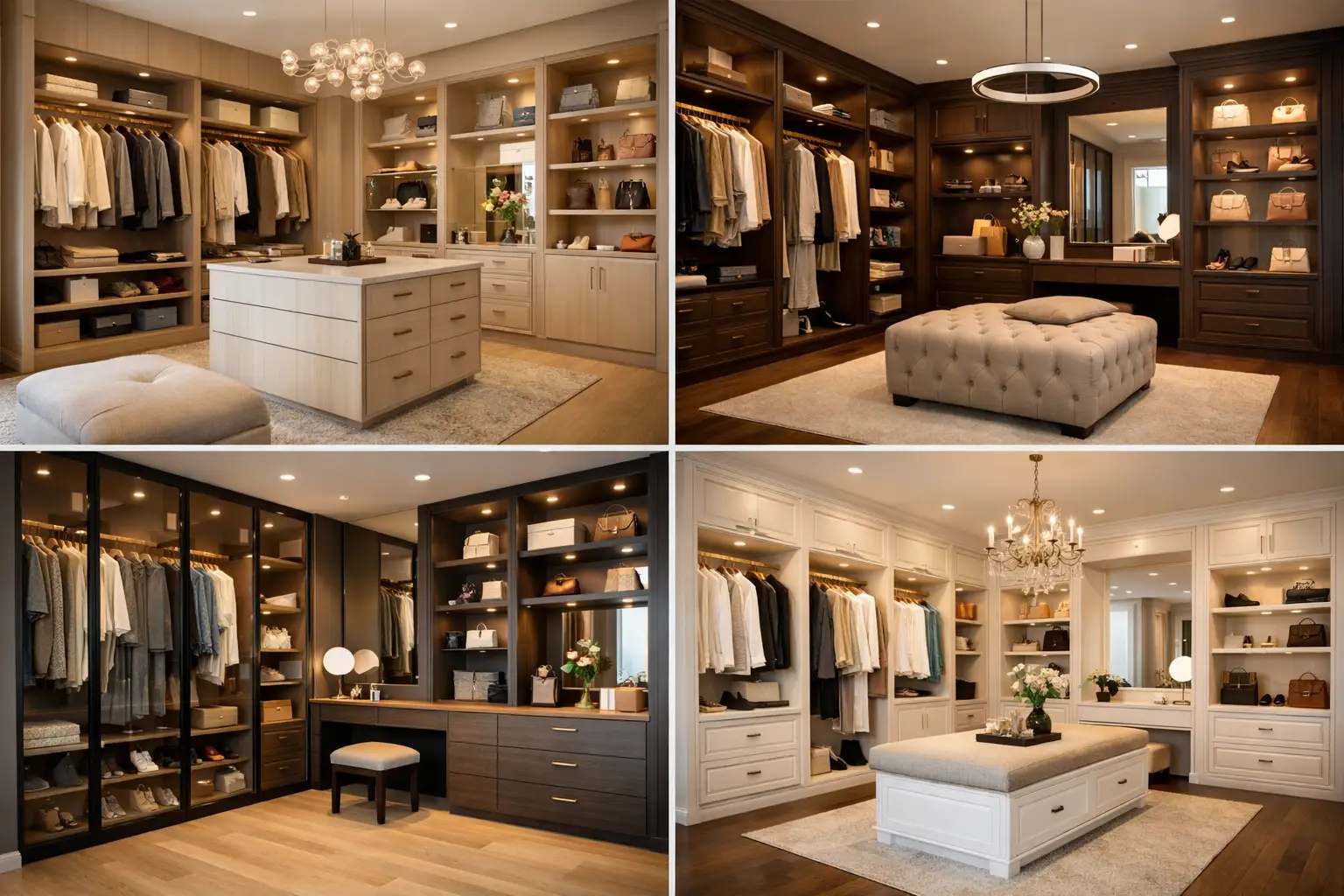
The best walk-in wardrobe designs do not begin with shelves. They begin with a daily routine. If your mornings involve opening three doors, shifting boxes off the floor and hunting for one missing shoe, the issue is rarely a lack of storage alone. It is a design problem – and good design changes how the room feels as much as how it functions.
A well-planned walk-in wardrobe should make dressing easier, protect the clothes you have invested in and bring calm to a busy bedroom suite. It should also suit the shape of your home. That matters more than most people expect, especially in period properties, loft conversions and family homes where alcoves, sloping ceilings and uneven walls can make standard furniture feel like a compromise.
What the best walk-in wardrobe designs get right
The strongest designs balance beauty with use. That sounds obvious, but many wardrobes lean too far one way. A space can look immaculate in photographs and still be frustrating to live with if rails are too high, drawers are too shallow or corners are wasted.
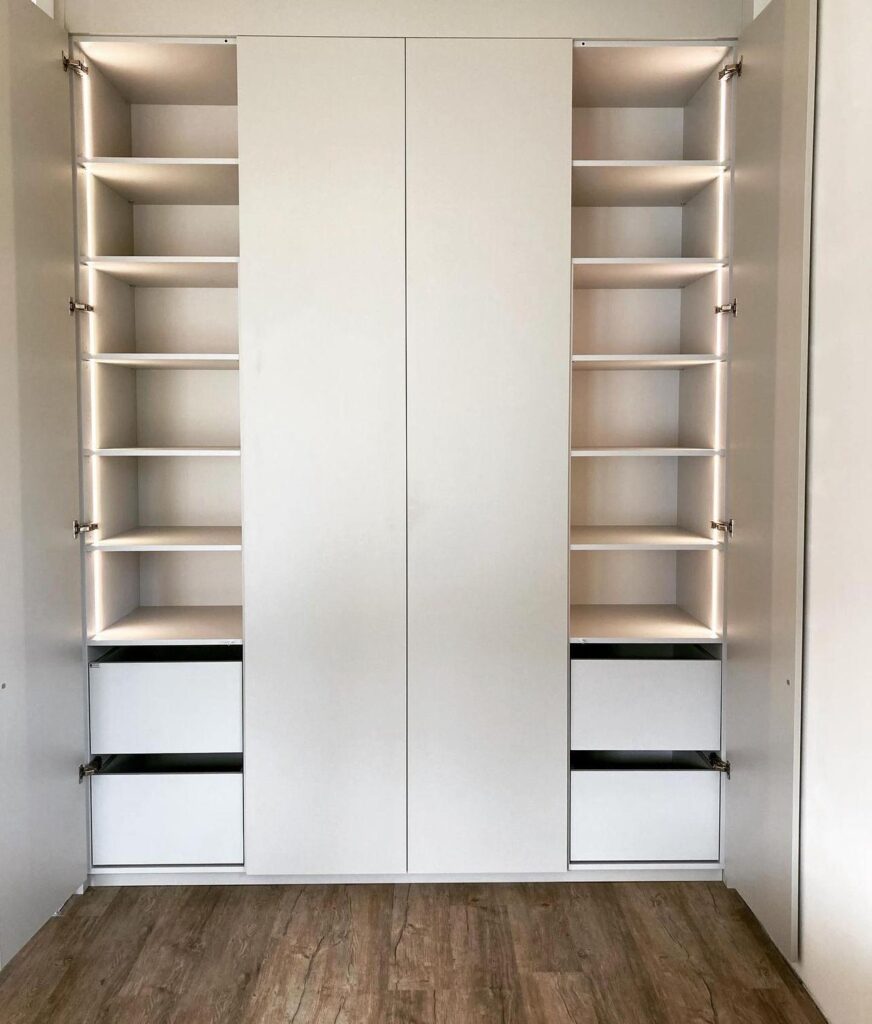
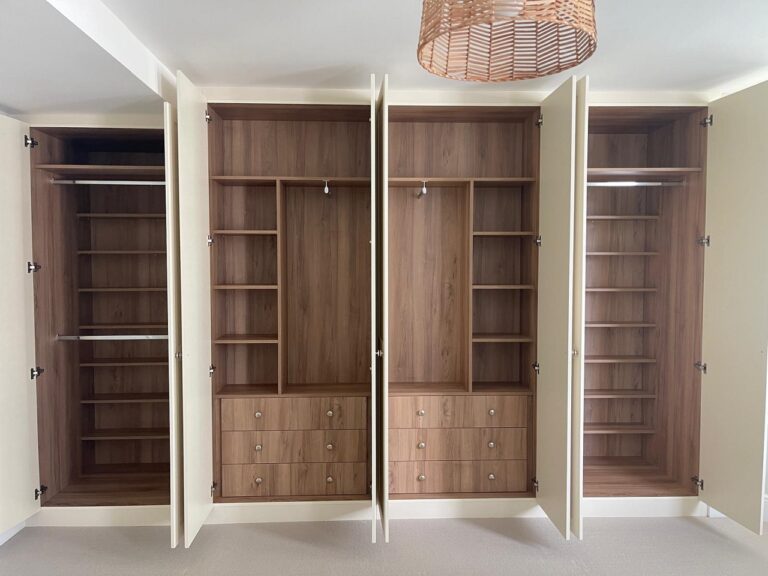
The best walk-in wardrobe designs start with zoning. Long hanging, folded knitwear, shoes, bags, jewellery and seasonal storage all need different treatment. When each category has a clear place, the room feels bigger and works harder. Bespoke fitted storage is particularly effective here because it can be built around your wardrobe, not the other way round.
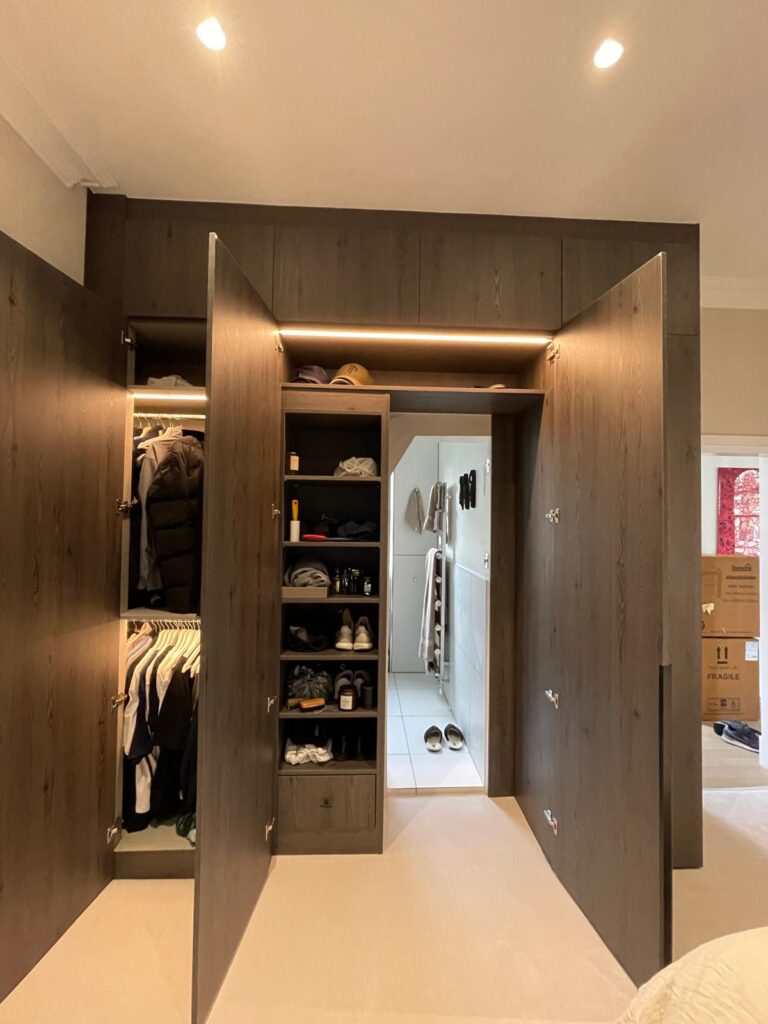
Lighting is another quiet marker of quality. In a badly lit walk-in, navy and black become the same colour and the back shelf disappears entirely. Integrated lighting inside shelving, around mirrors or beneath hanging sections gives the room a more luxurious feel while making it genuinely easier to use.
Then there is circulation. A walk-in wardrobe should never feel like a corridor packed with cupboards. You need enough space to move, open drawers fully and step back from a mirror. Even compact layouts can feel generous when the proportions are handled properly.
1. The boutique-style dressing room
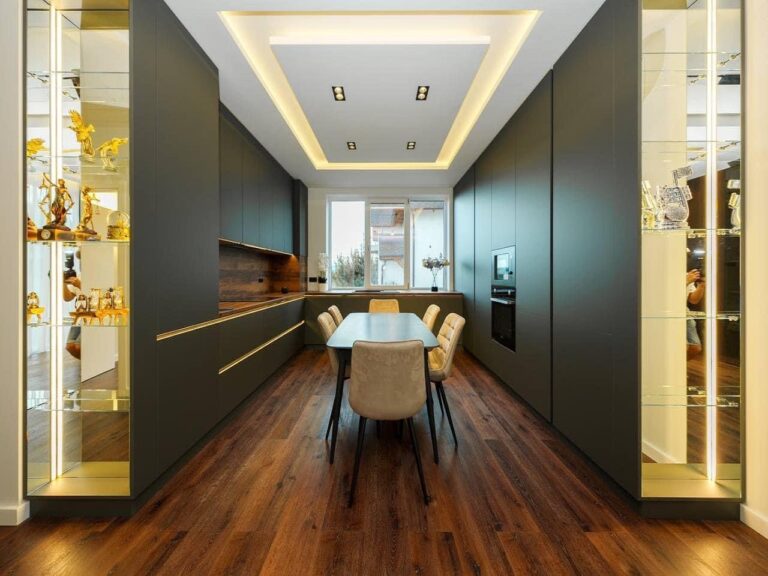
This is the design many people picture first, and for good reason. A boutique-style walk-in wardrobe uses open shelving, glazed-front drawers, elegant hanging bays and carefully placed lighting to create a polished, showroom-like finish.
It works best in a dedicated dressing room or a generous master suite where the wardrobe is part of the overall interior scheme. The appeal is not simply visual. Seeing everything at once makes outfit planning quicker, and accessories are less likely to be forgotten at the back of a cupboard.
The trade-off is that open storage demands order. If you prefer a softer, more concealed look, a mix of open and closed sections is usually the better answer.
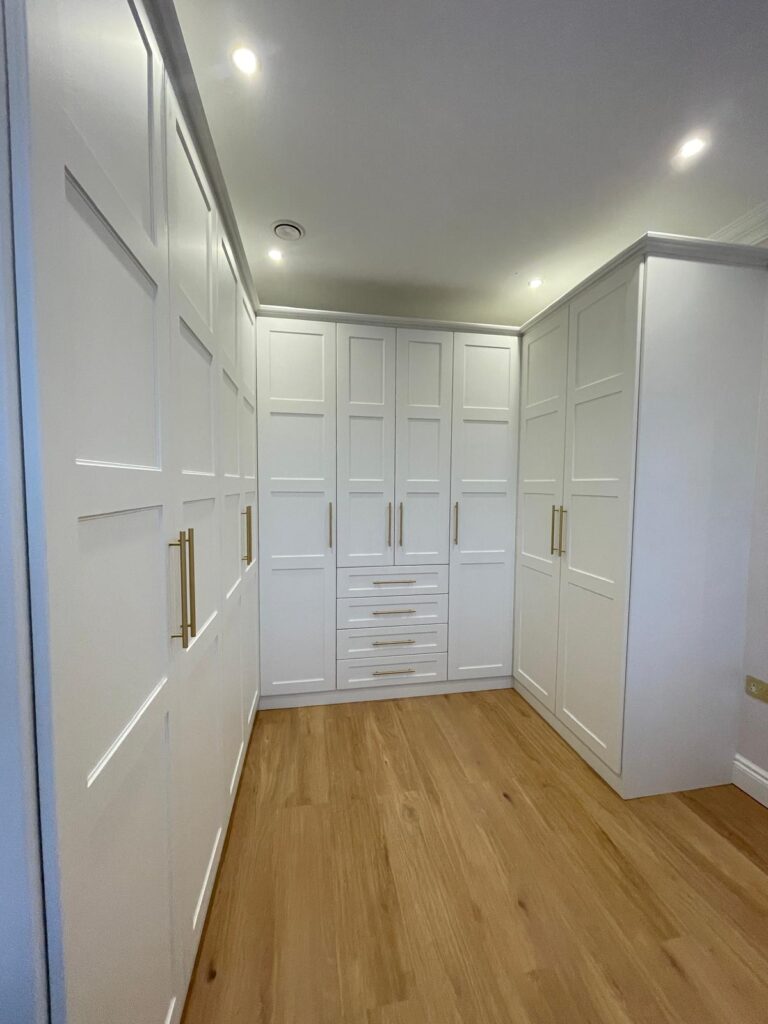
2. The U-shaped layout for maximum capacity
When clients want every inch of a room to work, a U-shaped configuration is often one of the most effective options. Storage runs across three walls, creating a compact but highly efficient envelope around the user.
This layout suits square or slightly rectangular rooms and is particularly useful where two people are sharing the space. One wall can be dedicated to long hanging, another to double hanging and drawers, and the third to shoes, folded items or display storage.
The key is keeping the centre clear. If the room is not wide enough, trying to force too much cabinetry into the design will make it feel cramped. This is where bespoke planning matters – the difference between generous and awkward can come down to a few centimetres.
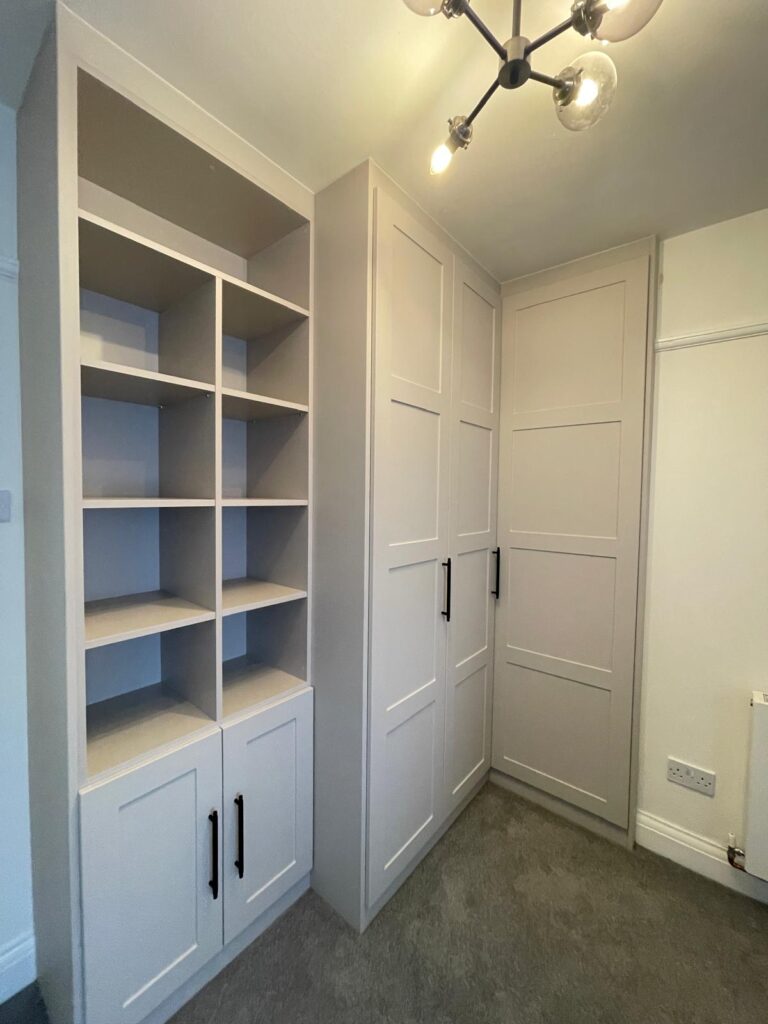
3. The L-shaped walk-in for smaller rooms
Not every walk-in wardrobe needs a separate room with sweeping floor space. Some of the best results come from compact corners of bedrooms, loft spaces or reworked box rooms.
An L-shaped design uses two adjacent walls and leaves the rest of the room more open. It is a strong choice where space is limited but the goal is still to create that walk-in feeling rather than relying on a standard fitted wardrobe run.
This layout is also useful in homes with chimney breasts, recesses or unconventional room shapes. Instead of fighting the architecture, the joinery can work around it and turn an awkward footprint into something refined and practical.
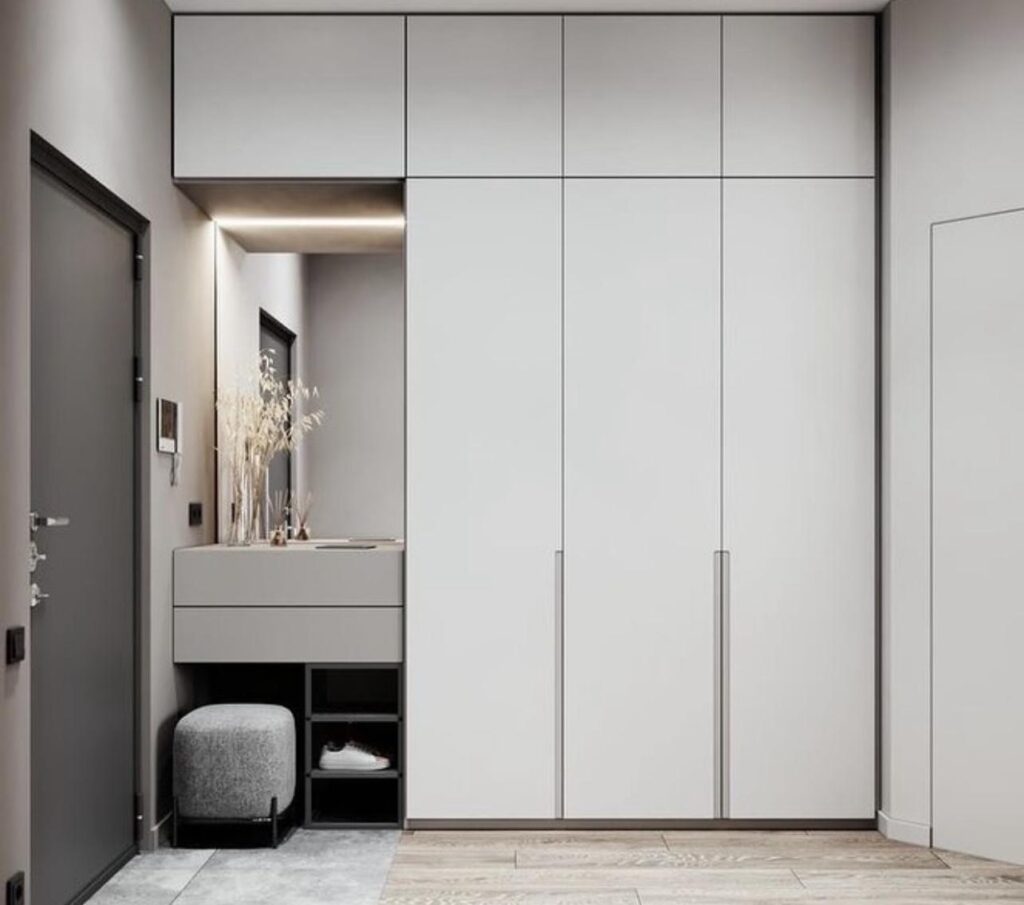
4. Floor-to-ceiling fitted storage
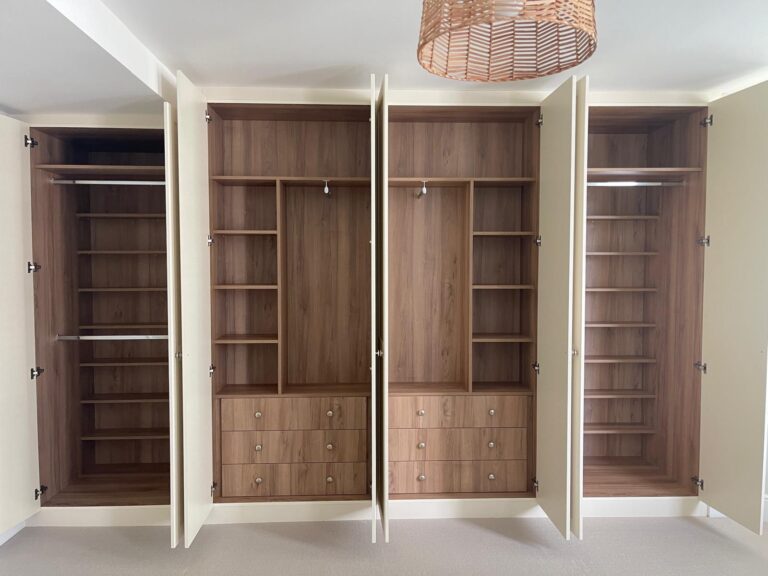
If the room has height, use it. Floor-to-ceiling cabinetry is one of the clearest differences between bespoke and freestanding storage, and it is one of the reasons fitted walk-ins feel so complete.
Upper cupboards are ideal for suitcases, occasion wear, spare bedding or off-season pieces that do not need to be reached every day. Lower and mid-level sections can then be reserved for daily essentials, which improves the overall flow of the room.
Visually, full-height cabinetry also looks cleaner. There is no dusty void above the wardrobes, no wasted strip of wall and no sense that the furniture has simply been placed in the room rather than designed for it.
5. Glass-front wardrobes with a softer edge
Glass adds lightness, especially in larger walk-ins where solid cabinetry on every wall can feel heavy. Smoked or reeded glass fronts are particularly effective because they soften what is inside rather than putting everything fully on display.
This style suits contemporary interiors but can also sit beautifully in more classic homes when paired with warm finishes and subtle detailing. It gives the room a more tailored, furniture-like character.
The practical question is maintenance. Finger marks and visual clutter are more noticeable on glass, so it works best for clients who like a tidy, curated look.
6. The island-centred dressing room
If space allows, an island can transform a walk-in wardrobe from useful to exceptional. It provides extra drawer storage, a surface for folding or laying out outfits and a natural focal point for the room.
An island makes the most sense in larger dressing areas where there is still comfortable circulation on all sides. It should never be squeezed in for effect. Proportion is everything here.
Handled well, it creates that sense of luxury people are often aiming for – not because it is extravagant, but because it makes the room easier to use and gives everything a more considered place.
7. Hidden vanity and mirror features
The best walk-in wardrobe designs often include functions that are not obvious at first glance. A pull-out mirror, a discreet dressing shelf or a built-in vanity can add a great deal without demanding much floor space.
These details are especially useful in busy bedrooms where combining dressing, storage and getting-ready space into one area makes daily life simpler. They also help the room feel personal. Good bespoke design is rarely just about storage volume. It is about shaping the room around how you actually live.
8. Shoe and accessory walls that stay organised
Shoes and accessories are often the first things to drift into disorder. They are smaller, varied in shape and easy to stash wherever there is a gap. That is exactly why dedicated storage matters.
Angled shoe shelving, divided drawers, pull-out trays and bag displays help preserve order while making favourite items easy to reach. In a shared wardrobe, these dedicated sections can also reduce friction. Everyone knows what belongs where.
The mistake to avoid is underestimating quantity. Most people own more shoes, handbags or small accessories than they think, so planning too little specialist storage usually leads to overflow elsewhere.
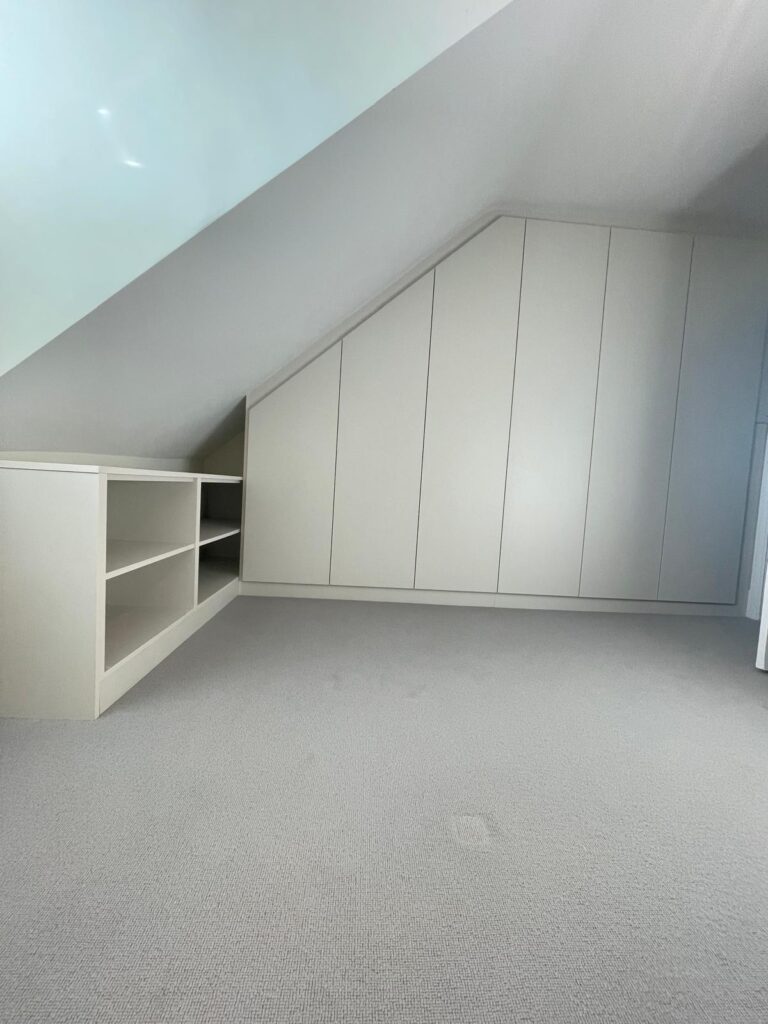
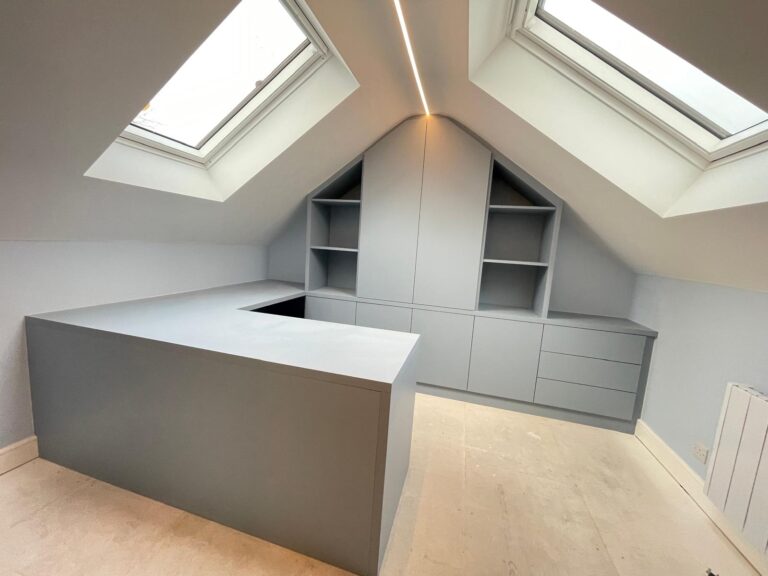
9. Walk-ins designed for awkward architecture
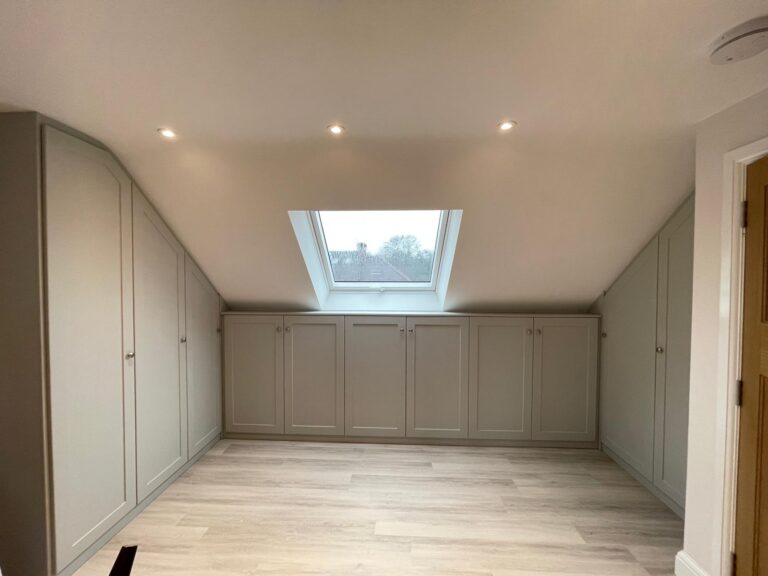
Some of the most rewarding projects come from rooms that look difficult at first. Loft eaves, sloping ceilings, alcoves and uneven walls can all make off-the-shelf furniture feel clumsy. A bespoke approach turns those constraints into design opportunities.
Low-level drawers beneath eaves, shelving built into recesses and carefully measured hanging sections can make a challenging room feel purposeful. In areas such as Richmond, Wimbledon and Chelsea, where homes often come with period quirks or unusual layouts, this approach can make far better use of the footprint than standard modular systems.
This is also where craftsmanship shows. A fitted solution should look integrated, not improvised.
10. Calm, minimal designs that hide the clutter
Not everyone wants a wardrobe that puts every item on show. For many homeowners, the ideal walk-in feels serene, pared back and visually quiet.
That usually means more closed cabinetry, fewer display sections and a restrained material palette. Soft neutral finishes, handleless drawers and concealed compartments create a calm backdrop that still works hard behind the doors.
This style is especially effective in homes where the bedroom is intended to feel restful rather than highly decorative. The result is less visual noise, with storage doing its job beautifully in the background.
How to choose the right design for your home
The right walk-in wardrobe is rarely about copying a look from a photograph. It depends on the size of the room, the architecture, how many people will use it and what needs to be stored. A couple sharing a dressing room will need a different layout from a single-user wardrobe focused on occasionwear and accessories. A family home may need more hidden storage, while a compact flat might benefit from every floor-to-ceiling trick available.
Material choice matters too. Dark finishes can feel luxurious, but they need thoughtful lighting. Open shelving can look striking, but closed storage often keeps the room calmer. An island sounds appealing, but only if the room can carry it comfortably.
This is why tailored design advice matters so much. At Finest Furniture Studio, the best results usually come from treating the wardrobe as part of the wider home rather than a standalone storage unit. When proportions, finishes and internal layouts are designed together, the room feels effortless.
A walk-in wardrobe should not just hold more. It should make the space around it feel more ordered, more elegant and much easier to live in. If a design can do that, it is doing far more than storing clothes.