
Why kids wardrobes need a different plan
Kids wardrobes are not just smaller adult wardrobes. They need to work for short reach, changing clothing sizes, uneven storage habits, and the reality that children rarely put things back in the same way twice. A good design has to balance access, durability, and future flexibility, especially if you want a fitted solution that lasts beyond one stage of childhood. For families comparing bespoke wardrobes, the strongest layouts usually solve three problems at once: keeping daily items reachable, protecting longer-term storage, and reducing clutter pressure in the bedroom.
What top-ranking articles tend to cover
The pages that rank well for kids wardrobes usually follow the same structure: they explain sizing, show storage ideas, compare fitted and freestanding options, and give a few style suggestions. Most also talk about safety, room shape, and how to make a wardrobe grow with the child. What they often miss is the operational side, such as deciding shelf heights, choosing door styles for tight rooms, or planning for a toddler-to-teen transition without rebuilding the whole unit.
How this guide is different
This guide focuses on decision-making, not just inspiration. If you are exploring kids wardrobes for a loft room, a shared bedroom, or a narrow alcove, you will get practical rules for layout, materials, and day-to-day use. The aim is to help you avoid the two most common mistakes: overbuilding storage that a child cannot use, and underplanning a wardrobe that becomes obsolete too quickly. If you want a bespoke route, visiting Finest Furniture Studio can help you compare fitted options that match the room rather than forcing the room to match the furniture.
Start with the room, not the wardrobe
The best kids wardrobes start with measurements and traffic flow. Before you think about finishes, measure ceiling height, wall return depth, skirting size, and how far the door opens into the room. In small UK bedrooms, a 10 cm difference in usable depth can determine whether you can fit hanging space, drawers, or only folded storage. If the room has a sloped ceiling, an alcove, or a boxed-out pipe chase, a fitted wardrobe often gives more usable capacity than a standard unit.
Measure for use, not just fit
A tape measure alone is not enough. Check where the child stands to dress, where toys get dropped, and whether a bedroom door or radiator limits access. A workable rule is to leave enough clear floor area for the wardrobe doors to open without blocking the main path to the bed. For sliding doors wardrobes, you trade off some instant full access for better performance in tighter rooms.
Choose storage zones by age
Kids wardrobes work better when they are split into zones. Put everyday items like school uniform, coats, and pyjamas at the easiest reach point. Store seasonal clothes higher up, and keep outgrown items in a separate upper shelf or labeled box area. This reduces the chance of a child pulling everything off one shelf just to find one jumper. A useful KPI here is access time, if a child can find and return daily items in under a minute, the wardrobe is doing its job.
Design for the current age and the next one
Toddler storage and teen storage are not the same problem. For younger children, lower hanging rails and open cubbies matter more than deep drawers. For older children, uniform storage, laundry separation, and space for longer items become more important. The smart move is to use adjustable internal fittings, so the wardrobe can shift from toy-heavy storage to clothes-heavy storage without replacing the shell.
What to include inside kids wardrobes
A practical internal layout usually includes one short hanging rail, two to four adjustable shelves, at least one drawer bank, and a top shelf for low-frequency items. For families with more than one child sharing storage, divided sections prevent mix-ups and reduce daily friction. If the bedroom is narrow, consider shallower drawers and vertical stacking. The trade-off is simple: more drawers improve separation, while more shelving gives better flexibility for folded items and storage boxes.
Hanging space, shelves, and drawers
Hanging space is most useful for school uniforms, dresses, coats, and outfits that need to stay crease-free. Shelves suit knitwear, sports kit, and spare bedding, but they work best when the shelf height matches the way items are actually folded. Drawers are the best choice for socks, underwear, and small accessories, but they add cost and hardware complexity. If budget is tight, prioritize one drawer stack and more adjustable shelving rather than filling the unit with drawers that may not be used every day.
Safety and durability matter more in children’s rooms
Safety is not an optional extra in kids wardrobes. Rounded edges, stable fixings, soft-close hinges, and anti-tip installation matter because children lean, climb, and pull on furniture more than adults do. In practical terms, a fitted wardrobe should feel solid when a child closes the door with force. A 10-year warranty only matters if the installation and materials are robust enough to support it, so check how the unit is anchored and what hardware is included.
Materials and finishes that hold up
For children’s rooms, wipe-clean finishes usually outperform delicate surfaces. Matt laminates and durable painted panels are easier to maintain than very high-gloss fronts that show fingerprints and scuffs. Light tones can make small rooms feel larger, but they also show marks faster near handles and lower panels. The trade-off is between visual softness and maintenance effort, so choose based on the child’s age and the amount of daily wear the room gets.
Make the wardrobe grow with the child
The best kids wardrobes are built for change. Adjustable rails, movable shelving, and modular drawer packs make it possible to convert the inside as clothing sizes change. That is especially useful in fitted furniture, where the outer carcass can stay fixed while the interior evolves. If you are planning for long-term value, think in three phases: early years, school age, and teen years. Each phase changes the ratio of hanging, folded, and hidden storage.
A simple planning rule for flexibility
Keep at least one third of the internal layout adjustable. That gives you room to respond when uniforms become longer, hobbies require more storage, or toys gradually disappear from the room. If a wardrobe is built with everything fixed at one height, it can feel perfect for six months and awkward for the next five years. Flexibility is one of the strongest reasons families choose bespoke wardrobes over cheap one-size-fits-all units.
Mini-case: a shared bedroom with changing needs
One family with two children sharing a medium-sized bedroom needed storage that could handle school clothes, sports kit, and seasonal bedding. Their original freestanding units wasted corner space and created a daily sorting problem. After moving to a fitted layout with split sections, a short hanging rail, and top storage for out-of-season items, the room gained clearer zoning and reduced morning clutter. The measurable outcome, based on their own tracking, was about 15 minutes less tidying each week and far fewer lost uniform items.
Mini-case: a loft room with awkward angles
A loft bedroom with sloped ceilings often exposes the weakness of off-the-shelf wardrobes. In one typical setup, the usable wall height dropped too quickly for a standard unit, leaving dead space above and limited hanging room below. A fitted solution used the lower height for clothing storage and pushed deep upper storage into the tallest section. The main gain was not just appearance, but usable volume, which is often the deciding factor in loft wardrobes and sloped cupboards.
Doors, access, and room flow
Door choice changes how the room functions every day. Hinged doors give full access to the wardrobe interior, which is useful when you want children to see everything at once. Sliding doors are better when floor space is tight, but they hide half the contents at any moment. For kids wardrobes in smaller bedrooms, the decision often comes down to access versus clearance. If two children share a room, the ability to open doors without blocking each other is usually worth more than a slightly larger visual opening.
When sliding doors make sense
Sliding doors wardrobes work well if the bed, radiator, or desk sits close to the storage wall. They are also a smart choice when you want a calmer visual line across a small room. The limitation is straightforward: you cannot open the full width at once, so shelf planning must be cleaner and more organized. If the wardrobe will hold lots of small items, add internal labeling or consistent basket sizes to prevent the hidden-side chaos that sliding systems can create.
Built-in features that improve daily use
Useful extras are the ones that reduce friction. Pull-out hampers, low-level hooks, internal mirrors set safely inside the door, and mixed-height compartments make kids wardrobes easier to use without constant parent intervention. For built-in cupboard layouts, think in actions: hang, fold, grab, drop, and sort. If a feature does not support one of those actions, it may be decorative rather than functional. That keeps budgets focused on practical storage instead of features children will ignore.
How to brief a bespoke designer
A good brief saves redesign time. Start with the room measurements, list everything the wardrobe must store, and rank items by frequency of use. Add notes about the child’s age, any shared storage needs, and whether the room has awkward angles or a sloped ceiling. If you are speaking to a fitted furniture specialist, mention your target installation window as well. With a company such as Finest Furniture Studio, this kind of detail helps turn kids wardrobes from a generic furniture purchase into a room-specific storage plan.
What to ask before you order
Ask how installation is handled, what the warranty covers, and whether the design allows later reconfiguration. Also confirm the lead time and fitting schedule, because families often need wardrobes installed around school terms or room redecorating. If the supplier mentions a 7 to 10 day fitting window, check what that covers from final sign-off to completion. That detail matters when you are coordinating paint, flooring, or moving between bedrooms.
Quick Takeaways
Kids wardrobes should be designed around reach, room flow, and changing age needs, not just around size. Fitted storage often beats freestanding units in awkward bedrooms because it captures more usable space. Adjustable rails and shelves extend the life of the wardrobe, while soft-close hardware and secure fixing improve safety. Sliding doors are useful in tight rooms, but hinged doors give faster access. The best results come from planning the interior zones before choosing the outside finish.
Custom image concepts for this article
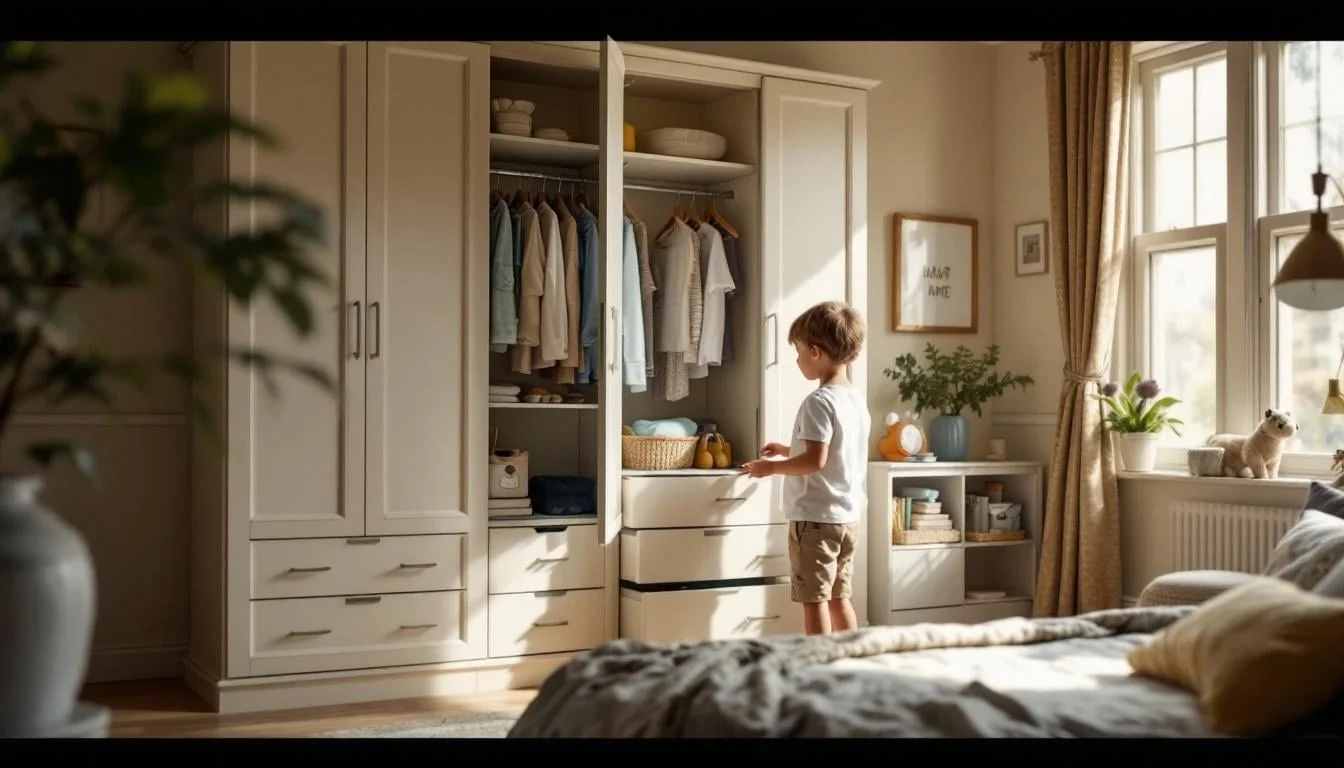
One image could show a child’s bedroom corner with a fitted wardrobe, soft natural daylight, and a parent’s hand reaching toward a low hanging rail, emphasizing practical access. Another could show the inside of an open wardrobe with neatly arranged clothes, baskets, and adjustable shelves, photographed from a believable side angle with no readable labels. A third could depict a loft room with a sloped ceiling and a bespoke wardrobe that fits the angle cleanly, highlighting the advantage of tailored storage in difficult spaces.
Conclusion
Well-planned kids wardrobes do more than store clothes. They reduce clutter, make mornings easier, and give a bedroom storage system that can adapt as a child grows. The strongest designs start with the room shape, then match the interior layout to the way the child actually uses clothes, shoes, school items, and seasonal storage. That is where bespoke wardrobes usually outperform generic furniture, especially in loft rooms, alcoves, or shared bedrooms. If you are planning a fitted solution, use the room measurements, storage list, and age-based zones as your starting point, then compare how much of the layout can still work two or three years from now. For more traffic-ready inspiration and practical design ideas, visit Bespoke Wardobes Lomdon through Finest Furniture Studio and review what fits your space best. If this guide helped, share it with someone planning a child’s room and let us know which wardrobe challenge you want solved next.
Frequently Asked Questions
What makes kids wardrobes different from standard wardrobes?
Kids wardrobes need lower access points, safer fittings, and more adaptable storage than standard adult wardrobes. They should support short hanging rails, mixed shelf heights, and space for school uniforms, toys, and seasonal items without feeling overcrowded.
Are fitted kids wardrobes better than freestanding units?
Fitted kids wardrobes are usually better for awkward rooms, loft spaces, and alcoves because they use wall height and corner space more efficiently. Freestanding units can work well in larger rooms, but they often leave dead space above and beside the wardrobe.
What should be inside kids wardrobes for everyday use?
A practical layout usually includes one short hanging rail, adjustable shelves, drawers for small items, and a top shelf for less-used storage. That combination supports kids wardrobe storage ideas for clothes, shoes, and bedding without creating clutter.
How do I make kids wardrobes last as my child grows?
Choose adjustable rails, movable shelves, and modular storage so the layout can shift from toddler clothes to teen clothing. This is one of the most effective bespoke wardrobe planning tips because it keeps the outer structure useful for years.
Are sliding doors a good choice for kids wardrobes?
Sliding doors wardrobes are useful in tight bedrooms where hinged doors would block walkways or furniture. The main trade-off is access, because you can only see part of the wardrobe at one time, so the internal layout needs to stay organized.
What safety features matter most in kids wardrobes?
Look for secure wall fixing, rounded edges, soft-close hinges, and durable materials that handle daily use. These details matter because children often pull on doors, lean on shelves, and move around the room quickly.
How quickly can bespoke kids wardrobes be fitted?
Fit times depend on the design and room conditions, but some suppliers mention a 7 to 10 day fitting window. Always confirm whether that includes final sign-off, delivery, and installation so you can plan around decorating or school schedules.

