
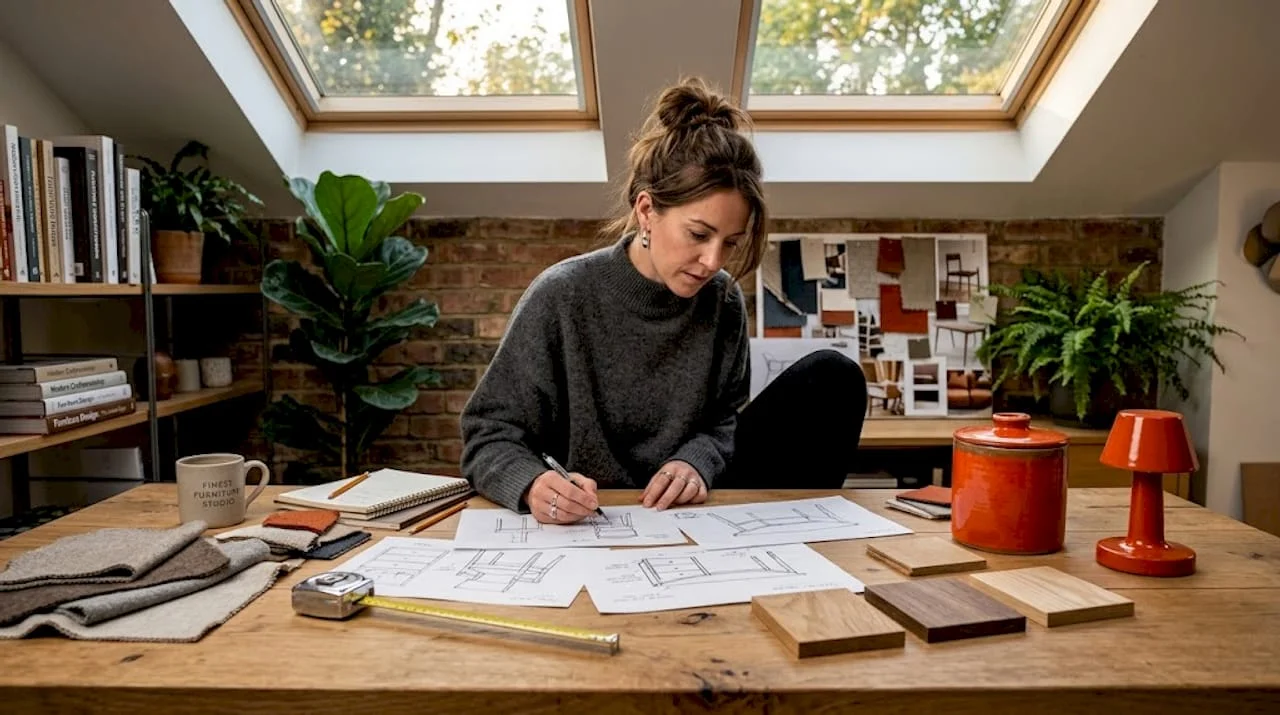
Commissioning bespoke furniture is one of the most rewarding decisions you can make for your home, but the custom furniture design process can feel genuinely daunting if you have never done it before. Long lead times, unfamiliar terminology, and a seemingly endless list of material choices leave many West London homeowners unsure where to begin. Whether you are planning a fitted wardrobe in Richmond, a built-in library in Chelsea, or a bespoke storage unit for an awkward under-stairs alcove in Putney, this guide breaks the entire process into clear, manageable steps. Follow it and you will arrive at your finished piece with confidence, not regret.
Table of Contents
- Understanding your needs and setting your vision
- Measuring and planning for precision fit
- Selecting materials, joinery and finishes
- Understanding the timeline and managing expectations
- Installation and care for lasting beauty
- Why careful design process beats quick fixes for bespoke furniture
- Explore bespoke furniture design and craftsmanship with Finest Furniture Studio
- Frequently asked questions
Key Takeaways
| Point | Details |
|---|---|
| Clear vision matters | Defining your needs, style, and usage upfront ensures furniture that fits your lifestyle and space. |
| Accurate measuring | Measure multiple points and plan for wall irregularities to guarantee a perfect fit. |
| Material choice impacts cost | Select materials and joinery balancing aesthetics, durability, and budget. |
| Expect lead times | Bespoke furniture typically requires 9-16 weeks, so plan accordingly. |
| Proper care preserves beauty | Follow delivery and maintenance advice to keep your furniture looking its best for years. |
Understanding your needs and setting your vision
The most important stage of the custom furniture design process happens before anyone picks up a pencil or opens a design programme. It is the stage where you define exactly what you need, how you want it to feel, and what role the piece will play in your daily life.
Custom furniture design starts by defining the piece’s place in the room, its usage, and your style preferences. That sounds obvious, but most homeowners skip straight to aesthetics without first answering the functional questions. Will this wardrobe hold bulky winter coats or mostly folded knitwear? Does the shelving unit need to display objects or purely store them out of sight? Is this a family kitchen with heavy daily use, or a guest bedroom that sees light traffic? Your answers shape every decision that follows.
Style is equally important to get right early. Consider whether your home leans towards modern and minimalist, warm mid-century, or something more architectural and traditional. Initial consultations consider room light, architecture, and palette beyond measurements to capture your emotional desires for the space. A north-facing room in Barnes, for example, benefits from lighter timber tones and open shelving that reflects available light, while a south-facing drawing room in Fulham can carry richer, darker finishes without feeling heavy.
Before your first furniture design consultation, prepare the following:
- A shortlist of inspiration images from magazines, social media, or showrooms
- A clear list of must-haves (for example, internal lighting, pull-out drawers, or a specific height)
- A list of things you actively dislike, which is often just as useful
- Notes on any architectural features: alcoves, chimney breasts, sloped ceilings, or period cornicing
- Photographs of the room taken in both natural and artificial light
Bringing inspiration photos, usage details, and physical samples aids accurate decision-making and helps your designer translate a mood into a workable brief. The more specific you are, the less room there is for misunderstanding.
Pro Tip: Do not just save images of furniture you love. Save images of rooms that make you feel the way you want your finished space to feel. That emotional reference is often more useful to a designer than a picture of a specific wardrobe door style.
Measuring and planning for precision fit
With a clear vision established, the next critical step in the bespoke furniture creation process is measuring your space with genuine precision. Off-the-shelf furniture assumes your walls are square, your floors are level, and your ceiling is flat. In most West London period properties, none of those things are true.
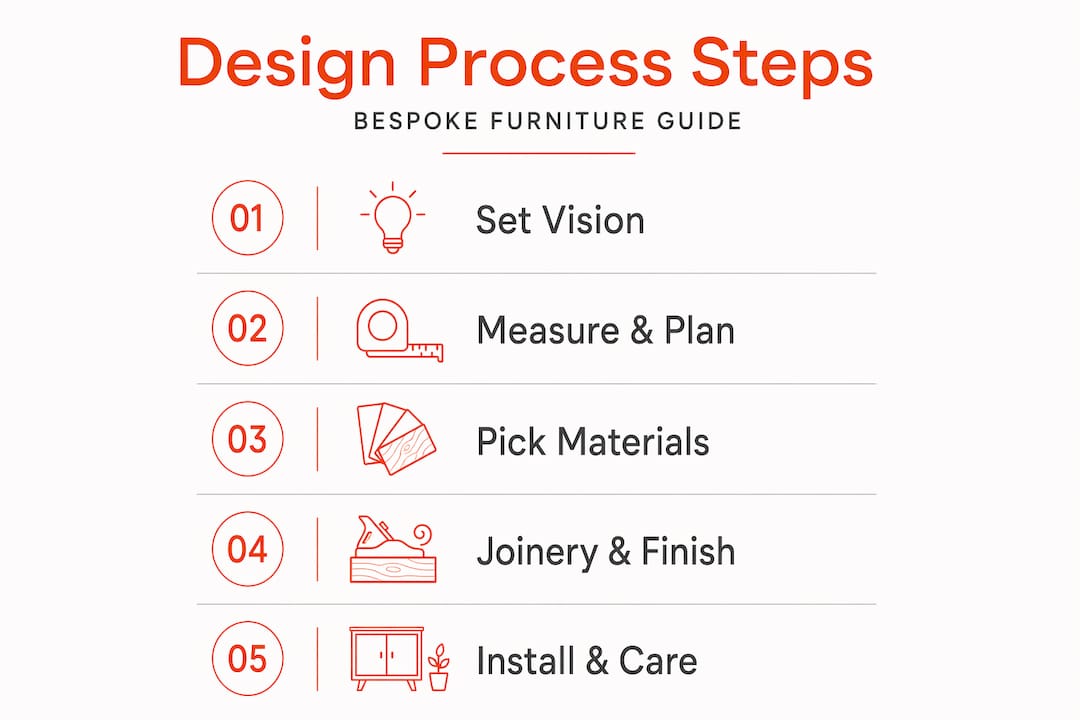
Measure walls at multiple points and use the smallest dimensions to allow for out-of-square conditions. This means measuring the width at the top, middle, and bottom of the opening, and doing the same for height on both the left and right sides. The difference between the largest and smallest measurement tells you how much scribing or packing your joiner will need to account for.
Follow these steps for a thorough site survey:
- Measure width and height at three points each. Record all six measurements and note the smallest of each.
- Identify and measure all baseboards. Decide whether you want the furniture to sit above them or whether they will be removed and the wall made good.
- Check for ceiling slopes or coving. A sloped ceiling in a Chiswick loft conversion requires a custom top detail that must be planned from the outset.
- Note the position of sockets, switches, and radiators. These affect placement and may require an electrician before installation.
- Mark the position of any structural elements such as steel beams or load-bearing walls that cannot be altered.
- Photograph everything from multiple angles with a tape measure in shot for reference.
Plan shelf spans carefully: 32 to 36 inches is the maximum recommended span for three-quarter-inch plywood before sagging becomes a risk, and additional supports or thicker material should be specified for longer runs.
The table below gives a quick reference for shelf depth by intended use:
| Use | Recommended depth |
|---|---|
| Books (paperback) | 20 to 25 cm |
| Books (hardback/coffee table) | 25 to 30 cm |
| Media and AV equipment | 40 to 50 cm |
| Folded clothing | 45 to 55 cm |
| Hanging clothing | 55 to 60 cm |
| Display objects | 20 to 35 cm |
Pro Tip: Always measure in millimetres rather than centimetres or inches. Bespoke joinery is specified in millimetres, and rounding to the nearest centimetre can introduce errors that compound across a large run of fitted units.
Selecting materials, joinery and finishes
Having planned sizing and layout, the next stage of the custom furniture workflow is choosing the materials and joinery details that will define the quality, character, and longevity of your piece.
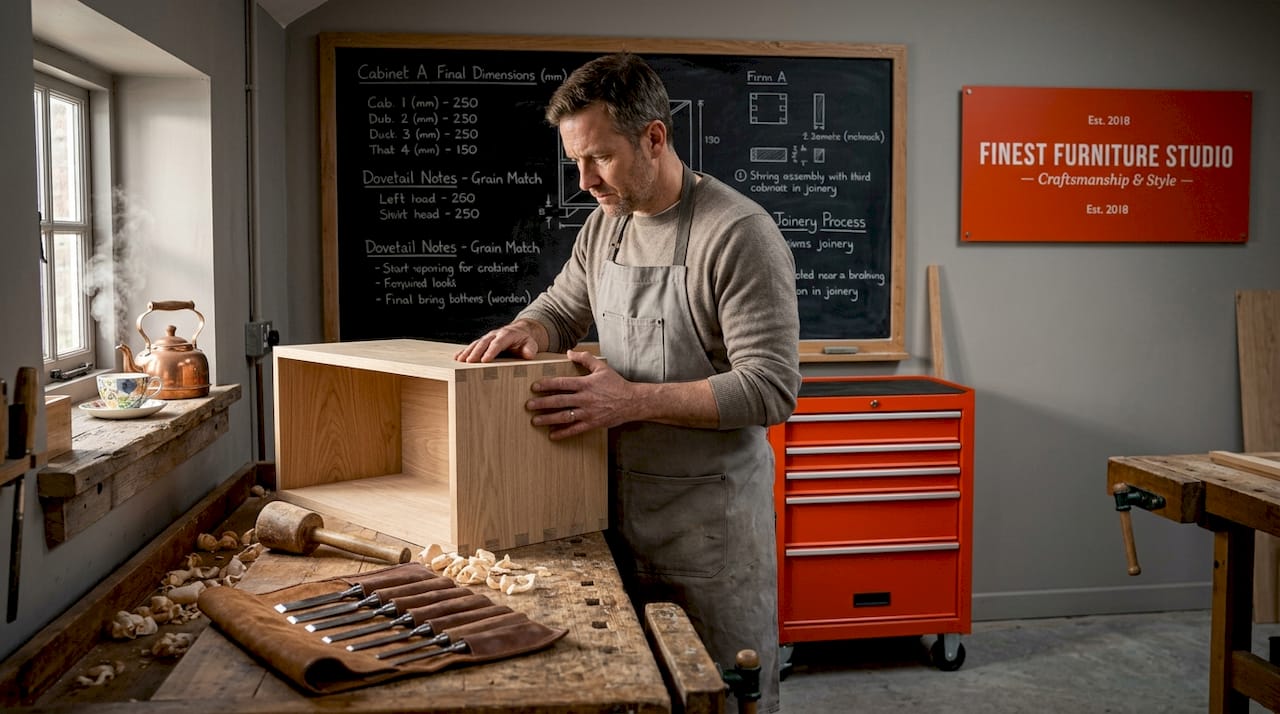
The material choice is where the cost range becomes significant. Bespoke joinery costs range widely depending on materials, with painted MDF starting at approximately £1,200 per linear metre and luxury timbers costing upwards of £6,000 per linear metre. For most West London homeowners, the sweet spot sits somewhere between the two: a painted MDF carcass with solid timber fronts and details delivers a premium look at a more manageable price point.
Here is a breakdown of the main material options:
- Painted MDF: Smooth, consistent finish. Ideal for modern and Shaker-style pieces. Susceptible to moisture in bathrooms if not correctly sealed.
- Solid oak: Warm, characterful grain. Ages beautifully. Suitable for kitchens, studies, and living rooms. Heavier and more expensive than MDF.
- Solid walnut: Rich, dark tones. Considered a luxury choice. Works particularly well in home offices and master bedrooms.
- Birch plywood: Stronger than MDF for carcass construction. Takes paint and stain well. Often used in Scandinavian-influenced designs.
- Veneered board: A cost-effective way to achieve the look of solid timber with greater dimensional stability.
Joinery technique is equally important. Complex joinery such as mortise and tenon adds structural strength but increases both time and cost compared to simpler dowel or pocket-screw methods. For furniture that will be used heavily, such as a kitchen dresser or a wardrobe in a family home in Wimbledon, investing in stronger joinery pays dividends over a decade of daily use. For a display cabinet in a guest room, dowel joinery may be entirely sufficient.
| Joinery type | Strength | Cost | Best use |
|---|---|---|---|
| Pocket screws | Moderate | Low | Carcass construction |
| Dowels | Good | Low to medium | Shelving, cabinets |
| Mortise and tenon | Excellent | High | Doors, frames, tables |
| Dovetails | Excellent | High | Drawer boxes, heirloom pieces |
Finish choices include lacquer (durable and easy to clean), oil (enhances natural grain, requires periodic reapplication), painted (versatile, can be colour-matched to any palette), and stained (preserves grain while altering tone). For homes with children or pets in areas like Ealing or Twickenham, a hard lacquer finish on frequently touched surfaces is worth the additional cost.
Pro Tip: When selecting suitable woods and finishes, always request a physical sample board in your own lighting conditions before approving. Colours and grain patterns look entirely different under a showroom’s spotlights compared to the natural light in your home.
Understanding the timeline and managing expectations
With your design and materials selected, understanding the timeline is essential to planning your project without unnecessary stress. The custom furniture project workflow follows a clear sequence, but each stage takes time, and rushing any part of it compromises the result.
Most bespoke furniture takes 9 to 14 weeks from order to delivery, with larger or more complex pieces sometimes requiring 14 to 16 weeks or more. For a homeowner in Kingston planning a full walk-in wardrobe, or someone in Hammersmith commissioning a fitted library wall, that timeline is not a delay. It is the time required to do the work properly.
The typical workflow for premium furniture projects runs as follows:
- Initial consultation (Week 1 to 2). Discuss your vision, take measurements, and agree on the design direction. This stage may involve one or two meetings.
- Design development (Week 2 to 4). Your designer produces detailed drawings and a specification document for your approval.
- Material selection and pricing (Week 3 to 5). Samples are reviewed, final choices confirmed, and a fixed price agreed.
- Workshop build phase (Week 5 to 10). The build phase typically lasts approximately one month for most standard pieces, during which your furniture is handcrafted to specification.
- Quality check and finishing (Week 10 to 12). The piece is inspected, finished, and prepared for delivery.
- Delivery and installation (Week 12 to 14+). Your furniture arrives and is installed by the team that built it.
“The lead time is not wasted time. Every week in the workshop is a week of skilled hands working on something made specifically for you, in a way that a factory-produced piece simply cannot replicate.”
Factors that can extend lead times include unusual material specifications, bespoke hardware sourcing, and busy workshop schedules during peak periods such as autumn and early spring. Communicate regularly with your maker throughout the process and agree on a schedule of update calls or emails from the outset.
Installation and care for lasting beauty
After building your perfect piece, successful installation and ongoing care ensure it remains a stunning feature of your home for years to come.
Delivery involves a white-glove service with protective packaging and careful placement, coordinated in advance to suit your schedule. Before the installation date, prepare your space by clearing the area completely, protecting flooring with dust sheets or boards, and confirming that any electrical or plumbing work required has already been completed. A wardrobe installation in a Barnes townhouse, for example, may require an electrician to move a socket before the units can be fitted flush to the wall.
Good installation practice includes:
- Confirming wall fixings in advance. Solid plasterboard fixings differ from those needed for masonry or timber-framed walls.
- Checking floor levelness. Shimming and scribing may be required to achieve a perfect plumb and level fit.
- Inspecting every component on delivery before the team leaves, noting any marks or damage in writing.
- Requesting care instructions specific to your materials and finish type before the installers depart.
Proper care includes placement advice, cleaning instructions, and protection from direct sunlight and moisture. Solid timber furniture in particular responds to changes in humidity, so avoid placing it directly against external walls without adequate insulation, and use a humidifier in winter if your home runs particularly dry. For lacquered or painted surfaces, a slightly damp microfibre cloth is all you need for routine cleaning. Avoid abrasive products entirely.
Pro Tip: Apply a small amount of beeswax or specialist furniture wax to the inside edges of drawers twice a year. It keeps them running smoothly and protects the timber from the friction and humidity that cause sticking over time.
Why careful design process beats quick fixes for bespoke furniture
There is a temptation, particularly when lead times stretch beyond three months, to wonder whether a high-quality off-the-shelf alternative might do the job just as well. In our experience, that question usually disappears the moment a client sees their finished piece installed.
Thoughtful handcrafting and proportional design create timeless pieces that endure precisely because they were designed for a specific room, a specific person, and a specific way of living. A wardrobe that reaches exactly to the ceiling in a Fulham flat, with no awkward gap collecting dust, looks fundamentally different from one that stops 20 centimetres short. That detail is only possible through the custom furniture design process.
Custom joinery designed alongside home architecture creates a cohesion that ready-made furniture simply cannot achieve. When a fitted bookcase in a period Chiswick home picks up the proportions of the existing cornicing, or a kitchen dresser in Wimbledon mirrors the height of the original Victorian picture rail, the result feels as though it has always been there. That sense of belonging is not accidental. It is the direct result of a thorough, unhurried design process.
We also think it is worth addressing the cost question honestly. Bespoke furniture costs more upfront than flat-pack alternatives. But it is not a fair comparison. A well-made fitted wardrobe with a 10-year guarantee, built from quality materials and installed by the people who made it, adds measurable value to a West London property. Estate agents in areas like Richmond and Chelsea consistently note that quality fitted storage is a selling point, not a neutral feature. The investment is not just in the furniture. It is in the home itself.
The clients who get the most from the bespoke furniture design philosophy are those who engage deeply at every stage: who bring considered inspiration, who take time over material choices, and who trust the process rather than rushing it. The result, without exception, is furniture they are still proud of a decade later.
Explore bespoke furniture design and craftsmanship with Finest Furniture Studio
If you are ready to bring your custom furniture vision to life, working with a studio that understands West London homes makes all the difference. From initial brief to final installation, the right partner keeps your project on time, on budget, and exactly as you imagined it.
At Finest Furniture Studio, we specialise in tailored design consultations for homeowners across Richmond, Chelsea, Putney, Wimbledon, Chiswick, and beyond. Our team handles everything from precise site surveys and material sourcing to precision installation and post-installation care advice. We offer transparent, fixed pricing, managed timelines, and a 10-year guarantee on every piece we produce. Whether you are planning a fitted wardrobe, a bespoke shelving wall, or a complete home office, we would love to show you what is possible. Get in touch to book your consultation and take the first step towards furniture that truly belongs in your home.
Frequently asked questions
How long does it typically take to receive bespoke furniture after ordering?
Bespoke furniture orders usually take between 9 and 14 weeks from confirmation to delivery, with larger or more complex pieces sometimes requiring up to 16 weeks. Planning your project well in advance of any move-in date or renovation deadline is strongly advisable.
What factors most influence the cost of custom furniture in London?
Material choice, design complexity, joinery technique, and finish quality are the primary drivers of cost. Bespoke joinery costs vary widely depending on these factors, so getting a detailed, itemised quote early in the process helps you make informed decisions about where to invest and where to simplify.
Can I commission custom furniture without visiting the workshop in person?
Yes. Many bespoke studios handle initial consultations and design approvals remotely using photographs, material samples sent by post, and detailed video calls, though a site visit is recommended for larger or more complex installations to ensure accurate measurements.
What are important considerations when measuring for built-in furniture?
Measure walls at multiple points and always work from the smallest dimension to account for walls that are out of square. Decide how you will handle baseboards, ceiling irregularities, and any architectural features before finalising your design, as these details affect both the specification and the installation method.

