





Why bookcases become a bottleneck
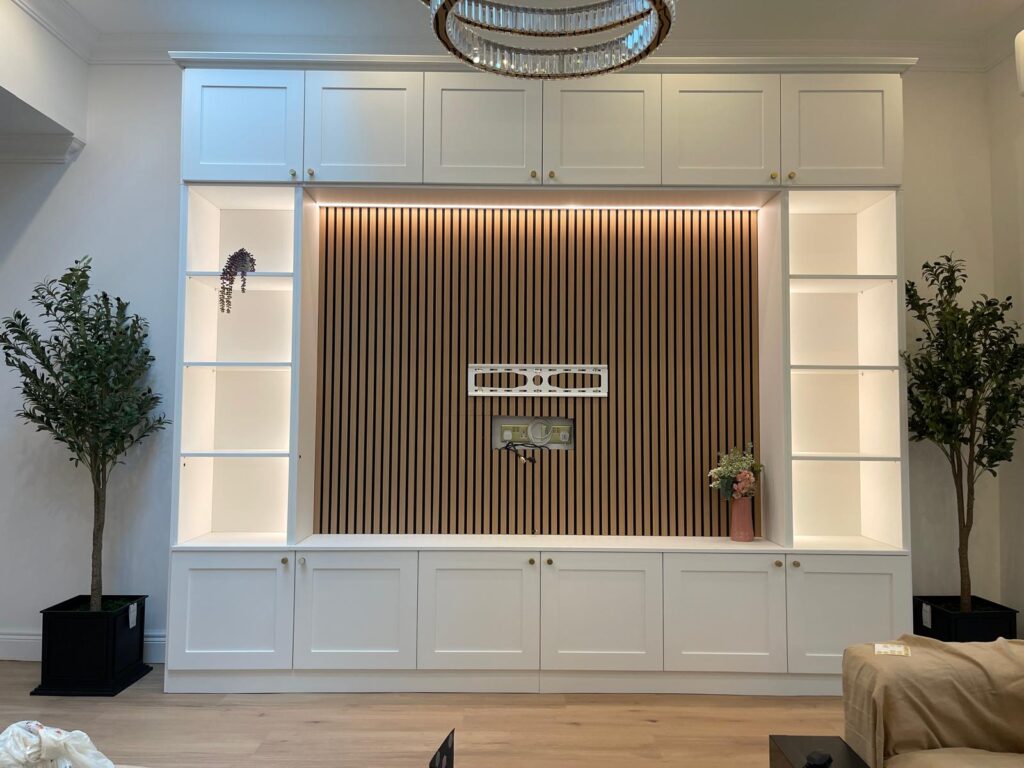
Bookcases look simple on paper, but they often slow teams down because they are treated as a filler item rather than a planning decision. In fitted interiors, that creates avoidable rework, late changes, and awkward gaps that show up only after installation starts. The fastest projects usually begin by defining how the bookcases will work with the room, not after the walls are measured. That small shift reduces delays, especially when the brief includes built-in storage, alcove cupboards, or a media wall that needs to feel intentional rather than assembled.
What top-ranking advice gets right and where it stops
Across the strongest pages on bookcases, the usual structure is clear: choose the right size, pick the right material, position shelving correctly, and avoid overcrowding. That advice is useful, but it often stops at aesthetics. For homeowners and design teams, the real issue is workflow. A bookcase that looks good but forces extra joinery, hidden gaps, or late electrical changes can add days to a job. The better approach is to treat bookcases as part of the fit-out sequence, with decisions made in the same pass as wardrobe design, alcove storage, and room circulation.
The sizing mistake that creates the most delay
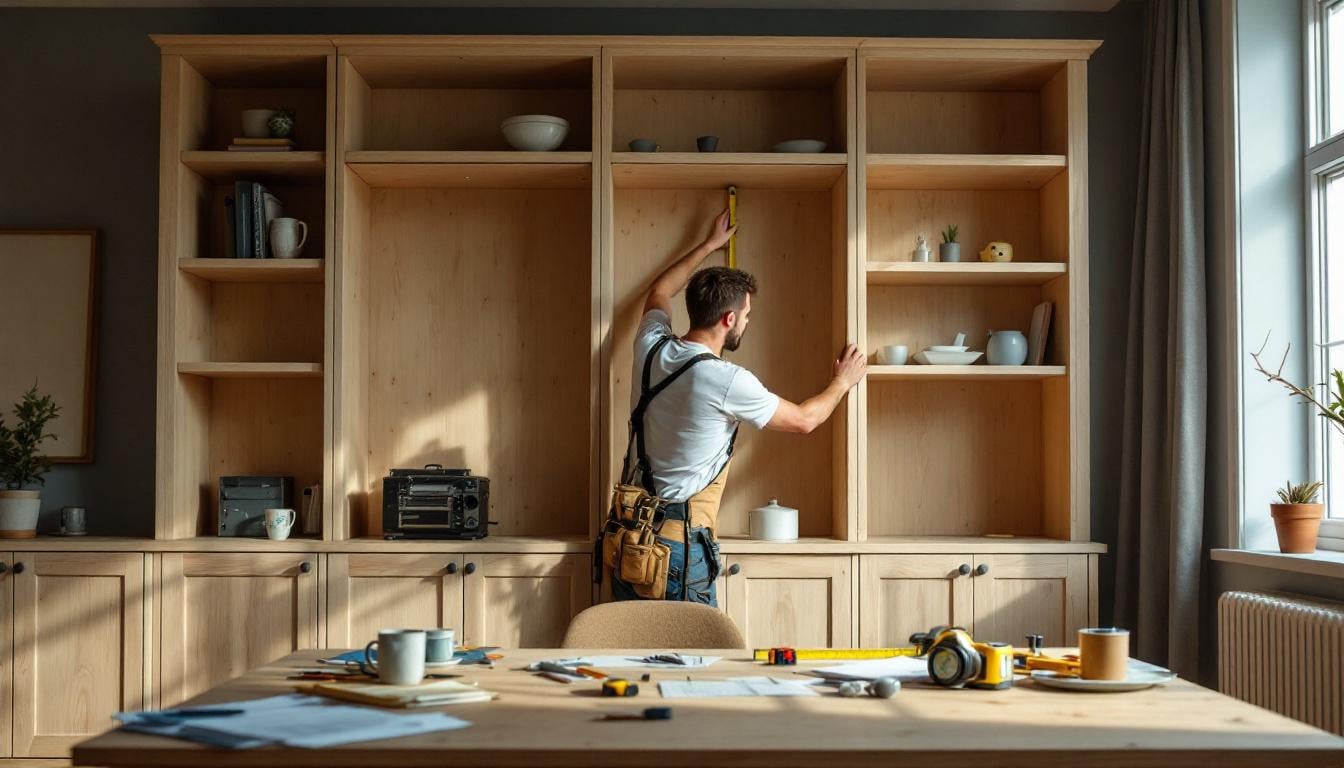
The most common mistake with bookcases is sizing them to the room after the fact, instead of sizing them to the usable wall space and the load they need to carry. A unit that is too deep can block walkways, while one that is too shallow can feel flimsy and waste vertical storage. A practical rule is to measure to finished surfaces, then allow for skirting, sockets, and door swings before the design is locked. That avoids the classic 10 to 20 mm adjustment cycle that slows installation and increases the chance of site fixes.
How to size bookcases without creating rework
Start by measuring the wall at three points, floor to ceiling, and left to right, because older homes are rarely square. Then check the usable depth after trims, radiators, and nearby furniture are factored in. For most fitted bookcases, depth should match the purpose: display use can work at around 250 to 300 mm, while mixed storage often needs more. The decision rule is simple, if the depth forces the room to feel tight, reduce it before you add compartments, because compartment count is easier to adjust than circulation space.
Shelf spacing that looks fine but performs badly
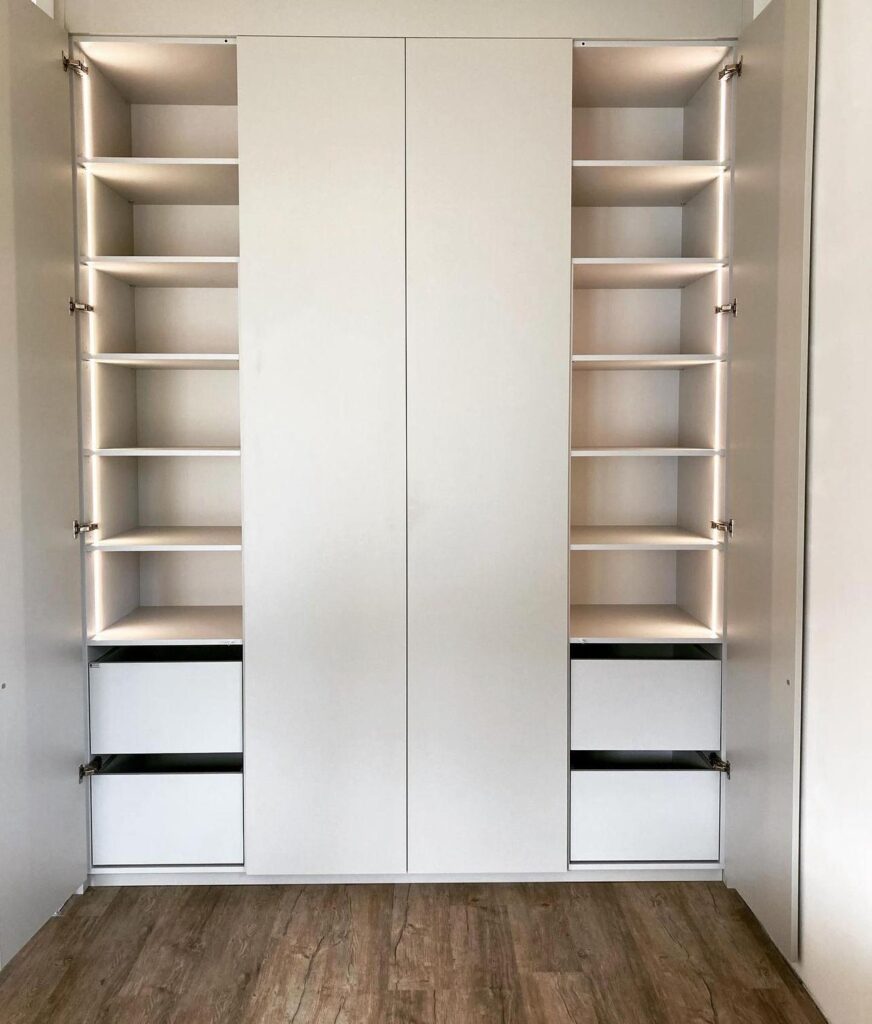
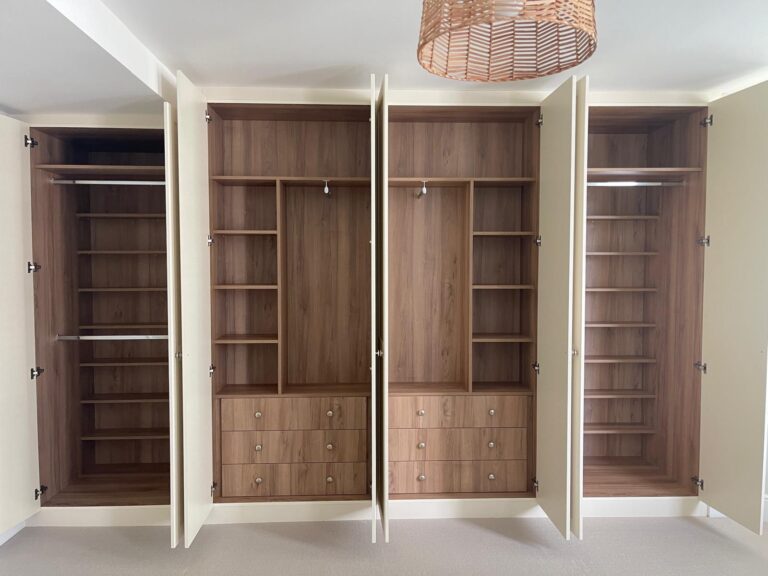
A bookcase can be visually balanced and still be poor at everyday use if shelf spacing is too rigid. Fixed gaps create dead space above paperbacks and wasted height below larger items, which is why teams end up overfilling shelves or adding extra units later. Adjustable shelving is usually the safer choice for bespoke wardrobe solutions and fitted furniture because it lets storage adapt as the household changes. The trade-off is slightly more planning up front, but that is cheaper than redesigning after the room is in use.
Set shelf heights around real objects, not assumptions
Before signing off the design, take a physical inventory of what will live in the bookcases. Measure the tallest books, display pieces, and storage boxes that matter most, then build shelf heights around those dimensions with a small allowance for fingers and easy removal. A good workflow is to group items into three bands: small, medium, and tall. This prevents the common mistake of designing all shelves to the same height, which looks tidy on a drawing but creates awkward usable space in practice.
Material choices that slow installation or speed it up
Material selection affects speed more than many buyers expect. Heavy solid timber can add visual warmth, but it may also increase lead time, handling effort, and the need for stronger fixings. In contrast, well-finished engineered boards can give a more predictable install and cleaner repeatability for fitted bookcases. The practical trade-off is between natural variation and project efficiency. If the room needs a premium statement, a mixed approach often works best, with visible sections upgraded and hidden structure simplified for faster fitting.
Choose finishes for durability and repeatability
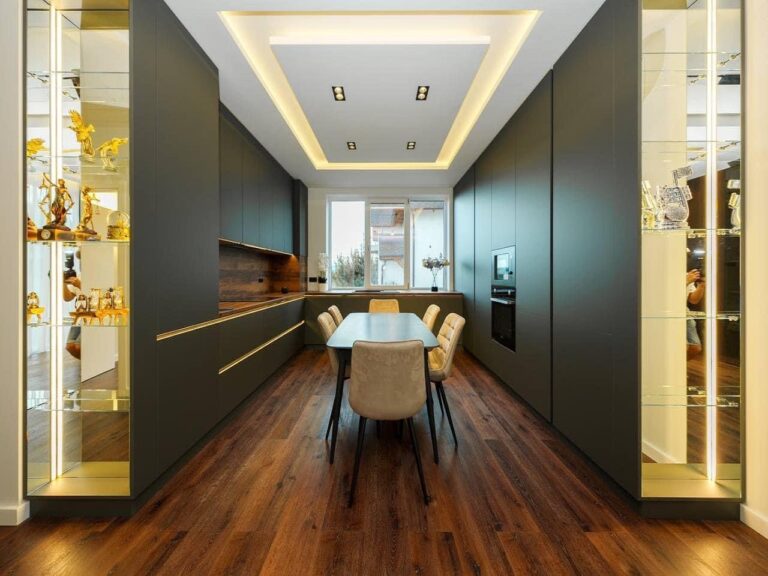
For busy homes, the finish matters as much as the core material. A hard-wearing painted finish or durable veneer can reduce touch-up work after installation and keep bookcases looking consistent when daylight changes across the room. Matte finishes often hide small marks better than high gloss, which can matter in alcoves and narrow halls where hands brush the surface. One useful decision criterion is maintenance tolerance: if the homeowner wants low-fuss storage, select a finish that hides minor wear rather than one that needs constant cleaning.
The hidden fitting problem around walls, floors, and sockets
Many delays happen because teams assume the wall is straight and the floor is level. In reality, even a well-kept room can have uneven plaster, out-of-plumb corners, and sockets that fall exactly where a shelf support was planned. That creates on-site adjustments, especially for built-in bookcases and alcove cupboards. The fix is to treat the room like a measured envelope rather than a perfect rectangle. Capture the irregularities first, then design the unit to absorb them. This is one reason fitted furniture often installs faster than freestanding pieces after the survey stage is done properly.
Use a survey checklist before cutting anything
A practical survey should record wall variation, skirting depth, ceiling height, socket position, radiator proximity, and any opening leaf or architrave conflicts. If the bookcases will sit beside a TV media wall or under a sloped ceiling, note that in the template before production starts. The rule here is simple: if the fitter discovers a conflict on site, the project loses time twice, once in diagnosis and again in adjustment. A clean survey prevents that and keeps the installation within the expected 7 to 10 day fitting window many homeowners want.
Mini-case: when a small design change removed a full day of delay
One residential project assumed floor-to-ceiling bookcases would fit a narrow wall without issue. The initial sketch looked fine, but the room had a slight floor slope and a socket cluster behind the lower left section. By reducing the base depth by a small margin and shifting one adjustable shelf bay, the fitter avoided cutting on site. The assumed outcome was a saved half-day to full day of labour, plus a cleaner finish. The lesson is that bookcases slow teams down most when the survey and the final drawing are treated as separate tasks.
Open shelving versus closed storage: choose by use, not trend
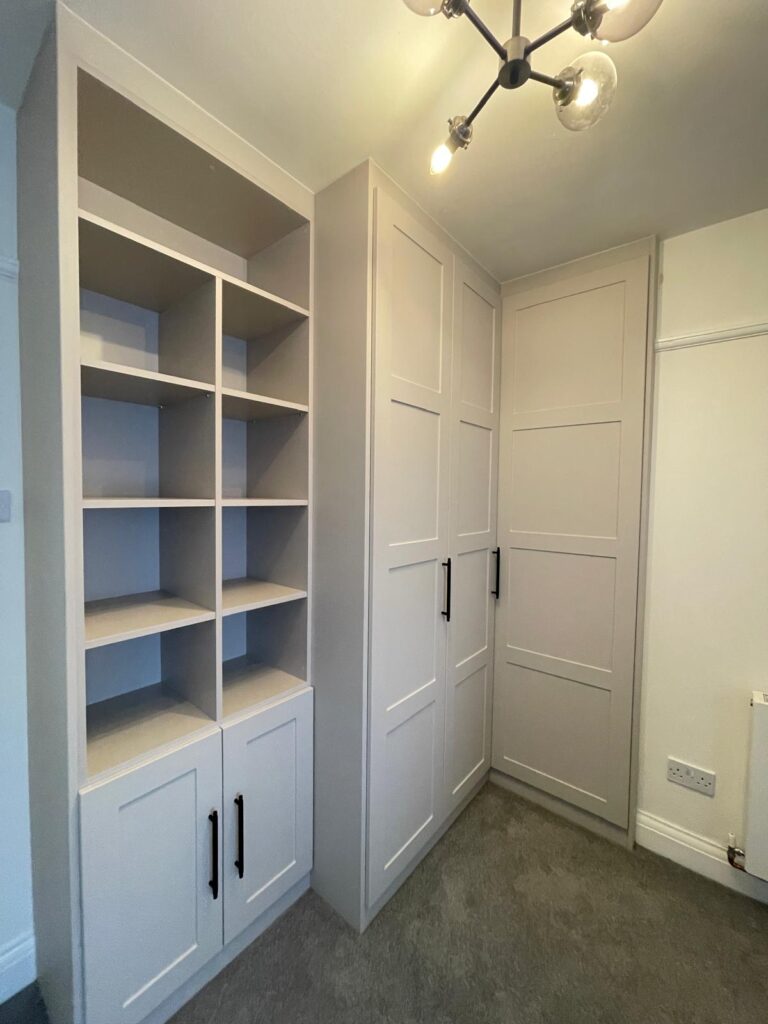
Open shelving is popular because it looks light, but it can slow a team down if the brief actually needs storage discipline. Closed sections hide clutter and reduce the number of visual decisions the room has to carry, while open sections demand more precise styling and spacing. For fitted interiors, the best solution is often a hybrid. Use open bookcases for display and closed lower cupboards for bulk storage. That balance gives the room breathing space without forcing every item to become part of the visual composition.
A hybrid layout is usually the safest default
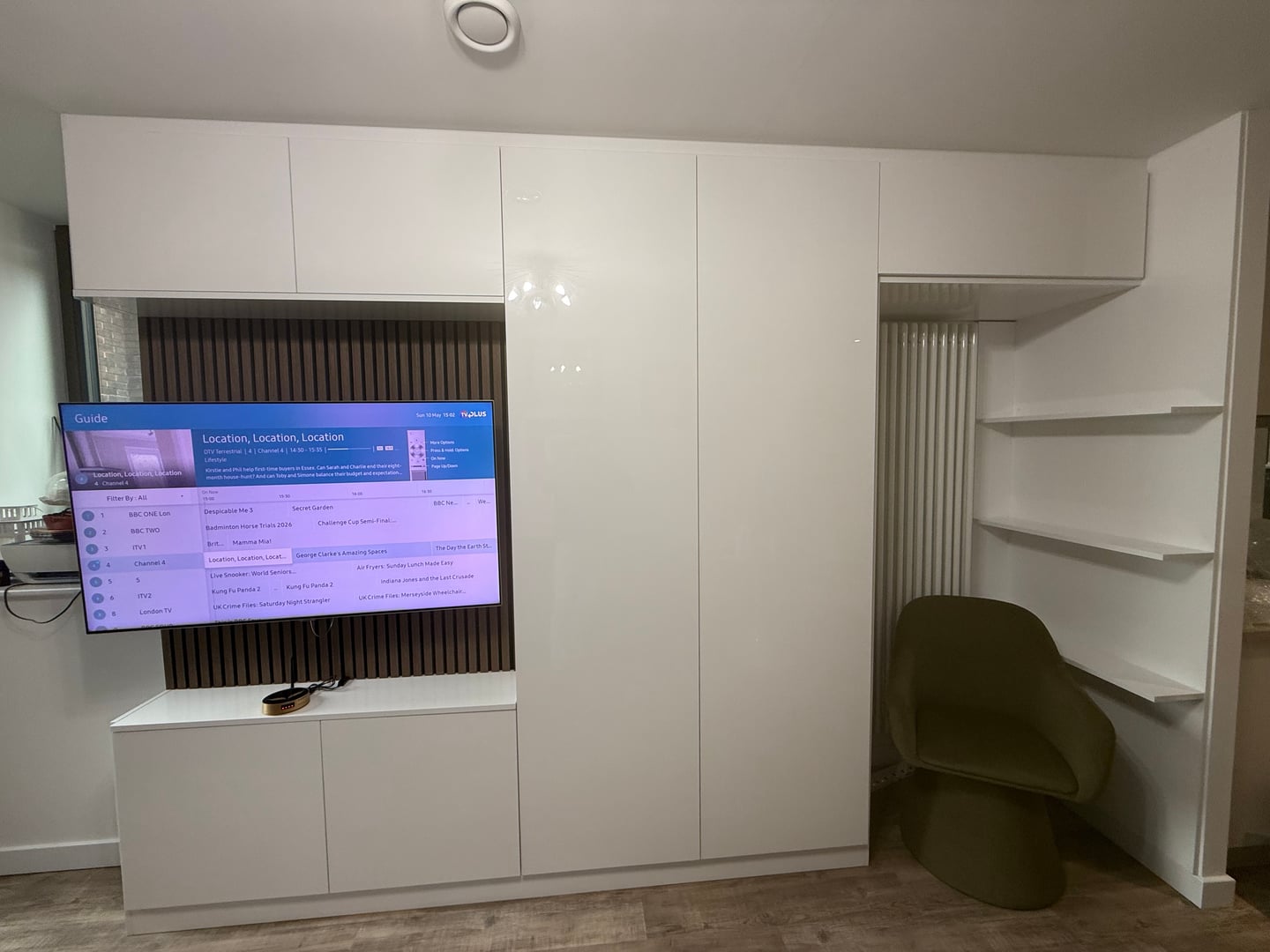
If the room serves multiple functions, such as reading, media storage, and household organisation, hybrid bookcases tend to outperform fully open designs. A lower run of cupboards can hide cables, chargers, and larger items, while upper shelving keeps books accessible. The trade-off is that the design must be coordinated carefully so it does not feel fragmented. The best hybrid layouts repeat one or two proportions across the room, which keeps the composition calm and makes installation simpler for the fitter.
How to plan bookcases around future use
Another mistake that slows teams down is designing for today’s items only. Households change, collections grow, and storage needs shift when a room becomes a home office or a child’s bedroom. If the bookcases are fully locked into one use, the owner often comes back later asking for extra shelving, doors, or cable management. That means another visit and another round of disruption. A better plan is to leave one or two bays adaptable, especially in bespoke wardrobes and fitted furniture projects that are meant to last.
Build in flexibility where the room is most likely to change
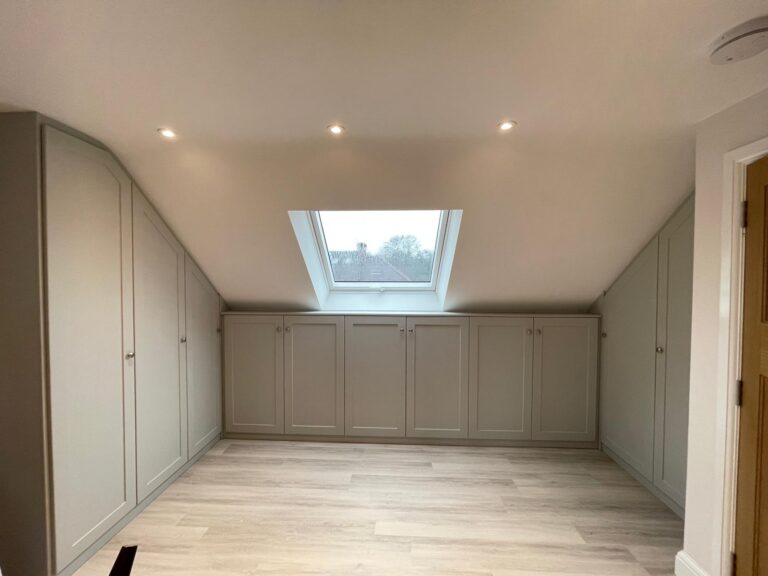
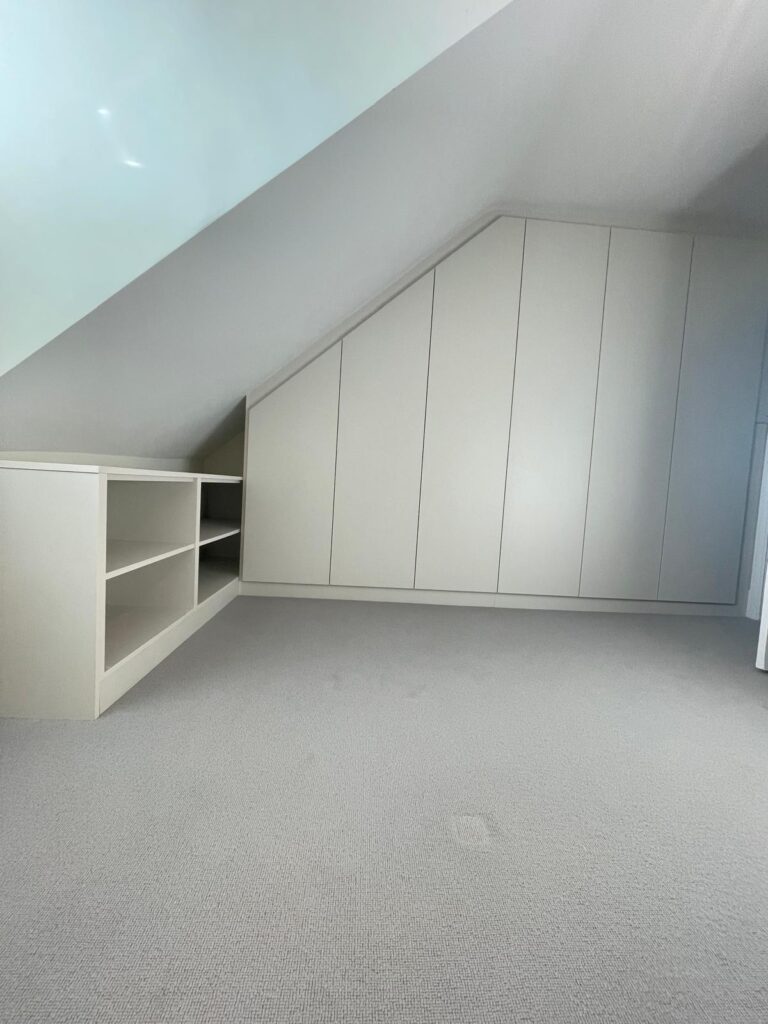
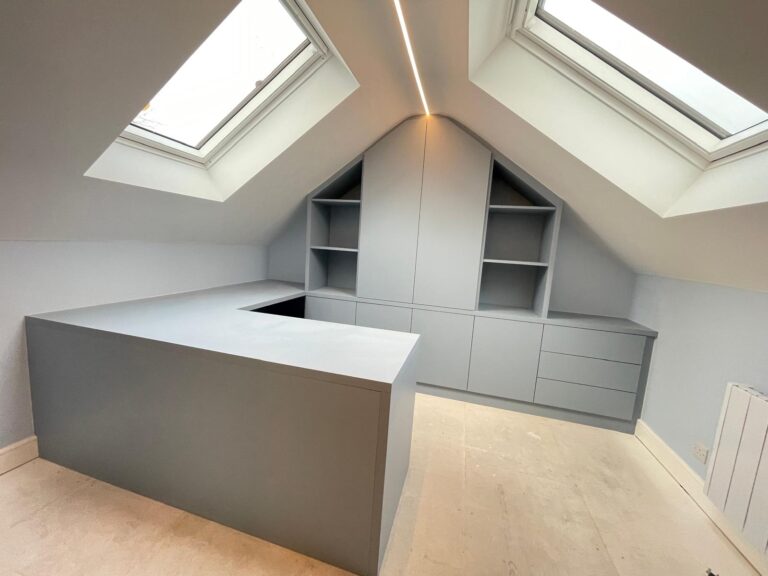
A simple flexibility rule is to keep at least one bay with adjustable shelves and one lower section that can later accept doors or baskets. That gives the homeowner options without redesigning the whole run. This is particularly useful in loft wardrobes, sloped cupboards, and alcove units where the geometry is already fixed. Flexibility should be targeted, not vague, because overbuilding every bay with every option makes the project slower and more expensive than it needs to be.
Mini-case: a B2B SaaS team analogy that fits residential design
A useful way to think about bookcases is the same way a software team thinks about release risk. If every change must be custom-built at the last minute, the process slows. In a fitting context, that means every shelf, panel, and cable route should be decided before production. For one anonymous household project, the design team assumed three rounds of revisions would be needed. By using a fixed survey template and one sign-off stage, the team reduced change requests from an estimated three to one. The insight is not technical, it is operational: fewer decisions made late usually means fewer delays on site.
The installation sequence that protects the schedule
The fastest bookcases are usually installed in a clear sequence: survey, final dimensions, material confirmation, production, site prep, fitting, and finish. When any of those steps are blurred, delays multiply. Teams often underestimate the value of site prep, especially in rooms with old skirting, uneven plaster, or existing joinery to remove. If the room is ready before the installer arrives, the project stays on schedule. If prep is still happening on fitting day, even a simple bookcase can slip.
What good site prep actually looks like
Good site prep means the wall is accessible, the floor is clear, and any old furniture, curtains, or radiators that interfere with the new unit have already been addressed. It also means the client understands where finishing touches, such as paint touch-up or cable routing, will happen. The trade-off is a little more upfront coordination for much less disruption later. For homeowners comparing fitted bookcases with off-the-shelf shelving, this is often where bespoke work wins, because the room is prepared to receive the furniture rather than forcing the furniture to adapt on the fly.
Quick takeaways for faster bookcase projects
The biggest delays come from poor sizing, fixed shelf spacing, and missed site details, not from the idea of bookcases itself. Treat the room as an irregular space, measure real objects before locking in shelf heights, and decide early whether open shelving or closed storage fits the use case. For fitted furniture, a hybrid layout is often the safest choice. When the survey, material choice, and installation sequence are aligned, bookcases support the project instead of slowing it down.
How Finest Furniture Studio can help you avoid the usual mistakes
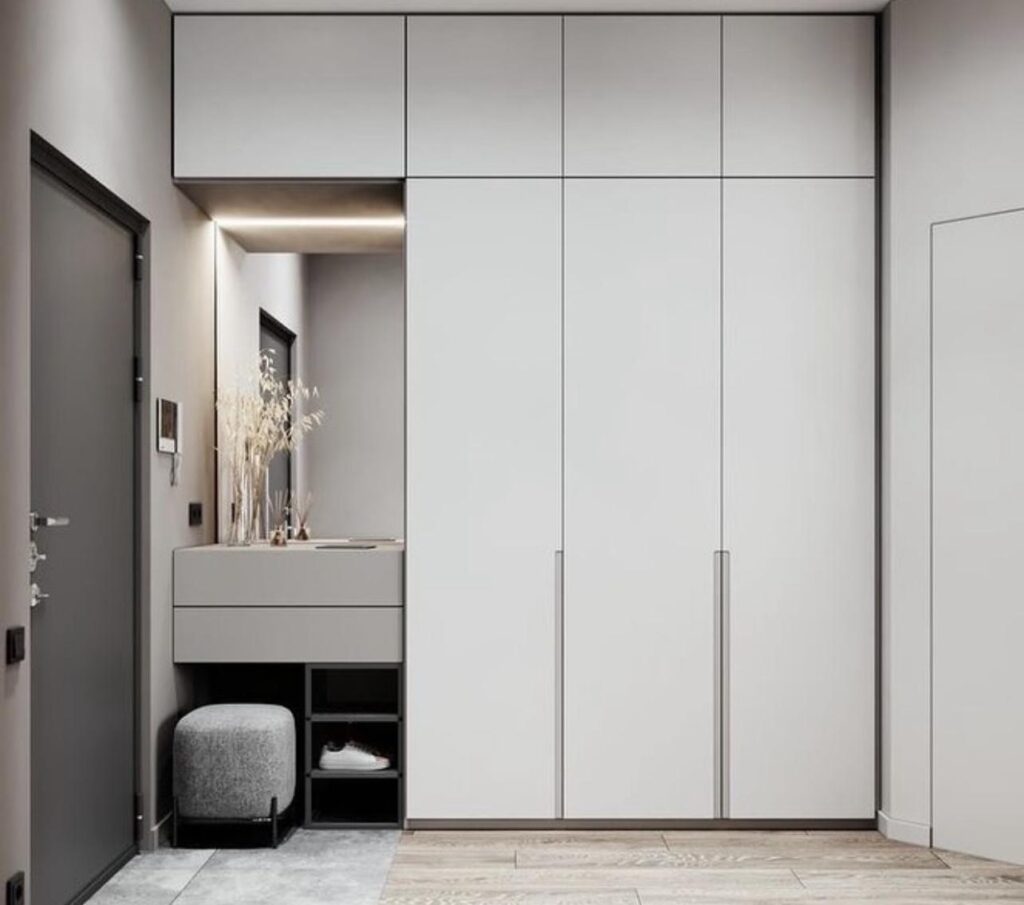
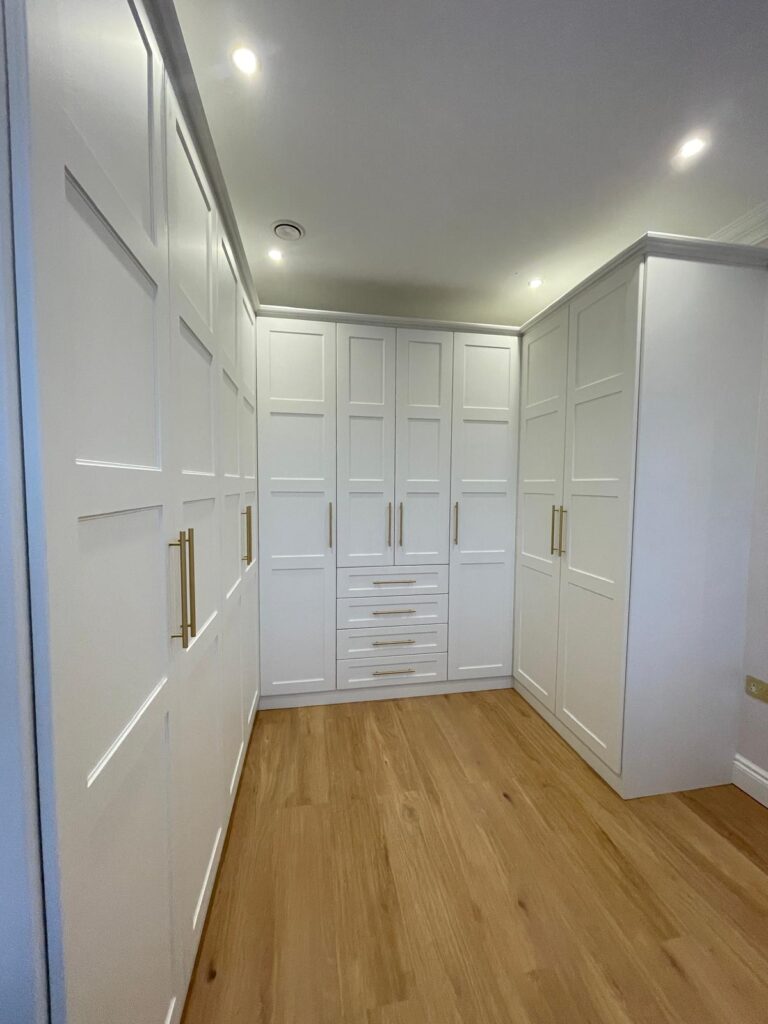
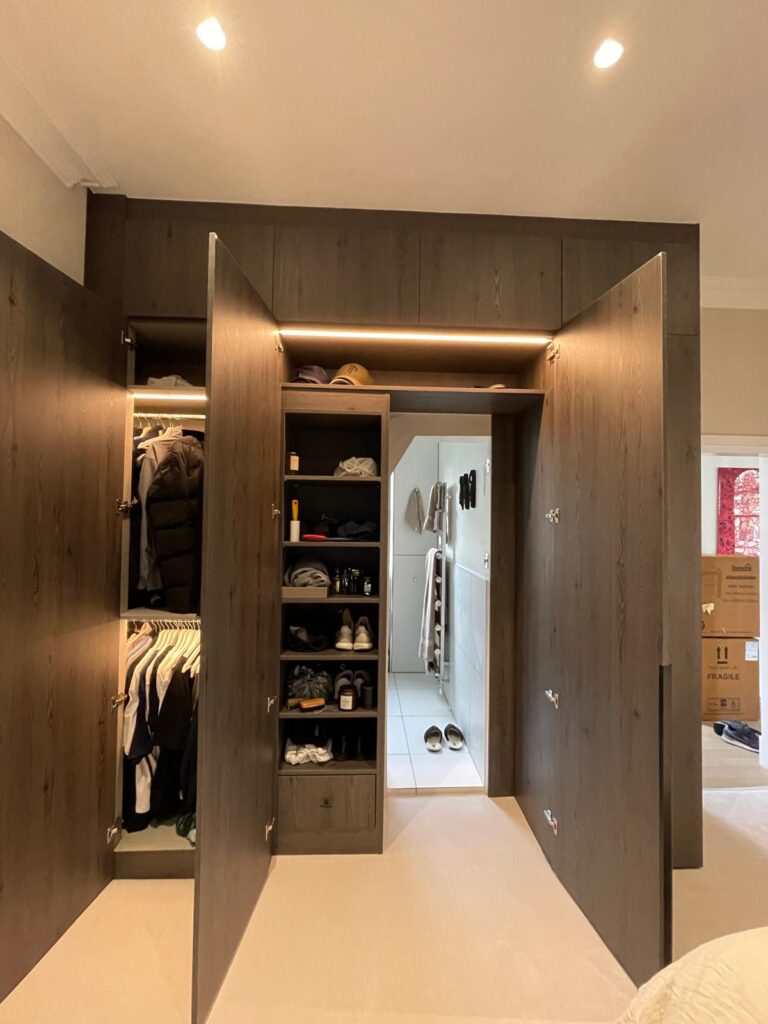
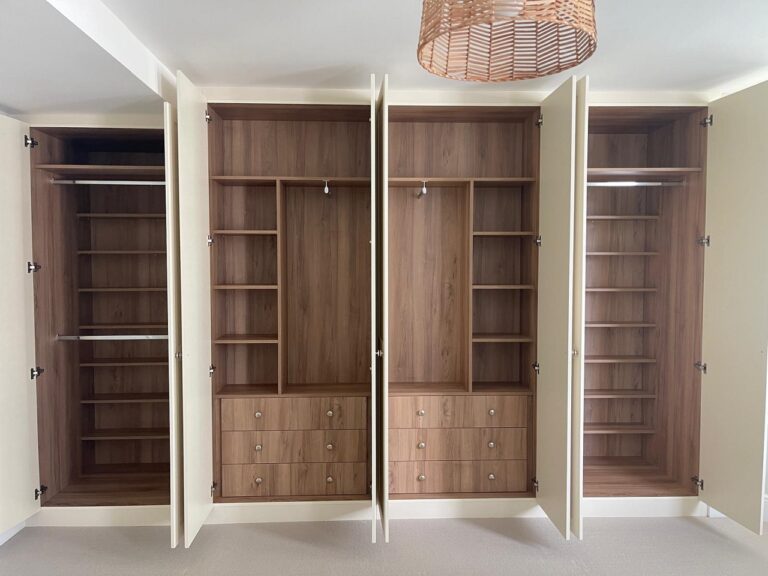
If you want bookcases that fit the room cleanly and install without the usual back-and-forth, it helps to work with a studio that designs around the actual space, not a generic template. Finest Furniture Studio focuses on bespoke wardrobe solutions and fitted furniture for UK homes, including bespoke wardrobes, TV media walls, alcove cupboards, loft wardrobes, built-in cupboards, sloped cupboards, and sliding doors wardrobes. If speed matters, the site also mentions fitting in 7 to 10 days and a 10-year warranty, which gives buyers a clearer benchmark when they compare options. Learn more about Bespoke Wardobes Lomdon if you want to see how a tailored approach reduces wasted time.
Frequently Asked Questions
The questions below cover the most common issues people run into when planning bookcases for fitted interiors and bespoke storage.
Frequently Asked Questions
What are the most common bookcases mistakes that slow teams down?
The biggest delays usually come from wrong sizing, fixed shelf spacing, and poor room surveys. In practice, these issues create on-site adjustments that can add hours or even a full day to a fitted furniture project. A better approach is to measure the finished room, confirm what will be stored, and lock the design before production starts.
How do I choose bookcases for fitted storage without causing rework?
Start with the room’s usable dimensions, then design around actual storage needs such as books, display items, and baskets. For fitted storage, adjustable shelving and hybrid layouts are often safer than fully fixed designs because they reduce the chance of later changes. This approach also supports better fitted furniture installation planning.
Are open shelving bookcases or closed units better?
It depends on how the room is used. Open shelving works well for display and lighter visual impact, while closed units are better for hiding clutter and keeping the room calm. Many homeowners get better results with a hybrid layout that combines both.
What size should bookcases be for a UK home?
There is no single standard, because room shape and use matter more than a fixed measurement. As a rule, display-focused bookcases can work at around 250 to 300 mm deep, while mixed storage may need more. Always check skirting, sockets, and circulation space before finalising the size.
How long does fitting bookcases usually take?
For bespoke fitted furniture, the fitting stage is often scheduled after survey and production are complete, and many providers work to a 7 to 10 day fitting window. The actual time depends on room prep, wall condition, and whether the bookcases include extra features like cupboards or media wall integration.
Do bookcases work well with bespoke wardrobes and other fitted furniture?
Yes, and they often work better when they are designed as part of the same interior plan. Matching proportions, finishes, and storage priorities helps the room feel intentional rather than pieced together. This is especially useful in alcoves, loft rooms, and bedrooms with built-in cupboard combinations.https://hamptoncourthomes.co.uk/contact-us-ppc/?gadsource=1&gadcampaignid=23180183712&gclid=EAIaIQobChMI7vSDoNOvlAMVQJJQBh1njipNEAAYAiAAEgL5KfD_BwE