





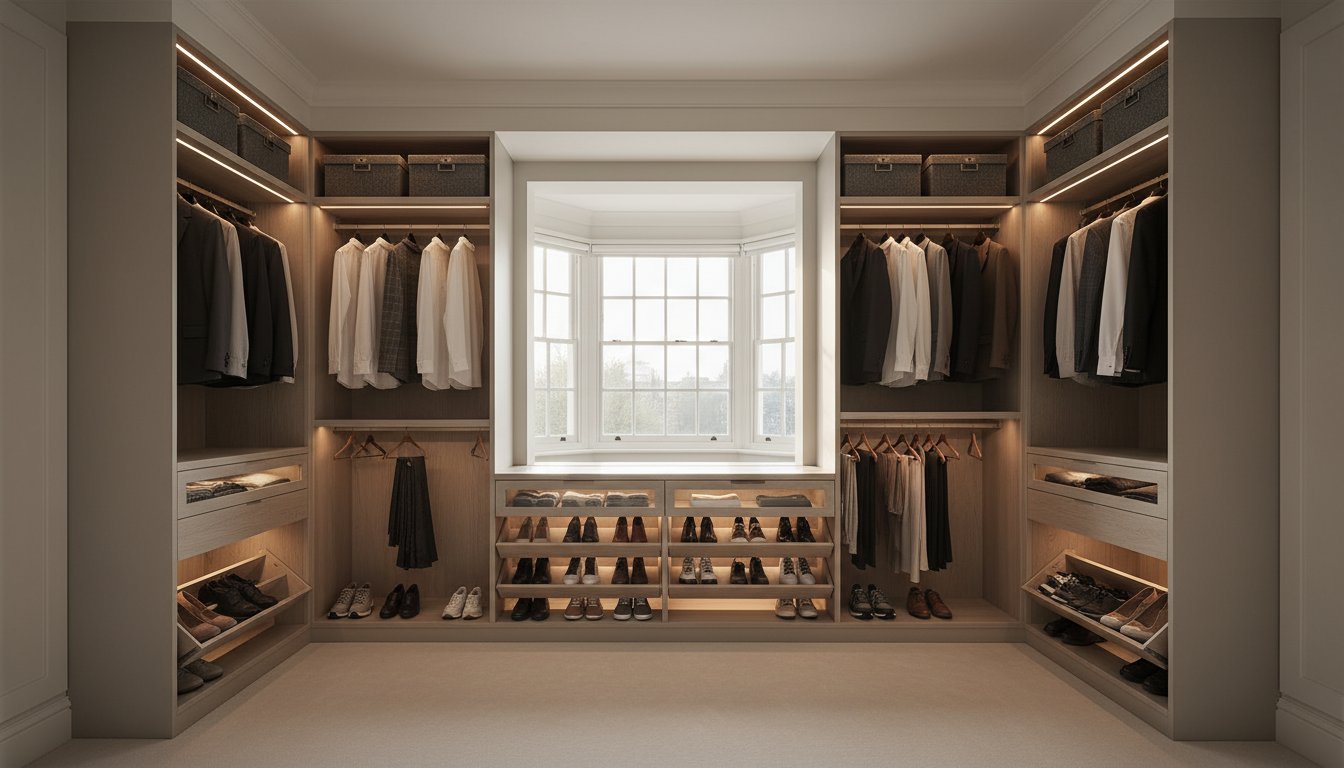
A wardrobe interior should be a curated reflection of your daily rituals rather than just a series of shelves. Most of us have felt the frustration of losing favourite jumpers in deep, dark corners or finding long dresses crumpled because the hanging rail is too low. It’s a common struggle where shoes end up in a chaotic pile at the base of the unit, turning a morning routine into a stressful search. Designing bespoke fitted wardrobe interiors is about reclaiming that wasted space and ensuring every item has a dedicated, logical home.
You likely believe that your home should be a sanctuary of order, yet standard storage often fails to meet the unique demands of your clothing collection. This guide will show you how to plan a perfectly organised interior tailored to your specific lifestyle and the unique architecture of your room. We’ll explore the latest 2026 trends, from integrated LED lighting to specialised pull-out racks, helping you transform a cluttered bedroom into a space of refined harmony. By the end, you’ll understand how to maximise every centimetre to increase both your daily peace of mind and your property’s long-term value.
Key Takeaways
- Perform a thorough inventory audit to shift your focus from simply storing clothes to curating a space that supports your daily rituals.
- Discover how a custom-engineered framework provides the structural integrity needed for high-performance fitted wardrobe interiors.
- Master the art of utilising awkward architectural features, such as shallow Victorian alcoves, to create seamless and high-capacity storage solutions.
- Prioritise your most-used items by identifying “daily drivers” to ensure your most important pieces are always within easy reach.
- Evaluate how your choice of premium materials and finishes impacts both the long-term utility and the overall market value of your property.
Planning Your Fitted Wardrobe Interiors: The Art of Organisation
Designing fitted wardrobe interiors is a process that begins long before the first piece of timber is cut. It requires a fundamental shift in perspective. Instead of viewing your wardrobe as a simple container for clothes, think of it as a tool that supports your morning and evening rituals. A well-planned interior doesn’t just store items; it presents them with clarity. This eliminates the frantic search for a specific shirt or the frustration of finding a favourite dress crushed at the back of a drawer. It’s about creating a fluid experience that starts your day with a sense of calm and order.
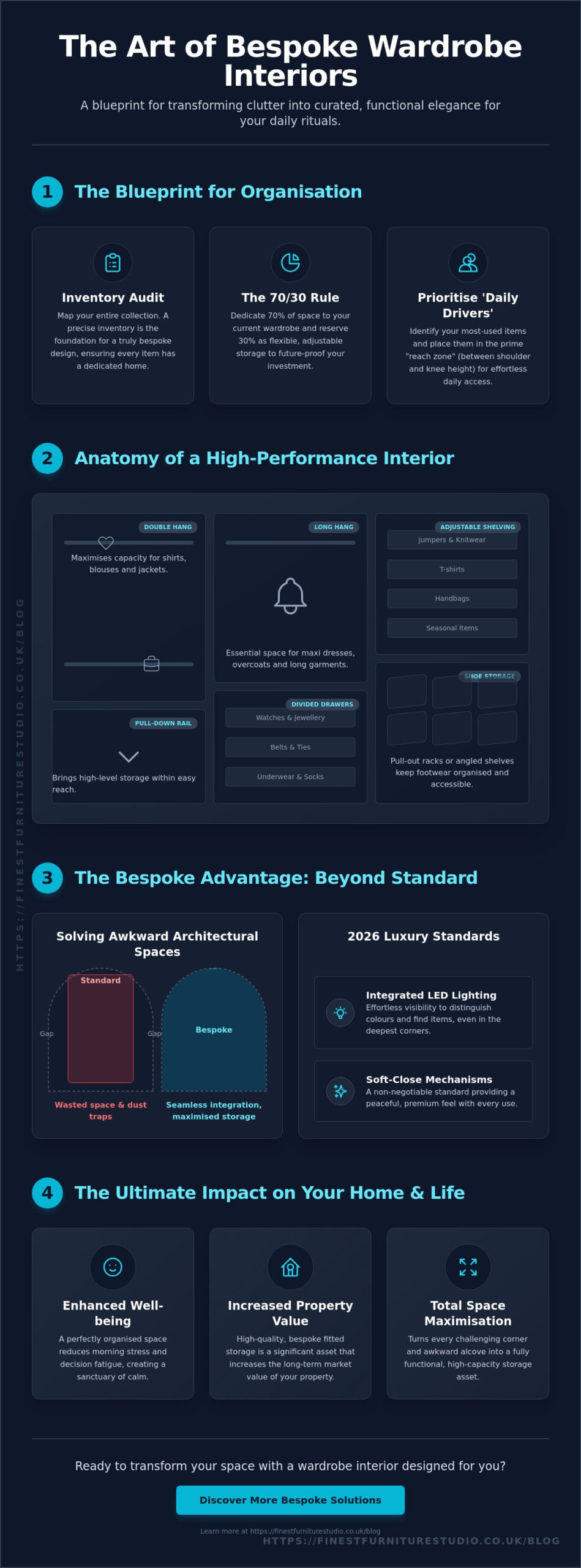
Success starts with a comprehensive inventory audit. You can’t design an efficient space without knowing exactly what it needs to hold. Historically, Closet organization systems have evolved from simple cupboards to complex, engineered environments that prioritise the user’s lifestyle. By counting every pair of shoes and measuring the length of your longest coats, you provide the blueprint for a truly bespoke solution. This data allows a designer to allocate space with millimetre precision, ensuring no centimetre is wasted in the final build.
Adopt the 70/30 rule to future-proof your investment. Dedicate 70% of the space to fixed storage like hanging rails and drawers for your current wardrobe. Reserve the remaining 30% as flexible space with adjustable shelving or modular components. This flexibility is vital because your style and needs will change over time. In London homes, where Victorian alcoves and Edwardian proportions often defy standard measurements, bespoke interiors offer a significant advantage. High-street modular kits frequently leave awkward gaps that collect dust. A bespoke build integrates with the architecture, turning every challenging corner into a functional asset. For a broader view of how fitted bedroom furniture can transform every room in your home, our 2026 London guide explores the full spectrum of bespoke storage possibilities.
Assessing Your Current Wardrobe Inventory
Start by categorising your clothing by length. Long-hang sections are essential for maxi dresses and overcoats, whilst short-hang rails are perfect for shirts, jackets, and folded trousers. Don’t overlook your accessories. Dedicated trays for watches, jewellery, and belts prevent small items from becoming clutter. Finally, identify “dead storage” items. These are pieces like heavy winter duvets or ski gear that only need to be accessed once a year. These belong on high-level shelves, leaving the prime reach zone for your daily essentials.
The Psychology of Space in the Bedroom
The way you organise your wardrobe has a direct impact on your mental well-being. A cluttered interior contributes to decision fatigue and morning stress. By contrast, a structured system provides immediate visual relief. You can choose between open components for a boutique feel or closed drawers to maintain a minimalist aesthetic. The goal is to create a sanctuary. When every item has a specific home, the bedroom remains a calm, restorative space rather than a room defined by hidden chaos. It’s the difference between a house and a home that truly works for you.
The Anatomy of a Bespoke Wardrobe: Essential Interior Components
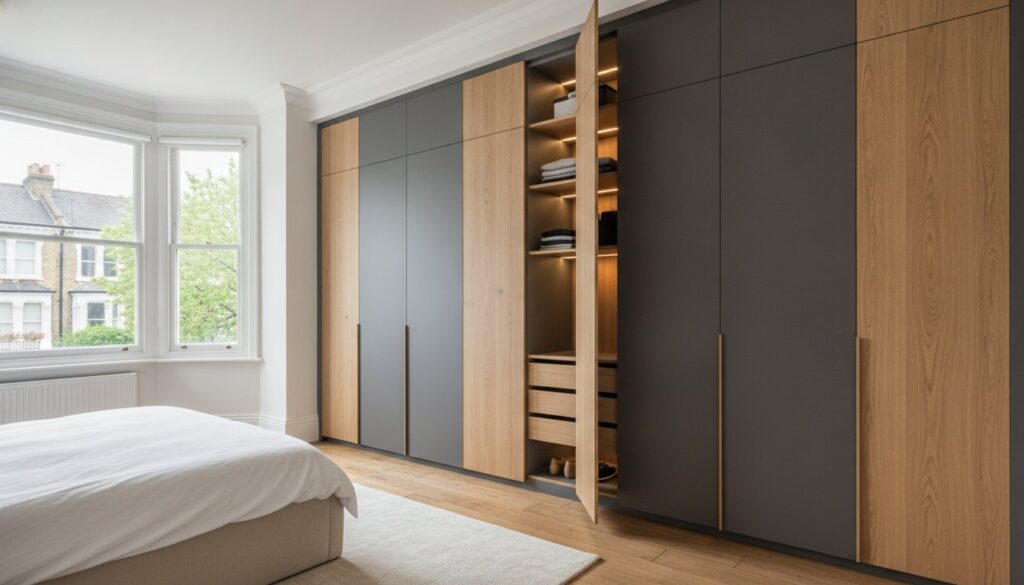
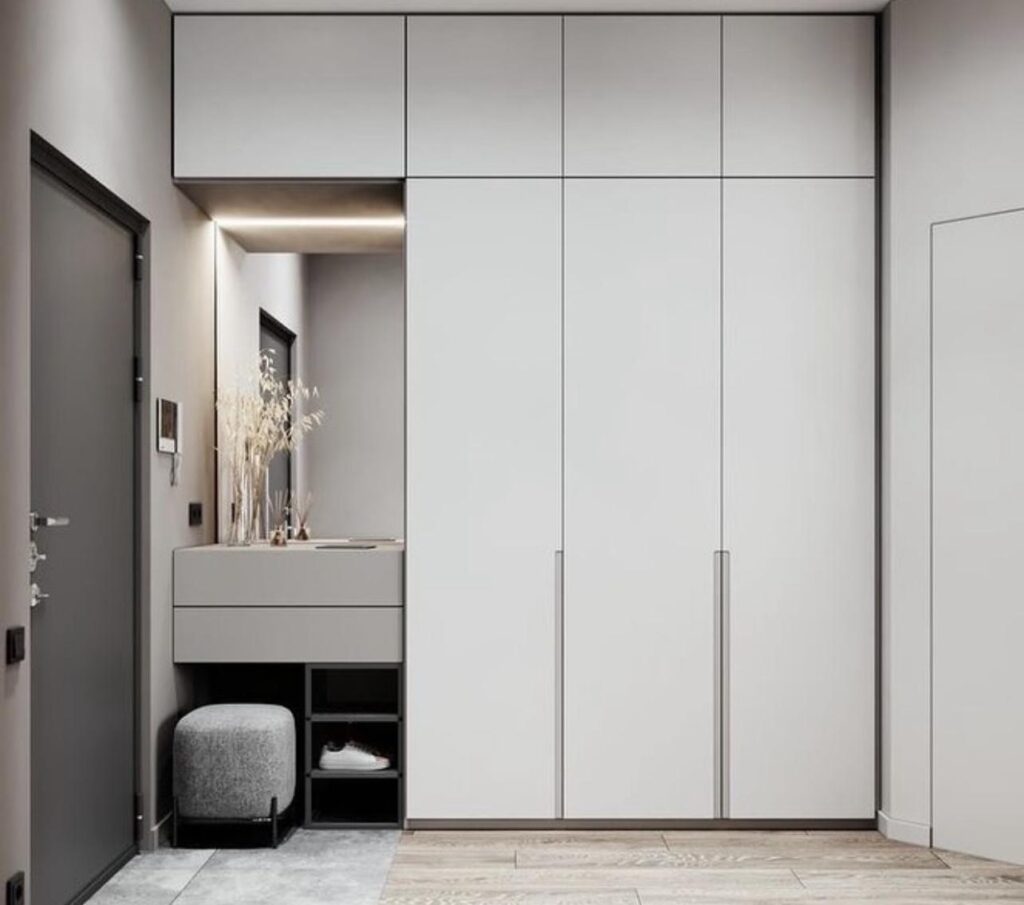
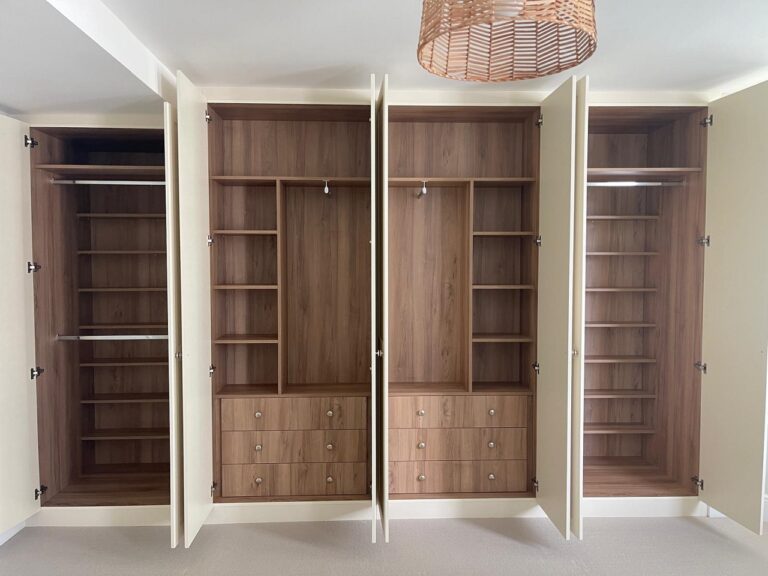
A bespoke interior represents a custom-engineered framework where every rail, shelf, and drawer serves a specific purpose within your fitted wardrobe interiors. Unlike modular systems, these components are designed as a cohesive unit to support your unique inventory. The foundation of this system is the “carcass,” the internal cabinet structure that provides essential structural integrity. This robust framework ensures your wardrobe can support significant weight, from heavy woollen coats to extensive footwear collections, without bowing or shifting over time.
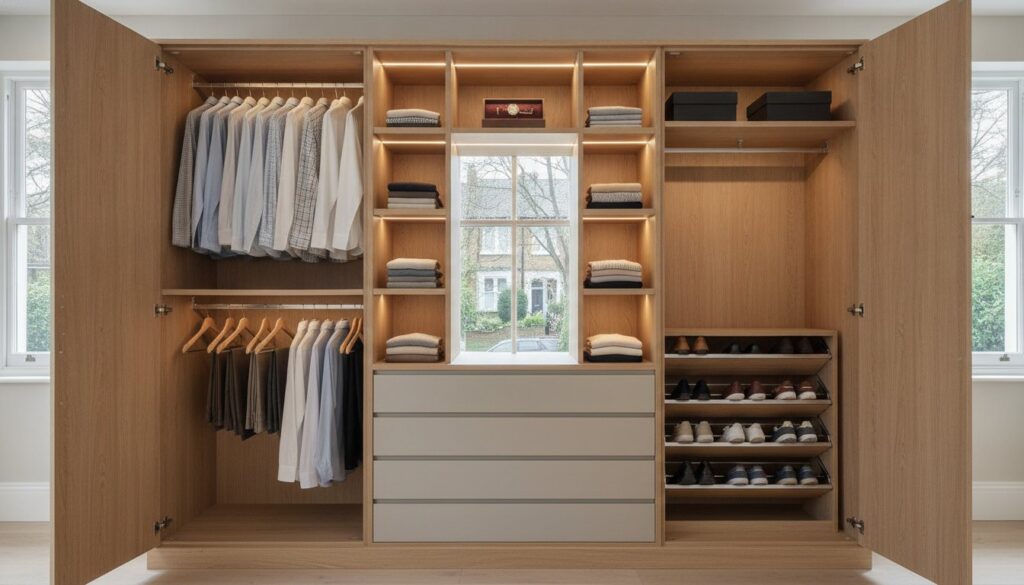
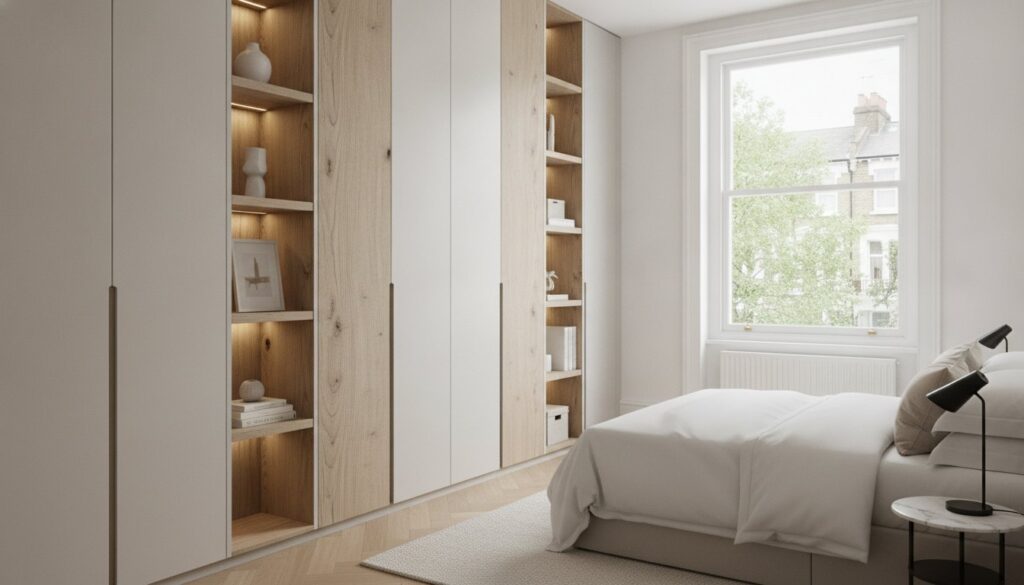
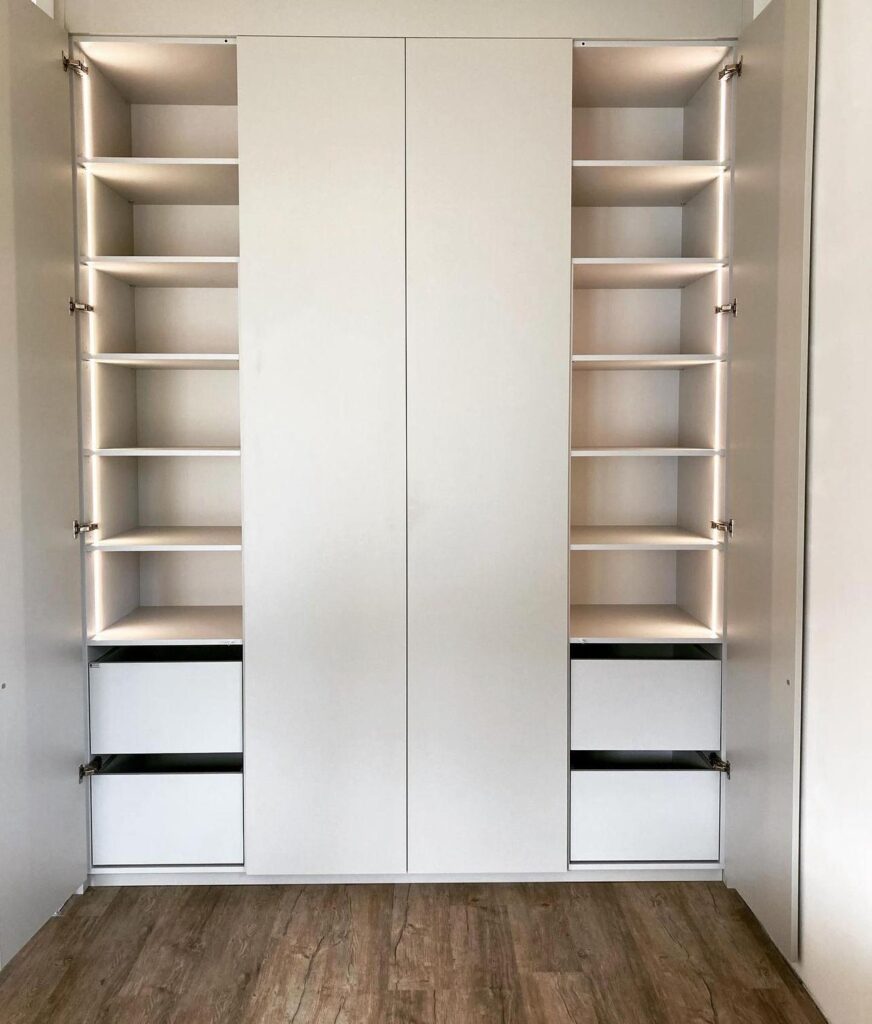
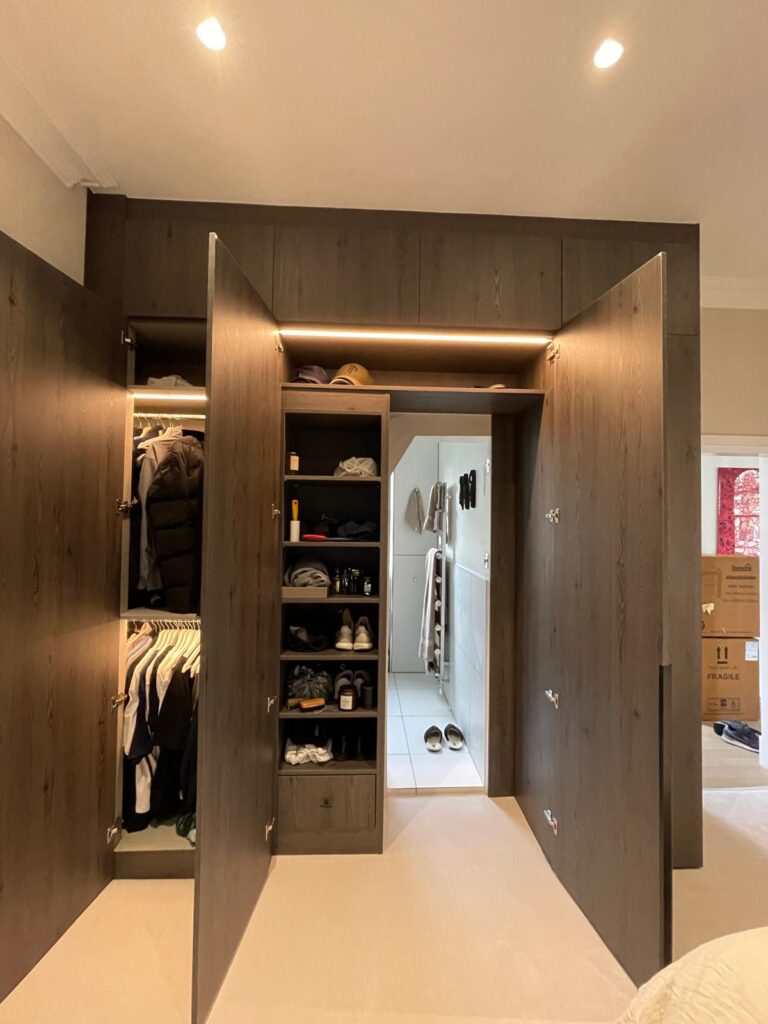
Luxury in 2026 is defined by the fluid experience of use. Soft-close mechanisms have moved from being an optional upgrade to a non-negotiable standard for high-end fitted furniture. They provide a tactile sense of quality and ensure a peaceful bedroom environment by eliminating the sound of slamming doors or drawers. Integrated LED lighting has also transformed the functionality of fitted wardrobe interiors. Recessed strips illuminate the deepest corners of your cabinets. This makes it effortless to distinguish between dark navy and black garments even on the dimmest winter mornings.
Hanging Rails: Single, Double, and Pull-down
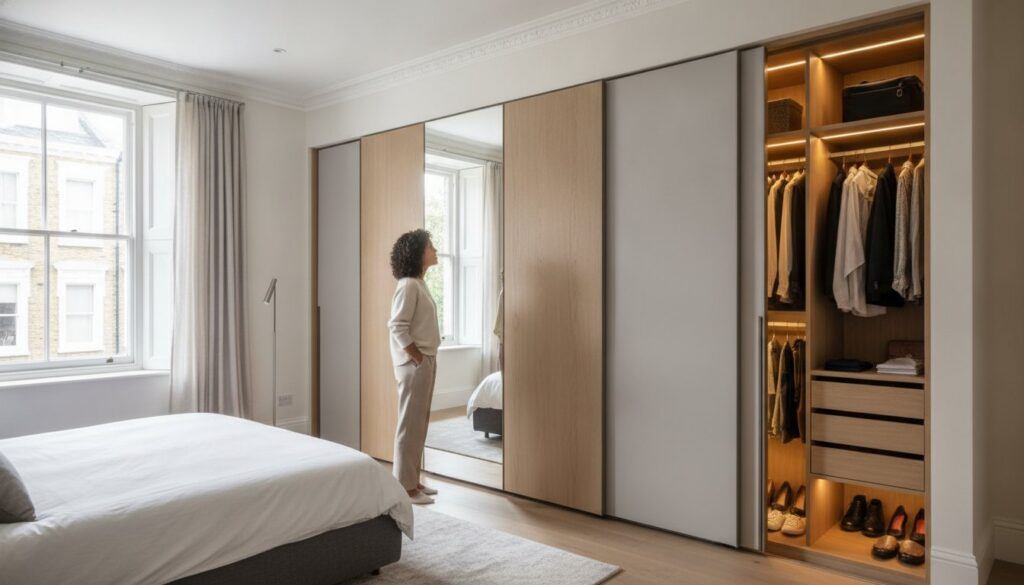
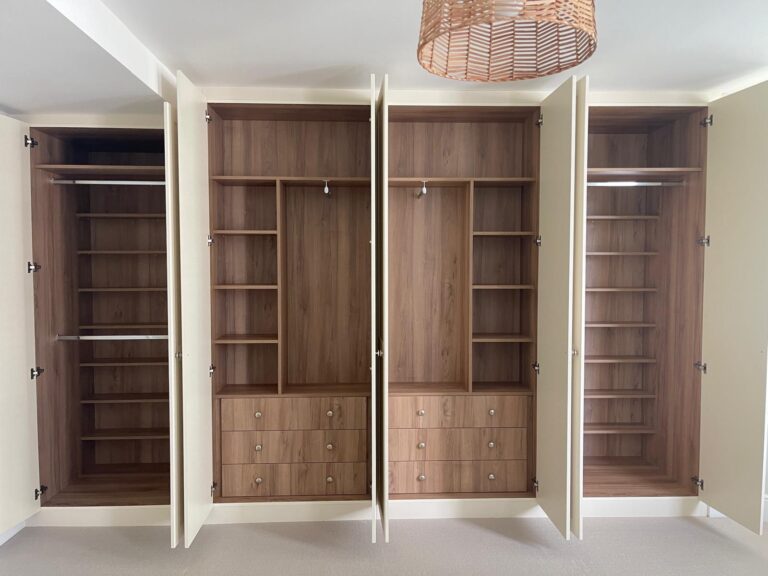
Optimising vertical space is the secret to a high-capacity wardrobe. Double hanging rails are the most effective way to store shirts, blouses, and jackets, effectively doubling your storage capacity in the same footprint. For evening gowns, maxi dresses, and long winter coats, full-height hanging sections are essential to prevent fabrics from pooling and creasing at the base. If your room features high ceilings, hydraulic pull-down rails allow you to utilise the uppermost sections of the wardrobe. You can access seasonal items easily without needing a step-ladder, keeping your daily essentials at eye level.
Internal Drawers and Pigeon-Hole Shelving
The interior layout should be as beautiful as it is functional. Scoop-front drawers are an excellent choice for those who prefer to see their belongings at a glance without opening every unit. For knitwear, pigeon-hole shelving is the superior solution. Stacking jumpers in these dedicated bays prevents the stretching and “hanger bumps” that occur with traditional hanging. To protect your most precious items, consider velvet-lined trays or specialised jewellery inserts. These bespoke touches ensure that watches, rings, and heirloom pieces are stored safely and presented elegantly. If you’re looking for more inspiration on refined home organisation, you can explore our latest design insights and storage tips.
Clever Storage Solutions for Awkward Spaces and London Alcoves
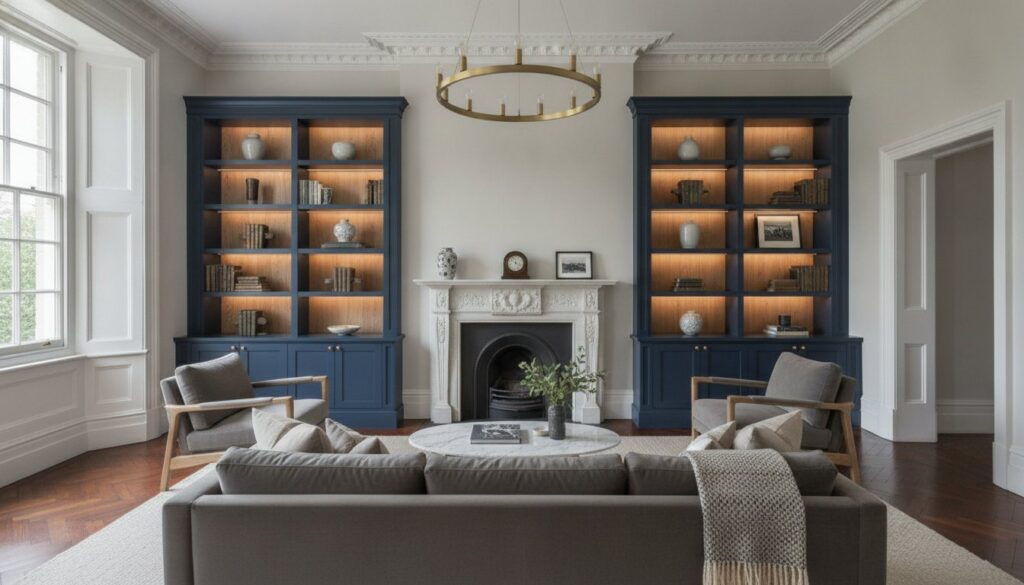
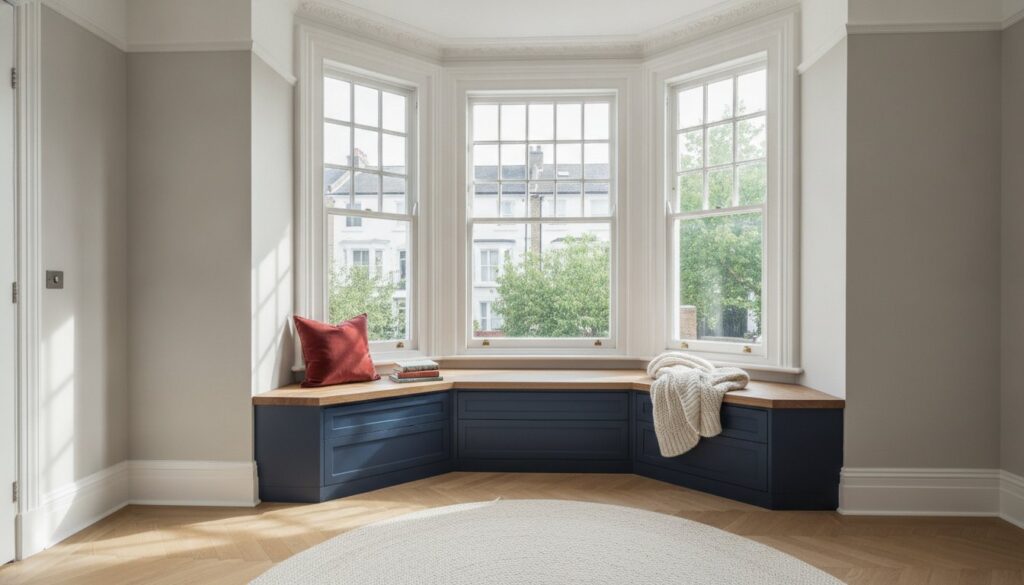
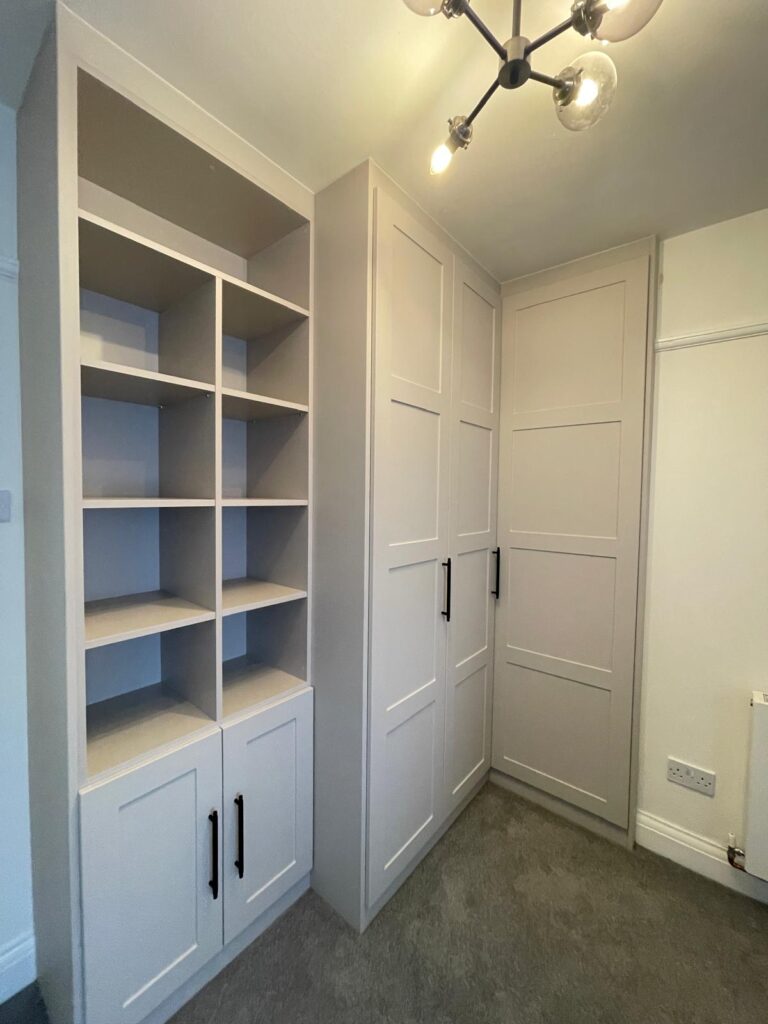
London’s period architecture, particularly in areas like Richmond and Wimbledon, presents a unique set of challenges for home organisation. Victorian and Edwardian properties are celebrated for their character, yet they rarely feature a perfectly straight wall or a standard sized alcove. Designing fitted wardrobe interiors for these homes requires a specialist approach that goes beyond off the shelf solutions. A shallow alcove next to a chimney breast doesn’t have to be a wasted space. By using bespoke framing, we can turn a 40cm deep recess into a high capacity hub for folded items, shoes, or even a concealed dressing station that feels like a natural part of the room.
The secret to a seamless finish in older properties lies in the “scribing” technique. This involves carefully shaping the internal framework to follow the exact, often uneven, profile of your period walls. This precise craftsmanship eliminates the unsightly gaps that modular kits often leave behind. To truly maximise the potential of a room, we look upwards. Many London homes boast impressive ceiling heights that are often overlooked. We utilise this verticality by incorporating bespoke top boxes. These units are perfect for storing bulky suitcases or seasonal bedding, ensuring every available centimetre from floor to ceiling is working for you.
Loft Conversions and Sloped Ceiling Strategies
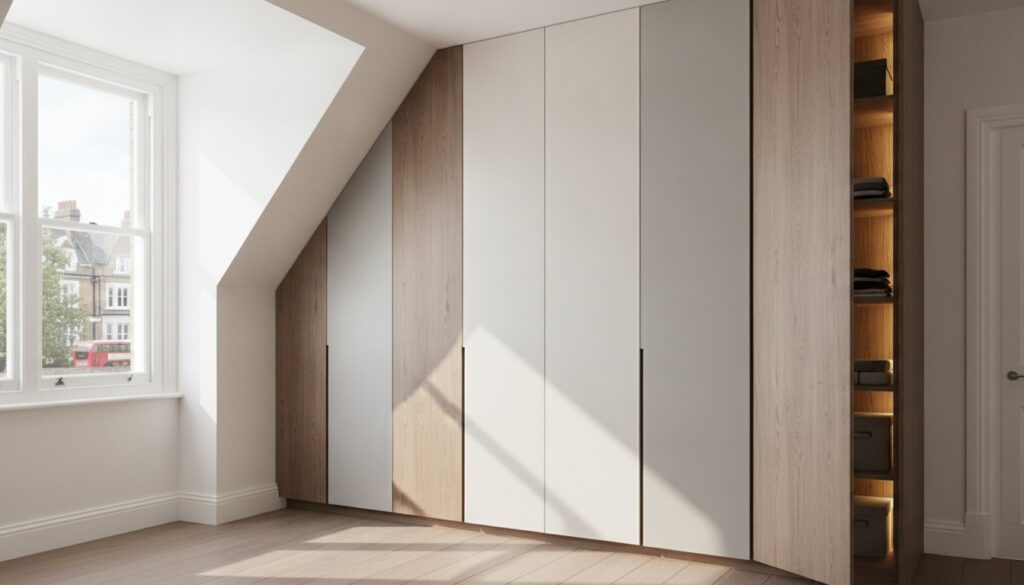
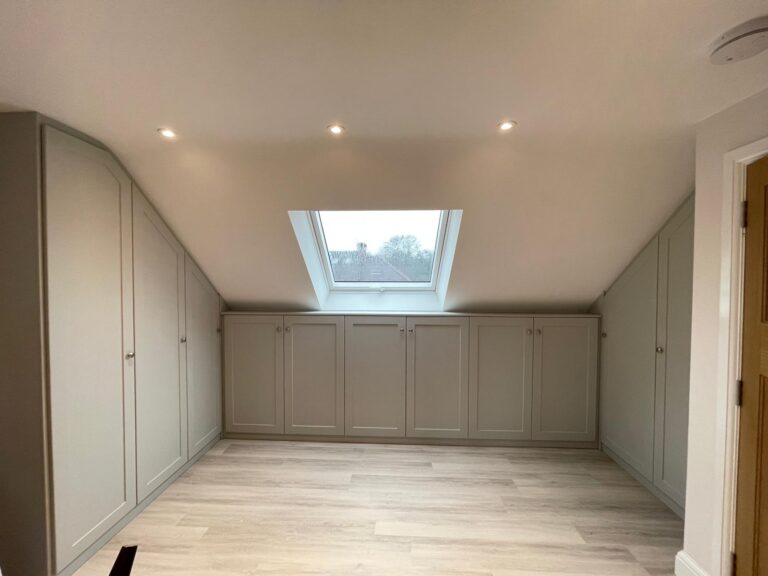
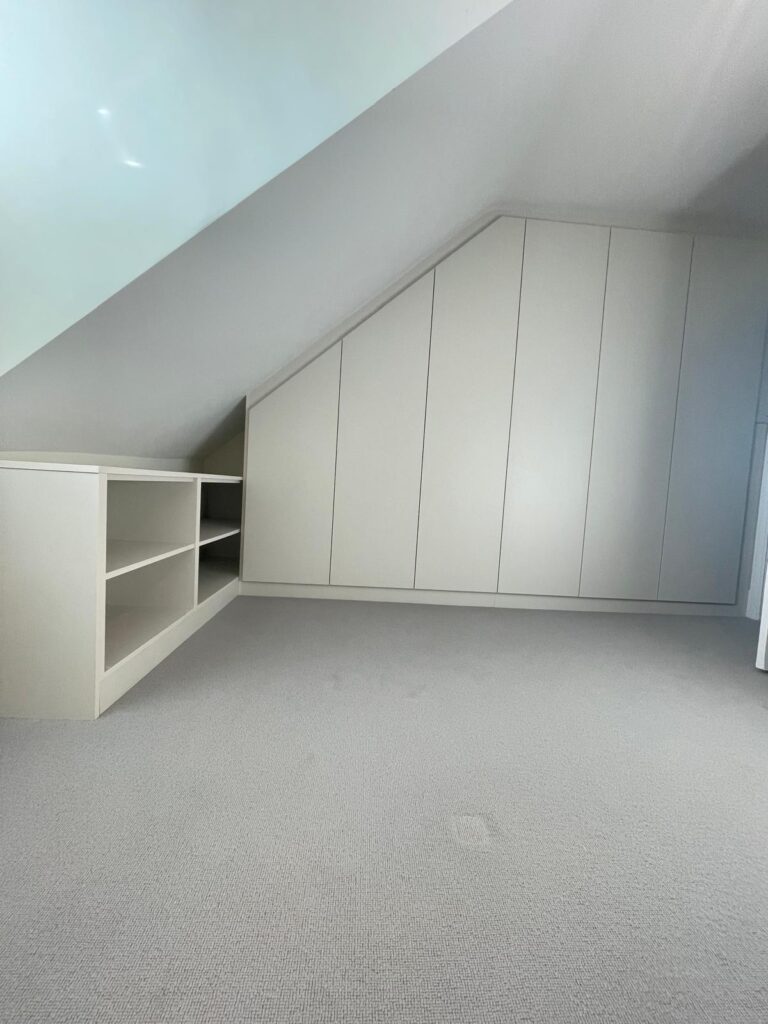
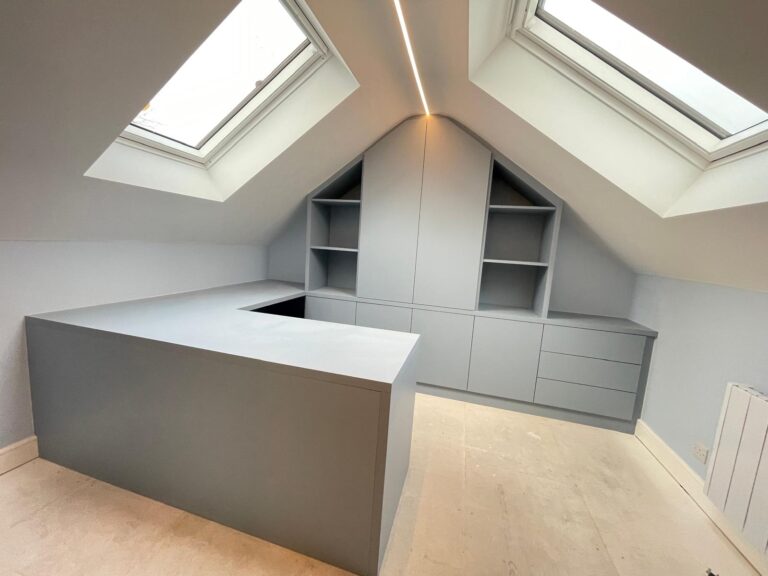
Loft conversions present their own architectural puzzles, specifically the sloping pitch of the roofline. We design stepped fitted wardrobe interiors that mirror the angle of your ceiling, ensuring no volume is lost to the pitch. By placing hanging rails at the highest point of the roofline, we maximise the floor to ceiling utility for longer garments. For more detailed attic specific strategies, our guide on fitted wardrobes loft solutions provides deeper technical insights into navigating these complex angles.
Deep Corners and “L-Shaped” Configurations
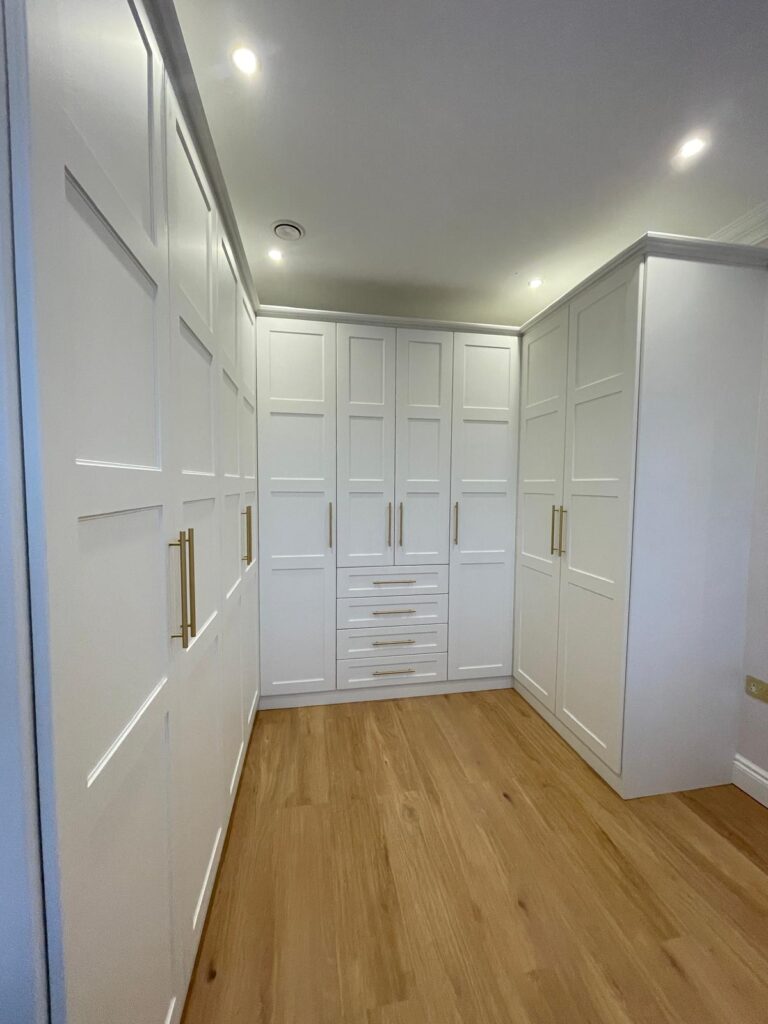
Deep corners in L-shaped configurations often become “dead zones” where clothes go to be forgotten. We solve this through two primary methods. The “Blind Corner” approach uses pull out shelving or internal carousels to bring items directly to you. Alternatively, a “Curved Rail” creates a continuous hanging space that flows through the corner without interruption. Both methods ensure a seamless transition between different wardrobe sections, turning a difficult architectural corner into an accessible and valuable asset for your collection.
Customising Your Interior Based on Lifestyle and Clothing Type
A truly personalised home avoids the “one size fits all” approach of mass-produced furniture. Designing fitted wardrobe interiors around your specific lifestyle ensures that your storage works for you, not against you. Whether you’re a city professional with a collection of tailored suits or a creative with a penchant for accessories, your layout must reflect your daily habits. We use a logical four-step framework to map out your internal space with precision.
First, determine your “daily drivers”. These are the garments you reach for every morning. They should occupy the prime “reach zone” between your waist and eye level for effortless access. Second, allocate the remaining mid-level space to high-visibility items such as shirts, blouses, or light jackets. This keeps your most frequent choices front and centre. Third, utilise the lower zones for heavier items or integrated, pull-out shoe racks. Finally, reserve the uppermost shelving for seasonal rotations or bulky luggage that you only need occasionally. This structured approach eliminates the chaos of a disorganised cabinet.
The Accessories Collector: Shoes, Bags, and Watches
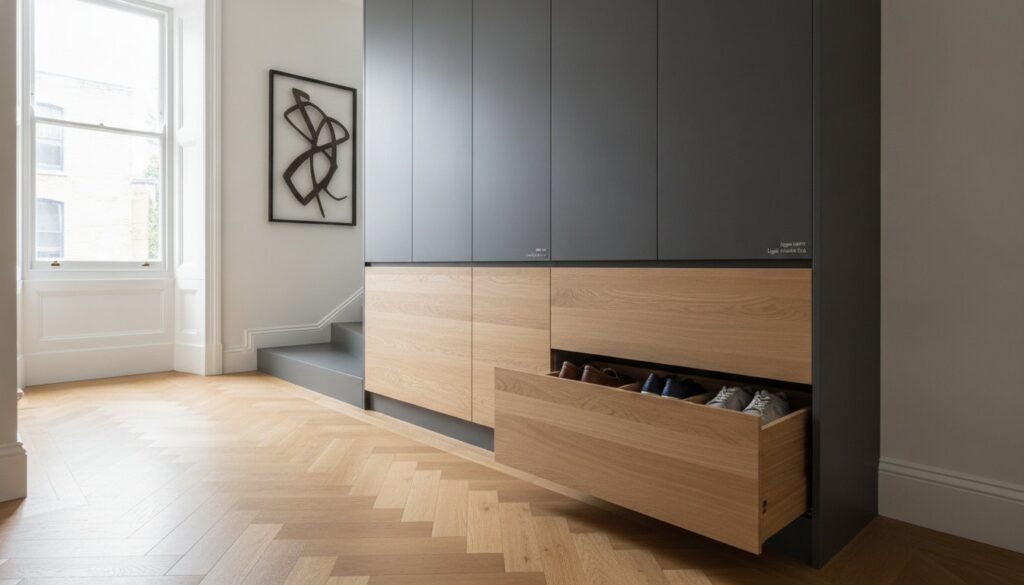
If your collection includes high-value footwear and accessories, your fitted wardrobe interiors should act as a private gallery. Angled shoe shelves with built-in “heel bars” provide an organised display that protects the shape of your shoes whilst making selection a pleasure. For those with a significant collection, integrating watch winders and glass-topped display drawers adds a layer of sophisticated luxury. If you have the space, a bespoke walk in wardrobe allows for even greater expression of this gallery-style organisation, turning your collection into a focal point of the room.
The Professional Wardrobe: Suits and Formal Wear
Maintaining the integrity of formal wear requires specific internal components to ensure longevity. Pull-out trouser racks are a superior choice to standard hangers. They keep creases sharp and save significant rail space. Dedicated tie and belt organisers ensure these smaller essentials don’t get lost in the shuffle of a busy morning. We also consider ventilation for high-value wool and silk garments. Proper airflow within the cabinet prevents stale odours and preserves the lifespan of your finest pieces. You can find more inspiration for your next project by exploring our latest design articles.
Premium Materials and Professional Fitting: The Bespoke Advantage
The final stage of creating luxury storage lies in the selection of materials. The quality of the internal boards directly influences the fitted wardrobes cost and determines the long-term value of the installation. Whilst many high-street retailers rely on thin 3mm hardboard back panels, a bespoke build uses 18mm thick back panels. This provides the structural rigidity required to prevent the unit from swaying or bowing under the weight of a full clothing collection. It’s the difference between a wardrobe that feels temporary and one that becomes a permanent architectural feature of your home.
Choosing the right finish is about balancing aesthetics with daily durability. Melamine Faced Chipboard (MFC) offers a practical and cost-effective solution with a vast range of colours. However, for a truly high-end feel, premium wood veneers or lacquered boards provide a depth of texture that MFC cannot replicate. These materials don’t just look better; they feel more substantial to the touch. Professional fitting is essential to achieve the seamless “built-in” look that homeowners in Chiswick and Fulham expect. Expert installers ensure that the fitted wardrobe interiors are perfectly levelled and scribed to the ceiling and floor, ensuring the furniture integrates flawlessly with the room’s proportions. If you’re considering extending this approach throughout your home, our comprehensive guide to fitted bedroom furniture for London homes in 2026 covers how bespoke cabinetry can unify your entire bedroom space. Before committing to a design, it’s worth reviewing a comprehensive breakdown of wardrobe fitting cost in London to ensure your budget aligns with the premium materials and craftsmanship your project deserves.
Finishes and Textures: Beyond Standard White
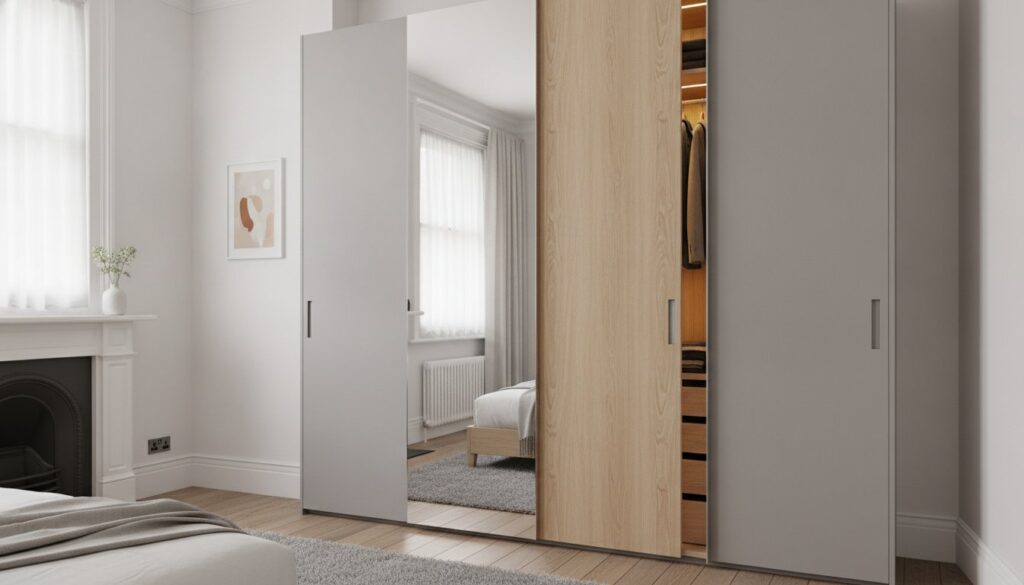
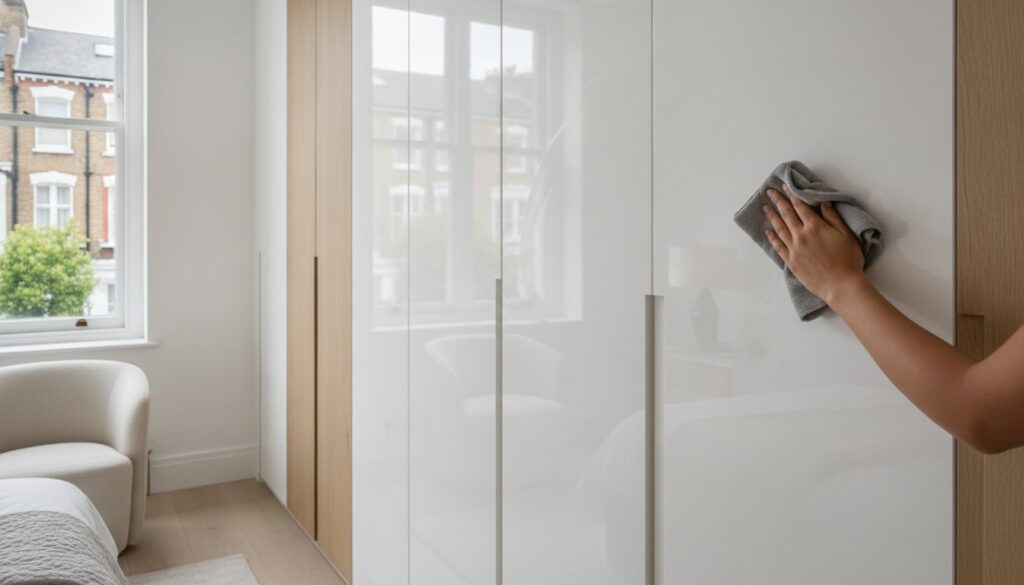
Contemporary fitted wardrobe interiors have moved far beyond basic white melamine. Linen-effect interiors are a popular choice for those seeking a boutique hotel aesthetic, providing a soft, tactile backdrop for your clothing. If you prefer a more masculine or traditional dressing room, dark oak and walnut veneers offer a sense of sophisticated warmth. We also pay close attention to “edge banding”. This process seals the edges of the boards with high-quality PVC or ABS strips. It prevents peeling and protects the core material from moisture damage, ensuring your wardrobe remains in pristine condition for decades.
The Installation Process: From 3D Render to Reality
Visualising how your new storage will function is a critical part of the journey. We use detailed 3D renders to help you see the interior flow and component placement before any manufacturing begins. This phase allows you to adjust the height of a rail or the position of a drawer until the layout is perfect for your needs. The artisanal approach to assembly is what sets bespoke furniture apart. On-site assembly by skilled experts ensures every joint is tight and every door is perfectly aligned. This level of craftsmanship is impossible to achieve with flat-pack alternatives. To start your journey toward a more organised home, Book a design consultation with Finest Furniture Studio today.
Transforming Your Space into a Sanctuary of Order
Designing high-performance fitted wardrobe interiors is an investment in your daily well-being and the long-term value of your property. By shifting from simple storage to a lifestyle-first approach, you ensure every garment has a dedicated home. Whether you’re navigating the uneven walls of a Victorian alcove or maximising the pitch of a loft conversion, bespoke organisation turns architectural constraints into functional advantages. You’ve learned how premium materials like 18mm back panels and soft-close mechanisms define true luxury in 2026.
Our expert artisans, based in Slough, bring decades of craftsmanship to every project. We serve London’s most prestigious postcodes with a commitment to precision and durability. Every piece of bespoke cabinetry comes with a 10-year guarantee, giving you total peace of mind in the quality of your installation. It’s time to replace the morning stress of a cluttered wardrobe with the fluid experience of a custom-designed sanctuary. Book Your Free Bespoke Design Consultation Today and start your journey toward a perfectly organised home.
Frequently Asked Questions
How deep should fitted wardrobe interiors be for standard hanging?
Standard fitted wardrobe interiors require a minimum depth of 60cm to accommodate standard 45cm hangers without garments touching the doors. If you’re opting for sliding doors, you’ll need to allow at least 66cm of depth plus an additional 5cm for the track mechanism. This ensures your clothes hang freely and aren’t caught or crushed when the doors are closed.
Can I change my wardrobe interior layout after it has been installed?
You can adapt your layout if the initial design incorporates adjustable shelving and modular components. Whilst the main carcass and primary hanging rails are usually fixed for structural integrity, designing with the 70/30 rule allows for future flexibility. It’s always a good idea to discuss your need for adjustable sections with your designer before the manufacturing phase begins.
What is the best way to organise shoes inside a fitted wardrobe?
Angled shelves with integrated heel bars are the most effective way to display footwear whilst protecting their shape. This method keeps your collection visible and prevents shoes from ending up in a chaotic pile at the bottom of the unit. For deeper cabinets, pull-out trays are an excellent alternative that brings your favourite pairs directly to you for easy selection.
Are drawers or shelves better for organising folded clothes?
Drawers are generally better for smaller items and everyday t-shirts as they provide better visibility and access. However, pigeon-hole shelving is the superior choice for heavy knitwear and woollen jumpers. Stacking these items on shelves prevents the stretching and “hanger bumps” that often occur when delicate fabrics are hung, ensuring your clothes maintain their original shape for longer.
How do I maximise space in a wardrobe with a sloped ceiling?
Maximising a sloped ceiling requires a stepped interior that follows the exact pitch of your roofline. You should place hanging rails at the highest point of the ceiling to ensure you have enough vertical height for full-length garments. This bespoke approach ensures that every centimetre of a loft conversion is utilised, turning difficult angles into high-capacity storage zones.
Do I need internal lighting for my fitted wardrobe?
Internal lighting isn’t strictly necessary, but it’s a transformative feature that significantly improves daily functionality. Recessed LED strips illuminate the deepest corners of your fitted wardrobe interiors, making it effortless to find specific items on dark winter mornings. It’s a relatively simple addition that adds a sophisticated, boutique feel to your bedroom whilst reducing morning stress.
What materials are best for durable wardrobe interiors?
High-density 18mm thick panels are the gold standard for durable interiors, providing the structural integrity needed to support heavy loads. Whether you choose a premium wood veneer or a high-quality melamine finish, the thickness of the boards and the use of solid back panels are vital. These materials ensure your wardrobe remains rigid and functional for decades, unlike thinner, budget-grade alternatives.