








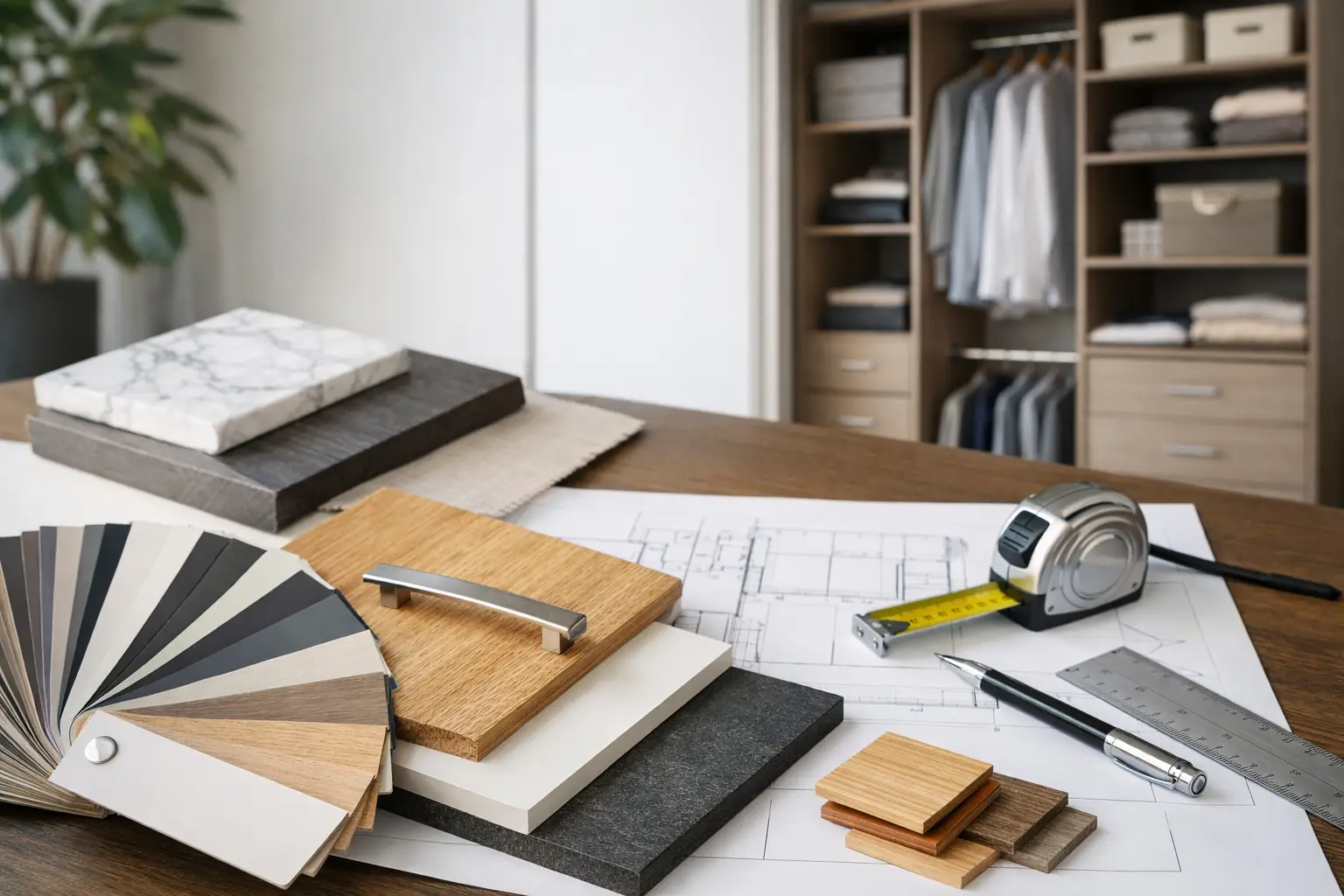
A wardrobe can look beautiful on installation day and still disappoint six months later if the materials were chosen for appearance alone. That is why a fitted wardrobe materials review matters so much. The right board, finish and door material will shape how your wardrobe wears, how easy it is to live with, and whether it still feels like part of your home years from now.
In bespoke interiors, materials are never just a technical detail. They affect the line of a shaker door, the smoothness of a painted finish, the strength of shelving, and even how calm and cohesive a bedroom feels. If you are investing in fitted storage, it is worth understanding what sits behind the doors as well as what sits on them.
A fitted wardrobe materials review starts with how you live
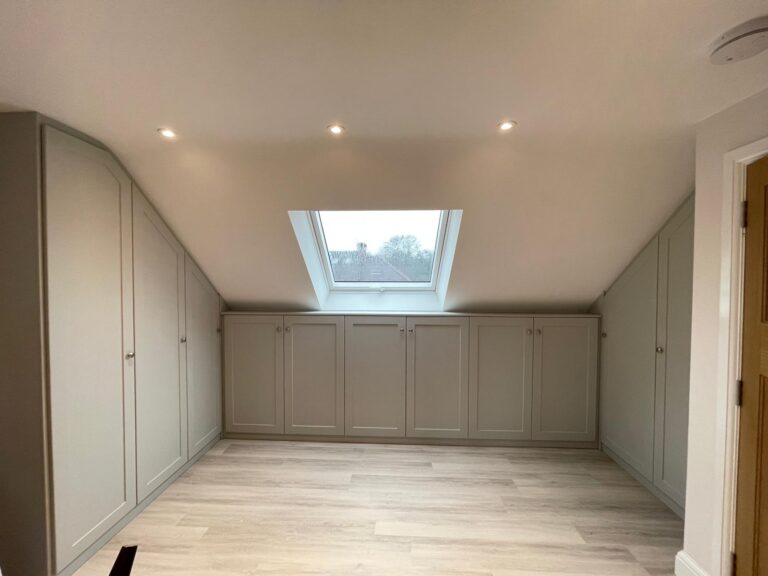
The best material is rarely the one with the most impressive label. It is the one that suits your room, your storage habits and your expectations for longevity. A family bedroom used every day needs something different from a guest room. A loft conversion with awkward angles may demand lighter, more adaptable construction than a large walk-in wardrobe with long runs of open shelving.
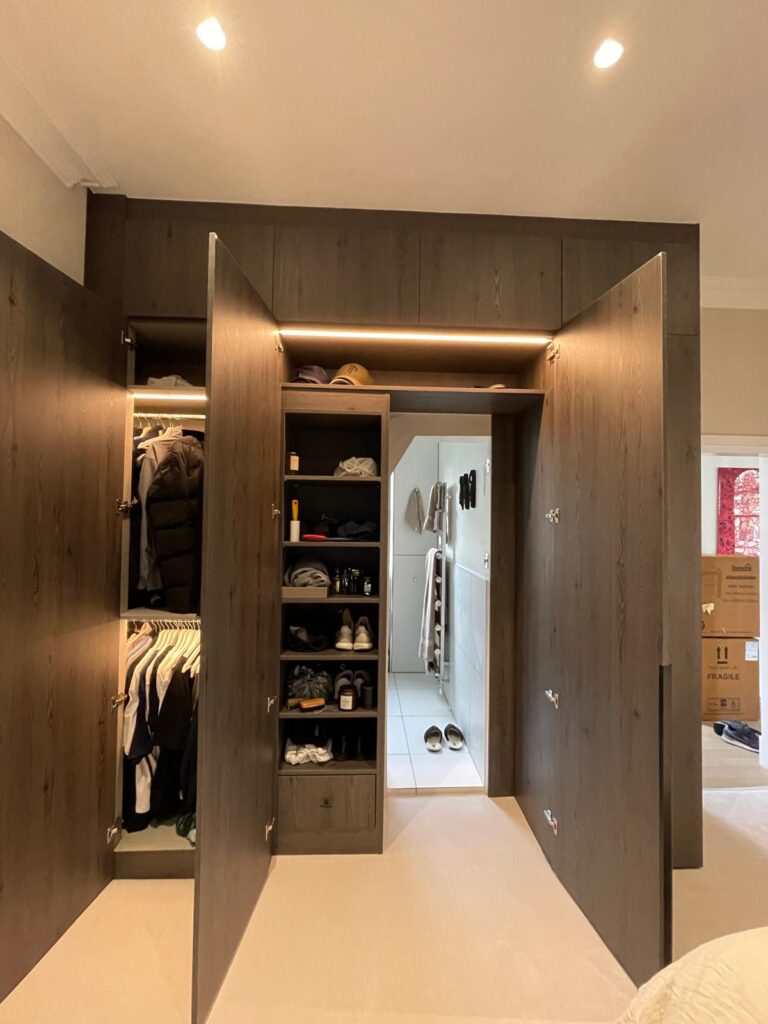
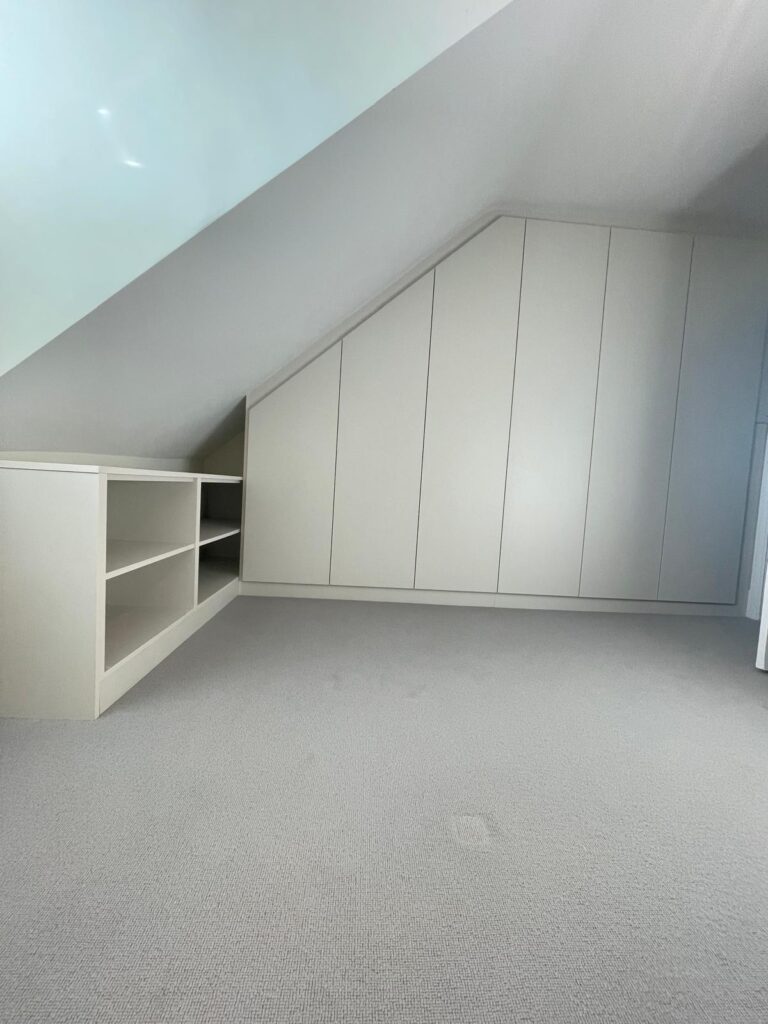
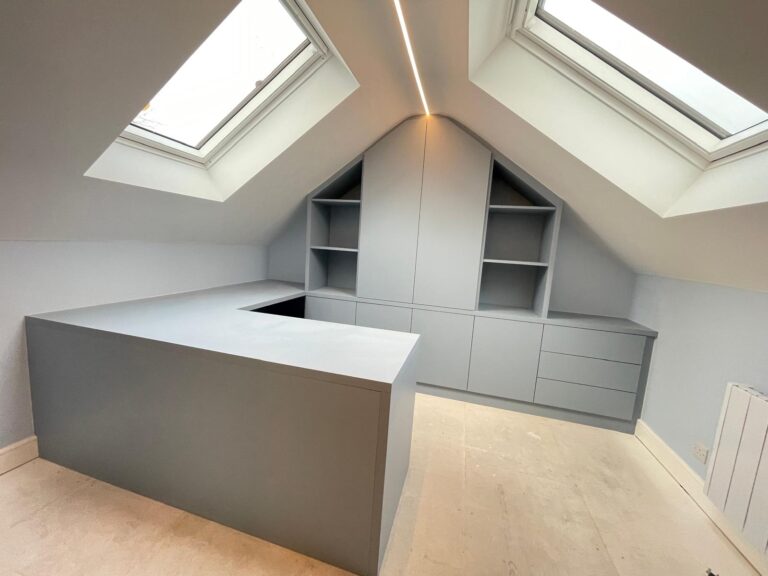
This is where bespoke design has a real advantage. Rather than forcing standard materials into a standard carcass, a made-to-measure wardrobe can be built around practical realities – ceiling height, alcoves, sloping walls, heavier hanging sections, deep drawers, integrated lighting or mirrored panels. Material choice should support that design, not fight against it.
MFC for wardrobe interiors
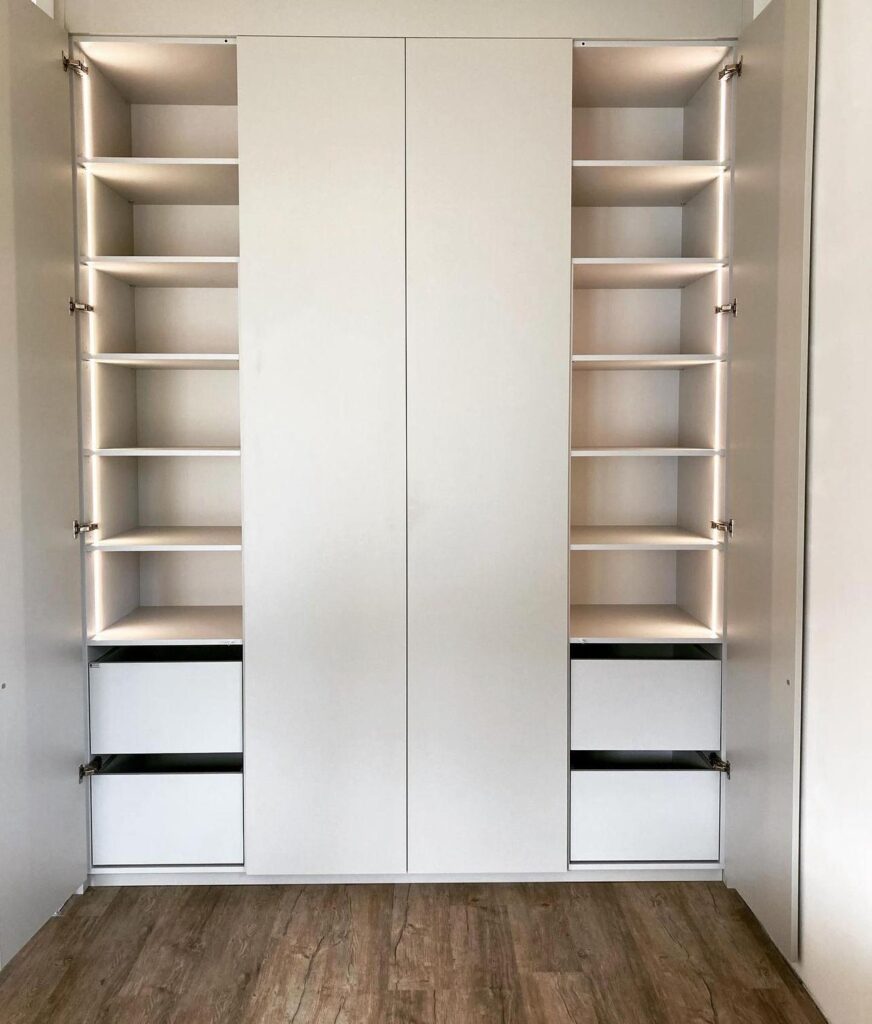
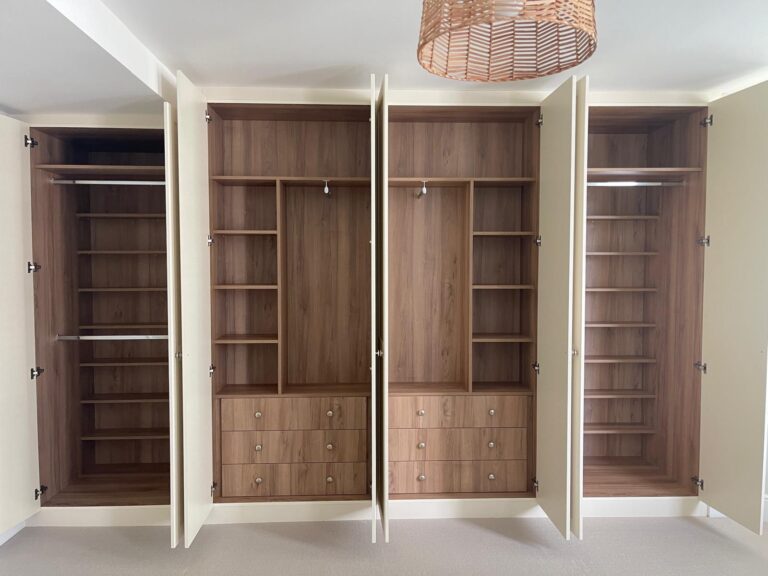
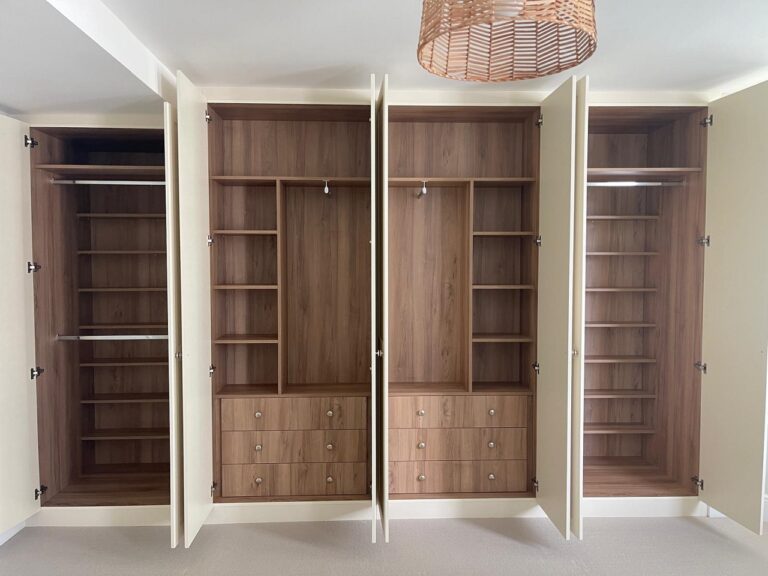
Melamine-faced chipboard, often shortened to MFC, is one of the most common materials used for wardrobe interiors. In practical terms, it offers a clean, consistent finish and very good value. It works particularly well for internal carcasses, shelves and drawer units where you want a crisp look and dependable everyday performance.
Its biggest strength is stability in standard interior conditions. The melamine surface is easy to wipe down, resists minor marks reasonably well and comes in a broad range of colours and wood-effect finishes. For many homeowners, this makes it a sensible choice for the inside of a fitted wardrobe where function matters most.
The trade-off is that MFC is not usually the most refined option for detailed painted doors or bespoke moulded fronts. It is practical rather than luxurious. When used well, it performs excellently inside the wardrobe, but it is less often the star material on visible statement pieces.
MDF for painted doors and refined detailing
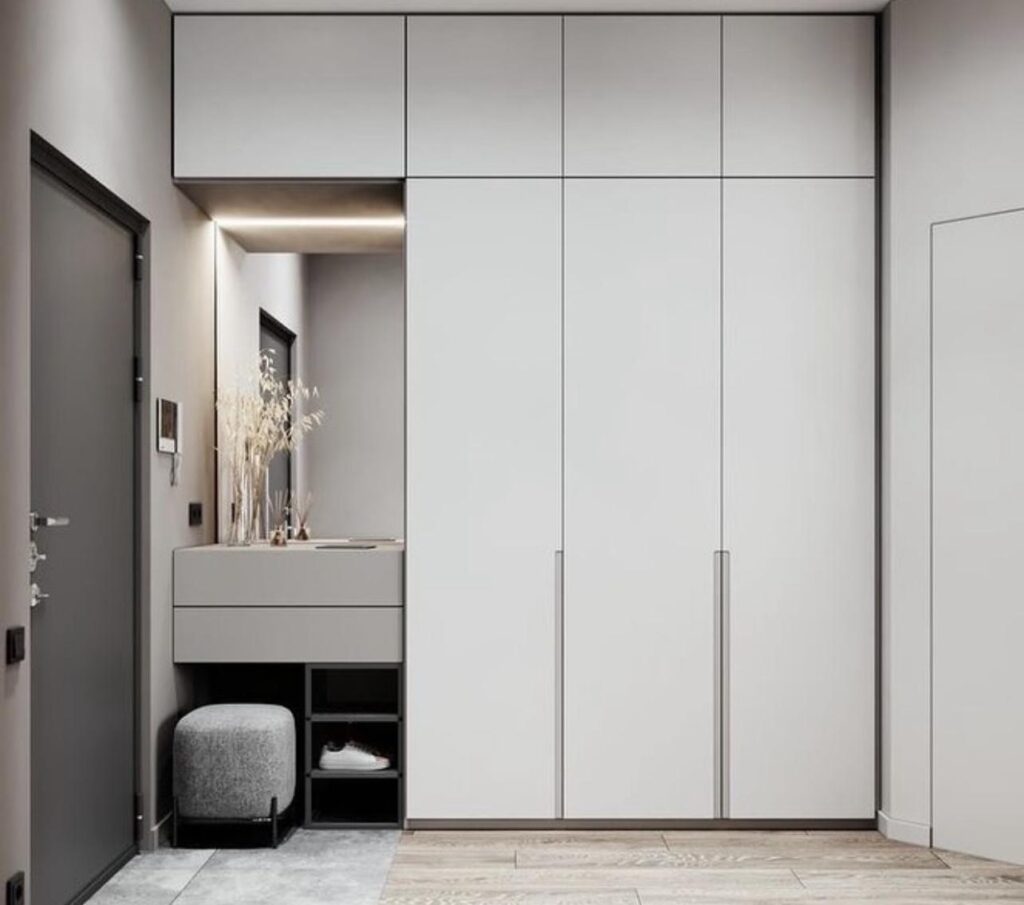
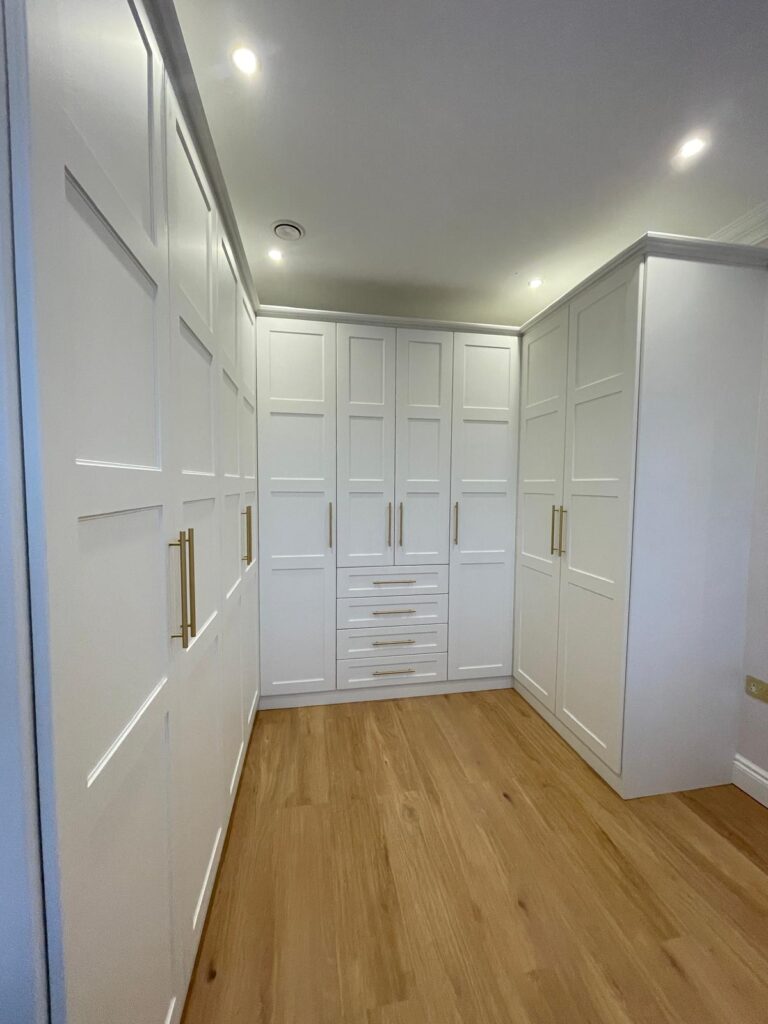
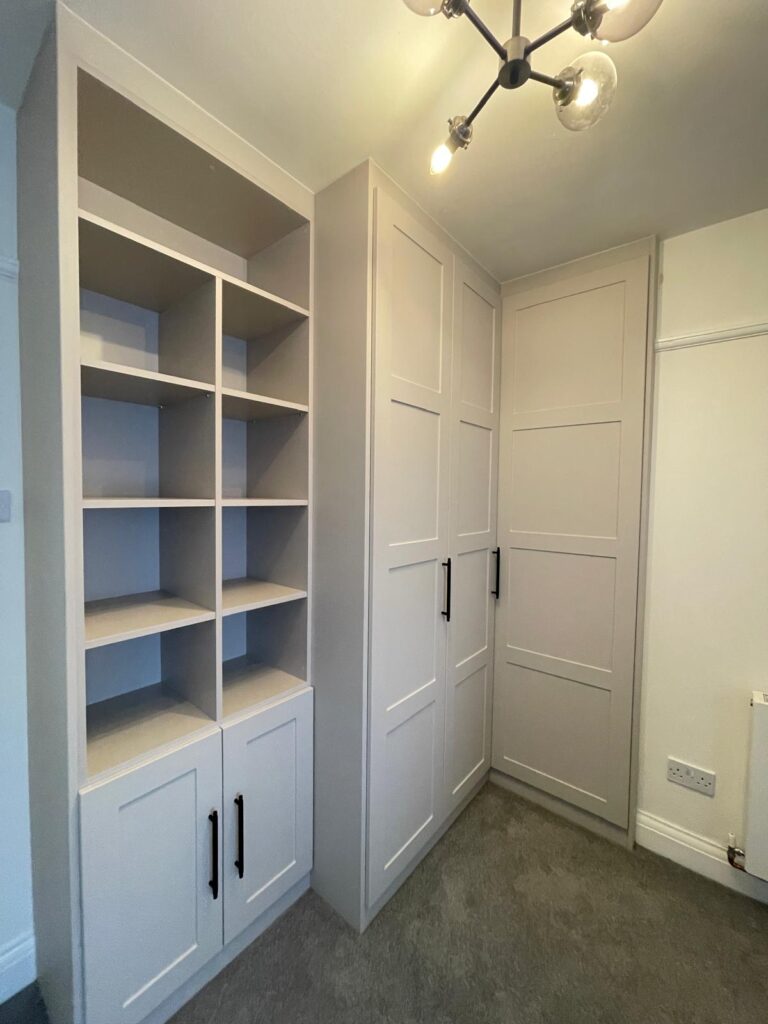
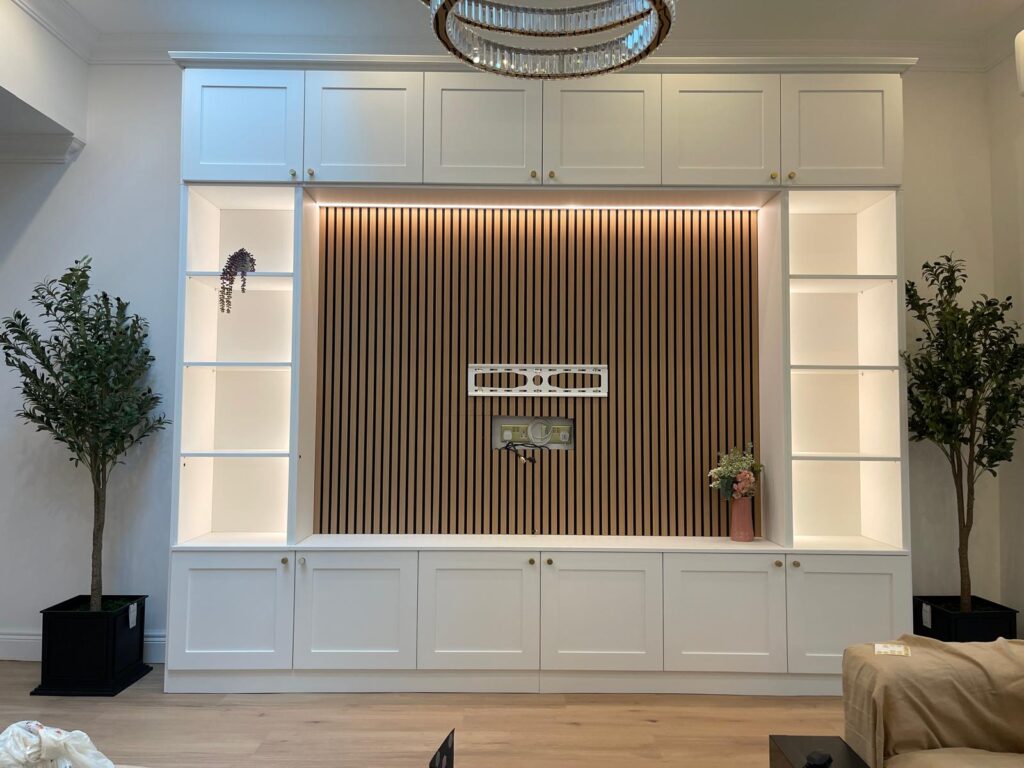
Medium-density fibreboard, or MDF, is often the preferred choice for wardrobe doors when a smooth painted finish is the goal. If you want classic shaker styling, elegant routed detail or a tailored colour match that complements your bedroom scheme, MDF is usually the material that delivers that neat, polished result.
One of its main advantages is consistency. Because it has a smooth and even structure, it takes paint well and allows for sharp detailing without the grain patterns or natural movement you get with solid timber. That is why so many premium painted fitted wardrobes rely on MDF for the frontals.
The thing to watch is weight and moisture exposure. MDF is dense, which can be a benefit for solidity, but doors need quality hinges and precise fitting. In spaces with persistent damp, material selection and ventilation become more important. In a properly designed bedroom wardrobe, though, MDF remains one of the most dependable choices for a high-end painted look.
Plywood where strength matters
Plywood has a loyal following, and for good reason. It is strong for its weight, holds fixings well and can be an excellent option where durability is a priority. In some bespoke projects, plywood is used for carcasses, shelving or specialist areas that need extra structural integrity.
Compared with chipboard-based products, plywood can feel more premium from a construction point of view. It is often favoured in projects where long shelves, heavier loads or certain bespoke detailing are involved. It can also suit more contemporary interiors where exposed ply edges are part of the design language, though that is a more niche aesthetic in bedroom furniture.
The limitation is cost. Good-quality plywood is usually more expensive than MFC or standard MDF, so it is not always necessary across an entire wardrobe. Often, the best answer is selective use – placing it where strength or fixing performance genuinely adds value rather than specifying it everywhere for the sake of it.
Solid timber for character, not always for everything
Solid wood carries obvious appeal. It has warmth, authenticity and a craftsmanship-led feel that many homeowners love. For selected wardrobe elements, especially decorative features, handles, trims or statement door styles, timber can bring real richness to a room.
But solid timber is not automatically the best choice for every fitted wardrobe. Natural movement is part of the material, and that needs to be understood properly. Changes in temperature and humidity can affect it over time, which means it requires thoughtful construction and finishing. In many modern fitted wardrobes, timber is used selectively rather than for full carcass construction.
That approach often gives the best balance. You enjoy the character of real wood where it can be seen and appreciated, while more stable engineered boards handle the structural work behind the scenes.
Glass, mirror and lacquered finishes for doors
When the conversation turns to visible impact, glass and mirror doors deserve attention. They can make a bedroom feel lighter, brighter and more spacious, especially in London homes where natural light and floor space are often limited. Sliding wardrobes, in particular, benefit from these finishes because they create a sleek, architectural look.
Mirror panels are especially useful in tighter rooms where you want storage to feel less imposing. Glass, whether coloured, frosted or paired with aluminium framing, gives a more contemporary edge. These materials are easy to appreciate visually, but they should still be judged practically. Fingerprints show more quickly, and the right frame quality matters just as much as the panel itself.
If you prefer a softer, more furniture-like feel, painted MDF or wood-effect finishes may sit more comfortably in the room. If you want clean lines and a modern profile, glass and mirror can be transformative.
What matters most in a fitted wardrobe materials review
A useful fitted wardrobe materials review should go beyond asking which material is best in absolute terms. A better question is which combination works best for the design. In many of the most successful wardrobes, the answer is mixed materials rather than one material throughout.
For example, an interior in durable MFC can be paired with painted MDF doors for a more elegant exterior. Plywood can reinforce shelves intended for heavier storage. Mirror panels can be introduced only where they improve the room visually. That kind of specification is usually more intelligent than choosing one material on reputation alone.
Edge banding, hardware, drawer runners and hinges also deserve attention. Even an excellent board can feel ordinary if the detailing is poor. Likewise, a well-designed wardrobe built with sensible materials and fitted properly will often outperform a supposedly superior product let down by rushed installation.
Budget, value and the long view
Material choice always meets budget at some point. That does not mean the cheapest option is poor or the most expensive option is necessary. It means value should be judged over time. A wardrobe is used daily, opened repeatedly and expected to look right in the room for years. That makes durability, finish quality and practical usability more important than headline material claims.
For homeowners weighing up options, it helps to decide where to invest. If the visual finish matters most, spend on the doors and visible panels. If the wardrobe will carry heavier storage, strengthen the internals. If the room is compact, prioritise materials and finishes that improve light and space perception. Good design is often about placing the budget where it changes the lived experience most.
At Finest Furniture Studio, this is where bespoke service becomes particularly valuable. Material choices can be matched to the room, the style of the property and the way the wardrobe will actually be used, rather than relying on a one-size-fits-all specification.
So which material should you choose?
If you want a concise answer, MFC is usually a strong and cost-effective choice for interiors, MDF is excellent for painted doors, plywood is ideal where extra strength is needed, and glass or mirror works beautifully for contemporary fronts and smaller rooms. Solid timber brings character, but is often best used selectively.
The more honest answer is that the best fitted wardrobe is rarely built from one hero material. It comes from a thoughtful combination, carefully designed, properly manufactured and fitted with precision. When materials are chosen with the room in mind, the result does not just store your clothes more neatly – it makes the whole space feel calmer, more intentional and far better to live in.
If you are comparing wardrobe options, look past surface impressions. Ask what the doors are made from, what supports the shelves, how the finish will age and how the design suits your routine. The right material choice should feel just as considered as the wardrobe itself.