
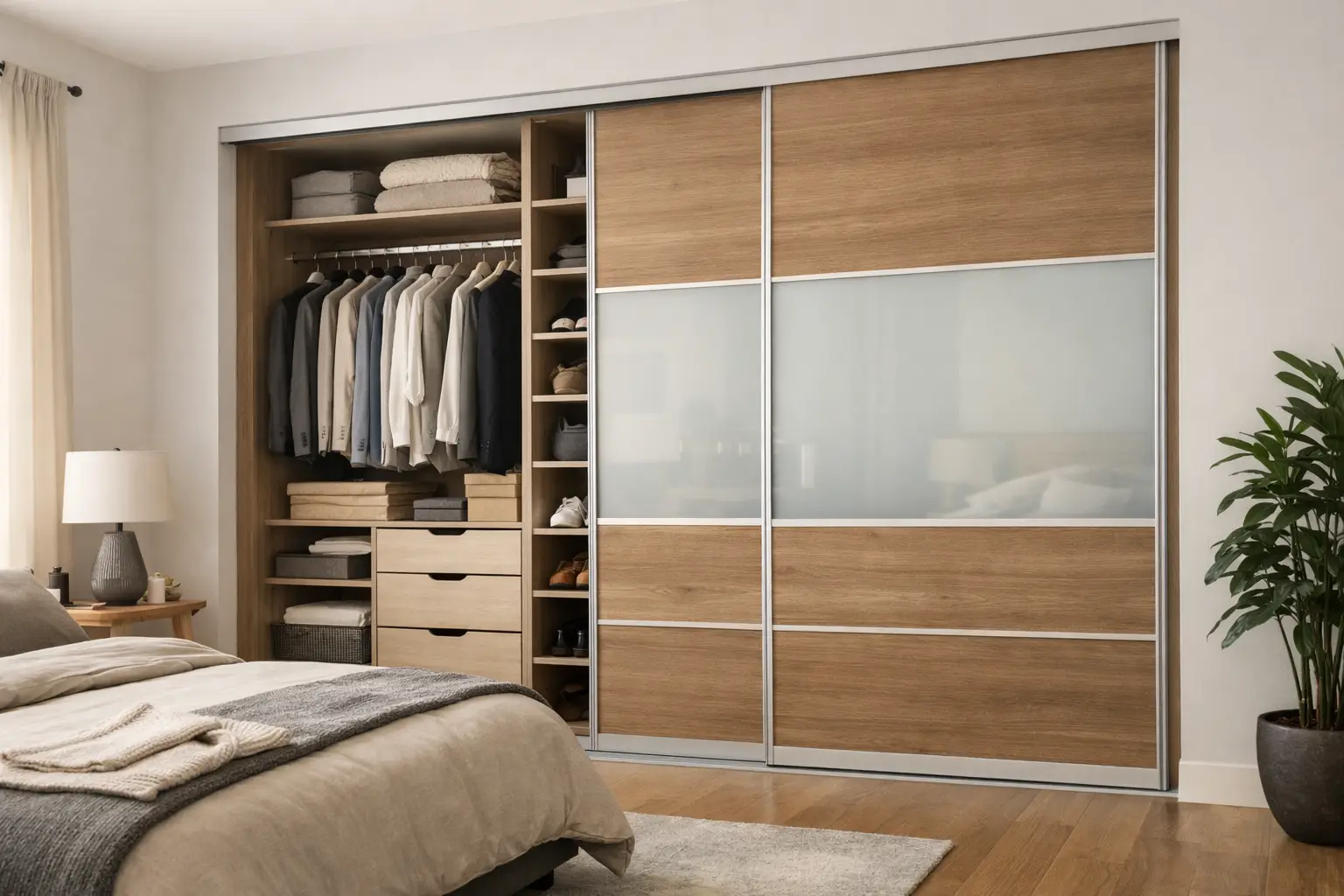
A wardrobe door that swings into the room can dictate where the bed goes, how wide the walkway feels, and whether the bedroom ever looks calm. Sliding wardrobe systems solve that problem neatly. They give you full-height storage without asking for extra clearance, which makes them especially valuable in bedrooms where every inch matters.
That practical advantage is only the starting point. When designed well, sliding wardrobes also change how a room feels. The front can read as part of the architecture rather than a bulky piece of furniture, and the interior can be arranged around the way you actually live – long hanging for dresses and coats, double hanging for everyday clothing, shelving for knits, drawers for smaller items, and dedicated space for shoes, bags, or luggage.
Why sliding wardrobe systems work so well
The appeal of sliding doors is obvious in compact rooms, but they are just as effective in larger spaces where a cleaner visual line matters. Because the doors move laterally rather than outward, they allow furniture placement closer to the wardrobe and keep circulation routes open. In a main bedroom, that often means better balance. In a guest room or loft conversion, it can mean the difference between storage that feels generous and storage that feels intrusive.
There is also a design advantage that freestanding pieces rarely match. Fitted sliding wardrobes can run wall to wall and floor to ceiling, closing awkward gaps where dust gathers and wasted space accumulates. Instead of a wardrobe sitting in the room, the wardrobe becomes part of the room. That tailored look is one reason homeowners often choose sliding systems when they want storage to feel intentional rather than added on later.
Of course, sliding doors are not automatically the right choice for every home. Hinged wardrobes offer full access to the entire interior at once, which some people prefer. Sliding wardrobes typically expose one section while covering another. Whether that is a drawback depends on how you use the space. For many households, the cleaner footprint outweighs that trade-off.
What makes a sliding wardrobe feel bespoke
A bespoke wardrobe is not simply a wardrobe made to measure. The real difference is how well it responds to the room, the contents, and the routines of the people using it. With sliding wardrobe systems, that means paying equal attention to the exterior and the internal layout.
On the outside, proportions matter. Wide panels can create a sleek contemporary look, while a more divided front can feel softer and more architectural. Material choice changes the whole mood of the bedroom. Mirror panels help bounce light and visually expand tighter rooms. Matte finishes feel understated and refined. Woodgrain adds warmth. Mixed-panel designs can balance practicality with a more decorative finish.
Inside, the best layouts are rarely generic. A couple sharing one wardrobe may need very different storage zones. One side might prioritize hanging rails and pull-out drawers, while the other needs more shelving and handbag storage. Children growing into teenage years may need interiors that can adapt over time. A smart design allows for that flexibility from the start.
Sliding wardrobe systems for awkward spaces
This is often where fitted furniture proves its value. Many bedrooms are not simple boxes. They have chimney breasts, sloping ceilings, alcoves, uneven walls, or corners that defeat standard furniture. Freestanding wardrobes tend to exaggerate those problems by leaving dead space around them. Bespoke sliding wardrobes can absorb them.
In loft rooms, for example, a sliding front can create a calm, uninterrupted line even when the ceiling changes pitch nearby. In alcove-heavy period homes, a fitted design can bring order to walls that would otherwise feel fragmented. In modern apartments, where bedroom footprints may be tight and storage limited, sliding doors can make everyday use much easier because they do not compete with bedside tables or narrow walkways.
This is also why the design process matters. The goal is not to force a standard product into a difficult room. It is to turn a difficult room into a well-resolved one.
Choosing the right interior layout
A beautiful wardrobe front gets attention first, but the interior determines whether the wardrobe is genuinely useful six months later. Good sliding wardrobe systems are organized around frequency and ease of use.
Everyday items should sit at the most accessible height. That sounds simple, yet it is often overlooked. Shirts, trousers, workwear, and daily accessories need easy reach. Seasonal items, spare bedding, or suitcases can sit higher. Deeper shelves may suit knitwear, while drawers help keep smaller items from creating visual clutter. If shoes are a priority, they should have dedicated storage rather than being pushed into the base of a hanging section.
There is no single perfect formula. Someone with an extensive dress collection needs more long hanging. Someone with mostly folded clothing may get more value from shelves and drawers. The best arrangement starts with honest habits rather than idealized ones.
Materials, finishes, and long-term feel
Sliding wardrobes are used constantly, so finish selection should go beyond appearance alone. A high-gloss surface can reflect light beautifully, but fingerprints may show more readily. Matte finishes are often calmer and easier to live with day to day. Mirrored doors are especially useful in smaller bedrooms because they combine storage frontage with a dressing mirror, though some homeowners prefer to soften the look with a mix of mirrored and solid panels.
Track quality matters too. A wardrobe can look impressive on day one and disappoint later if the doors feel heavy, noisy, or unstable. Smooth operation, strong construction, and precise fitting are what make the experience feel premium over time. This is where craftsmanship becomes more than a sales phrase. If the doors glide properly, align cleanly, and continue to do so with regular use, the wardrobe earns its place in the room.
Are sliding wardrobes right for every bedroom?
Not always, and that honesty matters. If you want to open the whole wardrobe at once while dressing, hinged doors may suit you better. If the room is spacious and the wardrobe is relatively narrow, the space-saving benefit of sliding doors may be less critical. Likewise, if you love the look of traditional panel doors and want a more classic furniture feel, a hinged design may be the stronger aesthetic choice.
But in many homes, sliding systems offer the most balanced answer. They work particularly well where space is constrained, where a cleaner contemporary look is preferred, or where the wardrobe needs to span a wider wall elegantly. They are also ideal when the aim is to reduce visual noise and make the bedroom feel more settled.
For homeowners upgrading bedrooms in places such as Richmond, Wimbledon, or Putney, this often comes down to making existing space work harder without making it feel busier. A fitted sliding wardrobe can do exactly that.
The value of professional design and fitting
A wardrobe this integrated should not rely on guesswork. Measurements need to be exact, internal planning needs to reflect real storage needs, and installation needs to account for floors, walls, ceilings, and finishes that are rarely perfectly true. The difference between an acceptable result and a beautiful one often comes down to those details.
A specialist approach also helps with budgeting. When pricing is transparent and the design is tailored properly from the beginning, homeowners can make clear decisions about finishes, interiors, and layout without unpleasant surprises later. At Finest Furniture Studio, that combination of bespoke design, practical guidance, and efficient installation is central to creating wardrobes that look refined and work hard every day.
The best sliding wardrobe systems do more than hide clutter. They create breathing room, bring order to difficult layouts, and make the bedroom feel considered. If your current storage interrupts the room more than it supports it, that is usually the signal to choose something made for the space rather than squeezed into it.

