
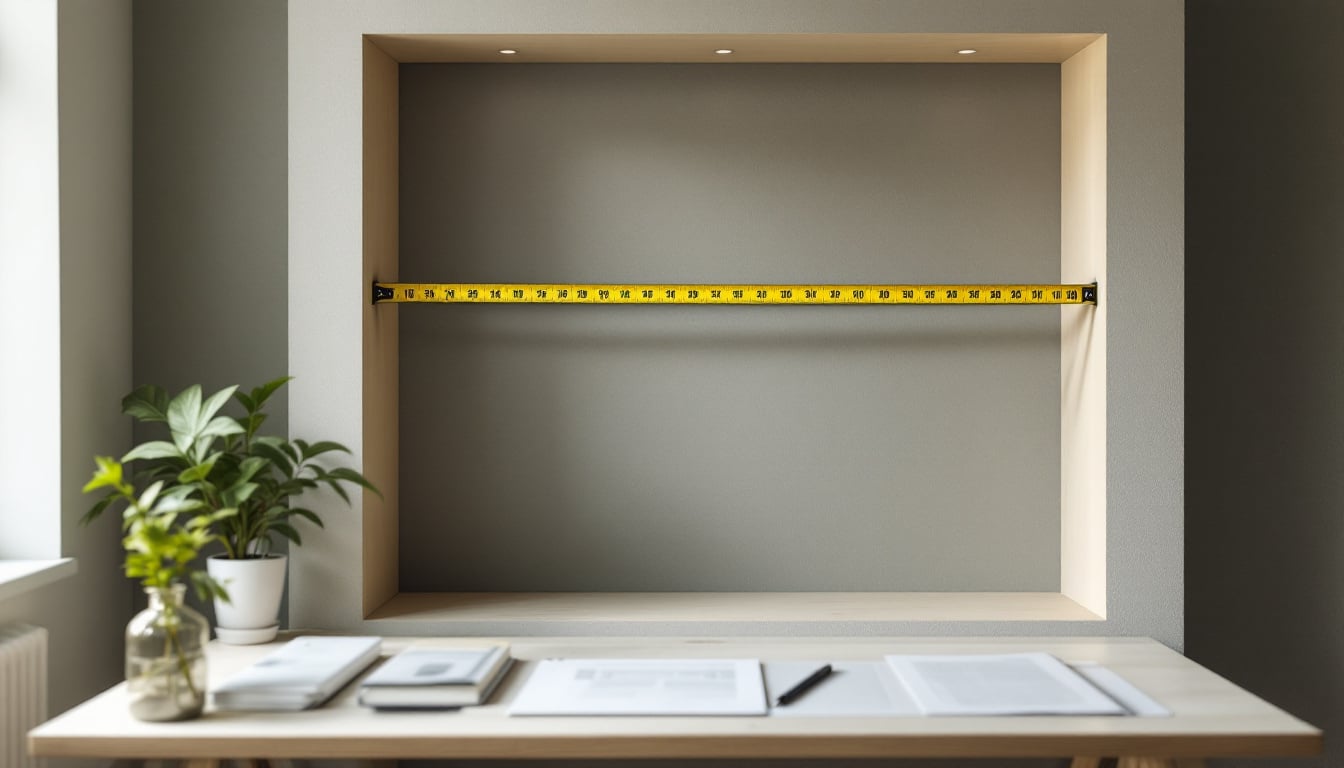
What a wardrobe survey should do
A wardrobe survey is not just a measuring visit. Done properly, it is the point where layout, clearances, wall conditions, and client expectations are checked before any materials are cut. If you treat the wardrobe survey as a quick note-taking exercise, you end up with avoidable delays, rework, and awkward surprises on fitting day. If you treat it as a diagnosis step, it becomes one of the strongest controls in the whole process. For fitted wardrobe projects, the best wardrobe survey answers one question early: will the proposed design actually work in this room?
What ranking pages usually cover
The pages that tend to rank for wardrobe survey topics usually focus on a few recurring themes: how to measure accurately, what tools to use, common measurement mistakes, and when to bring in a professional surveyor. They also cover alcoves, sloping ceilings, door swings, and the difference between rough measurements and install-ready dimensions. A stronger article goes further by showing what to record, how to verify the room, and how to turn the survey into a usable brief for design and fitting. That is the gap this guide fills.
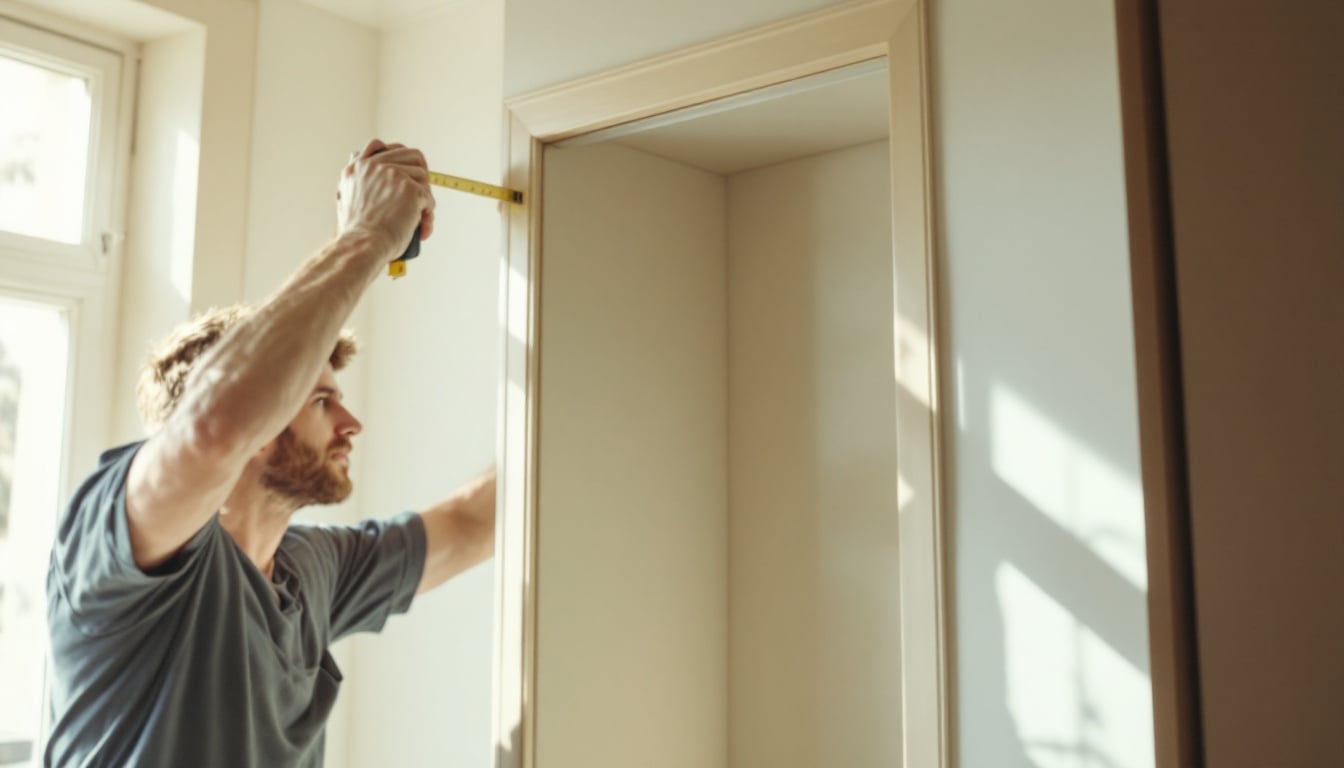
The wardrobe survey workflow that avoids rework
A reliable wardrobe survey should follow a fixed sequence. Start with a site walk-through, then measure the room, then confirm obstructions, then photograph the space, and finally sanity-check the design against the measurements. This order matters because measurements alone do not tell you whether a skirting board, radiator pipe, or uneven ceiling will change the installation. A useful rule is to record every dimension that affects the carcass, the doors, and the opening path separately. That prevents one number from being reused where a different number is needed.
Measure the room in layers, not one pass
The most common mistake in a wardrobe survey is relying on one width, one height, and one depth. Rooms are rarely that clean. Measure the opening at the top, middle, and bottom, then repeat on both sides if you are dealing with a fitted alcove wardrobe or an irregular chimney breast. The practical value is simple: three readings reveal tapering, bowing, and floor variation before they become installation problems. If the measurements differ, use the tightest usable figure and note the deviation clearly.
Check walls, floors, ceilings, and services
A wardrobe survey has to look beyond the nominal room size. Walls can lean, floors can slope, ceilings can drop, and pipework can sit where the design expects a flush back panel. This is where a measuring guide helps, because it forces the survey to include not only dimensions but also surface condition. A 5 mm tilt may not sound dramatic, but across a tall fitted run it changes how doors meet, how fillers sit, and how clean the final reveal looks.
Capture constraints that drawings often miss
Drawings can look correct and still fail on site if the wardrobe survey misses opening paths, plug sockets, window boards, or the location of a ceiling bulkhead. The fix is to write down anything that affects access or assembly, not just anything that affects width. For a sliding doors wardrobe, the door stack zone matters. For hinged doors, the swing clearance matters. For loft wardrobes or sloped cupboards, the critical issue is usually the shape of the ceiling line rather than the floor area itself.
The measurements that actually matter
Not every measurement deserves equal weight. In a wardrobe survey, the most important dimensions are the overall opening width, usable height, internal depth, and any local restrictions that interfere with the fitted structure. If you are planning bespoke wardrobes, measure the carcass depth separately from the door depth so you do not overpromise storage volume. That distinction matters because shallow spaces can still work well, but only if rails, shelving, and door choice are matched to the real room depth.
Use a decision rule for depth
Depth deserves a clear rule rather than a rough guess. If the room can support hanging clothes comfortably, the survey should confirm enough internal depth for the intended use, not just enough wall-to-wall space to place a unit. For example, a deep run may suit standard hanging, while a narrower room may need a mix of shelving, drawers, and shorter hanging sections. This is where wardrobe doors design matters, because door style and internal layout need to work together instead of being chosen in isolation.
Treat asymmetry as a design input
Many surveys fail because they try to make an uneven room look square on paper. A better approach is to preserve asymmetry in the survey notes and let the design absorb it with fillers, scribing, or split bay planning. A fitted wardrobe in a room with an uneven wall can still be precise, but only if the survey identifies where the room changes shape. This is the point where a good designer saves time later, because the survey data already explains where adjustment is needed.
How to handle awkward room types
A strong wardrobe survey becomes more valuable in awkward rooms than in perfect ones. Alcoves, loft rooms, chimney breasts, and bedrooms with sloping ceilings all require extra checks because the visible wall area is not the same as the usable installation area. The practical mindset is to decide whether the room should be measured as a simple rectangle, a stepped shape, or a fully irregular space. That choice changes the drawing, the order sheet, and the fitting plan.
Alcoves and chimney breasts
For alcove cupboards and fitted furniture around a chimney breast, the survey must capture both the full width of the feature and the return depths on each side. The main pitfall is assuming the recess is symmetrical when it often is not. Measure the front opening, the side returns, and the depth at the narrowest point. If the room is being used for a built-in cupboard or a wardrobe run beside the breast, note whether the finish needs to align visually with skirting, coving, or an adjacent door frame.
Sloped ceilings and loft spaces
For sloped cupboards and loft wardrobes, the key survey task is to define the line where height changes, not just the highest and lowest points. A common error is to measure only the peak height and assume the whole bay can use it. In reality, the slope determines whether hanging space, shelving, or drawer stacks will fit cleanly. The best wardrobe survey records the slope angle visually and by measurement so the design can step down smoothly rather than forcing unusable voids into the layout.
Choosing doors after the survey
Door choice should follow the wardrobe survey, not lead it. Sliding doors work well when front clearance is limited, while hinged doors are often better when the room allows full swing access and you want simpler internal access. The survey should therefore capture not only the opening width but also the circulation space in front of the wardrobe. A room with a bed close to the run may rule out one door type immediately, even if the unit itself technically fits.
Match door type to room constraints
If the wardrobe survey shows a tight walkway, sliding doors can reduce conflict with nearby furniture. If the room is wider and the client wants full access to the interior at once, hinged doors may be the better fit. The trade-off is simple: sliding systems save swing space but can limit access to one section at a time, while hinged doors need more front clearance but are easier to inspect and use. That decision should be made on measured room behaviour, not preference alone.
Use product options to refine the design
Once the survey is complete, product selection becomes much cleaner. Reviewing specific wardrobe doors design options after the visit helps avoid overdesigning a room that has limited tolerance for depth or movement. It also reduces the risk of choosing an attractive front that creates maintenance issues later. A practical rule is to prioritise access, room clearance, and installation tolerance first, then make the aesthetic choice within those constraints.
What to record so the fitters can trust the survey
The value of a wardrobe survey depends on whether the fitting team can use it without guessing. That means the final record should include dimensions, wall condition notes, door type assumptions, photos, and a short summary of anything unusual. A clean survey file should let another person understand the room without revisiting it. The best test is practical: if the fitter can explain the installation plan from your notes alone, the survey is good enough.
Build a simple documentation template
Use the same fields on every wardrobe survey so nothing gets forgotten. At minimum, record room name, date, access constraints, key dimensions, ceiling and floor notes, socket or pipe positions, and finish requirements. A repeated format also makes it easier to compare jobs later and spot recurring error patterns. The hidden benefit is speed, because standardised notes reduce back-and-forth between survey, design, and installation.
Photographs should support the measurements
Photos are not a replacement for dimensions, but they are essential for context. Take wide shots that show the whole wall, then closer shots of problem areas such as uneven corners, switches, or trim details. Avoid only taking flattering angles, because those hide the very issues the survey is meant to catch. A useful habit is to take one photo from each corner of the room so the visual map matches the written notes.
Common wardrobe survey mistakes and fixes
Most wardrobe survey errors are boring, which is exactly why they keep happening. The most frequent ones are measuring once instead of multiple times, forgetting trim thickness, ignoring uneven floors, and assuming a stock layout will fit a bespoke room. The fix is not more complexity, it is a stricter process. Build a short final check before sign-off: verify the tightest width, confirm door clearance, confirm internal depth, and confirm any special finish or access issue.
The fast sign-off check
Before a survey is marked complete, ask four questions. Is the narrowest dimension recorded? Is the usable depth confirmed for the planned storage type? Are obstructions documented? Does the layout still make sense if one measurement is reduced slightly during fitting? That last question matters because real rooms are rarely perfect. If the answer is no to any of these, the wardrobe survey is not ready for production.
Why a survey improves the website-to-enquiry path
From a practical site perspective, a clear wardrobe survey process also helps customers understand what happens next. People are more likely to enquire when they can see that the process is structured, measured, and install-led rather than vague. Pages that explain the survey and reference a measuring guide reduce uncertainty and help set realistic expectations. That does not mean overexplaining every technical detail. It means giving enough clarity that the customer knows what will be checked, what they need to prepare, and why the visit matters.
Make the next step obvious
A useful next step is to route visitors from the survey explanation into the most relevant product or measuring page, especially if they are comparing bespoke wardrobes, built-in cupboard options, or specific wardrobe doors design choices. For a fitted furniture site, this keeps the journey connected: survey information leads naturally to design selection, and design selection leads to a better briefing. It is a small change, but it reduces drop-off caused by uncertainty.
Quick Takeaways
A wardrobe survey should verify fit, not just record dimensions. Measure width, height, and depth in multiple points because rooms are rarely square. Always note walls, floors, ceilings, obstructions, and access constraints, not only the opening size. Choose door style after the survey so clearance and access match the room. Treat alcoves, loft slopes, and chimney breasts as irregular shapes, not standard bays. Use one repeatable documentation template so survey notes are clear for design and fitting. A clean wardrobe survey reduces rework, improves install confidence, and makes the next step easier for the customer.
Conclusion
A good wardrobe survey is the difference between a room that simply gets filled and a room that fits properly. When you measure in layers, record constraints, and match door choice to the real room, you cut out most of the friction that slows bespoke projects down. You also make it easier for the design stage to stay realistic, which means fewer surprises when the installation begins. If you are refining your process or updating a service page, keep the survey explanation practical, then direct people to the measuring guide and the most relevant wardrobe doors design options.
Frequently Asked Questions
What is a wardrobe survey in a fitted furniture project?
A wardrobe survey is the site check that confirms dimensions, room conditions, and installation constraints before a wardrobe is made or fitted. It is more than basic measuring, because a proper wardrobe survey also checks walls, ceilings, access, and anything that could affect the final fit.
What should be included in a wardrobe survey checklist?
A good wardrobe survey checklist should include opening width, height, depth, wall condition, floor level, ceiling slope, sockets, pipes, and door clearance. It should also note whether the room suits fitted wardrobes, alcove cupboards, or loft wardrobes, because those details shape the final design.
How do you measure a wardrobe survey accurately?
Measure width, height, and depth in more than one point, especially if the room has uneven walls or floors. For a wardrobe survey, the narrowest usable measurement usually matters most, and it is smart to verify the room with photos and notes so the design team has context.
Why does a wardrobe survey matter for bespoke wardrobes?
A wardrobe survey helps bespoke wardrobes fit the room properly instead of forcing a standard layout into an awkward space. It reduces the risk of clearance issues, door conflicts, and wasted storage space, especially in rooms with sloped ceilings or chimney breasts.
What are the most common wardrobe survey mistakes?
The biggest mistakes are measuring only once, ignoring trim or skirting, and forgetting to check for obstructions such as radiators or sockets. Another common issue is choosing a door style before the wardrobe survey confirms whether hinged doors or sliding doors are more practical.
How does a wardrobe survey help with wardrobe doors design?
A wardrobe survey shows how much front clearance the room actually has, which helps decide between hinged and sliding systems. It also highlights any layout limits, so wardrobe doors design choices are based on room fit rather than appearance alone.
Can a wardrobe survey be used for sloped cupboards and loft wardrobes?
Yes, and it is especially important for those rooms because the ceiling line and usable height change quickly. A wardrobe survey for sloped cupboards or loft wardrobes should record the slope position, the low points, and the exact space available for storage sections.