
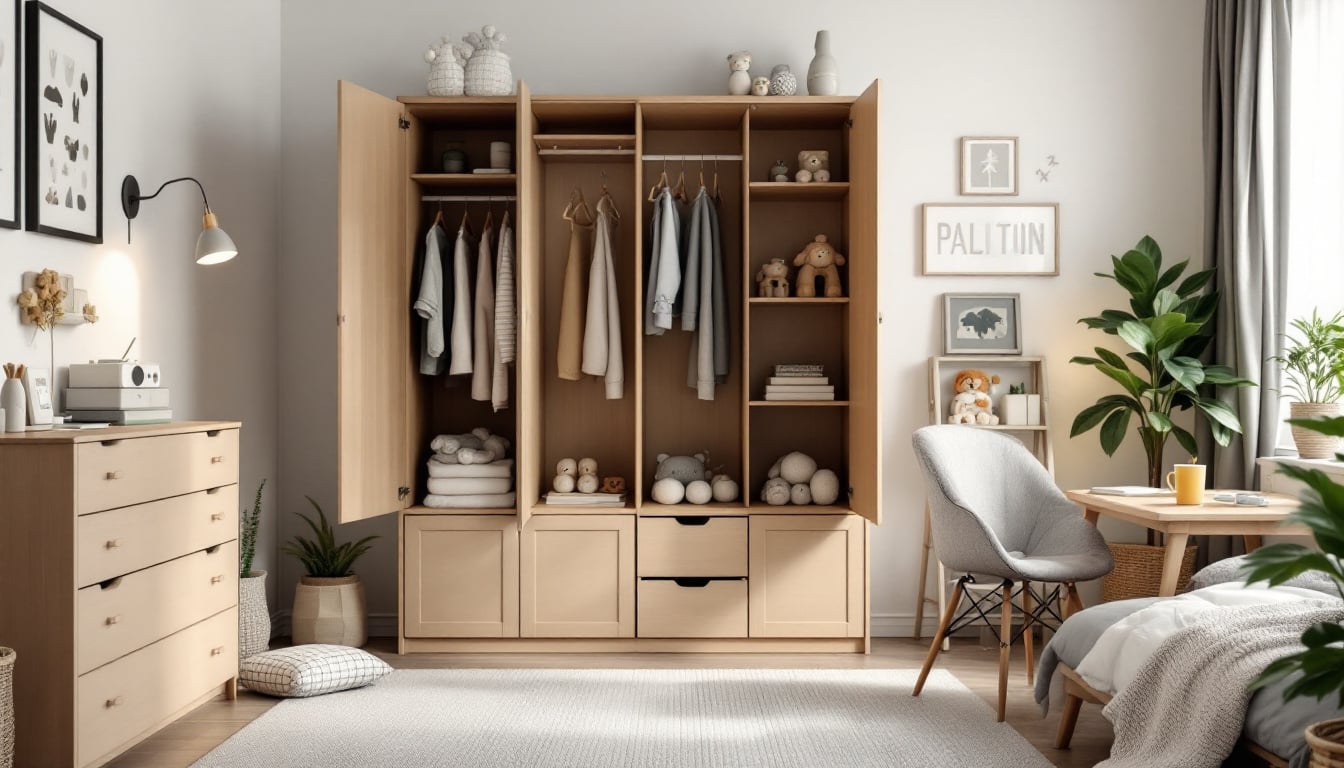
Why kids wardrobes need a different plan
Kids wardrobes are not just smaller adult wardrobes. They need lower reach zones, flexible storage, safer hardware, and enough room to change as clothes, toys, and school items change. If you get the layout wrong, the wardrobe looks fine on installation day but becomes awkward within months. The practical goal is simple: build a system that stays useful through growth spurts, seasonal clothing changes, and different routines. For operators and homeowners alike, the best results come from planning around use frequency, not just available wall space. That is the real starting point for kids wardrobes.
What top-ranking pages tend to cover
Most high-ranking pages on kids wardrobes focus on a familiar mix of made-to-measure fitting, space-saving ideas, and design options. They usually cover door styles, internal shelves, hanging rails, and a few safety notes, but many stop short of explaining how to decide between those choices. The stronger pages typically mention small-room layouts, angled ceilings, and storage for shared bedrooms, which matters because children’s rooms often have irregular walls and limited floor space. The gap is usually implementation detail: how to choose a configuration based on daily use, not just looks. That is where this guide goes deeper.
Start with the room, not the wardrobe style
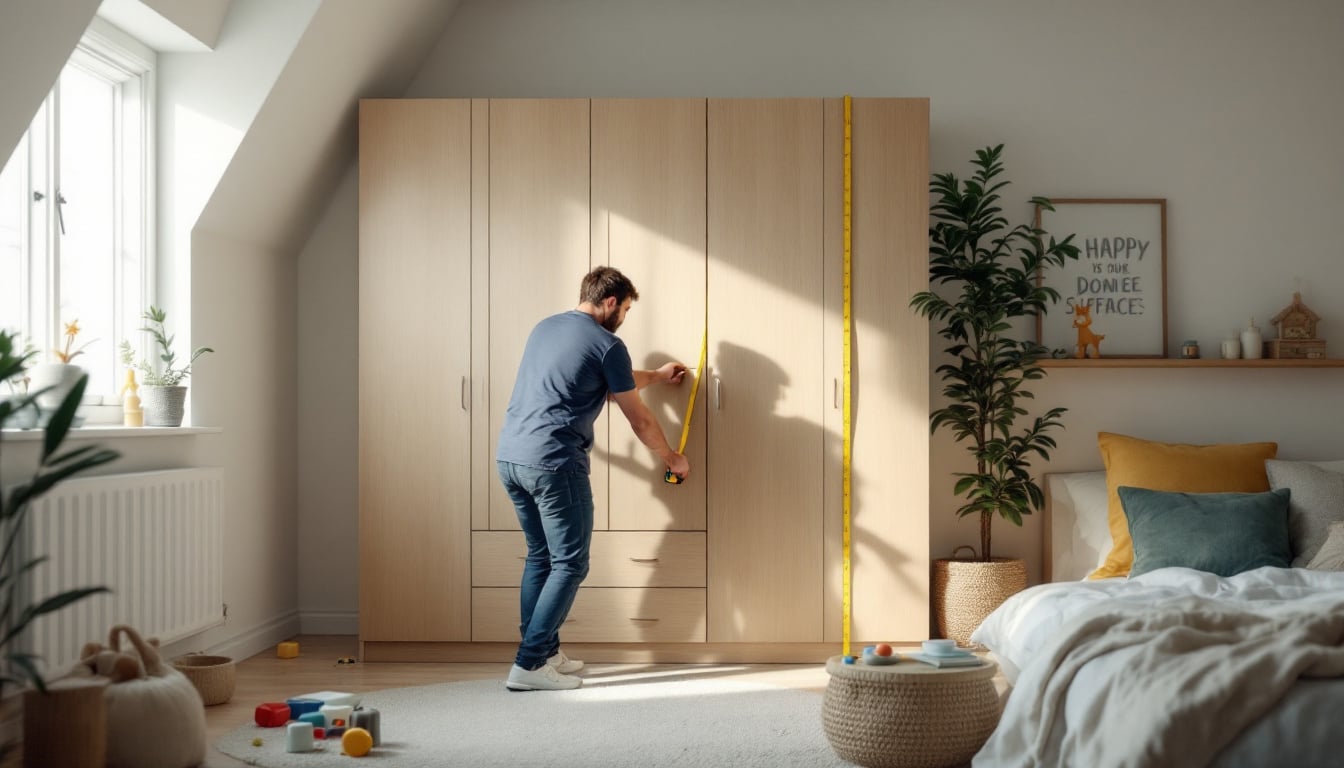
Before you compare finishes or door types, measure the room in three places: wall width, ceiling height, and any obstacles such as radiators, sockets, skirting, or slopes. A basic measuring guide should also note door swings and walking clearance, because a wardrobe that technically fits can still block access to a bed or desk. The most useful rule is to map the room in zones, then decide whether the wardrobe should be a full-height run, a corner solution, or a compact built-in. That decision prevents the common mistake of overfitting a design to a wall that cannot support daily use.
Use a child-height storage hierarchy
A practical kids wardrobes layout starts with the items a child uses daily. Put low drawers, open shelves, or a short hanging rail between roughly 60 cm and 110 cm from the floor so the child can reach them without help. Put less-used items, such as spare bedding or outgrown clothes, higher up. This hierarchy reduces clutter because the everyday items have a clear home. It also helps children maintain their own room routines, which matters more than adding extra shelves that are difficult to access.
Choose the right internal layout for age and use
There is no single best internal layout for kids wardrobes. For younger children, a mixed layout with drawers, open shelving, and a low rail usually works better than long hanging space. For older children, especially those with school uniforms or sports kit, a split design with separate hanging and folded zones is more efficient. If you expect the wardrobe to last several years, choose adjustable fittings wherever possible. A flexible interior gives you more value than a fixed layout that looks tidy on day one but becomes restrictive later.
Drawers, shelves, and rails: how to balance them
A simple decision rule is to allocate storage by item type, not by symmetry. Clothes that crease easily need hanging space, everyday basics do well in drawers, and toys or accessories fit best on shelves with bins. In many kids wardrobes, too much hanging space becomes wasted vertical room, while too many shelves create stacking and rummaging. The most practical balance is usually one short rail, two to four drawers, and adjustable shelving above. That ratio can shift if the child has a uniform-heavy routine or needs space for bulky seasonal items.
Sliding doors or hinged doors for kids wardrobes
Door choice affects more than style. Hinged doors give full access to the interior, which helps when you need to sort laundry or pack school clothes quickly. Sliding doors save floor clearance, which is useful in narrow rooms or shared bedrooms, but they reduce access to half the wardrobe at a time. If the room has limited clearance, sliding wardrobes are often the cleaner solution. If access and visibility matter more, hinged doors can make daily use easier. The right choice depends on how tight the room feels when both the bed and the wardrobe are in use.
Safety details that should not be treated as optional
Kids wardrobes should be judged on safety as much as storage. Rounded edges, soft-close mechanisms, secure wall fixing, and stable plinth construction all reduce avoidable wear and injury risk. If the wardrobe is tall, anchoring it properly matters more than decorative extras. A safe build also avoids loose handles or protruding hardware at head height. One useful check is to ask whether a child could climb, tug, or bump the structure without causing movement. If the answer is yes, the fixing and hardware need to be upgraded before installation.
Materials and finishes that hold up in real use
The best materials for kids wardrobes are the ones that tolerate fingerprints, door slams, and regular cleaning. Durable laminate, painted MDF, and quality veneer each have a place, but the right choice depends on the room and usage pattern. High-gloss finishes can look sharp but show marks more quickly. Matte and textured finishes tend to be more forgiving in busy family rooms. If you want a practical long-term option, prioritize scratch resistance and easy-clean surfaces over fragile decorative detail. The finish should suit real life, not just a showroom photo.
Built-in, bespoke, or ready-made: how to decide
The choice between built-in, bespoke, and ready-made kids wardrobes comes down to fit, budget, and lifespan. Ready-made units are quicker to source, but they often leave wasted space at the sides or top. Built-in wardrobes make better use of awkward alcoves and sloped ceilings. Bespoke fitted wardrobes are the strongest choice when the room has unusual dimensions, because they let you control internal layout and finish together. A practical test is simple: if you are losing more than a meaningful amount of usable storage to dead space, a tailored solution usually makes more sense.
When bespoke is worth the extra planning
Bespoke wardrobes are most useful when the room has a difficult shape or when you need a custom division of storage. For example, a child who needs room for both long coats and folded school clothes may benefit from a compartment mix that standard units cannot provide. The trade-off is lead time and coordination, so the decision should be based on space recovery and daily convenience rather than design preference alone. If you are already looking at bespoke fitted wardrobes, ask how the plan will adapt as the child grows. That answer is usually more valuable than the door sample.
Storage for shared bedrooms and changing routines
Shared rooms need tighter organization than single-child rooms because each child needs a clear boundary for clothing, school items, and accessories. The easiest way to reduce conflict is to separate storage by section, not by drawer label alone. Give each child a distinct hanging zone or shelf stack, and keep shared items such as bedding or seasonal clothes in a neutral upper zone. This works especially well in built-in wardrobes where internal partitions can be planned from the start. Without that structure, shared rooms usually drift into mixed storage and constant reshuffling.
Make room for growth without redesigning everything
Children outgrow storage layouts faster than most people expect. A rail that works at age five may be too low by age nine, while toy storage may become homework storage later. The fix is to choose adjustable rails and shelves, and to leave at least one repurposable compartment in the design. That extra flexibility reduces future disruption because the wardrobe can evolve without a full rebuild. A good rule is to keep one third of the wardrobe adaptable rather than locking every compartment into a single job.
How to plan around awkward spaces
Loft rooms, sloped ceilings, alcoves, and chimney breasts are common reasons families search for kids wardrobes that are made to fit. In awkward spaces, the goal is to eliminate unusable gaps rather than force a standard rectangle into the room. Sloped sections are best used for low storage or drawers, while full-height sections should sit where standing access is easiest. If a room has both a slope and limited depth, a custom built wardrobes approach is often the only way to keep the layout practical. The key is not to maximize every inch, but to maximize usable inches.
Common mistakes and how to avoid them
The biggest mistake is designing for the current age only. A toddler-friendly wardrobe that cannot adapt becomes a problem once school clothing and bags take over. Another common issue is oversizing hanging space and undersizing drawers, which creates wasted height and more folding clutter elsewhere in the room. People also underestimate door clearance and lighting, then end up with a wardrobe that is hard to use at night. The fix is to plan with a use checklist: daily clothes, seasonal items, spare bedding, and future growth. If a compartment does not serve one of those functions, it probably does not deserve space.
A practical installation workflow
A clean installation workflow for kids wardrobes starts with room measurement, then a floor plan sketch, then an internal storage list, and only then finishes and doors. If possible, confirm the height of radiators, skirting depth, and socket positions before fabrication. During fitting, check that doors open cleanly, shelves sit level, and all fixings are secure. If you are working with a fitted wardrobes manufacturer, ask for a final check against the measured room rather than a generic template. That extra step reduces the chance of site adjustments that slow the job down.
Where style should support function
Style matters, but it should never block usability. Neutral finishes age better because they are easier to pair with changing bedding, wall colours, and age groups. More playful colours can work well in younger rooms, but they are harder to carry into later years. A good compromise is to keep the structure quiet and add personality through handles, wall art, or soft furnishings. That lets the wardrobe remain useful even when the room’s theme changes. If you want a long-lasting result, choose a design that can survive two or three room updates without looking out of place.
Quick takeaways for choosing kids wardrobes
Kids wardrobes work best when the layout matches daily use, not just the available wall space. Adjustable fittings, safe hardware, and a child-height storage hierarchy make the wardrobe easier to use for longer. Sliding doors help in tight rooms, while hinged doors give better access. Bespoke solutions are most valuable in awkward rooms, shared bedrooms, and spaces that need a mix of hanging, folding, and seasonal storage. The strongest decisions come from measuring the room carefully, planning for growth, and avoiding dead space that looks good on paper but does not help in daily life.
A final check before you order
Before you commit, ask three questions: can the child reach the daily items, will the wardrobe still work in two years, and does the structure fit the room without blocking movement? If the answer is yes to all three, you are probably close to the right solution. If not, revisit the internal layout before changing the finish. For readers comparing options, the next sensible step is to review a measuring guide, then look at bespoke fitted wardrobes or custom wardrobes london if your room has awkward proportions. That route usually saves more time than trying to fix a poor fit after installation.
Frequently Asked Questions
What are kids wardrobes meant to solve?
Kids wardrobes are designed to make clothing and storage easier to use in a child’s room, with lower reach zones, safer fittings, and flexible compartments. The best kids wardrobes also help with seasonal clothing, school items, and future growth.
What size layout works best for kids wardrobes in small rooms?
In small rooms, kids wardrobes usually work best with a short hanging rail, a few drawers, and adjustable shelves. A compact fitted layout often makes better use of wall height than a standard freestanding unit.
Are bespoke kids wardrobes worth it?
Bespoke kids wardrobes are worth considering when the room has a slope, alcove, or awkward wall shape. They are also useful when you need a custom blend of hanging space, shelving, and drawers that standard units do not provide.
What should I look for in a measuring guide for kids wardrobes?
A good measuring guide for kids wardrobes should cover width, height, skirting, sockets, door clearance, and any sloped ceilings. Those details matter because a wardrobe can fit on paper but still be awkward in daily use.
Which door type is better for kids wardrobes, sliding or hinged?
Sliding doors are better when floor space is tight, while hinged doors give easier full access to the interior. The right choice depends on room clearance, how often you need to sort clothes, and whether the wardrobe sits near a bed or desk.
How do I make kids wardrobes last as children grow?
Choose adjustable shelves, a flexible rail position, and at least one compartment that can be repurposed later. That approach makes kids wardrobes more durable over time because the layout can shift from toy storage to school clothing or accessories.
What materials are best for kids wardrobes?
Durable laminate, painted MDF, and quality veneer are common options for kids wardrobes, depending on budget and finish preference. The best choice is usually the one that balances scratch resistance, easy cleaning, and a finish that still looks good after frequent use.