
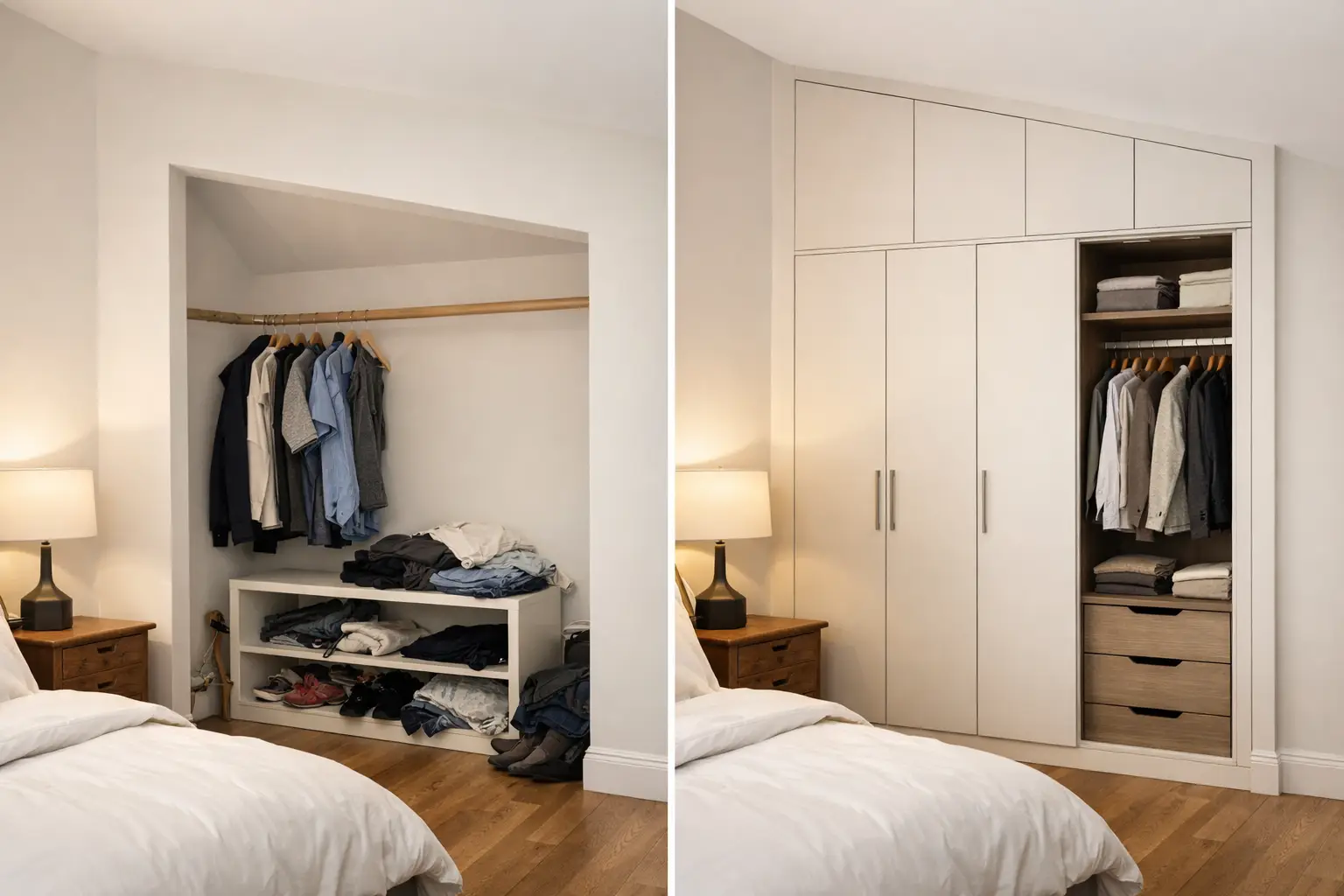
A good alcove wardrobe before-and-after example is rarely about adding doors and shelves to an empty niche. The real change is what happens to the room itself. A bedroom that once felt slightly untidy, visually uneven or short on usable storage starts to feel calmer, better balanced and much more intentional.
That is why alcove projects are so popular in period homes, loft rooms and renovated London properties. Alcoves often sit there half-used for years, collecting a small chest of drawers, a laundry basket and the odd pile of clothes. They look like storage opportunities, but without a made-to-measure solution they rarely work hard enough. A fitted wardrobe changes that by using the full height, depth and width properly, while making the room look finished rather than crowded.
What makes an alcove wardrobe before-and-after example so effective
The “before” in most alcove wardrobe projects tends to share the same problems. The space is awkward, the walls may not be perfectly straight, and freestanding furniture leaves wasted gaps at the sides and above. You end up paying for furniture while still losing storage capacity.
The “after” works because bespoke joinery responds to the architecture instead of fighting it. It can be built wall to wall within the alcove, up to the ceiling, and around details such as skirting boards, cornicing, chimney breasts or slightly uneven plaster. That tailored fit is what gives the result its clean, built-in appearance.
There is also a visual benefit that people sometimes underestimate. In many bedrooms, alcoves frame the chimney breast. When one or both alcoves are fitted properly, the whole wall gains symmetry and purpose. The wardrobe becomes part of the room design, not a separate item that has been pushed into place.
A realistic before-and-after scenario
Imagine a main bedroom in a Victorian terrace. One alcove has a narrow chest of drawers with dead space above it. The other holds a rail that was added years ago, hidden by a curtain that never quite hangs properly. The room has enough floor area, but storage is fragmented, and getting dressed feels more chaotic than it should.
In the after version, both alcoves are fitted with full-height wardrobes designed to reflect the proportions of the room. The left side might include double hanging for shirts, jackets and folded knitwear. The right side might have long hanging for dresses or coats, drawers at mid-height and shelving above for suitcases and seasonal items. If the ceiling height is generous, top cupboards can provide excellent storage without intruding on the room.
The difference is immediate. Floor space is clearer. Clothing is hidden behind doors. The wall looks balanced. Even the light in the room can feel improved because the furniture is designed to sit neatly in the recess, rather than protruding awkwardly into the bedroom.
Before: the common problems hidden in alcoves
Alcoves seem simple until you start measuring them. They are often deeper than expected, but not always in a useful way. In some rooms they are shallow enough to make standard wardrobes look oversized, yet too deep for open shelving to remain tidy. Period properties can also bring sloping floors, bowed walls and original features that make off-the-shelf furniture a compromise from the start.
Storage is another issue. Freestanding pieces rarely use the full ceiling height, which leaves an unattractive strip of wasted space above. That top gap then becomes a dust trap or a place for random boxes. Inside the wardrobe, the layout may not match your actual wardrobe habits either. A single rail sounds practical, but if you mostly need folded storage, shoes and drawers, it is not making the best use of the alcove.
There is a style problem too. Bedrooms with beautiful proportions can quickly feel cluttered when furniture pieces vary in height, finish and depth. In homes where every room has been carefully renovated, an unresolved alcove stands out more than people expect.
After: what the transformation should include
A strong alcove wardrobe transformation is not just about capacity. It should improve how the room looks, how it functions and how easy it is to live with every day.
The first sign of a good result is proportion. The wardrobe should feel as though it belongs to the room. Door widths, panel details, handles and cornice choices all matter here. In a classic bedroom, shaker-style doors can sit beautifully within alcoves without feeling heavy. In a more contemporary space, flat panels and minimal handles may suit the architecture better.
The second sign is internal planning. A tailored interior is where the wardrobe earns its keep. That may mean split hanging sections for two people, drawers positioned where they are easiest to use, shelves adjusted for handbags or knitwear, and top storage reserved for less frequently used items. If one alcove is slightly wider than the other, the internal arrangement can be adapted so the pair still looks balanced from the outside.
The third sign is finish. Painted finishes, wood effects and mirrored doors all change the final feel of the room. Mirrors can help if the bedroom is narrow or light is limited, but they are not always the right answer in a period property. A painted finish can look softer and more architectural, especially when the wardrobe is intended to blend into the wall rather than stand out.
Design choices that shape the before and after result
Hinged doors or open shelving
Most alcove wardrobes work best with hinged doors because they protect the room from visual clutter. Open shelving can be attractive in a styled photograph, but in daily life it asks for discipline. If the aim is a calm bedroom, closed storage usually delivers better results.
That said, it depends on the alcove. A very shallow niche may be better suited to open shelving or a hybrid design with cupboards below and shelves above. The best solution is the one that respects the available depth rather than forcing a full wardrobe into a space that cannot support it comfortably.
Full height or broken-up storage
Going to ceiling height is often the smartest move because it captures every bit of storage and creates a more bespoke appearance. Still, there are rooms where a lighter look is preferable. If the ceiling is low or the room already contains a lot of visual detail, breaking the design with open display shelving or a lower fitted base can feel less imposing.
One alcove or both
Using both alcoves usually gives the strongest before-and-after contrast, especially around a chimney breast. It creates symmetry and maximises capacity. But there are cases where fitting one alcove only is the better choice – for example, if the other side needs to remain free for a dressing table, desk or bedside arrangement. A bespoke design should respond to the way you use the room, not only to what looks balanced on paper.
Why bespoke matters more in alcoves than almost anywhere else
Alcoves expose the limits of standard furniture very quickly. A gap of a few centimetres at the side or top might not sound serious, but visually it can make the whole installation feel temporary. In a carefully designed bedroom, those details matter.
Made-to-measure wardrobes solve this by working with the exact dimensions of the space. They can accommodate uneven corners, pipe boxing, sockets, radiators and skirting details without looking pieced together. Just as importantly, they allow the interior to be built around the household. One person may need more shoe storage and drawers; another may want long hanging and upper shelving for luggage. Good design reflects that from the beginning.
For homeowners who have invested in extending or renovating, this is often the point. The wardrobe is not there simply to hold clothes. It is there to finish the room properly and remove a daily irritation in a way that still feels elegant years later.
Budget, value and what affects cost
An alcove wardrobe project can be surprisingly cost-effective compared with buying several freestanding pieces that still do not solve the storage issue. Pricing will depend on size, internal specification, door style and finish. Mirrored panels, premium paint finishes and more detailed interiors naturally increase cost, while simpler painted or wood-effect designs can keep the project more budget-conscious without losing the fitted look.
Installation speed matters as well. A well-planned fitted project is usually far less disruptive than people fear. Once design and manufacturing are complete, fitting can move quickly, which is one reason bespoke storage appeals to busy households who want a polished outcome without a drawn-out process.
If you are comparing options, look at value rather than headline price alone. A lower quote may leave out internal fittings, finishing quality or installation standards that make the wardrobe genuinely enjoyable to use.
An alcove wardrobe before-and-after example is really about lifestyle
The best transformations are the ones that make the room easier to live in from the very first day. Getting ready is simpler. Laundry has a place to go. Seasonal items are stored properly. The bedroom feels less like a holding area for possessions and more like a considered private space.
That is why so many homeowners revisiting an alcove project say the same thing afterwards: they wish they had done it sooner. In one measured intervention, an awkward gap becomes purposeful storage and the whole room gains a cleaner, more luxurious feel.
If you are looking at your alcoves and wondering whether they are worth using, that hesitation is usually a sign they are underperforming. The right design does not just fill the recess. It gives the room the sense of order and finish it was missing all along.

