
Table of Contents
- Why Bespoke Shelving Beats Freestanding Units
- 1. Built-In Alcove Shelving for a Seamless Look
- 2. Floor-to-Ceiling Library Storage That Doubles as a Feature Wall
- 3. Integrated Desk and Shelving Units for Small Home Office Shelving Ideas
- 4. Floating Shelves and Asymmetrical Designs for a Modern Aesthetic
- 5. Bespoke Home Office Storage Solutions for Awkward Spaces
- Fitted Home Office Design Ideas: Materials, Finishes and Lighting
- How to Choose the Right Shelving for Your Workspace
- Frequently Asked Questions
Last Updated: September 5, 2026
The average UK home office loses a surprising amount of usable space to alcoves, sloping ceilings, and awkward corners. Bespoke home office shelving turns those dead zones into the most functional part of your workspace, and it does so with a finish that freestanding units simply cannot match. This guide from Finest Furniture Studio breaks down five fitted approaches that maximise storage while lifting the look of your room, from seamless alcove installations to floor-to-ceiling library walls.
Bespoke shelving is custom joinery built to your exact wall dimensions, designed to integrate lighting, cable management, and storage around your workflow. Unlike a bought unit, it uses every millimetre of vertical wall space and can be finished to match your existing interior design. Below, we’ll show you exactly how to apply these ideas, what materials work best, and where to focus your budget for the greatest visual appeal and practical gain.
Why Bespoke Shelving Beats Freestanding Units
Freestanding bookcases and shelving towers leave gaps at the sides and above, collect dust behind them, and rarely fit the proportions of a Victorian or Edwardian room. A bespoke installation closes those gaps completely, which is why fitted home office design ideas consistently deliver a cleaner, more intentional look. The cabinetry becomes part of the architecture rather than furniture placed against it.
The practical advantages extend beyond appearance. Custom units can be built to support heavy equipment like printers, monitors, and reference libraries, with weight capacity determined by the timber and bracketry used. Freestanding units often sag or bow under the same load (woodweb.com). Bespoke joinery also allows you to conceal cabling within the structure, keeping your workspace organised and clutter-free.
What most guides miss is the effect on perceived space. A wall of fitted shelving painted in the same colour as your walls recedes visually, making a small room feel larger. Freestanding units break the sightline and shrink the space. For homeowners weighing long-term value, custom work also tends to hold up better than mass-produced alternatives, with quality joinery lasting decades rather than years.
1. Built-In Alcove Shelving for a Seamless Look
Built-in alcove shelving is the single most effective way to use the recesses flanking a chimney breast, which are otherwise dead space in many UK homes. Alcove shelving transforms these awkward voids into a tailored storage feature, with shelves cut precisely to the alcove’s width and depth. The result looks as though the house was built around the storage, which is the essence of bespoke furniture.
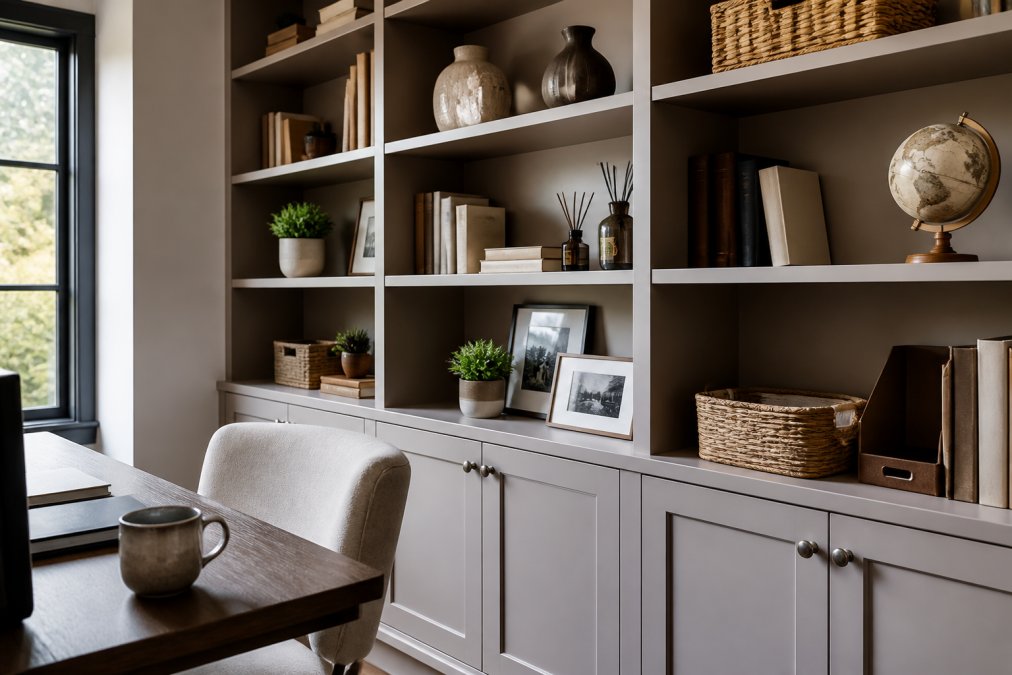
The key to a seamless finish is painting or staining the shelving to match the wall colour, so the unit reads as part of the architecture rather than an add-on. For a home office, combine closed cupboards at the base for paperwork and stationery with open shelving above for books and decorative pieces. This mix of open and closed storage keeps frequently used items accessible while hiding the visual clutter of cables and files.
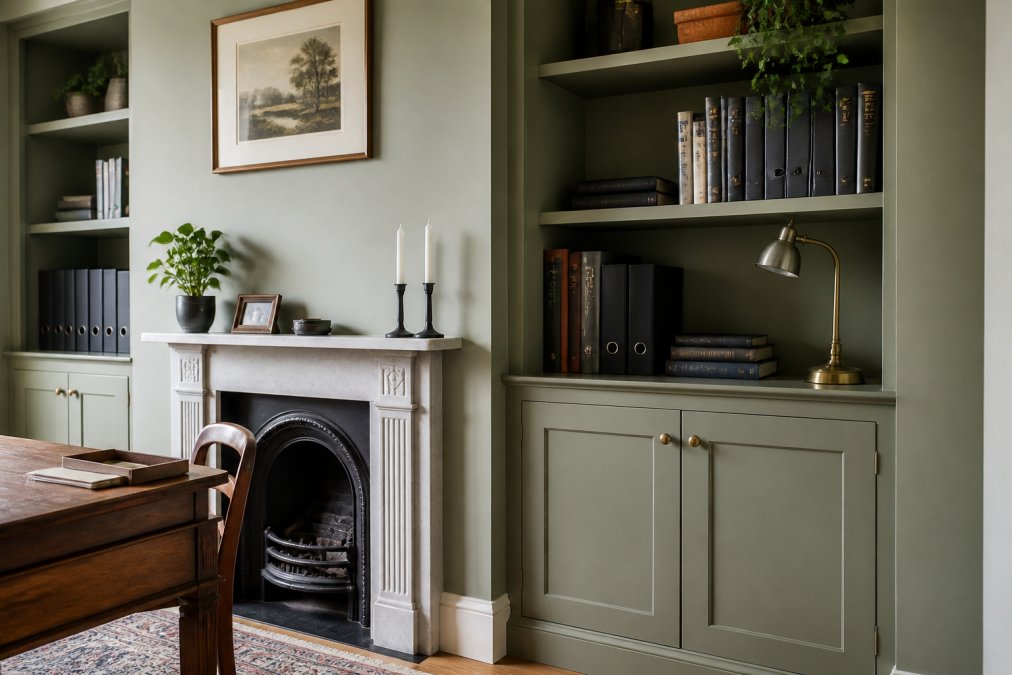
Integrating a desk into the alcove run creates a complete workstation. A fitted desk surface spanning the alcove width, with shelving above for monitors and reference materials, maximises space in rooms where floor area is tight. This approach is particularly effective in spare bedrooms and box rooms converted for work-from-home use, where every square metre counts.
2. Floor-to-Ceiling Library Storage That Doubles as a Feature Wall
Floor-to-ceiling library shelving is the boldest way to make a statement while adding serious storage capacity. Rather than stopping at head height, these units run the full height of the room, using vertical wall space that most shelving leaves untouched. The upper reaches are ideal for archive files and books you rarely need, while eye-level shelves hold daily equipment.
This design works best along a full wall, where it becomes a dramatic feature wall in its own right. A rolling library ladder adds a traditional, scholarly feel and makes the top shelves genuinely usable. For a contemporary twist, alternate solid cabinet fronts with open shelving to break up the mass and avoid a heavy, imposing look.
The structural demands here are higher than for alcove units. A floor-to-ceiling installation must be securely fixed to the wall studs or masonry, and the shelves need to carry substantial weight without deflection (awc.org). Professional installation matters because getting the fixings wrong on a tall unit creates a real safety risk.
When planning a full-wall library, factor in integrated lighting. LED strips under selected shelves or spotlights aimed at the wall transform the unit from simple storage into a dramatic evening feature, and they make finding documents far easier.
3. Integrated Desk and Shelving Units for Small Home Office Shelving Ideas
For compact rooms, small home office shelving ideas that combine the desk and storage into one fitted unit are the difference between a chaotic corner and a proper workspace. An integrated design mounts the desk surface to the wall, with shelving and cupboards built around it, eliminating the need for separate furniture that eats into floor space. The entire workstation occupies a footprint of little more than a desk chair.
The real advantage is ergonomic. Because the desk height and shelf positions are set during the design phase, everything lands exactly where you need it. Monitors sit at eye level, the keyboard at a comfortable typing height, and cable management routes neatly through the structure, keeping the surface clear for actual work.
Wall-mounted desks also free the floor beneath, which makes cleaning easier and gives a small room a lighter, more open feel. Where space is extremely limited, a pull-out keyboard tray and a slim profile keep the unit shallow while retaining full functionality. This is fitted home office design at its most space-efficient.
4. Floating Shelves and Asymmetrical Designs for a Modern Aesthetic
Floating shelves, where the bracket is hidden so the shelf appears to hover against the wall, bring a minimalist, modern aesthetic to a home office. Asymmetrical shelving designs, with staggered heights and varied shelf lengths, add visual interest and break the monotony of uniform rows. These two approaches suit contemporary interiors and rooms where you want storage to feel light rather than dominant.
Floating shelves work brilliantly above a desk for holding a few frequently used items, but they are not the right choice for heavy loads. The hidden bracketry limits weight capacity compared to units supported from below, so reserve them for lighter items like stationery, small plants, and framed prints. For anything heavier, return to a supported design. home office solutions.
Asymmetry also allows you to compose the wall like a gallery. Mix closed boxes, open display shelves, and a slim desk shelf at different heights to create a composition that is both functional and sculptural. This approach suits creative professionals who want their workspace to feel personal and curated rather than purely utilitarian.
A common mistake is installing floating shelves on plasterboard without locating the wall studs or using suitable fixings ([familyhandyman.com](https://www.familyhandyman.com/list/how-to-hang-shelves/)). A shelf laden with books can pull straight out of the wall, damaging the plaster and risking injury. Always fix into masonry or timber studs, or use fixings rated for the intended load.
5. Bespoke Home Office Storage Solutions for Awkward Spaces
Bespoke home office storage solutions earn their keep in the spaces that standard furniture cannot address: under the stairs, in eaves, and along sloping ceilings. These areas are frequently written off as unusable, yet with custom joinery they become some of the most characterful storage in the home.
Under-Stairs and Sloping Ceiling Installations
The under-stairs void is prime real estate for a compact home office. A fitted desk tucked into the deepest part of the stair run, with shelving following the rising slope above it, creates a private, focused nook that uses space otherwise given over to coats and shoes. The sloping ceiling dictates the shelf depths, with deeper storage at the bottom and shallower shelves as the ceiling rises.
Sloping ceiling installations in loft conversions and attic offices present the same challenge in reverse. Custom units built to follow the pitch of the roof maximise storage where a freestanding bookcase would simply not fit. Drawers and cupboards at the low end, where headroom is limited, make use of space that would otherwise be wasted.
These awkward installations demand precise measurement and skilled fitting, which is precisely where a specialist joinery service adds value. A poorly measured unit under the stairs is a costly mistake; a well-fitted one becomes the most useful corner of your home.
Fitted Home Office Design Ideas: Materials, Finishes and Lighting
Fitted home office design ideas succeed or fail on material choice and finish. MDF remains the most popular choice for painted cabinetry because it takes paint smoothly, resists warping, and is cost-effective. Timber, whether solid oak or a quality veneer, brings warmth and a premium feel, though it costs more. For a sustainable option, specify FSC-certified timber or reclaimed wood, which reduces the environmental impact of your project.
The finish sets the tone. Painted units in soft greens, blues, or warm neutrals suit traditional and period homes, while high-gloss or matte laminates read more contemporary. Handleless designs, where doors open via a push mechanism or a routed groove, create a sleek, minimalist frontage. Integrated lighting, whether concealed LED strips under shelves or spotlights in cabinets, elevates the unit from functional storage to a designed feature.
Lighting is the detail that separates average fitted furniture from exceptional. Task lighting above the desk surface prevents eye strain during long working hours, while ambient lighting within the shelving highlights books and objects. Plan the electrical layout during the design phase so cables are concealed within the joinery rather than trailing across the surface.
How to Choose the Right Shelving for Your Workspace
Choosing the right shelving starts with an honest assessment of what you store. List the items that need a home: heavy reference books, box files, a printer, a desktop computer, or just a laptop and a few notebooks. The weight and volume of these items determine the shelf depth, spacing, and the materials required to support them safely.
Next, consider the room itself. Measure the alcove or wall width precisely, note the ceiling height, and check for obstructions like radiators, skirting boards, and light switches. A room with limited floor space points toward wall-mounted and integrated designs; a larger room can carry a full library wall. Your working style matters too: open shelving keeps tools visible and accessible, while closed cupboards hide clutter and reduce visual noise.
| Consideration | Best Choice | Why It Matters |
|---|---|---|
| Heavy books & equipment | Built-in alcove or floor-to-ceiling units | Supported bracketry and solid timber handle the load |
| Small or awkward room | Integrated desk and shelving unit | Uses vertical space, frees the floor |
| Modern, light aesthetic | Floating or asymmetrical shelves | Minimalist look, suits lighter items |
| Rental property | Freestanding modular units | No permanent fixings, fully removable |
| Clutter reduction | Closed cupboards with some open display | Hides paperwork, keeps daily items handy |
Finally, weigh the trade-off between cost and longevity. Freestanding modular units from high-street retailers are cheaper upfront and suit rental properties where you cannot make permanent changes, but they rarely fit awkward spaces well or last as long. Bespoke joinery costs more but delivers a perfect fit, greater durability, and a finish that adds to the character of your home.
For homeowners ready to invest in a tailored solution, a professional design visit is the practical first step. At Finest Furniture Studio, we offer a complimentary design visit to measure your space and discuss your storage needs, followed by transparent upfront pricing with no hidden fees. Our bespoke home office shelving is fitted efficiently, and our cabinetry comes with a 10-year warranty for lasting peace of mind.
Frequently Asked Questions
How do I choose the right bespoke shelving for a small home office?
Start by measuring the wall space you have, including alcove depth and ceiling height. For a small home office, prioritise vertical storage that reaches the ceiling and built-in units that use every centimetre. Open shelving keeps the room feeling larger, while closed cabinets below hide cable clutter and paperwork. A free design visit can help you assess the best configuration for your room’s specific dimensions.
What are the benefits of fitted shelving over freestanding units?
Fitted shelving is cut precisely to your room, so it eliminates the wasted gaps you get behind and above freestanding furniture. It can be built around sloping ceilings, under stairs and into alcoves, turning dead space into functional storage. Bespoke units also feel like a permanent part of the architecture, which tends to look more polished and can add value to your property compared with a standalone bookcase.
Can bespoke shelving be installed on sloping ceilings or under stairs?
Yes. Awkward spaces are where bespoke joinery earns its keep. A fitted unit can be designed with stepped or angled shelves that follow the roofline, making use of areas that would otherwise sit empty. Under-stairs installations often combine open display shelving with closed cupboard storage for printers and files. The key is accurate measuring and custom cutting, which is why a professional design visit is recommended before any work begins.
What materials are best for durable, high-quality home office storage?
MDF and quality timber are the standard choices for painted, built-in shelving because they hold fixings well and resist sagging. For a more natural look, solid oak or walnut adds warmth but costs more. Always check the weight capacity of the shelving and bracketry if you plan to store heavy reference books or equipment. A reputable joiner will recommend the right material thickness and support system for your specific use.
Designing effective home office shelving comes down to using your space intelligently and choosing a solution built to last. The five ideas above cover everything from seamless alcove units to space-saving integrated desks, so there is an approach for every room and budget. For a truly bespoke result that maximises organisation and style in even the most awkward space, book a free design visit with Finest Furniture Studio and see your workspace transformed.
This article was written using GrandRanker

