
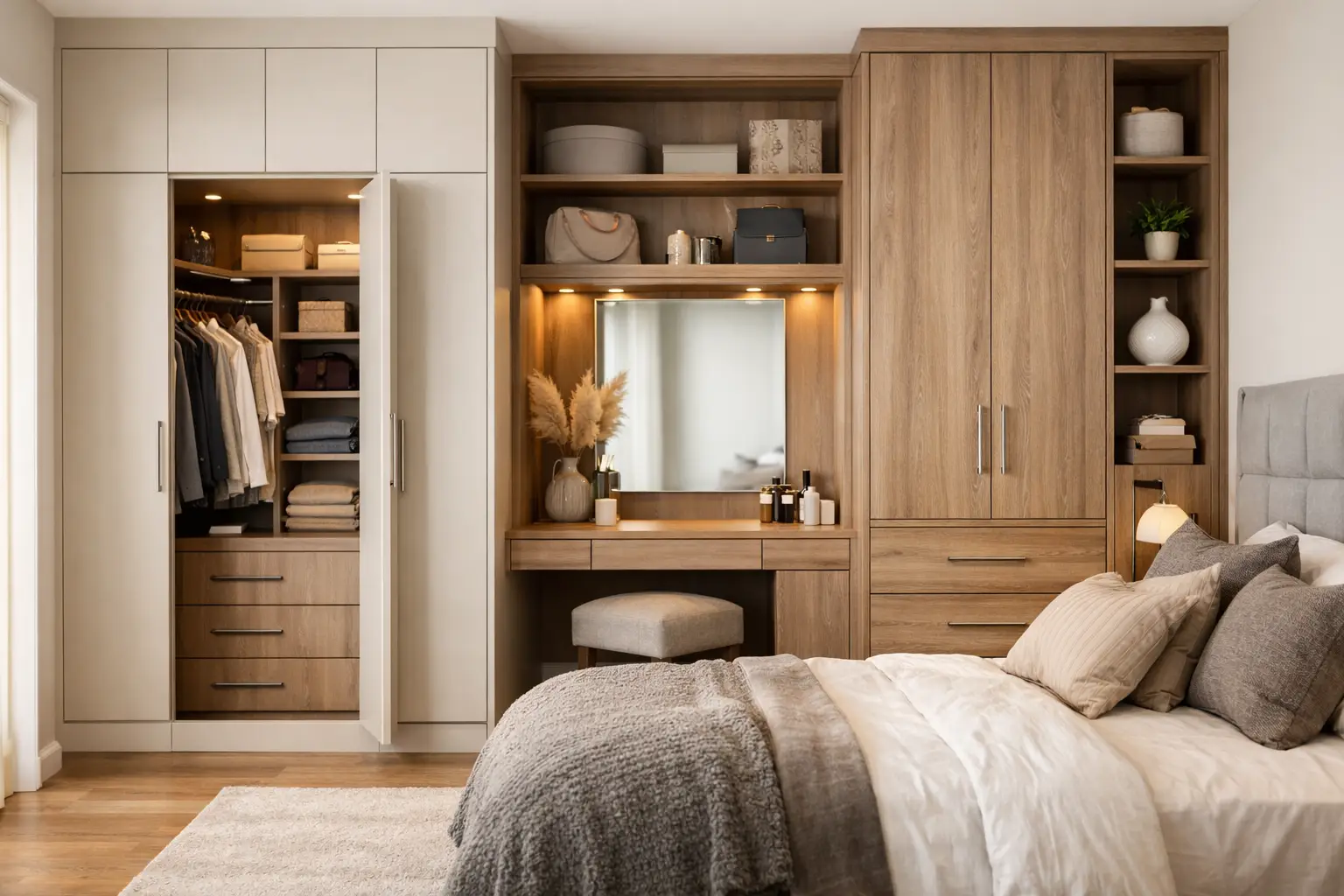
A well-designed bedroom usually feels effortless. The wardrobes sit neatly where they should, awkward corners disappear into useful storage, and the room looks calmer because everything has a place. That is why the best fitted bedroom ideas are rarely about adding more furniture. They are about shaping the room around the way you live.
In homes where space is valuable and layouts are rarely straightforward, fitted furniture can do far more than a freestanding wardrobe ever could. It can work around chimney breasts, sloping ceilings, alcoves, bay windows and uneven walls while still looking refined. More importantly, it can give the bedroom a finished, architectural feel rather than the look of furniture that was bought as an afterthought.
What makes the best fitted bedroom ideas work
The strongest ideas begin with the room itself. A large principal bedroom has different priorities from a compact guest room or a loft conversion with reduced head height. Some homeowners want a hotel-like scheme with concealed storage and clean lines. Others need every possible shelf, rail and drawer because the bedroom is doing the work of a dressing room too.
The balance between appearance and practicality matters. Full-height wardrobes create a sleek, built-in look and make use of the space right up to the ceiling, but they need careful internal planning so the top sections remain genuinely useful. Open display shelving can soften a run of cabinetry, yet too much open storage often makes a bedroom feel busy. The right answer depends on how tidy you naturally are and how much you want on show.
Best fitted bedroom ideas for different layouts
1. Wall-to-wall wardrobes for a clean, tailored look
If you have one uninterrupted wall, using it fully is often the smartest move. Wall-to-wall fitted wardrobes make a room feel considered and balanced, especially when the doors and end panels are designed to sit flush.
This approach suits both modern and classic interiors. In a contemporary bedroom, flat panel doors in a soft matt finish keep everything calm and minimal. In a period property, shaker-style fronts add detail without becoming heavy. The benefit is not only visual. You gain storage that looks intentional rather than pieced together over time.
2. Alcove wardrobes beside a chimney breast
Many London bedrooms have chimney breasts with alcoves on either side. Freestanding furniture rarely uses these spaces properly, which is why alcove wardrobes remain one of the most effective fitted solutions.
Done well, they make the room feel symmetrical and far more generous. You can keep both sides identical for a formal look, or use one side for hanging space and the other for drawers, shelving or even a compact dressing area. This is especially useful in Victorian and Edwardian homes where every centimetre matters but character needs to be respected.
3. Over-bed storage that does not feel bulky
Over-bed units can be brilliant in smaller bedrooms, but only when proportion is handled carefully. The mistake is making them too deep or too dominant.
A better approach is to frame the bed with shallower wardrobes or bedside units and use overhead cabinets for seasonal items, spare bedding or less frequently used belongings. When designed as one composition, the bed wall feels cohesive and luxurious rather than crowded. Integrated lighting can also help soften the joinery and make the whole arrangement feel more bespoke.
4. Sliding wardrobes for tighter spaces
In rooms where hinged doors would interrupt circulation, sliding wardrobes are often the most practical option. They are particularly useful when the bed sits close to the wardrobe or where walkways are narrow.
The style of the doors makes a big difference. Mirrored panels can bounce light around a darker bedroom and make it feel larger, while glass, wood-effect or mixed-finish doors create a more design-led look. Sliding systems tend to suit contemporary interiors best, although the internal layout can be tailored just as carefully as a hinged wardrobe.
5. Loft and sloping ceiling wardrobes
A loft bedroom can be one of the most attractive rooms in the house, but it is also where standard furniture fails fastest. Sloping ceilings and reduced wall height leave dead space that quickly becomes wasted space.
This is where fitted joinery proves its value. Low-level cupboards under the eaves, full-height wardrobes at the tallest point, and made-to-measure drawers following the roofline can turn an awkward loft into a highly efficient suite. The best designs avoid fighting the shape of the room. Instead, they use it as the starting point.
Fitted wardrobe interiors matter as much as the exterior
One of the most overlooked best fitted bedroom ideas is to spend as much time planning the inside as the outside. A wardrobe that looks beautiful but stores things badly will never feel luxurious for long.
Hanging sections should reflect what you actually own. Long dresses need different space from shirts and jackets. Drawers are better for smaller items, knitwear and accessories. Pull-out trays, shoe shelves, internal mirrors and dedicated compartments for jewellery or watches can make daily routines noticeably easier.
It is also worth thinking about who is using the room. A shared wardrobe works best when each person has a clearly defined zone. In a child’s room, adjustable shelving can give the design a longer life. In a guest room, a simpler arrangement may be enough. Bespoke storage works best when it responds to habits, not just measurements.
Choosing finishes that lift the whole bedroom
Material choice changes the mood of fitted furniture completely. Painted finishes in warm neutrals, off-whites, taupes and soft greys remain popular because they keep the room light and timeless. Darker tones can be striking, particularly in larger bedrooms with good natural light, but they need balancing with flooring, wall colour and lighting.
Wood-effect finishes bring warmth and texture, especially in contemporary schemes where too many plain surfaces can feel flat. Shaker doors offer a classic, versatile look that suits both traditional houses and newer homes, while handleless styles feel sharper and more architectural.
Handles deserve more attention than they often get. They are small, but they influence the style more than many people expect. Brass can add warmth, black creates contrast, and a subtle painted knob keeps things understated. This is often where fitted furniture shifts from practical to polished.
Make room for more than wardrobes
A fitted bedroom does not have to stop at clothing storage. Some of the best results come from treating the bedroom as a complete space rather than a wardrobe project.
A dressing table integrated into a wardrobe run can save floor space and create a more elegant layout. Window seats with hidden storage can make use of a bay while adding character. Media units, shelving, bedside tables and even compact home-working areas can be built into one joined-up design.
This is particularly useful after an extension or renovation, when homeowners want the room to feel composed from day one. Bespoke furniture helps avoid the usual mix of separate pieces that never quite relate to one another.
Budget, value and where to spend wisely
Not every bedroom needs an elaborate walk-in wardrobe to feel high end. Often, the best investment is a straightforward fitted design executed properly, with good materials, thoughtful internals and clean installation.
If you are balancing budget and impact, prioritise the main storage wall first. That is where fitted furniture gives the clearest visual and practical return. Extras such as internal lighting, specialist accessories or more complex finishes can be added where they genuinely improve day-to-day use.
There is also a long-term value in having furniture made for the room. It tends to wear better, uses space more efficiently, and removes the need to replace ill-fitting freestanding pieces later. For many homeowners, that makes bespoke joinery a more sensible investment than it first appears.
Why professional design makes a difference
The best fitted bedroom ideas usually look simple when finished, but getting there takes detailed planning. Proportions, door sizes, clearances, internal depths and awkward architectural features all need resolving before anything is made.
That is where an experienced fitted furniture specialist adds real value. A good designer will spot opportunities you may not have considered, but they will also tell you when an idea sounds better than it works. Sometimes a full bank of wardrobes is right. Sometimes a lighter combination of wardrobes and drawers will make the room feel better. It depends on the architecture, the storage brief and the look you want to achieve.
For homeowners who want a bedroom that feels calm, elegant and properly tailored, fitted furniture is rarely just about storage. It is part of how the room lives and feels every day. The most successful schemes are the ones that solve practical problems quietly, while making the space look as though it was always meant to be this way.
If you are planning your own project, start with the room’s awkward points rather than its empty walls. That is usually where the best idea is waiting.

