
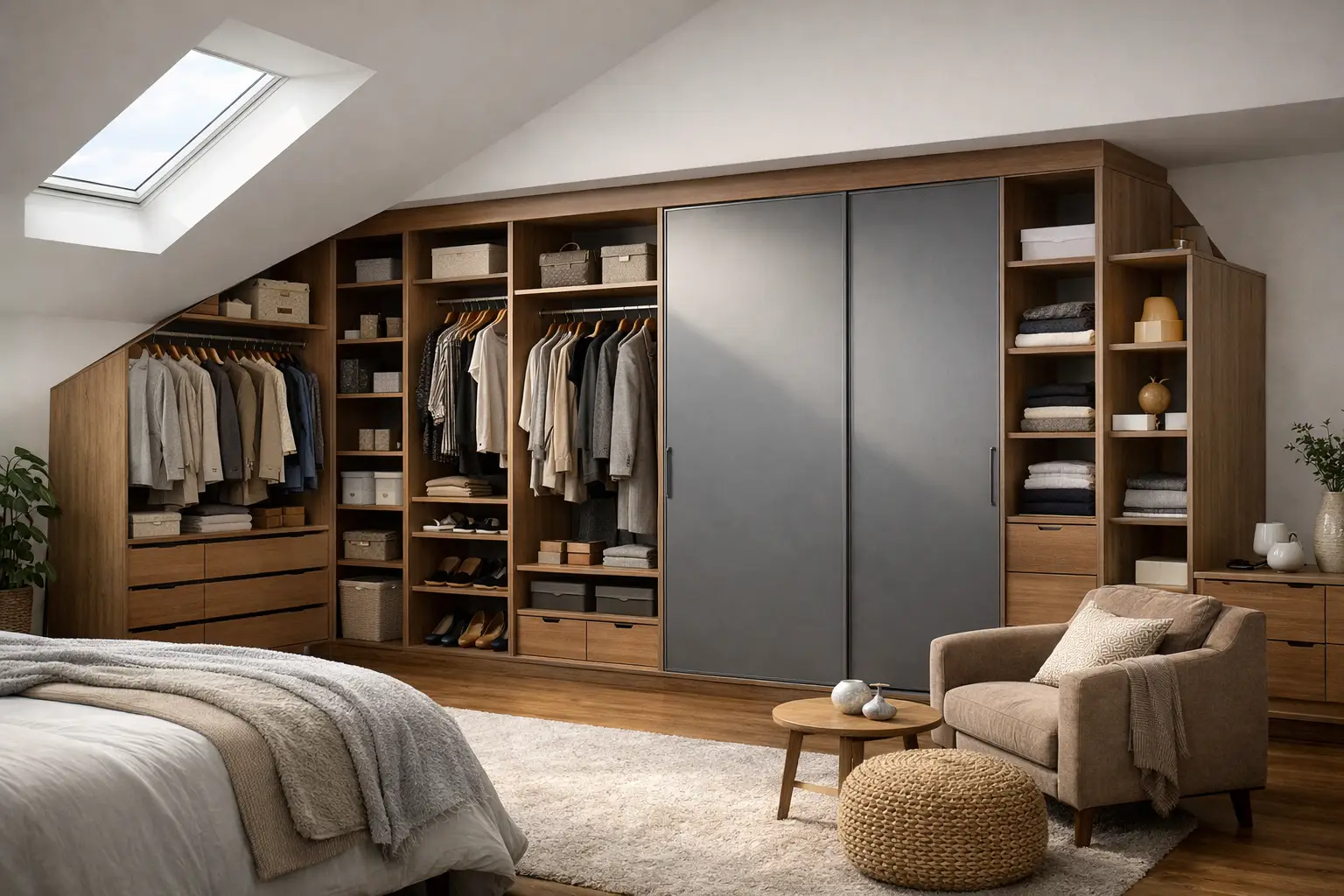
The moment a loft room becomes a bedroom, dressing area or home office, the same problem usually appears – where does everything go when the ceiling slope steals the wall space? A well-designed loft wardrobe solves that issue properly. Instead of forcing standard furniture into an awkward room, it turns those low eaves, angled ceilings and tricky corners into storage that feels built for the space because it is.
That difference matters more than most homeowners expect. In a loft conversion, every centimetre counts. The wrong wardrobe can leave dead space behind it, block natural light, make the room feel tighter and still fail to hold what you need. A fitted solution does the opposite. It brings order to a room that can easily become a compromise.
Why a loft wardrobe works so well
Loft rooms are rarely neat rectangles. You might have chimney breasts, reduced head height, dormer windows, alcoves or a staircase cutting into the floor plan. Freestanding wardrobes are made for standard proportions, which is why they often look clumsy in lofts and waste the very space you are trying to reclaim.
A bespoke loft wardrobe is designed around the architecture rather than against it. That means it can run neatly under the eaves, fit wall to wall, wrap around awkward angles and include internal storage suited to the way you actually live. The result is not just more storage. It is a calmer, more resolved room.
For many households, that visual difference is as important as the practical one. A loft bedroom should feel intentional, not like a place where furniture has been squeezed in after the building work finished. When the wardrobe is tailored to the room, the whole space feels more polished.
Loft wardrobe design starts with the room, not the doors
One of the most common mistakes is choosing a wardrobe style before understanding how the loft needs to function. The right design depends on the ceiling height, the width of usable wall space, where the windows sit and what you need to store.
Working with sloping ceilings
Sloping ceilings are the reason bespoke furniture makes such a difference in a loft. Low-level wardrobes under the eaves can be ideal for folded clothes, shoes, bags and seasonal storage. Where the ceiling rises, full-height sections can be introduced for hanging space or shelving. This creates a layout that follows the roofline naturally instead of leaving awkward voids.
There is no single best formula here. Some rooms benefit from a long run of low storage with a central taller section. Others work better with a mix of drawer bases, cupboards and open display shelving. It depends on how much standing room the loft has and whether you want the furniture to feel discreet or more architectural.
Making the most of dormers and vertical walls
If your loft has a dormer, that vertical wall often becomes the most efficient place for a taller wardrobe section. It is usually the best zone for long hanging rails, double hanging, pull-out accessories or a full-height linen cupboard. The lower eaves can then handle the bulkier or less frequently used items.
This balanced approach is often what makes a loft wardrobe feel genuinely useful. You are not trying to force every storage function into one shape. You are allowing each part of the room to do what it does best.
The best internal layout for a loft wardrobe
Good wardrobe design is not only about what you see from the outside. Interiors matter just as much, especially in a loft where access and proportions are more constrained.
If you wear mostly shorter garments, double hanging sections can make excellent use of a modest height. If you own longer coats or dresses, a dedicated full-drop section is worth protecting, even if space is tight. Drawers are particularly useful in lofts because they keep low-level storage easy to reach. Shelves can work well too, although very deep shelves under an eaves section can become awkward if not planned carefully.
For many clients, the most effective interior includes a mix rather than a single storage type. Hanging space handles everyday clothing, drawers keep smaller items organised, shelves take knitwear and accessories, and overhead cupboards store suitcases or occasional-use pieces. That variety keeps the wardrobe practical long after the novelty of a new installation has passed.
Choosing the right doors for a loft wardrobe
Door style has a big effect on how the room feels. In smaller lofts, this is not just a design decision. It is also about movement, access and visual weight.
Hinged doors suit many loft wardrobes because they allow full access to the interior and can be made to follow unusual angles more gracefully. They are often a strong choice where there is enough clearance in front of the wardrobe.
Sliding doors can be useful in tighter layouts, especially where bed placement limits the swing space. They create a clean, contemporary finish, although they are not always the best answer for heavily angled sections. In some lofts, a combination works best – perhaps standard doors for full-height units and lift-up or reduced-height fronts below the eaves.
The finish matters too. Lighter colours tend to help a loft feel brighter and more open, especially where natural light is limited. Wood effect finishes can add warmth and softness. Shaker detailing suits period homes and transitional interiors, while flat panel fronts create a sharper modern look. The best choice usually comes down to the age of the property, the style of the room and how visible the wardrobe will be from the main living areas.
When bespoke is worth it
There are loft rooms where off-the-shelf furniture can do a basic job, particularly if the space is large and relatively square. But most lofts are not like that. They are full of compromises, and standard furniture tends to expose every one of them.
A bespoke solution is worth it when you want to use the full width, height and depth available, when the ceiling line is irregular, or when the room needs to serve more than one purpose. It is also worth considering if you care about the finish looking integrated rather than temporary.
That does not mean every loft wardrobe needs to be elaborate. In many cases, the most successful designs are visually simple. Clean lines, well-planned interiors and a confident fit are usually what make the space feel expensive.
Practical points homeowners should think about early
Before any design is finalised, it helps to think beyond wardrobe size alone. Access matters. So does lighting. A beautifully fitted wardrobe can still feel frustrating if doors open into a tight walkway or if shelves disappear into shadow.
In loft bedrooms, socket locations, radiators and skirting details can also influence the final design. The same goes for lofts used by children or teenagers, where storage needs will change over time. Flexibility is often overlooked, but adjustable shelving and a balanced internal layout can make the wardrobe more future-proof.
If your loft is part of a wider renovation, fitting should also be timed properly. Bespoke furniture usually works best once plastering, flooring levels and final room measurements are confirmed. That is one reason a made-to-measure service tends to deliver a neater result than trying to piece solutions together yourself.
What to expect from a fitted loft wardrobe project
A good loft wardrobe project should feel tailored from the first conversation, not squeezed into a standard system. That begins with measuring the room properly and understanding how you want the space to function day to day. Are you storing two full wardrobes of clothing? Do you need room for luggage, spare bedding or children’s items? Is the loft a principal bedroom, guest room or mixed-use space?
From there, the design should respond to both the architecture and your routine. That is where details such as shelf height, drawer depth, hanging drop and door configuration start to matter. The best fitted furniture is not only attractive on installation day. It stays useful because those practical decisions were made well at the start.
For homeowners in London and South West London, where loft conversions are common and space is valuable, this level of tailoring can make a noticeable difference to everyday living. Finest Furniture Studio approaches loft storage in exactly that way – as part of the room, not an afterthought added to it.
A loft wardrobe should make the room feel easier
The best sign that a loft wardrobe has been designed well is surprisingly simple. The room feels easier to use. Getting dressed is simpler. Clutter has somewhere to go. Corners that once seemed awkward start earning their keep, and the space feels calmer, lighter and more complete.
That is the real appeal of fitted loft storage. It is not only about adding cupboards under a slope. It is about giving a difficult room a sense of purpose and polish, so the loft works beautifully every day, not just on a floor plan.

