
Table of Contents
- Why Vertical Storage Transforms Tiny Bedrooms
- Floating Shelves and Wall-Mounted Bedroom Storage
- Under-Bed Storage Solutions That Actually Work
- Tall Dressers and Vertical Cabinetry for Small Spaces
- Small Bedroom Storage Hacks Using Pegboards and Hooks
- Bespoke Fitted Furniture for Awkward Spaces
- Rental-Friendly Vertical Storage Without Permanent Damage
- Frequently Asked Questions
Last Updated: September 19, 2026
Why Vertical Storage Transforms Tiny Bedrooms
Small bedrooms feel cramped because walls are treated as decoration instead of storage. Shifting from horizontal to vertical thinking transforms them into organized, spacious rooms, which is why DIY vertical storage ideas for tiny bedrooms are so effective.
Design experts recommend tall dressers and floor-to-ceiling shelving to compensate for small floor areas, according to Architectural Digest’s small bedroom storage guide. This approach reclaims up to 25% of lost floor space through vertical and elevated storage solutions, according to research from Tip Top Furniture’s bedroom storage analysis. The difference is immediate: less clutter on the floor means more room to move, more breathing space, and a bedroom that actually functions.
An organized vertical space feels larger than a cluttered horizontal one, even when square footage hasn’t changed, a psychological shift that transforms how a room functions.
Vertical storage doesn’t add space; it reveals space you already have by lifting clutter off the floor.
Floating Shelves and Wall-Mounted Bedroom Storage
Floating shelves mount directly to walls, creating storage in dead space. The key is positioning them correctly and understanding your wall’s weight capacity.
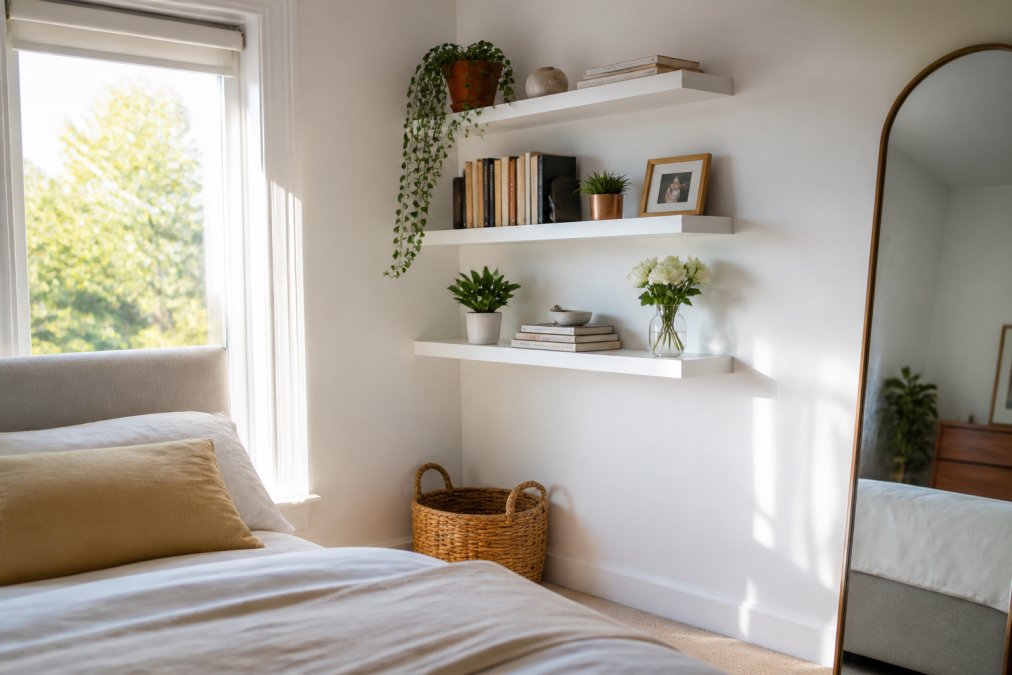
Wall-mounted hardware like pegboards and ceiling hooks are identified as primary methods for maintaining a clutter-free aesthetic in small rooms, according to Shelterness’s vertical storage guide. But the real challenge most homeowners face isn’t aesthetics, it’s understanding what your walls can actually support.
Understanding Wall Types and Weight Capacity
Wall strength depends on what’s behind the drywall. Most bedrooms have one of three types:
- Stud walls with cavity insulation: Standard in most homes. Studs (vertical timber or metal supports) sit 400-600 mm apart. Shelves mounted directly into studs can hold 20-45 kg per shelf, depending on the bracket quality and stud thickness. This is your strongest option.
- Plasterboard with drywall anchors only: If you can’t hit a stud, you’re relying on expansion anchors (plastic plugs) or toggle bolts. Standard plastic anchors hold 5-10 kg per anchor. Toggle bolts (which grip the back of the drywall) hold 15-25 kg per anchor. Most floating shelf brackets require at least two anchors; do the maths before you buy.
- Solid brick or block walls: Less common in modern bedrooms but found in older properties. These hold 30-50 kg per anchor with the right fixings, but require a masonry drill and plugs rated for the material.
If you don’t know your wall type, use a stud finder (£15-40) to locate timber studs before installation. Studs are your friend, always mount into them if possible.
Shelf Positioning and Load Distribution
Install shelves at eye level (1.4-1.7 m) for frequent access. Avoid placing them directly above your bed, it feels oppressive and poses a safety risk if a bracket fails.
Respect the manufacturer’s weight limit and distribute load evenly. A 20 kg shelf rating doesn’t mean loading 20 kg in one spot.
Use two brackets for shelves up to 900 mm, three for 1.2 m, four for longer. Space evenly to prevent sagging.
Renter-Friendly Alternatives
Adhesive-backed strips hold 2-5 kg per strip and leave no holes. They work for lightweight décor and books but won’t support a proper floating shelf.
Tension rods work in narrow spaces (under 1.2 m) but can’t hold heavy items. Over-the-door organizers add storage without wall damage but block door swing.
Freestanding shelving units give renters flexibility but take up floor space and are less stable than wall-mounted options.
Never mount heavy shelves using only drywall anchors in plasterboard. If your wall has no studs in the location you want, either find a stud location nearby, use a freestanding unit, or accept a lower weight capacity. A shelf failure in a tiny bedroom can cause injury and damage.
Installation Steps for Stud-Mounted Shelves
- Locate studs with a stud finder and mark them lightly in pencil.
- Hold your shelf bracket against the wall at your desired height and mark the screw holes.
- Drill pilot holes (slightly smaller than your screws) to prevent splitting the stud.
- Screw the brackets into the studs using 50 mm timber screws (rated for the stud material).
- Place the shelf on the brackets and secure it from underneath if the bracket design allows.
- Test stability by pressing down firmly before loading.
Under-Bed Storage Solutions That Actually Work
Under-bed space can store 20-30% more than expected, depending on bed height.
Use solid plastic boxes with lids and wheels. Label everything, you won’t remember contents later. Store seasonal items, bedding, or infrequently used things.
Don’t use under-bed storage for items needing regular access. It’s for things you want out of sight but accessible occasionally.
Bed risers increase clearance for taller containers. Ensure your mattress stays stable and risers handle the weight.
Never store anything moisture-sensitive under a bed, humidity accumulates in that enclosed space, and you risk mildew or mold on clothing or electronics.
Tall Dressers and Vertical Cabinetry for Small Spaces
Tall dressers use less floor space than wide ones while holding the same amount, vertical dimensions are more efficient than horizontal.
Choose dressers at least 1.5 m tall. Pair with floating shelves above to create a storage wall using minimal floor space.
Tall, narrow cabinetry stores more per square foot than short, wide alternatives, crucial in tiny bedrooms.
Bespoke fitted furniture solves awkward-space problems. Sloping ceilings, alcoves, and irregular walls become assets when custom-built. Off-the-shelf pieces leave gaps; fitted solutions eliminate waste.
Small Bedroom Storage Hacks Using Pegboards and Hooks
Pegboards become customizable storage systems when painted and fitted with hooks. They work best when installed correctly and their limitations are understood.
Pegboard Basics and Weight Capacity
Standard pegboards are 6 mm hardboard with 5 mm holes spaced 25 mm apart. Strength comes from what’s behind it and how it’s mounted, not the board itself.
A pegboard mounted into four studs holds 30-50 kg total, but individual hooks hold only 2-5 kg depending on type and stud alignment.
In tiny bedrooms, avoid overloading pegboards, they quickly look cluttered and exceed safe limits if not deliberate about placement. The best DIY vertical storage ideas for tiny bedrooms balance functionality with visual restraint.
DIY Pegboard Installation for Maximum Stability
- Locate studs and plan so at least two mounting holes align with them.
- Add spacers: Use pre-made pegboard spacers to create the gap hooks need.
- Mount the pegboard: Screw through spacers into studs using 40 mm screws. Use at least four screws.
- Paint before hanging: Use acrylic paint and let dry fully.
- Add hooks strategically: Place heavier items (bags, belts) in stud-aligned positions; lighter items anywhere.
Avoid mounting with only two screws or drywall anchors alone, this creates flex and hook failure.
Hooks: Types, Capacity, and Placement
- J-hooks on pegboards: Hold 2-5 kg depending on hook thickness and material. Thicker steel hooks hold more than thin plastic ones.
- Screw-in hooks into studs: Hold 10-20 kg if screwed directly into timber studs. These are ideal for hanging bags or heavier items.
- Over-the-door hooks: Hold 3-8 kg depending on the door thickness and hook design. They work without wall damage, ideal for renters, but can’t hold heavy items and block door swing slightly.
- Adhesive hooks (command strips): Hold 2-5 kg and leave no holes when removed. They’re renter-friendly but the weakest option. They fail if the wall is dusty, textured, or damp.
- Ceiling hooks: Rated for 5-15 kg depending on whether they’re screwed into joists (stronger) or just drywall (weaker). Only use ceiling hooks for lightweight seasonal storage bags or spare bedding.
Renter-Friendly Hook Solutions
Visibility and Accessibility
Start with fewer hooks than you think you need. A pegboard with 12 well-placed hooks holding intentional items looks purposeful. The same board with 30 hooks holding everything looks chaotic, even if the load is safe.
Bespoke Fitted Furniture for Awkward Spaces
Standard furniture is designed for standard spaces. Most bedrooms aren’t standard. An alcove, a sloping ceiling, a corner that’s slightly off-square, or an undersized wall, these awkward spaces waste potential unless you solve them properly.
Before commissioning bespoke furniture, photograph your room from multiple angles and measure everything twice, including ceiling height at different points if it’s sloped. These details determine what’s actually possible.
Rental-Friendly Vertical Storage Without Permanent Damage
Renters face a storage dilemma: you need more space, but you can’t drill holes or install permanent fixtures. The solution is removable, damage-free storage that still maximizes vertical space.
| Storage Method | Best For | Installation | Cost Range |
|---|---|---|---|
| Floating shelves | Books, décor, lightweight items | Permanent wall mounting | Budget-friendly |
| Under-bed containers | Seasonal items, bedding | Sliding placement | Low cost |
| Tall dressers | Clothing, daily-use items | Floor placement | Moderate |
| Pegboards | Accessories, small items | Wall mounting | Budget-friendly |
| Bespoke fitted furniture | Awkward spaces, maximum capacity | Professional installation | Premium investment |
Frequently Asked Questions
How much vertical space can I actually reclaim in a tiny bedroom?
Smart storage designs, including wall-mounted nightstands and under-bed lifts, can reclaim up to 25% of lost floor space in small bedrooms. The exact amount depends on your room layout, ceiling height, and which vertical storage solutions you choose. Tall dressers, floating shelves, and pegboards all contribute to maximizing your vertical space without eating into the limited floor footprint you have.
What are the best DIY vertical storage ideas for tiny bedrooms?
Top options include floating shelves for books and decor, wall-mounted nightstands to replace floor-standing tables, pegboards for organizing jewellery and accessories, tall dressers that draw the eye upward, under-bed storage boxes, headboard shelving, and over-the-door organizers. Combining several of these approaches creates a multipurpose storage system that maximizes your room’s capacity while maintaining a clutter-free aesthetic.
Can I install heavy wall-mounted storage in an older home?
Older homes often feature non-standard wall materials or uneven surfaces that make installing heavy-duty vertical shelving or wall-mounted units challenging compared to modern builds. Before installing, check your wall type (plaster, brick, or lath-and-plaster), locate wall studs with a stud finder, and use appropriate anchors for your wall material. If you’re uncertain, consult a professional or consider bespoke fitted furniture solutions designed to work with your property’s unique structure.
What weight can floating shelves safely hold?
Weight capacity depends on shelf material, bracket quality, and wall type. Most floating shelves rated for residential use hold 10-20 kg per shelf when properly installed into wall studs. Always check manufacturer specifications, use studs whenever possible, and distribute weight evenly. For heavier items like books or storage boxes, use heavy-duty brackets and ensure installation into solid wood framing rather than drywall alone.

