
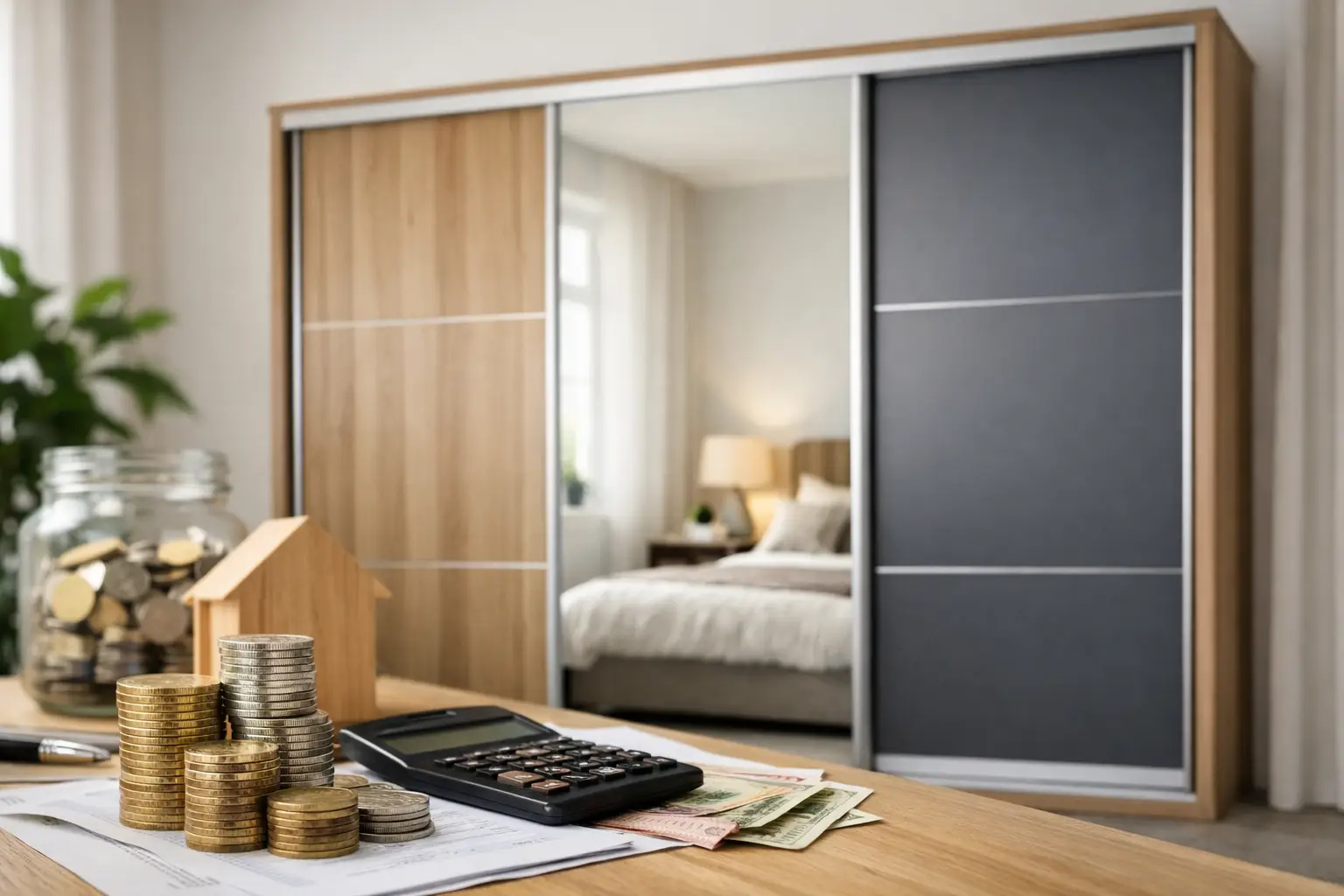
A sliding wardrobe can look deceptively simple from the outside. Two or three doors, a clean run of panels, no handles if you want a minimal finish. Yet when homeowners ask how much do sliding wardrobes cost, the real answer sits behind the doors – in the size, interior layout, door finish, track quality, and how precisely the design is made to fit the room.
For a clear starting point, a bespoke sliding door wardrobe typically starts from around £2,000. That is a useful entry figure, but it is not a universal price for every project. A compact wardrobe in a straightforward alcove will sit in a very different bracket from a full wall installation with mirror doors, premium internals, integrated lighting and tailored storage for shoes, long hanging, drawers and accessories.
How much do sliding wardrobes cost in practice?
Most fitted sliding wardrobes are priced as a complete piece of furniture rather than a flat off-the-shelf product. That means the quote usually reflects design, manufacture, materials, internal configuration and installation.
In practical terms, many homeowners will find that a smaller bespoke sliding wardrobe begins at about £2,000 to £3,000. A mid-range fitted design for a master bedroom often falls between £3,000 and £6,000. Larger wall-to-wall or floor-to-ceiling wardrobes with more refined finishes and detailed interiors can move beyond that, especially where the room has awkward dimensions, sloping ceilings or a design brief that needs something more architectural.
That range is fairly broad because sliding wardrobes are rarely chosen on size alone. One client may want a clean white finish with a simple hanging rail and shelf arrangement. Another may want bronze mirror glass, linen-effect interiors, soft-close drawers, jewellery inserts and concealed lighting. Both are sliding wardrobes, but they are not comparable products.
What has the biggest effect on price?
Size and proportions
The most obvious factor is overall size. A wardrobe that spans an entire bedroom wall uses more material, more internal fittings and more installation time than one built into a narrow recess. Height matters too. Full-height wardrobes in period homes or converted lofts often need more careful planning and fitting than standard-height units.
If your room has chimney breasts, uneven walls or restricted access, that can also affect the price. Bespoke furniture is designed to work with the room as it is, which is exactly where much of its value lies, but unusual spaces do take more time to measure, manufacture and install properly.
Door style and finish
Door design can shift the cost quickly. Plain panel doors are usually more budget-friendly than glass, mirrored or mixed-material combinations. Mirror doors are a popular choice because they add light and reduce the need for a separate full-length mirror, but they generally cost more than standard board finishes.
Framed door systems, ultra-slim profiles, tinted glass and luxury surface finishes also raise the specification. If you are aiming for a very polished contemporary look, the doors often become a major part of the overall budget.
Interior design
This is where fitted wardrobes become genuinely personal. A basic interior with shelves and hanging rails is relatively straightforward. Once you add banks of drawers, double hanging, pull-out trays, shoe storage, trouser racks and bespoke compartments, the price will increase.
That said, this is often the area worth investing in. A beautiful exterior matters, but the day-to-day experience of using the wardrobe comes down to what happens inside. Good interior planning can make a modestly sized wardrobe feel far more generous.
Fitted versus freestanding cost
Some homeowners compare bespoke sliding wardrobes with ready-made alternatives and wonder why the fitted option costs more. The short answer is that they solve different problems.
A freestanding wardrobe is a furniture purchase. A fitted sliding wardrobe is a made-to-measure storage system designed around your room and your routine. It uses the full width, height and depth available, avoids dead space above and beside the unit, and can be adjusted to suit difficult corners or ceiling lines.
For homes where every centimetre matters, especially in London bedrooms, loft conversions and renovated period properties, that difference is significant. The fitted route usually requires a higher upfront investment, but it often delivers more storage, a more refined finish and a cleaner result visually.
Budget, mid-range and premium examples
A budget-conscious bespoke project usually focuses on clean lines, practical internals and durable finishes rather than decorative extras. In that bracket, the aim is to keep the design elegant and efficient without overcomplicating it.
A mid-range project typically includes more customised internals, upgraded door finishes and a stronger design element. This is often where homeowners land when they want the wardrobe to feel fully integrated with the bedroom rather than simply functional.
At the premium end, you are paying for more than size. You are paying for detailing, materials, joinery quality, more sophisticated storage and a stronger design statement. This might include smoked mirror doors, wood-effect interiors, integrated lighting or a wardrobe designed as part of a wider fitted bedroom scheme.
Are sliding wardrobes cheaper than hinged wardrobes?
Not always. Sliding wardrobes can be more cost-effective in some rooms because they work well where there is limited clearance in front of the wardrobe. They are particularly useful in narrower bedrooms, where hinged doors may feel intrusive.
However, the sliding mechanism itself, the quality of the track system and the style of the doors can add cost. Hinged wardrobes sometimes offer a simpler construction depending on the design. So if you are comparing the two, it is best to look at the full brief rather than assume one format is always cheaper.
The better question is usually which design suits the room and how you want to use it. The most affordable option is not always the best value if it compromises storage or the look of the space.
Hidden costs to watch for
A well-prepared quote should be transparent, but it is still wise to ask what is and is not included. Installation is one area worth checking. With bespoke fitted furniture, professional fitting is usually part of the value, not an optional extra, because the final result depends on precise installation.
You should also ask whether the quote includes design consultation, measuring, interior fittings, removal of old furniture if needed, and any adjustments required for uneven walls or ceilings. Lighting, premium handles, specialist finishes and internal accessories are also common upgrade points.
A lower quote can sometimes reflect a simpler internal layout, thinner materials or a less refined installation process. That does not automatically make it poor value, but it does mean you should compare like with like.
How to budget sensibly for a sliding wardrobe
Start with how you want the wardrobe to perform, not just how you want it to look. Think about the quantity of hanging space you need, whether folded storage matters more than drawers, and what currently makes your bedroom feel cluttered. That gives the design direction and helps avoid paying for features you will not use.
It is also worth deciding early where to spend and where to simplify. Many homeowners choose to invest in better doors and a well-planned interior, then keep decorative extras to a minimum. Others prefer a simpler exterior and place more budget into internal organisation.
If your room is part of a larger renovation, allow for the wardrobe to be treated as fitted joinery rather than a final furniture purchase picked at the end. The earlier it is considered, the easier it is to coordinate electrics, wall finishes and room layout.
What good value really looks like
Good value in a sliding wardrobe is not about finding the cheapest number. It is about getting a design that fits beautifully, works hard every day and still looks right years from now. Poorly planned storage becomes frustrating very quickly, while a well-made fitted wardrobe can make the whole room feel calmer and more spacious.
For that reason, the best projects usually balance beauty and practicality. They are tailored to the home, proportioned properly, and built around how the client lives. At Finest Furniture Studio, that is often where the real transformation happens – not simply in adding doors and shelves, but in creating storage that feels considered from the first sketch to the final fitting.
If you are weighing up costs, treat the quote as part of a bigger decision about quality, finish and everyday usability. A sliding wardrobe should earn its place in the room, not just fill a wall.

