
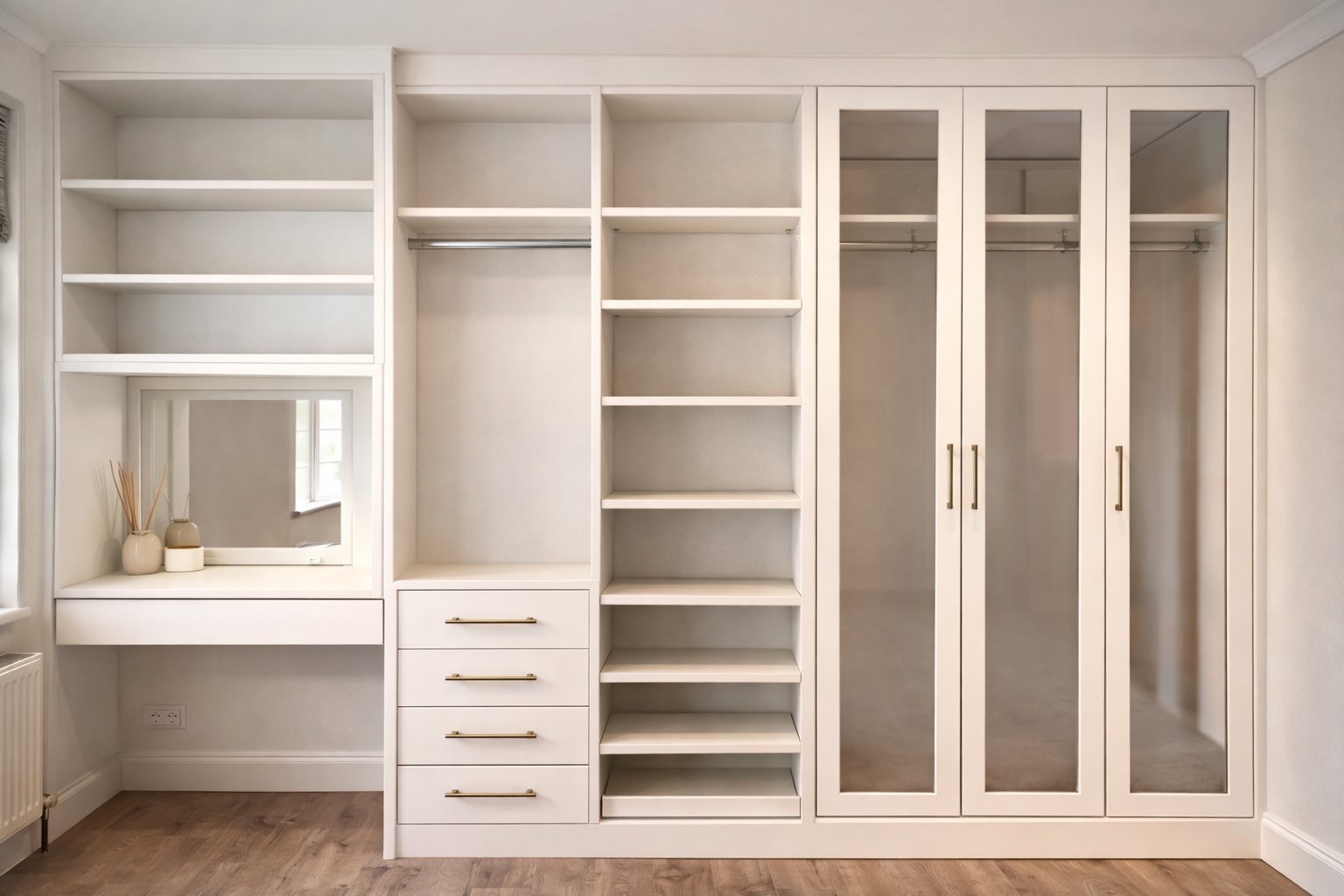
When planning how to budget for bespoke furniture, start with a clear brief rather than a guessed headline figure. A fitted wardrobe, loft wardrobe or TV media unit is designed around your room, so dimensions, door finish, internal storage and professional fitting can all affect what a proposal includes. It’s understandable to worry that a tailored project could exceed your comfortable budget, particularly when quotes describe different materials or leave design work and installation unclear.
Set your priorities before comparing proposals. This guide explains how to define the project, prepare a useful brief and compare quotes on a like-for-like basis, including what to check for design, manufacture and fitting. A design consultation and 3D render can help you review the proposed layout before you approve a final specification, so you can consider the trade-offs and choose a sensible next step for your home.
Key Takeaways
- Learn how to budget for bespoke furniture by defining the project scope before discussing design options or comparing quotes.
- See how room dimensions, storage layout and finish choices affect the work involved, especially for loft wardrobes and TV media units.
- Compare bespoke fitted furniture with other options by checking the fit, use of awkward spaces and services included in each proposal.
- Set a comfortable spending limit, then use a written specification to assess quotes on a like-for-like basis.
- Prepare room details and questions before speaking with a furniture specialist to make the design discussion more focused.
How to budget for bespoke furniture: define the project before estimating
A fitted wardrobe, loft wardrobe and TV media unit each involve different design decisions, so one headline figure won’t suit every project. A practical first step in how to budget for bespoke furniture is to describe the work before requesting estimates. Set out the room, the furniture you need, the storage it must provide and whether you’re asking for design, manufacture, delivery and professional fitting.
Scope affects what a specialist needs to consider. A fitted wardrobe on a straightforward bedroom wall has a different brief from a loft wardrobe designed around a sloping ceiling. A media unit has a different purpose again, so note the equipment it needs to house and any layout preferences. These details help a specialist understand your requirements without assuming that every project includes the same features.
Separate essentials from preferences. Enough hanging space might be essential, while a particular door style or finish could be something you’re open to changing. This gives the design discussion a useful order: first protect the functions you need, then explore alternatives for the details you’d like.
What should a bespoke furniture budget cover?
Ask the provider to clarify whether the proposal includes design work, materials, manufacture, delivery and professional fitting. A consultation and 3D render, where offered, can make the intended layout easier to review before you approve the specification. For an introduction to cabinetry, including common forms and construction, see Cabinetry basics.
Check what the quote includes and what falls outside its scope. If the room may need preparation or finishing work, ask whether that is covered or should be arranged separately. Don’t assume either way. Ask for the answer to be recorded in the proposal.
How to set priorities before requesting a quote
Make a short list of the storage functions you need, such as hanging space, shelves, drawers or room for media equipment. Add preferred finishes and door styles as discussion points rather than fixed specifications. That way, you can consider suitable alternatives if needed.
- Record approximate room measurements and note sloping ceilings, alcoves or other awkward features.
- Gather reference images or wardrobe interior ideas that show the look and organisation you prefer.
- Ask the specialist to confirm measurements during their assessment. Treat your notes as a starting point, not a final survey.
For homes in areas such as Richmond, Wimbledon, Putney, Kingston, Chiswick, Fulham, Chelsea, Ealing, Twickenham, Barnes and Hammersmith, include practical site questions in the brief. Ask whether access, parking, loading arrangements, stairs or lifts affect delivery or fitting, and whether these are included in the proposal. Treat them as points to confirm, not automatic surcharges. A clear brief makes it easier to see what each quote covers and compare the same scope.
Which design choices shape a bespoke furniture budget most?
The dimensions, configuration, materials, finish and interior all influence the work involved in a bespoke project. When considering how to budget for bespoke furniture, start with what the room needs to do, then compare design details against that brief. A wardrobe for a small bedroom, for example, may need a different arrangement from a larger fitted design, while a TV media unit has its own equipment and storage requirements.
A fitted wardrobe along a bedroom wall differs from a loft wardrobe designed around a sloping ceiling. A walk-in wardrobe calls for another kind of layout, planned around the available floor area and how you want to organise your belongings. The right approach depends on the room and agreed specification, rather than a standard assumption about which project involves more work.
How room shape and dimensions affect the design brief
Alcoves, corners and angled ceilings need careful planning so the proposed furniture works with the room. Note approximate measurements, obstructions and existing features such as a chimney breast, radiator or door opening. Include access details too, such as narrow hallways or stairs. These notes help prepare for a consultation, but a specialist’s assessment is needed to confirm the dimensions and whether a proposed layout is suitable.
How finishes, doors and interiors affect scope
Sliding and hinged doors bring different design considerations, so ask how each could work in your space rather than assuming one is always less costly. Finish preferences can guide the conversation: wood-effect wardrobes may suit a natural-looking interior, while Shaker fitted wardrobes or modern fitted wardrobes offer different visual directions. Mirrored panels and colour choices can also be discussed as preferences, not fixed specifications. For design inspiration, browse the V&A’s furniture collection.
Plan the interior around your daily routine. Decide which functions matter most, then explain how you use the space:
- Hanging space: consider the garments you need to store and the room available.
- Shelves and drawers: note what you want to keep folded or close to hand.
- Shoe storage: decide whether it’s a priority for your wardrobe.
- Media equipment: list what a TV media unit needs to accommodate.
A design consultation and 3D render can help you review the arrangement and appearance before confirming the final specification. If you’re considering fitted wardrobes, loft wardrobes or a media unit in London, explore Finest Furniture Studio’s bespoke furniture services as a starting point for discussing your brief.
Bespoke furniture versus standard options: compare value, not just quotes
A lower headline quote doesn’t necessarily describe the same project. A bespoke fitted wardrobe may be planned around a particular wall, alcove or loft, while a standard freestanding piece follows set dimensions. Neither option is automatically better value. Compare how well each suits your room and check exactly what each proposal includes before weighing up the figures.
| What to compare | Bespoke fitted furniture | Standard freestanding pieces |
|---|---|---|
| Fit | Designed to suit the agreed room dimensions, subject to a site assessment. | Available in set dimensions, so check how the piece will sit in your room. |
| Awkward spaces | May be planned for alcoves, lofts or compact bedrooms where dimensions matter. | Consider whether its shape and size will work around corners, slopes or other features. |
| Design choice | Layout, finish and storage can be specified for the project. | Choice depends on the options available for the particular piece. |
| Services and specification | Check whether design, manufacture and fitting are included and clearly described. | Confirm what the seller includes and what you’ll need to arrange separately. |
When made-to-measure furniture may suit the room
Room-specific dimensions can be useful in an alcove, beneath a sloping loft ceiling or in a compact bedroom where each section of storage needs to work hard. The layout can also reflect what you own and how you use it, rather than asking you to adapt your routine to a fixed interior. Explore bespoke fitted wardrobes in London to see the types of tailored storage the studio provides.
That flexibility doesn’t mean every difficult space can be accommodated in the same way. A specialist needs to assess the room and confirm a suitable design. The Furniture Makers’ Company offers wider context on the UK furnishing industry and its craft through its industry resources.
How to compare proposals fairly
For a like-for-like comparison, check whether each proposal covers design, 3D visualisation, manufacture and professional fitting. Then review the stated materials, finish, internal layout and installation scope. Ask providers to confirm assumptions, exclusions, how requested changes are handled and when you’ll approve the design. Get the answers in writing. A clear specification makes it easier to judge what each proposal delivers, not just which total looks lower.
If you’re weighing up storage options for your home, you can explore Finest Furniture Studio’s bespoke furniture services as one point of comparison.

How to create a practical bespoke furniture budget and assess quotes
A clear spending limit gives you a useful reference point before design choices start to multiply. Decide privately what you’re comfortable investing, then share that limit or a suitable working range with the furniture specialist if you wish. It can help frame a discussion around options that fit your priorities, without treating every preference as essential.
Use this process to move from an initial idea to a well-defined proposal:
- 1. Document the room and your needs. Note approximate measurements, awkward features, what you need to store and how you use the space. Include your preferred look, essential functions and any features you’re willing to reconsider.
- 2. Arrange a design discussion. Explain whether you’re planning fitted wardrobes, a loft wardrobe or a TV media unit. Ask what the proposal covers, including design work, any 3D visualisation, manufacture, delivery and professional fitting.
- 3. Review the specification. Check that the proposed layout, materials, finish and fitting scope match your brief. If an option has changed from your original request, ask why and whether it affects the project scope.
- 4. Confirm the details in writing. Before approving drawings or manufacture, make sure the final specification, inclusions, exclusions and approval stage are clear. Keep a copy of the agreed proposal for reference.
Questions to ask before accepting a furniture quote
Don’t rely on a headline total alone. Ask each provider to clarify which design, manufacture, delivery and fitting elements are included, and what sits outside the quoted scope. Confirm whether the proposal is based on your initial measurements or a specialist’s site assessment, and ask how access or other site conditions might affect the work.
Changes can matter. Ask how revisions are handled, whether changing the finish or internal layout affects the specification, and when you’ll need to approve the drawings. Get the answers in writing before authorising manufacture, so you understand what has been agreed and how later requests will be considered.
If you’re planning a fitted wardrobe in West London, apply the same checks to every proposal: compare the stated scope and specification rather than relying on a headline figure. This is a practical part of how to budget for bespoke furniture, and it helps keep decisions aligned with your priorities.
Once your brief is ready, discuss your bespoke furniture project with Finest Furniture Studio to explore suitable options for your room.
Plan your bespoke furniture next steps with a clear design brief
You’ve considered your project needs and how to assess a proposal. Now turn those decisions into a short brief: describe the room, the storage challenge and the functions that matter most. Gather the details that will help a design discussion focus on workable options for your home.
Finest Furniture Studio serves London and surrounding areas, including Richmond, Wimbledon, Putney, Kingston, Chiswick, Fulham, Chelsea, Ealing, Twickenham, Barnes and Hammersmith. The business also serves areas including Croydon, Slough and Reading, and clients across the UK. Check the studio’s London service locations for more information.
What to prepare for a design consultation
Bring approximate measurements and photographs showing the whole room, along with notes about access and features that may affect the layout, such as a sloping ceiling, alcove, radiator or nearby door. These details give the specialist useful context, while the final suitability of a design depends on assessing the space.
Share your storage priorities, preferred finishes and any existing room details the furniture should work around. Ask how the design consultation and 3D render fit into the process, what you’ll be able to review and when you’ll confirm the final specification.
- Room measurements and photographs
- Notes on awkward features and access
- Priorities for storage and preferred finishes
- Questions about the proposal and design approval
Choose the right bespoke furniture service for your space
Match your brief to the room’s purpose. Fitted wardrobes can organise bedroom storage, loft wardrobes can be designed around angled ceilings, and a walk-in wardrobe can be planned for a dedicated dressing area. A media unit may suit a living room where you want storage arranged around your equipment. A design consultation can help assess the space and discuss suitable options.
Finest Furniture Studio designs, manufactures and installs bespoke fitted furniture, including sliding wardrobes, walk-in closets and integrated storage. If you’re considering a project in Richmond, Wimbledon, Putney, Kingston, Chiswick, Fulham, Chelsea, Ealing, Twickenham, Barnes, Hammersmith, Croydon, Slough or Reading, prepare the same room details and priorities before discussing the design. A clear brief helps make the conversation focused, without obliging you to approve a proposal before you’re ready.
Take the next step towards a well-planned furniture project
A clear brief, a comfortable spending limit and a written proposal give you a stronger basis for deciding whether a bespoke project is right for your home. The key to how to budget for bespoke furniture is to compare the same scope, understand what’s included and make design choices in order of importance, rather than relying on a headline figure alone.
A design consultation and 3D render can help you review the intended layout and appearance before approving the final specification. Before proceeding, check that the proposal records the agreed work, fitting scope and any exclusions. Ask for any terms that affect the project to be explained and recorded in writing.
With those details clear, you can discuss your priorities without committing to options that don’t suit your space or budget. Discuss your bespoke furniture project with Finest Furniture Studio and explore a design for your home.
Frequently Asked Questions
How much should I budget for bespoke furniture?
There’s no single budget that suits every bespoke project. The amount depends on the room, dimensions, materials, finish, storage layout and fitting requirements. Start by deciding what you’re comfortable spending, then describe your needs to a furniture specialist and request a written proposal. Check what’s included and excluded, and compare proposals based on the same specification rather than relying on a generic online figure.
What affects the cost of bespoke furniture most?
The main factors are the space’s size and shape, design complexity, material and finish choices, internal storage requirements, and the work included in manufacture and fitting. For example, planning a wardrobe beneath a sloped loft ceiling may call for a different design approach from fitting one along a straightforward bedroom wall. Ask the provider to explain how each choice affects your project’s scope instead of assuming a standard surcharge.
Is bespoke furniture worth the investment?
It may suit your home if standard dimensions don’t work for the room, storage needs or appearance you want. Whether it’s worthwhile depends on your priorities and the complete proposal, not a general promise that bespoke is always better value. Compare fit, functionality, design support, materials and installation with the alternatives you’re considering. For homeowners in Richmond, Wimbledon or nearby areas, the right choice is the one that meets your needs and feels comfortable for your household.
Can I reduce the budget for bespoke furniture without compromising the design?
You can explore alternatives by separating essential functions from optional details. Ask whether the storage layout, finish or internal fittings could be simplified while still serving your daily needs. Discuss the trade-offs with the designer before changing the specification, and request a revised proposal that clearly records the differences. Check that any revised design still works for your room and retains the requirements that matter to you.
What should a bespoke furniture quote include?
A useful quote should describe the proposed design, dimensions, materials, finish, internal layout, manufacture and fitting scope. Ask whether design consultation and 3D renders are included, and request clear details of exclusions, site assumptions, revisions and how changes will be agreed. This gives you a better basis for comparing proposals for fitted wardrobes in Ealing, a loft wardrobe in Twickenham or another tailored project across London and the surrounding area.
How many quotes should I get for bespoke furniture?
There’s no fixed number that works for every project. Prioritise proposals that respond to the same brief and give enough detail to assess the layout, materials, fitting and exclusions. A smaller number of clear, comparable quotes can be more useful than several vague estimates. Give each provider the same project information and questions, then consider how well each proposed solution fits your room and priorities, whether you’re in Putney, Chiswick or elsewhere nearby.
Can bespoke furniture be designed for a loft or awkward space?
Made-to-measure furniture can be considered for lofts, alcoves and rooms with sloping ceilings, where standard dimensions may not suit the space. The appropriate design depends on the room, access and what you need to store, so photographs alone can’t confirm what will work. Share your measurements and images during an initial discussion, then ask for the space to be assessed before approving a final design for your home in London, Richmond, Kingston, Slough or another nearby area.

