
Table of Contents
- Measure Your Space and Understand Your Layout
- Assess Your Storage Needs Before Choosing Multipurpose Furniture
- Key Features to Look for in Space-Saving Bedroom Storage Ideas
- Understanding Bespoke Bedroom Furniture for Small Spaces
- Fitted Wardrobes for Small Rooms: Customisation vs Off-the-Shelf
- Design Principles That Make Small Bedrooms Feel Larger
- Evaluating Quality, Durability, and Long-Term Value
- Frequently Asked Questions
Last Updated: September 22, 2026
Learning how to choose multipurpose furniture for small bedrooms doesn’t have to mean compromising on style or comfort. Many homeowners struggle with limited floor space, awkward layouts, and the need to fit more function into less room. At Finest Furniture Studio, we help homeowners transform cramped bedrooms into organised, multi-functional spaces that actually work for their lives.
The key is understanding what makes a piece truly multipurpose, how to measure your space properly, and which design principles actually create the illusion of more room. This guide walks you through each decision point so you can select furniture that solves real problems instead of just looking good on a showroom floor.
Measure Your Space and Understand Your Layout
Before you buy anything, measure your bedroom carefully. You need three numbers: total floor area, ceiling height, and the dimensions of any awkward spaces like alcoves or sloped ceilings.
Start by mapping out your room on paper. Note where windows, doors, and radiators sit. Identify problem areas: under-bed storage potential, wall space for vertical solutions, corners that feel wasted. This isn’t about being precious, it’s about spotting opportunities that a standard furniture piece would miss.
Here’s what to measure:
- Total floor area in square metres
- Ceiling height at its lowest and highest points
- Width and depth of alcoves or built-in spaces
- Distance from the bed to the opposite wall
- Wall lengths available for wardrobes or shelving
Once you have these numbers, you’ll understand what size furniture actually fits. Many people buy pieces that technically fit but leave no walking space. A bedroom needs breathing room, even a small one. Aim to keep at least 60 centimetres of clear floor space around the bed for comfort and safety.
Photograph your space from multiple angles and take measurements with your phone. Send these to a designer before you commit to any purchase. Finest Furniture Studio offers a complimentary design visit where we assess your layout and identify solutions you might have missed, including those awkward spaces under stairs or sloped ceilings that most standard furniture can’t handle.
Assess Your Storage Needs Before Choosing Multipurpose Furniture
The mistake most people make is buying furniture first, then hoping it solves their storage problem. Work backwards instead. List everything you need to store in your bedroom.
Separate items into categories:
- Clothing (seasonal and everyday)
- Shoes and accessories
- Books or hobby items
- Work equipment or office supplies
- Bedding and pillows
- Personal documents
Be honest about quantities. If you have 50 pairs of shoes, a wardrobe designed for 20 won’t help. If you work from home, you need desk space and filing solutions, not just a place to sleep.
Once you know what you’re storing, you understand how to choose multipurpose furniture for small bedrooms that actually serve you. A storage ottoman works brilliantly if you have spare bedding to hide. A bed with built-in drawers solves the under-bed storage problem if you’re willing to keep items organised. A desk that doubles as a dressing table only works if your bedroom layout allows both functions to operate without conflict.
Many homeowners find that practical space-optimisation research from CasaGear shows that identifying storage needs first prevents costly mistakes and reduces clutter significantly. When you know exactly what needs to live in your bedroom, selecting furniture becomes a puzzle with a clear solution instead of a guessing game.
Avoid buying “just in case” pieces. A multipurpose ottoman that you don’t actually use wastes floor space and adds visual clutter. Every piece should earn its place by solving a specific storage or functional problem you’ve already identified.
Key Features to Look for in Space-Saving Bedroom Storage Ideas
Not all multipurpose furniture is created equal. Look for these specific features when evaluating space-saving bedroom storage ideas:
Raised legs and clean lines. Furniture that sits on visible legs creates the illusion of more floor space. Pieces that go all the way to the ground feel heavier and make rooms look smaller. This is a simple visual trick, but it works, design research from Tip Top Furniture confirms that furniture with raised legs and minimal visual weight significantly improves how spacious a small bedroom feels.
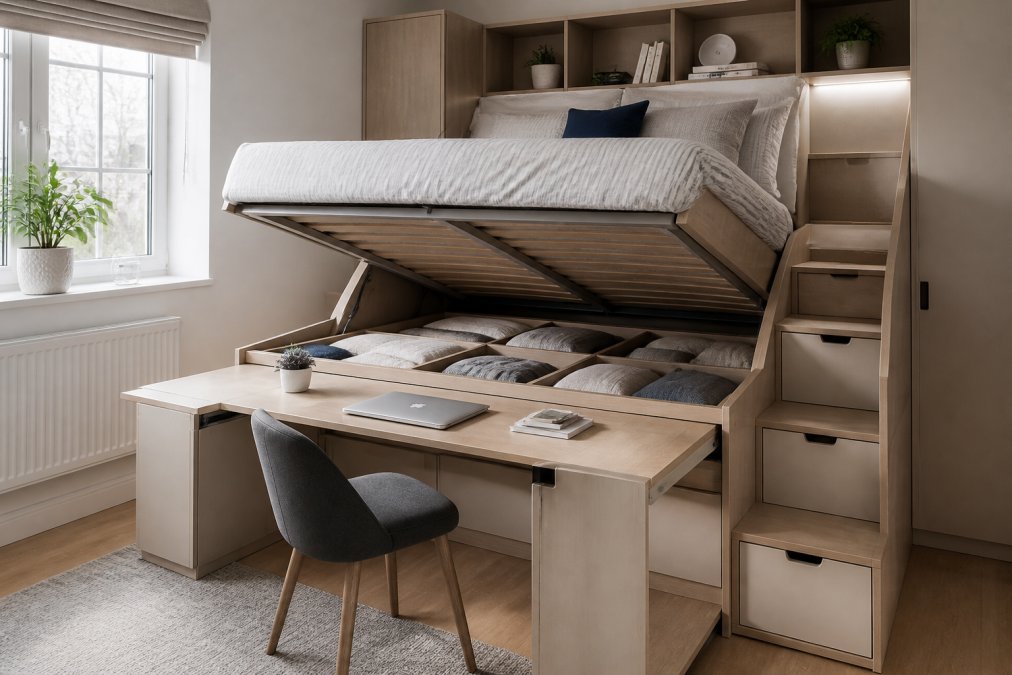
Integrated storage without extra bulk. Look for beds with built-in drawers underneath, nightstands with multiple compartments, or ottomans with hidden storage. The storage shouldn’t add to the visual footprint, it should replace it. A bed with under-bed drawers doesn’t take up more space than a regular bed; it just uses the dead space beneath more efficiently.
Vertical storage solutions. Wall-mounted shelving, tall wardrobes, and floating desks draw the eye upward and use the space most people ignore. Vertical storage is especially valuable in small bedrooms where floor area is precious.
Slim-profile designs. A desk that’s 40 centimetres deep instead of 60 centimetres makes a real difference. A wardrobe that’s 50 centimetres deep instead of 65 centimetres opens up walking space. These small reductions add up.
Dual-purpose pieces that actually work. A desk that folds down from the wall is great if you use it daily. A bed with a built-in desk is only useful if both functions fit your routine. Evaluate whether the second function genuinely serves you or just complicates the design.
Research testing in a 460-square-foot rental space identified seven specific furniture configurations that successfully optimised layout and storage, according to Warmcazza’s 2026 analysis, proving that thoughtful selection of multipurpose pieces with these features delivers measurable results in real homes.
Understanding Bespoke Bedroom Furniture for Small Spaces
Bespoke bedroom furniture means custom-made pieces designed specifically for your space. Unlike off-the-shelf options that force you to work around standard dimensions, bespoke furniture adapts to your room.
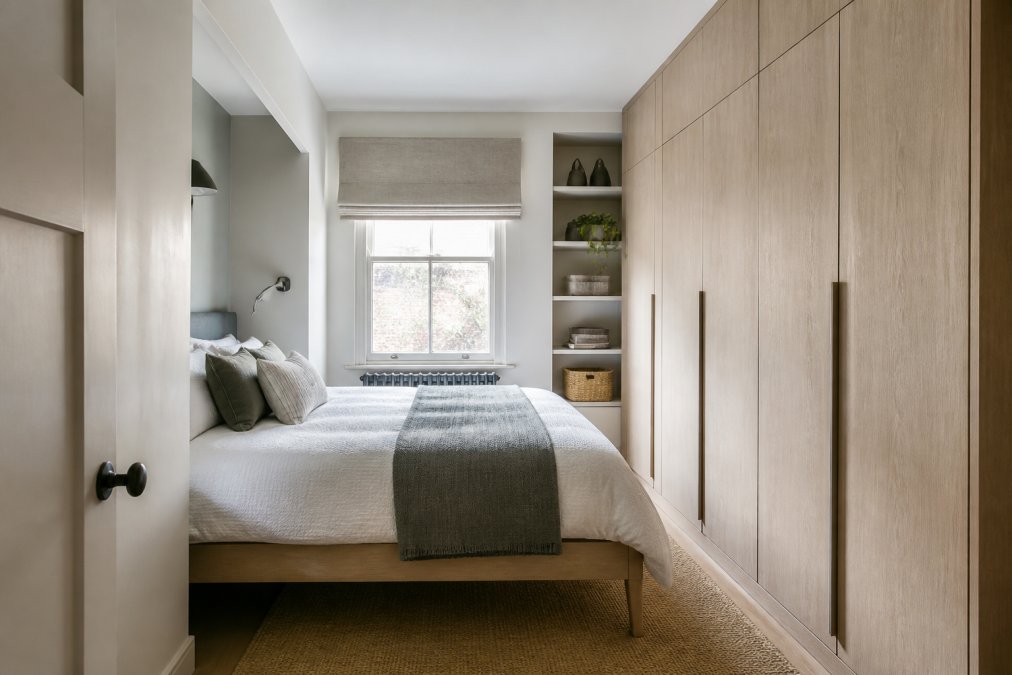
Integrating these custom elements effectively requires a strategic approach to maximize bedroom storage while maintaining the clean lines essential for a restful atmosphere.
This matters most in bedrooms with awkward layouts. A sloped ceiling, an alcove that’s 1.2 metres wide, or an understairs space that’s oddly shaped, these become assets instead of problems when furniture is built to fit them precisely. Bespoke bedroom furniture for small spaces eliminates wasted space and maximises every centimetre.
The real advantage isn’t just fitting the space. Custom pieces are designed around your specific storage needs. A wardrobe built for someone with 40 work suits and 10 casual outfits looks completely different from one built for someone with 60 pairs of jeans and minimal formal wear. Bespoke solutions match the furniture to your actual life.
Quality matters too. Bespoke pieces are typically built with better materials and construction than mass-produced alternatives. This durability means your investment holds value and functions properly for years.
Bespoke bedroom furniture for small spaces isn’t a luxury, it’s a practical solution when your room has dimensions or storage needs that standard furniture can’t address. The cost difference often disappears when you factor in not buying multiple pieces that don’t quite fit, and the durability advantage means less replacement over time.
Fitted Wardrobes for Small Rooms: Customisation vs Off-the-Shelf
This is the decision point many people face: buy a standard wardrobe or invest in a fitted solution.
Off-the-shelf wardrobes come in standard widths (usually 75, 90, 120, or 150 centimetres) and standard depths (typically 55 or 65 centimetres).
- No wasted wall space
- Interior layout that matches your clothing and storage needs
- Better quality construction and materials
- Customisation vs off-the-shelf limits you to fixed configurations
Design Principles That Make Small Bedrooms Feel Larger
Beyond furniture selection, certain design choices create the illusion of more space. These principles cost nothing, they’re about how you arrange and style what you have.
Evaluating Quality, Durability, and Long-Term Value
Materials. Solid wood construction (oak, birch, walnut) lasts decades. Veneered particleboard with edge-banding is acceptable for budget pieces but won’t survive heavy use. Check what’s underneath the veneer, real plywood is sturdier than particleboard.
Finishes.
| Feature | Off-the-Shelf | Fitted Wardrobes |
|---|---|---|
| Space utilisation | Standard dimensions only | Custom fit, zero waste |
| Interior layout | Fixed configuration | Customisable to your needs |
| Installation time | 1-2 days | 7 days (Finest Furniture Studio) |
| Cost | Lower upfront | Higher upfront, better value long-term |
| Warranty | Typically 1-2 years | 10 years (Finest Furniture Studio) |
| Awkward spaces | Won’t fit properly | Designed to fit perfectly |
Frequently Asked Questions
What should I look for when buying multipurpose bedroom furniture?
Prioritise pieces that serve at least two functions, such as storage ottomans that double as seating or beds with integrated drawers underneath. Look for furniture with clean lines and visible legs to maintain visual lightness. Check that dimensions fit your space precisely, measure twice before purchasing. Assess weight capacity if the piece will hold significant storage, and verify that materials suit your lifestyle. Finally, consider how the piece integrates with your existing layout rather than treating it as a standalone solution.
Is custom-fitted furniture worth the investment for small rooms?
Custom-fitted furniture maximises every centimetre of available space, including awkward areas like alcoves and understairs that standard pieces cannot address. Bespoke solutions reduce wasted space and often eliminate the need for multiple smaller items, offsetting the initial investment through better organisation and durability. A 10-year warranty on quality fitted wardrobes provides long-term value and peace of mind. For rooms where off-the-shelf options consistently fall short, bespoke furniture delivers practical and aesthetic benefits that justify the cost.
How can I make a small bedroom feel larger with multipurpose furniture?
Select pieces with raised legs and slim profiles to create visual lightness and maintain floor visibility. Choose light or neutral colours for larger items like wardrobes, which visually recede and avoid making the room feel cramped. Incorporate vertical storage solutions to draw the eye upward and maximise unused wall space. Minimise visual clutter by opting for furniture with built-in storage rather than multiple standalone pieces. Wall-mounted shelves and low-profile beds further enhance the sense of space and airflow within the room.
What are the benefits of bespoke fitted furniture for small spaces?
Bespoke fitted furniture transforms awkward spaces into functional storage, from sloping ceilings to understairs areas that would otherwise go unused. Custom solutions are designed specifically for your room’s dimensions and layout, eliminating gaps and wasted space. Quality bespoke pieces offer superior durability and organisation compared to mass-produced alternatives. A seamless installation experience and transparent pricing provide certainty throughout the process. With a long warranty and personalised design support, bespoke furniture delivers both immediate space optimisation and lasting value for your home.

