

Last Updated: October 25, 2026
Quick Summary
Maintaining custom fitted wardrobes for longevity requires consistent cleaning with soft cloths, moisture control through ventilation, regular hinge adjustment, and prompt attention to small faults before they cause structural damage. A simple seasonal routine of dusting, track cleaning, and inspections prevents most common problems and extends wardrobe life by years.
- Clean surfaces monthly with a lightly dampened microfibre cloth and dry immediately to prevent water damage.
- Check hinge alignment every six months and tighten adjustment screws a quarter turn to prevent doors hanging unevenly.
- Leave wardrobe doors slightly ajar when not in use and open them for 15-20 minutes after showers to control humidity.
- Inspect the interior every three months for damp, discolouration or mould, especially near external walls.
- Replace individual components like hinges, handles and drawer slides rather than the entire wardrobe when they fail.
Table of Contents
- Why Maintaining Custom Fitted Wardrobes for Longevity Matters
- How to Clean Fitted Wardrobes Properly
- Preventing Damp in Wardrobes and Controlling Humidity
- Wardrobe Door Hinge Adjustment and Hardware Maintenance
- Fitted Wardrobe Repair: When to Fix and When to Replace
- Seasonal Maintenance and Routine Care Checklist
- Maximising Wardrobe Durability Through Smart Storage Habits
- Frequently Asked Questions
Why Maintaining Custom Fitted Wardrobes for Longevity Matters
Custom fitted wardrobes represent a significant investment.
The real challenge isn’t complexity but consistency. Most wardrobes fail not from poor craftsmanship but because owners don’t know what maintenance matters.
This guide covers seven essential steps to keep your fitted wardrobe performing as designed: cleaning without damage, preventing moisture problems, adjusting hardware before it breaks, and recognising when professional repair is needed.
How to Clean Fitted Wardrobes Properly
The first rule of wardrobe care is simple: match the method to the material. A technique safe on painted MDF can cloud a lacquered veneer or streak a mirror, so treat each surface on its own terms.
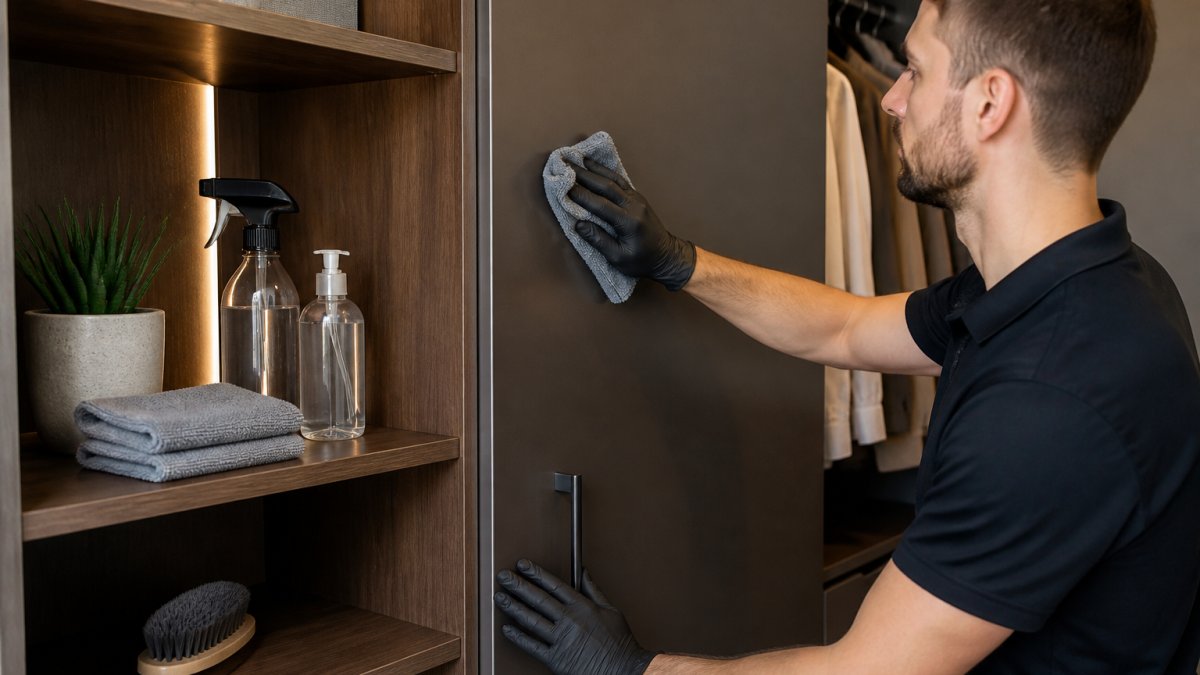
The universal rules that apply to every surface
- Work with a soft microfibre cloth, lightly dampened, never wet. Spray product onto the cloth, never directly onto the wardrobe.
- Wipe in the direction of the grain where one is visible, and dry immediately with a second dry cloth.
- Clean top to bottom so dust does not settle on surfaces you have already wiped.
Laminate and melamine
These are the most forgiving surfaces and the most common in made to measure wardrobes. Wipe with a cloth dampened in warm water with a drop of washing-up liquid, then dry immediately. Do not leave water pooling along edges or door grooves, because moisture wicks into the chipboard core and swells it. For greasy fingerprints, a weak water and white vinegar solution works; rinse afterwards.
Wood veneer and solid timber
Veneer is a thin slice of real wood bonded to a core, so treat it like fine furniture. Use the barely-damp cloth method and dry straight away; never let water sit on veneer, as it can lift the grain and cause bubbling. For a deeper clean once or twice a year, use a wood-safe cleaner applied sparingly to the cloth, then buff dry.
Painted surfaces
Painted MDF and painted timber show every mark but mark easily if scrubbed. Use a soft cloth with warm water only and dry immediately; a mild washing-up liquid solution handles scuffs. Never use abrasive cleaners, magic erasers or solvent-based products on painted surfaces; they cut through the paint film and leave a dull patch that cannot be blended. If paint is chalking or flaking, treat it as a finish problem, not a dirt problem.
Mirrors and glass panels
Use a dedicated glass cleaner sprayed onto a microfibre cloth, not onto the glass, to avoid liquid running into the frame. Wipe in overlapping strokes and buff with a dry cloth. Avoid paper towels, which scratch coatings, and ammonia-based cleaners on mirrored panels with a protective backing film. For mirror doors on sliding fitted wardrobes, clean the glass before the tracks so loosened dust does not fall back onto the glass.
Interior surfaces and shelving
Interior surfaces collect dust and need attention every few months. Remove clothing, then wipe shelves, rails and interior walls with a lightly dampened cloth and dry immediately. Check corners and the top of the wardrobe, where dust accumulates out of sight. If you notice discolouration or soft spots, stop and check for moisture problems.
Keep a dedicated wardrobe cleaning kit: two microfibre cloths, a small spray bottle of water, a mild washing-up liquid solution, a glass cleaner and a soft brush for tracks. Having it to hand is the difference between a five-minute job and a job that never happens.
Handles and metal hardware
For handles and metal hardware, a dry microfibre cloth works best. If handles are sticky, dampen the cloth minimally, wipe, then dry at once. Regular dusting prevents buildup. Avoid metal polishes on plated or lacquered hardware, because they strip the protective coating and accelerate tarnishing.
What to avoid, in one list
- Abrasive creams, scouring pads and magic erasers
- Bleach, ammonia and solvent-based cleaners
- Silicone and wax polishes on laminate or painted surfaces
Preventing Damp in Wardrobes and Controlling Humidity
Damp is the silent enemy of fitted wardrobes.
Moisture causes wood to swell, hinges to rust and finishes to bubble or peel, and it creates conditions for mould growth on clothes and surfaces. The problem develops slowly, so by the time you notice it, damage is already underway.
Consider a small dehumidifier if you live in a damp area or notice regular condensation on windows. Alternatively, ensure adequate ventilation: open windows daily when weather permits and use extractor fans in bathrooms.
Wardrobe Door Hinge Adjustment and Hardware Maintenance
Hinges are the hardest-working parts of your wardrobe.
Over time, hinges loosen slightly, causing doors to hang unevenly or stick. This is normal wear, not a defect, and catching it early prevents damage to the frame and door edges.
If doors stick or rub against the frame, the issue is usually a loose hinge or warped door; tightening hinges often solves it. If sticking persists, contact a professional fitter rather than forcing doors.
Fitted Wardrobe Repair: When to Fix and When to Replace
Not every problem requires replacement.
Small issues, a loose hinge, a stuck drawer, a misaligned door, are straightforward fixes. Learn about common problems with fitted bedroom furniture to understand what’s repairable and what signals deeper damage. Replace individual components when they fail: hinges, handles, drawer slides and shelving supports can all be swapped without replacing the entire wardrobe, an advantage of quality fitted construction. However, structural issues, warping, significant water damage or widespread mould need professional assessment, as these may require replacing sections rather than minor repairs; DIY fixes on structural damage often make problems worse.
Seasonal Maintenance and Routine Care Checklist
Consistency beats intensity. A few minutes each season prevents most problems, and a written schedule turns good intentions into a habit. The table below is the backbone; the notes after it explain what to look for and when to call a professional.
| Task | Frequency | Time Required |
|---|---|---|
| Dust and wipe all surfaces | Monthly | 10 minutes |
| Clean sliding door tracks | Monthly | 5 minutes |
| Check hinge alignment and tighten if needed | Every 6 months | 5 minutes |
| Inspect interior for damp, discolouration or mould | Every 3 months | 5 minutes |
| Lubricate tracks and moving parts | Every 6 months | 5 minutes |
| Check handles, knobs and drawer runners | Every 6 months | 5 minutes |
| Clear contents, clean interior and declutter | Seasonally | 30-60 minutes |
| Professional inspection if issues are spotted | As needed | Varies |
Spring: the deep clean and inspection
Spring is the natural time to empty the wardrobe, wipe every interior surface and inspect the structure. Look for soft spots, bubbling veneer, rust on hinges and any musty smell, and check that doors sit square in their frames and drawers run smoothly. This is also the moment to declutter, because a lighter wardrobe puts less strain on hinges and rails for the rest of the year.
Summer: ventilation and humidity watch
Warm weather raises indoor humidity, when condensation and mould take hold. Open windows daily when weather permits, leave doors ajar for 15-20 minutes after showers, and check the interior for musty smells or condensation on mirror panels. If your bedroom regularly shows condensation on windows, a small dehumidifier is a sensible investment.
Autumn: prepare for heating season
As heating comes on, indoor air dries and timber can shrink slightly, which is when hinges loosen and doors begin to rub. Check hinge alignment, tighten screws a quarter turn where needed, and lubricate sliding tracks before winter. Check for external damp near the wardrobe wall before the wet months.
Winter: moisture and hardware check
Cold external walls and warm interior air are the classic recipe for condensation behind a wardrobe. Leave a small gap between the wardrobe back and any external wall, keep the room ventilated, and inspect the interior monthly for damp. Check that handles and drawer runners are firm, and listen for squeaks that signal a dry hinge or loose fixing.
Troubleshooting common faults
- Sliding doors that stick: usually dust in the track or a worn roller. Clean the track with a dry cloth and a soft brush, then apply a silicone-based lubricant to the track only. If the door still binds, the roller may need replacing.
- Doors that rub or hang unevenly: almost always hinge alignment. Adjust the hinge screws a quarter turn at a time and recheck the gap top and bottom.
- Loose handles and knobs: tighten the fixing screw from inside the door. If the screw will not grip, the hole may need a small repair or a slightly longer screw.
Stop and call a professional if you find structural movement, water damage, widespread mould, cracked panels, doors that will not stay closed after adjustment, or any electrical component inside the wardrobe that is faulty. Do not force doors, over-tighten screws or attempt repairs to load-bearing fixings.
When to DIY and when to call a professional
Simple adjustments are within reach for most homeowners: tightening a hinge, cleaning a track, replacing a handle or swapping a drawer runner. Call a professional for anything structural, water damage or returning mould, anything electrical, and any problem that persists after a basic adjustment. A qualified fitter can assess whether a section needs replacing rather than repairing, which is often cheaper than letting a small fault damage the frame.
A seasonal rhythm, a short fault-diagnosis list and a clear line between DIY and professional repair will keep bespoke fitted wardrobes in service for decades. The schedule matters more than any single product.
Maximising Wardrobe Durability Through Smart Storage Habits
How you use your wardrobe affects how long it lasts.
Overloading shelves and rails strains hinges and causes sagging.
Discover practical wardrobe dividers and organizers that protect your contents while maximizing space.
Moisture from damp clothing damages finishes and encourages mould, so ensure clothes are completely dry before storing.
Learn decluttering strategies that reduce the burden on your wardrobe system.
Frequently Asked Questions
How often should you clean a fitted wardrobe?
Dust your fitted wardrobe interiors monthly and wipe down doors and handles every 2-3 weeks, depending on household dust levels and use. In humid environments or homes with pets, increase cleaning frequency to weekly. Deep cleaning of shelves and interior surfaces should happen quarterly. Regular maintenance prevents dust buildup, which can trap moisture and damage finishes.
How can you prevent damp and musty smells inside a wardrobe?
Ensure proper ventilation by leaving small gaps between the wardrobe back and wall if possible, and avoid placing the wardrobe directly against external walls in damp areas. Use silica gel packets or moisture-absorbing products inside shelves, and wipe down interiors if condensation appears. Check that your bedroom has adequate air circulation and consider using a dehumidifier if damp is persistent. Avoid storing damp clothing and inspect regularly for mould.
What should you do if wardrobe doors stick or come off their tracks?
Sticking doors often result from misalignment or debris in the tracks. Vacuum tracks thoroughly and wipe with a damp cloth to remove dust. For sliding doors, check the bottom track alignment and adjust the door guide if needed. For hinged doors, tighten hinge screws with an appropriate screwdriver. If doors continue to stick after cleaning, the track may need professional adjustment or lubrication. Do not force doors, as this can damage hinges and tracks further.
How do you know if a fitted wardrobe needs professional repair rather than replacement?
Minor issues like loose handles, squeaky hinges, or small dents in panels can usually be repaired cost-effectively. If doors no longer close properly, shelves are sagging, or the frame is visibly damaged, professional assessment is worthwhile before deciding on replacement. Many quality fitted wardrobes are designed for repair and component replacement. A professional fitter can often replace individual hinges, handles, or shelves rather than requiring full replacement, which extends the life of your wardrobe significantly.
Your fitted wardrobe is built to last. With these seven steps, you’re protecting your investment and ensuring it performs beautifully for years. At Finest Furniture Studio, we design wardrobes that evolve with your home, and proper maintenance is how you unlock their full potential. Book a free design visit to explore how we can create a wardrobe tailored to your space and lifestyle, backed by our 10-year warranty and 7-day fitting service.


