
Table of Contents
- Why Decluttering Your Bedroom Matters
- The Step-by-Step Decluttering Process
- Small Bedroom Storage Ideas That Maximize Space
- Clearing Surfaces and Reducing Visual Noise
- Bespoke Fitted Wardrobes and Custom Storage Solutions
- Decluttering Checklist for Bedrooms
- Maintaining Your Organized Bedroom Long-Term
- Frequently Asked Questions
Last Updated: September 26, 2026
Why Decluttering Your Bedroom Matters
A cluttered bedroom doesn’t just look untidy, it actively undermines your sleep quality and mental wellbeing. According to sleep experts at Homes & Gardens, decluttering before organizing, removing stressors, and optimizing your bed environment are essential steps to inject calm into your space. When your bedroom is filled with visual noise and unnecessary items, your brain remains in a low-level state of alert, making it harder to relax at night.
This guide covers everything you need to know about how to declutter a bedroom for better organization, transforming your space into a calm sanctuary that supports both rest and functionality.
An organized bedroom creates psychological relief. When everything has a designated place and surfaces are clear, your mind experiences less cognitive load, you spend less time searching for items, and enjoy genuine control over your environment.
The Step-by-Step Decluttering Process
How to declutter a bedroom for better organization begins with a systematic approach. Break the process into manageable stages to avoid decision fatigue and abandonment.
Sort Items Into Categories
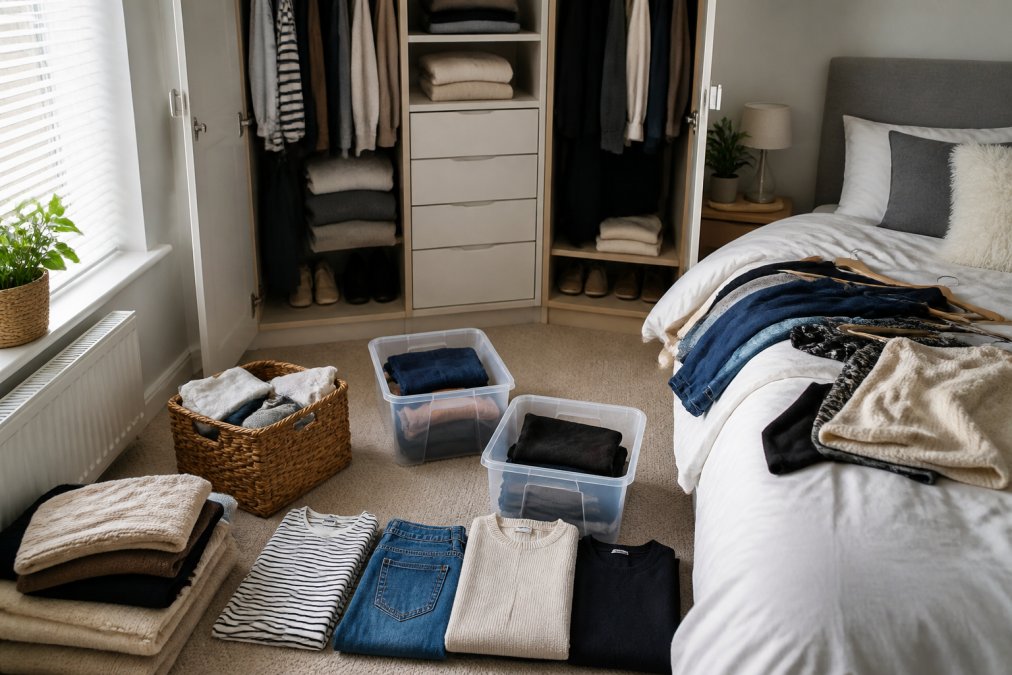
Start by grouping items into clear categories: clothing, books, personal items, sentimental objects, and miscellaneous. This categorization forces you to confront the volume of what you own and makes decision-making more straightforward.
Pull everything from one category at a time and lay it out so you can see the full scope. This visual confrontation is the first step toward meaningful change.
Note which items appear multiple times, duplicates are often the easiest wins in decluttering and free up significant space without difficult emotional decisions.
Decide What Stays and What Goes
A practical framework helps overcome the emotional weight of letting go: keep items that you actively use, genuinely love, or that serve a clear purpose in your current life.
Ask yourself three questions for each item: Do I use this regularly? Does it fit my current lifestyle? Would I buy it again today? If the answer to all three is no, it’s a candidate for removal.
For sentimental items, create a small designated space. Choose pieces that genuinely spark joy or hold real meaning, and let the rest go. This respects sentiment without paralyzing your entire space.
Have a disposal plan before sorting: donate good items to charity, use textile recycling for worn clothing, or sell online. This prevents bags of items cluttering your space for weeks.
Small Bedroom Storage Ideas That Maximize Space
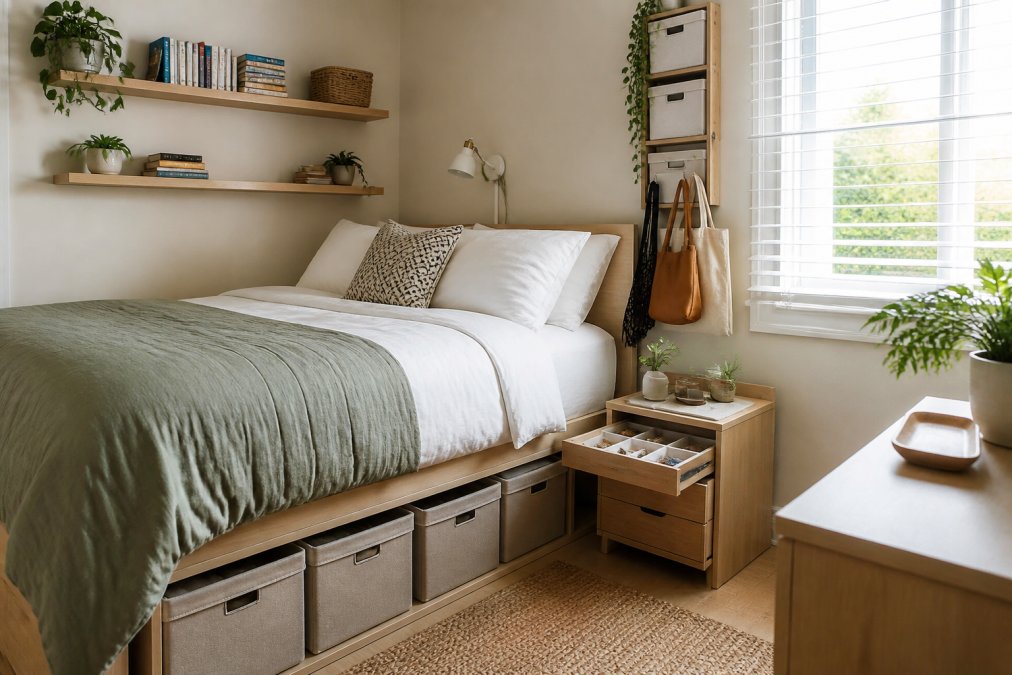
Small bedrooms demand strategic thinking. Every square inch must work harder, and proper organization delivers immediate, visible transformation.
Under-Bed Storage Solutions
Under-bed storage boxes are among the most effective tools for maximizing a small bedroom. Use flat, stackable containers that slide easily and fit snugly under the bed frame.
Store off-season clothing, extra bedding, or infrequently used items. Label each box clearly. Avoid storing items that attract moisture or pests.
Bed risers can lift the frame higher, creating additional clearance for larger storage containers and potentially doubling your under-bed storage capacity.
Vertical Storage and Wall Space
Install floating shelves above your desk, beside your wardrobe, or around your window. Vertical storage keeps items accessible while freeing up floor space, making the room feel larger.
Wall-mounted storage solutions, hooks, pegboards, narrow shelving, keep frequently used items within reach without consuming furniture footprint.
Drawer dividers transform standard drawers into organized compartments. Instead of a jumbled mess of socks and underwear, each item has a designated section. This simple addition makes getting dressed faster and keeps drawers tidy over time.
Clearing Surfaces and Reducing Visual Noise
Visual noise is the enemy of a calm bedroom. Clearing surfaces is only half the solution; maintaining clarity requires a simple daily reset routine.
The Surface Clear-Out
Clear your bedside table completely. Keep only essentials: a lamp, alarm clock, and current book. Everything else goes into a drawer or is removed. This transforms the visual feel immediately.
Your dresser should follow the same principle. A mirror, a small jewellery box, perhaps a framed photograph, that’s enough. Cosmetics, hair products, skincare, and other items belong in drawers, a dedicated storage box, or a bathroom shelf, not on display. The goal is a surface you can see the wood or finish of, not a surface buried under items.
Open shelving looks best when items are curated, not crammed. If you choose to display books or decorative objects, arrange them thoughtfully. Too many items create visual chaos; fewer, well-chosen pieces create elegance and calm. A common ratio is one item per 30 centimetres of shelf space, this prevents the “cluttered” feeling whilst still allowing for meaningful display.
The 10-Minute Daily Reset
Clearing surfaces once isn’t enough; they accumulate clutter again within weeks without a maintenance system. The most effective prevention is a brief daily reset, a habit that takes just 10 minutes and prevents the return of visual noise.
The evening reset routine:
- Spend five minutes returning items to their designated homes. Anything that’s migrated to the nightstand, dresser, or shelves goes back to drawers, the wardrobe, or storage.
- Spend three minutes wiping down surfaces with a dry cloth. This removes dust and reinforces the visual clarity you’ve created.
- Spend two minutes checking that your bed is clear and your floor is free of items. This prepares your space for sleep and prevents the bedroom from becoming a dumping ground for daily clutter. Maintaining this brief nightly discipline helps to reduce visual clutter and establishes a tranquil environment that supports your broader efforts to simplify your living space.
This routine takes less time than scrolling social media and prevents the slow re-accumulation that undoes your decluttering work. Most people find that after two weeks, this habit becomes automatic, you’ll do it without thinking.
Sustainable Disposal of Removed Items
When you clear surfaces and drawers, you’ll have items to remove. How you dispose of them matters, both for the environment and for your conscience.
Clothing and textiles: Worn items that can’t be worn should go to textile recycling, not landfill. Organisations like Textile Recycling UK accept old clothing, bedding, towels, and fabrics. Many high street charity shops (Oxfam, British Heart Foundation, Barnardo’s) also accept textiles in good condition. If items are stained or damaged, check whether your local council offers textile collection in your household waste bin, or search for a textile recycling drop-off point via the Recycle Now website.
Books: Charity shops accept books in good condition. Alternatively, platforms like World of Books or local community libraries often welcome donations. Damaged books can sometimes be recycled through your local paper recycling scheme.
Furniture and larger items: If you’re replacing a bedside table or small dresser, contact local charities like the British Heart Foundation or Emmaus, which collect furniture. Many offer free collection for larger items. Alternatively, list items on Vinted, Facebook Marketplace, or Freecycle to give them a second life.
Electronics: Old alarm clocks, phone chargers, or other small electronics should never go in general waste.
Bespoke Fitted Wardrobes and Custom Storage Solutions
For many homeowners, how to declutter a bedroom for better organization is only half the solution. The other half is having proper storage that actually works for your space and lifestyle.
Decluttering Checklist for Bedrooms
Use this practical checklist to guide your decluttering journey:
- Sort clothing into categories and remove duplicates
- Decide which clothes you actually wear and love
- Donate or sell items in good condition
- Arrange for textile recycling of worn items
- Clear your bedside table completely
- Remove unnecessary items from your dresser
- Sort books and keep only those you’ll reread
- Organize drawers with dividers
- Install or plan under-bed storage solutions
- Assess wall space for vertical storage opportunities
- Remove decorative items that don’t spark joy
- Create a system for off-season storage
- Label storage boxes clearly
- Evaluate whether bespoke fitted wardrobes would transform your space
This checklist works best when tackled one section at a time rather than all at once. Spend a weekend on clothing, another on books and accessories, another on surfaces and display items. Incremental progress prevents overwhelm and creates momentum.
Maintaining Your Organized Bedroom Long-Term
Decluttering is not a one-time event, it’s the beginning of a new approach to your space. Maintenance is simpler than the initial purge, but it requires intentional habits.
Frequently Asked Questions
How does decluttering your bedroom improve sleep quality?
A decluttered bedroom reduces visual and mental stressors that can interfere with sleep. Sleep experts recommend removing items that create visual noise and optimizing your bedroom as a calm environment dedicated to rest. Less clutter means fewer distractions, lower stress levels, and a more functional space that supports better sleep hygiene. Studies on residential clutter show that excessive belongings negatively impact living standards and mental wellbeing, both of which affect sleep quality.
What is the best way to sort through bedroom items when decluttering?
The most effective approach is to categorize items into distinct groups: keep, donate, and toss. Handle each item individually and ask whether it serves a purpose or brings value to your life. Many people find the incremental decluttering method helpful, tackling small areas daily rather than attempting an overwhelming whole-room purge. This approach reduces decision fatigue and makes the process more sustainable, allowing you to maintain your organized space over time.
How can I organize a small bedroom with limited storage space?
Maximize every inch by using under-bed storage boxes, drawer dividers, and vertical shelving. Wall-mounted solutions and tall, narrow furniture help you use height rather than floor space. Bespoke fitted wardrobes and custom storage solutions are designed to fit awkward spaces like alcoves and sloping ceilings, transforming areas that would otherwise go unused. Tailored storage ensures every item has a designated home, which is essential for maintaining organization in compact rooms.
What habits help maintain a clutter-free bedroom after decluttering?
Establish daily habits: make your bed each morning, return items to their designated places immediately, and do a weekly 10-minute tidy-up. Set a rule that new items only enter if old ones leave. Regular maintenance schedules prevent clutter from accumulating again. Creating functional spaces with clear storage systems makes it easier to maintain organization, as every item has a specific location. Consistency in these habits ensures your bedroom remains a calm, organized sanctuary.

